


Likes
Comments
Share


@Schneidersitz
Follow
Eine wirklich spannende Reise geht zu Ende. Die Pflanze ist ein absolutes Prachstück und riecht himmlisch süß. Aber jetzt ist sie reif und kommt kopfüber.

Likes
8
Share


@Salokin
Follow
Week went again very uneventful. The plant does what she is supposed to be doing (gaining weight) :). Still lots of new pistils appearing overnight, I am checking the Trichomes daily, however, everything remains milky, with only very little % of amber trichomes. Once amber colours start increasing I will start flushing.

Likes
12
Share


@Ashbash
Follow
60x60x120cm tent. Basic cheap one not sure what brand, if any. 200w CFL for veg, and a 250w HPS for bloom. Gonna continue with biobizz and maybe a couple of other supplements later down the road. Soil is biobizz allmix. Says pH ready so no need to adjust. Hopefully that's right!

Processing
Likes
11
Share


@Turbuhaler
Follow
I installed the mesh to do Scrog with normal thread and i have done some topping in secundary stems.
Everything was fine, but the smell was getting much stronger, so i started to think to install an extractor with a smell filter.

Likes
50
Share


@Weedpixels
Follow
INFO:
__________________________________________
LIGHT:
* 400 PPFD, 12/12
+ Keep raising the PPFD with a (100) each week until we reach +800 PPFD.
__________________________________________
NPK:
* MAIN: PLAGRON // Coco A // 3,0ml / Liter
* MAIN: PLAGRON // Coco B // 3,0ml / Liter
* Stimulator: PLAGRON // Power Roots // 1,0ml / Liter
* Stimulator: PLAGRON // Pure Zym // 1,0ml / Liter
* Stimulator: Blackstrap Molasses // 5,0ml / Liter
* Foliar Feeding: BIONOVA // Silution // 2,0ml / Liter
__________________________________________
ENVIROMENT:
* Humid: 60-65%
* Temp: 22-25C
* CO2: 600-900
__________________________________________
HAPPENINGS:
+ Flipped over to flower 12/12 light schedule
+ Increased the main nutrients
- Can see some spots on the leafs, so im adding BIONOVA Silution in foliar feeding
__________________________________________
STRAIN INFO:
Gender: Feminised
Genes: 80% INDICA - 20% SATIVA
Genetics: Californian Sunset Sherbet and the autoflowering strain Strawberry Cola Auto.
Harvest: 450-600 g/m²
Flowering: 7 weeks
THC: 18-22%
CBD: 0,1%
Taste: Earthy, Citrus, Cool
EFFECTS
Stimulating, Happiness, Relaxing
Release Year202?
WEBPAGE:
https://sweetseeds.es/en/f1-fast-version-seeds/3237-strawberry-cola-sherbet-f1-fast-version.html

Likes
33
Share

@For2itous
Follow
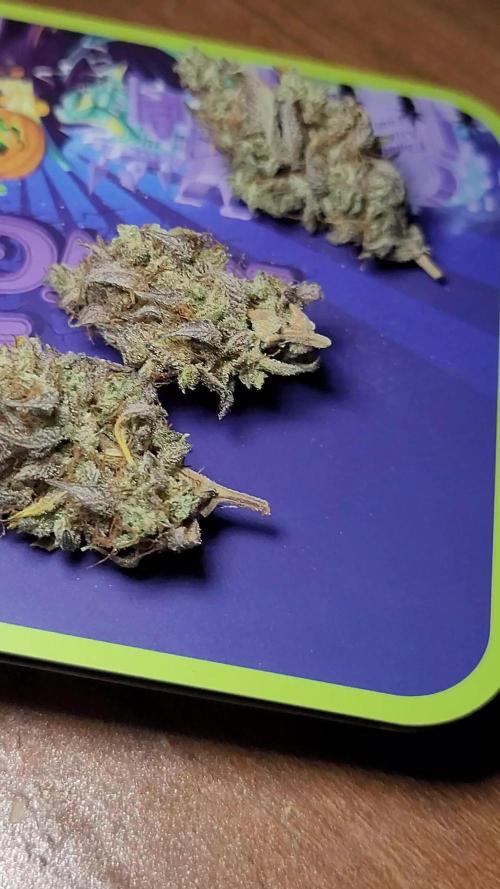
She preformed way better than expected and has been my biggest auto to date definitely grow her again recommend to anyone wanting to try and big auto

Likes
17
Share


@OldskoolHed
Follow
Nice harvest. big dense , aromatic buds..super easy to grow. Will grow again.

Likes
89
Share


@BioBuds
Follow
The enormous growth and bud development this week is unbelievable. This strain keeps pushing and pushing, I can see already that these plants will be covered in bud.
Also, these plants are in size what my previous photoperiods grow in 8 weeks and some flowering.
Really amazing to see. So far my experience with autos has been meh at best. These plants are nothing like that and are resilient and forgiving.
The Mars Hydro SP-3000 is now on full blast, it gives me some white pointies and the temps go up in the tent. I'm on the threshold of heat stress and light burn.
I'm trying to push it maximally and to get to know the boundaries.
Thanks again for checking out my grow!
Likes
12
Share


@RicoGrow
Follow
Hello,
On Monday evening, I watered with a supplement of 1 gram of Trichoderma and 1/2 teaspoon of dolomite lime to boost calcium and magnesium levels.
Today, I defoliated, keeping only the top 2 or 3 sets of flowers to concentrate energy on the top buds, knowing they haven't finished growing. Incidentally, I found 5 male flowers on the lower part of the plants, but they're still closed, phew!
I slightly re-trained my plants.
From today onward, my watering schedule will be. I'm really moving into the flowering phase and I'm adding Green Sensation to my nutrient solution.
Once a week, in addition to Plagron nutrients:
Power Bud 1ml/L once a week. (Why only once a week with POWER BUD? Plagron confirms that they have achieved better results in hydroponics, so for me, who works with soil, there is no need to use more.)
This means that according to Plagron, POWER BUD is more effective or requires different usage in hydroponic systems, while for soil cultivation, a lower or less frequent dose is sufficient.
Also,
Cane sugar molasses 2ml/L once a week. I don't use royal icing. Cann’Candy is the black cane molasses from the organic fertiliser manufacturer Guano-Diffusion.
Black molasses is a by-product of sugar refining, resulting in this thick black liquid with miraculous properties for microbial life.
Cann'Candy provides carbohydrates that are useful during the fruiting period, for tastier and more flavourful fruits and vegetables.
It is used to increase and optimise the sugar content of the fruits and vegetables in your harvests.
Black cane molasses is rich in minerals, trace elements, and vitamins that supply the carbohydrate source necessary for beneficial microorganisms living in your substrates.
You can use Cann'Candy molasses with all ranges of organic fertilisation to optimise your living soil and keep it healthy.
I'm using
Biobizz Bio Up and Bio Down to correct my pH, which I'm now raising to 6.6. My EC is 1.2 today.
I wish you all a successful cannabis grow.
DIAPOGRAMME
MUSIC SOUNDCLOUD
EL MUNDO & ZAZOU
LIKE FOREVER
[HMWL061]
Bonjour,
Lundi soir, j'ai effectué un arrosage avec un complément 1 gramme Trichoderma et 1/2 cuillère à café de chaux dolomite pour renforcer en calcium et en magnésium.
Aujourd'hui, j'ai effectué une défoliation en gardant que les 3 ou 2 étages de fleurs au sommet afin de concentrer l'énergie pour les fleurs au sommet, sachant qu'elles n'ont pas fini de grandir. À savoir, j'ai trouvé 5 FLEURS MALES sur le bas des pieds, mais encore fermer OOUUUFFF.
J'ai remis légèrement mon palissage. Je passe vraiment dans la phase Floraison et j' ajoute
green sensation à ma solution nutritive.
À partir de ce jour, mes arrosages seront :
1 fois par semaine en complément des nutritions Plagron
Power Bud 1ml/l 1/Semaines. ( Pourquoi 1 fois par semaines seulement et bien POWER BUD . PLAGRON CONFIRME qu' ils ont eu de meilleurs résultat en hydroponie donc pour moi qui travail en terre il n ' y a pas besoin d en mettre plus .)
De même
Mélasse de sucre cannes 2 ml/l 1/Semaines. Je ne met pas de sugar royal. Cann’Candy est la mélasse noir de canne à sucre du fabriquant d’engrais organiques Guano-Diffusion.
La mélasse noire est issue du raffinement du sucre, ce qui donne cet épais liquide noire aux vertus miraculeuses pour la vie microbienne.
Cann'candy apporte des hydrates de carbones utiles en période de fructification, pour des fruits et légumes plus savoureux et gouteux.
Il s'utilisera pour augmenter et optimiser le taux de sucres des fruits et légumes de vos récoltes.
La mélasse noir de canne est riche en minéraux, oligo-éléments et vitamines qui vont apporter la source de glucides nécessaire aux micro-organismes bénéfiques vivants dans vos substrats.
Vous pouvez utiliser la mélasse Cann'Candy avec toutes les gammes de fertilisation organique pour optimiser votre sol vivant et le maintenir en bonne santé.
J' utilise biobizz Bio Up Bio Down pour corriger mon PH que je monte maintenant à 6.6
EC 1.2 ce jour
Je vous souhaite une bonne cannabiculture.
POUR LE DIAPOGRAMME
MUSIC SOUNDCLOUD
EL MUNDO & ZAZOU
LIKE FOREVER
[HMWL061]
Likes
55
Share


@Hempy_The_Kid
Follow
02/09/22 changed nutrient water PH 5.93 TDS 890. Gave 2 quarts recharge. Will give foliar feeding at lights out.
02/10/22 PH 6.15 TDS 863. Removed a couple small suckers.
02/11/22 Ph 6.19 TDS 920
02/12/22 PH 6.22 TDS 924
02/13/22 PH 6.15 TDS 916 gave 2 quarts recharge. will give foliar feeding tonight at lights out. This is final foliar feeding.
02/14/22 PH 6.15 TDS 942
02/15/22 PH 6.15 TDS 902 tomorrow morning will start feeding 2x day.

Likes
Comments
Share

@MrCandyTerps
Follow
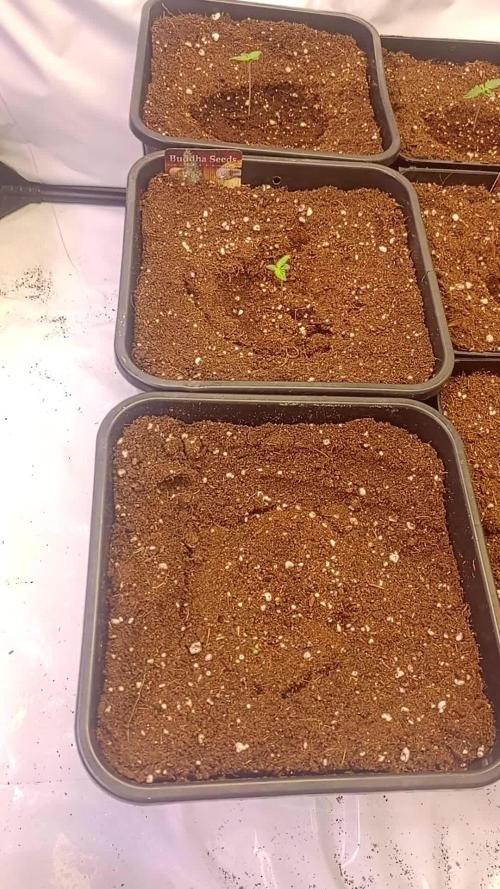
Dia 6 desde la germinacion en papel humedo y luego directas al sustrato


Likes
13
Share


@FlavoursUk
Follow
So, things are going great. The RO water change left me with a nice sterile clean res. The plants are loving the lighter feeding and it shows.
The trolmaster has my light schedule dialled in with the sunrise and sunset setting
Make sure you follow my YouTube and Instagram accounts linked on my profile page.

Likes
226
Share


@Kitties_and_Colas
Follow
~_~_~_~_~_~_~_~_~_~_~_~_~_~_~_~_~_~_~_~_~_~_~_~_~_~_~_~_~_~_~_~_~_~_~_~_~_~_~_~_~_~_~_~_~_~_~_~_~_~_~_~_~_~_~_~_~_~_~_~_~_~_~_~_~_~_~_~_~_~_~_~_~_~_~_~_~_~_~_~_~_~_~
9/18/21
😺 Week 4 of flower!! Everyone is looking pretty good but the mainlined plant seems to be locking out calcium again (and they're clawing slightly, this is on me, I was pushing it lol)..its early but we've increased calcium supplements by 3ml, cut all grow solutions and PK feeds consistent ..we'll update on this again midweek.. thanks for reading grow family and happy harvests!💡🌱 😽💨
Week 4 on YouTube:
https://m.youtube.com/watch?v=EL-n5MUawFY
~_~_~_~_~_~_~_~_~_~_~_~_~_~_~_~_~_~_~_~_~_~_~_~_~_~_~_~_~_~_~_~_~_~_~_~_~_~_~_~_~_~_~_~_~_~_~_~_~_~_~_~_~_~_~_~_~_~_~_~_~_~_~_~_~_~_~_~_~_~_~_~_~_~_~_~_~_~_~_~_~_~_~
Likes
70
Share


@Insaniac_0
Follow
All feeds with nutes use either a whole ratio or combination of "Veg Mix" and "Bloom Mix"concentrates DILUTED in water until a total ppm of add in is reached using a (Total Dissolved Solids)TDS Meter measured in PPM (parts per million). The "Veg Mix" concentrate will eventually be added in smaller ratios and "Bloom Mix" concentrate what will eventually replace the "Veg Mix" concentrate entirely with the ppm and ratios listed when I feed. Veg mix recipe is on week 3. Bloom Mix recipe is on week 5.
Day 77/7
PPFD is between 470 and 700 again with little vertical growth after all the HST/LST over last few days. I used 15 minutes of UV mid day with 15 minutes (30 total) IR before and after main light timers.
VPD was better today with 73F/55%RH/40%ILV Turning off the humidifier was the key this time.
All in all she looks fine for the day, I am hoping to get the new tent up tomorrow and will see if I can get her to fully stretch out again to allow each cola enough space to bulk with light and wind
Day 78/8
Tent conditions improved today because I was able to fix the sizing issue - I now have a Spider Farmer Pro-Grade Grow Tent, 48"x48"x80"
VPD is harder to get the humidity down in so I may have to put in a second de-humidifier or open another vent port, currently I have a 6" ILV pulling against a 4" open air vent hole. I would have tinkered with it a bit more but I was getting close to lights out so I left it. VPD for most of the day was 74F/55%RH/40%ILV in the Mars Hydro Tent. I current have 68F/65%RH/40%ILV for overnight.
Lights are about the same as yesterday with 80% power I am getting 470 to 700 ppfd from 42" from soil to light and since the plant is about 20" that gives her about 22" leaves to light. Im currently using the same 2x4 Bloom Plus LED light centered in the tent but I have another 2x4 Bloom Plus scheduled for delivery on Monday or Tuesday. - She had 20 minutes of UV and 30 minutes total of IR (15/15)
I am hoping this allows her to spread out and receive full light/air on each cola - So I also placed 2 more fans in the tent at plant level to help circulate the air better.
Day 79/9
PPFD was little changed since yesterday as was vertical growth (I think she's trying to spread back out again.) - ppfd was between 480 and 710 with 25 minutes of UV and 30 of IR (18/18)
VPD was a struggle to get under 60 - I now have 2 de-humidifiers in teh tent witht the ILV set to kick up anytime she hits 62%RH. Mostly though I was able to get it down to 55 to 61 - Temps are easier to control with 4 fans and the ILV triggers.
Day 80/10
VPD was 74 to 77F today with humidity still pushing 62% with 2 humidifiers today when the tent was closed. Otherwise I was able to reduce the humidity to 35 to 45% with the door open long enough (in MN fall with temps are around 30s)
So I had my door open for a bit today because I installed my second Bloom Plus XP2500 LED lights today and had to reroute most of the wires. PPFD after completion ranged from 550 at lowest to 750 - I only did 20 minutes of UV since yesterday was her first day at 20. I also increased the IR to 30/30 with 15 before and after lights on/off - so a total of 1 hr total at lights on/off
Feels dry so I plan to feed tomorrow morning with about 3 gallons of 6.3ph de-chlorinated tap water feed in a 10:90 ratio of Veg/Bloom mix
Day 81/11
I fed her today with 3 gallons of 6.4ph de-chlorinated tap water with a 25:75 ratio of Veg/Bloom mix at 500ppm. Runoff showed a ph of 6.5 and 1750 ppm.
VPD was more stable today after I opened another open air vent hole on another side of the side. 76F/55%RH with ILV on auto when needed.
PPFD ranged from 550 to 750 again with the lights at about 42 and she's now 34x28wide x22 tall, so about 20 inches from lights. Still only hit her with 20minutes of UV and an hour of IR with 30/30 at main light schedule with 15/15 before and after.
Day 83/13
Almost two weeks since flip. Turning the lights down yesterday seemed to help, little to no new burn progression on those identified yesterday and new growth with no new burn. Will continue to monitor.
Nute transfer seems to also slowed progression with the leaves only turning brown where they yellowed before and little to no new yellowing.
VPD doing better as well - I turned the heat down just slightly so now avg temps are about 73 - 75F and humidity under 59%RH with the OLV set to auto for limit controls
PPFD most unchanged after I started the day with a little LST on the center cola that was getting ahead of the rest. I also released teh last branch being tied - now all colas are simply help by the tomato rings. Once it was leveled PPFD was 750 at highest and about 550 for the lowest.


Likes
216
Share


@CRiSPrGrow
Follow
Week 10 :
Well the plants suffered a bit from the adjustment to bottom feeding. Didn't help that there was a heat wave while i was away - oh well , on wards ! Maybe they're showing signs of underwatering, i can tell from a bit of droop and dryish leaves. Plants showing a bit of light stress from growing without adjustments while i was gone. Started the PK Booster tea when I got back , that's just mixed in a bucket with a bubbler overnight. I feed top of next week. These have started to concentrate on packing weight now, and the mr. B's is starting to look real pro with 3 main colas that might need support. The biotabs one is still towering, i see some calcium issues coming on, but nothing i can really do at this point. Oh well. The vertafort plant is getting smothered by the six shooter and her sister in the corner. overall though, healthy as you can expect plants that have been left for over ten days with a HID too close lol, oh and by the way I noticed my timer got some keys smushed in and the light was basically on twice around the middle of the night. doh! what a dunce ! took me a week to catch it aswell lol cant believe it 🚀


Likes
45
Share


@AsNoriu
Follow
Day 104. Last Tangies chop day.
So , as you know three girls have dry results at the moment.
Fatty tangie 69.65
Foxtail tangie 72.03
Slim Fat tangie 65.03
Upsidedown tangie still in dry tent, but one hanger was left with most of leaves for dry trim and other two made 29+ and 35+ , so its AMAZING that this plant will make 3 oz, look at week 4 and you will understand why i am so happy and amazed ;)
Lanky aka Sativa dominant tangie which is choped today could still go, its day 104 from seed. This girl and really all of them except upsidedown should be defoliated, but its my first auto run purely indoors and i read so many crapy results, didnt want to stress them a lot.
From 6 girls only 5 sprouted. All very diff just two fatties where lookalikes . Upside down had strange life and she looked and was trained ( toped ) other way than her sisters. Foxtail early started so quick and so strong but ended with airy foxtailed buds and last lanky aka sativa diminant had loads of colas in videos before harvest its easy to spot she should be lolitoped higer, again i would ajust it during grow, but fears about autos prevented me from using many tricks.
With all love to RealGorillaSeeds , this bach was crap.
Day 108. I have holidays and UpsidedownTangie with leaves was still damp as was Lanky Tangies all bigger buds ( if that airy long strech but crystaly as f@#k crap around stemp we can call weed or bud ;)))) )
So both where left for extra 3 weeks overdry ;))) hope it wont be harsh from that.
I can guarantee that Upsidedown is the Champ at moment, those 4 top branches will have an ounce in them, so plant will be 90+.
With Lanky Tangie is diff story, she is airy i needed to trim and lolitop her a lot more, she just couldnt feed every bud, still that pheno is super crystaly. I like it and from 2 bottom branch hangers i got 35+, so 3 other will have like 45-50 on them, again loads of ....
Thats my nutes, in bag epsom salt, it was first grow with all of them, as you see for 9 plants I used almost nothing.
In 3 weeks i will have full weights and smoke report, i like Tangie more everyday, still not even close to my fav taste ...
P.s. i had a bit of leftovers of topmax, bio grow and bio bloom. Max like 200 ml. Bio grow still have a bit left in promo bottle.
Less is more !
Day 125
Upsidedown Tangie 93.4 - current Champ, its amazing what she managed to do ...
Lanky Tangie - 76.8
So total for all 5 Tangies is : 376.91
Not bad, still i will update later and ill explain why i didnt liked them ...


Likes
29
Share


@Lazuli
Follow
This strain has huge fat buds everywhere there was not one popcorn bud sooo i think this is a keeper
Likes
13
Share


@madlangs
Follow
Ppfd 300-220.
Hubbabubba haze off to a bad start and so are the lemon haze.
1.11.24
Gave all 1lt apart from lemonade got 500ml recharge
Root juice 4ml/L
Bio heaven 2ml/L
Acti Vera 2mlL


Likes
3
Share


@JeyGanesha
Follow
Quarta settimana di fioritura anche queste runz layer cake sta venendo very strong 😂🙏💪