




Likes
16
Share


@HAPPY91
Follow
Mars Hydro TS 3000
Dimensions:
25.3" x 22.8" x 2.7"
Weight:
11.3lb
Coverage:
4x4 feet
Watts Consumed:
~450w
Light Intensity:
Up to 1150 uMol @ 18" height
Spectrum:
Full White + Infrared
LED Brand:
Unbranded LEDs
Voltage:
120; 240; 277
Warranty:
3 Years
Week 14 6/23/2021-6/29/2021:
Day 90 6/23:
Played Santana Radio. Drank 0.5 gallons plain water=22 ppm 6.2 ph 73 f. 69.6-79.0 46%-70%
Day 91 6/24:
Played Reggae Radio. Drank 0.5 gallons Fish Brew water=16 ppm 6.4 ph 74 f. 68.9-77.5 48%-65%
Day 92 6/25:
Played Slipknot Radio. Nothing today. 70.9-81.7 48%-74%
Day 93 6/26:
Played High Octane Radio. Drank 0.5 gallons plain water=16 ppm 6.5 ph 78 f. 74.7-83.3 46%-61%
Day 94 6/27:
Played My Likes Radio. Drank 0.5 gallons plain water=19 ppm 6.4 ph 81 f. 76.3-84.2 48%-63%
Day 95 6/28:
Played Reggae Radio. Drank 0.5 gallons plain water=21 ppm 6.0 ph 80 f. 75.9-84.4
Day 96 6/29:
Played Santana Radio.

Likes
3
Share


@Del_grow
Follow
Practically overnight the Blackberry Moonrocks darkened to almost black from its blackberry Kush parentage, Kinda signaling that it’s ready. I mean it’s caked in trichs, many cloudy but still not quite there. All these strains look and smell great.


Likes
4
Share


@Ogbangbang2981
Follow
my our door girl not filling out as I thought she would I really thought I'd get bigger and healthier plant on the outside instead I got the opposite lesson learned. The mist didn't do what I thought it would so had to pollinate with a Male pink kush plant seeds forming nicely . plant still lovely I'm in love with colors.

Likes
4
Share

@fadedgreentaurus
Follow
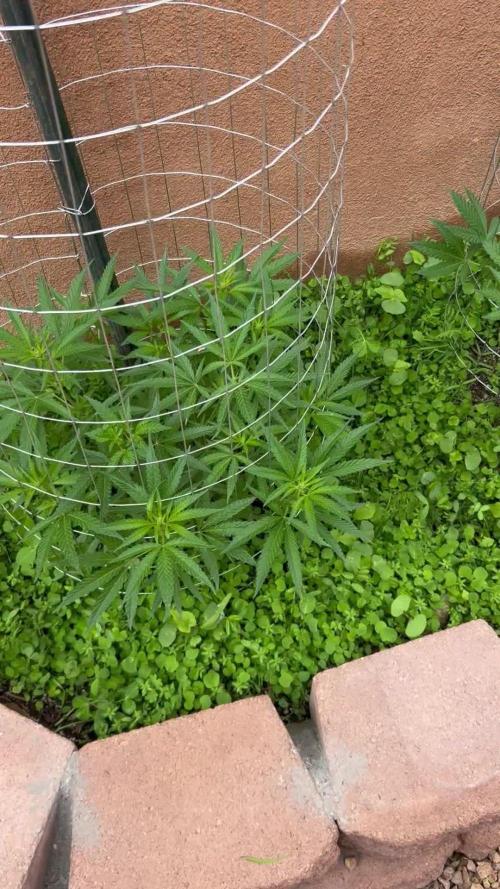
Strong week plants are bulking and showing signs of reveg, tops are all small popcorns these ladies should get huge and throw off a ton of tops.
Likes
43
Share


@Indica_Jones
Follow
Diese Woche wurden die Babys getoppt :) mir gefällt der neue Haarschnitt :D fleißig Lowstress Training haben sie auch hinter sich was ich bis nächste woche aufjedenfall weiterführen werde :) übernächste woche heißt es dann 12/12 :D bin gespannt

Likes
12
Share


@RookieGrowerTH
Follow
I transplant to 1 gl pot for veg
feed with clonex root solution
the rest is RO water with PH adjusted 6.3-6.5
The soil is from the previous grow but it's re amendment and set for a month before use

Likes
5
Share

@Jungle_James_Grows
Follow
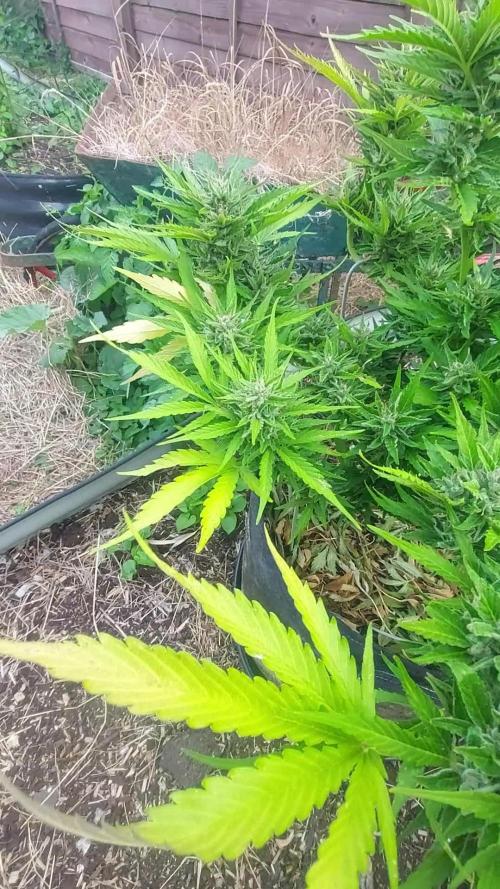
She's putting on some weight now, getting fat and frosty. Her fan leaves are yellowing out, time for a big defoliation and a bit more leaf tucking and give her another lollipop trim of her u der carriage.
She's bulking up nicely now putting on some weight and getting the autumn shades coming through now. She a heavy feeder

Likes
20
Share


@Chubbs
Follow
420 Fastbuds
FBT2305 Week 3
Merry Christmas Grow fam. Week 3 for these beautiful plants. I upped the feeding to 1000ml every other day and so far seem to be handling it fine. Will do a mild defoliation this coming week removing the lower leafs at soil level. All in all Happy Growing
Likes
107
Share


@Tropicannibis_Todd
Follow
💩Holy Crap We Are Back💩
Well i had so much fun the last round , that we are going at it again 😁
So super happy to be trying this one out , can't wait😝 .....The hope here is also see if we can get some really nice colors when it's all said and done ..👍
Seed soaked for 24 then placed in a tub with paper towels , once it cracked and rooted , placed into its main pot 👌
👉I WISH GD HAD DISCORD SERVER SO GROWMIES COULD HAVE A PLACE TO HELP AND TALK THINGS RELATED TO GROWING .....👈
👉SO I CREATED ONE ALL YOU NEED IS TO JOIN THE GROWDIARIES DISCORD SERVER !!!!!!!!!!!👈
LINK IS 👉
https://discord.gg/zQmTHkbejs
AND SEE HOW IT PLAYS OUT !!!!!!!


Likes
24
Share


@Wicked_Stix
Follow
The voodoo juice x platinum hermed this week so moved it to it's own tent. We have 6 plants remaining in the room. I cut out the maxigro this week. They are getting .5 tsp per gallon of maxibloom now. Seems to be keeping everyone happy. Not much to report other than that. Buds seem to be progressing pretty nice.

Likes
16
Share


@BrainStorm22
Follow
6 Semana Floracion
Dejamos de utilizar monster bloom seguimos con los demás fertis de la línea con una Ec de 800 y Ph 6.7 se comienza a apreciar el desarrollo final de estas plantas✌️

Likes
79
Share


@Roberts
Follow
Alien OG Autoflower grew great, and finished beautifully. Strong smell, frosty, and sticky. She grew great under the Mars Hydro FC4800 light. It was my first time using the Gen 1:11 nutrients. I really like them, and will use again till I run out or get more. She will hang dry 24 hours then be put into the cannatrol for a 8 day cycle. I got a great grow to try it out the first time. 🤞. Thank you Aeque Genetics, Gen1:11, and Mars Hydro. 🤜🤛🌱🌱🌱
Thank you grow diaries community for the 👇likes👇, follows, comments, and subscriptions on my YouTube channel👇. ❄️🌱🍻
Happy Growing 🌱🌱🌱
https://youtube.com/channel/UCAhN7yRzWLpcaRHhMIQ7X4g

Processing
Likes
3
Share


@DBanned
Follow
July 24, 2020
The phenotypes have been stretching as normal.
Some of them already passed the 30 in mark.
Some bottom leaves are turning yellow but we think it is normal for lower leaves to die.
We not only gave the plants Gaia green bloom amendments but also, we fertilized the plants with some Alaska morbloom 0-10-10. (Once every three weeks)
Water intake has been increasing. Now the plants are being water every other day. 10-14 liters for 10 plants.
Happy grow🤤🌱🌱🌱🌱!!!!


Likes
Comments
Share

@deseed_uy
Follow
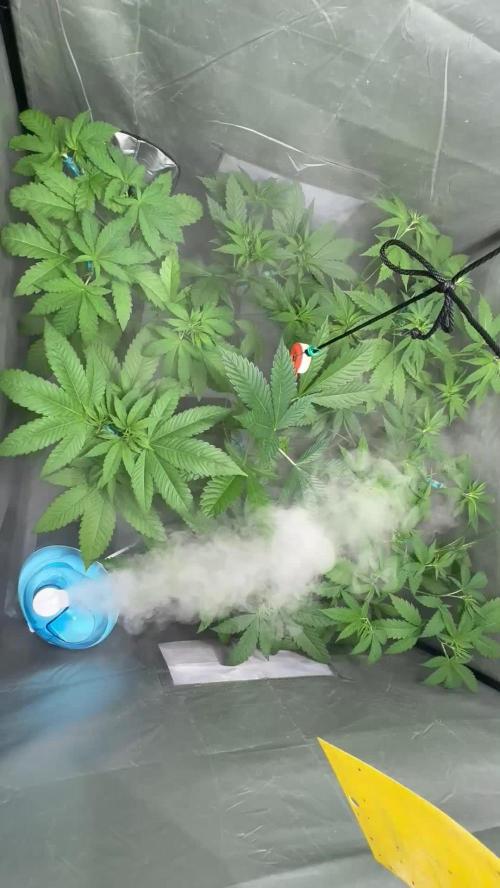
Enamorada de lo enormes q son estas locass😍
Esta semana aplique cannazym luego de varios riegos solo de agua, dejando q drene bastante algunos dias y solo un poco otros dias.. para q se vaya lavando el exceso mientras siguen creciendo re lindas y sanitas, estoy en duda de si hacer transplante o no, estan en maceta de 3lts capaz las cambio a 7 o 9lts antes de la flora, tambien se vienen podas q ya no dan mas

Processing
Likes
6
Share


@Mr_nugs_lover_David
Follow
This beautiful OG strain is such a diamond. I LOVE HER. super strong aroma, very OG, sticky flowers, very dense and compact. What else can I ask for. This strain is such a masterpiece. Definitely looking forward to grow her again. And the best is that she's 100% organic grown without any pks or any shit like that. Just Silicium flash by biotabs which contains a lot of nutrients npk and bug shit and also the soil has been prepared with Florians organic living soil. Which contains different strains of mycorrizae and endomycorryzhae. Also contains fulvic and humic acids it's such a super foof for plants that make them perform to it's full potential without adding any chemicals NPK. I only 💦 and watch the magic happen. A complete and rich in life soil is absolutely key to get a top quality organic cannabis. And here you got the results. Hope you guys enjoy ✌️💚❤️👨🌾


