


Likes
Comments
Share


@SoulGrownBotanicals
Follow
Another great week. No issues. She's getting thiccck lol. Buds are getting nice and dense. I added a fan for some more airflow so these dense bugs don't go bad on me.

Likes
33
Share

@GERGrowDesigns
Follow
Dear Growers ,
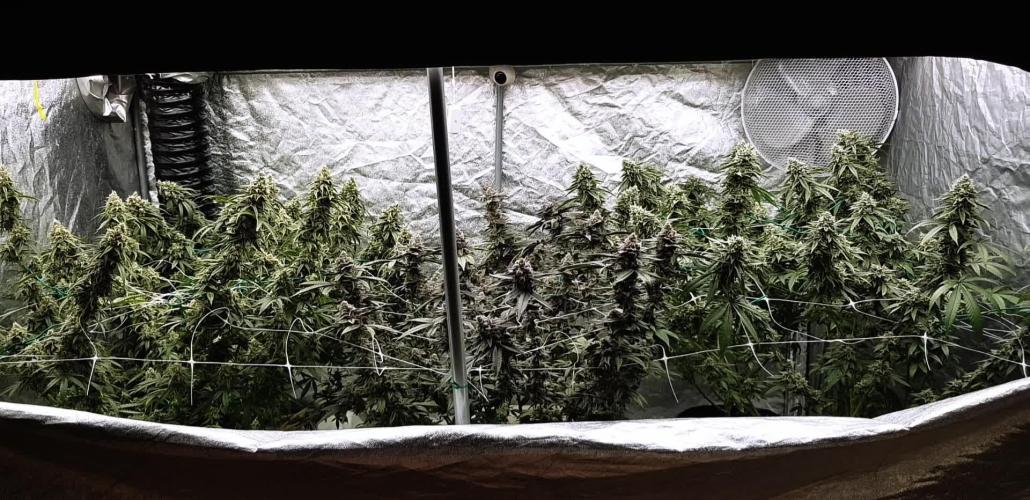
Welcome to Flower Week 7-8 Day 49-56 from Flowering , we’re excited to share a very special project with you:
NARCOS SEEDS Kingping Kush .
With dedication, knowledge, and hands-on practice, we’ll guide you step by step through the journey—watch with us as growth, development, and small wonders unfold before your eyes.
Whether you're a beginner or an expert, you are warmly invited to join, ask questions, and share your own experiences along the way!
Project Setup & Conditions:
• Brand/Manufacturer: Narcos Seeds
• Tent: 222cmx150cmx150cm
• Light: 2x 720 Watt Full Spectrum
• Humidity: 40%
• Soil: Narcos Organix Mix
• Nutrients: Narcos Products
• pH Value: 5.6
A Special Thanks To
Narcos Seeds
for the amazing collaboration, trust, and generous support in making this project possible. Your contribution is truly appreciated!
Congratulations on Your Own Projects!
We celebrate your growth, your creativity, and the passion you bring to the table. It’s truly inspiring to witness at Each visit .
Stay curious and keep up Growing —we look forward to welcoming you back for the next chapter soon!
Likes
18
Share


@Xpie77
Follow
Really nice that u check this page, its very much appreciated, thanks!
This week all is in flowering and the flowers now quickly getting fat!
Ive started with nutrition:
Sea weed 15ml/10L
P 8ml/10L
Bloom 30ml/10L
Molasse 20ml/10L
Silicium 10ml/10L
-----------------Purple Haze -----------------
Purple Haze Purple Haze ontstond in de jaren zeventig in de Verenigde Staten en is vernoemd naar het bekende nummer van Jimmy Hendrix. Purple Haze was de meest gerookte wiet bij Woodstock en een wereldwijde favoriet onder rokers. Ook in Nederland werd deze cannabissoort steeds populairder.
Deze populaire haze soort zie je vaak in Nederlandse coffeeshops. De toppen van de Purple Haze wietplanten zijn compact met prachtige THC kristallen en hebben paarse tinten.
Het roken van deze wiet maakt je euforisch, creatief en geeft je een opbeurend gevoel. Het effect is krachtig en merkbaar als een sativa high gevoel.
Eigenschappen van Purple Haze wietzaden Favoriete haze soort Sativa dominantie Heerlijke smaak Mooie paarse kleur Sativa high
Informatie Purple Haze wietzaden
Bloeitijd: 9-10 weken
Genetica: Haze x Afghan 80% sativa, 20% indica
Plant Hoogte buiten: 150 – 200 cm Oogstmaand buiten: van juni t/m oktober Opbrengst binnen: 450 – 500 gr/m² Opbrengst buiten: 200 – 800 gr/plant
THC: 21%
Link naar de shop: https://seedsgenetics.nl/product/purple-haze-gefeminiseerd /

Likes
41
Share


@Santica_Garden
Follow
So we have reached the end of Week 8 of Flower for the Alien OG, I have uploaded a video showing how the Trichomes are looking just before Harvest. Any questions just ask away guys 👍🏾🌱💚

Processing
Likes
23
Share


@eldruida_lamota
Follow
Ya en la recta final familia, están apuntito, solo unos días más.
Nuestras lemon kush ya recibieron su lavado de raíces , están sin productos ya solo AGUA.
Controlamos de todas formas el Ph igual y que no baje por debajo de 6,2.
Bestiales estás flores , un olor muy característico con tonalidades cítricas que recuerdan al limón.
Todo un clásico en verdad.
Estos ejemplares carecen de brazos laterales, son óptimas para un SOG desde semilla, pudiendo llenar 16 plantas en metro cuadrado.


Likes
41
Share


@Mother
Follow
Kaiydaan started showing signs of Flowering early last week. A few stigmas, Pre-Flowering, but still more Vegetative. So I decided to consider this week "Flowering". She was popping stigmas before 21 days.
So far these WeedSeedsExpress genetics have shown to be exceptional.
I will be slowly reducing her Veg feedings and slowly working in Bloom nutrients. I feed very sparingly as the soil has been amended with all the good stuff, organically.
I think my light may have been too close, so I raised it a couple of inches to 20". I'm not 100% sure it was too close, but it's better to be safe than sorry.
July 1, 2021 Little calyxes have started showing all over Kaiydaan. Kaiydaan has really breezed into Flowering without any hiccups *knock on wood.
July 2, 2021 I did some tucking-of-the-leaves and some mild LST on the entire crop. I had to tuck one of Kaiydaan's taller tops. I snapped one of her other tops, but quickly got her into 🚑Urgent Care and she's as right as rain.
July 3, 2021 That main top, I tucked on Kaiydaan, has turned right back up and has put on some height. Trichomes are starting to pop and the leaves are sticky. She still has no smell or none that I've noticed.
July 5, 2021 I'm still dialing back the Veg nutrients on Kaiydaan and Freeman. J is still vegging strong, very light defoliation as she is ALL tops. We're only 1 month away until My Freeman's birthday!
July 6, 2021 I just watered the girls, they're not big drinkers yet, a liter every 3 days. J seems to be a different Pheno from the rest. Her leaves have more texture and she appears to be all tops (likely due to the FIM'ing she underwent) and she is over a week behind Kaiydaan and Freeman.

Likes
4
Share


@Aleks555
Follow
⚠️ MOMENT OF IMPACT — RUSSIAN SHAHEED DRONE HIT OUR APARTMENT ⚠️
Hello everyone. Please watch the video until the end. The footage captures the exact moment of the explosion and the aftermath inside and outside of our apartment.
We survived by pure miracle.
🔊 Watch with sound on.
⚠️ Warning: the video contains strong language and distressing scenes.

Likes
19
Share


@sellem
Follow
Topping didnt seem to stunt the grow.
On Day 15, i added some training stakes. This being my 2nd grow overall, i couldve done way better there, as youll see in the coming weeks. Plant A has had one Sidenode growing faster than the opposing one and it led to a bit of asymmetrical grow, though thats my mistake, not the BPPs. also, for future grows, i'd train the top nodes down even further, as they would soon overtake the other ones. I planned to have 4 main stems but ended up with a weird 2-2 hybrid, lol. But oh well! you live and learn haha.
i ramped up the ppfd to around 500. Again, they probably couldve easily taken more.
i watered 1.5 Liters on Day 15 - Giving 2.5 ml/L of rootjuice this time and ramping up biogrow to 2 ml/L.
This was the first time i had a little bit of runoff to measure the drain ph, which was 5.9 and 5.7 respectively, quite ok, but a tad on the low end for my taste, so for future waterings i reminded myself to give slightly higher input ph.
Likes
27
Share


@MrJones
Follow
OSS Cheese XXL
🔹⊱╮🔹╰⊰🔹 GROW Started 03.10.24 INFORMATION 🔹╰⊰´🔹⊱╮🔹
🌞Environment - Maintaining 80F and 65%Humidity
🌾Training - Nothing this week just letting the seedlings veg out.
⚱️2-Gallon 📊6.2 PH
💧 Feeding - Using Horti Grow 8-11-21, Bloom 5-15-26, Late Bloom 0-24-26, Cal 12-0-0
🌞Medic Grow Smart 8 760 Watts
🕷️ IPM - CannControl from Mammoth and Mosquito Bits as needed
🔹⊱╮🔹╰⊰🔹 PLANT UPDATES 🔹╰⊰´🔹⊱╮🔹
📝 Notes - These girls have completely transformed into their new buckets and have started to drink up, increasing the amount of fertigation, (Nutrients and H20), and defoliation to expose the lower growth.
🗓️03.29.24 Maintaining Temps and Humidity - Plants are Looking Great!
🗓️03.30.24 Today fed with Hort-Grow @ 3.3 GRMS Per Gal, and Horti-Cal @ 2.5 GRMS Per Gal. I defoliated the plants to water them better and the middle growth could get more light and develop.
🗓️03.31.24 Maintaining Temps and Humidity
🗓️04.01.24 Today fed with Hort-Grow @ 3.3 GRMS Per Gal, and Horti-Cal @ 2.5 GRMS Per Gal. Check out the amazing growth and recovery after the defoliation!
🗓️04.02.24 Maintaining Temps and Humidity, watching these ladies are just nailing the veg phase.
🗓️04.03.24 Today fed with Hort-Grow @ 3.3 GRMS Per Gal, and Horti-Cal @ 2.5 GRMS Per Gal
🗓️04.04.24 Maintaining Temps and Humidity, closing out week 2 of veg and these ladies will need to be defoliated again, this new nutrient line from Greenpnaet is killing it, and so easy to use!
╰⊰🔹╰⊰´🔹⊱╮🔹╰⊰🔹╰⊰🔹STRAIN INFORMATION🔹⊱╮🔹╰⊰🔹╰⊰🔹╰⊰🔹⊱╮
Cheese XXL cannabis seeds are a special blend of Afghan Kush x Super Skunk producing the most pungent dank weed. Cheese XXL is the third commercially available edition released by Original Sensible using and developing these Afghan and Skunk genetics. The first release of these genetics was their Skunk Afghani. The second improved version was Stinkin' Bishop which had an improved and more potent THC content and was more pungent in terms of smell. Now the third and improved release on a similar theme is this Cheese XXL which has a similar THC content but with an improved heavier yield. The smoke is incredible with an outstanding flavour of pungent skunk and spicy, extra strong mature cheese created by the dominant terpene myrcene with its strong earthy scent accompanied by caryophyllene and pinene which combine to create a peppery acrid cheesy odour. THC levels are exceptionally high in this Cheese strain and the effect is well-balanced creating mental and body relaxation with a remarkable alleviation of stress and depression.
The strong pungent aroma starts early in the flowering period, if you're growing Cheese XXL indoors you'll need plenty of ventilation to disperse the stinky "road kill" aroma of these babies! Cheese XXL is a Cheese strain particularly suited to indoor setups but also thriving well outdoors these feminised marijuana seeds are incredibly resistant to mould and disease and produce a substantial harvest that both the professional and amateur growers alike can easily achieve. These Cheese weed seeds are outstanding, break open the buds ready for use and you'll see why, the stench will make your eyes water!
Cheese XXL from Original Sensible Seeds is a great choice to break into the commercial market of growing cannabis so if you're looking to buy something special with extreme yield, potency and flavour then Cheese XXL cannabis seeds are simply the best choice

Likes
28
Share


@TrueNorth
Follow
-Strain: Purple Lemonade - Fast Buds
-Tent: 5x5 Gorilla Grow Tent
-Lights: Budget LED Grow Lights 2 x 250 Watt
LED Full Spec/Red Spec mixed boards
-Light Cycle: 18/6
-Soil: Fox Farm
-Air Circulation: AC Infinity Cloudline T6 Inline Duct Fan
WECLOME BACK GROWMIES! Week 14 here with our PURPLE LEMONADE by Fast Buds!
February, 24, 2020 (DAY 93) - THATS IT THATS ALL FOLKS! The flush has began, absolutely nothing but RO water for 2 days and then 36Hrs of darkness and she is chopped!!!!
She has really really turned purple in the last week!! i am so in love with this plant, the smell is phenomenal so sweet and citrusy, i cant wait to enjoy this wonderful beast!
Likes
8
Share


@Huganji_37
Follow
Weekly Grow Update 🌸 – Steady Progress and Sticky Buds!
This week was super smooth. The plants continued developing nicely, and the buds have been packing on size. Plus, they’re getting stickier by the day, producing more and more resin – love seeing (and feeling) that!
On top of that, some of the buds are starting to show a slight purple tint, which looks absolutely beautiful. Every day, I’m getting more excited about finally harvesting and testing these beauties – but there’s still a good bit of work ahead.
Next week, I’m planning to tweak my feeding schedule a little: I’ll start lowering the Bio-Grow and increasing the Bio-Bloom to match the plants’ needs in late flowering. Watering habits have stayed about the same – around 4–5 liters every 2–3 days, depending on how heavy the pots feel.
pH levels are usually between 6.4 and 6.8, and overall, the plants are looking fit and healthy. I really hope the next few weeks keep going as smoothly as this one.
See you next time, friends – happy growing! 🌿✨

Likes
229
Share


@Crashoverite
Follow
Week 6
Hi everyone 😀
So far this little grow it's a pure joy for me.
No major issues. One of the girls aka "Nuna" it's a bit late in flowering. She was bit shy from the start and last week defoliation definitely did not helped her but I'm sure she will catch to others. All 3 looking very healthy and growth is still very fast.
Still waiting for better flower development before apply any of the flowering nutrients. I have try this several times years back and results on yield were much better if flowering nutrients are applied later in flowering stage. Hopefully it works the same with autoflowers 🤞
Have a great week eweryone
I will keep updating this week progress every couple of days.
Thanks for stopping by
Peace ✌️
28/08 Day 36
Changed watering time schedule for the morning to keep humidity at night a bit lower level. During the 18h schedule humidity 50-55 at night up to 68.
30/08 Day 38
So far all good. Girls are growing still in rapid speed. I can tell this girl likes grow big leaves. I have just defoliate from the big ones just over a week ago and again back to the forest :)
31/08 Day 39
This morning soil was way too dry and need to poured almost 1 liter to each pot. From tomorrow 500-600ml per 24h.
02/09 Day 41
2 of the girls developing flowers very well and still growing in rapid speed. Noticed that 3rd girl having issues to switch to flowering.
Noticed some nutrients deficiency on 3 leaves. Using spring water for watering and must be to soft on calcium and magnesium. Have little hope that calmag will have this sorted. Started blooming nutrients + fish shit from today
03/09 Day 42
It's seems that slow develop girl started flowering :) not sure but possibly new nutrients and lowered humidity helped. Did some defoliation from bigger leaves on 2 better developed girls.
It's the end of the week 6
Stay tuned for more updates on following week.
Peace ✌️

Likes
21
Share


@Budhunter
Follow
Have been away from my babies for a few days. Couldn’t wait to be back.
Purple punch and gorilla punch completed 1 week flush. The smell of them are really strong.
Mimosa cake is a bit behind but still promising. It is drinking 5l water each watering.
Likes
5
Share
@Chrisandweed
Follow
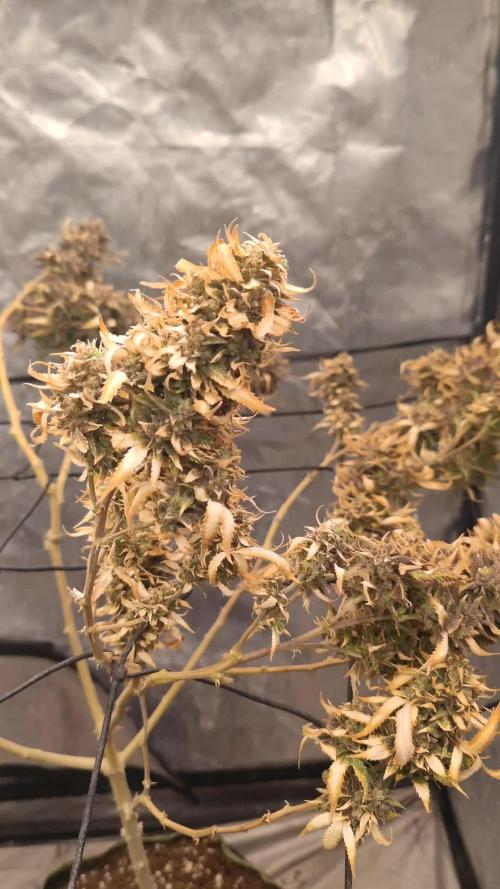
Bueno, ayer hice el ultimo riego, mas cantidad de lo habitual, y ya cuando seque, se corta, supongo que actualizaré fotos, conforme avance la semana, del corte y posterior proceso ya que dado que hubo araña y ciertos problemas, voy a hacer el budwashing que habitualmente hago.
Likes
Comments
Share


Likes
6
Share


@Chino8
Follow
Decided to start dark period(24-48hrs) day 85 mostly milky not much amber maybe some amber on the sugar leaves. I wanted to go 90+days with this auto but I needed the space in the tent for my photos and she looks almost ready, would’ve liked to see a little more amber but nevertheless I haven’t grown much at all so don’t have too much preference yet on trichomes. I’ll chop in a day or two and dry in my smaller tent and hopefully it goes well, my first harvest I dried too fast in low humidity and wasn’t that pleased with the end result. This time I’m planning on lowering exhaust speed and to not be so scared of 50+humidity in drying area and raise it to around 60humidity after a few days. Can’t think of anything else to write, but I’ll update after the chop and dry and 🙏 hopefully all goes well.

Likes
2
Share


@EmilianoGodaly
Follow
Terminamos otro cultivo, sino me equivoco este es el cultivo #15 de mi vida y seguimos buscando fenos y buscando una marihuana de mejor calidad. Siempre dispuesto a equivocarme y aprender, nunca hubo secretos ni claves en el cultivo, cada uno crea su propia biblia de cultivo, bajo su experiencia condiciones y interpretacion. Otra vez mas Gracias Marihuana por ser una planta tan noble y gracias a ustedes por ver mi cultivo...



Likes
35
Share


@bypado_farm
Follow
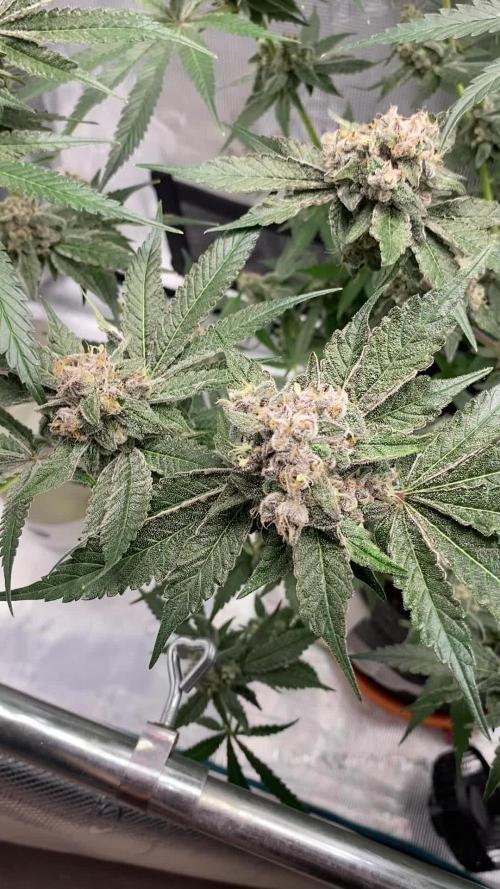
Plants are healthy and growing well.
0.5L of water each plant every 2/3 days