


Likes
Comments
Share


@420DeepGrow
Follow
💐 🍁 La variedad Mob Boss es una genética de cannabis rara y especial que ha podido ser salvaguardada y estabilizada por Anesia. Con sus flores extremadamente escarchadas y resinosas y su alta producción se ha hecho un nombre e inspira a todos los cultivadores que alguna vez la cultivaron. Los cogollos son impresionantemente cristalinos y a menudo de color rojo o pruple. Los efectos de Mob Boss son duraderos, extremadamente fuertes y rápidos. Tiene un contenido de THC de hasta el 28,7% y está especialmente recomendada para usuarios experimentados.
Mob Boss es una planta perfecta para los metodos SCROG, ya que producira grandes colas en ramas laterales bien entrenadas y continua creciendo mas densa hasta la proxima vez. Esta planta parece dar la mejor combinación de rendimiento y calidad cuando se cultiva hidropónicamente.
🌻 🚀 Consigue aquí tus semillas:
https://anesiaseeds.com/es/product/mob-boss/
💡 Mars Hydro TS 3000, como la lámpara de cultivo LED más grande de la serie TS, ofrece suficiente cobertura para un área de 4 × 4 pies con un precio asequible y rendimientos de calidad; a cambio, se puede aplicar tanto al cultivo doméstico como al cultivo comercial.
Potencia - 450w
Cobertura Vegetal – 5×5 pies
Cobertura de flores - 4 × 4 pies
La opción abrumadora para la mayoría de los productores que la aplican en tiendas de campaña.
Consigue aqui tu lámpara:
https://marshydro.eu/products/mars-hydro-ts-3000-led-grow-light/
📆 Semana 9:
Madurando como locas, esto va que vuela 😍, la resina esta cada vez mas presente ❄️ , los cogollos terminan de madurar.
Esta semana estará el TS-3000 de MarshHydro al 100% y 30cm de distancia.
Se estan desarrollando mejor que nunca, con una floracion mucho mas rapida, noto una gran mejoria gracias al Marshydro TS-3000.
Continuo con defoliaciones
A partir de ahora solo agua.

Likes
14
Share


@Whiteybulger1814
Follow
Day 31 of flower
Basically the girls are on autopilot, with the autopots and Gaia green there really isn't much to do, both methods are super user friendly and the basic needs that need to be meet are just ph water in the reservoir every couple days and then watch them stack buds on top of buds...Occasionally I move a branch over to another square in the net to make room but Basically after the last top feeding it's just watch and weight, pun intended....


Likes
7
Share


@GermanGrow182
Follow
Die zweite Reihe Photos hat richtig aufgeholt und ist fast so hoch wie die 2wochen älteren , aber noch nicht so verzweigt. Habe ja die beiden Haupttriebe nach außen gebogen, dadurch sprießen jetzt die Seitentriebe stark.die Special Queen Auto sind alle fleißig am blühen.es sind komische phenos geworden. Zwei sind sehr klein geblieben und werden nur wenig abwerfen. Da ich einen 4.run außerhalb der Doku habe, wo auch noch 6autos wachsen, ist es mir egal 🙂. Es läuft. Deas wichtigste sind die Photos und die machen,was sie sollen.. bis nächste Woche ✌️

Likes
3
Share


@GeminiCQC
Follow
As we enter week three, the stem is hardening on the fantasmo as she likes to flop over. No signs of any weird stress other than that plant flopping over, but the Mephisto's wedding is doing its own squat little thing.

Processing
Likes
9
Share


@Kushizlez
Follow
Harvest:
Everything dried up to 347 grams + 96 grams of super high quality trim. Overall I am not too pleased with the smoke of the product. Although the bud size, bag appeal, smell and taste are pretty much all there, the shitty burn is a deal breaker for me and the majority of this weed is quite frankly useless. Another downside is while smoking I’ve found 4 seeds in an ounce from almost every strain. Light leaks? At least I learned a ton, including how to get super good burn for my next crop. I’m hoping that curing for a month or so will improve the burn but I wouldn’t really count on it. I have seen weed dried for 4 days with no cure and no flush smoke clean and not go out once. I have been told that the key to white ashes/clean burn is proper mineral content in the soil and there is tons of scientific studies on cigar ash going back 100 years. Plants grown in a medium with high levels of decomposing organic matter, phosphorus, magnesium, chlorine and heavy metal ratio tend to produce black/grey ash. Whereas plants grown in a medium with a higher ratio of trace minerals like calcium carbonate and potassium in the form of wood ash, rock dusts, oyster shell flour and lower levels of decomposing organic matter will produce a dense, uniform white ash that rarely goes out. But this is still all theory until I test it to confirm for myself a few times. My last few outdoor harvests did not improve with curing at all so I’m hoping this will be the missing link. Plain peat moss and coco clearly lack essential minerals that help burn. If said theory is correct I should find a synthetic nutrient line with more trace minerals. Makes me wonder if growing if rockwool/basalt rock could improve burn in a hydro setup.
I think I did a fairly decent job for my first grow. I went wrong in a million different places but I still stuck it out and got some decent herb. Things went wrong early when I got black spot mold, nitrogen/magnesium deficiencies and powdery mildew. I corrected most of it but things didn’t get really bad until mid veg when I intentionally skipped a few feedings and defoliated quite heavily stunting the plants. I also didn’t even top or start LST until the 6-9th node which was really stupid and hurt my yield. My temperatures were all over the place from the learning curve. I was severely overwatering without realizing it. 100% peat moss is a shitty medium. I also fed way too late in flower (not what caused shitty burn). I also used synthetic nutrients in soil.
Zkittlez bonsai
Yield: 1.9g
Smell: 7/10 - sweet, candy, berry, gassy, piney hints
Bag appeal: 7/10 - slightly leafy/stemy
Crystal coverage: 7.5/10 - very impressed
Ash: 6/10 - flaky, mostly white/grey
Fire holding: 4/10 - stays lit for 10-30 seconds
Smoke: 6/10 - taste is decent, needs curing
High: 6/10 - indica dom
Comment: looks nice, smells nice, tastes nice, burns like shit.
43.5/70 = 62% 👎🗑️
Black Garlic #1
Yield: 53.6
Smell: 8/10 - gassy, piney, earthy, skunky
Bag appeal: 7/10 - slightly leafy/stemy
Crystal coverage: 7.5/10 - very impressed
Ash: 8/10 - thick, uniform white ash
Fire holding: 7.510 - stays lit for 45+ sec
Smoke: 7.5/10 - taste is good until the end
High: 7/10 - sativa dom
Comment: looks nice, smells nice, tastes nice, burns great but quite leafy.
52.5/70 = 75% 👍🔥
Black Garlic #2
Yield: 42.3
Smell: 7/10 - woody, earthy, tea
Bag appeal: 6.5/10 - slightly leafy/stemy
Crystal coverage: 7/10 - impressed
Ash: 6/10 - flaky, mostly white/grey
Fire holding: 4/10 - stays lit for 10-30 seconds
Smoke: 6/10 - taste is decent, needs curing
High: 8/10 - sativa dom
Comment: looks nice, smells nice, tastes nice, burns like shit.
44.5/70 = 63% 👎🗑️
Zkittlez
Yield: 39.4
Smell: 7/10 - sweet, candy, berry, gassy, piney hints
Bag appeal: 6.5/10 - slightly leafy/stemy
Crystal coverage: 7.5/10 - very impressed
Ash: 8/10 - thick, uniform white ashes
Fire holding: 8/10 - stays lit for seconds
Smoke: 7.5/10 - taste is decent, needs curing
High: 7/10 - indica dom
Comment: looks nice, smells nice, tastes nice, burns great but smalls didn’t fill out.
51.5/70 = 73% 👍🔥
Blackberry Breath #1
Yield: 57.5
Smell: 9/10 - sweet, grape, berry, gassy, earthy, hashy
Bag appeal: 8.5/10 - dense, sparkly buds
Crystal coverage: 9/10 - super impressed
Ash: 5/10 - flaky, mostly grey/blackish
Fire holding: 4/10 - stays lit for 10-30 seconds
Smoke: 5/10 - tastes like chalky shit
High: 6/10 - indica dom
Comment: looks amazing, smells amazing, tastes like shit, burns like shit.
46.5/70 = 66% 👎🗑️
Blackberry Breath #2
Yield: 76.1g
Smell: 6/10 - musky, tea, berry, herbal
Bag appeal: 8/10 - slightly leafy/stemy
Crystal coverage: 7.5/10 - very impressed
Ash: 5/10 - flaky, mostly grey/black
Fire holding: 4/10 - stays lit for 10-30 seconds
Smoke: 5/10 - taste is shit
High: 6/10 - indica dom
Comment: looks nice, smells shitty, tastes shitty, burns like shit.
41.5/70 = 59% 👎🗑️
Slurricane #4
Yield: 34.5g
Smell: 8.5/10 - gassy, deep piney, fuel, earthy,
Bag appeal: 8.510 - slightly leafy/stemy
Crystal coverage: 7.510 - impressed
Ash: 6/10 - flaky, mostly white/grey
Fire holding: 4/10 - stays lit for 10-30 seconds
Smoke: 6/10 - taste is decent
High: 6/10 - indica dom
Comment: looks amazing, smells amazing, tastes nice, burns like shit.
46.5/70 = 66% 👎🗑️
Badazz OG Cheese
Yield: 43.5g
Smell: 6.5/10 - musty, woody, cheesy, piney hints
Bag appeal: 6/10 - slightly leafy/stemy
Crystal coverage: 6/10 - very impressed
Ash: 5/10 - flaky, mostly white/grey
Fire holding: 4/10 - stays lit for 10-30 seconds
Smoke: 6/10 - taste is decent
High: 6/10 - sativa dom
Comment: looks like shit, smells decent, tastes decent, burns like shit.
39.5/70 = 56% 👎🗑️

Likes
17
Share


@Dunk_Junk
Follow
Wow she's turned on the trichomes this week!!!!!!!
Very frosty! Almost white.

Likes
15
Share

@NoProbation4Weed
Follow
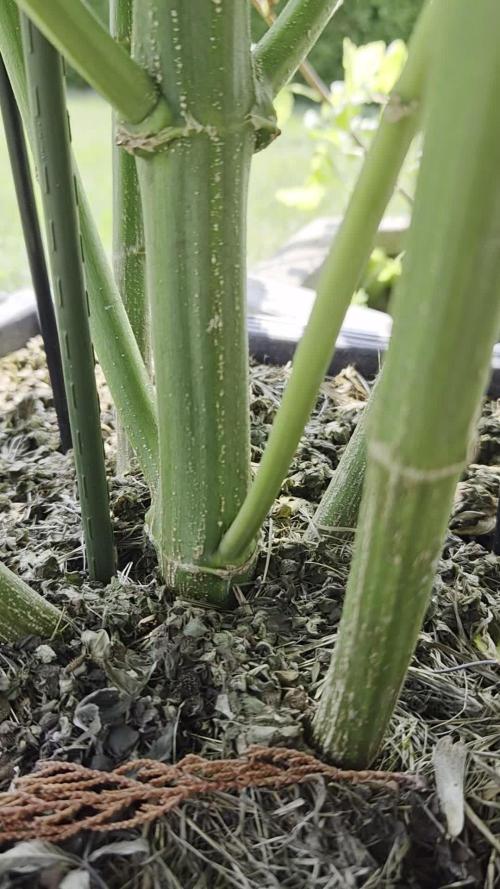
both plant are looking healthy. Its day 28 since flip to 12/12 light circle for the indoor plant. the outdoor plant shows some pre flowers and grows massive. Both got a little defoliation to provide some airflow in between the stems. The indoor Slushberry already gives some strong smell super fruity.
Likes
3
Share

@TTerpz
Follow
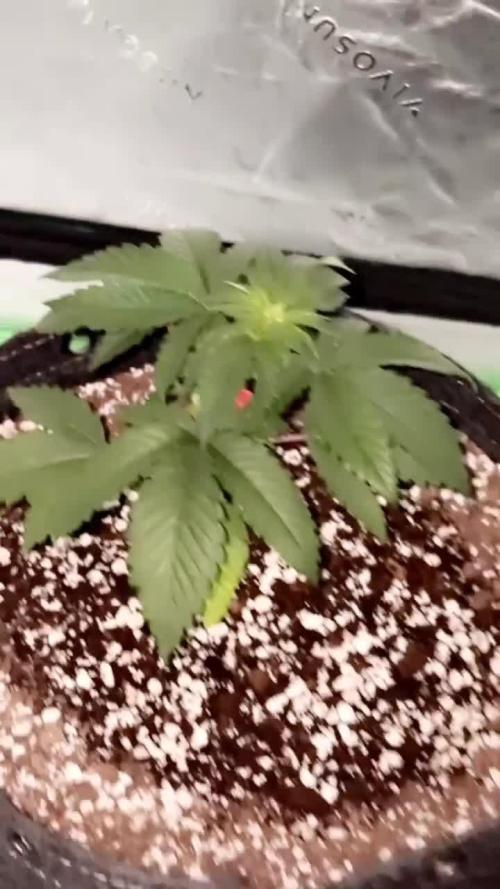
STARTED FOLLOWING WEEK 1 feeding chart lotus Fed with lotus 3/18/26
Watered plain - 3/21/26


Likes
19
Share


@Jokerdab13
Follow
Muy contento con los resultados unas flores con un aroma sorprendente y una genetics bastante productiva
Likes
2
Share


@Ryno1990
Follow
This big girl grew amazing with big fat solid buds covered with a layer of frost she grew very strong an vigorously her hole life

Likes
51
Share


@Corwinism
Follow
WEEK 8 (04/18/2021 - 04/24/2021)
Day 59: 04/18/2021
Defoliated some growth from each plant before I installed my custom-built SCRoG net made of: pvc piping, drywall screws, and jute twine for the netting. It’s slightly smaller than the tent, 41”x41” with a second level for another net. It fits perfectly, leaving plenty of room to work around the edges and move the fan around if needed.
Immediately after defoliation and installing the net, I watered using ½ strength Botanicare Hydroguard. Watering was different. I used a battery-powered liquid transfer pump to help water the plants a little faster and more efficiently. Also helps to reach the plants I can’t access as easily in the corner.
I am unable to test/collect any of the runoff at the moment since installing the net, which wouldn’t be an issue by itself, but my saucers are just barely large enough to fit the base of the 5 gallon pots into. I have no way of sticking a pH pen or TDS meter in the runoff. They simply won't fit between the pot and the saucer.
This is extremely unfortunate, as I am now unable to monitor the ppm of the soil with each watering. Will have to pick up some larger saucers soon or think of another solution.
-------------------------------------------------------------------------------------------------------------------------------------------
Day 61: 04/20/2021
‘Tis the season to be medicated. Happy Holidaze!
-------------------------------------------------------------------------------------------------------------------------------------------
Day 62: 04/21/2021
Upping the amount of water going into the pots this watering. Previously I was doing 1 gallon of water per 5 gallon pot. I’m increasing the amount of water to 1.5 gallons. Hopefully that will produce enough runoff for taking measurements. It’s going to be a painfully difficult task to take readings but I really need to know what the condition of the soil is right now. Will not be using any nutrients this time considering the runoff was kind of high when I fed on 4/10. This seems a little risky though since it has been 11 days since a nutrient feed, but I’d rather not burn the plants by blindly adding nutrients. Will return. Hopefully with measurements.
(some amount of time later)
Tap water: 245ppm, 6.1 pH (9 gallons)
pH Down: 30ml
JB#1 - 2730ppm, 7.0 pH
JB#2 - 2290ppm, (pH pen died again on this plant)
AP#1 - 2380ppm, 6.9 pH
AP#2 - 3610ppm (seems extremely high), 7.0 pH
GC#1 - 2320ppm, 6.9 pH
GC#2 - 2340ppm, 7.1 pH
I don’t know what was up with the measurements on the AP#2. The saucers the pots are sitting in are a little small so I think the ppm might have been reading high because the bottom of the fabric pot was sitting in the runoff. Maybe I’m just saying that to reassure myself. Either way, the 3000+ ppm seemed very off.
-------------------------------------------------------------------------------------------------------------------------------------------
Day 66: 04/24/2021
Defoliation + weaving/securing branches through SCRoG.
I'm not 100% sure that the SCRoG was the most optimal technique of choice given the very limited space within the grow tent. Also, I almost feel like I installed the screen a little late. Maybe not? Either way, I have read about them and the potential of increased yields, which got me excited enough to build one to try out for myself. I was aware going into it that there would be some difficulties using a SCRoG. I can no longer move my pots around is the main thing. Not being able to move the pots around has increased the difficulty factor of watering/feeding. I now have to access 3 different sides of the tent to get all 6 plants. I've clipped all the ties holding the branches down from previous LST sessions. There was just no way I was going to spend hours weaving in and out of all the ties trying to water each plant while also dealing with the difficulties of a SCRoG obstructing the work space. That would also wreck my poor back.
From here, things are going to get real exciting. Tomorrow (04/25) I am rescheduling the light cycle to 12/12 to initiate flowering. Another 60-70 days to go, growing buds and packing on trichomes. With that said, I'm excited to have made it through my very first full vegetative cycle. I've definitely made my fair share of mistakes, as expected, but as long as I keep learning from them future harvest will only continue to increase in quality and yield. Thank you for stopping by and checking out the diary this week! All your kind words and encouragement are fuel. Until next time! 🙏


Likes
9
Share


@GrowInBavaria
Follow
12.03.2024 – Ein Desaster mit Hoffnung
Wo fange ich an, wo höre ich auf…? In diesem Zeitraum bin ich umgezogen und musste mir überlegen, wie ich das Ganze manage, damit die Ernte am Ende optimal wird – was sie leider nicht wurde.😅
Die Pflanze war genau in der Zeit fertig, als ich mit meinem Umzug beschäftigt war und in den Urlaub geflogen bin. Also entschied ich mich dazu, sie vor meiner Abreise zu köpfen und aufzuhängen. Eigentlich wollte ich die gesamte Ernte wieder in DryFerms trocknen lassen, doch da ich mein Zeitmanagement dieses Mal überhaupt nicht im Griff hatte, wurde alles ziemlich kurzfristig. Die Buds mussten ja auch vorher noch getrimmt werden. Also ließ ich das bleiben und hängte sie einfach auf.
In meiner neuen Wohnung stellte ich schon mal ein Hygrometer auf, um die relative Luftfeuchtigkeit zu checken – 42 %. Schon ziemlich trocken, aber ich dachte mir nichts weiter dabei. Wird schon irgendwie klappen...
Dann flog ich in den Urlaub. Fünf Tage später war ich zurück. Die Ernte hing bereits einen Tag vor meiner Abreise. Als ich mein Zelt öffnete, sah ich das Desaster kommen: Das Hygrometer zeigte eine RLF von nur 32 % an. Die Buds waren staubtrocken. Die ganze Arbeit – für nichts. Besonders ärgerlich, denn von allen drei Pflanzen war diese die vielversprechendste, sowohl was die Terpene als auch den Ertrag betrifft.
Ich war kurz davor, alles wegzuschmeißen, weil ich mir das Elend nicht mehr anschauen konnte. Schlussendlich entschied ich mich aber doch dazu, die Ernte so gut es ging zu trimmen. Ein Desaster, das kann ich euch sagen! Die Hälfte aller Buds löste sich in Staub auf – kaum setzte ich die Schere an, zerfielen sie.
Am Ende blieben mir doch noch 32 g, allerdings extrem empfindlich. Curing? Keine Chance. Trotzdem wollte ich das Beste herausholen. Also packte ich die Ernte mit zwei Bovedas für sechs Tage in ein Glas – und siehe da: Die Buds nahmen die Feuchtigkeit auf, die sie brauchten! Am Ende hatte ich zumindest halbwegs vernünftiges Material.
Jetzt lagert alles in Grove Bags mit einem Boveda und wird genau beobachtet. Ich hoffe, dass daraus noch gutes, rauchbares Material wird!
Eins ist sicher: Die Dosidos Auto wird auf jeden Fall noch mal gegrowt – und dann richtig ✊!

Likes
4
Share


@Sinistergrow702
Follow
Plants are all doing great we are at the finish line am giving them a week more

Likes
5
Share


@xMuuy
Follow
Repotted her from the 4,4L pot into a much larger, 20L pot using only the pre-fertilized growmix from Floragard. Adjusted the amount of nutrients since she's in early flowering phase right now. Continuing LST as she develops new branches and therefore attempting to extend her over the whole pot width and beyond, trying to get the maximum amount of mainbuds.
Also bought a dehumidifier (Comfee MDDN-10DEN7) since theres too high humidity for her in flowering phase; especially because there is low airflow and no window in that tiny room (we peaked at 70-80% humidity at night, at ~20°C, before!). We set it up to be in 60% humidity right now.

Likes
16
Share


@HowtoBubatz
Follow
Finally I am getting started with my very first grow after 1 1/2 months of preparation.
The Seed got germinated in a Solution of 1ml C²O² and 29ml of Water.
Sadly the Seed opened over Night and the Sapling swam in the Solution.
I still set the Sapling in the prepared soil mix with Biobizz allmix, Biobizz light mix on the top where the plants sits and 5% Perlite extra.
lets see what happens with the plant because I am very curious.


Processing
Likes
5
Share


@Mr_nugs_lover_David
Follow
She's looking very healthy and strong after the transplant and I'm starting the lst on her too try to make a very nice and rounded bush full of tops. Let's see what happens with beauty, don't miss it! 💚 🌱 ✌️ 👨🌾

Likes
8
Share


@Mistertemps
Follow
One last week and chop chop. Strawberry n cream really looks like it could go another few weeks but I’m done lol. They all smell amazing!!!

Likes
2
Share


@YAMA47
Follow
Bien..ya corto el Stretch.. estiramiento a princ de flora..miden 70-80cm ..se estan llenando de tricomas.baje lampara a 50cm del dosel. Fertilize c Tricomas-namaste y con Flora Booster-namaste...en unos dias hago lavado de raices..y luego regare solo c agua c detox..p limpiar raices.¡
