Likes
3
Share
Another beautiful week with this lovely lady
Likes
9
Share
@Sudo17
Follow
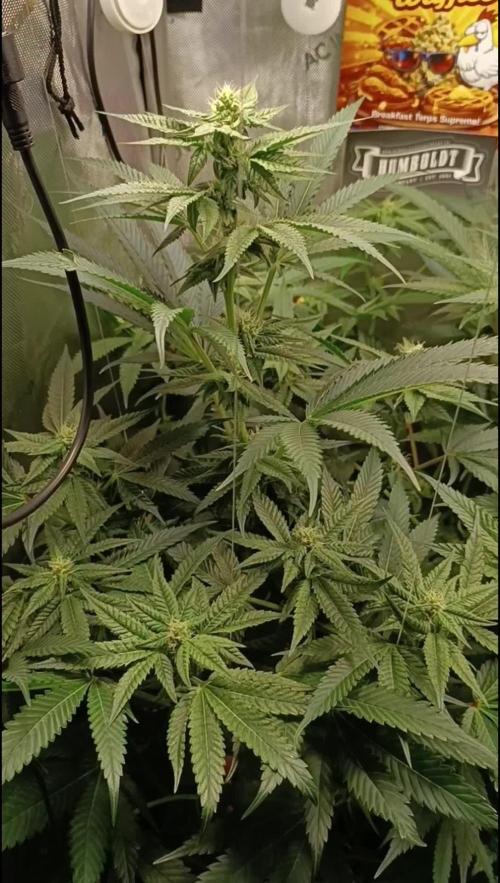
4/24/23 @ 12:30pm - We did something a little different today. Both plants given 1 gallon of campden water + 1 TSP RECHARGE + 1 TSP Mega Crop + 2 TSP Bloom. This should act like a flush of sorts but the water is loaded with nutes so hopefully this helps the plants turn more green. 4/26/23 @ 9pm - I checked on both plants tonight and the first inch or so of soil felt dry so I decided to water. pH'd 6.5 campden water + 1.75 tsp MegaCrop + 1 tsp Bloom + 1 tsp RECHARGE. 1.5 Gallons per plant. Still some yellowing and wilting but the leaves have straightened out since the wind burn adjustments. Hopefully they uptake all these nutrients, the smells are getting incredible. 4/28/23 @ 2:30pm - Checked on the girls today and I am happy to report they're finally starting to turn back to a nice shade of green. The wind burnt leaves have either died off or recovered. The smells are getting very strong and all the colas are super sticky. Hoping to see some fattening up over the next 2-4 weeks until harvest time. 4/29/23 @ 6pm - Both plants given 1 gallon of campden water + 1/2 tsp MC (4 grams) + 3/4 TSP Bloom + 1/2 TSP RECHARGE pH'd to 6.5 - First pistils starting to turn amber!
Likes
6
Share
@rvabudman
Follow
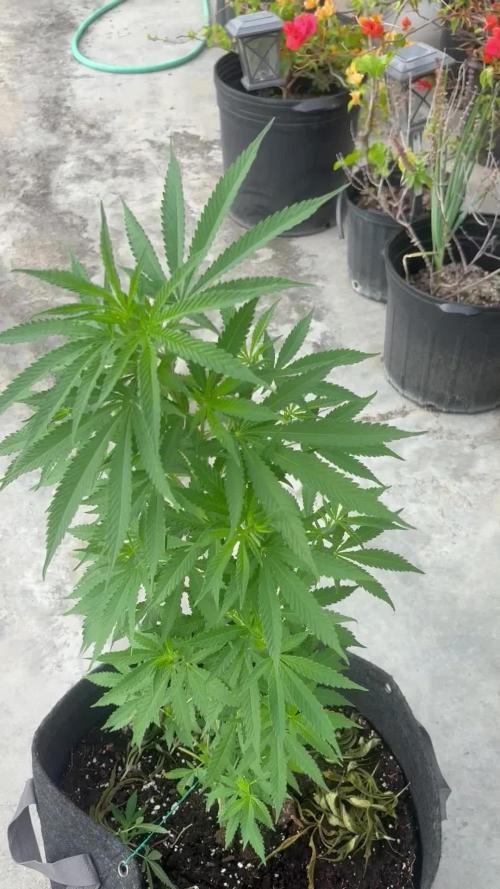
Graduated, and am off from work for a few weeks, so went overboard on photos. Plant is doing well, leaves are starting to turn yellow (strain trait). Can't wait for the harvest and being able legally gift my xmas ornaments to my cousins during our "cousins walk" at our family xmas party.
Likes
11
Share
@BudBeezy
Follow
Welcome to week 23 of my grow diary. Unfortunately, this is also the last week. During my daily check for mould, I noticed that one of the headbuds looked suspicious. The spot was right in the tip of one of the headbuds. In the video you can see that I have generously removed the tip. This was also the reason for the harvest. I actually wanted to leave the plant for a few more days but the mould made me decide to harvest it earlier. During the harvest, I discovered mould in the early stages in 2 other places. The flowers were trimmed wet and checked thoroughly. I hope you enjoyed my grow diary. If you have any questions, please feel free to ask me. All in all, I really liked this strain. Apart from the last case of mould, I had no problems with the plant. It survived the mainlining well. During this experiment I was able to gain a lot of experience for future grows. If I could travel back in time again, I would decide to leave fewer side shoots in the vegetative phase as it is already quite overgrown. Thank you for following me so far. I will give you an update after it has dried. See you next week ✌️
Likes
11
Share
@ibbzy
Follow
Flowers don’t look healthy…but we are getting there. 2nd tent has been bought and half way setup for next grow. Will have 2 tents going for next run. Im addicted to this grow stuff! So I didn't listen to advice of not removing leaves at Week 5 and went and removed and stripped....I regret it now. Bud development definitely slowed down and plants concentrated on growing out more leaves as it seems. Megacrop has been removed from feeding and just Myco Chun as a tea and Plagron 4-in-1 Green Sensation. Giving me an NPK ration of 1-9-11 Hopefully feed this for a week and then follow up with molasses feedings till harvest We shall see if that makes the buds develop a bit more. Buds getting denser and bigger by the day, had to purchase these bud hangers. So nifty. Just auto mode from now I guess
Likes
8
Share
@Organic_G
Follow
Mein bester und Ertragreichster grow kommt zum Ende…
Likes
20
Share
First week of just water no issues so far!
Likes
4
Share
@pzwags420
Follow
On the 5th week of flowering day 1 the girls are chugging along, growing bigger by the day and smelling excellent :). On day 5 the girls are putting on a lot of weight. I'm very excited about harvest:). On day 7 The girls are doing well. I had a small clog in my bluat system on one of my carrots. I have fixed the clog by massaging the small pipe that was clogged. it has been tough using powdered nutrients with this system as there has been a few clogs. I will be switching to water soluble nutrients with drip clean to keep lines clear on my next grow. I just need to make it through the next few weeks to harvest :)
Likes
62
Share
@Reyden
Follow
🔸Davvero una grande notizia! Una nuova collaborazione con @Spiderfarmer è iniziata e sono felice di poter creare dei contenuti per una azienda seria come la loro!!! Questa mattina è stata montata questa bellissima #SF2000 nella tenda da coltivazione più grande dove dovrà lavorare per far fiorire tutte le signorine che passeranno di qui prossimamente 😁😎🔥 Voglio fare i complimenti perché siete riusciti a creare veramente una luce bellissima con materiali super leggeri ed esteticamente geniali ❤️‍🔥oltre che consumare veramente poco (2.7 Umol/J)per il raggio di copertura ( 4x3 in crescita )(4x2 in fioritura ) e intensità uniforme in PPFD Mi piace molto anche il fatto che monta anche diodi IR utili per accelerare la fase di fioritura e aumentare la resa 💡 Ci saranno diversi aggiornamenti rimanete connessi e grazie ancora per essere passati a trovarmi 😃 https://www.instagram.com/reel/Cl_EEAbu_vQ/?igshid=YmMyMTA2M2Y= Funzionalità principali 2022 NUOVA VERSIONE COSTI DI ESERCIZIO INFERIORI E RENDIMENTI DI QUALITÀ SUPERIORE: Le luci progressive a LED SPIDER FARMER SF2000 utilizzano la più recente tecnologia LED ad alto rendimento oggi: diodi Samsung LM301B, alta efficienza energetica con 2,7 umol/J, creano la migliore penetrazione della luce del baldacchino. Copertura vegetale 3 x 4 piedi, fiore 2 x 4 piedi. Potenza estremamente elevata ma consuma solo 200 W di elettricità, rendendola più efficiente delle tradizionali lampade HID e di altre lampade per piante sul mercato. NUOVO DISPOSIZIONE DEI DIODI E DESIGN DIMMERANTE: Luci crescenti SF2000 aggiornate. Più perline leggere ai bordi, meno al centro. Aiuta a ottenere una PPFD più uniforme. e la manopola di regolazione della luminosità regola liberamente l'intensità della luce. Connessione multi-luce con regolazione unificata particolarmente vantaggiosa per un'ampia area di coltivazione indoor e piantagione commerciale. IDEALE PER TUTTE LE FASI DI CRESCITA: Eccellente spettro completo: bianco, blu, rosso e IR (3000K, 5000K, 660nm e IR 760nm). Diodi 3000K che forniscono più luce rossastra e 5000K che forniscono più luce bluastra. La luce rossa e IR da 660 nm è particolarmente utile durante la fioritura, dove accelera i tempi di fioritura e aumenta i raccolti. Trasforma i tuoi semi nella tua scorta. E la luce sembra abbastanza naturale, quindi è utile per monitorare accuratamente la salute delle piante. COSTRUZIONE BEN FATTA E SOLIDA: nessuna ventola senza rumore. Il driver ad alta efficienza, affidabile e staccabile ha un'ottima dissipazione del calore. Il dissipatore di calore in alluminio è spesso e robusto, coperture protettive per i cavi; Imballaggio intuitivo. Componenti di qualità significano che la luce dura più a lungo, SF Light si prende cura di te con un design più attento, puoi facilmente risparmiare denaro senza acquistare frequentemente luci. In qualità di produttore professionale di luci di coltivazione a LED da oltre 10 anni. Spider Farmer ha sempre insistito per creare attrezzature per la semina domestica più efficienti, adatte e di alta qualità per la crescita delle piante e si impegna a diventare un partner fidato per ogni coltivatore! Riceverai una lampada da coltivazione Spider Farmer SF2000, un manuale di istruzioni, un paio di ganci d'argento, un paio di ganci neri.
Likes
21
Share
@Bluemels
Follow
Tag 102: Die letzten Tage sind angebochen, die Runtz ist schön bunt geworden, ich senke jetzt noch die Temperatur und Luftfeuchtigkeit.
Likes
8
Share
Third one in the video, candy kush express, beautiful compact plant, she is growing fast and has a beautiful structure. She won't need long to finish her flower cycle ⚡
Likes
4
Share
I've been pulling the top fan leaves to stop the main stem growing any taller and repotted them into 4L pots, once they show roots I'll flip them over to flower. They've all outgrown their mutations but the apple fritter has a slight varigation.
Likes
18
Share
Sie bekommen Ph kontrolliertes Gieswasser👍 zurzeit noch mit hesi TNT und plagron Lemon Kick Pro Pflanze wird mit ca 1 Liter gegossen und dazu bald mit CalMag Pro von Plagron Bisher finde ich performt die WOB M100 Pro super mir gefällt der Wuchs der Critical Runtz unter ihr 🙂
Likes
5
Share
thought i will make the effort and upload the whole diary at once... would be a shame not to have it in my portfolio ;) i'm still amazed by the looks of the buds...fat and sticky- gorilla glue ;) she took my innovations better than expected...not much trim...the whole damn plant is one big fat sticky bud...dry weight of trimmed buds. blew me away!!!! heavy weight auto champion l!!!! hope my meth & fastberry will do as good,
Likes
11
Share
Seriøst jeg er bare så glad for jeg har fået lov til at få sponsor frø fra KANNABIA, de overrasker mig hverdag jeg står op og kigg Til dem ! Undskyld der er gået halvanden uge siden sidst 🙏🏼🧡🖤☮️💚de bedste hilsner fra jeres Nicogreen 💚💚💚🧡🖤
Likes
7
Share
@refusing3
Follow
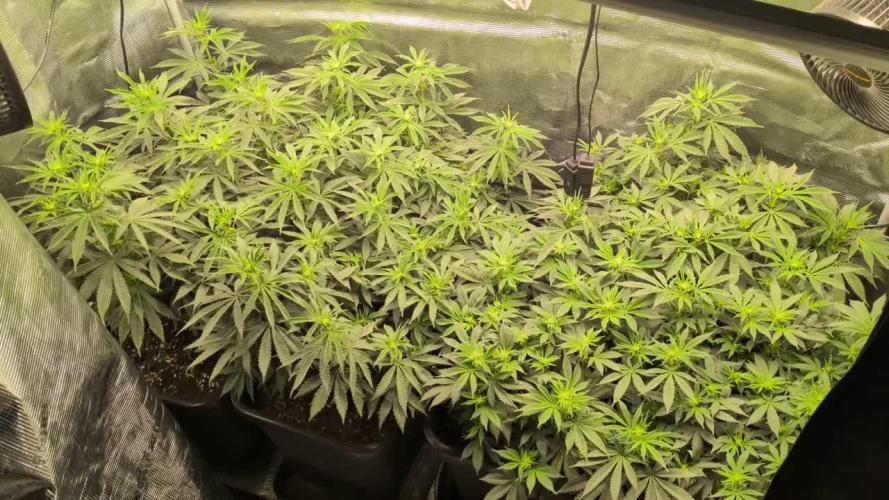
Day 29 of vegetation: raise the humidity to 60% trichomes on the leaves can be seen with the naked eye. I have never seen trichomes appear on vegetation before Day 31 of vegetation: remove 10 large leaves and made an LST. Now literally ALL the lower leaves receive 100% of the light After 35 days of vegetation, the plant looks like it ready to start flowering. Watering volume week 5: Day 29-35 - 400 ml per day
Likes
4
Share
@CalGonJim
Follow
7/28 1220AM MONDAY.... Bubbles are looking ok, I need to trim them back to 4 colas, I am really stressing them with small space limitations, and temps at 80 to 81 7/29 Tuesday 5:45 AM💦💦 6:15 AM water with methylene blue two pills of nitric boost amino acid, five drops of Quick Sorb and I added bud factor X today and a quarter mL per liter of rhino silica💦💦💦. 1030 AM I don’t know what I’m gonna do. It turns out the bubbles plants are terrible. The stems are all very weak and they’re growing bushy at the top. I didn’t get them separated so all of the side branches grew up really long it’s completely useless. It is absolute this plant. It will be thrown in the garbage. Can you fucking believe I have to throw another entire plant in the fucking garbage😡😡😡😡. TREVOR plant cut down to 2 colas only, very top heavy not liking my grow space, had 2 more than I wanted so it's all fucked.... will remove shitty small colas and get maybe 2 good colas per plant, not expecting much. 1219pm....HOLY SHIT I FUCKED THESE.....TOOK OFF SOME COLAS.....NOT ENOUGH SPACE AND I PUSHED THEM TOO FAR.....I CAN FIX IT 7/30 1215am found a GREAT science link::: ""https://www.frontiersin.org/research-topics/8125/cannabis-genomics-breeding-and-production/magazine"". 345am PROLINE WILL BE HERE TODAY.ALL RESEARCH INDICATES PROLINE WILL PROTECT FROM HEAT STRESS!!!! 11:30 AM they are good again they are recovering from heavy defoliation half of the plant was taken off of one of them. I pushed it a little far but today they are recovering from heat and lack of air and lack of space the leaves are reaching up and they are not folding under heat stress. They look good today. Fast recovery heavy amino yesterday.👍👍👍👍🚨🚨🚨🚨 🚨🚨🚨🚨🚨🚨🚨🚨 GOT THE AMINOS AND HERE IS THE GROK RESULT OF MY MIX.......🚨🚨🚨🚨🚨🚨🚨🚨 The effects of applying essential amino acids (EAAs), proline, trimethylglycine (TMG), and glutamine to cannabis plants can be significant, as these compounds act as biostimulants, influencing growth, stress resilience, and secondary metabolite production. The available research, primarily from studies on amino acids in plants, including cannabis, provides insights into their roles, though specific data on this exact combination is limited. Below, I summarize the effects of each compound on cannabis plants, drawing from relevant studies, and infer potential synergistic effects based on their known roles in plant physiology. Note that TMG (betaine) has less direct research in cannabis, so some effects are extrapolated from other plants. ### 1. Essential Amino Acids (EAAs) EAAs (e.g., leucine, lysine, methionine, etc.) are critical building blocks for proteins and play roles in plant metabolism and stress response. In cannabis: - **Growth and Development**: EAAs enhance protein synthesis, supporting shoot and root growth. Foliar or soil application of EAAs (e.g., 150–300 mg/L) increases leaf chlorophyll, shoot biomass, and root development in various plants, likely applicable to cannabis.[](https://www.nature.com/articles/s41598-022-21273-6) - **Nutrient Uptake**: EAAs like methionine and lysine improve nutrient absorption (e.g., nitrogen, iron) by acting as chelators, potentially enhancing cannabis nutrient efficiency in hydroponic or soil systems.[](https://cannabisindustryinstitute.com/news/amino-acids-what-they-mean-to-your-cannabis-grow/)[](https://mycsainc.com/newsletter/en/2023/03/03/amino-acids-and-their-function-in-plants/) - **Stress Mitigation**: EAAs, particularly methionine, support antioxidant production (e.g., glutathione), reducing oxidative stress from drought, salinity, or high light, common in cannabis cultivation.[](https://www.frontiersin.org/journals/plant-science/articles/10.3389/fpls.2020.00928/full)[](https://www.ncbi.nlm.nih.gov/pmc/articles/PMC9008891/) - **Cannabinoid/Terpene Production**: Limited evidence suggests EAAs may influence secondary metabolism. For example, methionine could enhance sulfur-containing compounds, potentially affecting terpene profiles in cannabis.[](https://www.ncbi.nlm.nih.gov/pmc/articles/PMC9008891/) **Application Notes**: EAAs are often applied via foliar spray (150–300 mg/L) or soil drench. Overuse may lead to nitrogen imbalance, so moderation is key.[](https://cannabisindustryinstitute.com/news/amino-acids-what-they-mean-to-your-cannabis-grow/) ### 2. Proline Proline is a non-essential amino acid that accumulates in plants under stress and serves multiple functions: - **Stress Tolerance**: Proline acts as an osmolyte, stabilizing cell membranes and scavenging reactive oxygen species (ROS) during drought, salinity, or temperature stress. In cannabis, exogenous proline (e.g., 50–100 mM) may enhance tolerance to environmental stressors, improving resilience in outdoor or controlled environments.[](https://www.researchgate.net/publication/349966775_THE_ROLE_AND_IMPORTANCE_OF_AMINO_ACIDS_WITHIN_PLANTS_A_REVIEW)[](https://pmc.ncbi.nlm.nih.gov/articles/PMC3548871/) - **Limited Growth Effect**: Proline alone is a poor nitrogen source for growth. Studies on Arabidopsis show it has a neutral or inhibitory effect on growth when used as the sole nitrogen source, suggesting it’s better for stress response than biomass accumulation.[](https://www.frontiersin.org/journals/plant-science/articles/10.3389/fpls.2023.1281495/full) - **Cannabis-Specific**: Proline helps cannabis maintain water balance, potentially improving resistance to extreme temperatures, which is critical for outdoor grows.[](https://cannabisindustryinstitute.com/news/amino-acids-what-they-mean-to-your-cannabis-grow/) **Application Notes**: Foliar or root application (50–100 mg/L) is effective for stress mitigation. High doses may inhibit growth if not balanced with other nutrients.[](https://www.frontiersin.org/journals/plant-science/articles/10.3389/fpls.2023.1281495/full)[](https://www.researchgate.net/publication/349966775_THE_ROLE_AND_IMPORTANCE_OF_AMINO_ACIDS_WITHIN_PLANTS_A_REVIEW) ### 3. Trimethylglycine (TMG, Betaine) TMG is less studied in cannabis but known as an osmoprotectant and methyl donor in other plants: - **Stress Protection**: TMG stabilizes proteins and membranes under salinity, drought, or temperature stress, similar to proline. It may protect cannabis plants in harsh conditions, maintaining photosynthetic efficiency.[](https://www.mdpi.com/2311-7524/9/7/807) - **Methylation Support**: TMG donates methyl groups, potentially enhancing secondary metabolite synthesis (e.g., cannabinoids, terpenes), though direct evidence in cannabis is lacking. Its role in methylation could support metabolic pathways linked to EAAs and glutamine. - **Growth Effects**: Limited data suggest TMG may improve chlorophyll content and photosynthesis, indirectly supporting biomass in cannabis. **Application Notes**: TMG is typically applied at 0.5–2 g/L via foliar spray. Its effects in cannabis are inferred from other crops, so careful experimentation is needed. ### 4. Glutamine Glutamine is a conditionally essential amino acid central to nitrogen metabolism: - **Growth Promotion**: Glutamine (10–1000 mg/L) significantly enhances shoot elongation, root growth, and chlorophyll content in plants like lettuce and hibiscus, likely benefiting cannabis vegetative growth. In cannabis, it may support lush foliage and robust rooting in hydroponics.[](https://www.scielo.br/j/oh/a/GZxMgqXb9wm7bsCTv4WwPdc/?lang=en)[](https://www.degruyterbrill.com/document/doi/10.1515/opag-2019-0016/html)[](https://www.degruyterbrill.com/document/doi/10.1515/opag-2019-0016/html?lang=en) - **Nitrogen Assimilation**: As a primary nitrogen acceptor, glutamine improves nitrogen use efficiency via the glutamine synthetase/glutamate synthase cycle, enhancing nutrient uptake in cannabis.[](https://academic.oup.com/jxb/article/58/9/2339/544408)[](https://www.frontiersin.org/journals/plant-science/articles/10.3389/fpls.2019.01743/full) - **Stress Response**: Glutamine supports proline synthesis, boosting stress tolerance. It also contributes to chlorophyll and protein synthesis, improving photosynthesis and yield potential in cannabis.[](https://www.mdpi.com/2311-7524/8/12/1110)[](https://www.frontiersin.org/journals/plant-science/articles/10.3389/fpls.2019.01743/full) - **Secondary Metabolism**: Glutamine is a precursor to glutamate, which influences GABA, arginine, and proline synthesis, potentially affecting cannabinoid or terpene production indirectly.[](https://www.frontiersin.org/journals/plant-science/articles/10.3389/fpls.2019.01743/full) **Application Notes**: Foliar sprays (250–1000 mg/L) or root application twice weekly are effective. Glutamine at 250 mg/L combined with other amino acids (e.g., glycine) shows synergistic growth effects.[](https://www.degruyterbrill.com/document/doi/10.1515/opag-2019-0016/html) ### Synergistic Effects on Cannabis - **Growth and Yield**: The combination of EAAs, glutamine, and proline may enhance vegetative growth and biomass. Glutamine and EAAs drive protein synthesis and nitrogen uptake, while proline supports tissue integrity under stress. TMG likely amplifies these effects by improving cellular hydration and methylation, potentially increasing leaf area and bud quality.[](https://www.mdpi.com/2311-7524/8/12/1110)[](https://www.nature.com/articles/s41598-022-21273-6) - **Stress Resilience**: Proline and TMG act as osmoprotectants, while EAAs and glutamine bolster antioxidant systems, collectively improving cannabis resilience to drought, salinity, or temperature extremes common in cultivation.[](https://www.mdpi.com/2311-7524/9/7/807) - **Secondary Metabolites**: Glutamine and TMG may enhance cannabinoid and terpene production by supporting metabolic pathways (e.g., methylation, nitrogen metabolism). EAAs like methionine could influence sulfur-based terpenes. However, direct evidence for cannabinoid enhancement is sparse.[](https://www.ncbi.nlm.nih.gov/pmc/articles/PMC9008891/) - **Nutrient Efficiency**: Glutamine and EAAs improve nitrogen and micronutrient uptake, while TMG may enhance nutrient transport, optimizing cannabis growth in nutrient-limited systems like hydroponics.[](https://mycsainc.com/newsletter/en/2023/03/03/amino-acids-and-their-function-in-plants/) ### Potential Risks and Considerations - **Inhibition at High Doses**: High concentrations of proline or certain EAAs (e.g., lysine, valine) can inhibit growth if used as sole nitrogen sources. Balanced mixtures mitigate this, as glutamine can antagonize inhibitory effects of proline or other amino acids.[](https://www.frontiersin.org/journals/plant-science/articles/10.3389/fpls.2023.1281495/full) - **Nitrogen Overload**: Excessive EAAs or glutamine may lead to nitrogen toxicity, causing leaf burn or stunted growth in cannabis. Monitor plant response and maintain balanced nutrient solutions.[](https://cannabisindustryinstitute.com/news/amino-acids-what-they-mean-to-your-cannabis-grow/) - **TMG Metabolism**: TMG may increase trimethylamine production in the soil microbiome, potentially affecting cannabis root health if not managed. Healthy soil microflora can mitigate this.[](https://cannabisindustryinstitute.com/news/amino-acids-what-they-mean-to-your-cannabis-grow/) - **Application Timing**: Foliar sprays (150–500 mg/L for EAAs, glutamine, proline; 0.5–2 g/L for TMG) during vegetative growth or early flowering maximize benefits. Avoid overuse during late flowering to prevent nutrient imbalances affecting bud quality. ### Cannabis-Specific Insights - **Hydroponics and Soil**: In hydroponic systems, EAAs and glutamine ensure efficient nitrogen delivery, while proline and TMG support stress resistance in fluctuating pH or nutrient conditions. In soil, maintaining microflora is crucial, as it naturally supplies amino acids; supplementation should be moderate.[](https://cannabisindustryinstitute.com/news/amino-acids-what-they-mean-to-your-cannabis-grow/)[](https://www.ncbi.nlm.nih.gov/pmc/articles/PMC9008891/) - **Cultivar Variability**: Cannabis cultivars differ in nutrient demands and stress responses. Sativa-dominant strains may benefit more from proline and TMG for stress tolerance, while indica strains may respond better to EAAs and glutamine for dense bud growth. Testing is needed. - **Secondary Metabolites**: While amino acids influence secondary metabolism, direct effects on THC or CBD levels are unconfirmed. Glutamine and TMG may indirectly enhance terpene diversity via improved photosynthesis and methylation.[](https://www.ncbi.nlm.nih.gov/pmc/articles/PMC9008891/) ### Practical Recommendations "🚨🚨🚨🚨"🚨🚨🚨🚨"🚨🚨🚨🚨 - **Dosing**: Apply EAAs (150–300 mg/L), glutamine (250–500 mg/L), proline (50–100 mg/L), and TMG (0.5–1 g/L) via foliar spray or root drench twice weekly during vegetative growth and early flowering. - **Combination**: Use a balanced mix (e.g., 250 mg/L EAAs + 250 mg/L glutamine + 50 mg/L proline + 500 mg/L TMG) to avoid inhibition. Test on a small batch first.[](https://www.frontiersin.org/journals/plant-science/articles/10.3389/fpls.2023.1281495/full) - **Monitoring**: Check for signs of nitrogen toxicity (dark green leaves, clawing) or stress relief (improved vigor, greener leaves). Adjust doses based on plant response. "🚨🚨🚨🚨"🚨🚨🚨🚨"🚨🚨🚨🚨. - **Synergy with Nutrients**: Pair with balanced NPK fertilizers and micronutrients (e.g., iron, calcium) to enhance uptake.[](https://www.degruyterbrill.com/document/doi/10.1515/opag-2019-0016/html) - **Cultivation Context**: In hydroponics, use lower doses to avoid nutrient lockout. In soil, ensure healthy microbial activity to complement amino acid supplementation.[](https://cannabisindustryinstitute.com/news/amino-acids-what-they-mean-to-your-cannabis-grow/) ### Evidence Gaps - **Specific Combination**: No studies directly address EAAs, proline, TMG, and glutamine together in cannabis. Effects are inferred from individual amino acid studies and general plant research. - **Cannabinoid Impact**: Limited data on how these compounds affect THC/CBD levels. More research is needed on secondary metabolite pathways.[](https://www.ncbi.nlm.nih.gov/pmc/articles/PMC9008891/) - **TMG in Cannabis**: TMG’s effects are extrapolated from other crops. Cannabis-specific trials are needed to confirm benefits. ### Conclusion Applying EAAs, proline, TMG, and glutamine to cannabis plants can enhance growth, stress tolerance, and nutrient uptake, with potential benefits for yield and secondary metabolite production. EAAs and glutamine drive biomass and nitrogen efficiency, proline and TMG bolster stress resilience, and their combination may optimize cannabis health in challenging environments. However, careful dosing and monitoring are crucial to avoid inhibition or toxicity. For best results, test small-scale applications and consult with a horticulturist familiar with cannabis cultivation. If you want more details on application methods, specific cultivars, or further searches for cannabis-related studies, let me know!""🚨🚨🚨🚨 🚨🚨 7/31 125am!!!!! Adding L-glycine to the combination of essential amino acids (EAAs), proline, trimethylglycine (TMG), and glutamine can further influence the effects on cannabis plants, as glycine is a non-essential amino acid with unique roles in plant physiology. Below, I outline the potential effects of L-glycine alone and in combination with the previously mentioned compounds, focusing on their impact on cannabis growth, stress response, and secondary metabolite production. Since specific studies on this exact combination in cannabis are lacking, I’ll integrate findings from plant science and infer synergistic effects based on known mechanisms. I’ll keep it concise and tailored to cannabis cultivation. ### Effects of L-Glycine on Cannabis Plants L-Glycine is a simple amino acid involved in protein synthesis, stress response, and metabolic pathways: - **Growth Promotion**: Glycine (50–500 mg/L) enhances shoot elongation, root growth, and chlorophyll content in plants like lettuce and rice, likely benefiting cannabis vegetative growth. It serves as a nitrogen source and supports protein synthesis, complementing EAAs and glutamine. - **Stress Tolerance**: Glycine acts as a precursor to glutathione, a key antioxidant, reducing oxidative stress from drought, salinity, or high light. In cannabis, it may improve resilience in challenging environments (e.g., outdoor grows or high-intensity indoor setups). - **Secondary Metabolism**: Glycine is a precursor to purines and chlorophyll, potentially enhancing photosynthesis and energy metabolism. It may indirectly influence cannabinoid and terpene production by supporting metabolic pathways, though direct evidence in cannabis is limited. - **Nutrient Uptake**: Glycine chelates micronutrients (e.g., iron, zinc), improving their availability, which is critical for cannabis in hydroponic or nutrient-poor soil systems. **Application Notes**: Foliar sprays or root drenches (100–500 mg/L) are effective, often applied twice weekly during vegetative growth or early flowering. ### Synergistic Effects with EAAs, Proline, TMG, and Glutamine Adding L-glycine to the mix may enhance the effects on cannabis plants in the following ways: 1. **Enhanced Growth and Biomass**: - **Glycine + EAAs/Glutamine**: Glycine complements EAAs and glutamine in protein synthesis and nitrogen metabolism. Studies show glycine (250 mg/L) combined with glutamine enhances shoot and root growth in plants, likely amplifying cannabis vegetative vigor and bud development. - **Synergy**: Glycine’s role in chlorophyll synthesis boosts photosynthesis, supporting the energy demands of EAA-driven protein synthesis and glutamine’s nitrogen assimilation, potentially increasing leaf area and yield. 2. **Improved Stress Resilience**: - **Glycine + Proline/TMG**: Glycine and proline both contribute to glutathione production, enhancing antioxidant defenses. TMG’s osmoprotectant properties further stabilize cells under stress. Together, they may improve cannabis tolerance to drought, heat, or salinity, maintaining growth in adverse conditions. - **Cannabis-Specific**: This combination could be particularly beneficial for outdoor cannabis or indoor setups with inconsistent temperature/humidity, reducing leaf wilting or nutrient stress. 3. **Secondary Metabolite Production**: - **Glycine + Glutamine/TMG**: Glycine and glutamine are precursors to metabolic pathways (e.g., GABA, purines) that may influence cannabinoid and terpene synthesis. TMG’s methyl donation could enhance these pathways by supporting enzyme activity. While direct evidence is sparse, this stack may increase terpene diversity or cannabinoid yield in cannabis buds. - **EAAs Contribution**: Methionine (an EAA) and glycine may support sulfur-containing compounds, potentially enriching terpene profiles. 4. **Nutrient Efficiency**: - **Glycine + EAAs/Glutamine**: Glycine’s chelating properties enhance micronutrient uptake, complementing EAAs and glutamine’s role in nitrogen assimilation. This could optimize nutrient use in hydroponic cannabis systems, reducing nutrient lockout. - **TMG Synergy**: TMG’s role in cellular hydration may improve nutrient transport, amplifying glycine’s effects on micronutrient availability. ### Potential Risks and Considerations - **Inhibition at High Doses**: High glycine doses (1000 mg/L) may inhibit growth by disrupting nitrogen balance, especially if combined with EAAs or glutamine. Studies on Arabidopsis show glycine can be toxic as a sole nitrogen source, so balanced mixtures are crucial. - **Nitrogen Overload**: Adding glycine to EAAs and glutamine increases nitrogen input, risking toxicity (e.g., leaf burn, stunted growth) in cannabis. Monitor for dark green leaves or clawing and adjust doses. - **Competition for Absorption**: Glycine, EAAs, and glutamine may compete for root or foliar uptake, reducing efficacy. Split applications (e.g., glycine in the morning, EAAs/glutamine post-light cycle) can help. - **TMG Interaction**: Glycine and TMG both influence methylation pathways, but excessive methyl donors could disrupt metabolic balance in sensitive plants. Stick to moderate doses (e.g., 100–500 mg/L glycine, 0.5–1 g/L TMG). - **Cultivar Variability**: Cannabis strains (e.g., sativa vs. indica) differ in nutrient and stress responses. Glycine’s benefits may be more pronounced in stress-prone sativas or nutrient-sensitive hybrids. ### Practical Recommendations - **Dosing**: Combine glycine (100–500 mg/L), EAAs (150–300 mg/L), glutamine (250–500 mg/L), proline (50–100 mg/L), and TMG (0.5–1 g/L) in a balanced foliar spray or root drench. Apply twice weekly during vegetative growth and early flowering. - **Application**: Use foliar sprays for rapid uptake during vegetative stages or stress events. Root drenches suit hydroponic systems. Test on a small batch to assess plant response. - **Monitoring**: Watch for nitrogen toxicity (dark, curled leaves) or stress relief (greener, more vigorous plants). Adjust concentrations based on cultivar and growth stage. - **Synergy with Nutrients**: Pair with balanced NPK fertilizers and micronutrients (e.g., iron, calcium) to maximize glycine’s chelating benefits. Ensure adequate magnesium for chlorophyll synthesis. - **Cultivation Context**: In hydroponics, use lower doses to avoid nutrient imbalances. In soil, maintain healthy microbial activity, as microbes naturally produce glycine and other amino acids. ### Evidence Gaps - **Specific Combination**: No studies address glycine combined with EAAs, proline, TMG, and glutamine in cannabis. Effects are inferred from individual amino acid studies and general plant research. - **Cannabinoid/Terpene Impact**: While glycine may support secondary metabolism, direct effects on THC/CBD or terpene levels are unconfirmed. Cannabis-specific trials are needed. - **TMG and Glycine**: Their combined effects on methylation in cannabis are speculative, as most TMG research focuses on other crops. ### Conclusion Adding L-glycine to EAAs, proline, TMG, and glutamine likely enhances cannabis growth, stress tolerance, and nutrient efficiency by supporting protein synthesis, antioxidant production, and micronutrient uptake. The combination may improve vegetative vigor, bud quality, and resilience to environmental stressors, with potential (but unconfirmed) benefits for cannabinoid and terpene production. Careful dosing and monitoring are essential to avoid nitrogen toxicity or absorption competition. Start with low doses, test on a small scale, and consult a cannabis cultivation expert for tailored advice. If you want me to search for more studies, focus on a specific aspect (e.g., glycine’s role in terpene synthesis), or provide application protocols for a particular cannabis strain, let me know!"""
Likes
Comments
Share
This girl is purpling out I guess because of the weather. She a beauty and she has seeds from the male Durban Skunk…these should be some amazing seeds I await her taste when she is ripe.