







Likes
95
Share


@Tonino
Follow
long storie this week what i though was foxtail was finally my girl going back in veg take a minute to figure out why thanks to my wolfpack we finally figure there was a problem whit my timer for a reason unknown the switch for 1am to 2:30 am were rise so in the middle of the night the light was lighting for 90 minute so that completely flip my plant back to veg so now this is fix but the girls are doing some reflowering on top of flower its looking weird will see how it goes stay tune
as for her she's not ready looking at trichomes
Smooth Smoke Feminised Seeds by the cannabis seeds breeder Tropical Seeds, is a Photoperiod Feminised marijuana strain. This Feminised seed grows well in Indoors, Outdoors conditions. This strain has (Pakistan Chitral Kush x Nepal Highland P3 ) x Pakistan Chitral Kush Genetics. It has a Unknown THC Content. The CBD content of the strain is Unknown. This strain can be used to treat a variety of medical conditions including, Pain.
BREEDER Tropical Seeds
GENETICS (Pakistan Chitral Kush x Nepal Highland P3 ) x Pakistan Chitral
VARIETY Mostly Indica
FLOWERING TYPE Photoperiod
SEX Feminised
GROWS Indoors, Outdoors
FLOWERING TIME 55 - 60 days
MEDICAL CONDITIONS Pain
MEDICINAL PROPERTIES Especially good for pain relief.
TASTE / FLAVOUR Berry, Candy, Sweet, Vanilla
EFFECT Powerful, Relaxing

Likes
17
Share


@4chuk
Follow
Dec. 4 - Week 9 begins.
Dec. 6 - I removed some dead and dying leaves.
Dec. 7 - Photo update.
Dec. 10 - Timelapse uploaded. This poor girl, the sometimes infrequent waterings may yet be her demise. In the video after the plant droops the leaves come back much more yellow since they're being sacrificed for the greater good. I've been aware that plants do this for many years, but I think it's still pretty neat to watch happen over just a few seconds.

Likes
19
Share


@Poleeg1986
Follow
Hi brothers!😊✌️ What do you think about it?)
Thanks a lot for your any coments) Have a great harvest all!😉😁

Likes
74
Share


@Rasta_Faraev
Follow
26.10.21.Уххх, 56 дней, 8 недель пролетели. Банана проявляет себя как индикодоминант, вытянулась слабо по сравнению с моими прошлыми гровами, но это плюс. Межлоузлия нютоже короткие, коллы толстые и их реально много. Мне проще формировать скрог. Продолжаем полет. Кормлю базой PF, иногда снижая дозу для усвоения 👍🏻
Скоро продолжим, спасибо за ваше внимание.не стесняйтесь лайкать и писать свое мнение в комментариях🙏

Likes
7
Share

@Sundancers
Follow
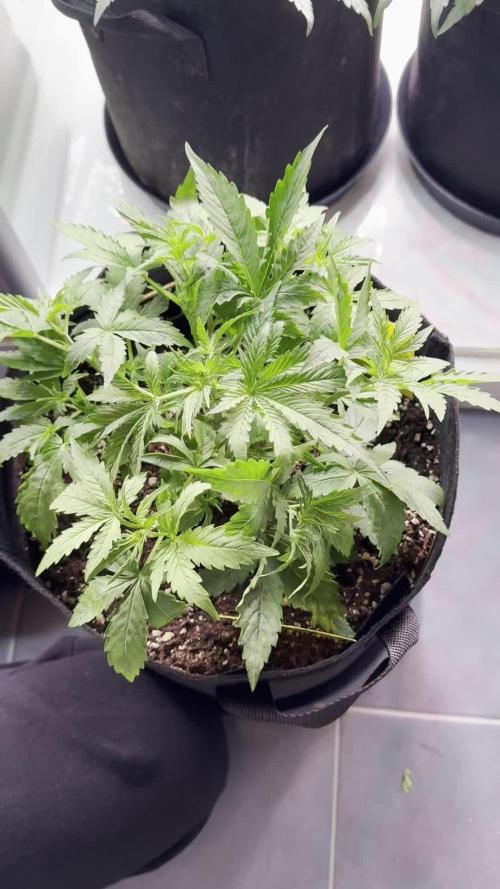
In der letzten Woche hat sie extrem an Biomasse zugelegt zu unserer Freude. :-)
Trotzdem ist sie im Verhältnis noch sehr klein. Deshalb haben wir uns entschlossen, sie nicht zu toppen und kein LST an ihr vorzunehmen. Im späteren Verlauf eventuell noch HST, aber als ersten Versuch lassen wir der Natur ihren Lauf. Die Cinderella soll einer der schönsten Pflanzen sein -- Wir werden sehen :-)

Likes
114
Share


@Tropicannibis_Todd
Follow
💩Alrighty Then Growmies We Are Back At it 💩
Well folks we just finished up the last run and so we are back to do it all over again 😁
So what do you say we have some fun 👈 We got some Gorilla Punch 👊 👊 👊 DAY 28
👉 Its been a really crazy week , major storm rolled in didn't have power for 4 days 😳 I had to be creative but shes doing fine 👌 I believe the stretch is on 👈
So this week I've started her nutrients regiments 👌Just need to remind myself to take it easy 🤔
FC4800 from MarsHydro Lights being readjusted and chart updated .........👍👉Added an RU45 too the mix 👍
www.marshydro.ca
👉I used NutriNPK for nutrients for my grows and welcome anyone to give them a try .👈
👉 www.nutrinpk.com 👈
NutriNPK Cal MAG 14-0-14
NutriNPK Grow 28-14-14
NutriNPK Bloom 8-20-30
NutriNPK Bloom Booster 0-52-34
I GOT MULTIPLE DIARIES ON THE GO 😱 please check them out 😎
👉THANKS FOR TAKING THE TIME TO GO OVER MY DIARIES 👈
Would you like to hang with the growdiary community 👉 https://discord.gg/gr4cHGDpdb 👈
Processing
Likes
14
Share


@kevgrow
Follow
Hey Friends, end of week 11 from seed ☺️
Not much has changed this week in the growth of plant #2.
I noticed some orange on the leaf tips. This can be due to overfeeding nutrients or because I recently ran into a problem with my Ph meter, it broke so I had to purchase one at a local Hydroponics store, different model so it was giving me different readings. For example, after adding nutrients to the water, ph would read 4.5 - 5.0, with the old ph meter I would add 10 drops of ph up and it would rise to 6.0 - 6.2, with the new ph meter it goes down to 4.2 when adding nutrients and I need around 20-30 drops to bring the ph up to 6.0 +. The old ph meter was less expensive I purchased it for $15, and the new ph meter cost me about $60. I guess the new one gives me the correct reading. The plant was used to the old feeding dosage now it just needs to adapt to the new feeding.
Noticed some of the top leaves had curls so I lowered light intensity.
An increase in red stems so ill keep lowering the light to avoid too much strees
Colas are growing in width
Smell is slowly getting stronger, not sure what strain it could be but it looks and smells like cookies and og.
No amber trichomes yet, maybe there is some already but its not very noticeable yet
QUESTIONS
How long before flushing?
Likes
15
Share


@Kelloggs420
Follow
From now on, I shall update my diary everyday.
I used some rosemary oil spray for the remaining spider mites. Worked like a charm
Day 40: the buds are still developing new pistils. The weather these days has been sunny to cloudy with some rain.

Likes
7
Share


@HoffmanShulgin
Follow
¡Hola a todos! Han pasado 3 semanas de floración y ya se pueden ver pequeños brotes. He estirado aún más las ramas que han crecido. También he recortado las hojas enormes para que la luz pueda penetrar en el interior de la planta. He agregado más fósforo al fertilizante para estimular la floración. Ahora solo queda la etapa final de la floración. ¡Estoy esperando con ansias!
Likes
35
Share


@Bud_Koenig
Follow
Hey everyone! Week 5 is complete, and we’re moving into week 6! Everything went smoothly without any issues, and the ladies showed no signs of stress or deficiencies. We’re slowly approaching the final phase, so I’ll only be giving water from now on, possibly with a few beneficial microorganisms. If you have any questions or are interested in cultivating with living soil, feel free to reach out—I’m here for you!


Likes
158
Share


Likes
2
Share

@Janerussel
Follow
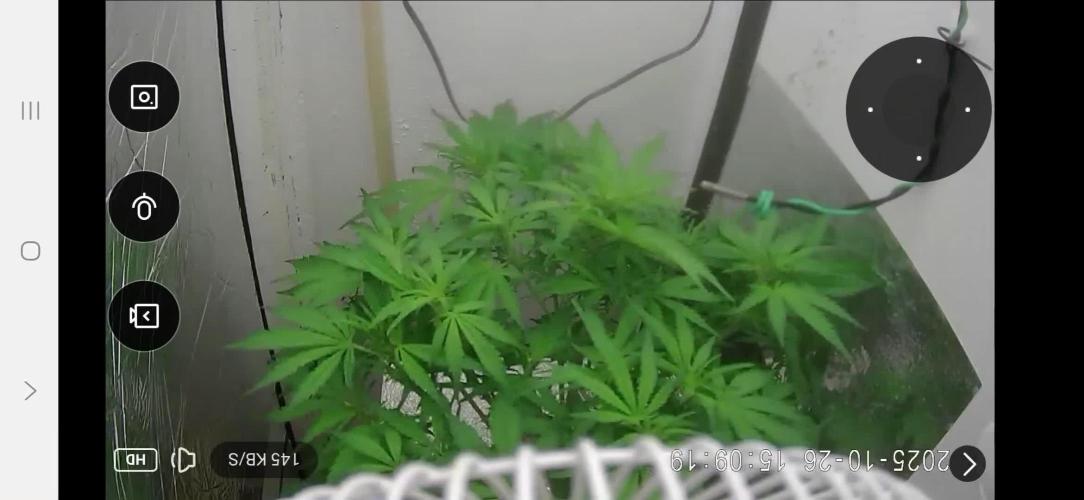
F week 3. It gets really bushy. I had to do a second defoliation. At this point everything seems to go well.


Likes
36
Share


@Salokin
Follow
Week went again very uneventful, she is not very hungry anymore and had to constantly refill the reservoir with water to keep the ec in check. Trichomes are all cloudy and start to turn amber. She has developed that amazing purple hue and is sticky to the max, so definitely showing her glue heritable ;) I will continue to feed her until Wednesday this week and then start the flushing and darkness. Harvest will be next week end.

Likes
60
Share


@SooSan
Follow
12/12 + 144 jours
Vu qu’il y a 16 plantes mais que sur growdiaries on ne peut mettre que 8 variétés j'ai divisé en 2 diaries pour le bas de la tente
1️⃣
🏠 90x60x90
☀️ FC-E 4800 => puissance a 60%
🍁
Black Bomb / Philosopher Seed
Amnesia Lemon / PEV Seeds
Amnesia Lemon /PEV Seeds 35g
Blueberry / PEV Seeds = 17g
Blueberry / 00 Seeds = 17g
Wappa / Paradise Seed = 11g
Dark Phoenix / Green House Seed
Quick Sherbet / Exotic Seeds = 14,5
Mango Cream / Exotic Seeds 19,5g
Banana Frosting / Sensi Seed = 11g
Hindu Kush / Sensi Seed 10,5g
Mix 1 / Sweet Seed = 26,5g
Mix 2 / Sweet Seed = 15g
Mix 3 / Sweet Seed = 22,5g
Mix 4 / Sweet Seed = 14,5g
📎 https://growdiaries.com/diaries/122084-grow-journal-by-soosan
📎https://growdiaries.com/diaries/124052-grow-journal-by-soosan
2️⃣
🏠 30x60x50
☀️TS1000 => 100w = 54g
🍁
Quick Sherbet - Exotic Seed = 12g
Quick Sherbet - Exotic Seed = 12g
Quick Sherbet - Exotic Seed = 17,5g
Quick Sherbet - Exotic Seed = 12,5g
📎 https://growdiaries.com/diaries/122080-grow-journal-by-soosan


Likes
68
Share


@MrHightimes
Follow
i'm in love with this grow.
I'm also drunk!
good pics and druken videos.
I love fastbuds/ Fastubds is life!
Likes
147
Share


@Zurban_Poison
Follow
hello everyone!
plants are 100% feeling great.
flowering is progressing at a very fast pace. trichome production also works at full capacity.
And she began to eat a lot. just a glutton! she brews 16 liters of fertilizer every 3 days.
there is another feature. the left Gorilla has purple inflorescences. You can see it in several photos.
and the right Gorilla is normal without purple hues.
and the question is: why is that? genetics?
