




Likes
40
Share


@CampaCavallo
Follow
Buongiorno amici! I draghi di coccinella stanno mutando🐞🐞 e la piccola BRUCE LEMON DIESEL AUTO di SUPER SATIVA SEED CLUB sta buttando fuori dei bei fiorellini!
Ha un bel tronco pricipale robusto ed un profumo già intenso🚗

Likes
13
Share


@ButterfliesLittleFarm
Follow
Hello Diary,
We have reached the end of the third week of vegetation, which is also the beginning of flowering.
Titan F1 started to form flowers which is normal for automatics after 3 weeks of vegetation.
Titan F1 has grown really nicely, it is developing nicely, it grew another 10 cm in a week and got a lot of new leaves.
I started to feel a slight smell, which also makes me happy :).
This week I also did minimal defoliation on all three plants on the Farm, I removed only the lowest leaves to make it easier to water and improve the air flow through the plant itself.
When it comes to watering, it is not frequent, about every 4 days. This week I added one tablet of Easy grow booster.
The conditions on the farm are excellent I would say, the temperature is around 26 degrees while the humidity is around 50%.
Here's how it looked this week.
16/05/2023 - Day 17.
Watering. I prepared 7 liters of water, lowered the pH. to 6.0 and dissolved one Easy Grow tablet and with that amount of water I watered all three plants equally.
19/05/2023 - Day 20.
First, I did a minimal defoliation, removing only the bottom leaves to make watering easier and improve air flow through the plant a bit.
After that I watered all three plants.
20/05/2023 - Day 21.
Measuring the height of the plants and taking photos at the end of the third week.
Titan F1 - 36 cm.
That's all for this week, see you soon. Thank you all for your support and comments.

Likes
11
Share


@Wolkenmacher7
Follow
Moin in Woche 4
In dieser Woche passiert nicht viel
Das erste mal gedüngt
Pflanzen weiter runter gebunden
Beim Wachsen beobachtet

Likes
3
Share


@Beginner86
Follow
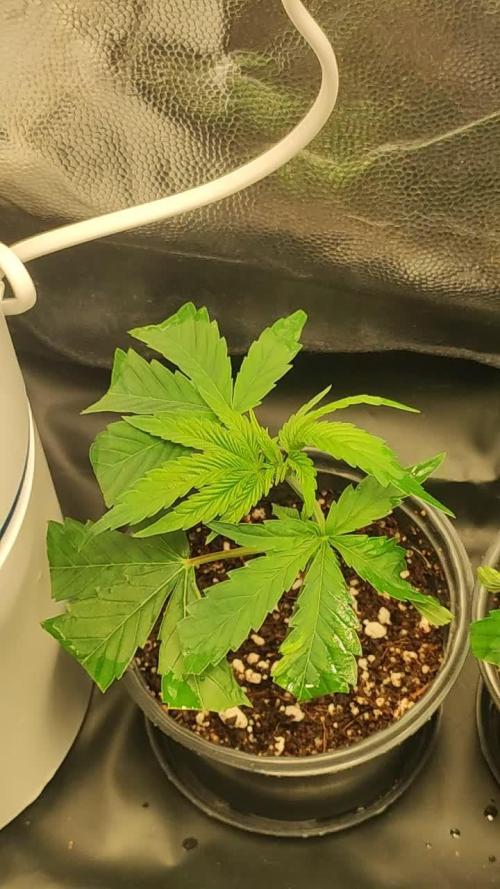
the fresh kit easy for beginner i have to do no watering, only open and wait. the first flush was arround 12 day‘s after openin the box.
very big thanks to Zamnesia @Zamnesia #Zamnesia.
some are goes blue by pull out.
and i had so much luck.
1 mushroom was opening and let fall his spores and this would kill the next charge, my luck was that all spore‘s falls down on the polymäre bag. so i hope that the next charge goes like this.
stay clean and this will go very easy and fast.
give a new feedback for the trip, and the hope of this 2.nd flush



Likes
25
Share


@herewegrow
Follow
Ordered a scale the other day so should have some more numbers tomorrow! Not going to sample anything until I get the scale, then I'll update with some more details.

Likes
5
Share


@Hawkbo
Follow
Still in the HPS tent but now they are under the LED again and doing pretty well as the roots are filling the pots out they are eating faster. Did a couple foliar feeds with the Growzyme at less than 1 ML/Gal which they seem to like. Hoping to get a little more vertical growth before they kick into flower. Also been doing some bottom feeding which I have been experimenting with a little bit. It seems to increase rate of growth and the plants seem a little happier when I do a few feeds like that in a row.
REMEMBER , IF YOUR SHOPPING FOR GEAR YOU CAN USE THE CODE “BANGDANG” FOR 10% OFF YOUR ENTIRE PURCHASE FROM ANY OF THE FOLLOWING COMPANIES.
@greenbuzzliquids
@rainscience_growbags
@gorilla_grow_tent
@growlightscience.led
*****Gorilla grow tent discounts extend to all companies affiliated with grow strong industries which include..*****
@super.closet
Lotus Nutrients
Kind LED grow lights

Processing
Likes
3
Share


@incensed
Follow
I am extremely satisfied with all of the results this week and although it might be a bit premature to recommend the Bloom City Organic Craft Grow Kit ... So far I am very satisfied with my results !

Likes
10
Share


@Hempire
Follow
Hello growers !
This week started the pistils colours white into orange /red. Let’s check at the final of the week it should be ok for the harvest :)

Likes
4
Share


@ThatsmyGrow
Follow
She's developed very well. I think there are already many amber trichomes, but also many light hairs. So I'll keep her for another week.


Likes
7
Share

@Fabroking
Follow
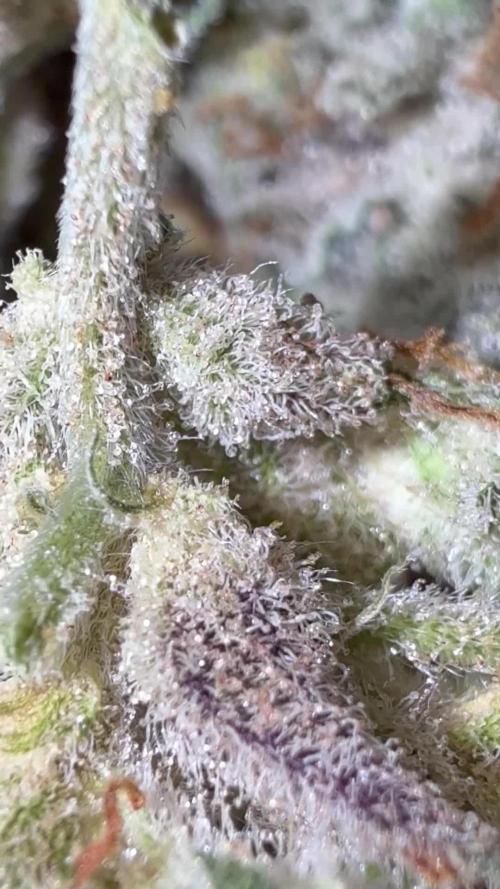
Genetica davvero valida come già detto merita un posto nella coltivazione di tutti almeno una volta, penso sopratutto che quando farò estrazione avrò bella soddisfazione data la quantità di resina e terpeni che hanno sprigionato

Likes
5
Share

@EllysGrow
Follow
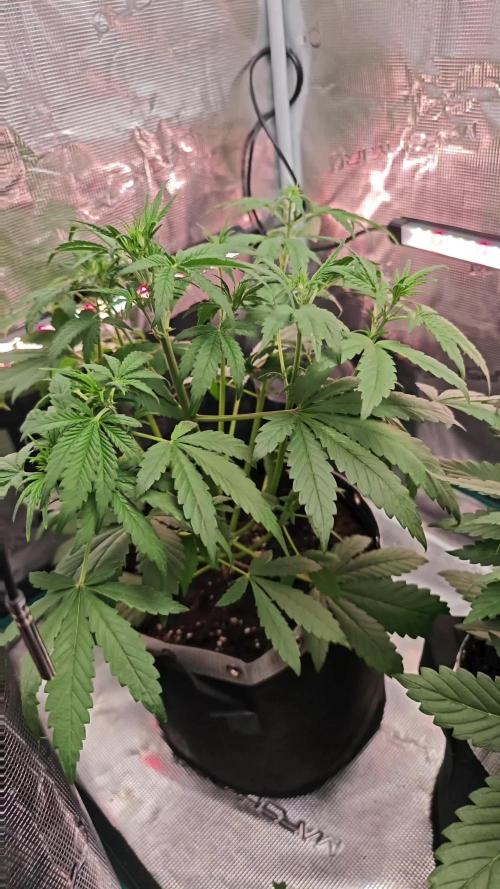
Mega am Stretchen meine Lady's. Haben heute noch Seitenlicht hinzubekommen, da die Blüte nun langsam losgeht. Etwas Duft kommt beim Öffnen des Zeltes heraus, verzieht sich aber sehr schnell.


Processing
Likes
6
Share


@field_nigga
Follow
Germinated pretty well. It's now been 2 weeks since it's erupted from the soil and uh looks good for now. I haven't given them any nutrients yet might start on the third week so 14/12/2020.

Likes
68
Share

@Ultraviolet
Follow
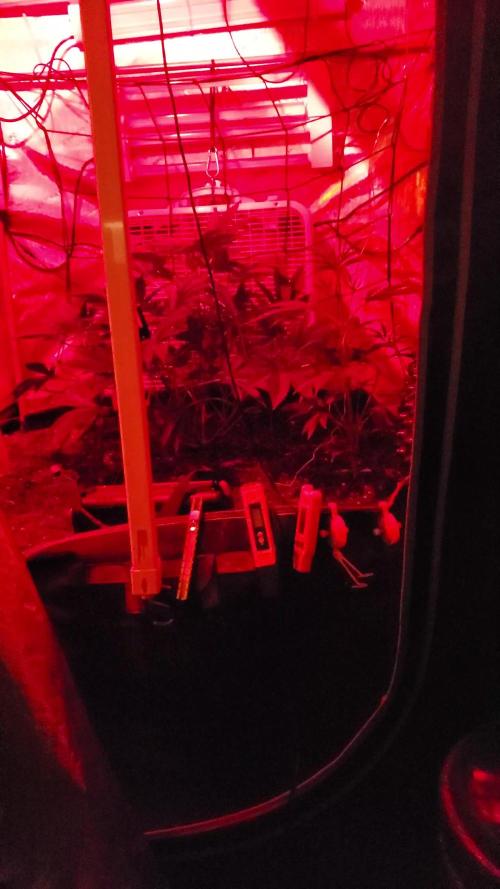
Removed autoflower and put her in her own pot outside the tent.
Foliars applied in strong blue 430nm with 4000Hz tone. 20-minute dose prior to application.
In essence, you're seeing a combination of the infrared light reflected by the plant, which the camera perceives as red, and any residual visible blue light the plant reflects, which results in a purple hue.
I was doing more stretching of the stems, adjusting weights, just a little too much, and it snapped almost clean. I got a little lucky in that it was still connected, wrapped her almost instantly while holding her in place with yoyo's. The core framework is now in place.
If your soil has a high pH, it's not ideal; you want a pH of 6.4, 6.5, or 6.6, which is ideal. If you are over a pH of 7, you have no hydrogen on the clay colloid. If you want your pH down, add Carbon. If you keep the pH below 7, you will unlock hydrogen, a whole host of new microbes become active and begin working, the plant will now be able to make more sugar because she has microbes giving off carbon dioxide, and the carbon you added hangs onto water. Everything has electricity in it. When you get the microbes eating carbon, breathing oxygen, giving off CO2, those aerobic soil microbes will carry about 0.5V of electricity that makes up the EC. The microorganisms will take a metal-based mineral and a non-metal-based mineral with about 1000 different combinations, and they will create an organic salt! That doesn't kill them, that the plant loves, that the plant enjoys. This creates an environment that is conducive to growing its own food.
Metal-based: Could include elements like iron, manganese, copper, or zinc, which are essential nutrients for plants but can exist in forms not readily accessible.
Non-metal-based: Examples like calcium carbonate, phosphate, or sulfur are also important for plant growth and potentially serve as building blocks for the organic salt.
Chelation in a plant medium is a chemical process where a chelating agent, a negatively charged organic compound, binds to positively charged metal ions, like iron, zinc, and manganese. This forms a stable, soluble complex that protects the micronutrient from becoming unavailable to the plant in the soil or solution. The chelate complex is then more easily absorbed by the plant's roots, preventing nutrient deficiency, improving nutrient uptake, and enhancing plant growth. Chelation is similar to how microorganisms create organic salts, as both involve using organic molecules to bind with metal ions, but chelation specifically forms ring-like structures, or chelates, while the "organic salts" of microorganisms primarily refer to metal-complexed low molecular weight organic acids like gluconic acid. Microorganisms use this process to solubilize soil phosphates by chelating cations such as iron (Fe) and calcium (Ca), increasing their availability.
Added sugars stimulate soil microbial activity, but directly applying sugar, especially in viscous form, can be tricky to dilute. Adding to the soil is generally not a beneficial practice for the plant itself and is not a substitute for fertilizer. While beneficial microbes can be encouraged by the sugar, harmful ones may also be stimulated, and the added sugar is a poor source of essential plant nutrients. Sugar in soil acts as a food source for microbes, but its effects on plants vary significantly with the sugar's form and concentration: simple sugars like glucose can quickly boost microbial activity and nutrient release. But scavenge A LOT of oxygen in the process, precious oxygen. Overly high concentrations of any sugar can attract pests, cause root rot by disrupting osmotic balance, and lead to detrimental fungal growth. If you are one who likes warm tropical high rh, dead already. Beneficial, absolutely, but only to those who don't run out of oxygen. Blackstrap is mostly glucose, iirc regular molasses is mostly sucrose. Sugars, especially sucrose, act as signaling molecules that interact with plant hormones and regulate gene expression, which are critical for triggering the floral transition. When sucrose is added to the growth medium significantly influences its effect on floral transition.
Probably wouldn't bother with blackstrap given its higher glucose content. Microbes in the soil consume the sugar and, in the process, draw nitrogen from the soil, which is the same nutrient the plant needs. Glucose is not an oxygen scavenger itself, but it acts as a substrate for the glucose oxidase (GOx) enzyme, effectively removing oxygen from a system. Regular molasses (powdered if you can), as soon as she flips to flower or a week before, the wrong form of sugar can delay flower, or worse. Wrong quantity, not great either. The timing of sucrose application is crucial. It was more complicated than I gave it credit for, that's for sure. When a medium's carbon-to-nitrogen (C:N) ratio reaches 24:1, it signifies an optimal balance for soil microbes to thrive, leading to efficient decomposition and nutrient cycling. At this ratio, soil microorganisms have enough nitrogen for their metabolic needs, allowing them to break down organic matter and release vital nutrients like phosphorus and zinc for plants. Exceeding this ratio results in slower decomposition and nitrogen immobilization, while a ratio below 24:1 leads to faster breakdown and excess nitrogen availability.
Carbon and nitrogen are two elements in soils and are required by most biology for energy. Carbon and nitrogen occur in the soil as both organic and inorganic forms. The inorganic carbon in the soil has minimal effect on soil biochemical activity, whereas the organic forms of carbon are essential for biological activity. Inorganic carbon in the soil is primarily present as carbonates, whereas organic carbon is present in many forms, including live and dead plant materials and microorganisms; some are more labile and therefore can be easily decomposed, such as sugars, amino acids, and root exudates, while others are more recalcitrant, such as lignin, humin, and humic acids. Soil nitrogen is mostly present in organic forms (usually more than 95 % of the total soil nitrogen), but also in inorganic forms, such as nitrate and ammonium. Soil biology prefers a certain ratio of carbon to nitrogen (C:N). Amino acids make up proteins and are one of the nitrogen-containing compounds in the soil that are essential for biological energy. The C:N ratio of soil microbes is about 10:1, whereas the preferred C:N ratio of their food is 24:1 (USDA Natural Resource Conservation Service 2011). Soil bacteria (3-10:1 C:N ratio) generally have a lower C:N ratio than soil fungi (4-18:1 C:N ratio) (Hoorman & Islam 2010; Zhang and Elser 2017). It is also important to mention that the ratio of carbon to other nutrients, such as sulfur (S) and phosphorous (P) also are relevant to determine net mineralization/immobilization. For example, plant material with C:S ratio smaller than 200:1 will promote mineralization of sulfate, while C:S ratio higher than 400:1 will promote immobilization (Scherer 2001).
In soil science and microbiology, the C:S ratio helps determine whether sulfur will be released (mineralized) or tied up (immobilized) by microorganisms.
A carbon-to-sulfur (C:S) ratio smaller than 200:1 promotes the mineralization of sulfate, when the C:S ratio is low, it indicates that the organic matter decomposing in the soil is rich in sulfur relative to carbon. Microorganisms require both carbon and sulfur for their metabolic processes. With an excess of sulfur, microbes take what they need and release the surplus sulfur into the soil as plant-available sulfate
A carbon-to-sulfur (C:S) ratio higher than 400:1 will promote the immobilization of sulfur from the soil. This occurs because when high-carbon, low-sulfur materials (like sawdust) are added to soil, microbes consume the carbon and pull sulfur from the soil to meet their nutritional needs, temporarily making it unavailable to plants.
200:1 C:S 400:1: In this range, both mineralization and immobilization can occur simultaneously, making the net availability of sulfur less predictable.
This dynamic is similar to how the carbon-to-nitrogen (C:N) ratio regulates the availability of nitrogen in soil. Just as microbes need a certain amount of nitrogen to process carbon, they also require a balanced amount of sulfur. Both mineralization and immobilization are driven by the metabolic needs of the soil's microbial population.
Sulfur is crucial for protein synthesis. A balanced ratio is particularly important in relation to nitrogen (N), as plants need adequate sulfur to efficiently use nitrogen. A severely imbalanced C:S ratio can hinder the efficient use of nitrogen, as seen in trials where adding nitrogen without balancing sulfur levels actually lowered crop yields.
Maintaining a balanced carbon-to-sulfur (C:S) ratio is highly beneficial for plant growth, but this happens indirectly by regulating soil microbial activity. Unlike the C:N ratio, which is widely discussed for its direct effect on nutrient availability, the C:S ratio determines whether sulfur in the soil's organic matter is released (mineralized) or temporarily locked up (immobilized).
Applied 3-day drought stress.
Glucose will hinder oxygenation more than sucrose in a solution because glucose is consumed faster and has a higher oxygen demand, leading to a more rapid decrease in oxygen levels. When cells respire, they use oxygen to break down glucose, and this process requires more oxygen for glucose than for sucrose because sucrose must first be broken down into glucose and fructose before it can be metabolized.
In a growth medium, glucose is a more immediate and universal signaling molecule for unicellular and multicellular organisms because it is directly used for energy and triggers a rapid gene expression response. In contrast, sucrose primarily acts as a signaling molecule in plants to regulate specific developmental processes by being transported or broken down, which can be a more complex and slower signaling process.
Critical stuff.
During wakefulness (DC electric current) life can not entangle electrons and protons. During the daytime, the light is sensed as multiple color frequencies in sunlight. Coherence requires monochromatic light. Therefore, at night, IR light dominates cell biology. This is another reason why the DC electric current disappears during the night. The coherence of water is maintained by using its density changes imparted by infrared light released from mitochondria in the absence of light. This density change can be examined by NMR analysis, and water is found to be in its icosahedral molecular form. This is the state that water should be in at night. This is when a light frequency is lowest and when the wave part of the photoelectric effect is in maximum use.
3600
Likes
22
Share


@donovanliam
Follow
Flowers are coming along nice. Im happy with my new light. Just changed my fertilizer from pre bloom to blooming. Thinking about getting big bud and bud candy.
Likes
4
Share


@DeadJoke
Follow
well 2 big plants were sick and i don’t think they are getting recovery.. so i put them aside and let the strong one dominate the light!

Likes
128
Share


@Hattiwatti
Follow
Hola 🐴
Skipped one week because nothing happened that much. Soil i replanted it was pretty low on nutes and suffered a bit deficiency. Watered only with water after replanting. Now it had 4l of 1.7ec and it looks great. One or two weeks more before bloom. 4 Sisters still hanging at corners but not for long time.
And for Hologram i made video about LST. not about how much at the time. Weekly a bit is good. Thats why easily adjustable ties are godlike thing. And PATIENCY.
With High Hopes 🍀
