


Likes
Comments
Share


@Natagoat
Follow
This week has been another good week ive increased feeds as she is super thirsty and getting watered every other day other than that ive let her get on with her thing. Ive gotten a new usb microscope and had a bash at taking pics with that, but its going to take some practice to get good images until I chop and use the stand or make my own stand.


Likes
9
Share

@Captain_Greenout
Follow
2026 April 16 - Day 21
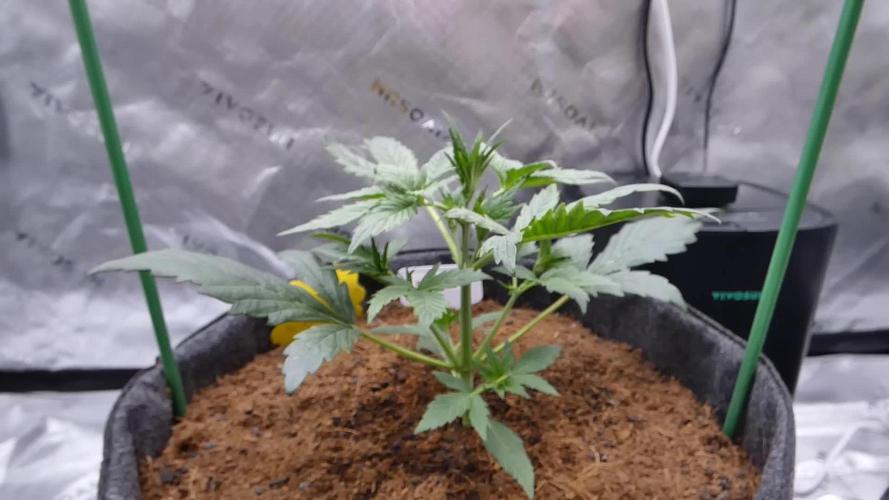
Pre-flowers started showing a few days ago with pistil hairs at the nodes. She's a little wind burnt maybe, or this is just how she's supposed to look. I'm leaning on the former. Otherwise she's doing fine and should be in full stretch by next week.

Likes
3
Share


@CaptonianMoneymaker
Follow
Plants are healthy and thriving will be flipping in a few days to flower
Likes
21
Share

@IslandTerps
Follow
Strain: Barney’s Farm – Mimosa x Orange Punch
Grow Type: Indoor
Pot Size: 5 Gallon
Medium: Peat Moss & Perlite
Nutrient Line: Athena
Week 20 Update
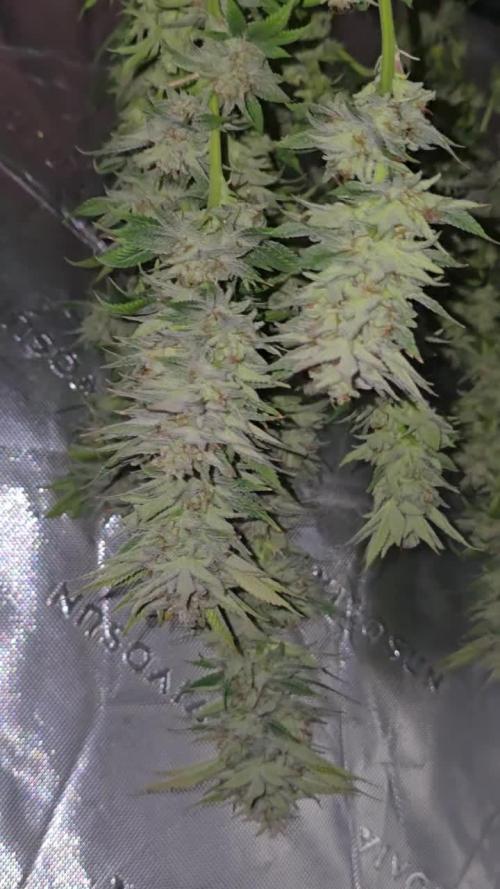
Sorry for missing the last two weeks of updates things were very hectic on my end. Glad to be back for Week 20, and I’m also looking forward to the harvest entry soon. This week she was flushed with plain water and then chopped. She’s now hanging to dry, and the buds are looking frosty and full.
Feeding
Flush with plain water before harvest.
Indoor Climate Conditions
Day Temperature: 25–27°C
Night Temperature: 21–23°C
Humidity: 50–55%
Drying Climate Conditions
Temperature: 20–22°C
Humidity: 55–60%
See y’all next week!

Likes
11
Share


Likes
19
Share

@BlaKX
Follow
Ai Gude Growmie und Willkommen zur 7 Woche,
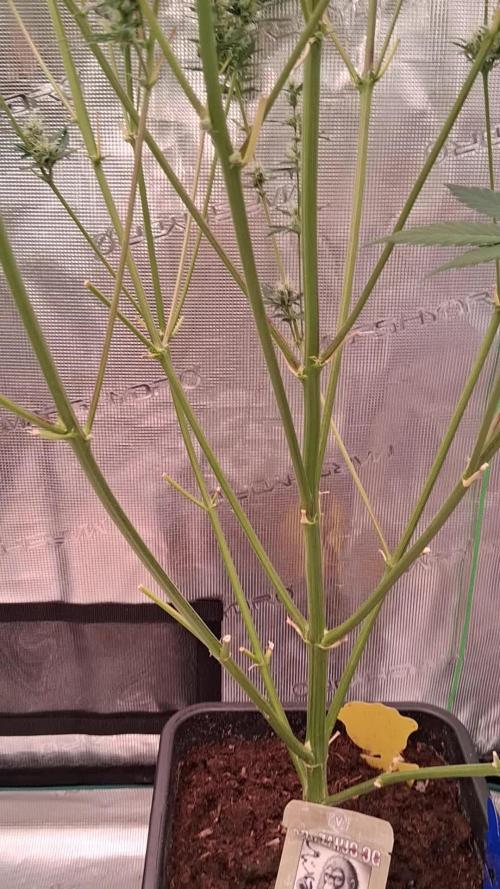
Ich habe die Pflanze ein letztes mal entlaubt sowie PK13/14 verabreicht. Mittlerweile sind die terpene extrem ausgebildet und gassy!!!!
Likes
13
Share


@DonKrika
Follow
This week I just flushed the plant. I think I could have feed nutes the first day of this week, but I decided to flush from the first day, something to improve next time. I think I should have given the last flush one day before harvest instead of 2 days after, I felt that the coco was a bit too dry and the steam was not as moist as the previous harvest, this would have been great if I was doing 14 days dry, but I'm doing a 30 day dry, so this extra moisture would be great.
The last 4 days the lights were turned off, as a consequence, the humidity went up the last 4 days, around 56-58%, I don't think I will do this next time.
The total flower period was 72 days, according to Barney's farm it would take 60-65 days, I feel that those values are very accurate, my personal circumstances made me take a bit longer, but I barely saw any amber trichomes at harvest day.
DAY 152 - Water
PH - 5.83
PPM- 777
Solution Temp - 23
Watering Volume - 4L
DAY 153 - Water
PH - 5.84
PPM- 783
Solution Temp - 21.6
Watering Volume - 3L
DAY 154 - Water
PH - 5.84
PPM- 793
Solution Temp - 21.7
Watering Volume - 2L
DAY 155 - Water
PH - 5.84
PPM- 809
Solution Temp - 22
Watering Volume - 2L
DAY 156 - Water
PH - 5.80
PPM- 810
Solution Temp - 22.7
Watering Volume - 2.5L
DAY 158 - Water
PH - 5.91
PPM- 587
Solution Temp - 17
Watering Volume - 3L

Likes
25
Share


@nonick123
Follow
Día 15 (27/01) Ha reaccionado bien al trasplante. A ver como se desarrolla en los siguientes días!
Día 16 (28/01) Muestra un buen desarrollo con las primeras ramas formándose
Día 17 (29/01) Subo a DLI 40
Muestra un color verde estupendo 😍
Día 18 (30/01) Tras subir el DLI la temperatura en el indoor ha subido a de 22ºC a 26 ºC, de modo que va a acelerar las necesidades hídricas
Se sigue desarrollando estupendamente 😁
Día 19 (31/01) Seguimos a buen ritmo
Creo que debería haber regado este día... (Visto como estaba de seca al día siguiente...)
Día 20 (01/02) Elimino las ramas más inferiores (1er nudo) que siempre suelen quedar débiles en el stretch
Riego con 350 ml H2O RO
Día 21 (02/02) Empieza a estirarse! 😍
Está sedienta! Riego con 350 ml H2O
En una semana a floración!
💦 BioTabs 15% DISCOUNT code "GDBT420" biotabs.nl/en/shop/ @biotabs_official
🌱Substrate PRO-MIX HP BACILLUS + MYCORRHIZAE @promixmitch @promixgrowers_unfiltered
💡2 x Mars Hydro FC1500 EVO Led Grow Light (2024 NEW FC 1500-EVO Samsung LM301H 150W LED) - https://marshydro.eu/products/fc1500-evo-led-grow-lights/ - https://www.amazon.de/dp/B0CSSGN5D8?ref=myi_title_dp


Likes
6
Share

@Thedibber
Follow
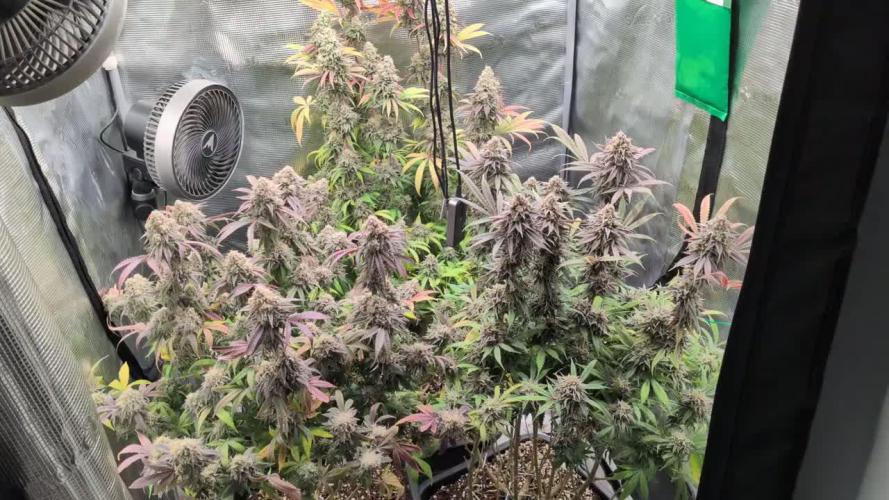
Hung to dry in 15-18c and 58% humidity aiming for 10-14days drying time 😇


Likes
115
Share


@DogDoctorOfficial
Follow
Harvesting the Bounty of Cherry Cola Auto
Dear fellow cultivators, we've reached the triumphant culmination of Cherry Cola's journey as we delve into Week 13 – Harvest Time! Join me in celebrating the fruition of our labor and the bountiful rewards awaiting us as we harvest the radiant buds of Cherry Cola Auto.
As the sun sets on Week 13, the air is filled with anticipation and excitement. Harvest season has dawned upon us, marking the culmination of Cherry Cola's remarkable journey from seed to harvest-ready beauty.
In the heart of the garden, Cherry Cola stands tall, her branches heavy with the weight of abundant buds. Each bud is a testament to her resilience, her vigor, and the care and dedication invested in her growth.
With meticulous care and precision, the time has come to harvest Cherry Cola's radiant buds. Each cut is made with reverence, ensuring that only the finest, most pristine flowers make their way into our stash.
As the buds are trimmed and cured, an aromatic symphony is unleashed, filling the air with the tantalizing scent of Cherry Cola's terpene-rich profile. It's a sensory experience like no other, a celebration of nature's bounty.
As we gather the fruits of our labor, let us take a moment to reflect on the journey that has brought us here. It's been a labor of love, a testament to patience, perseverance, and the boundless wonders of nature.
In conclusion, let us raise a toast to Cherry Cola Auto – a true champion of the garden, a symbol of resilience, and a source of boundless joy. May her harvest be plentiful, her flavors unforgettable, and her legacy enduring. Until next time, happy harvesting, fellow enthusiasts! #CherryColaHarvest #BountifulBuds #GrowersPride
Nutrition: @aptusholland @aptus_world @aptus_
Love, Care, and Attention: @dogdoctorofficial
As always, thank you all for joining me on this journey, for your love, and for it all. My horticultural odyssey would never be the same without you. Your love and support are cherished, and I feel both honored and blessed to have you in my life
Friendly reminder all you see here is pure research and for educational purposes only
Growers Love To you All 💚 💚 💚

Processing
Likes
4
Share


@Fergie
Follow
hey guys so girls been transplant to new home for next few weeks to month all looking good under new LEDs . Got really nice node structure coming together on them and so far so good . Feeding them with plain r/o water with 5ml of calcium and magnesium supplements added to each 3 gallon bucket - started running my Aircon water back through my system as at current am recollecting around 20 litres a day with current temps outside soaring .til next week 😀

Likes
51
Share

@Comfrey
Follow
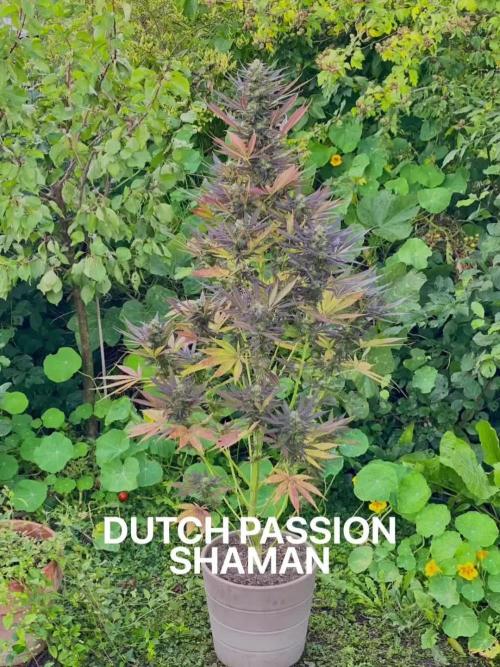
Dutch Passion Shaman
Pünktlich zum Erntedankfest am 5.10. war für mich der kritische Punkt überschritten. Shamanin 1 hat ihren Headbud und drei weitere Blüten genommen bekommen. Ich habe die beiden Pflanzen in der letzten Zeit täglich mit einer Taschenlampe abgesucht und nun war es soweit, leichte Faulstellen an dennStielen in mehreren Bereichen der Pflanze. Es waren nur sehr kleine Teile der Blüten, bzw. schlaffe Zuckerblätter betroffen, ich erkenne das mittlerweile relativ früh. Die Stielfäule, wie bei @birdmountain hatte sich bei der dunklen Dame an fünf Stellen gebildet und die angrenzende Blüte befallen. Verlust liegt bei zwei bis drei Gramm trocken.
Am Sonntag gab es zum Erntedank Space Tee für zwei und der war sehr lecker, mit starker aber angenehmer Wirkung. Ich lasse den frischen Trimm und Blütenmaterial bei 90 Grad mit einem guten Schuss Olivenöl (zwei Esslöffel ca. eine Stunde ziehen. Die Kräuter aus dem Tee schmecken mit bissl Salz wie Spinat, lecker, und wenn man sich die auch reinzieht, dann wird‘s richtig gut, mit Lachflashs. 🤤 😅 Jetzt bin ich entspannter, was den Erntezeitpunkt und die zu erwartende Wirkung betrifft.
Shamanin No. 2 musste dursten, hat recht weit oben eine weitere Blüte verloren, wobei ich die Stelle an einem dünneren Stiel auch hier vor der eigentlichen Blütenfäule entdeckt habe. Hier saß auch ein kleiner Käfer in der Nähe, wahrscheinlich hatte der es mitgebracht. Ihre Blätter beginnen sich zu verfärben.
Es geht weiter, bis nächste Woche! Danke für‘s vorbeischauen. 💚

Likes
20
Share


Likes
14
Share


@RunWithIt
Follow
First sets of pistils were spotted on Sunday and so I decided to make today the official first day of flower for this plant, woot! Gave her a 2/3 str. nute feeding and will be monitoring her closely. This week I added in 5mL of the tiger bloom when I mixed my 1gal of nutes.
Thursday update: Got an Exhale CO2 bag hung up, super excited to see how much they help my plant! On other update news, i decided to do some super-cropping on account of her rigourous growth. One of the branches snapped just a little, but enough for me to get the tape. Other than that, all is well! She's drinking plenty of water every day and I haven't fed her nutes since Monday.
Monday update: Ordered some Exhale CO2 bags for the grow tent that will be arriving thursday!

Likes
12
Share

@GoodTimesOrganics
Follow
Hi liebe Community and Welcome Back! 💚🌱
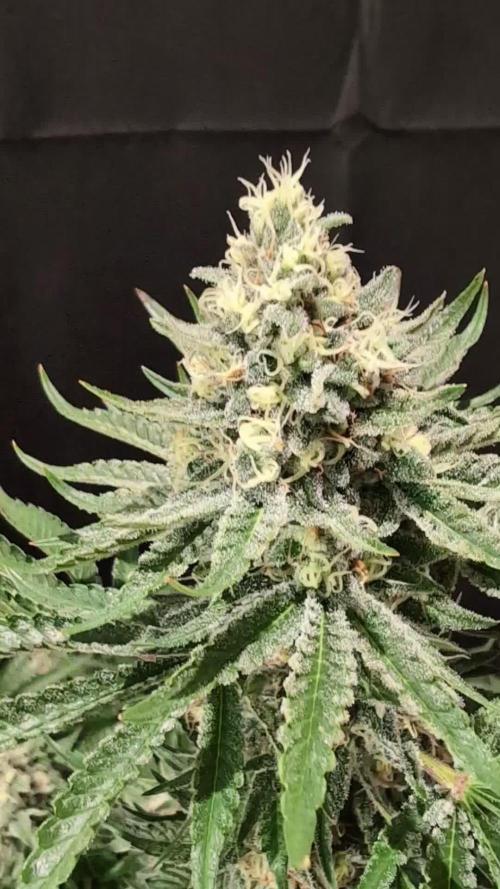
Nach der sechsten Blütewoche entwickelt sich die Aficianado Pflanze weiterhin sehr schön!
Sie ist in diesem Run definitiv die Beautyqueen.
Die Struktur, die Buddichte, Interniodenabstände alles perfekt! ?
Es scheint auch als würde sie eine Top Blütenperformance hinlegen. Die Trichome sprießen und dass Icing zieht sich wunderbar über die Sugarleafes.
Das süßlich- fruchtige Aroma entwickelt sich immer mehr, es hat nun auch etwas beerige Aromen.
Ab jetzt bekommt die Pflanze nur noch Wasser bis zur vollen Reife.
Aufgrund der ernten der anderen Pflanzen, kann ich das System nun besser auf die Pflanze anpassen.
Die Umgebungsgegebenheiten sind aktuell gut für die Endblüte!
—————
🌞 Temp: 27
🌚 Temp: 18°C bis 19°C
💨 RH: 49%
VPD: 1,42 kPa 🏜️
💡ppfd: 830 mpm
—————
Viele Grüße 👋
Likes
13
Share


@Kayotic
Follow
*Trimmed #4 yesterday.
23.5 grams
*#3 was 65.32 grams
*Harvested #5 Wednesday
*Fed 2 tbsp of Tiger Bloom to the last 2, last time feeding and watering.