


Likes
Comments
Share


@artems
Follow
Not sure what I'm doing wrong with my autoflowers but regular plant looks and smells fine. Also 2 cols with mutations looks fine, really glad for it😇

Likes
7
Share


@weedrevolution
Follow
An important event marked this week: plants were indeed heavily defoliated.
This was possible also due to their strong (and positive) reaction to the tea (Organic Compost Tea by Soil With Attitude) received last week. All plants are literally exploding with life. 💪


Likes
5
Share


@TrimQueen
Follow
SECOND HARVEST OF MY LIFE!! ALWAYS TRYING TO IMPROVE. THANK YOU ALL GUYS.
Likes
32
Share


@JKent19
Follow
Great week! Buds are fattening up even better than I'd hoped. Some hairs are starting to turn red, and the buds are covered in a thick layer of trichomes! I have no choice but to harvest July 1st, so I'm keeping my fingers crossed that they will ripen enough by then. I will start my flush/harvest prep 10 days in advance, so in about 10 days. I am really looking forward to this one, can't wait for purple lemonade to be my daily smoke!
Likes
1
Share


@ChubbyBudBros
Follow
-
Day 57
Watering day. Gave 3 Liters today, see how fast she'll drink that up.
Day 59
Not much too report other than that the buds keep bulking up for now ^^.
Day 61
Gave her another 2.5 liters today pot was fully dry after 4 days, so gave her a bit less this time.
She smells great, very deep smell, almost smells like tobacco somehow, but sweet. Buds still have quite a few white pistils so she will still take a few weeks to finish I think.
Day 63
Buds are definitely still bulking up 😍 definitely strong buds, very colorful and got a really nice smell going. I removed some yellowing leaves today and my fingers got stiiiiicky.


Likes
37
Share


@GrownwithLED
Follow
After germinating the seeds are transplanted into small pots with soil (see tutorial in VIDEO above). The soil is prepared with water mixed with a little bit of BIO NOVA Roots (0,5 ml/l), which aids the development of the seedling. Transplanting is very easy now, because they have grown a STRAIGHT tap-root while hanging during the SERIOUS' WAY of germination. This straight root allows for easy potting of the seeds. Simply make a little hole in the center of the soil with your pinky finger and carefully place the germinated seed with the white root pointing DOWNWARDS into the hole. Best is to lay it onto one side-wall of the hole with the seed shell right at the surface. Then I push the other side inwards and enclose the whole root with soil. At the end only the top of the seed-shell peeks out of the soil. IT IS VERY IMPORTANT to plant the seeds NOT TO DEEP into the soil. The seedling only needs extra strength to work itself upwards thru the soil and you run the risk of the soil drying out and the seed dying off. When you PLANT THE SEED VERY SHALLOW into the soil (=with the top of the seed-shell still peeking out) your seedling can grow out right away and you have a small plant already 24 hours after putting the seed into the soil.
The small seedling sometimes still has the seed-shell on its 'head', it normally falls off by itself, but sometimes you have to carefully help and take it off with your finger nails. Be careful to NOT clip of the seedling accidentally when you do this!
The seed-shall has an inner lining, which feeds the small seedling when it germinates. This inner lining sometimes gets tangled around the stem of the small seedling after the shell has fallen off. This little skin MUST be taken off the stem right away! Once it dries up, it gets hard and can strangulate the seedling around the stem. In order to avoid this, the skin must be taken off as soon as possible! I show it in the pics above and also made a video about taking off the inner lining of the seed.


Likes
Comments
Share


@The_Lonely_Farmer
Follow
So these fastbuds testers are holding in there along side my aptus girls and I have selected the best 3 which includes 1 of each strain, plus 1 extra 410 tester which I have doubt in unfortunatley as it seems she may not catch up by time it comes too flip 👎
But we plod on and out of 9 seeds 6 popped and now 1 of each remain too continue their great positive journey ahead 🙏🤞
These girls have been bent too allow light too the lower branches and so far each seems too be thriving 🌱
This week I continue too lst and form them ready for flip in a week or so time 💚
Likes
18
Share


@eldruida_lamota
Follow
Esa familia, actualizamos las northern light xL, hay una de las 3 que destaca del resto por tamaño y flores, pintan muy bien, se ve buen color y bastante vigorosas, tutelamos 1.
Bajamos humedad y temperatura, a estas alturas estamos pensando en el siguiente proyecto con varias geneticas de zambezaseeds.

Likes
10
Share


@SgtDoofy
Follow
3/27
Been fighting the warmth of the lights and the rising temps lately. Amnesia is still sacrificing leaves, but much more slowly now, letting me pick out about 5-10 per day. I really don't know what caused it all, but at least this could make trimming easier. I'm trying to make sure I pull off all the browning and crispy leaves so that they don't get absorbed by growing bud. Trainwreck is getting much more purple, but is also browning in some spots. Trainwreck doesn't let go of any leaves, as the base of them is still green, which makes it more difficult to sift through the brown leaves and pull them out. Fed at the end of last week, may have been Friday.
3/29
Feeding 3/4 nutrients today!
3/31
Fed 1/2 strength nutrients and lowering lights to 50% before going away for the weekend.
4/1
They survived my time away.
4/2
Some crispy leaves needed to be plucked from Trainwreck to open up other budsites. Trichomes are still not amber.

Likes
8
Share


@Skinnytalls420
Follow
Very happy with the outcome just as good as the first time I grown this strain!!!!
Likes
91
Share


@Salokin
Follow
Hi Growmies,
This was her last week of heavy feeding. I have already decreased the nutes for the coming week and will probably start flushing her the week after. So that she should be finished by the end of the contest pretty much. Regardless of her age the rootball has shrunk only a little bit.
I have also taken her out of the scrog to enable the canopy to open up further and allow more light penetration for the maturation of the buds. This worked actually very well, as the weight of the buds pull the plant open.
Thanks for stepping by and until next week!


Likes
15
Share


@Geili_Seili_fireinfireout
Follow
Heute ist es soweit! Bräuchten evtl noch knapp eine woche. Aber hab schon neue bestellt und das ne woche zu früh🙈😅😅🤷♂️
Also chop chop😅😅
Diesen geilen cut gibts wie immer vital und virus frei bei ROOTS-FARMS. The best you can get

Likes
45
Share


@masterofsmeagol
Follow
7/3 Hot as fuck today. Japanese beetles were around. I killed a few. I'm going to have to go over and keep an eye on things. It reached 90° today for the majority of the day. I watered around 1pm as I noticed most of the bags were very light. I'm glad I held off on the BT. I've dealt with jpn beetles before so hopfully that won't be an issue. Things are getting big. It won't let me upload any pictures or the video I did. I may upload it to past week. Went back over at night and and plants looked dropy but it was after 7pm and they were just going to sleep.
7/4 Didn't take photos this morning. Found some jpn beetles. That's the damage I've been seeing. I went back over last night to hunt them but I only got two. There weren't any others. No biggie. I'll put some pics up from today after I get back
7/5 Didn't get a chance to check the plants out today. My intuition tingled around 1pm and I had just gotten home and I ran over to check them. They displayed minor signs of heat stress as seen in the pics (due to the super high humidity and 90° weather) and the bags were light. A few were REALLY light. I could see they needed water. I WATERED 4 1/2 GALLONS TO THE GARDEN. DO TO THE HIGH TENPS AND WINDS IVE HAD TO WATER THE LAST THREE DAYS IN A ROW. IVE SLOWLY STRARTED INCREASING VOLUME. I don't want to water until I get a shit ton of run off because I want to keep the nutes in my soil as long as possible. As you can see things are going great. Minor pests but notjing major. They're growing at a very rapid pace. I'll need to add another layer of supports soon and begin to LST some of these girls. I've got one seedling in a 10 gal and I'm pretty sure it's a feminized red runtz but it's in preflower and looks and SHOULD be a female but I haven't seen the white hair yet. Looks like a female preflower though. I do have one auto though in a 5 gallon tjats doing good too. I have a bunch of pics but the internet is too slow. I'll upload tomorrow. Started pouring around 6.
7/6 Poured sheet rain all night. After it had Bern super fucking hot and I watered my plants with 4 1/2 gallons. Oh well. If I didn't water we wouldn't have gotten the rain. The fabric bags makes watering easier. The wind will dry out the medium. We do have some rain in the forecast. A pallet fell over and knocked my 5 gal bucket with tje auto into a 10 gal seedling but it held the pallet up and didn't damage anything. Out of all the ways it coyldve landed it landed just right to not hurt anything. Everything is super healthy. I do have some random pest damage but it's minimal. I'll decide whether to use a spray or not. Didn't take pictures this morning. Was pressed for time.
7/7 Super hot even at 8a.m. Rained the majority of the day yesterday. Plants are getting HUGE. I'm going to have to build a second round of supports and should probably start some LSTing. They seem to like growing natural how they are (besides the original topping and FIMed. You can tell these are ALL very high % indicas. I'm seeing pistols spitting out everywhere. Event horizon and sherb cake seem to be in the lead. The seedlings have realky taken off. The one I put in the 50 has fan leaves the size of my hands.
7/8 Wow it has been extremely hot. It's going to be in the 90's again today. Checked my plants and it seems the GMOs seem to be using more water. Those bags were a little lighter. Seeing how there is no rain in for a few days I had to water. WATERED 3 1/2 GALLONS. LAST SEEDLING FINALLY SHOWED AS A FEMALE.
7/9 Bags are still heavy. Found ONE jpn beetle this morning. Plants seem to be bigger everytime I look.starying the stretch and spitting out some pistols. I took some pics of the pistles. I'll update
7/10 should've started a new week but I didn't. I'll make next week six days. Plants are starting ro stretch. Minor random pest damage but woth the heat they need lots of water. Noticed a couple dead interior leaves so I should probably go through everything and defoliate. I need to add another layer of supports as well.


Likes
1
Share

@Bread_n_Buds
Follow
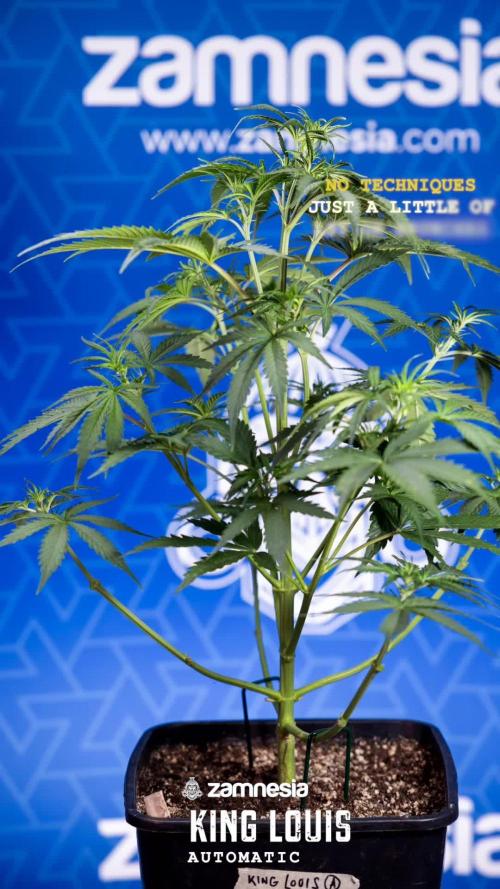
The Blue Dream is a plant that started very well, this specimen has been put at 12/12 for two days but this week I still consider it vegetative.
Remember that we are growing 1 Plant worked with the techniques and one left to grow without cutting techniques I am with a bit of LST.
In this diary we find the plant that is growing straight I would say very well and with only a few yellow tips that often appear at the beginning of flowering probably it is the passage of fertilizers that should be shaded better.
The comparison is the salt of the experience so the plant of the other diary will be worked very differently go and see it to compare them.
We have started the Plagron fertilization program, we are in 100% organic configuration, the soil is recycled Promix + 1/3 fresh soil + 10% Perlite + RQS Mycorrhiza Mix (4 g in the mix, 1 g under the small fiber pot).
We are administering // 1 ml/l Power Roots - 1 ml/l Pure Zym - 1 ml/l Sugar Royal - 3 ml/l Alga Grow
We sprayed Vita Race Foliare 3 ml/l.
https://plagron.com/en
The doubts about the compatibility between Pure Zym and mycorrhizae have been dispelled, they can get along according to Plagron experts. If someone tells you that enzymes eat mycorrhizae, which in principle may seem possible, explain to them that it is not true.
https://www.royalqueenseeds.it/growing/452-easy-roots-mix-di-micorrhize.html
Try this strain it promises more than good ---- // https://www.zamnesia.io/en/3271-zamnesia-seeds-blue-dream-feminized.html
Short Description Zamnesia // Exceptionally tasty and potent, Blue Dream by Zamnesia Seeds is a hybrid with a distinctive and sophisticated character. A blend of Haze and Blueberry strains that manages to bring out the best of both worlds. Its short flowering time of just 9 weeks far surpasses other Haze strains!
You can find the whole world of growing at Zamnesia and much more take a tour of the site and you will find "all the best that nature has to offer" in various shapes and colors.
The new strains are fantastic and the old ones are no exception... p.s. no hermaphrodites so far, can you growers say the same?
You can find the entire world of growing on Zamnesia and more, just take a look at the site and you will find "all the best that nature has to offer" in various shapes and colors.
The new varieties are exceptional and the old ones are no different...
--- // www.zamnesia.com

Likes
6
Share

@mc_plantz
Follow
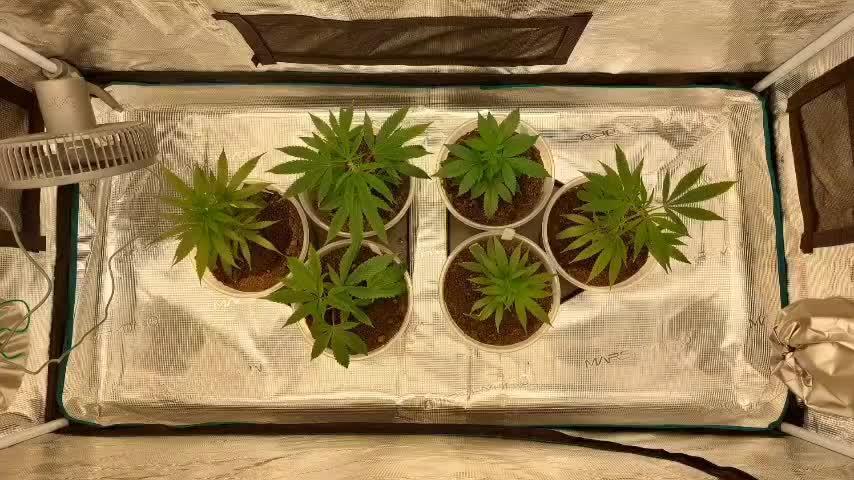
Zum Start der 2. Woche wurde getoppt.
Mal schauen, wie die Damen es verkraften.
Läuft es wie geplant, wird nächstes Wochenende umgetopft.

