Likes
Comments
Share


@Smokeitup091191
Follow
This week has gone well again really impressive the growth on this lady starting to shape up nicely no problems.
The smell is slight but getting stronger each day. Very sour grapefruit peel springs to mind and some signs of trichomes other than that just keeping it nice and steady 👍🏼

Likes
2
Share

@Mo_Powers
Follow
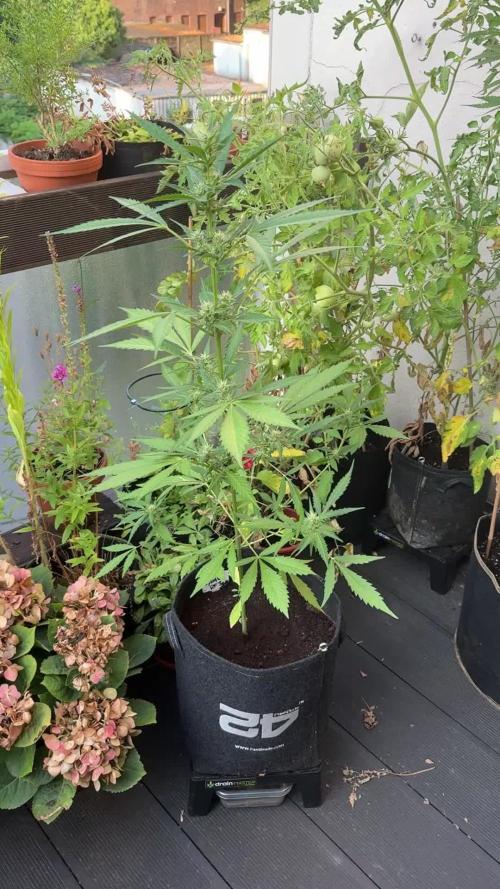
She’s just over 90 cm tall. The buds are getting fatter and the pistils are already taking on a lovely pink hue – guava pink. Otherwise, she looks healthy. I’ve stopped the LST training for now and have pruned the side shoots into shape.
Likes
6
Share


@valiotoro
Follow
Hello everyone 😎
Week 5 of flower for the OG Kush🌲
She is doing very well,growing at fast pace and with a beautiful green colour on the leaves.
For the nutrient 2ml/L terra bloom + 1ml/L power buds🔥
I already have my Christmas tree 🎄
The smell is amazing Pine & citrus
One is ready & it’s time to flush with Terra Aquatica Flashhh Clean
Likes
5
Share


@Nebula
Follow
Happy this seed was successful to germinate! This is an organic run with Green Gro in Ocean Forest. Trying some new air pots at my local grow shop, $7 vs $30. Nothing exciting yet. Looking forward to sharing the progress.

Processing
Likes
12
Share


@Siriuz
Follow
Started Week 7
Noticed 2 or 3 leaves showing some
Nutrient burnt
But she's all good we already added some plain water and flush a Lil so she's even better, nothing to worry about.
We went medium hard on nutes last day
Hopefully we will see results in a couple days and preparing her for next meal
Any suggestion please let me know
Comment down below, thank you for your support have fun and happy growing guys
Day 46 Was a great day outdoors, they spent all day out until night came and then we brought them inside for more light
Was a cloudy rainy but sun still there
Nice weather after all
Day 47 Only outdoors from 7 til 2pm
Day 48 not so good outdoors but left them until 2.00pm than CFL
Day 49
She's looking good, passed all morning outdoors and went back inside around 2pm then CFL for the next day
Day 50
Sunny Sunday outdoors very clear good weather we will see if it gets hot or not to bring her inside, buds coming up quickly developing more places where buds will grow, any suggestions or ideas are welcome!
Day 51, 52 and 53.
Havent gotten the time to take pics or vids lately but check on next week to see the difference between day 50 and day 54
If I can put all those day together
I must say she's been good and healthy
Performed Lil defoliation on her
Also watered them a lil
They always take morning sunlight outdoors from 6.30 til it gets really hot or dry then they go back indoors under CFL lights so they continue to grow in a good environment where we can control humidity and temp better.
If weather is good they will stay outdoors until sun is gone then we give them extra light at the comfort zone indoors.
Happy growing community and good vibes
Thanks for your support
Likes
8
Share

@Jardineiro_Br
Follow
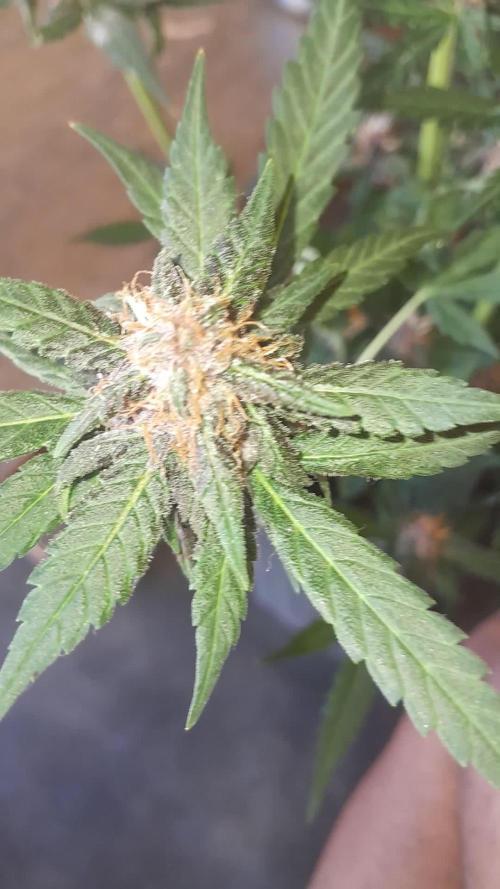
Planta com botões bem densos e devido a umidade percebi uns pontos de fungos por isso viu colocar ela no ambiente externo por uns dias e vou colher.
Ja perdi plantas com um floração linda para esse fungo que ataca o botões mais densos.
Likes
6
Share


@Rabidreject
Follow
Thursday
this week has been good so far, I pulled each plant out yesterday and tidied everything up. I got rid of all the tiny lateral branches that didn’t make the cut and I got Rid of everything that was below about half way down the plant. Obviously the lateral branches that grew to the same height as the canopy are staying it’s just all the non starter stuff below.
I annoyingly had my in take fan die on me. We’ll sort of, it just keeps tripping the fuse on my electric so I assume it’s from when I had my res flood onto the floor - I forgot it was there on the floor because it was hidden behind the res

Likes
2
Share


@KeemBboomin
Follow
This was the week I decided to take a look at my trichomes with about 2-3 weeks left why not see what’s in store for me. And what I saw was some pretty milky stuff with surprisingly some amber to me that just means I’m going to get some good thc levels I’m shooting for at least 22-25% thc wish me luck we are almost there final stretch


Likes
18
Share


@DogDoctorOfficial
Follow
Week 6 Report: White OG – Shaping Her Future 🌟
We’re at Week 6 of veg, and the White OG is thriving like a superstar! This week, I decided to take her structure to the next level by topping a few branches, and let me tell you—she’s loving it. 🌿 The growth is vigorous, and she’s shaping up beautifully to maximize her potential for flowering.
Let’s dive into what went down this week and why it’s all so important for her journey.
Branch Topping: Building a Strong Framework
After recovering beautifully from her initial topping at node 7, it was time to refine her structure further by topping a few branches. For each branch, I left two nodes to ensure strong, healthy growth while encouraging a bushier canopy.
Why Top Branches?
Topping isn’t just for the main stem—it’s an essential technique for creating an even canopy and increasing yield potential:
1. Encourages Lateral Growth: By removing the top of a branch, the plant redirects its energy into the remaining nodes, encouraging side shoots to grow and fill out.
2. Maximizes Light Penetration: A bushier plant with more branches ensures that all parts of the plant get access to light, reducing shading and improving photosynthesis.
3. Improves Structure: A strong, evenly distributed framework sets the stage for a healthier plant that can support larger buds during flowering.
The decision to leave two nodes per topped branch ensures a balance between promoting growth and avoiding unnecessary stress.
Tent Conditions: Consistency is Key
The room conditions this week have remained steady and perfect for her vegetative stage:
• Temperature: Around 18°C—cool but manageable, keeping her growth steady.
• Humidity: At 60%, maintaining just the right level to support her root zone and foliage.
• Lighting: The Future of Grow (FOG) LED at 200 PPFD continues to provide optimal light for compact, strong growth. i will dim it up soon!
These consistent conditions give her the environment she needs to recover quickly from topping and focus on building her structure.
Nutrient Routine: Trusting the Pellets
This week, I’ve continued with the Aptus Holland All-in-One Pellets as the primary nutrient source. They’re working their magic, providing a steady release of nutrients to support her vigorous growth.
As a backup plan, I’m always ready to reintroduce All-in-One Liquid if she starts showing signs of needing more immediate nutrition. For now, she’s thriving, and the pellets are doing an excellent job of meeting her needs.
Training and Future Plans
Topping a few branches this week was just the beginning. I’m planning to continue topping over the next few weeks to shape her into a bushy, evenly distributed plant. By focusing on creating a strong structure now, she’ll be perfectly prepared for explosive growth when we flip her into flowering.
Looking Ahead: Growth on Overdrive 🚀
As Week 7 approaches, I’ll be monitoring how she responds to the additional topping and ensuring her environment stays consistent. The goal is to encourage her lateral growth while keeping her stress levels low and her energy focused.
A huge thank you to the incredible brands and community that make this journey so rewarding:
• Seedsman Seeds for the top-tier genetics—don’t forget to use the DOGDOCTOR 10% off discount code!
• Aptus Holland for their game-changing nutrient solutions.
• Pro-Mix Soil for the perfect foundation with their HP Mycorrhizae + Bacillus blend.
• TrolMaster for helping me maintain the perfect environment.
• Future of Grow LED for reliable, efficient lighting.
• Cannakan for kickstarting this journey during germination.
• Grow Diaries for being the platform where we share, connect, and learn together.
To all my followers, lovers, haters, and everyone in the community—you’re the heart and soul of this journey! 🌟
Bonus Content: New Episodes Weekly on YouTube! 🎥
Don’t forget to check out my YouTube channel for weekly episodes with tips, tricks, and behind-the-scenes action. Links are in the profile—come join the fun!
Growers Love! 💚
DISCOUNT CODE - SeedsmanSeeds - DOGDOCTOR 10% off
As always thank you all for stopping by, for the love and for it all , this journey of mine wold just not be the same without you guys, the love and support is very much appreciated and i fell honored and so joyful with you all in my life 🙏
With true love comes happiness 💚🙏 Always believe in your self and always do things expecting nothing and with an open heart , be a giver and the universe will give back to you in ways you could not even imagine so 💚
Friendly reminder all you see here is pure research and for educational purposes only
💚Growers Love To you All and remember to keep that smile big and alive 💚

Likes
1
Share

@Lombardy11
Follow
Zdar Bando.
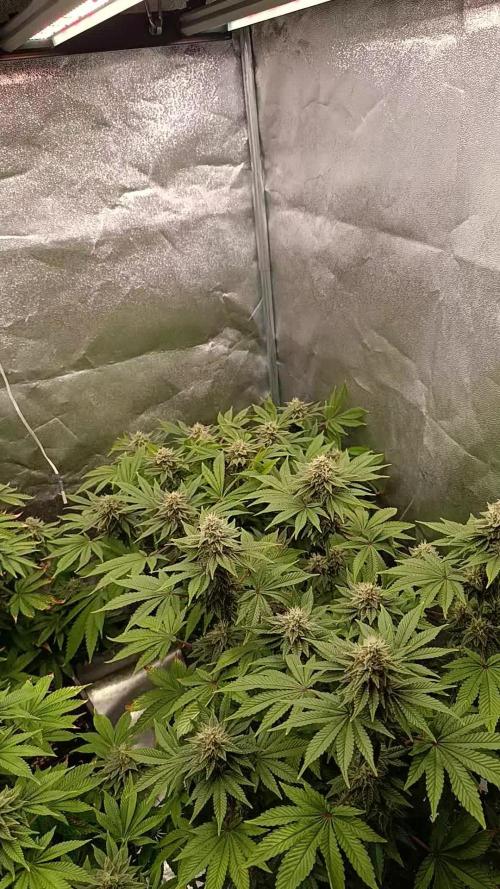
7 týden květu za mnou.
Paldy bobtnání hezký dál.
Na bong snad bude.
Holky mi dělají radost jen sem musel likvidovat další 3 květy, snad to dopadlo dobře a nebude nic oprcaný.
Začínají vonět dost štiplavě je to taková zvláštní vůně těžko to popsat. 😁
Vypadá to že se dostanu až na 10 týden.
Už se těším jaký to bude, pěstu zdar.🤘

Likes
27
Share


@Wicked_Stix
Follow
This bitch hermed on me. 2nd one this grow. I didn't want to kill it so I separated it from the other plants in it's own tent. Running it on a 5 gallon reservoir. Going to pick as many bananas off as I can and pick out the seeds and stems when I smoke it. Just like the old days
Processing
Likes
91
Share


@CANNASIM
Follow
GENERAL COMMENT. WEEK 5 OF FLOWER.
Ok guys, this week ran ok for one girl and less for her sister, so i will go on details individually.
RQS STRESS KILLER AUTOMATIC COMMENT.
Beautiful girl getting bigger everyday, i’m very satisfied overall, she is fast and have lots of terpenes, and started heavy resin production. Super strong, absolutely no issue at all for now. I’m imagining to start flushing this week or the next will decide this days to come, but this grow will be max 12 weeks.
Not reading the runoff on this girl as everything is just amazing. Maybe will backbuild some colas to compare.
EC at 2.2, released a lot of N now, but still did a good feeding, it might be the last, or max one more before the flush.
Will be flushing with flawless finish in the last week.


Likes
8
Share

@GERGrowDesigns
Follow
Privat Problems
Im Back soon stay tuned for more New Upcoming Content
Just doing a little break because theyrse much to do and solve behind the scenes
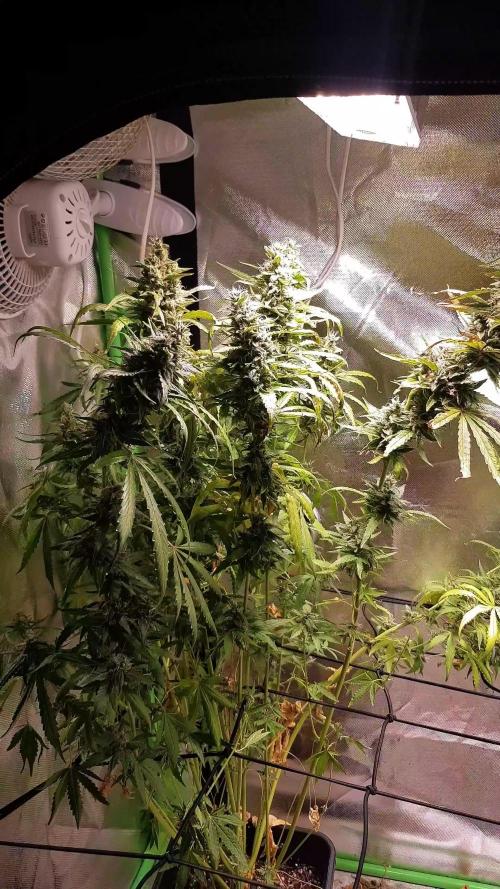
Finishing up the Diaries as good as Possible, theyre got harvested some weeks Ago


Likes
12
Share


@Sieben
Follow
Sorry guys some trouble only a vid today.
Best at this week , i had to re attach the Sanlight directly to the tent cause only cause plants got too high.
I do not suggest this fun to anyone 😂🙈.


Likes
24
Share


@Mathew
Follow
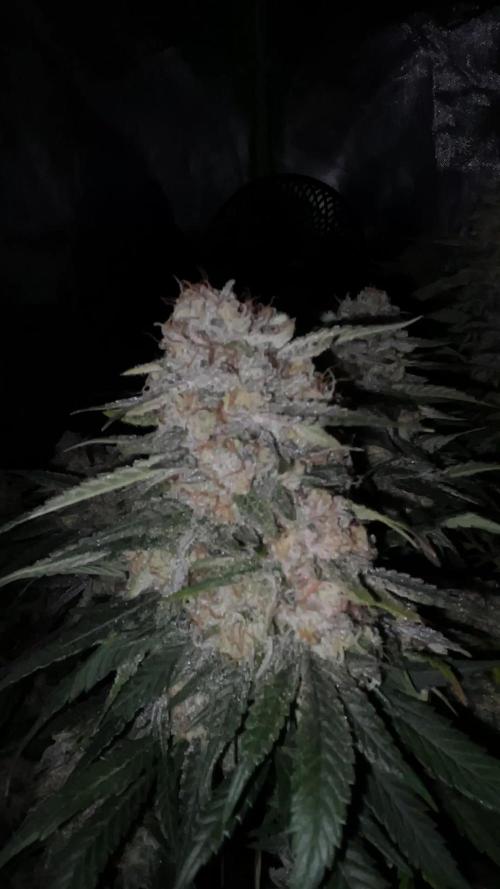
I feel like she's doing great, loving this batch of living soil. Still a bit confused on how watering at a ph of 5.3 is being buffered by the soil up to a runoff ph of 8. Not going to worry about it, she looks great and smells great and it's day 29-30 since flipped. The soil has her now.