


Likes
Comments
Share


@Lanek
Follow
very easy and pleasant lady. Recommended, I didn't do much, some training, some defoliation, not much. It smells beautiful, has beautiful colors, hard and large flowers and a very fast lady

Likes
1
Share


@CannabisCultivate
Follow
Just about to go into bloom, we’ll cleanup the lower part of this girl today and hit them up with some Mills Nutrients Bloom, Hygrozyme and HyShield.

Likes
17
Share


@YorkshireGardeneruk
Follow
They popped up 2nd of January after germination. Biobizz soils mixed just using oxy plus for first couple of weeks as well as silicone


Likes
23
Share


@eldruida_lamota
Follow
Como estamos familia, a día de hoy, viernes, llevamos exactamente 7 días en la fase de floración y todas ellas están marcadas por su sexo.
Todo va sobre ruedas, tenemos mínimas de 20,5 y maximas de 28,5 grados. la humedad no supera nunca el 60%.
Altura mínima lemon kush 25cm.
Altura maxima northern light xl 42cm.
•las power plant xl Han pegado un estirón serio, están empezando a ensanchar bastante.
•una marea verde desde semilla, con tan solo 5 semanas de crecimiento y un solo trasplante desde que se germinó, para controlar un mal crecimiento.

Likes
33
Share


@burnerac
Follow
Day 50: Added one gallon of pH 6.5 water with nutrients. Plant looking healthy. Continuing to try LST but the tent stakes are not wanting to stay in the soil. Going to get some soft plant ties and begin pinning to the smartpot. Forgot to take pictures.
Day 51: Maybe approaching flowering?
Day 52: Looking good. She's getting real thirsty.
Day 53: Pretty
Day 54: Added a gallon of water with nutrients, Man she's getting thirsty.
Day 55: Posted timelapse but no glamour shots
Day 56: Added one gallon of pH 6.5 water without nutrients.


Likes
7
Share

@420DeepGrow
Follow
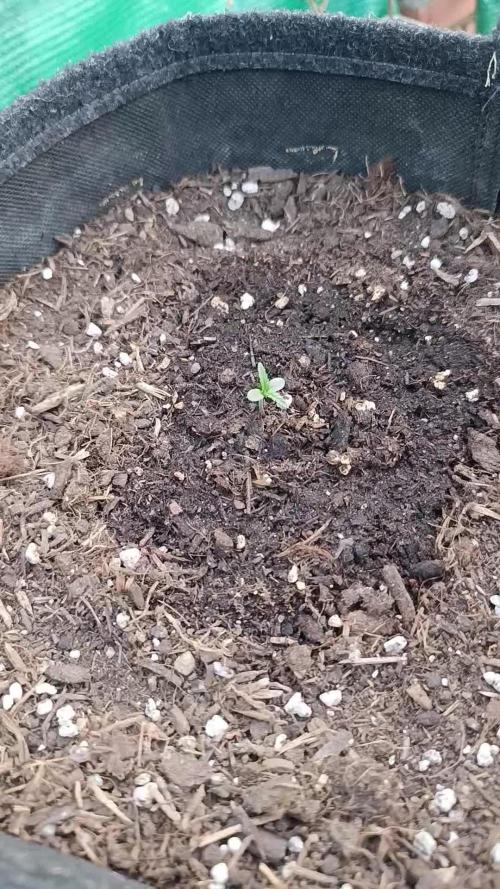
📆 Semana 1:
La plántula entra en su primera fase real de crecimiento en exterior, desarrollando nuevos pares de hojas con buen ritmo y manteniendo un color verde sano. Se aprecia una ligera elongación inicial típica de estos días, pero dentro de lo normal y sin comprometer la estructura.
Se retira progresivamente el “vaso”, permitiendo que la planta se adapte al entorno natural. La respuesta es positiva, con buena turgencia y sin signos de estrés, comenzando a ganar fuerza en el tallo.
Los riegos siguen siendo controlados, ampliando el perímetro para fomentar una mayor exploración radicular. Se mantiene el uso de estimulador de raíces, sin introducir aún carga nutricional significativa.
El aumento progresivo de horas de luz y la intensidad solar empiezan a marcar el ritmo, preparando a la planta para un crecimiento más explosivo en las siguientes semanas.
⚡ EC: 0.4–0.5
💧 pH: 6.2–6.3
🌡️ Agua: 18–20°C
🌫️ Humedad: 50–70%
☀️ Luz: sol directo principios de Abril
🔥 Nota de cultivo: Adaptación progresiva + raíz activa = clave para desbloquear todo el potencial en exterior desde fases tempranas.
Seguimos creciendo fuerte 💪!


Likes
48
Share


@DogDoctorOfficial
Follow
The time to move this cutie pie to the autopot came and with it the feeding applications, for this i use all in one pellets from aptus and i use about 75g for the all cycle , wen transplanting i always use the mycor mixe help to promote my root with the fungus world life.
For now i will be feeding all in one liquid also but just until the pellets have time to brake and get available to my girl <3 <3 <3
Started her training with for me is just leaf bending and making sure that the lower branch get light and get a chance to grow the same high as the main one, or as close as i can get it <3<3<3
For this week this is it , looking flowerd to see her exploding so that i can plug in the autopots , but for now i will keep doing top feedings for a week or so <3 <3 <3
As always thank you all for stopping by and for supporting me on this journey, i am super passion about growing and fell blessed to have you all with me on this new journey <3 <3 <3
Genetics - Fast Buds Tropicana Cookies Auto
Ligth - LUMATEK ZEUS 465 COMPACT PRO
Food - APTUS HOLLAND
Tent - MARS HYDRO
All info and full product details can be find in can find @
https://2fast4buds.com/
https://aptus-holland.com/
https://autopot.co.uk/
https://lumatek-lighting.com/
<3 <3 <3 Growers love to you all <3 <3 <3
Tropicana Cookies Auto is the perfect variety for growers of all levels, especially beginners as this strain performs very well outdoors and indoors, and can produce up to 500gr/m2 in 56-63 days without needing extra maintenance. Reaching up to 110cm, this strain grows fairly tall with medium-sized branching, showing its mixed heritage. Definitely the right choice for those with a high tolerance looking to get their hands on the strongest autoflowers out there. Thanks to the 27% THC, you can expect an extremely powerful and long-lasting high that’ll boost your mood and give you that extra push you need to start your days on the right foot. This variety offers the whole range of citrusy and woody flavors with a strong candy-sweet background that will keep you coming back for more and more.
Bud description
Tropicana Cookies Auto produces gorgeous dark purple flowers, so expect really dark buds with gorgeous hues of pink, purple and blue, and thick dark-orange hairs that get completely covered in resin by harvest time, giving them an almost shiny-white appearance.
This variety develops a typical Indica-like structure and very few sugar leaves that will make your trimming sessions a breeze. But make sure to store your trimmings as the gorgeous flowers reek of a mouth-watering blend of lemon peels, orange juice, and sandalwood that gives it almost a citrus candy-like flavor that makes for the most aromatic hash and extractions.Smoke report
Thanks to the 27% THC, Tropicana Cookies Auto’s effect starts with an energizing head rush that gets your mind up and running while leaving you in a nice calm state. As the Indica-dominant side kicks in, the powerful cerebral effect gradually moves downwards and hits your whole body with a deep relaxation that leaves you with a joyful stoney sensation that alleviates chronic pain while leaving you in an overall happy and positive state of mind.
It’s the perfect daytime and nighttime strain as it can boost your mood and enhance a night out with friends but can also quiet your mind as you get ready for a good night of sleep. No matter the scenario, expect a powerful high that lasts for hours on end.Plant appearance
Tropicana Cookies Auto reaches up to 110cm and develops a tall main cola with shorter side branches, typical of hybrid strains. You can expect a stocky yet tall main cola with medium-sized side branches and thin fan leaves that fade into a yellowish hue with a beautiful dark purple tint. Thanks to the excellent selection, this variety develops a short internodal spacing that makes the medium-sized flowers look like they’re growing stacked on top of each other. It’s the ideal choice for growers who want to get big yields without having to deal with huge plants, as this monster yielder can produce up to 150g per plant while growing relatively short.
Grow tips
This variety grows super dense buds so make sure to space out the branches by tying them down, this way you improve airflow which helps prevent mold and other pests. Tropicana Cookies auto reek of a delicious sweet and sour smell so make sure to flush thoroughly to enhance the aromas even more. This terpene heavyweight finishes with lots of resinous sugar leaves that make for fantastic hash and extractions so remember to have your trim bucket ready!Flavor
Tropicana Cookies Auto boasts remarkably sweet flavors that resemble a blend of lemon peels and fresh orange juice, with subtle floral undertones that make it the perfect choice for extractors looking for unique terpene profiles.
Expect an overall citrusy zest that’ll coat your whole mouth and leave a delicious tropical candy-like flavor aftertaste. The sweet and sour flavors get balanced out with a herbal background that gets stronger as you exhale and gradually opens up, bringing out the whole range of woody, floral, and spicy flavors, making it the perfect choice for the most flavorful extracts.
Likes
60
Share


@BOMbolenath
Follow
Harvest done, plant is drying.
116 days from seed: 51 days veg + 65 days flora

Likes
4
Share


@HowtoBubatz
Follow
The stretch phase is officially over, and now the plant is shifting its energy toward trichome production!🌱
I’ve started noticing a light scent developing, though it’s still not very intense yet. I expect that to change in the coming weeks.
I did a light defoliation to improve airflow and light penetration, and I plan to do another round in about two weeks.
Interestingly, the fan leaves are starting to take on a slight reddish hue—curious to see how that develops! 💪😊
So far, everything is looking great, and I’m excited to watch the buds bulk up in the next phase!
Likes
6
Share


@bioaccessory
Follow
Hello colleagues!
I have reached the end of the cycle, everything is going well. I like the obvious difference in the plant phenotypes, it is interesting to fully reveal each strain.
Next week - watering with clean water, and we will be approaching the harvest.
Thank you for stopping by, and be healthy! 🙏
To be continued... 😶
Likes
23
Share


@nonick123
Follow
Día 13 (06/05) Nos acercamos al final de la fase plántula. A ver si ahora empiezan a crecer de forma explosiva!
He sido muy estricto con los riegos, dejando que el top hasta el nudillo se seque completamente!
Día 14 (07/05) Hago una mejora en la tienda. Hasta ahora tenia intracción pasiva, pero ahora he instalado una turbina para que impulse aire fresco dentro de la tienda
Día 15 (08/05) Con el calor que hace me sorprende que las macetas sigan aguantando la humedad, pero al hundir el nudillo sigue húmeda. Mañana haré un riego de nuevo
Día 16 (09/05) Relleno el top con sustrato para compensar la compactación y dar mas soporte a las plantas
Riego con 300 ml solo H20 - pH 6,2
Día 17 (10/05) Baño de sol de dos horas.
Día 18 (11/05) Baño de sol de dos horas
Día 19 (12/05) Riego 750 ml H2O + Regulator 0,15 ml/l + CaMg-Boost 0,25 ml/l + Startbooster 0,25 ml/l - pH 6.2
💦Nutrients by Aptus Holland - www.aptus-holland.com
🌱Substrate PRO-MIX HP BACILLUS + MYCORRHIZAE - www.pthorticulture.com/en/products/pro-mix-hp-biostimulant-plus-mycorrhizae
Likes
27
Share


@Kindbudz
Follow
8/9/2018 - All of these girls are doing great and have all shown their white pistils now! The branching on them has taken off and they responded to being topped really well. I’ve switched them from my 4x4 grow tent into a 4x8. I have to say it is significantly better having the extra space to be able to water, move around and for better air circulation with multiple fans. I also believe this will greatly help with light penetration inventory they bush out. I’ve been having issues keeping the daytime air temperature down due to the extream heat wave we have been experiencing. I think I have tackled this issue by running the lights at night now while the temperatures are cooler. Tomorrow is the official switch to flower and will be on a 13 hours off, 11 hours on light cycle for the next 2 days. Then on a normal 12/12 light cycle. IVE read that this can help the plants switch quicker. I’m looking forward to seeing the growth over the next few weeks!

Likes
Comments
Share


@Bread_n_Buds
Follow
Forbidden Fruit – Zamnesia Seeds | Germination & Early Growth
Starting another grow diary with Forbidden Fruit from Zamnesia Seeds.
The beginning has been smooth and straightforward, with the seedlings establishing themselves well and showing healthy early growth. So far, everything is progressing as expected, with no particular issues to report.
Forbidden Fruit is a predominantly Indica strain (75% Indica / 25% Sativa), bred from Cherry Pie × Tangie. The combination of these genetics is reflected in its reported citrus, fruity and tropical aroma profile, with terpinolene listed as the main terpene.
Compared with Sativa Fiesta, this one should have a more compact structure, with Zamnesia listing an expected indoor height of around 120 cm. The flowering period is estimated at 8–9 weeks, making it an interesting contrast to the more Sativa-dominant genetics in the grow.
For this grow, I’m using Zamnesia Vegan Grow as the nutrient, together with the Zamnesia Ecosystem grow box, including its ventilation system. Lighting is provided by the Zamnesia Phytonaut LED 480W.
At this stage, the focus is on establishing strong and healthy plants and observing how Forbidden Fruit develops as it moves through the vegetative phase. The reported genetics suggest a more compact Indica structure, so it will be interesting to follow its growth pattern throughout the cycle.
**Strain:** Forbidden Fruit
**Breeder:** Zamnesia Seeds
**Genetics:** Cherry Pie × Tangie
**Genotype:** 75% Indica / 25% Sativa
**Type:** Feminized, photoperiod
**Difficulty:** Moderate
**Main terpene:** Terpinolene
**Flowering time:** 8–9 weeks
**Indoor height:** up to 120 cm
**Outdoor height:** up to 160 cm
**Reported THC:** up to 21%
**Reported CBD:** 0–1%
**Aroma:** Citrus, fruity, tropical
**Reported effects:** Relaxing, soothing
Grow setup:
🌱 Zamnesia Ecosystem Grow Box
💡 Zamnesia Phytonaut LED – 480W
💨 Integrated ventilation system
Zamnesia Vegan Grow
All the products used in this grow are available at
www.zamnesia.com

Likes
39
Share


@CURATI_DA_SOLO
Follow
In realtà ho coltivato 2 semi di questa pianta una l'ho raccolta e seccata mentre un altra è ancora in flush e verrà raccolta tra 5-6 giorni. I fenotipi sono quasi identici e predilige un odore di gas e og! L'effetto è devastante molto narcotica e a breve pubblichero qualche foto di qualche estrazione a freddo! Spero che piacciano a qualcuno i miei lavori e che qualcuno di voi si possa ispirare a tutto questo.
Ringrazio ogni singola persona che è passata di qui a lasciare il suo like o commento e ricordo a tutti voi che potete trovarmi anche su Instagram 😘
Likes
16
Share

@H0BBYGAERTNER
Follow
WEEK #17 — THIS AIN'T A SPRINT
Again big zZz, zZz...
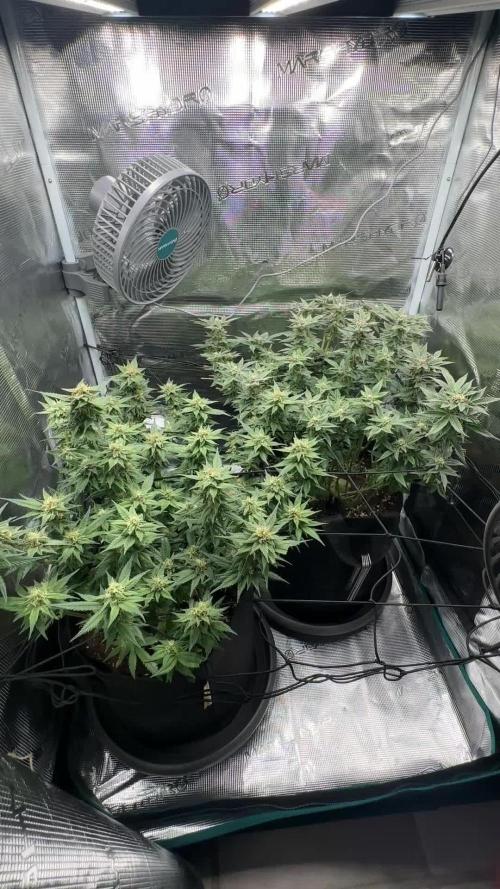
Water: a bit more (hot temperatures), but did not use phosphor this time, because i read horror stories for when you feed too much of it. And the plants seem to do fine, so no need to maximize and risk it.
However, at the moment i'm afraid the size of the buds is still a bit behind for the duration of flower, at least checking other diaries (which strengthens my theory there was something wrong with the light controller the first few days). Maybe it's the multitude of blossomos also. They seem to be rather dense though, so i hope they're going to develop a bit. As for the schedule, i think there's no way i will harvest in 1 week (1-2 weeks for SMC and 2-3 weeks for Skywalker *Haze* according to Dutch Passion standard).
Smell is sweet and rather unchanged, soapy-citrus for Skywalker and fruity-gummybears für SMC.
Look: SMC is just super cool. Super frosty leaf brims, purple details - very pretty! Buds going to look super appealing, i guess, with white-green-orange-pruple color. Compared to that Skywalker is just "ok", but given the different stage of bloom i am sure she will do her part.
Patience it is. Haven't checked any trichomes also so far. See you next week!

Likes
15
Share


@Red_i_jedi
Follow
05/03/19
Kept it simple, haven't done much apart from lower the light from 45cm to 40cm. Keeping the thermostat fan set to no higher than 25c
Open the doors once a day and give a spray of water to the walls of the wardrobe 3 x daily
The soil is still moist from a feed on the 03/05/19 so I'll just wait until the topsoil is dry by 3cm
*******
08/03/19
The plants were looking a little sad so I've watered them 1L nute loaded for each plant and started with some LST
Likes
11
Share


@The_Hoods_Club
Follow
Without a doubt, this variety is very resistant and has withstood well the stress to which we have subjected it, such as abrupt changes in pH, pruning and training.We can only hope that the flowering is much better than I expect so we can preserve the genetics in the collection

Likes
16
Share

@HowtoBubatz
Follow
The Plant is getting very bushy and I am thinking of dedefoliating the plant but I am unsure because of it being an Autoflower in the early stages.
