


Likes
Comments
Share


@Vegetoo420
Follow
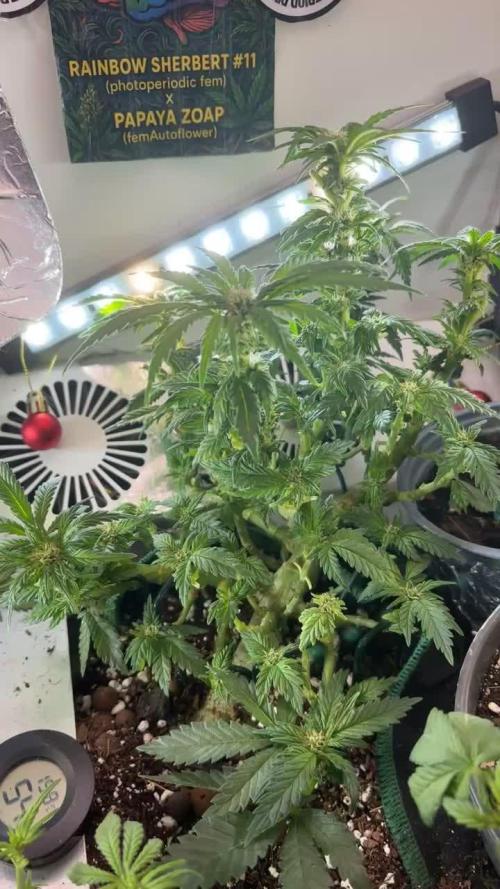
Hey hey ! I left my girls during 4 days without watering due a hospitalization !
I discovered this girl like this when I opened the room and she exploded !!
Day 3 : floweeeers comin !
Day 6: little defoliation and 🍭 lollipop on this girl : she’s clean now !

Likes
5
Share

@psychonaut420
Follow
She’s developing her bud formation nicely hopefully see more and more fattening and more stretching of the side branches so far so good

Likes
98
Share


@Tropicannibis_Todd
Follow
💩Holy Crap We Are Back At It And Loving It💩
Growmies we are at DAY 56 and she's just killing💀it👌 The Smell has kicked in and is wonderful 😀
👉We are in full out flowering 💐 and its looking great 👈
So Shit , I gave them just a tad to much nutes on the first few feedings 👈 But I have since fixed it
So I'm helping out with some low stress training 🙃 and some defolation 😳
Lights being readjusted and chart updated .........👍rain water to be used entire growth👈
👉I used NutriNPK for nutrients for my grows and welcome anyone to give them a try .👈
👉 www.nutrinpk.com 👈
NutriNPK Cal MAG 14-0-14
NutriNPK Grow 28-14-14
NutriNPK Bloom 8-20-30
NutriNPK Bloom Booster 0-52-34
I GOT MULTIPLE DIARIES ON THE GO 😱 please check them out 😎
👉THANKS FOR TAKING THE TIME TO GO OVER MY DIARIES 👈

Likes
2
Share


@LittleBigTrees
Follow
Easy to grow , no real problems .
Was ready in 8 weeks but could have gone another at least .
Next time I will flower for longer to see if there's much difference in that last week to ten days.
You can find these beans at :
Zamnesia.com
20%off code : ZAMMIGD2023

Likes
15
Share

@SouthGermanGrowGirl
Follow
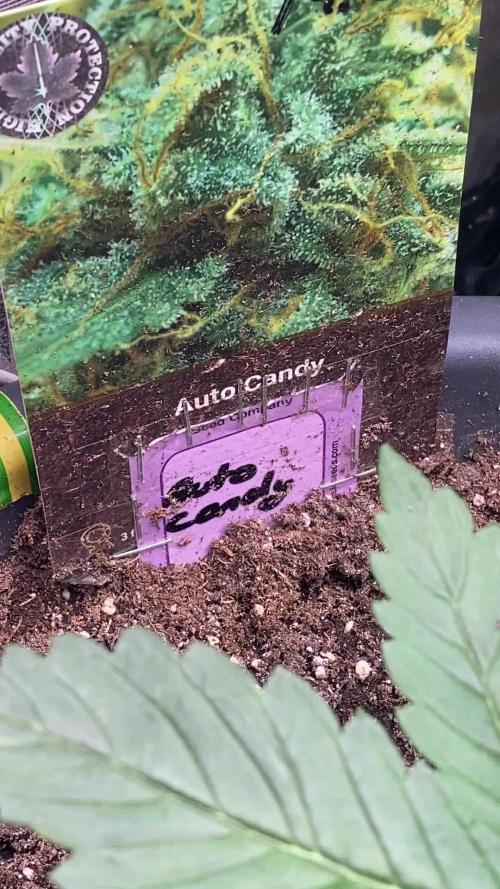
Candy grows slowly because of this weather here in South germany :-(
but we will see, it seems it will be better in few days

Likes
112
Share

@Tropicannibis_Todd
Follow
Alright Then
REMINDER I DO 2 UPDATES PER WEEK 👉WEEKLYROUNDUP👈👉MIDWEEKLY UPDATE👈
We just hit week 4 and all is well , have to admit she been a little bit of the runt of the litter ,still she keeps on pushing forward 😃 .......
So this little sprout is tuff one and has begun to start with pre-flowers👍 Still very little vertical growth , but I'm working on it 😏
Very little water given ,so far and rain water to be used entire growth
Her little sister is about 12 days behind and is playing catchup and she's doing great 👌
Lights being readjusted and chart updated .........👍
I GOT MULTIPLE DIARIES ON THE GO 😱 please check them out 😎
👉I WISH GD HAD DISCORD SERVER SO GROWMIES COULD HAVE A PLACE TO HELP AND TALK THINGS RELATED TO GROWING IN REAL TIME .....👈
👉SO I CREATED ONE ALL YOU NEED IS TO JOIN THE GROWDIARIES DISCORD SERVER !!!!!!!!!!!👈
LINK IS 👉
https://discord.gg/zQmTHkbejs
AND SEE HOW IT PLAYS OUT !!!!!!!
Likes
2
Share

@Ensign420
Follow
|»» LOG DISCLAIMER: Not intended as a grow guide. Grow log entries are usually posted 3-4 weeks later and are for my learning reference. ««|
Introduction - Week 20 Summary -
Ensign's log, stardate 17741.4,
Another grow week.
In the main tent, nothing but general checkups with a few leaf defoliations. Added more mulch to the top of each pot.
In the veg tent, topped all mothers and took more clone cuttings. Now have the cuttings rooting in Coco Coins.
Anyways, onwards to next week Ensign.
[START OF WEEK 20]
==========================================================
---------- [ 3x3 VEG TENT - GR3 ] ----------
Heady OG BX1 #1 - WEEK 12 - Full Veg
TKO #2 - WEEK 02 - Full Veg
Chill Out OG #3 - WEEK 09 - Full Veg
Chill Out OG #2 - WEEK 05 - Full Veg
---------- [ 4x4 MAIN TENT - GR30 ] ----------
Chill Out OG #2 - WEEK 20 - Full Bloom Wk6
TKO #2-2 - WEEK 14 - Full Bloom Wk6
Heady OG BX1 #1 - WEEK 16 - Full Bloom Wk6
03/16/26 → 03/22/26 [WEEK 20]
This Week's Estimated Goals
----------------------------------------------------------------------------------------------
DLI: ~22 mol/m²/d
PPFD: ~500 μmol/m²/s
VPD: ~1.2 kPa
This Week's Meter Readings & Averages
----------------------------------------------------------------------------------------------
Light On/Off: 16:00 - 10:00 | Wattage: ~386.3W [LV05]
Distance From Canopy: ~[21”, 3.5”, 9”]
Plant Height: ~[31”, 48.5”, 43”]
Max Plant Height: ~52” [Lamp-to-Soil Distance]
DLI: ~53.31 mol/m²/d
PPFD: ~520 μmol/m²/s
VPD: ~0.64 kPa
Soil %: ~[51.4, 41.6, 47.3, 41.9, 54.7, 64.6, 48.0, 63.9, 50.9, 70.7]
==========================================================
Day 01 - Monday - 03/16/26 - Total Days: 131
-----------------------------------
Daily Averages ~[+01:00]
- Temps: 78.9°F [26.1°C]
- Humidity: 83.6%
- VPD: 0.55 kPa
- Soil %: [52, 41, 46, 43, 53, 63, 49, 63, 51, 69]
-----------------------------------
- [21:26]: Night check on the 4x4 tent.
--- The garden is looking great.
--- All phenos are in full bloom and terpenes are getting louder.
--- The under canopy is looking clean and pots look good.
- [21:40]: Checked the Ecowitt soil moisture sensor data:
------------------ [ 3x3 VEG TENT – GR3 ] ----------------
------ 51% - [CH01 » M1 » VBL – Heady OG BX1 #1]
------ 41% - [CH02 » M2 » VBR – TKO #2]
------ 46% - [CH03 » M3 » VFL – Chill Out OG #3]
------ 43% - [CH04 » M4 » VFR – Chill Out OG #2]
----------------- [ 4x4 MAIN TENT – GR30 ] ---------------
------ 53% - [CH05 » P1 » FLT – Chill Out OG #2]
------ 62% - [CH06 » P1 » FLB – Chill Out OG #2]
------ 49% - [CH07 » P2 » BLT – TKO #2-2]
------ 62% - [CH08 » P2 » BLB – TKO #2-2]
------ 51% - [CH09 » P3 » FRT – Heady OG BX1 #1]
------ 69% - [CH10 » P3 » FRB – Heady OG BX1 #1]
--------- Veg: ~38%-45% | Flower: ~45%-55%
--------- General: ~30% [Dry] «| ~45-60% [Moist] |» ~70% [Wet]
- [21:43]: Checked the 3x3 veg tent.
--- Veg garden is looking great.
--- Mothers and clones look good.
--- Two solo cups need watering..
- [21:59]: Here are the starting initial watering ranges:
------ Heady OG BX1 #1-1 » 256.9g → 353.3g
------ Gorilla Goat #1-1 » 287.0g → 325.2g
--------- General Weight Range: [Dry] ~275g «| [Dryback] ~300g |» ~325g-400g [Wet]
--- Both cups were last watered 3-4 days ago.
--- Took the starting weight of both clones before watering,
------ Heady OG BX1 #1-1 » 295.7g
------ Gorilla Goat #1-1 » 276.9g
--- While on a scale,
--- Evenly misted the top of both cups with RO water.
--- Did not spray the top growth.
--- Misted 10-20 sprays. Waited a moment, then misted again.
--- Repeated this process until both cups weighted at least 300g.
--- There was no runoff.
- [22:35]: Took the saturated weight of both cups after watering,
------ Heady OG BX1 #1-1 » 355.9g
------ Gorilla Goat #1-1 » 370.1g
--- Updated the wet weight and watering dates for both cups.
--- Placed both cups back into the tent.
- [22:59]: Checked the humidifiers.
--- Tanks are still full and no leaks found.
Day 02 - Tuesday - 03/17/26 - Total Days: 132
-----------------------------------
Daily Averages ~[+01:00]
- Temps: 81.5°F [27.5°C]
- Humidity: 82.2%
- VPD: 0.65 kPa
- Soil %: [52, 41, 45, 42, 52, 62, 48, 62, 51, 68]
-----------------------------------
- [16:06]: Evening check on the 3x3 veg tent.
--- Veg garden looks healthy.
--- Two solo cups need watering..
- [16:12]: Here are the starting initial watering ranges:
------ TKO #2 » 252.5g → 335.5g
------ Gorilla Goat #1-1 » 287.0g → 325.2g
--------- General Weight Range: [Dry] ~275g «| [Dryback] ~300g |» ~325g-400g [Wet]
--- Both cups were last watered 2-5 days ago.
--- Took the starting weight of both clones before watering,
------ TKO #2 » 294.3g
------ Gorilla Goat #1-1 » 297.2g
--- While on a scale,
--- Evenly misted the top of both cups with RO water.
--- Did not spray the top growth.
--- Misted 10-20 sprays. Waited a moment, then misted again.
--- Repeated this process until both cups weighted at least 300g.
--- There was no runoff.
- [16:24]: Took the saturated weight of both cups after watering,
------ TKO #2 » 355.4g
------ Gorilla Goat #1-1 » 375.1g
--- Updated the wet weight and watering dates for both cups.
--- Placed both cups back into the tent.
- [16:34]: Checked the Ecowitt soil moisture sensor data:
------------------ [ 3x3 VEG TENT – GR3 ] ----------------
------ 52% - [CH01 » M1 » VBL – Heady OG BX1 #1]
------ 41% - [CH02 » M2 » VBR – TKO #2]
------ 46% - [CH03 » M3 » VFL – Chill Out OG #3]
------ 42% - [CH04 » M4 » VFR – Chill Out OG #2]
----------------- [ 4x4 MAIN TENT – GR30 ] ---------------
------ 52% - [CH05 » P1 » FLT – Chill Out OG #2]
------ 62% - [CH06 » P1 » FLB – Chill Out OG #2]
------ 49% - [CH07 » P2 » BLT – TKO #2-2]
------ 62% - [CH08 » P2 » BLB – TKO #2-2]
------ 53% - [CH09 » P3 » FRT – Heady OG BX1 #1]
------ 68% - [CH10 » P3 » FRB – Heady OG BX1 #1]
--------- Veg: ~38%-45% | Flower: ~45%-55%
--------- General: ~30% [Dry] «| ~45-60% [Moist] |» ~70% [Wet]
- [22:12]: Checked the 4x4 tent.
--- The garden is looking and smelling incredible.
--- Bud growth is coated in trichomes and water leaves are resin-railed out. Nice.
--- The under canopy is looking clean.
- [22:20]: Checked the humidifiers.
--- Tanks are still full and no leaks found.
Day 03 - Wednesday - 03/18/26 - Total Days: 133
-----------------------------------
Daily Averages ~[+01:00]
- Temps: 82.7°F [28.2°C]
- Humidity: 81.3%
- VPD: 0.71 kPa
- Soil %: [52, 41, 47, 42, 53, 62, 49, 62, 52, 67]
-----------------------------------
- [16:02]: Evening check on the 3x3 veg tent.
--- Veg garden is looking good.
--- With the exception of Chill Out OG #2, going to top all mothers.
--- Will also be taking several clone cuttings of Chill Out OG #3 and Garlic Budder OG#1
- [16:13]: Filled a measuring cup with 1.5 cups of RO water.
------ Added 1/8tsp of Horticultural Aloe
--- Mixed the solution and poured it straight into a clear solo cup.
--- Placed the PVC rig into the cup just above the aloe water.
--- Using a pair of clean trimmers,
--- Topped and defoliated each mother plant.
--- Removed a decent amount of growth which lowered the canopy by a good 12-13 inches.
--- Mulched the trimmings into a 5-gallon bucket.
- [16:59]: Also cut several clonal cuttings from each mother plant.
--- Only need one cutting to root, but to ensure successful rooting, took multiple cuttings of each cultivar.
--- Made sure to trim most of the branches leaving a top node or two.
--- Did not cut any leaf fingers and made sure to cut the tip of the stalk (about 45-degree) before placing each cutting into the cup of aloe solution.
--- Made sure each tube on the PVC rig had the correct names labeled.
--- Wow the canopy looks a lot cleaner and lower.
- [17:09]: Placed the cup into the veg tent.
--- Have the cup resting in the propagation tray.
- [17:11]: Decided to cull the Garlic Budder OG#1-1 clone.
--- Mulched the trimmings and soil. Placed everything into the 5-gallon mulch bucket.
- [19:14]: Checked the 4x4 tent.
--- The garden is looking good and terpenes are smelling great.
--- Wow the canopy looks stacked with Heady OG’s top buds swelling up and looking uniform.
--- The under canopy looks clean.
- [19:24]: Checked on the BluMat soil moisture sensors:
------ Chill Out OG #2 » 58mbars
------ Heady OG BX1 #1 » 48mbars
------ TKO #2 » 55mbars
--------- Watering Range: [Too Wet] ~25mbars «| [Ideal Target] ~40-80mbars |» ~125mbars [Too Dry]
--------- BluMat Max Values: [10mbars «||» 750mbars]
- [19:26]: Took the 5-gallon mulch bucket with clippings from earlier.
--- Evenly spread the trimmings on top of all 3 pots in the tent.
--- Tried to keep everything within the BluMat drip-tape watering loop.
- [19:35]: Decided to make a slight adjustment to Chill Out OG #2’s watering carrot.
--- Using the BluMat key, increased the water moisture by rotating the tension cap slightly counter-clockwise.
- [19:44]: Quickly checked on the RO reservoir and auto-watering system.
--- Everything looked good and no leaks detected.
--- The gravity feed was holding steady at ~2.1 psi of pressure at ~22” from the floor.
- [19:47]: Checked the humidifiers.
--- Tanks are still full and no leaks found.
Day 04 - Thursday - 03/19/26 - Total Days: 134
-----------------------------------
Daily Averages ~[+01:00]
- Temps: 83.0°F [28.3°C]
- Humidity: 81.6%
- VPD: 0.70 kPa
- Soil %: [52, 42, 49, 42, 60, 69, 49, 65, 52, 73]
-----------------------------------
- [16:03]: Evening check on the 3x3 veg tent.
--- Veg garden is looking good.
--- Two solo clones need watering..
- [16:12]: Here are the starting initial watering ranges:
------ Heady OG BX1 #1-2 » 255.4g → 335.4g
------ Gorilla Goat #1-2 » 294.4g → 325.4g
--------- General Weight Range: [Dry] ~275g «| [Dryback] ~300g |» ~325g-400g [Wet]
--- Both cups were last watered 5-6 days ago.
--- Took the starting weight of both clones before watering,
------ Heady OG BX1 #1-2 » 299.0g
------ Gorilla Goat #1-2 » 283.1g
--- While on a scale,
--- Evenly misted the top of both cups with RO water.
--- Did not spray the top growth.
--- Misted 10-20 sprays. Waited a moment, then misted again.
--- Repeated this process until both cups weighted at least 300g.
--- There was no runoff.
- [16:31]: Took the saturated weight of both cups after watering,
------ Heady OG BX1 #1-2 » 355.2g
------ Gorilla Goat #1-2 » 370.1g
--- Updated the wet weight and watering dates for both cups.
--- Placed both cups back into the tent.
- [16:41]: Time to swap the aloe water out.
--- Filled a clear cup with fresh RO water (1.5cups).
--- Gently lifted the PVC rig out of the cup of aloe water and set it gently into the RO cup.
--- Going to let these soak for another day before transplanting into Coco Coins for rooting.
- [16:44]: Checked the Ecowitt soil moisture sensor data:
------------------ [ 3x3 VEG TENT – GR3 ] ----------------
------ 52% - [CH01 » M1 » VBL – Heady OG BX1 #1]
------ 45% - [CH02 » M2 » VBR – TKO #2]
------ 67% - [CH03 » M3 » VFL – Chill Out OG #3]
------ 42% - [CH04 » M4 » VFR – Chill Out OG #2]
----------------- [ 4x4 MAIN TENT – GR30 ] ---------------
------ 58% - [CH05 » P1 » FLT – Chill Out OG #2]
------ 68% - [CH06 » P1 » FLB – Chill Out OG #2]
------ 49% - [CH07 » P2 » BLT – TKO #2-2]
------ 67% - [CH08 » P2 » BLB – TKO #2-2]
------ 53% - [CH09 » P3 » FRT – Heady OG BX1 #1]
------ 73% - [CH10 » P3 » FRB – Heady OG BX1 #1]
--------- Veg: ~38%-45% | Flower: ~45%-55%
--------- General: ~30% [Dry] «| ~45-60% [Moist] |» ~70% [Wet]
- [20:14]: Checked the 4x4 tent.
--- The garden is looking and smelling great.
--- The under canopy is looking clean and pots look good.
- [20:20]: Checked on the BluMat soil moisture sensors:
------ Chill Out OG #2 » 35mbars
------ Heady OG BX1 #1 » 42mbars
------ TKO #2 » 44mbars
--------- Watering Range: [Too Wet] ~25mbars «| [Ideal Target] ~40-80mbars |» ~125mbars [Too Dry]
--------- BluMat Max Values: [10mbars «||» 750mbars]
Day 05 - Friday - 03/20/26 - Total Days: 135
-----------------------------------
Daily Averages ~[+01:00]
- Temps: 82.3°F [27.9°C]
- Humidity: 82.9%
- VPD: 0.64 kPa
- Soil %: [51, 42, 48, 42, 56, 67, 47, 66, 50, 73]
-----------------------------------
- [22:35]: Night check on the 4x4 tent.
--- The garden is looking healthy and terpenes are getting louder and smelling gassy.
--- Bud growth is stacking up and the canopy is continuing to gain weight. Nice.
--- The under canopy is still clean and pots look good.
- [22:41]: Checked the Ecowitt soil moisture sensor data:
------------------ [ 3x3 VEG TENT – GR3 ] ----------------
------ 51% - [CH01 » M1 » VBL – Heady OG BX1 #1]
------ 41% - [CH02 » M2 » VBR – TKO #2]
------ 49% - [CH03 » M3 » VFL – Chill Out OG #3]
------ 42% - [CH04 » M4 » VFR – Chill Out OG #2]
----------------- [ 4x4 MAIN TENT – GR30 ] ---------------
------ 55% - [CH05 » P1 » FLT – Chill Out OG #2]
------ 66% - [CH06 » P1 » FLB – Chill Out OG #2]
------ 47% - [CH07 » P2 » BLT – TKO #2-2]
------ 66% - [CH08 » P2 » BLB – TKO #2-2]
------ 50% - [CH09 » P3 » FRT – Heady OG BX1 #1]
------ 74% - [CH10 » P3 » FRB – Heady OG BX1 #1]
--------- Veg: ~38%-45% | Flower: ~45%-55%
--------- General: ~30% [Dry] «| ~45-60% [Moist] |» ~70% [Wet]
- [22:44]: Checked the 3x3 veg tent.
--- Veg garden is looking great.
--- Growth seems to be recovering well from the topping.
--- Two solo cups need watering..
- [22:49]: Here are the starting initial watering ranges:
------ Heady OG BX1 #1-1 » 256.9g → 353.3g
------ Gorilla Goat #1-1 » 287.0g → 325.2g
--------- General Weight Range: [Dry] ~275g «| [Dryback] ~300g |» ~325g-400g [Wet]
--- Both cups were last watered 3-4 days ago.
--- Took the starting weight of both clones before watering,
------ Heady OG BX1 #1-1 » 287.6g
------ Gorilla Goat #1-1 » 265.6g
--- While on a scale,
--- Evenly misted the top of both cups with RO water.
--- Did not spray the top growth.
--- Misted 10-20 sprays. Waited a moment, then misted again.
--- Repeated this process until both cups weighted at least 300g.
--- There was no runoff.
- [23:19]: Took the saturated weight of both cups after watering,
------ Heady OG BX1 #1-1 » 360.7g
------ Gorilla Goat #1-1 » 375.1g
--- Updated the wet weight and watering dates for both cups.
--- Placed both cups back into the tent.
--- Time to start the veg cutting’s rooting process.
- [23:43]: Filled a measuring cup with 1.5 cups of RO water.
------ Added a pinch of Quillaja Saponaria Extract [60]
------ Added 1/64tsp of Horticultural Aloe
------ Added 1/32tsp of Mycrobe Complete
--- Mixed the solution thoroughly.
--- Dropped 4 Coco Coins into the measuring cup.
--- The coins immediately started to expand.
------ [» ~5 MINUTES LATER «]
--- Placed each fully saturated Coco Coin into half-cut solo cups.
--- Using a squeeze bottle filled with Clonex,
- [23:55]: Gently filled each pre-made hole with Clonex rooting gel.
--- Using a pair of clean trimmers, made a final 45° cut.
--- Also stripped and scrapped some of the stem’s outer membrane.
--- To help with planting, gave each Coco Coin a squeeze to loosen the coco.
--- Made sure to insert each stem straight and snug with the tip about a 1/4 inch from the bottom of the Coco Coin.
--- Also secured the stem by pinching and pressing in the top of the Coco Coin.
--- Once each cutting was planted,
- [+00:16]: Placed each Coco Coin into the propagation dome’s tray.
--- Made sure to keep each cutting properly tagged.
--- Did not spray the top growth with any water.
--- As far as PPFD,
--- At the lowest light intensity (and raised ~14 above the tray), the PPFD is around 42 μmol/m²/s which gives a DLI of 2.72 mol/m²/d under an 18/6 light cycle
--- Mulched the extra veg cuttings.
- [+00:22]: Checked the humidifiers.
--- Tanks are still full and no leaks found.
Day 06 - Saturday - 03/21/26 - Total Days: 136
-----------------------------------
Daily Averages ~[+01:00]
- Temps: 81.0°F [27.2°C]
- Humidity: 82.9%
- VPD: 0.62 kPa
- Soil %: [51, 43, 48, 41, 55, 65, 47, 65, 50, 73]
-----------------------------------
- [19:08]: Night check on the 4x4 tent.
--- The garden is smelling great.
--- Terpenes are getting louder and bud growth is continuing to swell and stack. Nice.
--- The under canopy also looks good.
- [19:15]: Checked the Ecowitt soil moisture sensor data:
------------------ [ 3x3 VEG TENT – GR3 ] ----------------
------ 51% - [CH01 » M1 » VBL – Heady OG BX1 #1]
------ 42% - [CH02 » M2 » VBR – TKO #2]
------ 50% - [CH03 » M3 » VFL – Chill Out OG #3]
------ 41% - [CH04 » M4 » VFR – Chill Out OG #2]
----------------- [ 4x4 MAIN TENT – GR30 ] ---------------
------ 54% - [CH05 » P1 » FLT – Chill Out OG #2]
------ 65% - [CH06 » P1 » FLB – Chill Out OG #2]
------ 47% - [CH07 » P2 » BLT – TKO #2-2]
------ 65% - [CH08 » P2 » BLB – TKO #2-2]
------ 52% - [CH09 » P3 » FRT – Heady OG BX1 #1]
------ 73% - [CH10 » P3 » FRB – Heady OG BX1 #1]
--------- Veg: ~38%-45% | Flower: ~45%-55%
--------- General: ~30% [Dry] «| ~45-60% [Moist] |» ~70% [Wet]
- [19:21]: Checked the 3x3 veg tent.
--- Veg garden is looking good.
--- Misted the veg cuttings in the propagation tray with RO water.
--- Oops. The TKO #2 solo clone needs watering.
- [19:34]: Here is the starting initial watering range:
------ TKO #2 » 252.5g → 335.5g
--------- General Weight Range: [Dry] ~275g «| [Dryback] ~300g |» ~325g-400g [Wet]
--- Been 4 days since the last watering.
--- Took the starting weight before watering,
------ TKO #2 » 288.6g
--- While on a scale,
--- Evenly misted the top of the cup with RO water.
--- Did not spray the top growth.
--- Misted 10-20 sprays. Waited a moment, then misted again.
--- Repeated this process until the cup weighted at least 300g.
--- There was no runoff.
- [19:47]: Took the saturated weight after watering,
------ TKO #2 » 365.5g
--- Updated the wet weight and watering date.
--- Placed the cup back into the tent.
- [19:55]: Checked the humidifiers.
--- Tanks are still full and no leaks found.
Day 07 - Sunday - 03/22/26 - Total Days: 137
-----------------------------------
Daily Averages ~[+01:00]
- Temps: 81.2°F [27.3°C]
- Humidity: 83.1%
- VPD: 0.62 kPa
- Soil %: [50, 41, 48, 41, 54, 64, 47, 64, 50, 72]
-----------------------------------
- [19:02]: Night check on the 4x4 tent.
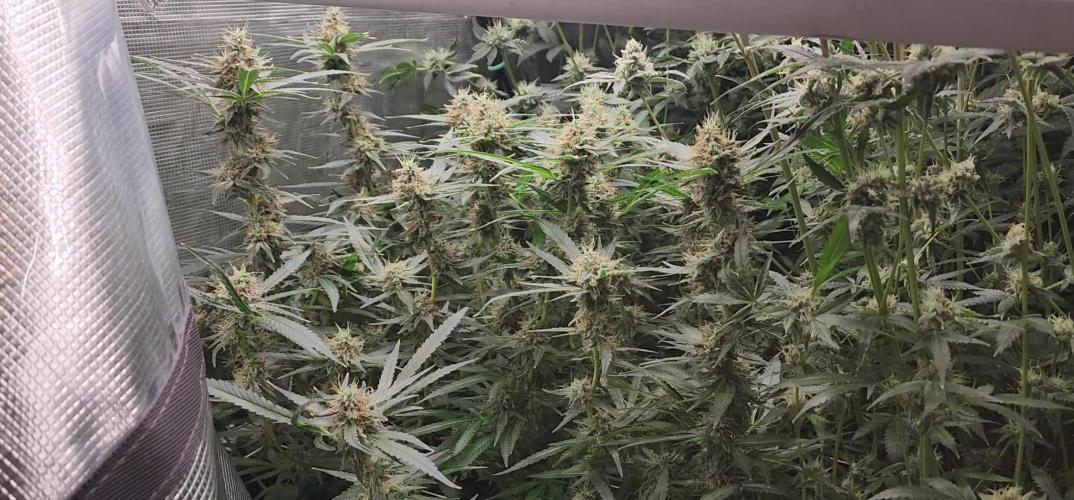
--- Flowering day 56 and the garden is looking and smelling great.
--- The under canopy is also looking clean and pots look good.
- [19:07]: Checked on the BluMat soil moisture sensors:
------ Chill Out OG #2 » 48mbars
------ Heady OG BX1 #1 » 51mbars
------ TKO #2 » 57mbars
--------- Watering Range: [Too Wet] ~25mbars «| [Ideal Target] ~40-80mbars |» ~125mbars [Too Dry]
--------- BluMat Max Values: [10mbars «||» 750mbars]
- [19:12]: Checked the Ecowitt soil moisture sensor data:
------------------ [ 3x3 VEG TENT – GR3 ] ----------------
------ 50% - [CH01 » M1 » VBL – Heady OG BX1 #1]
------ 41% - [CH02 » M2 » VBR – TKO #2]
------ 49% - [CH03 » M3 » VFL – Chill Out OG #3]
------ 41% - [CH04 » M4 » VFR – Chill Out OG #2]
----------------- [ 4x4 MAIN TENT – GR30 ] ---------------
------ 53% - [CH05 » P1 » FLT – Chill Out OG #2]
------ 64% - [CH06 » P1 » FLB – Chill Out OG #2]
------ 47% - [CH07 » P2 » BLT – TKO #2-2]
------ 64% - [CH08 » P2 » BLB – TKO #2-2]
------ 51% - [CH09 » P3 » FRT – Heady OG BX1 #1]
------ 72% - [CH10 » P3 » FRB – Heady OG BX1 #1]
--------- Veg: ~38%-45% | Flower: ~45%-55%
--------- General: ~30% [Dry] «| ~45-60% [Moist] |» ~70% [Wet]
- [19:22]: Checked the 3x3 veg tent.
--- Veg garden is looking great.
--- Both Gorilla Goat solo clones need watering..
- [19:30]: Here are the starting initial watering ranges:
------ Gorilla Goat #1-1 » 287.0g → 325.2g
------ Gorilla Goat #1-2 » 294.4g → 325.4g
--------- General Weight Range: [Dry] ~275g «| [Dryback] ~300g |» ~325g-400g [Wet]
--- Both cups were last watered 2-3 days ago.
--- Took the starting weight of both clones before watering,
------ Gorilla Goat #1-1 » 289.1g
------ Gorilla Goat #1-2 » 278.4g
--- While on a scale,
--- Evenly misted the top of both cups with RO water.
--- Did not spray the top growth.
--- Misted 10-20 sprays. Waited a moment, then misted again.
--- Repeated this process until both cups weighted at least 300g.
--- There was no runoff.
- [19:55]: Took the saturated weight of both cups after watering,
------ Gorilla Goat #1-1 » 375.6g
------ Gorilla Goat #1-2 » 375.3g
--- Updated the wet weight and watering dates for both cups.
--- Placed both cups back into the tent.
--- Propagation tray cuttings look good.
--- Misted the top growth with RO water.
- [22:34]: Back in the main tent,
--- Did a bit of defoliation focusing on the front buds.
--- Wow the terpenes are becoming more distinct and have a more greasier feel with a strong gas and fuel from both Heady OG BX1 #1 and TKO #2.
--- Both have their differences with Heady OG leaning more towards a lemon-pine profile whereas TKO has a more citrus-rubber but both are definitely in the fuel category (Earthy, Fuel, Floral, and Fruity).
--- As for Chill Out OG #2, on the nose, she’s more in the earthy category with refined mix of grape and citrus-vitamin.
--- Planning to check trichomes soon.
--- Anyways.
- [22:41]: Checked the humidifiers.
--- Tanks are still full and no leaks found.
--- Another grow week done.
--- Hmm.
--- Been neglecting both PPFD and plant height checkups but oh well..
--- Onwards to next week.
[END OF WEEK 20]

Likes
9
Share


Likes
25
Share


@TheBudWhisperer
Follow
Week 4 of veg. And all just maintenance right now. Should be flipping in a week regardless of what the smaller ones might be doing. Pruning and tying em down to maintain a very low canopy for the stretch. So far, so good. No real deficiency issues as we’ve been keeping the regimen real conservative. All is well to the flower show👍



Likes
35
Share


@Hiroots420
Follow
Impecable cosecha de Sweet Cheese, se llenó todo el espacio de secado de buenas cabezas, próximamente actualizaré números finales de cantidades pero hasta el momento se lo ve muy prometedor.


Likes
25
Share


@Dingle_Dangle
Follow
19/05/2022 - Day 0 - First day of the 1st week.
The journey begins. Baby alive! 😍
Wish me good luck and let's hope in sunny hot days 🤞☀️
- DD


Likes
5
Share


@CreamyNuggets
Follow
Day 53. AK47 has been flushing for 3 days. Going to chop her as soon as she is completely faded, hopefully the next 4-5 days. Going to start flushing the bubba pupils and the purple wreck as well. It looks like the Godberry could go another week and a half to two weeks. She’s looking so frosty, and smells so fruity. Plenty of bud sites, she just needs to get swelling.

Likes
19
Share


@Yessi_squeeze
Follow
All same strain but growing differently due to different environments. Humidity issues resolved with dehumidifier. Runt had to be pruned and still so many buds. Single GG in tent is short and stocky ... Nice crystals. They smell wonderful.


Likes
5
Share

@Gewaltmann
Follow
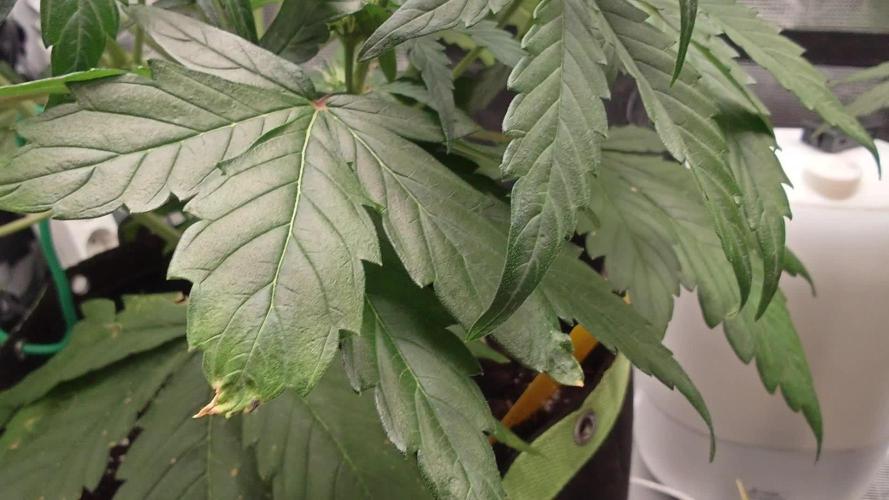
Wie auch bei der runtz, hoffen wir mal dass sich die stretch in weiteren Grenzen hält. Die sunday wächst ziemlich buschig. Hier werde ich beim lollipoppen auf jeden Fall jede Menge zu tun haben.
Ich habe zwischendurch auch kleinste Äste wie bei der runtz, entfernt. Ebenfalls ein zwei Blättern die andere kleinere Blüten verdecken.
Die Lampe läuft schon auf 65%. Mehr wird aufgrund der Temperaturen einfach nicht gehen. Aber bei 440 Watt sollte das auch ausreichend sein.
Auch hier habe ich den ersten Zucker entdeckt. Ich bin gespannt wie sie sich weiterentwickeln wird im Gegensatz zu der runtz 🤔🤷🏼
Likes
86
Share


@Leeyum
Follow
This is NOT a plant that I would recommend for a beginner she can demand much more attention without reciprocation, which was frustrating for my FIRST EVER grow (woohoo!). She is one that I have had a little bit of trouble growing and others on this site Ive researched have had trouble growing. She is a little more sensitive to nitrogen and other nutrients yet gulps cal-mag.


Likes
8
Share


@HAN_GROWER17
Follow
Por el momento solo estamos aplicando Bases Connosseur Grow. La fotografia de esta semana es la del ejemplar mas alto, cerca de los 18cm, no es un espigamiento; mas bien parece que es un ejemplar "grande" solamente, además es el ejemplar que mas consume agua. Adjunto video donde se aprecia junto a otra variedad de original sensible.