Likes
Comments
Share


@Xpie77
Follow
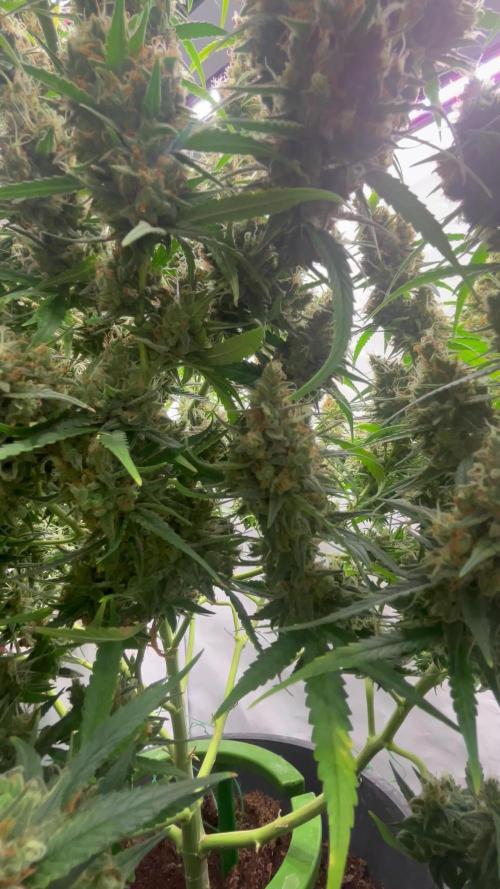
Day 18 of flowering!
💚Please Like This Diary and Leave a Comment!💚
This week the flowers start to swell up. The smell is very nice and love this strain to grow🌿💚🍀
Nutrition: not so much, just a quarter of what is asked on the bottle.
Smell: plant already have a nice smell, very punchy, skunky, forest fruits
Health: nice strong plants, will grow big and flower fast!
Red Wine was created by crossing Rozay F2 with Jet A. They are 2 very powerful aromatic Cali hybrids. This exclusive new Cali strain is a very strong and fast flowering indica-dominant strain. It has an aromatic, intoxicating and relaxing effect. That is comparable to enjoying a good glass of wine.
Red Wine has an average flowering time of about 7-8 weeks when grown indoors. Outdoors it is ready fairly early, usually around the end of September.
The yield is very good. Indoors she has an average yield of 450-650 gr/m². When growing outdoors, 600-800 grams can easily be achieved per plant.
Red Wine has an aromatic scent that can be compared to a full red wine. Her full, purple-green buds are very compact with few leaves. This is very convenient when cutting the plants and saves a lot of time. Smoking this weed gives you a nice high with relaxing properties. The taste of Red Wine is very fruity sweet with an aroma of red grapes.
Flowering time: 7 – 8 weeks
Genetics: Rozay F2 x Jet A
30% Sativa, 70% Indica
Plant height outside: 100 – 180 cm
Outdoor harvest month: from June to October
Yield indoors: 450 – 650 gr/m²
Yield outdoors: 200 – 800 gr / plant
THC: 25%
💚💚Wanna Try Red Wine from Seeds Genetics💚💚
Link:
https://seedsgenetics.nl/product/red-wine-gefeminiseerd/

Likes
25
Share


@The_Lonely_Farmer
Follow
Overall a great strain too grow as grows with ease and seemingly without issues even with minimal care.
With care she can produce hefty buds, as kept mine small my flowers reflect but still produced great smelling powerfully buds 🌱
Cycle finished in time essentially with ease and I'd be happy too recomend this strain from fastbuds.
I will update with more images and videos upon timing complete and give dry weight ect, these girls wont bring much but smell absolute treat.
Atm I have tried 1 small nug but still not ready not long untill can trim up, great oils and taste just need a little cure up once finished.
Tried uploading longer videos but again says error 👎 have now added few extra videos

Likes
3
Share

@Piratenarm
Follow
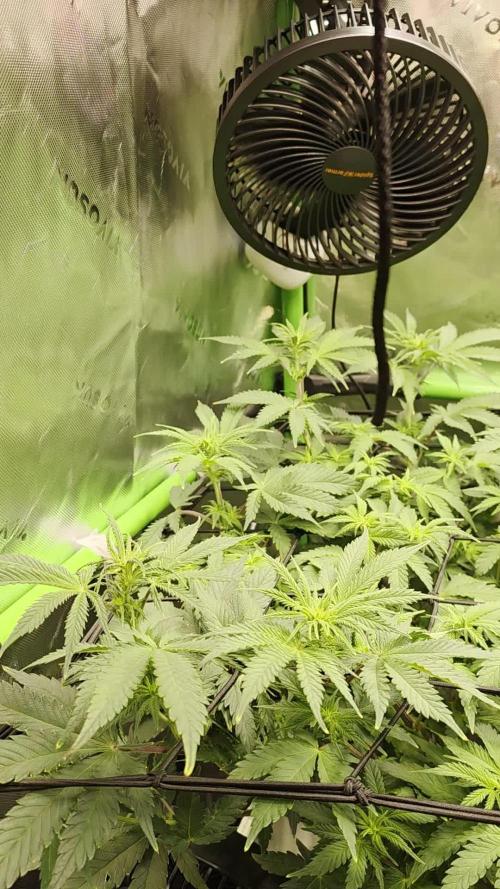
Die ladies machen sich soweit ganz gut. Habe doch wieder ein scrog Netz eingearbeitet, weil so die lichtverteilung wesentlich besser ist. Ab jetzt heißt es abwarten und Gießen

Likes
7
Share


@HylianGrass
Follow
Week 7 had its share of temperatures variations . Combined with my lack of cfl bulb distance from buds knowledge had the tips of the calix turn light yellow and caused the pistils to turn orange at the tip. No serious harm done but this is how you become a better grower and getting to know how different phenotypes react to environmental changes and adaptation. Luckily for me the ruderalis genes in the blue dream matic from fastbuds makes her pretty resistant to stress and traumatic “mistakes “ cause you got real high one night and decided that defoliation would be great right now 👍🏻
Processing
Likes
19
Share


@Oldmanbud__50
Follow
For some reason it's say 9 weeks flower. But it's only 4 weeks flower. Lol. Going well I guess for a 1st grow. Looking nice n frosty at 4 weeks.. Got a alien in the corner lol which knocked me.. Turns out to be a different strain.. 5 n half foot monster.. N still going up.. Have enjoyed this 1st 1 and hope to do more. Has any 1.got n ideas for next. 1 myt try autos. Are they easy to grow? Is is it best to stay away from them.. Happy growing ppl
Likes
7
Share


@Cultivatorcarlos
Follow
Week 7 she is fat af and sooo frosty. Camera honestly doesn’t even don’t it any justice and it still looks frosty on camera too. All videos and pics are from the same day which was week 7 day 1 of flower. Ive currently been flushing so only dechlorinated tap water phd to around 6.3-6.5. Ive been watering every two days. Im very excited to chop her down. She has a sweet smell kinda vanilla like honestly. She also smells super lemony like pinesol almost. I was also told it smelled like coffee Where as my last grow smelled just like skunky weed. This one definitely has more terps to it. I didn’t post week 6 and wont be posting week 8 or harvest. I will however post the trim day before curing the buds.

Likes
2
Share


@fadagrow
Follow
As I dive deeper into week 6, the flowering stage is officially in full swing. I can feel the excitement in the air as the plants begin to transform into their beautiful selves.
This week, I've continued to band and apply Low-Stress Training (LST) techniques, ensuring that the branches are positioned just right for optimal light exposure. It's all about maximizing potential, and I'm committed to giving them every advantage possible.
I've also been diligent with defoliation, carefully removing some leaves to improve airflow and light penetration. It's a delicate balance, but I believe it will pay off as the flower start to form.
I've been sticking to the full schedule of the Canne Terra set, and the plants are reacting exceptionally well to both the feeding and the LST. Their growth is vigorous, and I’m pleased with how robust they’re looking.
A fascinating development this week is the emergence of a subtle, sweet smell. It’s a delightful reminder that the plants are truly in their element. I can't help but relish this part of the journey.
With the buds on the horizon, I’m eager to see how they will develop in the coming weeks. The anticipation is palpable, and I’m ready for the rewards that lie ahead. Here's to another exciting week in the garden!
Likes
Comments
Share

@DogDoctorOfficial
Follow
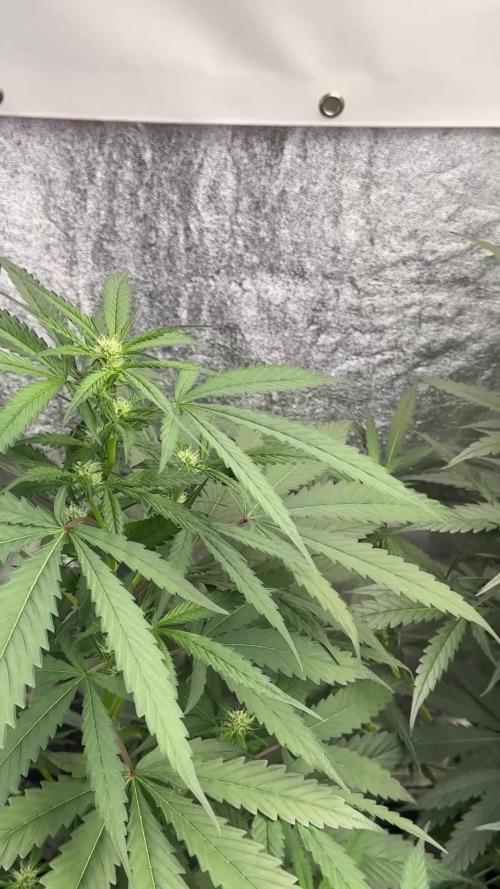
🌿 Frosted Guava Auto by Zamnesia | Pheno B | Week 6 (Early Flower)
🌱 Same Family, Completely Different Personality
One of the greatest joys of growing multiple phenotypes side by side is discovering just how differently they can express the very same genetics.
Frosted Guava Pheno B continues to surprise me every single week.
Sharing the same home, the same lighting, the same nutrition, the same environmental conditions, and the very same 12/12 From Seed journey as her sister, she's writing an entirely different story.
Where Pheno A reached for the sky with a broader, more open structure, Pheno B has remained wonderfully compact, building a dense framework of strong branches and closely spaced internodes that give her an incredibly sturdy appearance.
Standing at 99 cm, she isn't the tallest lady in the room.
But every day she convinces me a little more that height isn't everything.
Sometimes the smaller plants carry the biggest surprises.
🌸 Week 6 – Flowers Are Starting to Take Control
This week marks the moment where flowering truly begins taking over.
The vertical stretch has slowed considerably, allowing the plant to redirect her energy into building the dozens of flowering sites spread across her canopy.
Every branch now carries clusters of bright white pistils, and what were small pre-flowers only a week ago are already beginning to form recognizable bud sites.
There's a quiet confidence about this phenotype.
She isn't growing wildly.
She's growing with purpose.
Each node feels productive, each branch contributes to the canopy, and the entire plant appears focused on one objective—building flowers.
🌿 Compact Structure with Huge Potential
One characteristic continues standing out above everything else.
Density.
Her internodal spacing remains noticeably tighter than her sister's, creating a plant that feels full without becoming overcrowded.
The careful Low Stress Training carried out during vegetative growth has paid off beautifully, allowing light to reach deep into the canopy while preserving her naturally compact architecture.
Strong lateral branching, thick stems and excellent airflow throughout the plant provide a solid framework for the weeks ahead.
Looking at her today, it's easy to imagine each one of these flowering sites developing into chunky, well-supported colas.
Sometimes compact plants end up being the ones that surprise you the most.
🌼 Early Flower Development
Flower production has accelerated nicely this week.
Fresh clusters of pistils continue appearing across every growing tip, while the first small stacks of calyxes are beginning to give each bud site more definition.
Although it's still early in bloom, there's already a noticeable increase in flower density compared to last week.
Every passing day adds a little more volume.
A few more pistils.
A little more structure.
The transformation has clearly begun.
The first hints of resin are also starting to appear on the surrounding sugar leaves, offering a small preview of what's still to come.
🍃 Plant Health
Health remains exceptional.
The foliage displays a deep, healthy green, with leaves maintaining excellent posture throughout the entire canopy.
There are no signs of stress, deficiencies, or nutrient imbalance.
The stems continue thickening to support future flower weight, while new growth remains vigorous and beautifully uniform.
She has developed into one of those plants that simply looks comfortable.
Comfortable in her environment.
Comfortable with her feeding.
Comfortable doing exactly what nature designed her to do.
💧 Nutrition & Hand Watering
Unlike her sister, Pheno B continues her journey under traditional hand watering, allowing me to spend a little extra time with her during every irrigation.
This week's feeding consists of:
• Terra Bloom — 1.9 ml/L
• Pure Zym — 1 ml/L
• Sugar Royal — 1 ml/L
• Power Buds — 1 ml/L
• Green Sensation — 1 ml/L
Maintaining:
• EC: 1.78 mS/cm
• pH: 6.0
It's been fascinating to compare both irrigation methods throughout this project. Despite one plant growing with AutoPot and the other by hand, both continue developing beautifully under the same Plagron feeding program.
🌡️ Environment
Stable environmental conditions continue allowing each phenotype to express its genetics without unnecessary stress.
Current conditions:
• Day temperature: 29°C
• Night temperature: 25°C
• Relative humidity: 72%
• Solution temperature: 21°C
• Root zone temperature: 21°C
• CO₂: Approximately 639 ppm
Keeping these parameters consistent has allowed the subtle genetic differences between both Frosted Guava phenotypes to become the real story of this grow.
👀 Looking Ahead
Over the coming week, I expect flower production to accelerate significantly.
Those small clusters of pistils should begin stacking together into clearly defined buds, while resin production gradually spreads across the sugar leaves and surrounding calyxes.
What excites me most isn't her height.
It's her structure.
Her compact frame, tight internodal spacing, and impressive number of flowering sites give me the feeling that she could become one of those plants that quietly delivers an outstanding harvest without ever being the biggest in the room.
Sometimes the plants that ask for the least attention end up giving you the biggest smile at harvest.
🙏 Final Thoughts
Frosted Guava Pheno B is becoming one of the most fascinating plants in this entire 8×8 Adventure.
Growing beside her sister under identical conditions has been a perfect reminder that genetics are never just about a strain name—they're about expression.
Same family.
Same environment.
Same care.
Yet a completely different personality.
She has chosen to stay compact, sturdy and beautifully organized, and every week she becomes a little more convincing that this unique structure could translate into something very special when harvest day finally arrives.
A huge thank you to Zamnesia for trusting me with these incredible genetics, Plagron for consistently outstanding nutrition, Future ofGrow for powering the garden with exceptional lighting, TrolMaster for maintaining a stable environment, and to everyone following this journey here on GrowDiaries.
Your support, comments, and encouragement continue to make this 8×8 Adventure even more rewarding.
Until next week...
Growers Love and happy growing! 🌱💚

Likes
14
Share


@KGrow
Follow
During the first period of flowering they seemed a little bit slowed down..Now they're starting to swell pretty good! :D Atami products work very well!

Likes
4
Share


@Nutrient_gro
Follow
Day 148. Veg just transplanted her to a 5 gal and lst with scrog net helpfully she takes off.
Likes
19
Share


@Drgreen13
Follow
This girls an absolute beast for her age, she's only 4 weeks old, going into 5th week, she's filled up my space nicely, ive defol'd and lst'd a little, nothing to heavy, ive also lollipoped her. I'm switching to half bloom and half veg nutrients from now until next fortnight, then straight bloom. Thanks for taking the time to read my diary. Feel free to check out my other diaries, and please leave a like, maybe a follow. Stay high stay fly. #420everyday
Likes
7
Share


@stonermamba13
Follow
The aloe seems to have taken hold in the plant's nutrients just as we approached 130 days and the buds perfect, we're almost there.
Getting ready to consider a good flushing.

Likes
207
Share


Likes
8
Share

@FourTwenty_Plants
Follow
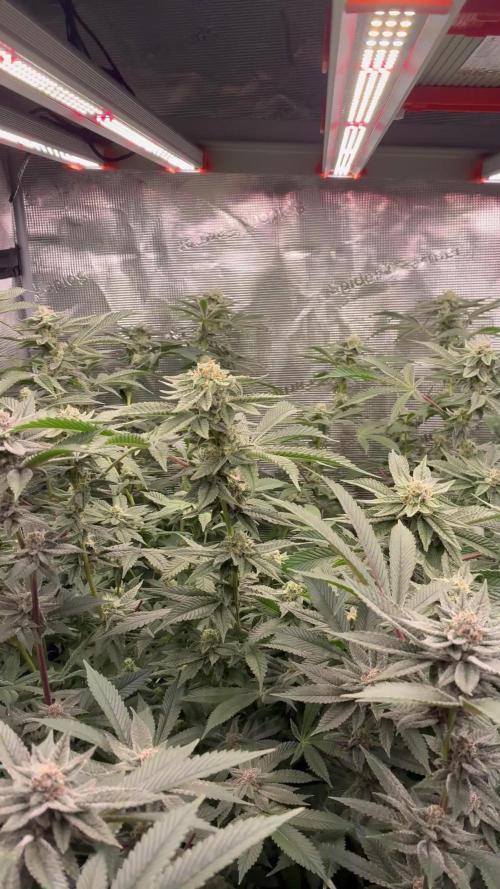
The Smell is getting insanely loud out of that tent, the girls are big and stacking up insanely pretty, Chimera is starting to fall to the sides, because the branches started getting thinner through her 170%+ stretch😂.
Im loving the view and im proud that the Girls are healthy and love the nutrients



Processing
Likes
10
Share


Processing
Likes
12
Share


@BloodBath
Follow
I know that it may seem like a lot of nutrients at first. It’s not. A lot of those mycorrhizae ingredients are mixed into my soil well before the germinated seed goes into the pot. I make my own mix of soil using some of those ingredients. I like to use the great white mykos because of its powders consistency. Makes it easy for a clean transport from germinated bean to its forever home. For watering, they have been given only plain RO water with a neutral ph. Just yesterday I gave them a little tiny mix of Medusa’s magic, Zeus juice, and Gaia mania. I have used Oregon’s only brand products for a while now and I absolutely love them and better yet, I understand them. They have responded super well already to their first drink of bottled nutes with a ph of 6.3 . I’m keeping a RH between 50 and 60%. I’m also keeping a temp during the day at around 78-81°f. Right now I’m not worried about a night time temp but I do run cooler lights for about 4 hrs every day, dropping to around 70-75°f. Eventually I will add my second light boosting me from 600w too 1200w. Also they will begin a 20-4 hr light cycle. I find these autos do amazing with a little rest for 4 hrs. Allows me to pull more resin and color in later stages of life by dropping the temp lower than usual with the lights off. So please if you will, stay tuned and I’ll have much more info and much better videos and pictures for you to all enjoy. Thanks for looking! ✌️🏻
Likes
2
Share


@Mr_nugs_lover_David
Follow
She grew up nicely very healthy and strong and she produced a decent amount of organic clean cannabis, It's great and just what I work for because I'm a patient that needs to grow his weed and doing it making sure I grow them naturally and organically. The result is a very fruity and and tropical aroma, the purple color makes her even more beautiful. It's just a dream man, I love it, I just love to grow this strain, the 4 plants I grew had the same aroma very tropical and fruity, super sweet.


Likes
10
Share


@Die_Growbox
Follow
Blätter werden immer gelber 🤯 Bekomme es nicht in den Griff !!
Der nächste Grow auf jeden Fall mit ec und ph Überwachung und strickt nach Düngerplan!!
Temperaturen gehen auf 26-29 grad
24/0 Licht eventuell zu viel /:
Nährstoffe 🤯
Die Einzelnen Zweige hab ich mit bodenanker und Schnur auseinander gezogen damit sie nicht zu dicht sind und sich gegenseitig das Licht wegnehmen ..