


Likes
Comments
Share


@YOZYY
Follow
Did some defoliation very light just made sure nothing is blocking the lower nodes to much but other than that been feeding heavy then watering with just cal mag for two waterings then heavy. Next watering will be a 900 to 950 ppm mix.

Likes
1
Share


@Growing2Give
Follow
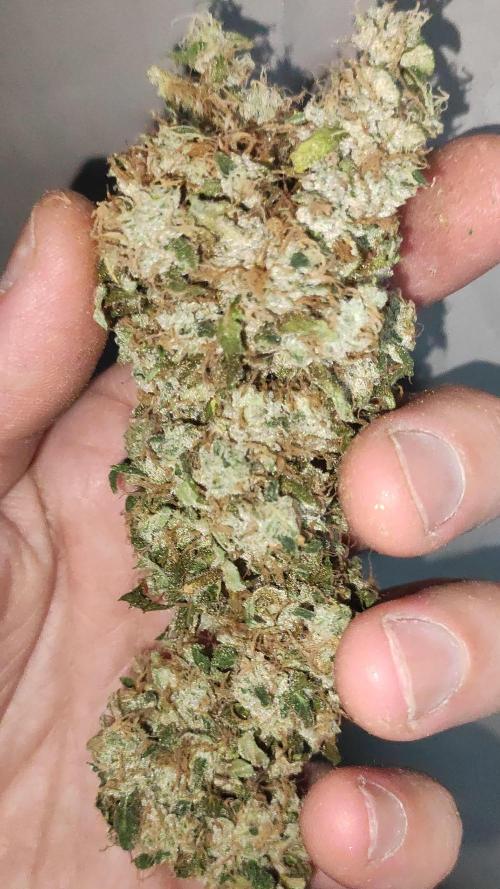
I harvested this plant on the same week that I pulled down the 2 B Blunt, so there was no more progress in the garden. Was thinking that it was going to take a bit longer to cut down than it did (I wet trim). Feel free to let me know why that is not the proper way to trim... I have my reasons and it has been working for a while.


Likes
7
Share

@Bncgrower
Follow
Great harvest, I was impressed with the quality of this strain. After the drying and curing process, I'll give my feedback! 💪

Likes
68
Share


@Roberts
Follow
Auto Northern Dragon Fuel is growing really well. The only issue is I need to go to twice a day with water. She has been drying out she is drinking, and absorbing a lot. Everything is growing great. The colas should be developing more very soon. Thank you Medic Grow, and Super Sativa Seed Club. 🤜🏻🤛🏻🌱🌱🌱
Thank you grow diaries community for the 👇likes👇, follows, comments, and subscriptions on my YouTube channel👇. ❄️🌱🍻
Happy Growing 🌱🌱🌱
https://youtube.com/channel/UCAhN7yRzWLpcaRHhMIQ7X4g

Processing
Likes
14
Share


@Datiko
Follow
I Topped 3 days ago, she got a little bit stress, she could be stressfull if i top earlyer, so i hadnot other way. I think she will give me 50-60 g dry buds... but i am scaryed with this. she is still not flowering. explain me why. almos every GSC auto starts flowering at 5 week

Likes
19
Share


@Sergio_721
Follow
they do not seem mileage even after a week of fertilization even if at very low dosages the next time I increase the nutrients and let's see what happens
Days 41 it looks like it's going well they still look nutrient deficient the next time we increase the dosage.
Likes
2
Share


@bigbubsofcheese
Follow
Good day to all
so i colne them as they had stretched to must under them crappy pink leds .
also two 4cheese plants in here but soon to be rehomed


Likes
16
Share


@DaddyPrime2
Follow
Defoliated and flipped to 12/12
Slight stretch.
Plants didn’t like that I only gave them half veg nutes and half bloom. They look nitrogen deficient. They’ve also shown some calcium deficiency i believe. The uprising foundation is cal mag and sulfur mostly I believe. So it’s good to have

Likes
20
Share


@color
Follow
Se non fosse stato per la cima ammuffita, avrei fatto un bel risultato però per essere la prima esperienza d’oro, me ne ritengo soddisfatto, anche se so che ho un estremo potenziale

Likes
21
Share

@masterofsmeagol
Follow
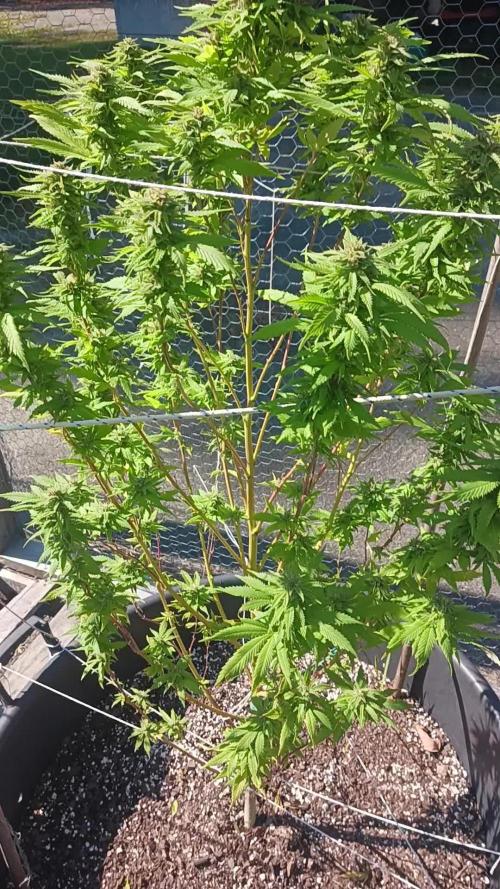
It seemed there were two very different phenomes. One had pink calyxes which was cool. One had extremely dense buds and the other were fluffier put had trichs on top of trichs. The last plant taken had almost all stigmas bright red. Very pretty plants. I wish I didn't lose so much to insects. I learned ky lesson. Next year floating row covers. This strain made it through septoria and a host of other problems including inclement weather and a thrip infection. This plant looked so perfect and it just seems like I'm losing a little more daily. I was hoping the buds would fill out more on the last one but they were INCREDIBLY frosty and had reached the date it said on the package. Not that that matters.


Likes
3
Share

@Organic710
Follow
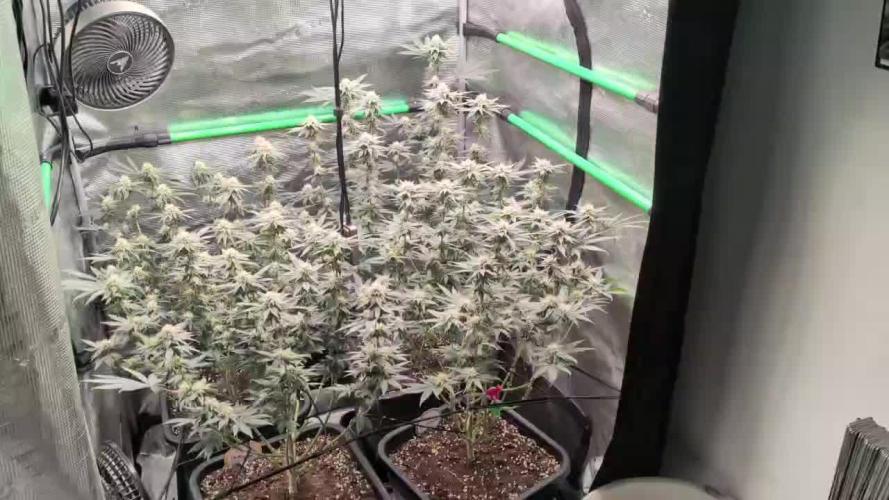
Not too bad I'm enjoying the smell of these so far 2 are super garlic gassy and the other 2 just smell like a fruity hash 😃
Added some side lighting as this tent only has a 300w SE3000. Other tent is getting the mammoth nova sun canopy lighting in the next few days 😄
Likes
15
Share


@Bread_n_Buds
Follow
And here we are in full swing. We have only reached day 19 and our Wurlz F1 Hybrid is truly very very competitive.
It grows well, regularly, the internodal distance seems average but we're waiting for another couple of floors to rise, as you can see for a day 19 we're in great shape... You'll say similar reviews, and guys the F1s are very similar, the differences will come soon with the beautiful buds.
We're keeping our fingers crossed because there's no word soon but our f1 Hybrids seem to keep what our trusted breeder says.
As feeding we are giving the Plagron Alga Grow 2 ml/l.
Come on gentlemen, I can't wait to see the flowers.
So seeds of all brands, in addition to these great F1 Hybrids and the entire Zamnesia line, fertilizers and everything related to the world of cannabis, you should buy them from the best online store in the sector www.zamnesia.io
Wurlz F1 seeds specifically
https://www.zamnesia.com/10669-zamnesia-seeds-wurlz-f1-automatic.html
Site Description
ZAMNESIA SEEDS - WURLZ F1 HYBRID AUTOMATIC: EFFECTS TO LEAVE YOUR HEAD IN A WHIRL!
As the end product of combining Runtz with Watermelon Candy, Wurlz F1 hybrid Automatic showcases a reliable, uniform, and, above all, easy growing experience. The resulting buds offer mind-blowing flavors and soothing effects, making Wurlz F1 Automatic more than worthy of being on your radar.
GROWING WURLZ F1 HYBRID AUTOMATIC
As an autoflowering strain, it takes just 9–10 weeks for Wurlz F1 Automatic to move from germination to harvest. Fortunately, there's very little required other than a bit of maintenance along the way. This is partly due to the F1 genetics that make this strain robust and uniform, resulting in plants that reach a similar height and provide a similar (large) yield. Moreover, Wurlz F1 Automatic is highly resistant to disease, pests, and other ailments.
Reaching heights of about 65–80cm, Wurlz F1 Automatic is not an overbearing plant and can fit into smaller spaces with zero fuss. Once ready to yield, growers have the potential to see a return in the region of 450–500g/m² indoors and 50–150g/plant outdoors.
AROMAS, FLAVORS, AND EFFECTS OF WURLZ F1 HYBRID AUTOMATIC
After Wurlz F1 Hybrid Automatic wows you with its easygoing growing experience, the best is yet to come: the smoke test. Teeming with terpenes, this cultivar offers a fruity and candy-like flavor tinged with just a little bit of pine for good measure. In terms of effects, Wurlz F1 Automatic is bolstered by 24% THC and a finely tuned array of cannabinoids, making for a soothing, physically relaxing, and, in larger amounts, couch-locking high. So settle in with some of your favorite friends, snacks, and movies; this is relaxation at its finest.
As for fertilizers, I'm doing a small comparison experiment to finish off the fertilizers I had at home, it's not 100% indicative, it's only on two specimens but given the stable genetics I decided to try to compare the results of Plagron Vs Aptus , both excellent brands which they will certainly produce beautiful plants which are already of excellent stable genetics. In the next few weeks the comparison will be more evident now the seedlings are still very small and just potted.
So seeds of all brands, in addition to these great F1 Hybrids and the entire Zamnesia line, fertilizers and everything related to the world of cannabis, you should buy them from the best online store in the sector www.zamnesia.io

Likes
1
Share


@SkunkySteve
Follow
Had problem since last week with PH. Was down and staying down below 5.0. Managed to sort it and keep it higher for a while to make up the cal mag. Everything seems to have levelled out for our for now. GSC and GG showing stighs of early buds.
Likes
10
Share


@StickyFingah420
Follow
Extrema producción de tricomas de esta variedad! Gran parte de los frutos lo usaré para extraer rosin, su resina se ve ideal para este propósito.
Fragancia exquisita a ponche de fruta dulce, con notas ácidas y un fondo de especias.
Como mencioné anteriormente dejaré la parte de la reseña de efectos, sabores y sensaciones para cuando los cogollos estén secos y curados, por ahora solo puedo apreciar lo que mi vista y olfato me permiten captar.
Totalmente conforme por la calidad de estas flores y agradecido de los amigos de Sweet Seeds por la confianza.
Será hasta la cata entonces, buenos humos!

Likes
Comments
Share

@Dr_4NdY
Follow
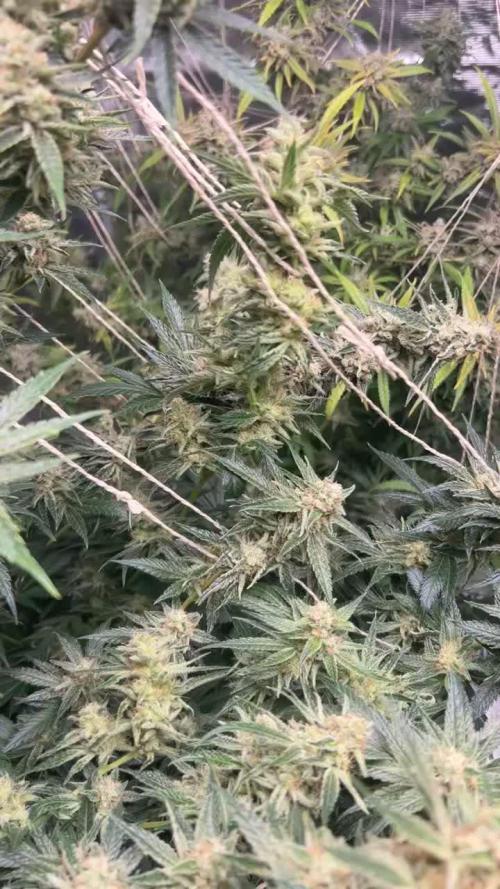
Sadly only pictures before harvest
Didnt used any fertilizer in week 9

Likes
18
Share


@Hashy
Follow
Week 3
Light cycle=18/6
Light Power=120w 50%
Extractor controller settings
High temp= 24c
Low temp= c
Temp step=0c
High Rh= 65%
Low Rh= %
Rh step=0%
Speed max=5
Speed min=1
Smart controller settings (during lights on).
Lights on=06.00am
Radiator on= below 19c
Radiator off= above 20c
Humidifier on= below 60% above 23c
Humidifier off= above 63%
Dehumidifier on= not in use
Dehumidifier off= not in use
Smart controller settings (during lights off).
Lights off=00.00am
Radiator on= below 17c
Radiator off= above 18c
Humidifier on= not in use
Humidifier off= not in use
Dehumidifier on= not in use
Dehumidifier off= not in use
VPD aim=0.6-1.0
DLI aim=18-22
EC aim=0.8
PH aim=6.2
Fri 5/1/24
#3 (Day 15)
📋
💧💧💧💧💧💧💧💧💧💧💧💧💧💧💧💧
Method= manual
Neutralise=0.1ml/L
Roots=5ml/L
Feed=nutes
Volume=200ml
Easy Ph down=0 drops/L
Ec=0.27 PH=5.9/6.2
Time=2.30pm
Runoff.
Total runoff=45ml
Ec=1.47 PH=6.0/6.3
💧💧💧💧💧💧💧💧💧💧💧💧💧💧💧💧
Sat 6/1/24
#3 (Day 16)
📋 Looks fine even with tiger stripe
Sun 7/1/24
#3 (Day 17)
📋 Potted up to 8L pot with biobizz light-mix.
💧💧💧💧💧💧💧💧💧💧💧💧💧💧💧💧
Method= manual
Neutralise=0.1ml/L
Roots=5ml/L
Feed=nutes
Volume=3L
Easy Ph down=0 drops/L
Ec=0.27 PH=6.0/6.3
Time=1.30pm
Runoff.
Total runoff=500ml
Ec=5.6 PH=5.4
💧💧💧💧💧💧💧💧💧💧💧💧💧💧💧💧
Removed humidifier.
Adjusted light height.
Light Power=100w 42%
H=11cm D=61cm DLI=21.7
Mon 8/1/24
#3 (Day 18)
📋 Doesn't look to bad, foliar sprayed (cal-mag 5ml/L)
Tue 9/1/24
#3 (Day 19)
📋 Having a cold spell at the moment so I'm adjusting the smart settings to compensate.
Smart controller settings (during lights on).
Lights on=06.00am
Radiator on= below 20c
Radiator off= above 21c
Humidifier on= not in use.
Humidifier off= not in use.
Dehumidifier on= not in use.
Dehumidifier off= not in use.
Smart controller settings (during lights off).
Lights off=00.00am
Radiator on= below 18c
Radiator off= above 19c
Humidifier on= not in use.
Humidifier off= not in use.
Dehumidifier on= not in use.
Dehumidifier off= not in use.
Wed 10/1/24
#3 (Day 20)
📋 Still looks funky.
Thur 11/1/24
#3 (Day 21)*****
📋 H=14cm D=58cm DLI=22.7
This one still looks funky, there ain't nothing wrong with a bit of funkyness. I must admit she is doing fine. I'm wondering if these tiger stripes are going to be on every set of leaves she grows. Only time will tell.
Back soon.
Take it easy.
Likes
37
Share


@Regenwurm
Follow
Die Außentemperatur spielt mir voll für die Blütezeit in die Karten. Permanente Zuluft von draußen über starken EC Lüfter mit Leistung 240m3/Std über einen Airsock für die Beleuchtungszeit von 12 Std. In der Nachtphase keine aktive zuluft da keine Photosynthese (Temp draußen = 0-5 Grad während der Beleuchtungsphase, HID Lampe ohne Cooltube)
Im Zelt die Leistung der HID Lampe auf 570 Watt erhöht.
Schwankungen Temp 18bis 19 in der Nacht 23-25,5 Grad am Tag , Schwankungen Luftfeuchtigkeit 35-48 % . EC Wert konstant im fertigen Gieswasser inclusive Nährstoffe bei 1,1. PH Wert Schwankung 5,8 - 5,9. Die Stärke der aktiven Umluft wurde auf maximale Leistung erhöht. Es wurde in dieser Woche ein letztes Mal alles entlaubt. Harzbildung und Geruch stark..... bis nächste Woche
Likes
2
Share


Likes
14
Share


@Christmas
Follow
Big thanks to @James from the Royal Queen Seeds team for this stuff! Definitely one of my favorite strains.
Processing
Likes
6
Share


@Jubaea
Follow
The bud's are starting to to swell up stopt feeding leafs are green enough fore the last weeks