


Likes
Comments
Share


Likes
31
Share
@Schafe1001
Follow
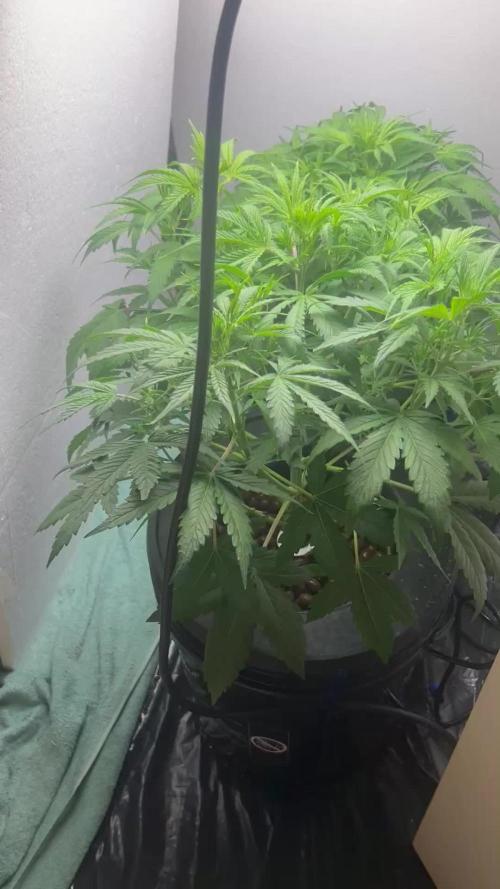
Starting to dial it in, I think? Finally, it seems my plant was growing faster than the chlorophyll could keep up. Thai and some ph adjustment and I woke up smiling 🙂


Likes
4
Share

@Organic_G
Follow
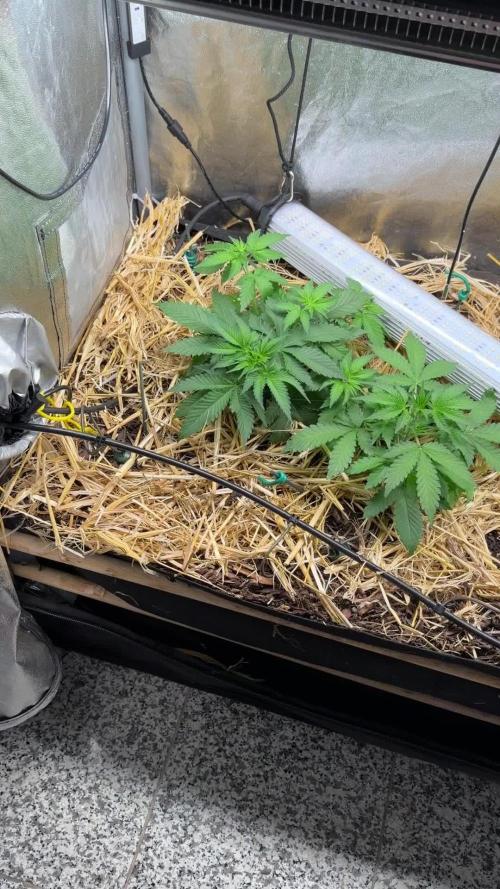
Wachsen aber gehen an mir vorbei hahaha muss nicht wässern, muss nichts machen einfach wachsen lassen und vergessen das ist immer das beste ;)
Werden heute oder morgen auf 12/12 wegen der Photoperiodischen umgestellt, zeigen erste Vorblüteerscheinungen, zumindest die Autos, daher muss die Purple Mango Kush nachziehen

Likes
3
Share


@DoctorP
Follow
looking well but i think she could have a little more resin production at this stage, currently going in to week 6.
any tips would be helpful, im already pumping co2 in there above the plant so it falls down, under a 200w attis lumatek led. (will upgrade next grow) ... the old co2 pack behind the plant is empty and old just not removed 🤣
thanks :)

Likes
1
Share


@AZTERPHUNTER
Follow
All these have been topped and trimmed just will stay in here for 2-3 weeks while others in flower room finish

Likes
5
Share


@MyStery21
Follow
im starting to have concerns about this plant. she's been growing slow but in the same cycle as the Pineapple Glue.
Likes
22
Share


@Slobasian
Follow
Love every plant each one is growing differently stacking different even the visual difference of one strain growin two different ways combined smells of diesel, pez candy and lemons


Likes
12
Share

Likes
8
Share


@ProKush27
Follow
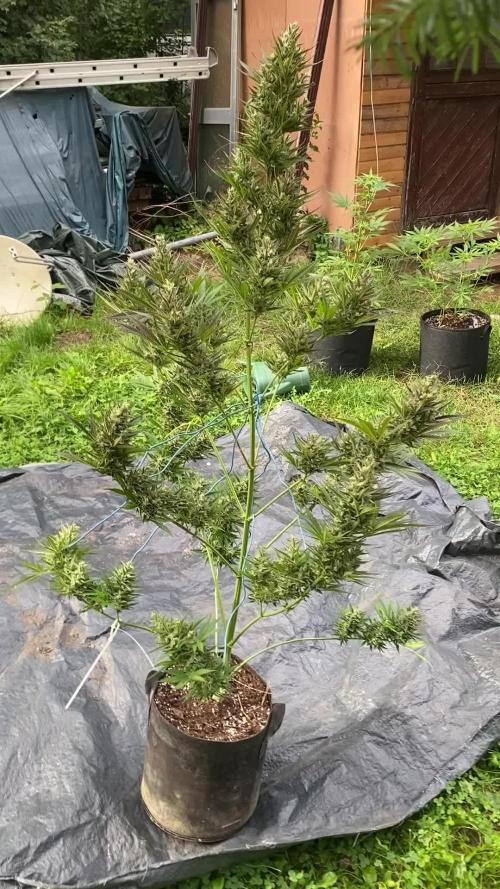
Over the last week I’ve continued with defoliation process and I removed downer leaves that were not developing properly.
On day 78 I added support for aide branches on B and C.
I started flush of plant C on day 80, so we’ll see how she looks. I keep feeding other plants but I will be starting flush soon. 😎
Likes
11
Share


@ButterfliesLittleFarm
Follow
Hello Diary,
It finished the second week of flowering, a total of five weeks from the beginning of the vegetation.
Apollo F1, although at the beginning of flowering, the tips of the branches are beautifully shaped into flowers, it develops really quickly.
The leaves are really very thick, I hesitate to thin them out a bit, but I'm afraid of causing too much stress.
Of all the three plants on the Farm, Apollo is the smallest. He is only 40 cm tall, but that's why he looks the most muscular.
Here and there a yellowish leaf appears, which I immediately remove.
This week I added supplements to both waterings.
The first time I put the Easy Bloom Booster tablet in 7 liters of water and the second time I added Bio Flowering Booster.
The conditions on the Farm are good, the humidity is lower than 50% while the temperature is around 27, 28 degrees.
Here is a quick overview of the week:
30/05/2023 - Day 31.
Watering. I added one Easy Bloom tablet to 7 liters of water and lowered the pH. on 6.0
I watered all three plants with that amount.
02/06/2023 - Day 34.
Watering. This time I added all three components from the Bio Flowering Booster kit.
I also watered all three plants in the Box with 7 liters of water.
03/06/2023 - Day 35.
Photo shoot for the end of the 5th week.
Apollo F1 - 39 cm
That's it for this week. See you soon.


Likes
14
Share


@Inhaledmonkfish
Follow
Day 1 of week 3 flower loads of small buds everywhere will be finishing flower burst feed end of this week then starting the pk9-18 should start seeing some big buds on there soon.
Starting to smell decent and seeing loads of growth on the buds everyday!

Likes
103
Share


@Zurban_Poison
Follow
Hello everybody!
everything is just great! even there is nothing to say so much everything is good)))
I think it's not long left to wait for the harvest .. 2-3 weeks maximum!)
Processing
Likes
7
Share


@Kenethica
Follow
Shitty weather wooooooop, too cold and too rainy. they have been sitting inside mostly near the window with the CFL as support. Not ideal but I'd rather have less bud than rotten bud.
That being said they are fattening up nicely. Trich show more milk and the occasional amber (only saw 2 to be honest). Lower nodes are still pretty clear and still have lots of white pistils. I am thinking 1 more week of feed then start the 2 weeks of flushing.
Having a hard time watering them evenly with all the LST straps. Expecting a tiny watering can one of these days to get that even watering job.
Likes
10
Share

@DuSSS
Follow
Flowering is in full effect and things are starting to get sticky. The strawberry gorilla has not streched much so i raised her to keep up with the tropicana cookies. She has grown so high that my light is now all the way up in the tent and cant go higher. Unfortunately she is showing leave deficiency which, i think, is ph lock out or overfeeding. Decided to flush her with TA Flash clean and go on from here. Nevertheless she is growing awesome buds, and god the purple colours are amazing 🤩😍
Likes
9
Share


@HollowSource
Follow
The banner is looking like it's namesake. Big, green and mean. She is super dense and has colas almost as long as she is. She is fattening up. She is giving the Gelato a run for its money when it comes to bud size.

Likes
2
Share


@nenenedudu
Follow
lowered the ionbeam lights and adjusted all lighting to get even 20k lux everywhere.
Likes
18
Share


@Grey_Wolf
Follow
Outdoor Auto #2 Sour Diesel
fastbuds originals sour diesel auto
13th November 2020
BLACK FRIDAY 😱👻 lol
Only if ya superstitous 😁
Okay so you may have noticed there is only one sour diesel plant featured this week?
That is because I have put the other plant out bush somewhere alongside a Male auto plant to be open pollinated.
I didn't want the risk of having any of my other plants pollinated so I took the male auto and the sour diesel
a fair ways out into the bush , found a protected spot and will leave them both there for atleast a week or until
the male has well and truly released pollen into the air.
Once I feel that the plants have had their "sexy time" I will collect some extra pollen for freezer storage
before pulling up the male and bringing the sour diesel plant back home to finish off the seed production process.
By doing it this way I hope to get quite a few "auto" beans to play with 😎
* Now for a quick report on the other plant that is still here and flowering.
She is finally starting to put on a little bit of bulk and smell which is encouraging. 😀
The bio bloom and worm castings reall made a difference I feel .
That is about it for this week , When I go out to check on the ones out bush I will take the camera so I can get some snaps.
Thanks for stopping by 👍
Edit 14th November I went out to water the Sour diesel and Male auto that are out bush.
Above you will see a video of my highly technical and advanced methods of pollination 😉
Likes
32
Share


@Compassionate_Gardener
Follow
This cycle was all along a great pleasure. The plants developed MUCH BETTER THAN EXPECTED, the result under the Q6W-Gen. 2 LED lamps from SANlight is FANTASTIC. I have NEVER harvested more from plants of the same strain under HPS and the quality of the bud (trichomes, taste aroma) is MUCH BETTER when grown under LED, my decision is definitely made, I will continue to solemnly grow with LED-lights in the future. I harvested 2250 gram of Shiva Skunk and 3009 gram of Serious Kush, that a total amount of 5259 gram. In relation to the 3000 Watts (incl. dimmed part!) power of the LED-lights thats an AMAZING 1,753 gram per Watt.


Likes
4
Share


@CheeRz
Follow
Our journey is slowly coming to an end. Both Gelatos have developed well, and I'm looking forward to testing them soon. The smell in the box is mind blowing 💚💚💚.
