


Likes
Comments
Share


@SlickCityOrganics
Follow
Black Strap and Peach Crescendo getting close. I see they will get cut way before the Fat Bastard. Fat Bastard must have a long flowering period. But branch structure is thick. I will get a heavy yield from it. Peach Crescendo has so much frost on it. Ethos fkn rocks! Black Strap smells like baked cookies and gas.


Processing
Likes
11
Share


Likes
51
Share


@Organic_LarF
Follow
Transplant to full soil. No pot involved anymore. Their in contact with mother earth.
🍀🍀🍀
These 2 girls have a bit more stress because of the transit.
Still grew like 10 cm.
🍀🍀🍀

Likes
5
Share


@Stickybudz420
Follow
New addition to the family donated kindly by @dropseedsnotbombs, just managed to squeeze this girl in hopefully she takes a liking to her new habitat an 19hrs light schedule 😃🌲🙏

Likes
3
Share

@Farad9650
Follow
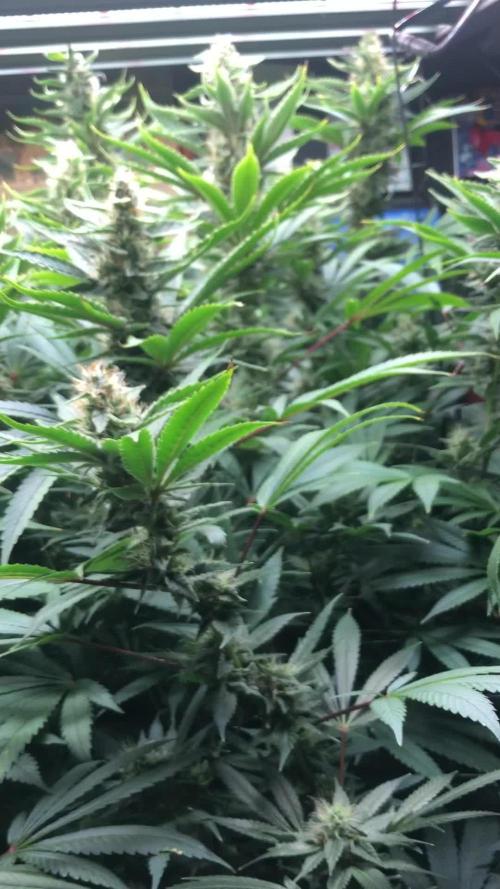
We are on week 6 for the 5x5 and week 5.5 for the 3x5 and week 3 ish for the jealousy

Likes
13
Share


@leefy770
Follow
Week 2.I rearranged a few lights in my grow room to get rid of unnecessary lighting and I also moved my auto flowers to their own separate environment. Only about three more weeks left on the Auto’s and I’ll be done for now. I plan on using a harvest right freeze dryer to cure

Likes
3
Share


@BR1CK_SANCHEZ
Follow
Starting off this new run strong!!! Loving how fast the sprouties are growing. They look pretty happy to me. Maybe bottled nutes are best for my indoor.

Likes
5
Share


@DRunKenMONkey271
Follow
I'm super impressed with this beauty. This one is going back in the garden next year.
Likes
78
Share


@ClubRiot
Follow
Week 11 ,
pH Perfect Connoisseur Bloom Part A ( 1 ml/L )
pH Perfect Connoisseur Bloom Part B ( 1 ml/L )
CarboLoad Liquid ( 2 ml/L )
Sensi Cal-Mag Xtra ( 2 ml/L )
Sensizym ( 2 ml/L )
Bio-Heaven ( 2 ml/L )
Overdrive ( 2 ml/L)
Nirvana (2 ml/L)
Likes
53
Share


Likes
37
Share


@MG2009
Follow
08/29/2018
Been a hot week but the girls don't seem to mind,90s in the day 82° at night and sticky,muggy weather. Their leaves all pointing ☝️,lets me know they are happy ☺️ .watered with plain water they were pretty dry pots weight was very light. Will feed and water in in morning sleep well and medicated😎
08/31/2018
Just a note today #1 is very green compared to the other 4 plants, could be potted plants running low on nitrogen? My soil has plenty according to soil test. I know last year's crop in soil was pale like other 4 plants, maybe biochar is helping soil retain it's nutes better? Year 2 for biochar, first year could have tied up some nutes....hmmm?
Ps
Last feeding today Fox farms big bloom at heavy feeder dose 1/2 cup per gallon, should see nice gains this week! 🙏🙏🙏.
Pss.
G GTH #4 loosing her smells, #3 smells of Skunk and coffee ☕,#2 minty chlorophyll orange,#1 menthal,skunky but very lite scent.
Should I pollinate a branch of each? Oh my God the pressure! Do I have enough pollen? Oh sorry for rambling on just smoked lemon sour diesel and thoughts very racy😀
Got to garden see you next week
😎😎😎😎😎😎😎😎😎😎😎😎😎
Likes
12
Share


@cookingwithninja
Follow
day 49 just pure water phed down.
it is day 51, morning before lights on, I might chop today. I use a zero water filter pitcher got off walmart. My humidifier is only a sonic wave. If you use regular tap water it will get gunky in a sonic humidifier. If you have a heat humidifier that boils the water the mist should be clean. These are the 2 types of water humidifiers. Researching best water filters this "zero water" also comes with a free ppm meter! yay! Other water pitcher brands; the water still has ppm. So water misted will still have ppm contamination. You can easily used distilled water only, and reverse osmosis. I just fill a 4gal office water jug with the pitcher and fill my humidifier when needed. I do not use a humidifier in my entire grow up to this point when I chop, I need the perfect rh or this whole effort can fail. growing up to this point only requires 20% effort, chopping now for the 2 weeks dry is this 80% of crucial determination, succeed. A lot of tasks are required today for a clean chop. I feel confident, observed my cross seeds with pink paradise and one with a slightly open caylex looks dark enough for successful germination. I figured 8-16 seeds may be created, 3-4 buds were potentially pollinated. Many growers don't understand when creating genetics with female/female there is a slight chance of herm. You lose 50% of your genetic function. Just water last 2 days, no humic no folvic, 1st time entire grow ha!
There is a lot of cleaning to do, remove the trees, clean the entire tent and environment with bleach water, hacksaw.
I am very proud of my grow. I have sampled 3 of the strains, dr. thunder legit made my lips numb but it could have just been the terps removing my skin cells from the sticky filter, no lie. This is my best grow to date. I did this for you, and to document hype or not under the best conditions I could give my plants, full max potential, although I wish I had more lights, I am not looking for industrial lol, this is how I grow. Learn a lot on youtube and podcasts there is many good content and I may dab into it. You can have a room full of growers and you have 1 seed in your hand, they will all tell you that their way is correct ;) and the best way. Oreo is stinky AF, Bridal is just amazing glad its massive, just not into sativa but the test seemed slight sativa with majority indica, pink untested, dr, thunder just a lip numming plant aha, its very nice, all 4 amazing appeal like advertised, and excited for next run. Either crosses from this or other copycat genetics.
I will give you beautiful glamout shots today, the sizes of the plants, My guesstimate bridal 1lb, thunder 1lb, pink, 0.4lb, bridal 0.5, I am ambitious off 640w lm301h, and 4x 20w blurples daisy chained.
day 51 4 chopped see you in a few weeks :D


Likes
26
Share


@GuerillaGorilla
Follow
What a joy this grow has been.
She was a real beauty. Absolute joy to grow...strong branches but she likes to stretch a lot.
I knew wat to expect. I have grown Lemon Kush outdoors 3 times. The scrog this year was the perfect solution. I will not grow her again outdoors. This was my first time to see her finish. Seeing her flower this year, she just needs the warmth in the end. The climate here rarely offers that.
I must say the dense flowers are amazing also size and yield is incredible. Update about that later.
Trichomes were underdeveloped. I had to harvest early because of mould. The last 3 weeks of flower the temperatures were very low 10-15 C daytime and very very wet.
I believe this stunted the plants. They made a full stop in development and exploded again in the last week. 3 days of sun did more than the 2 weeks before.
Weather forecast were bad so big buds were harvested 25 september. We eventually had more sun than expected and bottom half was left until 2 october. That week made sooo much difference!!
Those bottom buds finally developed some nice trichomes and turned purple.
Of course I wish the big buds could have enjoyed the sunshine during that last week as well.
Most of you will know, being an outdoor grower...Every year is about compromises.
This year was so hot during growth and cold and wet in bloom that mould was unstoppable.
After all I am very pleased with this grow and cant wait to taste some of this.
Probably needs al long cure though to bring back that lemon scent.
Almost seems like all that the rain washed the scent right off her😪
Keep growing y'all!

Likes
19
Share


@ScrogFreak
Follow
We had a couple unseasonably warm days this week, our wood furnace was going when the temps went up. The tent hit 27.5 degrees one day?, which resulted in the heat damage to the leaves. The leaves are also starting to die back faster. I have a feeling they may determine my harvest day instead of my trichomes. Still only some amber, maybe 5-10%, the rest are cloudy with very, very few clear

Likes
34
Share


@RFarm21
Follow
Semana 7 (19Nov-25Nov)
20Nov - Alimentada com 2L de água.
Runoff EC: 1.20/ runoff pH: 6.4

Likes
2
Share


@Mitenslite
Follow
Muy satisfecho con la genética ya que el olor era lo que estaba buscando, el efecto es bastante relajante y me pareció muy agradable para pasar con amigos y trabajar.


Likes
3
Share


@HowtoBubatz
Follow
This week has been a mixed bag for my two plants. #1 is really taking off now, showing strong growth and picking up speed!🌱
It’s looking healthy and vigorous, which is great to see. Towards the end of the week, I also noticed the first signs of flowering—exciting!
Unfortunately, #2 is still struggling.😩
It has barely grown and remains very small compared to #1.
If it doesn’t start making progress soon, I might consider replacing it with another plant.
I’ll give it a little more time, but let’s see how things develop in the next week. Fingers crossed!🤞