


Likes
Comments
Share


@Tropicannibis_Todd
Follow
👉Alrighty Then👈
So we are at DAY 49 of Flowering with the Sugar Larry 👈 And she's doing fantastic 👍
😀 decided to showcase pheno #2 , definitely has different traits then #1 very interesting 😀 thoe both are killing it 👈
Except for some slight watering , ive been doing some defolation as well as some LST manipulation to pull branches to the side 👌
👉I had to Top her during the middle of 4th week 👍 Happy Growing
👉Soil Provided by ProMix.ca
👉Nutrients Provided by Agrogardens
👉Lighting Provided by MarsHydro.ca
Thanks my friends for the great support over the years 🙏 Happy Growing

Likes
49
Share


@deFharo
Follow
Hola cultivadores de marihuana ✋👨🌾🌲, bienvenidos a la semana de corte, a las quince semanas de vida, esta cepa auto floreciente, colorida y con dominancia índica, ha pasado a mejor vida en mis mallas de secado.
- He cultivado esta cepa con dedicación y esmero, en una maceta air-pot de 6l, con ataduras en las ramas y tallo, en una mezcla de sustratos ligeros con minerales, sustrato activado con microbiología autóctona recogida en los bosques vírgenes de mi región.
-La he alimentado con macro y micro nutrientes solubles creados con fermentados anaeróbicos e hidrolizados propios, creados en casa, con microbiología, elementos orgánicos y minerales.
-Le he dado mucha y buena luz, 10h de luz interior, más otras 10 horas de luz exterior y cuatro de obscuridad, siempre ha llevado sombrero (mulch), con mucha materia seca que ha dado de comer a la microbiología y ha mantenido niveles de humedad altos en superficie, lo que ha facilitado la vida microbiana y la creación y mantenimiento de las raíces adventicias desde el primer centímetro de sustrato.... 💧🌞👨🌾
Definitivamente no tengo suerte con las chicas de color... o no las entiendo? 🤷♂️ He cultivado varias cepas coloridas y todas me han regalado momentos bellísimos, pero luego al envejecer, pierden mucha y rápidamente su antigua belleza, como también el caso de esta cepa, y yo me quedo insatisfecho.
Este cultivo ha cumplido, pero por poco, el tiempo de cosecha está dentro de lo que el productor anuncia, pero la planta no desarrolló colas como yo esperaba, acusó carencias tempranas, que no se corrigieron a pesar de mis esfuerzos, los brotes florales demasiado esponjosos y con demasiada hoja entreverada, aunque la gran presencia de tricomas es evidente en todas las colas... esperaré al humo a ver que pasa. De momento secando durante una semana y después esperé al menos otra para dar una valoración más acertada del humo.
Hasta la cosecha...
SALUDOS A TODOS, GRACIAS POR LEER!! 🖐️👨🌾🌞💧
================================= 🙄☮️👇🙏👌🤛👍👉👉👉❤️💜❤️👈👈👈🤜👌🙏👇☮️🤩🖐️🏻 =================================
Likes
20
Share


@Ultraviolet
Follow
Let her show us her unlimited potential; all possibilities exist within the present moment, yet most people predict the future based on past experience, when you are truly present. The observer effect is
the phenomenon where the act of observing or measuring a system inevitably alters its state is a concept fundamental to quantum mechanics and applicable to various fields. It occurs because measuring tools interact with the subject (e.g., photons hitting a particle), rather than requiring conscious observation. Detection forces particles to behave differently—acting as particles rather than waves. It is closely related to Heisenberg's uncertainty principle. Light exhibits a wave-particle duality, acting as both an electromagnetic wave and a particle (photon) depending on how it is observed. It travels like a wave (refraction, interference) but interacts with matter as distinct, quantized packets of energy, known as photons. This duality is a cornerstone of quantum mechanics. Quantum particles, including light, can exist in multiple states or locations at once (superposition). In complex processes like photosynthesis, light energy acts as both a wave and a particle, traversing all possible paths simultaneously to select the most efficient route, acting as a "quantum computer". Particles can become so deeply linked that the state of one instantly influences the other, regardless of the distance between them. This phenomenon, initially doubted by Einstein, has been validated through rigorous experimentation.
When researchers quantize the classical electromagnetic field, the theory predicts four potential oscillation modes, but only two are observable. The other two are "ghost" photons—unobservable yet necessary for the mathematical framework of quantum theory. Quantum mechanics is not limited to cold, isolated laboratory settings. Research indicates that plants utilize quantum coherence at room temperature to achieve 99% efficiency in photosynthesis. Recent experiments have shown that light can be manipulated to exist in dozens of dimensions, which could revolutionize quantum computing and secure communication. New research suggests that classical light interference patterns arise from, and are controlled by, specific quantum states known as bright and dark states, which persist even when light waves appear to cancel each other out. These findings challenge the fundamental understanding of reality, suggesting that the universe is far more interconnected, probabilistic, and mysterious than previously imagined.
Emotion is the chemical experience of energy passing through a conscious vessel, e-motion, energy in motion. Emotions are fundamentally neurochemical events. Neurotransmitters (like dopamine, serotonin, norepinephrine) and hormones (like cortisol, oxytocin) dictate what we feel. The word emotion itself comes from the Latin emovere ("to move out/move away"). Emotions are literally energy in motion—nervous system activation, shifts in heart rate, muscle tension, and electrical impulses in the brain. Consciousness experiencing itself with amnesia, mother nature, father time, electromagnetic light/sound matrix evolution making sunlights data durable using water and magnetism as its template to store in DNA, less of a body with a soul and more a soul within a body. Clock-like recording device. That's why it matters, that's why you matter. Thats why it's never too late, lead to gold.
Ecclesiastes 12:13

Likes
2
Share


@LittleBigTrees
Follow
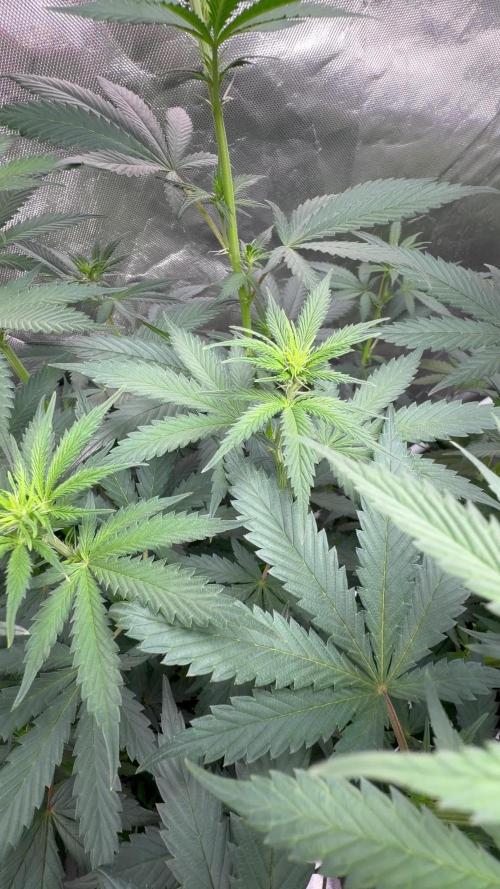
Feeding max recomended strength H&G soil A&B and they are loving it. Buds are swelling now and trichomes are more visable .
This plant is growing fast .

Likes
6
Share

@MO_PureLeaf
Follow
Ich würde mal sagen jetzt geht die spannende Phase los :) ich freu mich schon auf die buds! Bis dahin 🏻
Edit: am 14.5 haben wir bisschen mal etwas blattwerk weggenommen :) die Pflanze zeigt heute auch schon (glauben wir) Blüten Ansätze :)

Processing
Likes
5
Share


@Smokwiri
Follow
Welcome to the second week of flowering of the Limited edition strain
Orange Skunk Ryder
This thing smell dank...
really really dank...
dank like a real skunk
I wouldn't recommend this one for indoor growing without air filter.
such small thing with such big smell
it's only in week 2 of flowering, i was expecting some flowering hairs and that would be all i could expect. But this thing has a small handfull of small nuggets that are feeling quite dense already... a bit early to be that compact perhaps, but very nice to see
Likes
28
Share


@DutchFarmer
Follow
Flipped the tent
Removed two male trop cherry
Replaced them with Cherry Gar see Ya from Ethos and Miami Madness and Strawneapple
Light intensity: 65%%
PPFD: approx. 2000 umol
Light distance: 35 cm
hours day/night: 18/12
Temperature day: approx. 31.5 degrees
RLF day: 78%
Temperature night: 25-27 degrees
RLF night: approx. 70%
VPD value: approx. 0.8-0.9
PH value water/fertilizer solution: 5.9
EC value: 4.5
ventilator oscillation: level 4
Humidifier: off
Dehumidifier: on
🌿 Check Out My Cannabis Community! 🌿
👇 Like, Follow, Comment, and Subscribe to My YouTube Channel 👇
❄️🌱🍻 DutchF4rmer on YouTube (https://www.youtube.com/@DutchF4rmer)
----------------------------------------------------------
🎁 Join Our Discord Community for Weekly Giveaways! 🎁
👉 Join Our Discord Server (https://discord.gg/VMu6rH4a7V)
----------------------------------------------------------
🌟 Get Exclusive Help, Advice, and Mentoring on Patreon! 🌟
👉 Join Our Patreon. (https://www.patreon.com/DutchFarmer)
----------------------------------------------------------
📸 Follow Me on Instagram 📸
👉 DutchFarmer1 on Instagram (https://www.instagram.com/dutchfarmer1)

Violet BAG · Robin Hood Seeds

Tropicana Cherry · Relentless Genetics

Miami Madness · Solfire Gardens

Cherry Gar-see-ya R1 · ETHOS Genetics

Strawneapple · Exotic Genetix

Black Valentine · LIT Farms (Lost In Translation)

Sugar Cane · In House Genetics

Gorilla Cookies Auto · Fast Buds
Banana Purple Punch Auto · Fast Buds

Cereal Milk · Cookies Seed Bank
Likes
85
Share


@420DeepGrow
Follow
Comienza la sexta semana de floracion, aqui aplicaré abono de engorde durante una o dos semanas y luego hare el lavado de raiz correspondiente.
Se ha convertido en toda una belleza 😍 💕
📅 Dia 36: Descanso merecido.
📅 Dia 37: Riego con nutrientes EC 1350 EC escurrida 2000
📅 Dia 38: Riego con nutrientes EC 1100 EC escurrida 1750, perfecto
📅 Dia 39: Riego con nutrientes EC 1100 EC escurrida 1850
📅 Dia 40: Riego con nutrientes EC 1100 EC escurrida 1850
📅 Dia 41: Riego con nutrientes EC de 1100 EC escurrida 1750.
📅 Dia 42: Descanso

Likes
2
Share


@CalGonJim
Follow
8/3 12:36AM MONDAY FULL RETARD MODE ACTIVATED
8/3 10AM "
They look solid for where they are.
**Quick visual read:**
- **Right plant (front)** — strongest of the three. Good color, solid node spacing, leaves are filling out nicely, no obvious stress. This one is handling the current feed best.
- **Back plant (Mendo Frost)** — clean and upright, healthy light-to-medium green. Looking very consistent.
- **Left plant (front)** — a bit behind the other two in size and leaf development. Color is still good, but it’s the lagging phenotype of the three. Common with mixed RF3 packs — you’ll often get one that starts slower.
None of them are showing tip burn, clawing, or dark “overfed” green, which means your decision to keep the EC at 0.93 while adding the light amino dose was correct. They’re not hungry yet either (no pale yellowing or slow growth signs), so jumping straight to 1.1 without aminos today is a clean next step.
At this stage (early veg, still small pots/coco), staying in the 0.9–1.2 range is ideal for RF3s and Mendo Frost. They’re still building structure and roots more than bulk. Once the stronger two start putting on more rapid growth and the internodes begin tightening a bit, you can ease toward the higher end of that range.
One small observation: the left plant’s lower leaves look a touch softer/less turgid than the others. Keep an eye on whether that improves after the next watering. If it stays lagging while the other two take off, you can always give it a slightly lighter feed or just let it catch up at its own pace — mixed packs almost always have one slower starter.
Overall they look healthy and on track. The amino experiment didn’t push them over. You’re dialed in right now.""
8/5 12:16AM. 8/3 Grandpa from the Lost Boys Mode activated
8/7 3:41am 👍 Yes, 400 mg each of L-proline and L-phenylalanine in a gallon of water is a low, one-time dose that should have only a minor effect on EC.
Rough concentration
1 US gallon ≈ 3.785 L
~400 mg of each → roughly 105–106 mg/L per amino acid (total ~210–212 mg/L).
Proline molecular weight is ~115 g/mol, so this is about 0.9 mM. Phenylalanine is higher MW (~165 g/mol), so closer to 0.6 mM. These are in the range commonly discussed for plant use (often 0.5–2 mM or a few hundred mg per gallon for proline as a stress aid).
Effect on EC
Amino acids do contribute some conductivity because they can ionize (especially depending on pH), but far less than mineral fertilizer salts at the same mass. At this low concentration the rise is usually modest—often in the 0.1–0.3 mS/cm ballpark or less, depending on your starting water, existing nutrients, and meter.
In practice, many growers add pure L-amino acids at similar or higher rates without big EC swings. The big EC jumps seen in some studies come from much higher doses of mixed commercial amino products. Measure your solution EC (and pH) before and after dissolving them so you know exactly what happened in your mix. If you’re already running a target EC for the autos, you can simply account for the small bump or dilute slightly if needed.
Will it help / any downside?
L-Proline: Plants accumulate it under stress (heat, drought, salinity, osmotic stress). Exogenous proline is often used to support osmotic adjustment and stress tolerance. A single modest dose is unlikely to hurt and may give a small buffer if the plants are dealing with any environmental stress.
L-Phenylalanine: Precursor in the phenylpropanoid pathway (leads toward flavonoids, lignin precursors, and various secondary metabolites). Some research and grower use explores it for supporting secondary metabolism; effects are more variable and usually not dramatic from one application.
Because this is a one-time introduction at a conservative rate, risk of imbalance or toxicity is low for autoflowers and your other plants. Amino acids are generally well-tolerated when kept moderate; the main caveats with higher or repeated doses are possible effects on nitrogen metabolism or nutrient uptake patterns, and the fact that they can feed microbes if the solution sits too long.
Practical notes
These are pure L-forms from the labels (BulkSupplements and Nutricost), which is what you want.
Dissolve fully, check pH/EC, and use reasonably soon.
For coco or other soilless media, just include it in a normal feed or water event. No need to change your overall regimen for a single application.
Keep an eye on the plants for a few days after (normal advice with any new input). If everything looks happy, you’re good.
You’re not wrong for trying a light one-off addition of these two. It’s a reasonable, low-risk experiment at the dose you used. Measuring the actual EC change will give you the clearest answer for your specific water and nutrient base..👍
8/7 11:54 PM Classic Stock Car Race Replays by My Journey 4K.... distracted by classic cars again
Likes
5
Share


@banditman1200
Follow
started LST just at end of week 3 and into week 4 ,then decided that these girls may not be suited to this procedure. Will just let them do their thing. Have also adopted 2 Green Gelato from a friend that have some issue's, will have a go an see if they get better.
Likes
37
Share


@MrJones
Follow
MrJones Pink Sugar Breath F2 by VMAN - ViparSpectra XS2000 240W Infrared Full Spectrum LED Grow Light
´🌿⊱╮🌿╰⊰🌿 WEEKLY GOALS 🌿╰⊰´🌿╰⊰´🌿
🏡Indoor - 3"x4"x8" Custom Built Grow Closet
🌞Environment - 80F and 65% Humidity - using Humidfyer as needed.
🌾This strain likes to stretch during flower, so a heavy training regiment will be needed.
🗓️Vegging
⚱️1-Gallon 📊6.4 / 6.8 PH
💧 Feeding / Dry Amendments using Dr. Erth Live all Purpose and Using Up my Mr. B's Green Trees ORGANIC BLOOM 2-8-6
🌞ViparSpectra XS2000 240W x2 Infrared Full Spectrum LED Grow Light
🕷️ IPM - We will be using Green Cleaner" 1 OZ per Gallon, and CannControl from Mammoth alternating between products each month for Integrated Pest Management.
🌿╰⊰´🌿╰⊰´🌿 PLANT UPDATES 🌿╰⊰´🌿╰⊰´🌿
📝 Notes - A good friend of mine gave me some of his crosses, please read below for his amazing details, I am very excited to see what I can accomplish with these genetics and my cannabis gardening approach.
╰⊰´🌿 ╰⊰´🌿 ╰⊰´🌿 ╰⊰´🌿 ╰⊰´🌿 ╰⊰´🌿 ╰⊰´🌿
🗓️Sunday 09/05/22 - A week in their new pots and this strain is doing very well, they are stacking very tightly. odd because they have a strong Sativa trait, so I am still trying to figure out my training process, I started a compost rea yesterday and will be ready tomorrow, and hope the plants have dried out a bit from my watering on Friday. I have placed a recipe for my Nitrigeon Rich Tea Below, I am hoping it really supports the natural organic soil and activates the microbes to help the plants blow up! The plants are starting to develop a nice sweet smell, very fresh!
🗓️ Wednesday 09/07/22 Fed the Sugarbreath the Compost tea on Monday, they are looking great, decided to do defoliation on Tuesday, and the plants are bouncing back and looking amazing! I am going to give them the remainder of the week and decide if to top or just do some LST, the plants are stacking, the internode spacing is very tight, and would like to see how I can open this up. Stay Tuned!
📝 Saturday - 09/10/22 Thursday I topped dressed with the first-time feeding of Dr. Earth Life, watered in with dechlorinated H20, these ladies are really starting to explode!
╰⊰´🌿 ╰⊰´🌿 ╰⊰´🌿 ╰⊰´🌿 ╰⊰´🌿 ╰⊰´🌿 ╰⊰´🌿
Breeders Notes by VMAN
Pink Sugar Breath is a creation of Platinum Kush Breath x Pink Sugar cookies originally Bred by UFO Genetics.
Pink Sugar Breath F2 is the second filial Generation that was hunted and creates by Visions.
The vigorous cultivar takes 63 to 75 days to flower with various phenotypes. These phenotypes can express terpene profiles ranging from Bakery Dough, Sugar, Og Funk, Fruity, Gas, Dank, Chemical Floor Cleaners, and much more. Expect Purple and Pink Phenotypes to pop up fairly easily. Color starts to show within 7 to 8 days of flower for the purple and pink phenotypes. Green phenotypes have more of an OG Funk/Floor Cleaner presence
╰⊰´🌿 ╰⊰´🌿 ╰⊰´🌿 ╰⊰´🌿 ╰⊰´🌿 ╰⊰´🌿 ╰⊰´🌿
Compost Tea
1 Cups Worm Casting
1 Cups Lobster Compost
1 Cups Home Made Compost
2T Molasses
2 T Alfalfa Meal (DTE)
2 T Kelp Meal (DTE)
1 T Bat Guano (DTE)
1 teaspoon Rootwise Bio Elixir
I used a small paint strainer to hold my composts, placing an air stone right in the bag and zip-tie it nice and tight - this allows air bubbles to really agitate the micro matter off of the compost and into your tea
I like to mix in the molasses (microbe food) and start my main air stone, the dry amendments and Rootwise can be just measured in the bubbles
Keep the temp of the water warm 75F/85F - too cool and the microbes reproduce too slowly and too hot will kill them.
I do not delete my teas and let the plant pots dry out slightly before feeding.
I try to do this weekly - as we get further into the growth during the flowering stage I will add DTE Seagull Guano increasing the phosphorus.
If any questions post up in the comments and will do my best to answer them for you
Likes
18
Share


@RFarm21
Follow
2 março - 8 março
--------------------------------
3 março: primeiro dia de lst
4 março - foram alimentadas com 1l de água
Alimentação cheese #2:
RJ - 1.5ml; bioheaven - 0.5ml; calmag 0.3ml; acti-vera 0.5ml
8 março cheese #1 e #2 feeding:
Biogrow 1 ml; bio heaven 2ml; acti-vera 2ml
pH 6.3

Likes
241
Share

@Tropicannibis_Todd
Follow
💩Holy Crap We Are Back At It And Loving It💩
Growmies we are at DAY 49 and she's just killing💀it👌
👉We are in full on flowering , gotta say the pink to redish hairs look amazing , not to mention the frost 👈 even the stems and branches are sticky icky 👈
OMG I LOVE THE PINK PISTOLS 👈 👉 BUT THE MORE IT FLOWERS THE LESS THEY ARE SHOWING 😭
So Shit , I gave them just a tad to much nutes on the first few feeding 👈 But I have since fixed it
So I'm still doing some low stress training 🙃 and some defolation 😳
Lights being readjusted and chart updated .........👍rain water to be used entire growth👈
👉I used NutriNPK for nutrients for my grows and welcome anyone to give them a try .👈
👉 www.nutrinpk.com 👈
NutriNPK Cal MAG 14-0-14
NutriNPK Grow 28-14-14
NutriNPK Bloom 8-20-30
NutriNPK Bloom Booster 0-52-34
I GOT MULTIPLE DIARIES ON THE GO 😱 please check them out 😎
👉THANKS FOR TAKING THE TIME TO GO OVER MY DIARIES 👈
Likes
8
Share


@NiceGuyOllie
Follow
Starting to look like a bag of cheesy dusting has been wafted around by unicorn farts on a barmy summers evening. Turned her around to slap her naughty side with equal and opposite neutrons or some shit like that. Boss

Likes
67
Share


@Ageddd
Follow
_____________________
| ROYAL CHEESE HARVEST |
|_____________________|
Whats up!! Harvesting a little earlier than when i would like, because of the rise of bugs that appeared last days due to climate conditions... this year temperatures are oscillating more than usual having 1 rainy week, then a sunny hot one just after it rains.. In fact, last year, it did not rain until November
So the plagues were on the leaves, mildew powdery(just a coulpe of leaves),aphids(like just in the leaves of one cola), and some caterpillars almost ready to get out and start eating all the buds, (hopefully i cut that day)..
Sounds bad, but the parts of the plant affected was only the leaves... and means that a proper cleaning is coming so removed all the leaves and the result is what you can see, that bonsai.. Spotted 2 dead material points in big colas, that i removed after drying..
I did not weight the plant wet because of the smell that i had on my house that day, things went very tense, i was a bit busy, and even, it has not much sense to me, im better weighting the dry material.
So at the end i think im having very good quality, and the affected parts are less than i thouth at first, so im very happy with the results..
On the scales are the best buds, the rest is the lower part of the colas that were less developed so im doing hash with that part..
Been busy guys so im uploading more photos today ^^
I hope you like all the grow thank you for follow it :)
Song: Eazy-E - Down 2 tha last roach00000
Processing
Likes
3
Share


@Strictlyorganics420
Follow
Another great week gave this girl a good clean out of the fluff at the bottom the others are crushing it aswell more pics to come tonight as we are all caught up its may 23 now the indoor has starting showin off her awesomeness at the end of week 2 of flower stay tuned growmies
Likes
3
Share

@Grow_for_Happiness
Follow
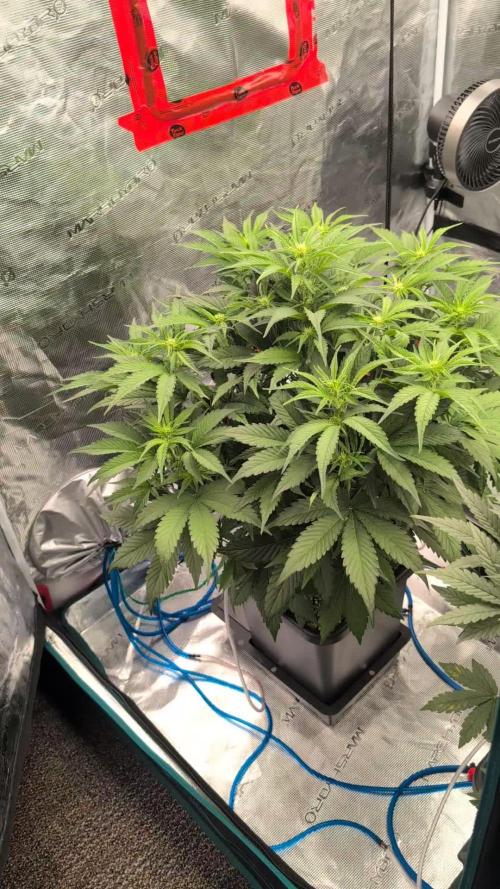
Exciting week, this girl has gone into flower! Was seeing the start of some pistils at beginning of week and by end of week they are fully into flower. Just over an inch of growth a day, and were just hitting stretch. Nice busy even plant, with zero training or defoliation to date. Love how blueberry crosses are almost always naturally bushy plants. Trying out Plagrons Power Buds, claims more bud sites, see how she. Goes! Plants seem happy with the mix so far, so good! Lights at 30" hitting 580-600 umol/s

Likes
45
Share


@masterofsmeagol
Follow
8/7 Plants were still heavy this morning. Temperatures have been much milder. 70's is much better than 90's. I had to water twice a day for a while. I defoliated ahind found some heat stress ob the gmo canary on the end with some twisted leaves. Some leaves are turning purple on an event horizon and gmo. Night Temps are much cooler plus its probably a pheno thing. I defoliated everything dead yesterday. Found lacewind eggs. Saw an adult green lace wing this morning in the garden along with a couple more lady bugs. There were also some lady bug larvae so I hope the go right to town. It's getting cooler so if I'm going to poorly I need to do it. Sherb pie plant seems to he the pillars favorite. I've killed a few of them. Still need to fix supports and do a little more defoliation. I have a video too but it's too slow to upload now.
STOPPED AFTER GETTING MY TIRES PUT ON AND DAD SAID THE LITTLE PLANT IN THE 5 GAL BUCKET IS DROOPING. I WENT BACK AND OF COURSE IT WAS. I WATERED THAT AND THE ONE IN THE TEN AND THE 50 AS IT LOOKED DROOPY. 10 GOT A HALF GALLON AS IT WAS DRYING UP AND ITS GOING TO BE HOT TOMORROW TOO. NOT 90S PROBABLY 80S AT MOST BUT STILL. I GAVE PRETTY MICH EVERYTHING A HALF GALLON EXCEPT THE EVENT HORIZONS TGAT ARE FURTHEST IN FLOWER. WITH THIS SUPER HOT WEATHER AND LACK OF RAIN I DONT WANT TO OVERWATER. DAY AFTER TOMORROW IT SAYS WE ARE SUPPOSED TO GET AN INCH. IM DOING MY BEST. IM TRYING TO UPLOAD THE VIDEO I DID TONIGHT. ILL UPLOAD ThE OTHER ONE TOMORROW.
8/8 Went over this morning and it was 55°. I gave the event horizon in the back half a gallon of water. I gave the other event horizon a LITTLE water but it still is holding weight. It doesn't get the wind blowing through it since it's in the middle. Still need to do supports and decide about whether to spray BT. population is down. A couple plants look hungry so I'm going to have to look at nutes. I defoliated the toasted toffy some this morning. I have more to do on a few others.
TALKED TO MY BUDDY AND SHOWED HIM A VIDEO. HE WAS KINDA ALREADY IRRITATED AND SAID OMP WAS IN THE AREA. UE SAID MY PLANTS LOOKED DROOPY AND THAT I NEED TO GIVE THEM THE 10% AND AT LEAST WATER TWO GALLONS A TIME. HE ALSO SAID NOT TO BET ON THE RAIN. I DONT AGREE WITH THE LAST PART AS IVE STUCK A BICKET OUT DURING THESE RAIN STORMS AND EVEN PHED IT. I WATERED EVERYTHING A GALLON. PLUS THE HALF LAST NIGHT. I THINK MY BUDDY MAY BE RIGHT AND THAT I NEED TO INCREASE THE VOLUME OF WATER AT A TIME SO I DID. I NEED TO INCREASE NUTES TOO. ILL CHECK LAST TIME I FED AND FIGURE THAT OUT. KILLED A FEW JPN BEETLES, A LEAF HOPPER AND A COUPLE PILLARS WITH HAIR ALL WEBBED UP. IM WONDERING IF THE TOASTED TOFFY HAS SEPTORIA. IM LEANING TOWARDS PESTS THOUGH. IVE SEEN TONS OF PESTS IN THE GARDEN. I REALLY SHOULD SPRAY IF IM GOING TO. I NEED TO DO THE SUPPORTS AND REARRANGE A FEW THINGS FOR FLOWER. THE SEED IN THE 5 GAL BUCKET (I THINK ITS A BLUEBERRY IS VIBRANT DARK GREEN BUT THE TIPS OF THE JEWLY FORMED FLOWERS ARE TURNING BROWN ON SOME. ILL GET A PICTURE TOMORROW. A FEW OTHERS EXPERIENCED SOME BURNS AND HEAT STRESS. I HOPE ITS NOT ROOTBOUND OR A ROOT ISSUE. IF IT IS ILL HAVE TO CUT THE BOTTOM OFF THE BUCKET AND STICK IT IN A HOLE. IT WILL HAVE TO BE OUTSIDE MY CAGE WHICH WILL SUCK. WE'LL SEE HOW IT GOES.
8/9 Got like an inch of rain. Plants are looking great. Some look a little hungry. MY buddy was right about the water. I made a SHIT TON of bubble hash today so I'm barely able to type this. NY plant is the 5 gal has some burns that look like it could be root issues. I've finished in buckets before with no issue. I think it's just from being too hot. You can see at the end of the video what I'm talking about. Oh well. I'm tired and done for now. I made a large ice hash pizza now I'm waiting for it to dry so i can make a temple ball. Things are kicking off. We're in flower that's for sure.
8/10 Everything looked good bit I wad in a hurry and didn't get out of the car. I'll check things out when I get back.
HOLY FUCK. WE GOT SO MUCH HARD RAIN THAT I FOUND MY FAVORITE GMO PLANT PUSHED OVER AND LYING ON THE CAGE THATS USED AS THE FIRST SUPPORT. I DIDNT GET OVER THERE UNTIL LIKE 11AM. I IMMEDIATELY FIXED THE PLANT THAT WAS LYING DOWN AND PUT A TRELLIS NET OVER IT AS DEEP AS I COULD AND ZIP TIED IT TO THE PALLETS. I ALSO ADDED A PLASTIC GARDEN STAKE AND USED TWINE TO SECURE THE MAIN STALK HIGHER UP. I DID THE SAME THING WITH THE GMO NEXT TO IT. THE OTHER IN THE FRONT LOOKED BETTER THEN EVER. SAME WITH THE TWO EVENT HORIZON. IM GETTING LITTLE BUDS NOW. I SHOULD GO FEED TONIGHT. THE TOASTED TOFFY EITHER HAS SOME PESTS OR ITS GOT SEPTORIA. COULD JIST BE A DEFICIENCY. I WORRY A LOT. IT WAS SUPER HOT AND HUMID. I DID WHAT I COULD AND THEN I RAN SOME STRINGS ACCROSS THE CAGE TO TEMPORARILY HELP WITH HIGH WINDS OR RAIN (EVEN THOUGH THE STORMS OVER.) I STABBED MY THUMB TOWARDS THE END OF MY WRIST WITH A COLD STEEL RECON 1. WOULDNT STOP FUCKING BLEEDING. I SHOULD'VE KNOWN MY LIMITS AND WAS MORE CAREFUL. I TOOK A COUPLE PICTURE AND DID A MINUTE VIDEO. NO REST FOR THE WICKED. IM FUCKING DEAD TIRED. I RAN SOME MATERIAL FROM LAST YEAR THROUGH BUBBLE BAGS. GOT A TON OF HIGH QUALITY BUBBLE. IM ABOUT TO TRY IT. AFTER IT DRIES A LITTLE MORE ILL MAKE A TEMPLE BALL. I JUST CHECKED THE WEATHER AND THE RAIN TOTALS FOR TODAY AND YESTERDAY AND ITS A COUPLE POINTS UNDER 3 INCHES. I HAD WATERED A GALLON THE NIGHT BEFORE THAT. I HAVE NO IDEA WHY MY PLANTS AREN'T DROWNED BUT THEY ARENT.
8/11 Its going to be hot again today. Plants looked amazing. I took a video. I FED TODAY. EVERYTHING GOT A QT EXCEPT THE 10 GOT HALF A QT. THE 50 GOT SLIGHTLY MORE. A fucking chipmunk ran in my garden when the door was open. He was going fast and I couldn't find him. I looked under the pallets the entire length. Hopfully he just ran out of a hole or up the fence. I'm going to get an air horn and blow it inside the cage. I need to get some zip ties and do a little rearranging before I setup the other supports for flower. Suprisingly the plantvin the 50 went from the furthest from flower to having little budlets on it. Can't be an auto or I think it would've flowered already.
8/12 Ending of the lions gate portal. Everything looked good this morning. The one in the 5gal was removed until I figure out its issue or trash it. The yield would be less than a branch anyway. Probably chronic underwatering. The 10 was bone dry despite the 3in of rain. Some bags seemed light. Looked at last years diary and went with my intuition. WATERED TODAY. Gave everything a gallon. I moved the event horizon to where the 5gal bucket wad and STARTED reorganizing to use the most of my space. I gotta pick up some zip ties and finish the supports but I'm happy. Plants look happy. Not as tall as last year but they are SUPER bushy. I'm going to have to open some up and spread the branches. I'll keep this updated.
WENT OVER AROUND THREE. I CHECKED OUT THE LITTLE PLANT AND NOTICED MULTIPLE BUDSUTES DIEING. I ALSO SAW WHAT "COULD'VE" BEEN A MALE PREFLOWER. MY INTUITION TOLD ME TO GET RID OF IT. ITS LESS THAN A BRANCH OFF THE CROP IT COULD HARM. LUCKILY I HAD BAGGED IT UP BEFORE IT BEIBG REMOVED AND IT WAS FAIRLY WELL SEPERATED. AFTER CUTTING AND DISPOSING OF IT I BROUGHT THE BUCKET TO EMPTY. IT WAS EXTREMELY ROOTBOUND. THE ROOTS WERE WHITE EXCEPT THE ONES ON THE OUTSIDE WHICH WERE A NEON GREEN. THE INSIDE OF THE BUCKET HAD WHAT LOOKED LIJE GREEN ALGAE ON IT. I IMAGINE THAYS PROBABLY WHERE MY PROBLEMS CAME FROM. I'VE USED THIS BUCKET SECERAL TIMES AND IVE SEEN TJIS TYPE OF ALGAE BUT USUALLY ONCE I SANITIZE ITS GOOD TO GO. IM NOT SURE IF IT WAS BEING ROOTBOUND OR THE ALGAE THAT DID IT IN BUT I HAVE MUCH BETTER SPACING NOW. THIS WAS THE RIGHT DECISION. I COULDNT BEAR THE RHOUGHT OF MY GIRLS GETTING POLLINATED. I DID A VIDEO TOO BUT ILL HAVE TO UPLOAD TOMORROW. ALSO CAUGHT THE TINIEST EVER MOUTH LARVAE. I SEE TINY GOLD FINCHES AND OTHER BIRDS DARTING IN MY CAGE AND AWAY WHEN I APPROACH. I THINK THEY ARE GIVING ME A HAND.
8/13 Thought thos was a new week so I took a ton of pictures and did a video. Who knows what will upload. Plants look hetter with the increased room spacing. I have the materials to finish final supports. I've just got to do it. Same with the BT spray. I'm thinking I should've upped the water to a gallon and a half or two but I'll do that next time I guess. Only problem I can see is some septoria looking spits on the toasted toffy and one gmo looks like itscrunning through nutrients quicker than others. Dad said he thinks this is my best year. He said they're more full and healthier looking. I looked at my diary last year and I had plants over the top of the cage. The weren't as bushy but I'm not complaining. These are far more indica dominant than last year so that's probably part of it. Leaves on the event horizons are starting to turn purple. I'll update what I do. I defoliated what needed it and combed through the plants hunting pillars.
I GUESS I FORGOT TO UPDATE THIS OR IT DIDNT SAVE. I BOUGHT A WATERING CAN THAT HOLDS A GALLON AND A HALF AND EMPRIED VERY QUICKLY IN SMALL STREAMS SO IT DOESNT HURT THE ROOTS. GREAT INVESTMENT. COULDNT GET OVER UNTIL 2 AND I GAVE EVERYTHING A GALLON AND A HALF. EXCEPT FOR THE ONE IN THE 10 TJAT GOT A GALLON AND THE TWO PLANTS IN THE MIDDLE THAT GOT A GALLON. ONE EVENT HORIZON AND THE TOASTED TOFFY.
Likes
6
Share


@shrubluv
Follow
Unfortunately, once again (last grow too) I had some bud rot in the last week before harvest in both plants with the biggest one largely affected. Because of that, I had to remove all infected parts and have an early harvest. I picked out all fucked buds, gave my plants another two days of (finally!) sunshine to dry out the cut-outs I did on the plants.
Today I harvested the smaller one and was surprised it actually was quite alright in terms of yield. Tomorrow, I'll cut the big one and I hope there will still be some good bud structures left as this one grew so nice, especially for being a dwarf :-D
Will update as soon as I've got more news!
UPDATE: I cut the big one as well and am very pleased with the yield I have from this grow. Was not an easy grow since the weather was shit and I've had to throw away some decent buds because of bud rot, but all in all it looks promising :-)
DRY WEIGHT: 48g of fresh buds (had to throw away at least what could have been 10-15 grams because of bud rot)


Processing
Likes
29
Share


@DudeGrowsWeed
Follow
Still unnamed C.A.... Maybe "Callit Anything"? 😜
Anyway, her buds are looking nice and tasty. Who cares what the name is, I'm gonna be smoking this in a few weeks! 👍