


Likes
Comments
Share


@Huckleberry39
Follow
Loving these ILGM OG KUSH!!! This is my 3rd grow of them and they just keep getting better and better!! The middle one should finish up by the end of this month if not sooner. About 80 percent of the pistols have turned. I am going to start checking trichomes very soon. The will definitely plump up in the next few weeks!!

Likes
25
Share

@Kirsten
Follow
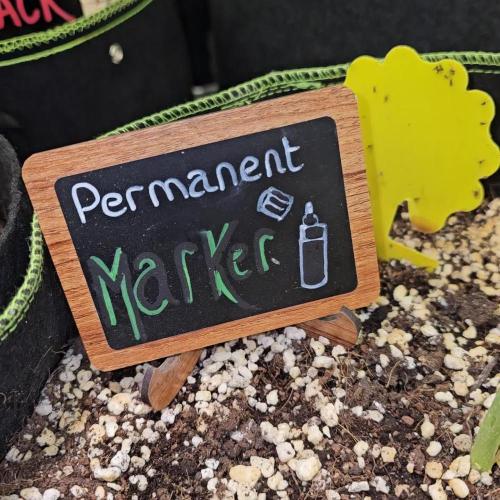
Permanent Marker has taken to the FIM last week. Looking nice and healthy, again a slight Nitrogen excess.
Which will resolve itself without intervention. Provided no N is added into the nutrient soloution.
I am actually considering super cropping the main stem on this one. Let's see next week how we are looking then.
Here's what I did this week.
Here is what I did this week.
12.9.25:
I watered with 1L of dechlorinated water PH'd to 6.5 with;
💜 2ml Trace
💜 2ml Flourish
PH: 6.5
PPM: 335
The fungus gnats have really incresed since I did a watering of the whole tent.
I have some more sticky traps set out, and I will not water for several days.
Once it has dried the top soil, I will add some more Diatomaceous Earth to the top 5cm.
Thank you for checking in this week, I'm very much looking forward to how she turns out. Sounds like a banger. See you in the comments 😁💚✌️🧡👌

Likes
67
Share


@Ageddd
Follow
Hello GD !!!!
This week things went complicated... Both cheese started preflowering and flowering right now, imma put you in the whole context of this .. Im really confused at the moment
Both plants showed preflowers, over developed pre flowers ? ....
Then hairs appearing, and i started to worry about this..
Temperature was good at 10/5 so put the plants outside, topped the girl and removed a few lower branches
Couple of cloudy days and .......more hairs... maybe more like a first stage flower
Talked about this with a more experienced grower, he told me that the plants should re vegetate when noticing longer days..
I have been researching and many people coincide with the revegetation, but.... maybe some grower or skilled revegger can help me out ? I mean im feeding the plant with BioGrow ph 6.5, yesterday with Green Explosion and BioGrow to seeif this helps the plant ....
My plan was to make a monster plant this year, but things are not going as expected.
Got a Jack Herer waiting if i need to germinate a new plant now but would be a mess of Cheese
Thank you for your time guys !!!!!
EDITED 22/05 : The other cheese which have a slowly develop in comparision, has developed flowers too but are smaller, and seems she is showing ReVegetation Signs !!!! with more leaves in the popcorn buds and new growth, so we are waiting a few days to take a decission.
Thank you so much for the advice mates !
EDITED 24/05: The buds are getting frosty .... wtf, temperatures are low, this is a really weird year... Winter come later than usual, and still here..

Likes
18
Share


@DaddyPrime
Follow
7/17 she is SUPER fucking frosty 😍💚 buds are filling out too. Cant wait to see her a couple weeks from now
7/21 she was getting super bushy so I defoliated alot of the bigger fan leaves

Likes
35
Share


@StonedandSteady
Follow
9th W/Flower Harvest: No 9th Feed of #HumboldtCountysOwn this last few Weeks! I Flushed them out once a day with 1 Gallon of Cold Declorinated Tap Water for the last 7 days, letting thier pots dry out for 4/5 days and Checking the Triks every couple of days as well! Thier Packed, Stacked Up and Lights Upgraded!!! Cloned with my Steady's Saliva!!! We'll definitely Grow back to everything here soon! #Pre-Sexed 4/9/21 #Opium/#PabloEscobar *Fems* breed by Team #DivineSeeds #DivineSeedsSquad #DivineSeedsBreedingCompany I'm Very Excited and Extremely Gracious!!! These Cannabis plants are Camping out in the Closet for a week or so! Lol
My #PabloEscobar and #Opium *Fems* from #DivineSeeds Regs: SalamiLegF3's×2 and FireAlienRomulan look$ Outstandingly Awesome and Finished Up Phenomenally Fine into thier 9th week of Flower! Thanks Again for All the Love and Support my fellow Growmies and Growmets!!! These Magnificent and Magical Ladies were Growing in our 48×24×60 ViparSpectra Official Club 🌿 ®️ Grow Tent and under our #Osree QB1000w and #GrowStarStore Kokokala QB1000w but Finished out in Flower under our #BloomPlus BP1500w! #TNBNaturals The Enhancer Co2 Despersal canister and ph'd them w/ Declorinated watering w/ TNB ph Up and Down! Totally Top Quality Topz all Around! Thanks Again #GallowGlas420 #HarleyGrower #thehumancannabiniod #AlienBloodGenetix #TNBNATURALS #www.as420.ca #divineseeds #divineseedssquad #divineseedsbreedingcompany #HumboldtCountysOwn Family's and Teams!!! Your Genetics are Merry Magnificent, Mega Marvelous and Mighty Medical! Love um!!! I really Can't stress enough how Thankful and Grateful I am of All of you and what you've Shared with Us! Means the World!!! It's definitely a Pleasure being able to Grow with these Phenomenal Grow Lights! Please Enjoy! BudBrothers4-Life! Cheers Famz!!! Much Props and Much Topz!💯🔥#BloomPlus #Osree #GrowStarStore #Growatt #TNBNaturals #TNBTeam #HumboldtCountysOwn #GrowYourOwn #Bliss
Bloom Plus BP-4000
CA:https://www.amazon.ca/dp/B08DTDP5FF/ref=cm_sw_r_cp_awdb_imm_86Q7H2D5BGFYB9B6PR9K
US:https://www.amazon.com/dp/B08DTN3B84/ref=cm_sw_r_cp_awdb_imm_4B7XWCAS09M4V3W0AFJH
Bloom Plus BP-2500
CA:https://www.amazon.ca/dp/B08DTCYV9Y/ref=cm_sw_r_cp_awdb_imm_YDNA8G16PH3TB002VKGE
US:https://www.amazon.com/dp/B08DS53THM/ref=cm_sw_r_cp_awdb_imm_SX3AEDKRVAYQECF32BE4
Bloom Plus BP-1500
CA:https://www.amazon.ca/dp/B082XYLHRJ/ref=cm_sw_r_cp_awdb_imm_XEBFV7790EHT53B2J9B5
US:https://www.amazon.com/dp/B082XYLHRJ/ref=cm_sw_r_cp_awdb_imm_MB3PYZEVSQRZY096AB79
BloomPlus Instagram Link: https://instagram.com/bloom.plus?utm_medium=copy_link
Thanks Again Broski #SmokinPlantaz for Hosting your Bright and Tight Amazon Prime Day #BloomPlus-1500w Giveaway! I'm still Blinded by the Light!!! Lol (Song Pun) it's Ultimately Lit, Extremely Powerful and Brilliantly Bright! I also Love and Appreciate Everyone out here! Please! Go Over and Spread That Love to my Bro's YouTube Channel and Team #BloomPlus on their Instagram! I'll have thier Links posted ⬆️⬇️! BudBrothers4-L!!! Cheers Famz!!! Much Props and Much Pars!💯
SmokinPlantaz YouTube Channel Link: https://youtube.com/channel/UCDKJthWoS6-miAhq_lLb_-w
HumboldtCounty'sOwn:
Email: [email protected]
Phone: (707) 725-4119
Toll free: (866) 872-9434
Humboldt Bottling
Po Box 429 · Fortuna, CA 95540
HumboldtCounty'sOwn Website Link: https://humboldtcountysown.com/
HumboldtCounty'sOwn Instagram Link: https://instagram.com/humboldtcountysown?igshid=1qj809qkkwych
Vivosun Precision Pruner/Trimmer: https://www.amazon.com/gp/aw/d/B06Y1XVD1P?psc=1&ref=ppx_pop_mob_b_asin_image#
https://youtube.com/c/VIVOSUN
https://www.facebook.com/vivosun.official/
https://instagram.com/vivosun.official?utm_medium=copy_link
https://instagram.com/bloom.plus?utm_medium=copy_link
https://instagram.com/osree.light?igshid=1vrsbdyhzg2h8
https://instagram.com/growstarstore?igshid=2yjn0r00r6ru
https://instagram.com/divine.seeds?igshid=1r90iwe9xiwz8
https://instagram.com/thehumancannabinoid?igshid=17k159pumklkq
https://www.instagram.com/alienblood_genetix_official/
https://instagram.com/as420.ca?igshid=1f116alw054wp
The Grow Bags: https://www.as420

Likes
Comments
Share

@senya_grow
Follow
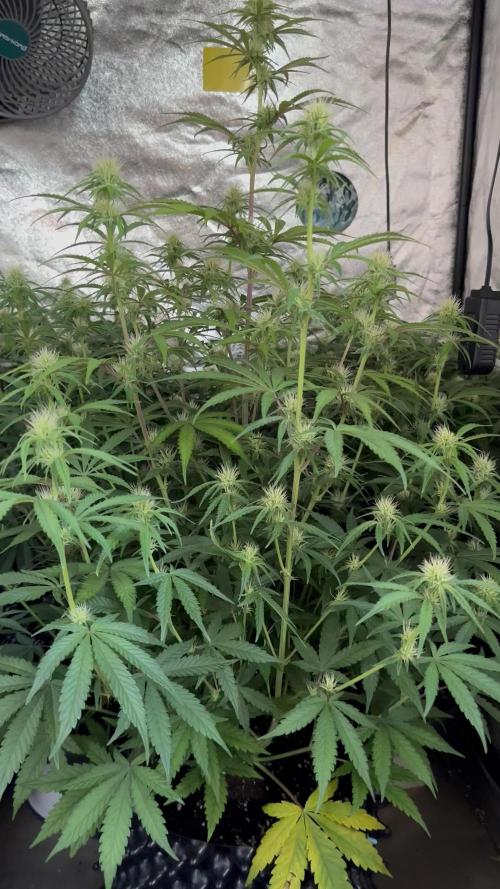
A scent that’s impossible to describe — it’s like sweet bubble gum with a hint of wine. Pure beauty!
Likes
10
Share


@KingCatfish
Follow
Flushed it already. Leaves aren't fading that much but the trichomes are developing to the right state very soon. So 🤩🤩🤩 my first harvest is coming soon. I would like to thank everyone so far for the massive help and encouragement the community gave through out my journey. Hopefully my next post is harvest 🤞 🌴🌴


Likes
4
Share


@1guy2plants
Follow
They're ready to flip already, if I take another week they'll probably get too big to handle. I flipped the switch right at the last day of this week. The growth is coming now. I'll probably have to add another trellis to support flowering.

Likes
29
Share


@Prilyfe13
Follow
May 10, 2024
A new week and more flushing. Both ladies look really good. Tropicana C is way too heavy for her branches. It's good and bad. It's bad because they are flopping all over. And it shows how weak these tops are. It had to be my nutrient regimen. It's good because it shows the buds are dense and heavy.
Tropicana Cookies has significantly stronger branches and can hold a lot of weight for the size of the buds. I could just be a tight fit with all the buds up and down each top. Who knows. They are starting to lean a little bit, but not too bad.
Her buds are almost all purple top to bottom and the leaves are getting lighter and lighter throughout the plant. She's covered in trichomes. From what I can see, there's not nearly enough amber trichomes on the buds. Very soon though.
I reactivated her wick system today. Her container was about half the weight as it was yesterday. Maybe now that it's not saturated anymore, the wick system will provide what it needs. We shall see later today I think.
The lighting for some of this week will stay the same. I'm just waiting for the other 2 plants in the tent to start their flush. Then I'll drop the power down some. Most likely to a DLI of 36 mol/m²/d. We shall see. I'm also curious if it will actually do anything. They are autoflowers and light doesn't really mean much. Just as long as it's on and the right DLI, it should be fine, right? Anyway, I'll drop it when the flush starts anyway. I want to see what happens.
The environment is looking a little better. The humidity is lower at 54%, but still way too high. At least it's below 60% finally. But 54% isn't much better. The temperature is pretty good at 76° during the day and 67° at night. I still can't get it down to 66° at night, so 67° will have to suffice. However, there is about a 10° difference between lights out and lights on.
Grow System Environment:
Temp: 74.1°
RH: 54.2%
VPD: 1.29 kPa
May 11, 2024
Watering day! Last watering of the grow. I'll let them dry out from now on. It should be like 4 days before they are dried out.
Tropicana Cookies looks so close to being done. Her fade is spreading and I'm guessing another 3 days? Maybe less. There is so much more purple now. Ite absolutely beautiful. She definitely will need a trichome check daily.
Tropicana C has started showing purple finally. I'd give her another 5 days, maybe a week. I honestly cannot tell. I'll check trichomes tomorrow and every day afterward. Her buds are definitely getting heavier and some even look fatter. She's definitely not quite ready, but super close.
The light power will be dropped in a couple days down to a DLI of 36 mol/m²/d. Not much else for that.
The environment is still kind of a mess. The temp is fine at 75°, but the humidity is still high at 55%. I even got the temp down to 66°. So that's good. I'd like to keep it there for the rest of the grow. I'll also try to drop the temp during the day to help bring out more color. It will also help with keeping the temp low during the drying period.
Grow System Environment:
Temp: 73.0°
RH: 53.6%
VPD: 1.27 kPa
Update: I ended up checking the trichomes anyway, and i think I know when they will be done. Just an estimate, but I think a good one. Anyway, Tropicana Cookies should be done in about 3 days while Tropicana C should take about 5 days. I may wait and harvest both at the same time. Or in between and harvest them in 4 days.
Tropicana Cookies just needs more amber trichomes. They are almost all cloudy. Very few clear, but only about 5% amber.
Tropicana C on the other hand, has a bit too many clear trichomes and no where near enough amber. 5 days should do it. 4 might be a little early, but that might be the only option. We shall see in 4 days.
May 12, 2024
Not much going on today.
Tropicana Cookies had a soaked bottom again, so I removed 1 of the wicks. So there should be about half the water going in now. She's definitely not thirsty. So very close. Anyway, she is fading quite nicely and I think she will have a whole bunch of beautiful colors. Lots of purple and some nicely fading fan leaves. Light greens, yellows a tiny bit of red. But not there yet.
Tropicana C did not have a soaked bottom today. She never does. It just tells me she is still thirsty. Which also tells me she still has some time left. Maybe 4 to 5 days, but I may harvest her in 3 to 4 days. It all depends on how she looks.
I got some trichome pics today. Just one for each plant, but they were the best I could get so there you have it.
Anyway, Tropicana Cookies looks very close. More amber trichomes, more cloudy and much less clear.
Tropicana C still has a bit too many clear, but definitely has more cloudy. Not too many amber, but more than yesterday.
I still plan to drop the DLI down to 36 mol/m²/d in a day or two. It won't really matter, but it's still important to note. It's for the other plants in the tent.
The environment is a lost cause. I can still control the temp, but the humidity is still at 57%. I have the temp at 77°, but I think I'm going to drop it down to 74°. I don't think the humidity will go up with the temp change. And if it does, back up to 77°. I'll probably get the 74° mark, so all good.
Grow System Environment:
Temp: 73.9°
RH: 55.6%
VPD: 1.25 kPa
May 13, 2024
Not much going on today. I checked trichomes and I think I'm going to harvest when Tropicana C is done. She should be done in a couple of days. Maybe 3 to 4? Maybe less? I'm supposed to be harvesting tomorrow, but I'm not sure I will. I'll check the trichomes again tomorrow, but both are there. Just a little bit more. Not too much longer though. I have 4 more plants ready to come in like ASAP.
Anyway, the trichomes on Tropicana C are mostly cloudy now, with a few clear and more amber. Maybe 8% to 10%. Just a bit more. Tropicana Cookies is a bit further with next to no clear trichomes and the same amber as her sister. Roughly 8% to 10%. She will definitely be done either tomorrow or the next day.
So I think it makes more sense to focus mostly on Tropicana C for harvest time. I really don't want to harvest an indica too early. Not to mention, the purple is coming through really quickly for Tropicana C.
Tropicana Cookies has almost all purple buds. The very bottom of the plant still has mostly green with purple coming through just a bit. It's more like pink than purple. But the majority of the bud is green. These are the underdeveloped buds. Not even worth of popcorn I think. That stuff will become concentrate.
The light intensity will be dropped tonight down to a DLI of 36 mol/m²/d. Kind of pointless for the last couple days, but it needs to be done.
The environment is driving me crazy. I can keep the temp at 74°, but then the humidity goes up to 58%. Much too high. Even opening the tent door only drops the humidity down to 52%. I'm going to need to drop the humidity in my room down to 35% somehow and maybe I'll get below 50%. This is ridiculous.
Grow System Environment:
Temp: 74.4°
RH: 56.2%
VPD: 1.24 kPa
Update: I ordered a new dehumidifier for grow tents today. It should be here tomorrow. I'm guessing a lot of my problem with the humidity is my current dehumidifier. It barely pushes air. Cheap and well used. The new one is from Vivosun. A much more reputable company.
May 14, 2024
Trichome day! Took a couple videos. The videos are kind of crappy. I hurt my back so I'm shaky.
I removed the wick system completely from both plants. Tropicana Cookies was yet again soaked. Not as bad with just the one wick, but still soaked. Anyway, I pulled the wicks and emptied the reservoirs. Maybe that will help with the humidity. They should both be dried out in a few days. Just in time for harvest.
Tropicana Cookies looks wonderful! Her buds are nearly black, with nearly black leaves. It's the darkest strain I've ever grown. Insane. She still has a day or 2 left to go. There's trichomes, but not enough. Hopefully 2 days will do it.
Trichomes are mostly cloudy, a little bit of clear and not enough amber.
Tropicana C is right behind her sister plant in the dark purple color. Her flowers and sugar leaves are getting super dark. Fan leaves are lights ing up, but not fading. I have a feeling she is going to need longer than I have been estimating. I also have a major issue with the side branches all around the plant. They are just laying down. Buds completely facing down. The branches are also super weak. I don't understand what happened. Back to trichomes. There's like 20% clear still and nowhere near enough amber.
The lower light intensity doesn't seem to being doing anything, but I'm sure it's preserving the trichomes. Maybe even helping along the plants to finish up.
The environment is still a nightmare. The temp is still fine, but the humidity is stuck at 60% again. The humidity in my room is higher than outside. I have the door open to help drop it, but it's not helping with the tent humidity. I have no idea how environmental science works. Lol.
I wonder if I defoliate both plants a couple days early, what will happen. Wouldn't it put all of its energy into the buds and increase trichome production, like a last push? I'll research this and decided what to do by tonight.
Grow System Environment:
Temp: 74.3°
RH: 59.2%
VPD: 1.15 kPa
May 15, 2024
Nothing going on today. Both ladies are about halfway there before completely drying out. I'd say another 2 days.
I was going to harvest tomorrow, but I checked the trichomes and they still aren't there yet. Plus, I think the other 4 waiting to get in the tent still have time to veg before they overwhelm their containers. One of them is very close, but I don't think she will be a problem in the next 2 days. Plus I can always train her down.
Tropicana Cookies is starting to lean more. Her branches aren't quite falling over, but they are definitely getting weighed down. She seems to have basically stopped fading. Still a lot of green leaves, but each top is essentially all dark purple. So this may be it for fading. Now I can only wait for her to ripen up. Hopefully 2 more days. I really can't push it that much further.
Tropicana C is still behind her sister by a bit. Not much, but enough for me to be concerned about harvesting them together in 2 days. I guess I'll see how the 4 other plants are doing in 2 days. Maybe I'll wait 3. Who knows at this point. It's been 7 weeks, so it should be any day.
I think the light intensity is making the smell stronger. Less intense light is keeping the trichomes nice and plump and filling with cannabinoids. So maybe it was a great idea to drop he intensity.
The environment is still kicking my ass. I can't get the humidity to drop below 60% and now I don't have much control over the temp
It's stuck at 73°. Not bad for this stage, but it's killing the VPD. It needs to be at like 1.5 kPa, but it's at 1.00 kPa. Super bad. No good. The night temp is still too high. The average last night was 69.1°. Much too warm for night temps. Maybe that's what is taking Tropicana C to turn purple. She's getting there definitely and should be the same color as her sister. They are the same phenotype after all.
Grow System Environment:
Temp: 72.9°
RH: 63.0%
VPD: 1.00 kPa
May 16, 2024
The final day of the week and I think I need to harvest these 2 tomorrow. The 4 Sour Diesels I have in my 2x2 tent are starting to get bigger and will need more space very soon. Not to mention, they are in my 2x2 tent I use for drying.
Tropicana Cookies is basically done. I didn't check her trichomes today, but all the buds top to bottom are purple. Lighter purple in the lowers, but those are popcorn and larf, so I'm not so worried. She also seems to have stopped fading. She's nearly dried out now. Probably tomorrow right when I need to harvest.
Tropicana C on the other hand has her trichomes looked at today. Made a video and took a pic from it. Anyway, the trichomes are much more cloudy now and maybe 7% amber. She should go a few more days, but I still have the dilemma of the other plants. I guess it all depends on how they look tomorrow I guess.
She hasn't started fading yet, but more purple is showing up everyday. That's another reason I think she could go a few more days. She still hasn't even begun to fade. She's about half dry, but if I have to, I'll add a half gallon of plain water tomorrow to see if she fades at all.
I may have to harvest Tropicana Cookies tomorrow and then Tropicana C a few days later. I should be able to fit 4 more 3 gallon containers in the 3x3 with just the one plant gone. It'll be tight and I'll need to Tetris the shit out of it, but I think I can manage.
One thing I haven't thought about until now is drying itself. If I have to harvest separately, the 2 to 3 day difference will mess up the dry for the first one harvested. I think? Maybe not. I have a plan. Instead of hanging them next to each other, I'm going to hang them on top of each other.
So the first will be Tropicana Cookies on top and later in Tropicana C on the bottom. Theoretically, with this setup, I could control the humidity a bit better. When Tropicana Cookies is nearly done and needs the extra humidity for that even dry, Tropicana C will have brought it back in and I should be able to hold it around 60% for the rest of the drying time for both plants.
Lighting doesn't matter anymore. It's served it's purpose and I could technically take one out now for a 2 day dark period before harvest. But if anything, I'll wait for tomorrow. I honestly didn't think about the dark period until now. Haha. Whoops. That may just solve problem entirely. I don't have to wait for harvest time.
My other plants won't get too big and I can put them in the 3x3 more comfortably. I can also harvest both plants at the same time. Or, if I have room, I can place Tropicana C in the dry tent on the bottom while Tropicana Cookies gets hung up. I don't think there's enough space though.
Anyway, I think the best course of action is to put Tropicana Cookies in the dry tent for a 2 day dark period and harvest both when Tropicana C is ready. Then I can see if there's a difference between lights all the way to harvest or dark for 2 days. Fun!
The environment is the bane of my existence. The new dehumidifier is definitely stronger than the old one and more compact. I even left the old one in there as well. Both running at the same time can only drop the humidity to a solid 60%, but my room is 63% and I can't do anything about it. I also have the tent completely sealed off. I think it's helping to keep the humidity from climbing to 65% or 70%.
I have the temp up a bit to 76° and 77°. Just to help a smidge with the DLI. The only thing I have an advantage with is my ari flow and spread canopy. There's 2 fans blowing around air and the exhaust. It should help prevent mold or bud rot, but with such high humidity for days, I can only imagine something bad is happening. Maybe not bud rot or mold, but the chemical composition of the buds? I dunno. I haven't learned that much.
Grow System Environment:
Temp: 74.8°
RH: 62.8%
VPD: 1.07 kPa
Likes
21
Share


@Wrongholn519
Follow
I've had to make a few changes this week in order to maximize my environment. At this point in flower the goal is to raise pH of my water and lower temperatures inside my tent.... high temps can help burn off terpene profiles.
Overall she has been looking pretty light and I've decided to feed her with Advanced Nutrients pH perfect bloom. Planting in a 3 gal bucket just doesn't cut it if your planning on growing in super soil/ organic soil. Since I've fed with AN, I've also increased the CaMg dose.. she really enjoyed the nutes. I will probably feed once or twice more depending on how long she wants to grow. I'm anticipating 90+ days to harvest at this point.
Compared to the runtz, Blackberry and cheese auto, the trichome production started pretty slow with the mimosa cake. It's starting to stack on now and the smell has intensified 10 fold in the last week.
Process/ Environment changes:
- Turned back down my exhaust fan.. it was turned up way too high and my carbon filter couldn't keep up with amount of air bieng pushed thru it... the smell in/outside my house was unbearable...
- I Harvested my cheese auto (see videos), so I turned down one of my TS1000 lights, which decreased the temperatures inside my tent.
- Like I mentioned earlier, I fed with AN bloom nutes to help keep her healthy.
- I've been taking off more fan leaves and bottom larf, bit by bit every day
I'm on auto pilot at this point. I included photos of my outdoor grow space.. I plan know replicating this grow outdoors this summer.
I also bought a rosin press, and I plan on smashing nugs for days when all these plants are ready ☮️


Likes
13
Share


@TheHighNews
Follow
Dopo un paio di prove con autofiorenti ho deciso di ripartire alla grande non riempio un box in questo modo da 5 anni non vedo l'ora 😍

Likes
9
Share


@Djuff
Follow
Week 4 Flower:
Day 1: Fed her with another 10ml/l of Biotabs BudBooster and will no longer defoliate the lady,
Day 2: Quite happy about her progress so far. Hoping that my 125W Purple Alien LED will deliver enough light for thick and dense buds.
FUCK, i just discovered some pollen on a leaf - and i saw the stem evolving pollen. So i cut it. Lets hope that not every bud will be full of seeds.
Are there Nanners or is it a Hermie guys?? (Pictures)
Likes
241
Share


@Tropicannibis_Todd
Follow
💩Holy Crap We Are Back At It And Loving It💩
Growmies we are at DAY 14 and she's doing really well👌
So I'm starting to pull her over and do some low stress training 🙃
She now gets full feeding from this point 👉 NutriNPK
Lights being readjusted and chart updated .........👍rain water to be used entire growth👈
👉I used NutriNPK for nutrients for my grows and welcome anyone to give them a try .👈
👉 www.nutrinpk.com 👈
NutriNPK Cal MAG 14-0-14
NutriNPK Grow 28-14-14
NutriNPK Bloom 8-20-30
NutriNPK Bloom Booster 0-52-34
I GOT MULTIPLE DIARIES ON THE GO 😱 please check them out 😎
👉THANKS FOR TAKING THE TIME TO GO OVER MY DIARIES 👈
Likes
6
Share


@weedelicious
Follow
Day 71:
Hope everything's going well for you. Unfortunately, it's still way too hot here. The outside temperature is 29°C, so it's pretty similar inside the tent. I do have a portable air conditioner, but it would have to run constantly, and that's too expensive for me. That's why I’ve increased the humidity a bit. Otherwise, they look healthy and the buds are getting bigger. I removed two leaves from the Tropical Marker that seemed a bit burned — at least that's what I suspect.
Day 74:
Today, like every two days, the ladies were watered again with 2 liters of water mixed with fertilizer and Cal-Mag. The girls are looking beautiful. The Tropical Marker is very frosty, but the Purple Kush is also getting frostier. Today, I wedged a board with a hole for the exhaust fan into my window. I hope the room will get a bit cooler now. Additionally, I temporarily hung the lamp’s power supply outside the tent.
Day 75:
Today, for once, I didn't do anything. Thanks to the new exhaust outlet, the temperature in the tent is actually 5 degrees Celsius lower. The VPD is now back at 1.6. Yesterday, I lowered the exhaust from 80% to 50% to better maintain the 60% humidity, which is working well now. The buds continue to grow, the girls look beautiful, and the smell is getting stronger.
Day 76:
Today the ladies got 2 liters of water again, this time without any fertilizer. The buds are getting bigger and the girls are looking wonderful. Other than that, I had a little chat with them and then left them in peace again.

Processing
Likes
6
Share


@eldruida_lamota
Follow
Y hasta aquí, el corte última semana ya de todo el proyecto, solo queda tijera en mano y esperar para catarlo.
Os muestro mi zona de trabajo en un video 🤷♂️ Para mi consumo justo
Likes
2
Share


@KofiCultivates
Follow
Yoo it’s kofi cultivates it’s week 3 veg the growth has been explosive from week 2 to week 3
Thanks for following along with my journey. Keep on growing
Likes
7
Share


@Bluemels
Follow
Tag 72: Die letzte Blütewoche hat begonnen. Die beiden Pflanzen sehen ganz gut aus, sie riechen auf jedenfalls stark. Der Geruch hält sich lange. Was auf eine gut feuchte in den Blüten schließt aber nicht muffig sondern sehr aromatisch.
Likes
31
Share


@Santica_Garden
Follow
This is how the ladies are looking, not much to update same old same old, they are just packing on their Budz, well see how they look in the next 7 days. More info on the video I uploaded.
Happy Growing guys 👍🏾

Likes
45
Share


@Kitties_and_Colas
Follow
~_~_~_~_~_~_~_~_~_~_~_~_~_~_~_~_~_~_~_~_~_~_~_~
🌱💡😽💨
Awesome week!! These plants are definitely my favorite of the bunch. I love the shape and node spacing. I think these will be the highest yielding.. bud sites are forming fast and they're praying to the Solux most of the time.. we raised the light a few more inches..the tops of one of the kush is getting bleached.. this may be due to our calmag shortage too..we ordered more and plan to hit them all with a full dose when it arrives..
We still have the Solux at 75% power and this seems to be more than adequate for now..we'll turn it up to 100% a little later in flower..not too much else to report, awesome lighting and forgiving plants make for easy weeks.. thanks as always for dropping by and happy harvests everyone!!🤘🐱❤️🌱
⚡Hortibloom/Solux 350⚡
Specifications ⚙️:
Diodes: Samsung LM281 Pro / Osram DR (1,440 total)💡
Driver: Inventronics 350 watt🔌
PPF: 1015 μmol/s ☢️
PPE: 2.9 µmol/j 〰️〰️
Lifespan: 50k+ hrs ⌛
Weight: 14.3lbs lbs (6.5kg)
Veg Coverage: 5 x 5 ft 🌱
Flowering Coverage: 4 x 4 ft 🌼
-Uses an aluminum heatsink (no fan), quiet while operating 👂⬇️
-IP65 waterproof ratings, tolerant to high humidity grow environments 💦
-May be daisy-chained via RJ14 and managed from a single controller 💡~💡~💡~💡~💡
🌎 https://hortibloom.com/products/solux-350-led-grow-light
~_~_~_~_~_~_~_~_~_~_~_~_~_~_~_~_~_~_~_~_~_~_~_~_
Likes
16
Share


@OJxTropical
Follow
Watering the autos in solo cups at least once a day by now.
Merry Christmas to everyone by the way.
Unfortunately my mum has passed yesterday morning at 8:01am, her stage III cervical cancer became stage IV in just 2 months from october to december.
Heart is heavy & broken but at least she is resting now.
Negative Energy for me to feed on.
Sending Love to everyone.
