The Grow Awards 2026 🏆 








Likes
Comments
Share
@CannaIGrow
Follow
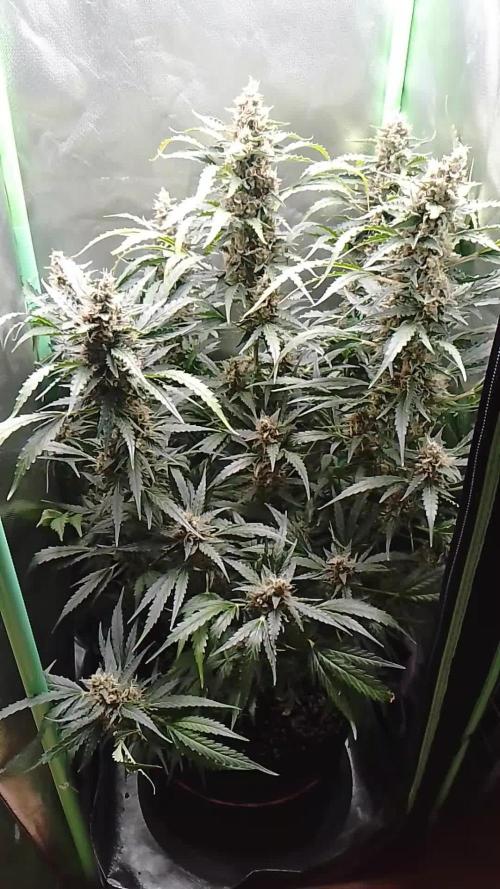
This plant plus one more started to wilt earlier on in the week, I figured it was probably time to transplant seeing as they had been in the solo cups for 2 weeks. After transplant plants seemed to be happy again. I introduced amino acids this week as well. They are getting the grease spray and drench program
Processing
Likes
11
Share


Likes
52
Share
@TheFoxFarmer
Follow
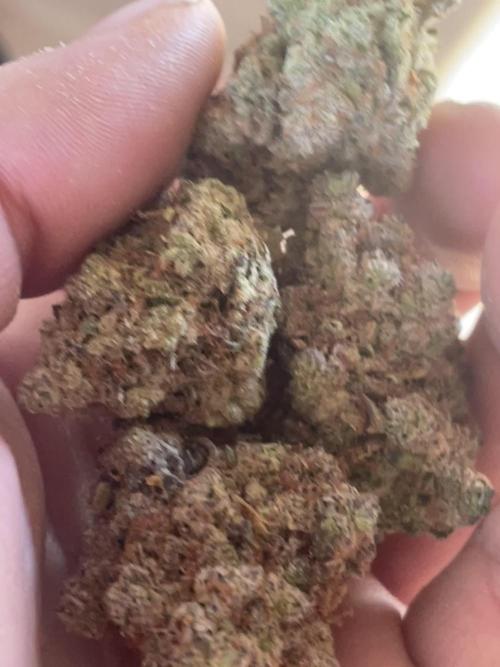
Thank you to RQS for creating and sending me this girl. She's fat, full of flavour and a pleasure to grow! Highly recommended even for a beginner. Thanks to all that follow, like and comment. Without you guys it'd be pretty boring so I appreciate all of your input!
She was harvested on Day 58 and left to dry for at least a week. I then gave her a dry trim and thrown the buds in a jar for curing. I put a couple of boveda 62% humidity packs in there too, to keep the moisture level correct. I'll soon be switching to Integra boost packs as they seem to get a better review and are purposely made for cannabis.
Because I have 4 seperate plants/strains in one tent, under one light, I've had to calculate these by dividing the conditions by 4 (4 plants in total sharing same conditions). This is the fairest and only way to work it out on average as a full tent.
Happy growing! 🐺

Likes
16
Share
@Naujas
Follow
107 days!! Here is another great experience :) The girl has matured, 330 grams of wet, full of sticky, resinous shiny, pleasantly smelling flowers :) I think it will be about 90 dry :) although the girl is definitely not the biggest, but she looks great, the smell is also amazing :) I also got some sugar leaves from which I will make bubble hash, For me personally it is really beautiful and good growth, which I think will definitely be confirmed by the dried and cured flowers :) there will be a smoke review, as well as the total dry weight. good luck to everyone :).

Processing
Likes
32
Share
@Vega0284
Follow
Hey Guys!
Super excited this week! I've really been wanting to try growing outdoors, so I built a cheap hoop house! Got most of this stuff for the frame from Lowes under 300$. All the soil products I got from GrowGreenMI. Some really cool people out there.
One thing I'm super worried about is drainage. Right now those holes are about 4 feet deep and they've got about 4 inches of water in them already. What's been cautioned is that, eventually, about 2 months in these plants roots will grow and reach the bottom and cause root rot to form. One of the biggest things I was trying to be wary of was causing root rot. This was also the biggest precautionary measure I took when mixing the soil. Adding the extra perlite, coco, and clay pebbles. Best advice right now is to build the soil up on the holes another 16 to 18 inches and possible stick a PVC pipe down to the lowest drainage point of the hole to allow some of that natural occurring water to evaporate.
Any advice anyone has on it is welcomed!
Making a compost tea for the soil outdoors, will probably put 2 cups in each RDWC bucket as well and let that do it's magic for a day or so before nutrient change. Raised the bed about 14 inches as well!
All the seeds sank! Off to a good start! Lol


Likes
9
Share
@SeseGrows
Follow
Home Interior 90x90//
Do Si Dos 33 - Barneys Farm + Sour Diesel + Roadawg
//Semana 8 // FLORACIÓN
- Grotek Nutrients.
- Lumatek LEC 315w+ 💎 .
Likes
12
Share
@2Stones1Bird
Follow
Checkout my Instagram @smallbudz to see the Small budget grow setup for indoor use, low watt, low heat, low noise, step by step.
13/12/2019 - Change the light schedule to 12-12h after 8 weeks of no signs of flowering I think is a photo not and auto.
16/12/2019 - Fed her 1.5l of 6.5PH water with 0,5ml of each: Grow, Bloom and Max, and 1ml of each: Heaven, Alga-mic and Vera, noticed about 10% run off, I use about 1/3 of the nutrient dosage on the chart, to achieve about 200/300PPM (500 scale).
17/12/2019 - Did some defoliation on the lower branches mainly.

Likes
6
Share
@The_Lonely_Farmer
Follow
Well the apricot has finally surcome too budrot and I have removed but expect it too return as it allways seems too 🙄
Such a shame as shes started really letting off her beautifull smells I hope but dint see her making it too harvest 😔 so sad too see the last outdoors auto nearing her end but we shall plod on and leave her be too see what comes of her 🌱
Great smell coming from her i must say 😍💚

Likes
52
Share
@Jef79
Follow
Hello and welcome to u all.. Hope you are all well and having a great weekend.. 😁👍
Great week growing for my "Future #1" from Anesia Seeds.. Passed on the mother plant and been busy with my clones and - future - mother!.. Both original cuttings rooted up and wer transferred into 4inch rockwool cubes.. I noticed today that the later cutting is just starting to flash her roots at me so she will b placed into soil for future runs.. 🤣👍
Huge amount of thanks to you all for your support, comments, follows and likes.. Stay safe to u all and best wishes for all your grows.. 😁👍🍀

Likes
24
Share
@Frank_cultiva
Follow
Las 4 nenas del scrog iniciaron con el ciclo 12/12 el día 05/11/2021: están siendo alimentadas con advanced nutrients(dosis indicadas en la foto de la tabla)
-micro
-blom
-grow
-b52
-rhino skin
-big bue
-bud ignitor
-bud candy
-sensi cal mag xtra
Las 2 nenas en macetas de 30LT 18/6:
por el momento están siendo alimentadas con advanced nutrients(dosis indicadas en la foto de la tabla)
-micro
-grow
-blom
-b52

Processing
Likes
154
Share
@CBD_Sweden
Follow
@FAST_BUDS,
Hi all the happy people here in GrowDiaries.
This is my second cultivation ever and it will be fun to try a bigger space than my closet grow.
First, I'm just going to say I'm done with the construction of my new growroom.
I put some pictures on the construction here in week one.
The room is 2.14 meters by 1.7 meters and has a ceiling height of 2 meters.
It provides a floor area of 3.6 square meters.
I use a 54 Watt Lightwawe T5 for germination and 2 Pcs 400 Watt HPS lamps.
I have a channel fan that replaces the room air about 40 times an hour to get a comfortable environment in the room, the air enters a fresh air intake from the outside.
The air is purified through a carbon filter to then leave the room to the rest of the basement.
Then I use that heat to heat the rest of the basement.
I will use 8 pcs 15 liter Autopots to grow with and a 100 liter water tank that supplies the pots of water and nutrition.
I will grow completely organically in soil and will watercure my buds to get the best possible medicine for me.
But there are no cultivation rooms to be displayed here, so I continue with what is most important.
Today I have put my seeds in my moisture dome and hope the seeds have germinated within a few days.
I am very excited to see how the new growroom will work and how this new secret CBD plant from @FAST_BUDS, will turn out.
..............................................................................................................................................................................................................................................................................................................................................
Update 2017-08-15. Both seeds have germinated and planted in small pots inside the humidity dome.
I'm so glad it worked so well and now it's just hoping they'll start growing and become 2 big healthy girls :)
...............................................................................................................................................................................................................................................................................................................................................
Update 2017-08-16. I have mixed my own soil today. Its 40% sieved peat harrow H2-H4 0-30 mm, 45% sieved peat harrow H4-H6 0-30 mm. 5% sand and 10% of compost soil. And i use 15% of perlite and mix it all together.
....................................................................................................................................................................................................................................................................................................................................................
2017-08-21 The 2 sisters are doing great, Nr2 is a bit after Nr1 . Some new pics.
Likes
9
Share
@TiRobotProds
Follow
Nous somme à la 6ème semaines de floraison tout se passe comme prévu les bourgeons continuent de gonflés les paramètres sont excellents 24 degrés en température 55% en hydrometrie.
- L'ajout de RQS guano a redonner un coup pouce à la plante les bourgeons ont sacrément gonfler aimer et regarder par vous même. Cet semaine sera aussi la dernière irrigation avec nutes. Ce run est l'une de mes préférée.
Léger carences en azote post-stretch cela es dû a un faible apport de celui-ci mais rien de grave cela indique les derniers semaine de vie de cette dame le rinçage sera simple et éfficace.
L'odeur quelle dégage es fortement fruité cela sent le 🍬 🍬. A plus pour d'avantge d'informations.👍🏼
Likes
22
Share
@Philhsy
Follow
All in all, love to thank everyone that made this contest possible, and to all sponsors, and thanks dogdoctor for including me 👌😄 its been a blast, cant wait to smoke this honey and also press some honey 🍯 this one is going to be tasty! Big fat buds on this one, jusat kept stacking up but now chop chop! See uou blut the smoke review guys, and good luck! Love to everyone
Likes
14
Share
@TherealNICOGREEN
Follow
Jeg har nu min nr 2outdoor ( den anden har stået ude i over 12dage :-) og er til gengæld forret med jord og 🍁! Jeg er virkelig overrasket 😮 over at det har kunnet lade sig gøre at spirer direkte i underlaget. Men jeg har også lagt tørret blade 🍁 på toppen om natten 💚☮️HELD OG LYKKE TIL ALLE SAMMEN DER UDE
Likes
Comments
Share
@Yiyis_Grow
Follow
Van madurando bien, se les siente super compactas algunas como piedra.
De momento no hay indicios de botrytis, que siempre ha sido un problema para mi.
Hoy revisé los tricomas pero ninguna está para cosechar aún, así que se quedarán una semana más.
5 con proceso de lavado y 1 todavía con nutriente.

Likes
4
Share
@Crazy_zx10r
Follow
Starting pre-flower, still running 18/6 light schedule . Strong smell starting to fill the room,
sweet berry skunk. plants love kelp every couple weeks
Likes
2
Share
@Kirsten
Follow
16.2.25:
I decided to check out the lower canopies of all plants to see if I need to get rid of any foliage.
I did get rid of a few small branches and leaves.
However, whilst I was doing this, I saw more garden pegs from my LST remaining.
There were about 6 or more in Pink Mist alone. Additionally, on Watermelon, there were some left in, too.
I'm so annoyed to see that because the plants are really stretching, and I could've potentially disrupted this by leaving the pegs in for all this time without realising it.
🤞 that I haven't compromised things too much. We'll see.
I watered today with 2ltrs of dechlorinated water PH'd to 6.3 containing the following nutrients;
♡ .8g Green Leaf Nutrients PK booster
♡ .5g Ecothrive Biosys
I ordered quite a few things for the garden. I got Greenleaf Nutrients Sea K(elp) and Mega Crop Parts A+B. To go with their PK Booster I got last month. I'm excited to try it all together. Next run, maybe just using these. We'll see how it goes.
18.2.25:
The plants are going crazy for water! Everything is getting used right up so fast!
Today, I decided to add some more Black Strap Molasses to add some carbs and other micronutrients. I'll add the jar with the label in the photos section above.
I watered a very small amount to each plant.
What I put in:
♡ Black strap molasses 150g
♡ 2g Sea K(elp) Greenleaf nutrients.
I dissolved everything in 4ltrs of dechlorinated water PH'd to 6.4.
19.2.25:
I received the majority of the garden purchases that I made. I'm still waiting for the Ecothrive Life Cycle. I wanted to top dress, but it's been delayed unfortunately.
I am using my Greenleaf nutrients products which I bought on Amazon. I got the Mega Crop 2 part system Part A and Part B. I have the Sea K(elp), and the bud explosion PK booster.
I really wanted to get some of their sweet candy asking read many positive reviews. Unfortunately, for me, this is unavailable to buy currently. So that's a little disappointing.
I needed to do a good watering so when my nutes were delivered today, I got excited 🤗
I watered 2ltrs of dechlorinated water per plant, PH'd to 6.4, containing the following nutrients:
♡ 1g Mega Crop Part A
♡ 1g Mega Crop Part B
♡ .5g Sea K(elp).
The plants drank this up within a few hours.
I'm going to try and hold off on watering in hopes that my Ecothrive Life Cycle will arrive so I can top dress and water it in then.
20.2.25:
My Ecothrive Life Cycle arrived yesterday, and the plants are ready for their top dress and a good watering in.
I have some Biobizz Light Mix, Canna Coco,and perlite. I'm going to use this as a base to mix my amendments in.
I'm going to fill my 5 gallon bucket with about 4.5 gallons of my top dress mix. I will distribute this across 6, 4-5 gallon pots. Then I will water in well with Greenleaf nutrients Mega Crop Parts A+B and Sea K(elp).
I've made a crude attempt to video mixing my top dress. Don't listen to the audio. lol, my YouTube didn't stop playing whilst I recorded this 😂
So anyway, I added the following amendments to the above base mix of 4.5 gallons;
♡ 3 TBSP Ecothrive Life Cycle
♡ 3 TBSP Vitalink Bat Guano
♡ 3 TBSP Ecothrive Charge
♡ 1 TBSP RHS Mycorrhizal Fungi granules
♡ 6 TBSP Ground Cinnamon.
Likes
10
Share
@Weedprinzessin
Follow
Ich bin mehr als zufrieden, freue mich schon auf die Ernte 😋
Sone frostigen Buds hatte ich bisher noch nie, vielen lieben Dank an Fast Buds 👌
Likes
23
Share
@Bauhinia
Follow
She’s starting to smell really nice and fruity, kind of mango-ish. There are a bunch of pistils starting to turn amber as well, but most trichomes are still clear. Transitioning to late bloom nutrients, so stopped adding Gro and will be slowly decreasing overall nutrients probably next week. The damaged cola has been recovering as well, and I noted good new growth and new pistils sprouting on its damaged tip. All the other colas are growing really nicely and forming nice dense nugs.
