The Grow Awards 2026 🏆 






Likes
Comments
Share
@Canna96
Follow
solid fruity nugs. Second only to the Durban Nights as far as this grow goes.....fruity and fairly dense....

Likes
7
Share
@MadeInGermany
Follow
COMMENTED BY
MadeInGermany MadeInGermany 9 hours ago
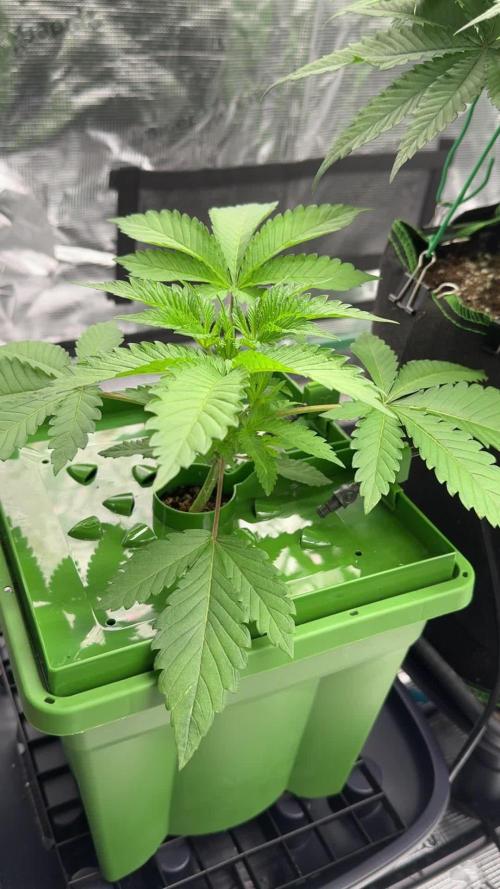
Day 13 since time change to 12/12 hrs Hey all together 😋.
in the last few days since the changeover, it has already made a nice push 👌.
She looks beautiful and it is fun to watch her grow 😉.
I am very excited about Green Buzz Liquid 👍.
I am looking forward to its growth in the coming week 😋.
I wish you a lot of fun with the update 👍
You can buy this Strain at
https://thecaliconnection.com/original-sour-diesel.html
You can buy this Nutrients at
https://greenbuzzliquids.com/
Type:
Original Sour Diesel ( Clone )
☝️🏼
Genetics:
Fem seeds- Original Sour Diesel to Original Sour Diesel BX3 RVSD Male
Reg seeds- Original Sour Diesel x Original Sour Diesel BX3 Male
👍
Vega lamp:
2 x Todogrow Led
Quantum Board 100 W
💡
Bloom Lamp :
2 x Todogrow Led
Cxb 3590 COB 3500 K 205W
💡💡☝️🏼
Soil :
Canna Coco Professional +
☝️🏼
Fertilizer:
Green Buzz Liquids :
Organic Grow Liquid
Organic Bloom Liquid
Organic more PK
More Roots
Fast Buds
Humic Acid Plus
Growzyme Big Fruits
Clean Fruits
Cal / Mag
Organic Ph - Pulver
☝️🏼🌱
Water:
Osmosis water mixed with normal water (24 hours stale that the chlorine evaporates) to 0.2 - 0.4 EC. Add Cal / Mag 2 ml per l water every 2 waterings . Ph with Organic Ph - Pulver to 5.8 .

Likes
98
Share
@DogDoctorOfficial
Follow
I love growing its a big passion of mine , and the fact that GD exists makes everything so much better, one can interact with others and enjoy and learn from each others. Thank you all growers love and keep them green <3 <3 <3


Likes
16
Share
@MadeInGermany
Follow
Info:
Unfortunately, I had to find out that my account is used for fake pages in social media.
I am only active here on growdiaries.
I am not on facebook instagram twitter etc All accounts except this one are fake.
Flowering day 11
since time change
to 12/12.
Hi everyone 😀.
It has a very nice stretch and is developing really well :-).
Yesterday I got her GHSC Powder Feeding Bio Bloom for the first time given (2 g GHSC to 1 l coco).
In 14 - 20 days she will get another 1 g per l coco.
It was poured twice this week with 1.2 l each.
Otherwise the tent was cleaned and everything was refilled.
Have fun and stay healthy 🙏🏻
You can buy this Strain at
https://www.barneysfarm.com/blue-cheese-34
Type:
Blue Cheese
☝️🏼
Genetics:
Blueberry
X
Original Cheese
👍
Vega lamp:
2 x Todogrow Led
Quantum Board 100 W
💡
Bloom Lamp :
2 x Todogrow Led
Cxb 3590 COB 3500 K 205W
💡💡☝️🏼
Soil :
Canna Coco
☝️🏼
Fertilizer:
Green House Powder Feeding
☝️🏼🌱
Water:
Osmosis water mixed with normal water (24 hours stale that the chlorine evaporates) to 0.2 EC. Add Cal / Mag to 0.4 Ec Ph with Organic Ph - to 5.5 - 5.8

Likes
3
Share
@KcKush
Follow
*Will be topping them to find out Sex in straight 12/12 cloner hopefully we get more females than males.
* Will update journal later
*Ignore everything untill tomorrow
*So I cut them and put them straight into 12/12 the clones that is to show me Sex.
*You could see the hollow hole in the stem I wonder if that’s gonna cause an issue.
Likes
19
Share
@Naujas
Follow
I'm happy to see how it has changed since I broke it with my crooked arm :D but now it looks very good :)

Likes
4
Share
@SakuraAsa
Follow
10/14
#1 Day156 23Week Outdoor(Guerilla) Harvest&Drying
#3 Curing Day31 @boveda62%
#4 Curing Day34 @boveda62%
#Clone☓1 Curing Day26 @boveda62%
#Clone☓3 Curing Day14 @boveda62%
#Clone☓5 12/12
#Clone☓4 12/12 short-day Day37
#Clone☓3 short-day Day4
Likes
1
Share
@Randomjcb
Follow
Had police scare so had to move in dark so the stress seams to have made it finish a bit quicker had a good 16days flush


Likes
11
Share
@Finsfan
Follow
Everything is dense with tight buds. Decent yield to her, I think.
Nice light green color and smells. Fruity/blueberry scentbto her for sure.
Going to be harvesting in less then a Week.
I started flushing a couple days ago.
I want to let her pot dry out, become lighter in weight, before I chop it.
To ensure she's properly flushed and because I'm going to chop as an entire plant so If I chop it when the container's lighter then heavy, it'll dry faster for trimming/jarring/curing.
All the hairs appear to be orange and curling back in; if not already done so.
I checked with my scope and am beginning to notice amber trichomes far and few.
Another reason im giving her another 4-5 days before taking it down.
Definitely there, but i like to wait a tad bit longer.
Also, I feel the flush is important, although others can say otherwise.


Likes
4
Share
@Lazuli
Follow
She goes fast and good yield, mine was a bit bushy but still the buds underneath were still hard


Likes
3
Share
@herbalistssword
Follow
Really enjoyed growing this girl, so much adventure :D To think I started her off thinking she is an autoflower and will be done in 3 months :D
She is supposed to indica dominant but at >2m I think I got a more sativa dominant branch.
Can't wait to smoke after all this time
Likes
6
Share
@Walter_the_Ragamuffin
Follow
More Incredible Developments this week! I started adding General Hydroponics Bud on the first watering of the third week of flower - it has resulted in some surprisingly big and fast growth over the past week. You can see from going to the previous week and this one, the bud sites seem to just getting fatter and searching out for their neighbors above and below them with the white pistils - I know I keep saying this but as a lifetime cannabis user, this is the first time I have had the opportunity to watch my own garden closely through the entire plants development and life cycle, and so far this is VERY exciting and entertaining to see the developments each day. The topping and LST techniques I used (no experience, only watching videos and researching) have resulted in my plants taking on almost a bowl or basket shape, where the outside branches have reached far far above the middle canopy during their "final stretch" or first week or two of flowering. Now, the middle of all of my plants have numerous smaller bud sites that are developing - I am looking forward to how the lower canopy buds develop!
I am currently watering them every other day - 8 cups of water each. This past week I increased their water intake from 6 cups to 8 cups - So far I am seeing no sign of stress in any way shape or form - only VERY happy plants working on bulking up on their flowers. I plan on letting them do their thing and working on maintaining their environment so it stays consistent. Definitely a big increase in smell this week - the Cherry Gorilla x Sol Sonic seem to be moving along and bulking up a little more than the GMO. When picking leaves off the GMO, I can already start to smell and recognize hints of the tremendous gas garlic stank I have been looking forward to - Appreciate the Likes and Follows! Look forward to more photos and developments from my First Grow :)
Likes
1
Share
@baphomet_botanica
Follow
Welcome to the garden.
We are three weeks deep into the vegetative stage, and the ritual is officially underway. I prefer running from seed there is something alchemical about watching them crack open and rise from the soil and these girls have taken to their new reality with aggressive vigor.
The lineup for this run is a study in contrasts:
- NineWeeksHarvest - GrapePak: Expecting sweet, heavy resin production here.
- Solfire Gardens - Barf Breath: The name says it all. I’m hunting for that loud, offensive funk that Solfire is known for.
Current Status: Things are dialed in. The stems are thickening up, and fan leaves are praying to the light. No deficiencies, no stress. Just pure, unadulterated growth. I’ll be looking to start some light training soon to break their apical dominance and spread this canopy out before we flip.
Stay tuned as we push these genetics to their breaking point.
PS: I don't know which Plant is which. We'll find out during flower :)


Likes
10
Share
@Gram_Solo
Follow
Tropicanna Banana is all done. 2 weeks in the jars to cure now.
got just over 2 ounce of this plant so not too bad. should be a good daytime smoke.
Likes
22
Share
@J_diaz420
Follow
Se instala segunda malla para ayudar con el espigamiento y a partir de aquí se bajan las luces y se sigue contemplando la hermosa floración!!

Likes
7
Share
@Sabac
Follow
Plantitas con 21 días de vida
Días 20 solo se corto a todas un nudo de abajo y se les agrego los tutores.
