






Likes
23
Share


@MadeInGermany
Follow
Hi everyone 🤗.
Welcome to a new diary.
Cuttings were cut and rooted last week 🙂.
Today they were placed in 11 pots in Canna Coco Proffesional +.
Green Buzz Liquids is used for the fertilizer 😀👍.
Made in Germany 🤗.
I looked at the compositions of the individual elements and I am very impressed and excited about him 😎.
Greetings go out to Green Buzz Liqudis, and a big thank you for the support 🙏🏻👍.
Which training methods I will use will be decided spontaneously each day 😃.
I wish you a lot of fun with the diary, stay healthy l and let it grow 🌱.
You can buy this Strain at
https://thecaliconnection.com/seeds/girls-scout-cookies-34.html
You can buy the fertilizer at
https://www.greenbuzzliquids.com/
Type:
Girls Scout Cookies
☝️🏼
Genetics:
GSC Tint Mint
👍
Vega lamp:
2 x Todogrow Led
Quantum Board 100 W
💡
Bloom Lamp :
2 x Todogrow Led
Cxb 3590 COB 3500 K 205W
💡💡☝️🏼
Soil :
Canna Coco Professional +
☝️🏼
Fertilizer:
Green Buzz Liquids :
Organic Grow Liquid
Organic Bloom Liquid
Organic more PK
More Roots
Fast Buds
Humic Acid Plus
Growzyme Big Fruits
Clean Fruits
Cal / Mag
Organic Ph - Pulver
☝️🏼🌱
Water:
Osmosis water mixed with normal water (24 hours stale that the chlorine evaporates) to 0.2 - 0.4 EC. Add Cal / Mag 2 ml per l water every 2 waterings . Ph with Organic Ph - Pulver to 5.8 .

Likes
27
Share


@adam_pawloski87
Follow
Over all was an amazing grow, super sticky dense nugs with smell of berries, highly recommended for everyone!!
Likes
19
Share


@Naturalist
Follow
I just fed the Nebula plant on day 139 the rest got straight water.
Added HLG Scorpion R Spec light panel today, very heavy, had to use two poles for support.
PPFDs across canvas seem to be in good flowering range now hung at 18" hope to finish in a couple weeks more or less.


Likes
92
Share


@DogDoctorOfficial
Follow
Week 6 Flower Report: Maturation in Full Swing!
🌟 Welcome to the week where the magic of maturation takes center stage! 🌟
The garden has reached a pivotal moment as the trichomes are bursting with potential. Each one a glittering universe, they are the undeniable stars of this show, taking over every surface with their frosty brilliance. ✨ Watching them evolve is like witnessing art being created in real time – it’s a reminder of the beauty and patience this craft demands.
Trichomes: The Frosty Frontier
This week, the focus is all about those frosty beauties!
• Trichomes are the key indicators of ripeness and cannabinoid production. Watching their progression from clear to cloudy to amber provides the ultimate insight into maturity.
• Currently, we’re seeing a fantastic mix of cloudy trichomes with some clear still hanging around – a perfect sign that they’re gearing up for their final push.
• Fun fact: Trichomes serve as the plant’s natural defense mechanism, protecting it from UV rays and pests while being our treasure trove for cannabinoids and terpenes.
Spectrum Tuning: The Science of Light
Light plays a major role in shaping the maturation process, and this week, we’ve dialed in the spectrum for optimal results. Here’s the breakdown:
• Whites: Running at 77% to maintain robust overall growth and trichome density.
• Deep Reds, Far Reds, and UV: Maxed out at 100% to mimic the end-of-season spectrum, signaling the plants to finish strong.
• Deep Reds: Enhance photosynthesis efficiency through the Emerson effect.
• Far Reds: Promote stretch and flowering hormone production.
• UV: Stimulates trichome production for an extra boost of frost!
We’ve also added a timing twist:
• Reds & UV start 15 minutes before whites to simulate sunrise.
• Reds & UV finish 15 minutes after whites to mimic sunset, creating a more natural light transition.
These subtle timing tricks help reduce stress while optimizing light absorption, ensuring every photon counts! 🌞
Environmental Conditions: Precision is Key
Here are the dialed-in parameters for the week:
• Temps: 26.3°C
• RH: 70.1%
• CO2: 800 ppm
• VPD: 1.03 kPa
With these numbers, the ladies are thriving in their sweet spot, absorbing nutrients efficiently while maximizing trichome development.
Lighting Power:
• Lower layer at 800 PPFD and the upper layer shining bright at 1500 PPFD. The canopy coverage is perfect for even development throughout the garden.
Nutrition: Balanced and Boosted
We’ve stuck with the tried-and-true nutrient mix this week but with some strategic adjustments:
• Removed Breaking Powder to focus on trichome maturity.
• Introduced K-Boost at 0.5 ml/L, giving the plants the potassium edge they need to pack on weight and enhance terpene production.
• Feeding solution details:
• pH: 6.2
• TDS: 755 ppm
• Temp: 20.6°C
In the Autopots, the medium stays perfectly hydrated at 100% with:
• TDS: 580 ppm
• Temp: 22.2°C
Shoutouts and Gratitude
A huge shoutout to the amazing genetics and these incredible ladies, and a big thanks to Trol Master, Aptus Holland and Pro Mix for the stellar products that are elevating this grow to new heights! 🌱💪
To all growers out there, remember: Patience is the secret ingredient. Watch, learn, and trust the process – the results will always amaze you.
Here’s to another week of growth and gratitude. Onwards to Week 7 with hearts full of joy and gardens full of frost! 🌟💚
Growers Love,
Your Grateful Gardener
Discount Codes so you can save big on your next check out 💚💚💚
Kannabia - DOGDOCTOR 30% off
SeedsmanSeeds - DOGDOCTOR 10% off
CannaKan- DOGDOCTOR 15% off
terpyz.eu - DOCTOR 15% off
The Neutralizer - PORKIT5-DOG 15% off
Fast Buds - DOGDOCT 15% off
As always thank you all for stopping by, for the love and for it all , this journey of mine wold just not be the same without you guys, the love and support is very much appreciated and i fell honored and so joyful with you all in my life 🙏
With true love comes happiness 💚🙏 Always believe in your self and always do things expecting nothing and with an open heart , be a giver and the universe will give back to you in ways you could not even imagine so 💚
Friendly reminder all you see here is pure research and for educational purposes only
Growers Love to you all 💚💚💚


Likes
1
Share


@Ashketchum
Follow
Flower fuel seems to be working buds are bulking up and trichomes are looking milky
Likes
28
Share

@GERGrowDesigns
Follow
Dear Growers ,
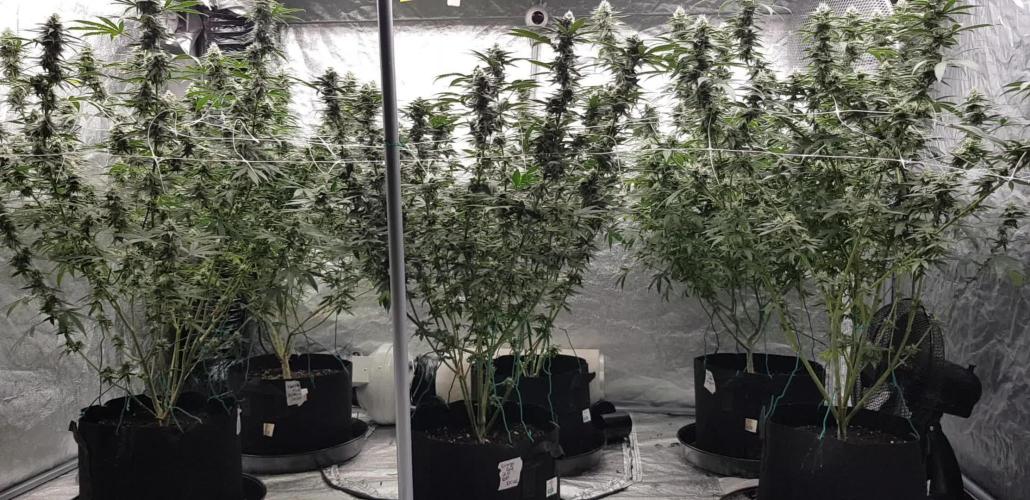
Welcome to Flower Week 4-5 Day 28-35 from Flowering , we’re excited to share a very special project with you:
NARCOS SEEDS Kingping Kush .
With dedication, knowledge, and hands-on practice, we’ll guide you step by step through the journey—watch with us as growth, development, and small wonders unfold before your eyes.
Whether you're a beginner or an expert, you are warmly invited to join, ask questions, and share your own experiences along the way!
Project Setup & Conditions:
• Brand/Manufacturer: Narcos Seeds
• Tent: 222cmx150cmx150cm
• Light: 2x 720 Watt Full Spectrum
• Humidity: 40%
• Soil: Narcos Organix Mix
• Nutrients: Narcos Products
• pH Value: 5.6
A Special Thanks To
Narcos Seeds
for the amazing collaboration, trust, and generous support in making this project possible. Your contribution is truly appreciated!
Congratulations on Your Own Projects!
We celebrate your growth, your creativity, and the passion you bring to the table. It’s truly inspiring to witness at Each visit .
Stay curious and keep up Growing —we look forward to welcoming you back for the next chapter soon!
Likes
2
Share


@Ultraviolet_
Follow
The nighttime VPD does not need to mirror the daytime VPD. Daytime VPD dictates the pull of water and nutrients, while nighttime VPD acts mostly as a prevention tool. A high nighttime VPD increases the risk of the leaf temperature dropping below the dew point, which can trigger bud rot and powdery mildew.
Switched down to 12's hours of light mid-week, changed spectrum, increased light intensity from 840umol up to 1150umol at current height. Overnight from 800ppm to 1500ppm, morning compensation point (microorganisms) 46-47 days from germination, she fills the canopy herself, once the apical dominance is broken.
Measuring a plant's overnight CO2 emissions provides an accurate estimate of its dark respiration rate. Because photosynthesis stops in the dark, you are isolating the respiration process, which allows you to gauge how much stored energy (glucose) the plant has consumed and estimate the scale of oxidative phosphorylation. Oxidative phosphorylation is the final stage of respiration that generates the bulk of the plant's ATP (90%) and relies directly on the oxidation of these respiratory substrates NADH and FADH2 along with the consumption of oxygen.
From a thermodynamic standpoint. Growth is an energy-capturing process, and the rate of that growth is bound by the available free energy (Gibbs free energy) and the First Law of Thermodynamics. While the ceiling or upper limit is dictated by free energy (such as photosynthetically active radiation), the actual amount of growth relies on how the plant balances that energy with other limiting factors. These are often described as the nine cardinal parameters of plant growth. 4 Above, 5 Below. If any one of the 9 becomes bottlenecked, the entire plant's cycle is restricted.
Operating an 80F+ environment at night to force rapid carbon conversion comes with major drawbacks, as the biochemical processes work differently than the deductive logic suggests. While raising nighttime temperatures to 80F indeed accelerates respiration and speeds up the conversion of captured sugars (sink activity), doing so also radically increases the plant's overall metabolic baseline. If the plant's metabolic rate is artificially forced too high via heat, it can actually "burn" through more energy than it managed to assimilate during the day. This leads to carbohydrate starvation, stretching, and a net loss in final biomass yield.
400 ppm is near the standard ambient level; the plant's stomatal intake is the primary limiting factor, not the dark-reaction enzymes. To push 45 DLI without burning out the plant. Trying to force the conversion of a massive daylight DLI in a compressed time frame (12 hours) becomes highly inefficient because the Rubisco enzyme simply hits a saturation limit. To successfully convert a 45 DLI into dense, productive mass, the ambient CO2 generally needs to be elevated to the 1000 to 1200ppm range. This creates a steeper concentration gradient, driving the stomata to inhale CO2 fast enough to match the high photon energy.
It's not all about the amount of light, but the ratio too, as this will dictate growth through the ratio of phytohormones. In order for correct bud development, there needs to be a correct ratio of RGB. Different wavelengths have different penetration depths. When one grows using top-down lighting, only the entire canopy is limited to 2-3 layers of leaf, meaning there will only be correct bud development in those layers, regardless of getting 45DLI.
The biomass potential of a plant is linked to root mass. Generally, when a plant reaches its maximum biomass, you can help to chop off parts of the plant that are in less than efficient areas of the plant (low light) so that it can create new biomass growing towards the light.
Strength is the maximum potential, and power is the rate of conversion. You can have the biggest veg period of 18 weeks, and it means nothing, as soon as you start flowering, the chronological clock starts ticking, the only metric that matters to bud size is how much energy you convert each cycle, not by how long it took you to build the framework, it helps a lot nonetheless.
Not saying anyone should not defoliate for a reason, only that you should have one, and at the right time. Don't defoliate 30+% on autoflowers or 4 weeks into the flower period and expect an increase in yields; it doesn't work like that. There is room for dictating growth patterns and clearing out overcrowded nodes, but it needs to be done in veg because once that timer starts and buds start growing, it's all just energy conversion. One barely needs to defoliate at all in a 4x4 because with side lighting, turning a 2d canopy penetration into a 3d, even lower buds are 90% the quality and density of top ones. The rate of photosynthesis and the ultimate density of lower buds aren't just about the sheer number of photons PPFD. The specific ratio of R:G:B dictates canopy penetration and drives different photochemical reactions. The Electron Transport Rate (ETR) measures the speed at which electrons are driven through Photosystem II (PSII) during photosynthesis. The ratio of Red, Green, and Blue (RGB) light heavily dictates this rate.
Plant leaves continuously perform cellular respiration regardless of the time of day, using energy and oxygen to fuel essential metabolic maintenance. If you over-defoliate, the remaining canopy may be unable to produce enough net sugars during the day to offset the constant respiratory demands of the plant. Must balance fixation with assimilation; there's no point in capturing 45 DLI if you only convert 20% every cycle due to an extreme lack of respiratory capacity to perform cellular oxidative phosphorylation.
You can have a 4x4 canopy or a 4x4x4 canopy, yes, we know that side lights are not as effective at absorption from the sides or underneath, but it's not about DLI, it's never been just about efficiency, it's about the penetration ratios of RGB that drive ETR of/photosynthesis and trigger correct bud development. The size of each bud is its own ability to perform the ETR required for its own personal growth, and bud development is dictated by the ratio of RGB. It drives localised growth and acts as a regulatory switch for that development. Turgor pressure is another very important factor in understanding if you want big buds, for it is the "steam engine" that dictates the rate of bud expansion. Simply, a lot harder to achieve metabolically at ambient 75F than at say 86F
Because buds have less chlorophyll, they do not suffer from the same photosynthetic shutdown that over-exposed, light-stressed leaves do. They can soak up direct light energy to swell in density and size. Their tolerance to intense light is heavily limited by the temperature and humidity, but if you can control those temps and keep the rot away, buds have a much, much higher tolerance to high light than leaves. Beneficial to hammer with high light before trichomes appear. Balancing this with trichome maturity is key for rich terpene and flavonoid profiles, want it just right, somewhere in the middle, not too much, not too little. Find cannabis plants can defoliate themselves come harvest, given the right signals. Every last ounce of potential is recycled into buds by the plant itself (senseceance), given you can keep the level of conversion high enough to prompt a need to do so.
Get the canopy @ optimal PPFD range, 45-55DLI, then let the plant "stretch" the stems into a "PPFD range much higher, one that leaves don't like to grow in, but buds thrive in. What is optimal for a bud is different from what is optimal for a leaf photosynthetically. Genes provide the blueprint, but the environment dictates how, when, and if those genes are expressed. Must first signal the condition to increase the expression you want to exist through stress and response, cause and effect. A well-buffered CEC medium prevents extreme nutrient swings, allowing plants to maximise their dedicated genetic expression.
A plant is either genetically expressing "growing" or "recycling" genes based on its nutrient starvation level in the medium. Constantly toggling between "growing" and "recycling" hormonal states creates a futile cycle that wastes valuable metabolic energy. Plants rely on sophisticated biochemical switches to manage this trade-off and prevent rapid fluctuations that disrupt that balance.
This energy inefficiency is a recognised biological challenge. Plants avoid this costly "flip-flopping" by using hierarchical master regulators (like the TOR and SnRK1 protein kinases) that act as strict molecular switches. These networks enforce cellular commitment to either growth or survival, preventing mixed signals.
This is something that was missing from previous grows.
Under nutrient-rich conditions, TOR promotes protein synthesis, cell division, and structural expansion.
Under starvation, TOR is inhibited, and SnRK1 is activated. This triggers autophagy—where the plant breaks down old macromolecules and organelles to scavenge and reallocate essential nutrients to critical sinks.
"What's the point in flushing?"
The core idea behind a PK booster is to deliver a massive, concentrated surge of P&K exactly when buds are swelling in conjunction with a N starvation. Because these are short, targeted windows, the nutrients must be highly bioavailable so the plant can process them immediately. As soon as you go "organic," that's out the window. Much slower release, uncontrolled, very difficult to "spike". to cause the ratio that will initiate a response.
High-volume PK spikes rely strictly on the immediate uptake capabilities of mineral fertilisers. Making it far less efficient in organic/living soil setups.
When you use organic nutrients, it changes the dynamic with which the plant delivers and trades its nutrients; organic is always releasing new nutrients into the immediate EC. This prevents a lot of autophagic responses from occurring due to a constant stream of new nutrients into the immediate medium's EC. This can prevent nutrient starvation from being signalled.
PK boost is essentially just N starvation, triggering an autophagic response. Concentrated ratio of P&K while tapering off the Nitrogen base. To the plant, the sudden drop in Nitrogen registers as a severe environmental stressor—essentially, the beginning of starvation protocols. She aggressively strips nutrients and proteins from older leaves and vegetative structures and shuttles them directly to the developing flowers and fruit. Ta daaa. Call it a PK booster and sell it. Nothing to do with the P and K itself, it's the ratio immediately available in the medium triggering a nutrient recycling mechanism within the plant itself; all the "booster" sells is the trigger to the signal.
PK BOOST with 50% ammoniacal N signals floral maturation.
PK BOOST with N starvation signals nutrient recycling/sinking.
Very difficult to initiate a response when organic nutes are doing their thing. It takes 4x5x more water significantly to leach or wash ammonia out than it does nitrates. This can prevent triggering N starvation from having its normal impact.
Manipulating the C:N ratio in the medium. One autophagic response has multiple potential signal triggers. Nutrient starvation is not an option.


Likes
2
Share

@SirNutalot
Follow
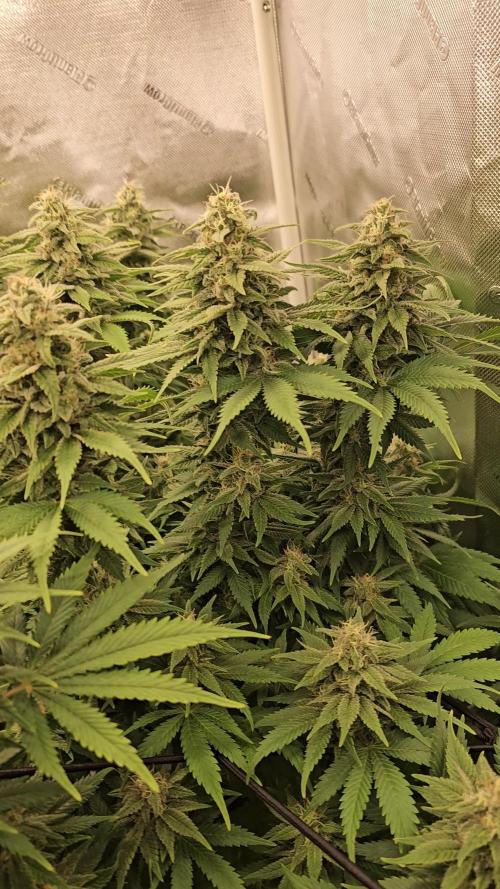
I enjoyed the Plant so much and I definitely not forget it.
Was the last winter grow

Likes
2
Share

@UnitedStrainsGermany
Follow
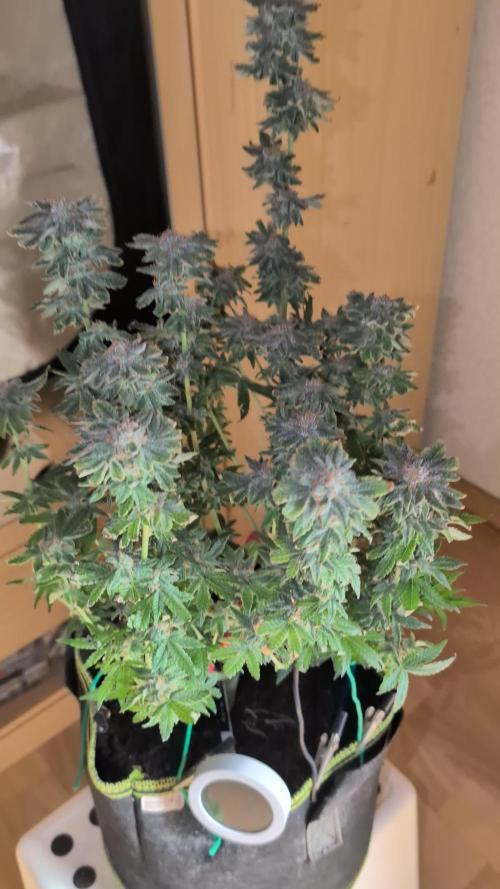
Sie wird als erste fertig sie schließen schon die Blüten sie riecht unglaublich floral süß!!!! Unfassbar gut !!

Likes
22
Share


@Trip614
Follow
So I'm flushing this week, Sunday I used Flawless Finish and watered heavy early, and did a 2nd plain ro flush 6 hours later, I did the same thing Monday. Tuesday I did not give any water at all, Wednesday I flushed the same way with Flawless finish, but water 2 times after that night, I let everything dry Thursday and Friday, It is Saturday, Today I have used only RO water, I am done adding anything. I think I could call it good, but I am going to keep things going after today, tomorrow/Sunday, and Monday, I will not water again, Tuesday the light will not even come on and I will give it a couple days of dark to finish. I could use some tips on how to get some better pics. I try, I really do, but I'm not getting the pics my eyes are seeing, so in the center of the area is all yellow and marooning leaves, and the buds have a pink tint in that area. The trics are getting there, but not yet, I figure by end of week they should be right... almost all cloudy now, a few clear left, but barely any, the few amber here and there, but I'm also not taking a piece to check from the top either, I gettin a look at a few small little buds, near the top, but not the top, I feel like I'm close... , So anxious had to phone a friend to tell me why to wait today... lol, I'll test my runoff ppm's tonight just to be sure, but the way the coco is taking the water makes me think its clean. I'm always ready at the end, Garden of Green seeds have ALWAYS made me look like a great grower. I'm excited, The smells, is very strong, it has a sweeter smell, next week I should have harvesting pics... Thanks for checkin it out

Likes
4
Share


@Willy_Balls
Follow
I was dealing with weird tacoing of leaf tips. Never had it before. Also the tips were light green. I think it was a bit of shock when changing light spectrum. Although the intensity was pretty low. Lamp was set only on 250w for a 5x5 space. Maybe it was a bit too low.
I think the issue resolved itself in acouple of days and after switching to 12/12 . DLI dropped and plants recovered fast. They seem to grow beautifully now.


Likes
2
Share


@Thunderstruckfarmer
Follow
Plants were stunted for a few days from transplant and roots took a long time to make their way down to water line.

Likes
57
Share


@Kitties_and_Colas
Follow
~_~_~_~_~_~_~_~_~_~_~_~_~_~_~_~_~_~_~_~_~_~_~_~_~_~_~_~_~_~_~_~_~_~_~_~_~_~_~_~_~_~_~_~_~_~_~_~_~_~_~_~_~_~_~_~_~_~_~_~_~_~_~_~_~_~_~_~_~_~_~_~_~_~_~_~_~_~_~_~_~_~_
❤️💡🌱😽💨
Almost there!! This stran smells incredible! They're all fading fast and putting on a beautiful color show. These buds are rock hard and completely covered with frost (reminds me a lot of Purple Ghost Candy by Seedsman).. 2 plants look just about done but the other maybe a week behind. We'll probably start harvesting the first few from this tent in a week 🌱


Likes
5
Share


@Bluemels
Follow
Tag 45: Leider hat eine Pflanzen braune Flecken bekommen. Vielleicht weil ich den Ph wert einmal bei 6,2 hatte? Der anderen Pflanze hat es nicht geschadet.
Die schlimmsten Blätter hab ich heute mal entfernt, jedoch scheint sich das ganze noch weiter auszubreiten. Zum Glück ist es nicht mehr lange bis zur Ernte. Diese sollte spätestens in 4 Wochen sein laut RQ.