Likes
Comments
Share
@bear66
Follow
Не, знаю, думаю еще подержать недельки 3 и рубить.
Likes
12
Share
Likes
16
Share
This week made a few oopsies . I gave un-ph’d water to one of the plants “moving to fast” . Started defoliation during this week to attempt to redirect plant energy into establishing a full canopy since flowering has initiated. Whilst defoliating I broke a branch that had to be taped to save it. Humidity went out of whack when I stored 4 prepped 5 gal pots for transplant in the tent sooo I’ve got to buy a dehumidifier bc at one point all my plants fell out in a fit . STILL haven’t filled these pots out, & I’m kinda sure/unsure it’s time to re-amend the soil for flowering. I’m conflicting on waiting until beginning/middle of week 7 so I can flush week 11 & 12 . I think that covers it pretty well Week 5 in the 📚 📕 📖.
Likes
34
Share
Yellow butterfly came to see me the other day; that was nice. Starting to show signs of stress on the odd leaf, localized isolated blips, blemishes, who said growing up was going to be easy! Smaller leaves have less surface area for stomata to occupy, so the stomata are packed more densely to maintain adequate gas exchange. Smaller leaves might have higher stomatal density to compensate for their smaller size, potentially maximizing carbon uptake and minimizing water loss. Environmental conditions like light intensity and water availability can influence stomatal density, and these factors can affect leaf size as well. Leaf development involves cell division and expansion, and stomatal differentiation is sensitive to these processes. In essence, the smaller leaf size can lead to a higher stomatal density due to the constraints of available space and the need to optimize gas exchange for photosynthesis and transpiration. In the long term, UV-B radiation can lead to more complex changes in stomatal morphology, including effects on both stomatal density and size, potentially impacting carbon sequestration and water use. In essence, UV-B can be a double-edged sword for stomata: It can induce stomatal closure and potentially reduce stomatal size, but it may also trigger an increase in stomatal density as a compensatory mechanism. It is generally more efficient for gas exchange to have smaller leaves with a higher stomatal density, rather than large leaves with lower stomatal density. This is because smaller stomata can facilitate faster gas exchange due to shorter diffusion pathways, even though they may have the same total pore area as fewer, larger stomata. Leaf size tends to decrease in colder climates to reduce heat loss, while larger leaves are more common in warmer, humid environments. Plants in arid regions often develop smaller leaves with a thicker cuticle and/or hairs to minimize water loss through transpiration. Conversely, plants in wet environments may have larger leaves and drip tips to facilitate water runoff. Leaf size and shape can vary based on light availability. For example, leaves in shaded areas may be larger and thinner to maximize light absorption. Leaf mass per area (LMA) can be higher in stressful environments with limited nutrients, indicating a greater investment in structural components for protection and critical resource conservation. Wind speed, humidity, and soil conditions can also influence leaf morphology, leading to variations in leaf shape, size, and surface characteristics. Small leaves: Reduce water loss in arid or cold climates. Environmental conditions significantly affect gene expression in plants. Plants are sessile organisms, meaning they cannot move to escape unfavorable conditions, so they rely on gene expression to adapt to their surroundings. Environmental factors like light, temperature, water, and nutrient availability can trigger changes in gene expression, allowing plants to respond to and survive in diverse environments. Depending on the environment a young seedling encounters, the developmental program following seed germination could be skotomorphogenesis in the dark or photomorphogenesis in the light. Light signals are interpreted by a repertoire of photoreceptors followed by sophisticated gene expression networks, eventually resulting in developmental changes. The expression and functions of photoreceptors and key signaling molecules are highly coordinated and regulated at multiple levels of the central dogma in molecular biology. Light activates gene expression through the actions of positive transcriptional regulators and the relaxation of chromatin by histone acetylation. Small regulatory RNAs help attenuate the expression of light-responsive genes. Alternative splicing, protein phosphorylation/dephosphorylation, the formation of diverse transcriptional complexes, and selective protein degradation all contribute to proteome diversity and change the functions of individual proteins. Photomorphogenesis, the light-driven developmental changes in plants, significantly impacts gene expression. It involves a cascade of events where light signals, perceived by photoreceptors, trigger changes in gene expression patterns, ultimately leading to the development of a plant in response to its light environment. Genes are expressed, not dictated! While having the potential to encode proteins, genes are not automatically and constantly active. Instead, their expression (the process of turning them into proteins) is carefully regulated by the cell, responding to internal and external signals. This means that genes can be "turned on" or "turned off," and the level of expression can be adjusted, depending on the cell's needs and the surrounding environment. In plants, genes are not simply "on" or "off" but rather their expression is carefully regulated based on various factors, including the cell type, developmental stage, and environmental conditions. This means that while all cells in a plant contain the same genetic information (the same genes), different cells will express different subsets of those genes at different times. This regulation is crucial for the proper functioning and development of the plant. When a green plant is exposed to red light, much of the red light is absorbed, but some is also reflected back. The reflected red light, along with any blue light reflected from other parts of the plant, can be perceived by our eyes as purple. Carotenoids absorb light in blue-green region of the visible spectrum, complementing chlorophyll's absorption in the red region. They safeguard the photosynthetic machinery from excessive light by activating singlet oxygen, an oxidant formed during photosynthesis. Carotenoids also quench triplet chlorophyll, which can negatively affect photosynthesis, and scavenge reactive oxygen species (ROS) that can damage cellular proteins. Additionally, carotenoid derivatives signal plant development and responses to environmental cues. They serve as precursors for the biosynthesis of phytohormones such as abscisic acid () and strigolactones (SLs). These pigments are responsible for the orange, red, and yellow hues of fruits and vegetables, while acting as free scavengers to protect plants during photosynthesis. Singlet oxygen (¹O₂) is an electronically excited state of molecular oxygen (O₂). Singlet oxygen is produced as a byproduct during photosynthesis, primarily within the photosystem II (PSII) reaction center and light-harvesting antenna complex. This occurs when excess energy from excited chlorophyll molecules is transferred to molecular oxygen. While singlet oxygen can cause oxidative damage, plants have mechanisms to manage its production and mitigate its harmful effects. Singlet oxygen (¹O₂) is considered a reactive oxygen species (ROS). It's a form of oxygen with higher energy and reactivity compared to the more common triplet oxygen found in its ground state. Singlet oxygen is generated both in biological systems, such as during photosynthesis in plants, and in cellular processes, and through chemical and photochemical reactions. While singlet oxygen is a ROS, it's important to note that it differs from other ROS like superoxide (O₂⁻), hydrogen peroxide (H₂O₂), and hydroxyl radicals (OH) in its formation, reactivity, and specific biological roles. Non-photochemical quenching (NPQ) protects plants from damage caused by reactive oxygen species (ROS) by dissipating excess light energy as heat. This process reduces the overexcitation of photosynthetic pigments, which can lead to the production of ROS, thus mitigating the potential for photodamage. Zeaxanthin, a carotenoid pigment, plays a crucial role in photoprotection in plants by both enhancing non-photochemical quenching (NPQ) and scavenging reactive oxygen species (ROS). In high-light conditions, zeaxanthin is synthesized from violaxanthin through the xanthophyll cycle, and this zeaxanthin then facilitates heat dissipation of excess light energy (NPQ) and quenches harmful ROS. The Issue of Singlet Oxygen!! ROS Formation: Blue light, with its higher energy photons, can promote the formation of reactive oxygen species (ROS), including singlet oxygen, within the plant. Potential Damage: High levels of ROS can damage cellular components, including proteins, lipids, and DNA, potentially impacting plant health and productivity. Balancing Act: A balanced spectrum of light, including both blue and red light, is crucial for mitigating the harmful effects of excessive blue light and promoting optimal plant growth and stress tolerance. The Importance of Red Light: Red light (especially far-red) can help to mitigate the negative effects of excessive blue light by: Balancing the Photoreceptor Response: Red light can influence the activity of photoreceptors like phytochrome, which are involved in regulating plant responses to different light wavelengths. Enhancing Antioxidant Production: Red and blue light can stimulate the production of antioxidants, which help to neutralize ROS and protect the plant from oxidative damage. Optimizing Photosynthesis: Red light is efficiently used in photosynthesis, and its combination with blue light can lead to increased photosynthetic efficiency and biomass production. In controlled environments like greenhouses and vertical farms, optimizing the ratio of blue and red light is a key strategy for promoting healthy plant growth and yield. Understanding the interplay between blue light signaling, ROS production, and antioxidant defense mechanisms can inform breeding programs and biotechnological interventions aimed at improving plant stress resistance. In summary, while blue light is essential for plant development and photosynthesis, it's crucial to balance it with other light wavelengths, particularly red light, to prevent excessive ROS formation and promote overall plant health. Oxidative damage in plants occurs when there's an imbalance between the production of reactive oxygen species (ROS) and the plant's ability to neutralize them, leading to cellular damage. This imbalance, known as oxidative stress, can result from various environmental stressors, affecting plant growth, development, and overall productivity. Causes of Oxidative Damage: Abiotic stresses: These include extreme temperatures (heat and cold), drought, salinity, heavy metal toxicity, and excessive light. Biotic stresses: Pathogen attacks and insect infestations can also trigger oxidative stress. Metabolic processes: Normal cellular activities, particularly in chloroplasts, mitochondria, and peroxisomes, can generate ROS as byproducts. Certain chlorophyll biosynthesis intermediates can produce singlet oxygen (1O2), a potent ROS, leading to oxidative damage. ROS can damage lipids (lipid peroxidation), proteins, carbohydrates, and nucleic acids (DNA). Oxidative stress can compromise the integrity of cell membranes, affecting their function and permeability. Oxidative damage can interfere with essential cellular functions, including photosynthesis, respiration, and signal transduction. In severe cases, oxidative stress can trigger programmed cell death (apoptosis). Oxidative damage can lead to stunted growth, reduced biomass, and lower crop yields. Plants have evolved intricate antioxidant defense systems to counteract oxidative stress. These include: Enzymes like superoxide dismutase (SOD), catalase (CAT), and various peroxidases scavenge ROS and neutralize their damaging effects. Antioxidant molecules like glutathione, ascorbic acid (vitamin C), C60 fullerene, and carotenoids directly neutralize ROS. Developing plant varieties with gene expression focused on enhanced antioxidant capacity and stress tolerance is crucial. Optimizing irrigation, fertilization, and other management practices can help minimize stress and oxidative damage. Applying antioxidant compounds or elicitors can help plants cope with oxidative stress. Introducing genes for enhanced antioxidant enzymes or stress-related proteins over generations. Phytohormones, also known as plant hormones, are a group of naturally occurring organic compounds that regulate plant growth, development, and various physiological processes. The five major classes of phytohormones are: auxins, gibberellins, cytokinins, ethylene, and abscisic acid. In addition to these, other phytohormones like brassinosteroids, jasmonates, and salicylates also play significant roles. Here's a breakdown of the key phytohormones: Auxins: Primarily involved in cell elongation, root initiation, and apical dominance. Gibberellins: Promote stem elongation, seed germination, and flowering. Cytokinins: Stimulate cell division and differentiation, and delay leaf senescence. Ethylene: Regulates fruit ripening, leaf abscission, and senescence. Abscisic acid (ABA): Plays a role in seed dormancy, stomatal closure, and stress responses. Brassinosteroids: Involved in cell elongation, division, and stress responses. Jasmonates: Regulate plant defense against pathogens and herbivores, as well as other processes. Salicylic acid: Plays a role in plant defense against pathogens. 1. Red and Far-Red Light (Phytochromes): Red light: Primarily activates the phytochrome system, converting it to its active form (Pfr), which promotes processes like stem elongation and flowering. Far-red light: Inhibits the phytochrome system by converting the active Pfr form back to the inactive Pr form. This can trigger shade avoidance responses and inhibit germination. Phytohormones: Red and far-red light regulate phytohormones like auxin and gibberellins, which are involved in stem elongation and other growth processes. 2. Blue Light (Cryptochromes and Phototropins): Blue light: Activates cryptochromes and phototropins, which are involved in various processes like stomatal opening, seedling de-etiolation, and phototropism (growth towards light). Phytohormones: Blue light affects auxin levels, influencing stem growth, and also impacts other phytohormones involved in these processes. Example: Blue light can promote vegetative growth and can interact with red light to promote flowering. 3. UV-B Light (UV-B Receptors): UV-B light: Perceived by UVR8 receptors, it can affect plant growth and development and has roles in stress responses, like UV protection. Phytohormones: UV-B light can influence phytohormones involved in stress responses, potentially affecting growth and development. 4. Other Colors: Green light: Plants are generally less sensitive to green light, as chlorophyll reflects it. Other wavelengths: While less studied, other wavelengths can also influence plant growth and development through interactions with different photoreceptors and phytohormones. Key Points: Cross-Signaling: Plants often experience a mix of light wavelengths, leading to complex interactions between different photoreceptors and phytohormones. Species Variability: The precise effects of light color on phytohormones can vary between different plant species. Hormonal Interactions: Phytohormones don't act in isolation; their interactions and interplay with other phytohormones and environmental signals are critical for plant responses. The spectral ratio of light (the composition of different colors of light) significantly influences a plant's hormonal balance. Different wavelengths of light are perceived by specific photoreceptors in plants, which in turn regulate the production and activity of various plant hormones (phytohormones). These hormones then control a wide range of developmental processes.
Likes
7
Share
Thanks for stopping by growfessors, week 4 begins. Not much to report other than I'm happy with the bud development.
Likes
3
Share
@djsalin
Follow
Haven't touched much of anything, and the roots are starting to find their way out of the basket.
Likes
3
Share
🌸 Pink Rosay Auto by Zamnesia | Pheno A | Week 5 (Early Flower) 🌱 An Auto That Refused to Waste a Single Day Some plants take their time deciding what they want to become. Pink Rosay had other plans. From the very beginning, she grew with purpose, and this week she truly showed just how quickly an autoflower can move when everything comes together. Running under my 12/12 From Seed experiment, she seems to have compressed multiple stages of development into a single week. Stretch. Pre-flower. Flower initiation. Bud formation. It almost feels like she completed an entire chapter of her life in just a few days. At only Week 5, she’s already carrying herself like a plant several weeks further into bloom, and watching that transformation has been nothing short of incredible. ⸻ 🌸 Week 5 – Full Speed Into Flower There is no questioning where this plant is heading now. Flowering has completely taken over. Every branch has erupted with fresh clusters of brilliant white pistils, and the main stem is already beginning to stack into what promises to become an impressive central cola. Instead of isolated flowering sites, the entire canopy now feels connected, with every branch contributing to the final structure. This is no longer simply a plant preparing to flower. She’s fully committed. And she’s doing it at remarkable speed. ⸻ 🌿 Structure & Training Pink Rosay has developed a wonderfully balanced architecture. Standing 90 cm tall, she combines a strong central leader with evenly distributed secondary branches that have responded beautifully to gentle Low Stress Training. Nothing about her feels forced. The branches naturally reached toward the light, creating an open canopy with excellent airflow and light penetration throughout the plant. The spacing between internodes is ideal, giving every future cola enough room to develop without competing for space. She has that elegant look where every branch seems to know exactly where it belongs. ⸻ 🌼 Flower Development This is probably my favorite part of this week’s update. The flowers are forming incredibly fast. Every day seems to bring noticeably larger clusters of pistils, and what were tiny flower sites only a few days ago are already beginning to resemble proper buds. The main cola is taking shape beautifully, while the side branches are keeping pace surprisingly well. There is already a sense of rhythm across the canopy. One top after another. One flower after another. It’s becoming obvious that Pink Rosay intends to make every branch count. ⸻ 🍃 Plant Health Health remains outstanding from top to bottom. The foliage carries a rich, healthy green color with excellent leaf posture, while the stems continue thickening enough to support what is likely to become a substantial amount of flower weight later on. New growth remains vigorous, leaf spacing is clean, and there are no signs of stress despite the rapid pace of development. For a plant progressing this quickly, maintaining this level of balance is something I’m genuinely happy to see. Sometimes fast growth comes with compromises. This one simply looks comfortable. ⸻ 💧 Hand Watering & Nutrition Like her Frosted Guava sister, Pink Rosay isn’t connected to the AutoPot system. She has been hand-watered throughout the grow, allowing me to stay closely connected with her daily development while providing exactly the nutrition she needs. Current feeding: • Terra Grow — 1.8 ml/L • Terra Bloom — 1.9 ml/L • Pure Zym — 1 ml/L • Sugar Royal — 1 ml/L • Power Roots — 1 ml/L • Power Buds — 1 ml/L Maintaining: * EC: 1.88 mS/cm * pH: 6.05 The transition into bloom has been exceptionally smooth, and she’s responding beautifully to the current feeding schedule. The balance between vegetative support and flowering nutrition seems to be right where she wants it. ⸻ 🌡️ Environment Stable environmental conditions continue allowing the genetics to express themselves without unnecessary stress. Current conditions: * Day temperature: 31.1°C * Night temperature: 25°C * Relative humidity: 72% * Solution temperature: 21°C * Root zone temperature: 21°C * CO₂: approximately 529 ppm Despite the warm summer temperatures, the room remains remarkably consistent, giving every plant the opportunity to perform at its best. Consistency really is one of the most underrated nutrients in any grow room. ⸻ 👀 Looking Ahead If Pink Rosay continues at this pace, the coming weeks are going to be incredibly exciting. The stretch is beginning to settle, meaning more of her energy will soon shift into flower production and bud density. The framework is already built. Now it’s time to start filling it. I’m especially curious to see how these early flower clusters evolve because she’s showing all the signs of becoming a heavy producer with excellent flower distribution from top to bottom. This feels like one of those plants that surprises you every single week. ⸻ 🙏 Final Thoughts Pink Rosay has quickly become one of the standout plants inside this project. Not because she’s the biggest. Not because she’s the tallest. But because of the incredible pace at which she’s developing while never sacrificing her overall health or structure. Watching her transition from vigorous vegetative growth into full flowering almost overnight has been one of the highlights of this grow so far. It’s another reminder that every seed carries its own personality, and sometimes that personality is simply to move forward without ever looking back. A huge thank you to Zamnesia for these fantastic genetics, Plagron for providing the nutrition that keeps these plants thriving, Future of Grow for the outstanding lighting, TrolMaster for maintaining such a stable environment, and to everyone following this journey here on GrowDiaries. Your support, encouragement, questions, and shared passion for growing continue to make this adventure even more rewarding. The flowers have arrived. Now the real magic begins. Growers Love and happy growing! 🌱💚
Likes
26
Share
@siL01337
Follow
Okay here we go.... 6 seeds..... 6 different kind of phenos #F 1-6 They all different to each other... From the taste from the look from the smell from the strength ..... But for me it is perfekt than I have a little bit Option to change when I want another taste or strength. From the result in the first point I am happy But for a strain with 7 weeks flower (they need nearly 10 weeks) I think the waight is a little bit to less. But I am very happy with that result it is okay 😊😋. And from the cuttet trim I have made some iceolator bubble hash and this result is nearly perfect... Okay let's view some pictures....
Likes
1
Share
@Chucky324
Follow
Hello This is the end of week 6 and the beginning of week 7 of flowering. These plants will go for Meds as well as smoking. Showed some pictures of the Rick Simpson Oil I've made and I made a gallon of tincture too. Pics are for the extract contest. I take the tincture when I forget to take my oil or I need a break from the oil. I try not to eat much acidic food and drink... That helps too.... try to eat alkaline as much as possible. But all the good tasting food is acidic. I try to avoid sugar too. Cancer likes sugar. One of the Pink Kush plants leaves are going a yellow a little early.... Wonder what's wrong.... got to look into that... 3 More weeks to go before harvest.... Lots of Fun... OK. Be Great. Chuck.
Likes
10
Share
Some more training nothing special. I can really see the difference with one of my plants as its less dense and has some yellowing on its leaves, so I added Bloom and Top-Max to the nutrient mix as I suspected a Zinc deficiency, but to be safe I went with the full spectrum. The soil was probably depleted of nutrients anyway,
Likes
29
Share
After week 16 of this grow my 'Fruity Terps'-plants are ready to harvest. I check the trichome-heads with a handheld-microscope (magnification of 150, available in every growshop) and see that all have turned milky and some start to turn amber already. That means PEAK-THC (=all trichome-heads have turned milky) has been reached inside the trichome and it is time to harvest. If I would let them go longer now and continue to flower them, more of the trichome heads will turn amber as the THC breaks down again to other cannabinoids, and the effect of the cannabis will get more sedative when smoked. For some chronic pain patients this is what they want from their medicine, therefore it is advisable for them to let the weed flower than recommended. The aroma coming out of the tent is STRONG and DELICIOUSLY FRUITY! 😍 The fade from the flush has turned the bigger fan-leaves yellow or purple now, this shows the plant is using her own sugars now and has used up all nutrients saved inside her. That is exactly what I want, since a well flushed plant ensures a clean, smooth smoke when the buds are dried. This is my MEDICINE and I use it against my chranic back-pain from hernia, therefore I have to make sure I can consume my medicine as pure and clean as possible. All my plants have grown big buds, which are glistening with TRICHOMES, the SANlight EVO4-120 LEDs did an OUTSTANDING JOB! In combination with the BIO NOVA nutrients, all plants THRIVED throughout the cycle and were able to grow healthy to their full potential.
Likes
42
Share
@rhodes68
Follow
Four plants in all eventually 1/31 First of the Bond harvests, Pussy Galore first of the FFT-7s, two more follow. Pussy Dry weight 312 grams 3/5 Holly 665 grams wet into dry - dry 98 grams Two more F7s to go 3/25 Pussy-1 clone yields 1107 grams wet in dry --- dry yield 181 grams One FFT-7 Remains Pussy-2 buds look a bit larger 3/28 Pussy-2 wet weight 1295 grams in dry. 242 grams dry. This concludes the FFT-7 harvests
Processing
Likes
22
Share
3 of the same strain 2 are going into flush and the big one is getting another week of overdrive as she seems to be responding well to it I started her off on it much later than the other 2 probably be another 2 weeks before she comes down.
Likes
17
Share
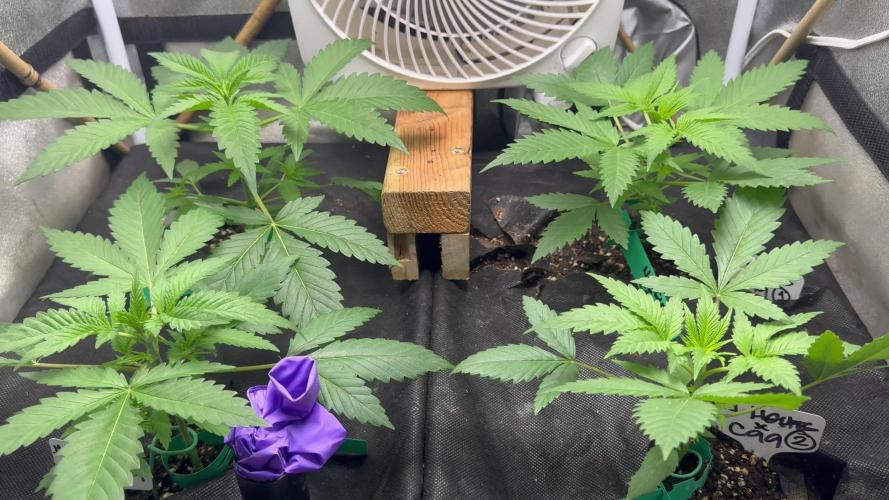
So this is the starting phase of the light schedule 3 days in so far after they sproutd from the soil in the 3" cups the light schedule is on 16hrs on 8 hrs off. Also there is strictly water being sprayed lightly on and off through the day no heaving water added at all. Will keep it posted, Also if someone could help me better arrange this grow diary that will be greatly appreciated lol sorry thanks!
Likes
58
Share
Buds stacking slowly but surely. Will be a semi late finisher but it's ok, that's y I got the greenhouse. She has a crazy unique smell that's hard to describe. I'll pry give PEV another shot down the line. Especially outside since they are so resilient.
Likes
12
Share
@trustno1
Follow
Hi 👋 Blüte Tag 69 Ich hatte schon bedenken, das die Lady nicht rechtzeitig fertig wird. Aber diese Woche hat sie gut zugelegt. Auch die Trichome sehen schon ganz gut aus. Der Zitrus Geruch ist wieder stärker. yummy Gruß M.
Processing
Likes
13
Share
@GrowGuy97
Follow
Day 3 of flower & these ladies are stretching great! We are having a bit of a calmag Deficiency right now but currently in the process of trying to fix it so hopefully they bounce back! The Gelato OG from seedsman is a monster to only be 42 days old not sure if I just got a good pheno or what happened but compared to the other gelato beside it from the same bag it looks like a completely different plant! Can’t wait to see how the buds turn out! Happy growing friends!✌️🏼🙏🏼 Day 4 of flower - recharge water at 6.5 Day 5 of flower - ladies are really starting to fill out & stretch, can’t wait to see how this run turns out✌️🏼🌱 Day 7 of flower - Not much to say everything is going great so far! Thanks for following & happy growing friends✌️🏼🌱 Day 8 of flower - They are all stretching & growing so much everyday! Couldn’t be happier so far!👍🏼🤙🏼 Day 9 of flower - end of week 7 things seem to be going great so far, fingers crossed we can keep it this way through harvest! Happy growing friends & thanks for watching!✌️🏼🌱
Likes
10
Share
Week 11, she’s got a nice structure to her. Ready to pack on the pounds during the later weeks, nothing more to add really. Stay tuned for bud porn I guess lol