


Likes
Comments
Share


@Roberts
Follow
So I am harvesting sweet Bourbon Kush Autoflower. It grew really fast. It smells like a wooddy sweet Bourbon. Hence the name. 🤷. She grew great for me in coco/perlite in a 1.5 gallon Potter. She has a great smell, great frost. Looks delicious. I am super eager to try the results. Thank you Spider Farmer, and Super Sativa Seeds Club. 🌱🤜🏻🤛🏻🌱❄️🌱
Thank you grow diaries community for the 👇likes👇, follows, comments, and subscriptions on my YouTube channel👇. ❄️🌱🍻
Happy Growing 🌱🌱🌱
https://youtube.com/channel/UCAhN7yRzWLpcaRHhMIQ7X4g

Likes
12
Share


@Scottydarkmoon75
Follow
Had an awesome visit from Sebastian and Chubbs from 420fastbuds! They really seemed to like the smell of these ladies right here. It was an absolute pleasure.


Processing
Likes
6
Share


@Ferenc
Follow
Day 61: I left them in darkness for 3 days and just switched on the lamp for 12/12 with today the foirst day of the 9th week.
Fertilization goes on the same days with the nutrients above and water intake approx 250 ml per plant per day.
Nice green color comes they always look nice after darkness :) Lets' go.
Day 66: Growing growing growing...


Likes
2
Share

@DogDoctorOfficial
Follow
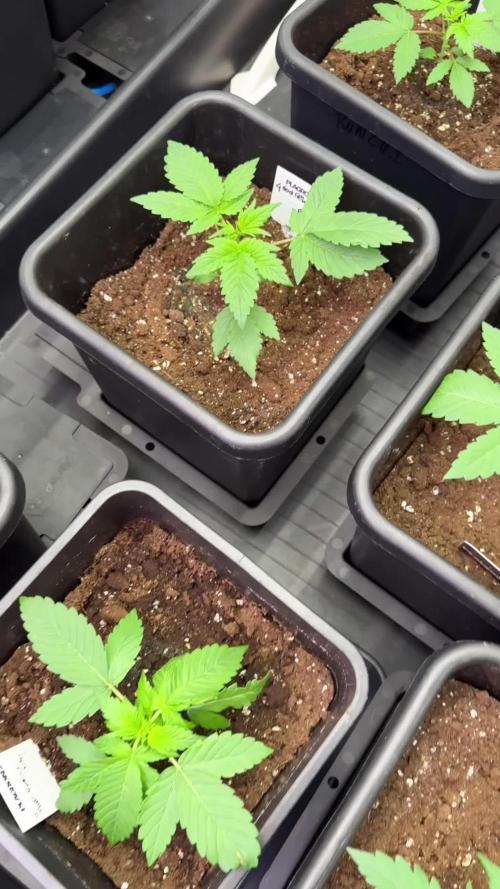
Cash Express – Pheno A | Week 3
A Picture of Vigor
Welcome back to another week of the 8×8 Adventure, where twelve cultivars are being documented individually under a 12/12-from-seed schedule. Each phenotype receives its own dedicated diary, allowing us to observe not only cultivar differences but also the subtle variations that appear between sister plants sharing the same genetic foundation.
Week 3 has been a week of acceleration.
The entire room received a substantial increase in light intensity, moving from approximately 370 µmol/m²/s PPFD to 700 µmol/m²/s PPFD at canopy level. Nutrient strength increased alongside the lighting, and the plants have responded with enthusiasm.
Growth rates are increasing, branching is becoming more apparent, and the room is beginning to transition from seedlings into young plants with real structure and personality.
Among them, Cash Express Pheno A is making a very strong first impression.
⸻
Week 3 Environment
🌡️ Temperature: 27.4°C
💧 Relative Humidity: 55%
💡 PPFD: ~700 µmol/m²/s
🌱 Medium: Plagron Lightmix
? Growing Method: 12/12 From Seed
💦 Water Consumption: ~0.9–1.2L per day
Feeding Schedule
Days 18
* EC 1.0
* pH 5.99–6.0
* Approximately 1L
Days 21–
* EC 1.3
* pH 6.0
* Approximately 1.2L
The environment remains stable, which allows each cultivar to express its genetic potential without external stress factors influencing development.
⸻
Cash Express Pheno A
Some plants attract attention because they are unusual.
Others attract attention because they are simply doing everything right.
Cash Express Pheno A belongs firmly in the second category.
Looking through this week’s photographs, the first word that comes to mind is:
Vigor.
Everything about this plant communicates health.
The leaves are broad and evenly developed.
The coloration is rich and consistent.
The stem is sturdy.
The internodal spacing remains compact.
And perhaps most importantly, the overall symmetry is excellent.
From above, the plant displays a clean, balanced structure that many growers hope to see at this stage of development. Each new node seems to emerge with confidence, stacking neatly above the previous one while maintaining a very organized architecture.
The increased PPFD appears to have been welcomed rather than merely tolerated.
Instead of stretching toward the light, the plant is building mass.
The canopy is widening.
The stem is thickening.
The branching is becoming more defined.
This is exactly the kind of response growers hope to see when increasing light intensity.
One of my favorite observations this week is the contrast between the mature fan leaves and the fresh emerging growth.
The older leaves provide a strong foundation while the new growth pushes upward with remarkable energy, creating that vibrant layered look that healthy plants often display during rapid vegetative development.
There is a confidence to this phenotype.
No strange leaf shapes.
No unusual growth patterns.
No hesitation.
Just steady, healthy progression.
Sometimes perfection can be boring.
But in the garden, perfection is still beautiful.
And this plant is undeniably beautiful.
⸻
Reading the Plant
One of the most important lessons in cultivation is learning to observe rather than assume.
This week offered a perfect example.
When PPFD was increased to approximately 700 µmol/m²/s, the goal was not simply to provide more light.
The goal was to see how the plants would respond.
Cash Express Pheno A answered quickly.
The leaves remained comfortable and relaxed.
The plant maintained healthy posture.
New growth accelerated.
Color remained strong.
These signals tell us that the plant is utilizing the additional photons effectively rather than becoming stressed by them.
This is why environmental monitoring is so valuable.
Plants communicate continuously.
The challenge is learning how to listen.
⸻
Structure and Development
At this stage, Pheno A is developing into a plant that could potentially become a very balanced individual later in flower.
Several characteristics stand out:
* Excellent symmetry
* Strong central growth
* Healthy branching development
* Compact internodal spacing
* Consistent leaf morphology
* Strong response to increased PPFD
The architecture currently suggests a phenotype capable of building a dense, productive canopy while maintaining a manageable structure.
Of course, the real story is still ahead.
Week 3 only gives us the first hints of what this plant may become.
But those hints are promising.
Very promising.
⸻
Looking Ahead
Over the next week, I will be watching closely for:
* Continued branch development
* Response to the higher EC feeding schedule
* Growth rate compared to neighboring cultivars
* Structural changes as additional nodes form
* Early indicators of flowering transition under the 12/12 schedule
If the current pace continues, this plant could quickly establish itself as one of the stronger performers in the room.
For now, she remains one of the cleanest examples of healthy development in the entire project.
⸻
Thank You
A huge thank you to everyone following along with this journey.
Thank you to the entire GrowDiaries community for providing a place where growers can document, learn, share experiences, and support one another.
Thank you to Plagron for the nutrition and cultivation support powering this project.
Thank you to Zamnesia for the genetics, equipment, and opportunity to document these cultivars from seed to harvest.
And thank you to every grower, reader, supporter, and curious visitor who takes time out of their day to follow these updates.
The plants grow because of biology.
The project grows because of community.
🌱💚
Growers Love and see you next week.

Likes
13
Share


@Kenpowarrior
Follow
This week she got the works.😎👍 going for max buds.
Had to put sand in so i could kill of the little black fly's that lived in her soil...and the soil of the other plants.
Got rid of them for 80%!
I water her from the bottom now.
The sand gives it a nice looking pot😎👍.
This week will LST the tops too.
Going for big!😉😎
9/5/21 : new LST for the queen.😎👍

Likes
209
Share


@BioBuds
Follow
At the beginning of this week, I have been fighting the gnats, which are less and less now. Just some watering and gradually lowering the light and going to full power. The Orange Hill Special has been filling out great and I must say, she is a pretty plant. With some manual bending and super cropping, I'm bending the longer stalks sideways and we are off. What I actually do is more of an intuitive hybrid between mainlining (where I bend the whole plant 90 degrees at the third week), LST (where I bend branches outward slightly, without tying), HST / Super crop (where I bend the stems 90 degrees with the clips or manually), after which I keep bending outward to SOG and, put the net over to end in SCROG.
This same method gave me the canopy in my prize-winning Gelato 33 grow. Check it out if you haven't seen it, it was my first experimental accident that led to beta test of Super Soil mixture 0.7, now we are at Alpha version 1.00 and testing great so far if I say so myself. I haven't seen such lush greens in my own grows, only outdoor. They seem uber-healthy and resilient, with very sturdy stems and leaves. Way more resilient than previous strains I tested in the beta soil.
The light is performing, the natural color of it makes everything pop. Mars Hydro has a winner with the SP-3000. Check out their site: www.mars-hydro.com
Thank you @MarsHydroLED for letting me test it, hook them up for a great deal or info on their products!
Halfway through this week, I took the clips out, AND...... we switched them to go into flowering. After a day the stretch is already visible. I had to bend them again after a couple of days. Now we have almost a tent filling foundation for a maximum result canopy of buds.
I was wanting to amend the soil with flowering additions (see recipe in yellow image), but I'm holding it off for two reasons. A/ The leaves are still so green and lush, I think there is an abundance of nutes. B/ @Haoss mentions his suspicions on his OHS grow (@#CannapediaProGrowersCup Orange Hill that very sadly went hermie on him) that nutrition in this phase could have had an influence, after asking what happened to him. I would have loved to see that grow to full harvest. But it makes me a bit cautious. if Haoss (whom I consider to be one of the star growers here) couldn't prevent this, what chance have I?
I'm waiting until the girls start asking for nutrients. They'll show me what they need in their own time. For now this soil is the shizzle (also quite literally) and Im happy with how everything is going. I remember much more hassle and steering in the last grow. This grow, even the Gorilla runt seems happy.
I now water them 3 liters of water / Perma tea mixture every 4 days, every 3rd watering I don't do the tea. This makes for fewer gnats and this soil seems to hold water nicely, also due to the hydro corn.
What I like is there is always some unforeseen circumstance, a tilt of the tables, some battle to be fought which delivers in big harvests or, in worst case, no harvest at all. It makes it more exciting, when your heart is at stake, we pour a lot of love and attention in the ladies.
So with hopes, but not too high, we go into flowering. Thank you all for joining me again in this Orange adventure! I hope you all had great weeks, germed seeds, extreme growth and buds bursting with trichomes!! See you next week!
Hug Bud
PS Sunshine made her first appearance, as she promised on the Gelato 33 grow. She is still a bit camera shy, so her digital alter makes an appearance first, if you all want to see more of her and my other helpers, let me know in the comments. Sunshine will make a real appearance if yall are real nice to her.

Likes
17
Share


@leliantu
Follow
Hola. No había actualizado estas plantas, aquí va. Semana 18. Las plantas ya llevan alrededor de 13 días en riego solo con Flawless Finish, las flores pegaron una ultima engordada y ya están madurando, ambas variedades han adoptado tonalidades muy linda.


Likes
52
Share


@Ultraviolet
Follow
Lacewings seemed to have mostly killed themselves by flying into hot light fixtures. I may have left the UV on which was smart of me :) Done very little to combat if anything but make a sea of carcasses, on the bright side its good nutrition for the soil.
Made a concoction of ethanol 70%, equal parts water, and cayenne pepper with a couple of squirts of dish soap.
Took around an hour of good scrubbing the entire canopy.
Worked a lot more effectively and way cheaper.
Scorched earth right now, but it seems to have wiped them out almost entirely very pleased.
Attempted a "Fudge I Missed" for the topping. So just time to wait and see how it goes.
Question?
If I attached a plant to two separate pots but it was connected by rootzone, one has a pH of 7.5 ish the other has 4.5. Would the Intelligence of the plant able to dictate each pot separately to uptake the nutrients best suited to pH or would it still try to draw nitrogen from a pot with a pH where nitrogen struggles to uptake?
Food for stoner thought experiments!
Another was on my mind.
What happens when a plant gets too much light?
Well, it burns and curls up leaves.
That's the heat radiation, let's remove excess heat, now what?
I've always read it's just bad, or not good, but when I look for an explanation on a deeper level it's just bad and you shouldn't do it.
So I did.
How much can a cannabis plant absorb, 40 moles in a day, ok I'll give it 60 moles. 80 nothing bad ever happened.
The answer, finally. Oh great........more questions........
Reactive oxygen species (ROS) are molecules capable of independent existence, containing at least one oxygen atom and one or more unpaired electrons.
"Sunlight is the essential source of energy for most photosynthetic organisms, yet sunlight in excess of the organism’s photosynthetic capacity can generate reactive oxygen species (ROS) that lead to cellular damage. To avoid damage, plants respond to high light (HL) by activating photophysical pathways that safely convert excess energy to heat, which is known as nonphotochemical quenching (NPQ) (Rochaix, 2014). While NPQ allows for healthy growth, it also limits the overall photosynthetic efficiency under many conditions. If NPQ were optimized for biomass, yields would improve dramatically, potentially by up to 30% (Kromdijk et al., 2016; Zhu et al., 2010). However, critical information to guide optimization is still lacking, including the molecular origin of NPQ and the mechanism of regulation."
What I found most interesting was research pointing out that pH is linked to this defense mechanism. The organism can better facilitate "quenching" when oversaturated with light in a low pH. Now I Know during photosynthesis plants naturally produce exudates (chemicals that are secreted through their roots). Do they have the ability to alter pH themselves using these excretions? Or is that done by the beneficial bacteria?
If I can prevent reactive oxygen species from causing damage by "too much light".
The extra water needed to keep this level of burn cooled though, I must learn to crawl before I can run.
Reactive oxygen species (ROS) are key signaling molecules that enable cells to rapidly respond to different stimuli. In plants, ROS plays a crucial role in abiotic and biotic stress sensing, integration of different environmental signals, and activation of stress-response networks, thus contributing to the establishment of defense mechanisms and plant resilience. Recent advances in the study of ROS signaling in plants include the identification of ROS receptors and key regulatory hubs that connect ROS signaling with other important stress-response signal transduction pathways and hormones, as well as new roles for ROS in organelle-to-organelle and cell-to-cell signaling. Our understanding of how ROS are regulated in cells by balancing production, scavenging, and transport has also increased. In this Review, we discuss these promising developments and how they might be used to increase plant resilience to environmental stress.
Temperature stress is one of the major abiotic stresses that adversely affect agricultural productivity worldwide. Temperatures beyond a plant's physiological optimum can trigger significant physiological and biochemical perturbations, reducing plant growth and tolerance to stress. Improving a plant's tolerance to these temperature fluctuations requires a deep understanding of its responses to environmental change. To adapt to temperature fluctuations, plants tailor their acclimatory signal transduction events, specifically, cellular redox state, that are governed by plant hormones, reactive oxygen species (ROS) regulatory systems, and other molecular components. The role of ROS in plants as important signaling molecules during stress acclimation has recently been established. Here, hormone-triggered ROS produced by NADPH oxidases, feedback regulation, and integrated signaling events during temperature stress activate stress-response pathways and induce acclimation or defense mechanisms. At the other extreme, excess ROS accumulation, following temperature-induced oxidative stress, can have negative consequences on plant growth and stress acclimation. The excessive ROS is regulated by the ROS scavenging system, which subsequently promotes plant tolerance. All these signaling events, including crosstalk between hormones and ROS, modify the plant's transcriptomic, metabolomic, and biochemical states and promote plant acclimation, tolerance, and survival. Here, we provide a comprehensive review of the ROS, hormones, and their joint role in shaping a plant's responses to high and low temperatures, and we conclude by outlining hormone/ROS-regulated plant-responsive strategies for developing stress-tolerant crops to combat temperature changes.
Onward upward for now.
Next!
Adenosine triphosphate
(ATP) is an energy-carrying molecule known as "the energy currency of life" or "the fuel of life," because it's the universal energy source for all living cells.1
Every living organism consists of cells that rely on ATP for their energy needs. ATP is made by converting the food we eat into energy. It's an essential building block for all life forms. Without ATP, cells wouldn't have the fuel or power to perform functions necessary to stay alive, and they would eventually die. All forms of life rely on ATP to do the things they must do to survive.2
ATP is made of a nitrogen base (adenine) and a sugar molecule (ribose), which create adenosine, plus three phosphate molecules. If adenosine only has one phosphate molecule, it’s called adenosine monophosphate (AMP). If it has two phosphates, it’s called adenosine diphosphate (ADP).
Although adenosine is a fundamental part of ATP, when it comes to providing energy to a cell and fueling cellular processes, the phosphate molecules are what really matter. The most energy-loaded composition for adenosine is ATP, which has three phosphates.3
ATP was first discovered in the 1920s. In 1929, Karl Lohmann—a German chemist studying muscle contractions—isolated what we now call adenosine triphosphate in a laboratory. At the time, Lohmann called ATP by a different name. It wasn't until a decade later, in 1939, that Nobel Prize–-winner Fritz Lipmann established that ATP is the universal carrier of energy in all living cells and coined the term "energy-rich phosphate bonds."45
Lipmann focused on phosphate bonds as the key to ATP being the universal energy source for all living cells, because adenosine triphosphate releases energy when one of its three phosphate bonds breaks off to form ADP. ATP is a high-energy molecule with three phosphate bonds; ADP is low-energy with only two phosphate bonds.
The Twos and Threes of ATP and ADP
Adenosine triphosphate (ATP) becomes adenosine diphosphate (ADP) when one of its three phosphate molecules breaks free and releases energy (“tri” means “three,” while “di” means “two”). Conversely, ADP becomes ATP when a phosphate molecule is added. As part of an ongoing energy cycle, ADP is constantly recycled back into ATP.3
Much like a rechargeable battery with a fluctuating state of charge, ATP represents a fully charged battery, and ADP represents a "low-power mode." Every time a fully charged ATP molecule loses a phosphate bond, it becomes ADP; energy is released via the process of ATP becoming ADP.
On the flip side, when a phosphate bond is added, ADP becomes ATP. When ADP becomes ATP, what was previously a low-charged energy adenosine molecule (ADP) becomes fully charged ATP. This energy-creation and energy-depletion cycle happens time and time again, much like your smartphone battery can be recharged countless times during its lifespan.
The human body uses molecules held in the fats, proteins, and carbohydrates we eat or drink as sources of energy to make ATP. This happens through a process called hydrolysis
.
After food is digested, it's synthesized into glucose, which is a form of sugar. Glucose is the main source of fuel that our cells' mitochondria
use to convert caloric energy from food into ATP, which is an energy form that can be used by cells.
ATP is made via a process called cellular respiration that occurs in the mitochondria of a cell. Mitochondria are tiny subunits within a cell that specialize in extracting energy from the foods we eat and converting it into ATP.
Mitochondria can convert glucose into ATP via two different types of cellular respiration:
Aerobic (with oxygen)
Anaerobic (without oxygen)
Aerobic cellular respiration transforms glucose into ATP in a three-step process, as follows:
Step 1: Glycolysis
Step 2: The Krebs cycle (also called the citric acid cycle)
Step 3: Electron transport chain
During glycolysis, glucose (i.e., sugar) from food sources is broken down into pyruvate
molecules. This is followed by the Krebs cycle, which is an aerobic process that uses oxygen to finish breaking down sugar and harnesses energy into electron carriers that fuel the synthesis of ATP. Lastly, the electron transport chain (ETC) pumps positively charged protons that drive ATP production throughout the mitochondria’s inner membrane.2
ATP can also be produced without oxygen (i.e., anaerobic), which is something plants, algae, and some bacteria do by converting the energy held in sunlight into energy that can be used by a cell via photosynthesis.
Anaerobic exercise means that your body is working out "without oxygen." Anaerobic glycolysis occurs in human cells when there isn't enough oxygen available during an anaerobic workout. If no oxygen is present during cellular respiration, pyruvate can't enter the Krebs cycle and is oxidized into lactic acid. In the absence of oxygen, lactic acid fermentation makes ATP anaerobically.
The burning sensation you feel in your muscles when you're huffing and puffing during anaerobic high-intensity interval training (HIIT) that maxes out your aerobic capacity or during a strenuous weight-lifting workout is lactic acid, which is used to make ATP via anaerobic glycolysis.
During aerobic exercise, mitochondria have enough oxygen to make ATP aerobically. However, when you're out of breath and your cells don’t have enough oxygen to perform cellular respiration aerobically, the process can still happen anaerobically, but it creates a temporary burning sensation in your skeletal muscles.
Why ATP Is So Important?
ATP is essential for life and makes it possible for us to do the things we do. Without ATP, cells wouldn't be able to use the energy held in food to fuel cellular processes, and an organism couldn't stay alive.
As a real-world example, when a car runs out of gas and is parked on the side of the road, the only thing that will make the car drivable again is putting some gasoline back in the tank. For all living cells, ATP is like the gas in a car's fuel tank. Without ATP, cells wouldn't have a source of usable energy, and the organism would die.
Eating a well-balanced diet and staying hydrated should give your body all the resources it needs to produce plenty of ATP. Although some athletes may slightly improve their performance by taking supplements or ergonomic aids designed to increase ATP production, it's debatable that oral adenosine triphosphate supplementation actually increases energy.
An average cell in the human body uses about 10 million ATP molecules per second and can recycle all of its ATP in less than a minute. Over 24 hours, the human body turns over its weight in ATP.
You can last weeks without food.
You can last days without water.
You can last minutes without oxygen.
You can last 16 seconds at most without ATP.
Food amounts to one-third of ATP production within the human body.

Likes
3
Share

@Chef_LA
Follow
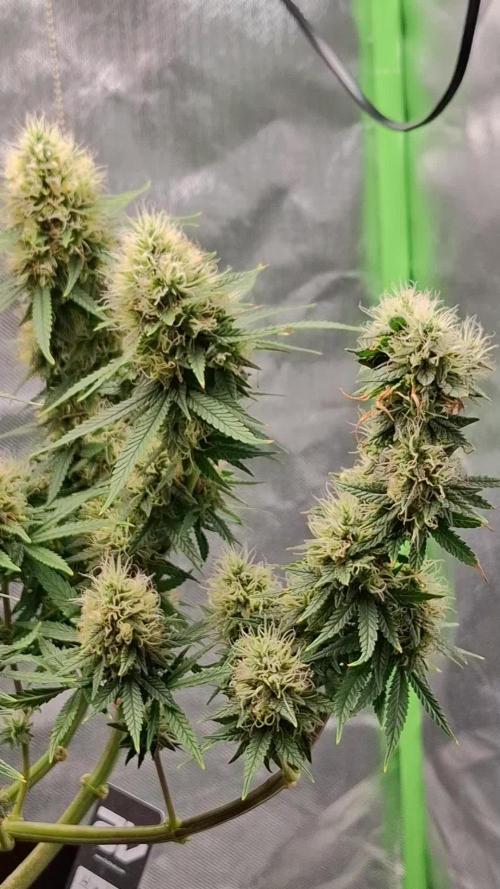
Wow, ich bin begeistert! Meine ersten reguleren fem. Pflanzen bereiten mir große Freude. Schöne dicke und lange Buds, vor allen die getoppte übertrifft meine Erwartungen bei weitem. Sie wurde seit letzter Woche bereits gespült und heute habe ich auch bei der zweiten damit begonnen.
Das Topping zahlt sich wirklich aus aber mit so einem Unterschied habe ich nicht gerechnet. Bin gespannt welchen Unterschied die Waage anzeigt.
Großes Lob auch an Sensi Seeds für so einfach anzubauende Pflanzen. Die Genetik scheint sehr ausgereift zu sein und ein kleiner Rauchtest viel auch positiv aus. Dazu aber mehr wenn sie richtig getrocknet sind.

Likes
23
Share


@Sators
Follow
🌱Day 36. Start flowering.💚
🌱Day 38. Keep watering with clear water. Super soil working well.💚
🌱Day 40.💚
🌱Day 42.💚
Likes
4
Share


@Familytrees19
Follow
I’m back!! And sorry I’m using my videos I posted on YouTube..😞😞 I will make sure not to in my posts to come!!
Popped seeds Jun 27
Temps inside some at 80 degrees F
Humidity is at 75-80%
8 seeds planted and all 8 made it!

Likes
184
Share


@Still_Smoq
Follow
#seedsman420growoff and #SeedsmanSeeds
📆 Week 1, 27 April - 3 May 2024
27 April - 3 May - Observed and let the seedling grow.
📑 Not much to do except observe the seedling at this stage, check and adjust the PH level in the DWC. She is growing as expected, fast and strong. Root developement is steady and on track. I see no problems whatsoever. Her 1st nutrient change will be week 3.
🍶 27 April no nutrient solution change
🍽️ 27 April feeding schedule unchanged
💧 Using reverse osmosis water with EC/TDS at 0
🐉 Nutrient Solution EC 1.0 at 68 degree F
🔆 Light power at 50%, DLI 13 canopy coverage at 18hrs
😤 Using General Hydroponics, HGC728040, Dual Diaphragm Air Pump, 320 GPH
That is it for this week. Thanks for the look, read and stopping by.
Likes
21
Share

@Hempface86
Follow
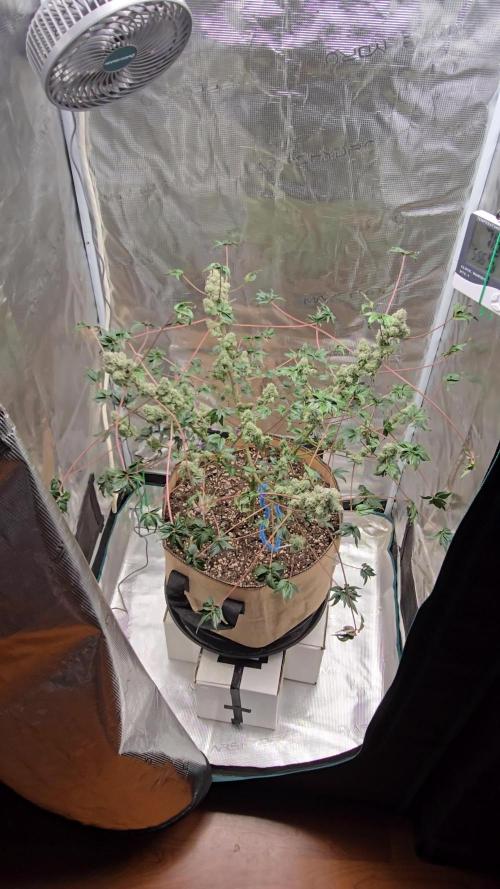
Alright, so I know this is only a few days after my last update.Put my last update was a week and a half from the one prior so we are back on track... I will say these buds are gaining size and weight very fast, considering how far along she is... The buds are already starting to pack on weight... She smells good and I'm still not over the whole not trimming thing. So awesome.. God bless and happy growing everyone

Processing
Likes
14
Share


@CityFarmer
Follow
Hello everyone,
Been busy but I shoot a little video for yall to see, also if growing is something you guys intended to do, I suggest you guys get yourselves a Digital Microscope or a jewlers loop.
I just got myself a Digital Microscope for under $20.00 on Walmart.com, I got me a cheap one to start with so I can learn how to use it properly. But for under $20.00 this one brings 8 led lights, a adjustable mount, comes with 3 different connection choices build in, magnifies from 50-1000x, can take pictures and also videos and my favorite part, it connects right to my mobile device, you download and install a Google app and your ready to go, ill work with it and add pictures next week...
See you guys soon 👊👊👊
Likes
3
Share


@ForbiddenBotanist
Follow
Today is the start of week 8. Very nervous about the harvest so im checking it with a microscope daily. Any tips or suggestions appreciated!


Processing
Likes
22
Share


@Luv2Grow
Follow
Day 43 - First day of week 7 today and she looks really good just not sure if she’s really starting to flower yet. I’m hoping this is just typical of the GC strain.
Day 44 - No major changes, she’s growing and I’m loving the looks of her. Will continue uploading daily pictures.
Day 45 - She’s looking really good and budding more and more each day. Gave her straight pH’d water today and tomorrow and will give her another feeding on Saturday. She’s drinking almost a gallon of water a day.
Day 46 - Things are looking good with this girl. Bud sites are growing daily and this thing is a beauty. Gave her another feeding of just pH’d water and will “feed” her tomorrow.
Day 47 - ALL is looking good and she’s looking purdy. Gave her a feeding with the foxfarm nutes today. Did a true measurement to the biggest branch and she’s at 25.5”. Will continue to measure each day to see how much she’s growing in a 24 hour period.
Day 48 - Looking gorgeous and still stretching. Grew another two inches and is sitting at 27.5” right now. She’s really starting to fill in now and looking forward to the next few weeks.
Day 49 - The way thing thing is growing, she’s gonna be a beast. Gave her straight pH’d water tonight and will give her a feeding tomorrow. Looks like she finally stopped stretching, sitting at 27.5” still so hopefully she’ll start putting on the weight.
Likes
14
Share


@OGGrowerBob
Follow
All the seeds are sprouted they are under humidity domes for the first week im using my ES180 from thegreensunshineco.com All seeds are from Sagseedbank.com under 18/6 light cycle may take it up to 20/4 after they get use to the light this is day 2 of week 1