




Likes
8
Share


@Weedganja420
Follow
Ha sido una de las mas productivas de las 8 que tenia en el pequeño armario.
Voy a repetir esta cepa en mi siguiente cultivo ya que me ha encantado.


Likes
43
Share

@wolfvb
Follow
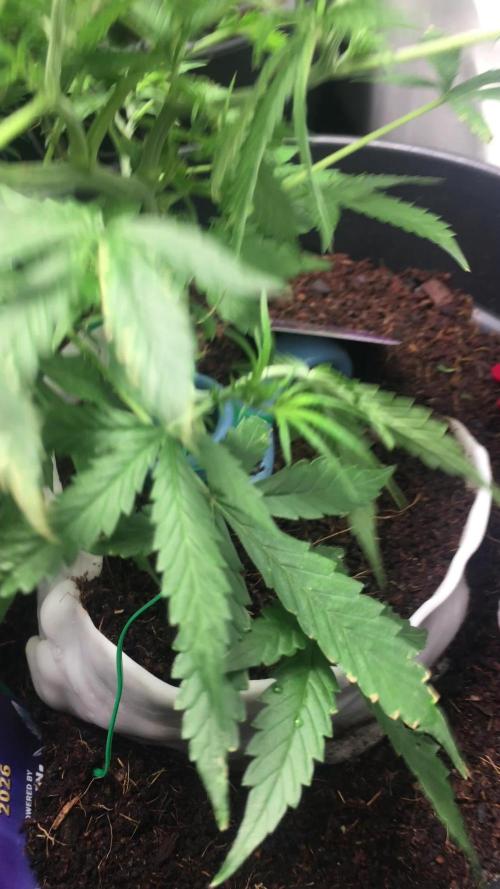
🌿 Week 6: Explosive Side Growth & The Recovery Phase
Strain: Sticky Broccoli Auto 🥦
Stage: Late Vegetation / Pre-Flowering
Light Cycle: 18/6
📝 The General Vibe The "Sticky Broccoli" is really starting to live up to its name not because of the resin yet, but because she’s bushing out like crazy! After pinning the main terminal down last week, the side branches have officially taken over. Despite my shoulder injury, the garden is thriving, proving that a little bit of LST goes a long way.
🍽️ The Menu (Nutrients) Still staying consistent with the Plagron and BioBizz regimen.
Root-Juice: 3ml (Finalizing the root base)
Bio-Grow: 2ml (Supporting the leafy explosion)
Bio-Down: 1ml (Keeping that pH stable around 5.9 for the coco mix)
Observations: The redistribution of auxins worked perfectly. I now have 4-6 secondary tops that are all competing to be the new main lead. The stem is thickening up nicely, and I’m starting to see the first signs of "pre-flower" pistils.
👽 Final Thoughts Gardening with one hand was a workout, but seeing these results makes it worth it.
The "Kewpie" Garden Managers are still on duty and seem happy with the progress. Next week, I expect a significant vertical stretch as she prepares to flower!



Likes
18
Share


@Sadhus
Follow
EBB and flow,bille d'argile expansé
17 week, 7 week 12/12
EC 2,73 terra aquatica tripart+ plagron
5 plantes sur 1m², 1000w full spectrum a 75% pour 50-60cm de hauteur au dessus de la canopée
1m20² de canopée
Ppfd 987 DLI 32
RH 70% 26 °C VPD 1,01
Température eau réservoir 21°c pour 80 litres de
soupe
Cycle marée de 4-5 min on pour 45 min off
Trolmaster controller
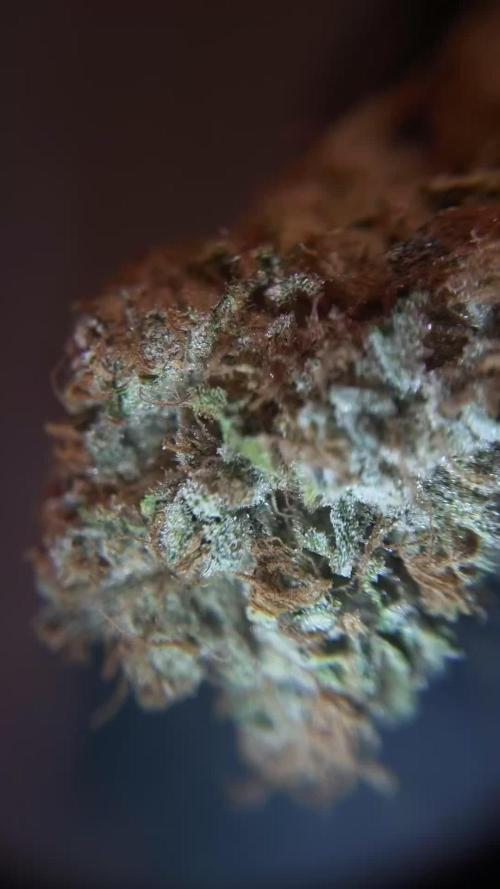
Purement éducatifCelle du milieu me sort de belle couleur d'automne 🍁🍂 une odeur sublime de melon bien mûre très profond j'adore j'ai hâte de goûter sa
Likes
80
Share


@Roberts
Follow
The Pure Ice cream clone is doing great. I did catch the mutation from the mother plant. The whole plant but 2 leaves is light green vs what it would be as seen in picture. I wonder if it will effect the bud quality 🤔 . Anyway she has been drinking and consuming large doses of nutrition with ease. She looks like she is gonna have a good yield on the clone. Thank you Pure Instinto, and Spider Farmer. 🤜🏻🤛🏻🌱🌱🌱
Thank you grow diaries community for the 👇likes👇, follows, comments, and subscriptions on my YouTube channel👇. ❄️🌱🍻
Happy Growing 🌱🌱🌱
https://youtube.com/channel/UCAhN7yRzWLpcaRHhMIQ7X4g

Likes
12
Share


Likes
8
Share


@dauntless
Follow
Everything is the same, since moving everything to one tent, the NL auto started flowering a bit more. The Vanilla Frosting started stretching, and the White Widow is finally pre-flowering a little.
The VF gets dry every day, and weather has been wild again but I have managed to keep everything healthy. The addition of OG Biowar has really seemed to put the critters out of work (https://ogbiowar.com/). Granted I have also used Boogie Brew Black, and it takes me friggin 20-30 mins to get everything mixed and ready, but the plants are not complaining. I make a compost tea in a five gallon bucket and bubble for about 24 hours with a serious air pump and huge air stones, then I add all my nutes to it. I would say this is a 95% organic grow.
Check out the video and check out the meds I made from the leaves of these plants. Packed a mason jar with clean leaves and poured in regular isopropyl alcohol - a few days later and its so green you cant see through it. I learned about this from a friend from South of the border. It seems to work well on muscle aches. -shrug- at least for me.
FIVE MORE WEEKS
For those who wonder how much light/heat I am putting down, its like 1807.8 umol/s at dead center over the Cree light, the Spider Farmer puts down way less, but the two lights together are working well and fuck it, its 82 degrees in the tent during the day and they are all pretty happy. So it is what it is. If it gets super hot I keep the CREE part of the Phlizon on, and turn of the LEDs, the SF1000 has plenty of light to help.


Processing
Likes
13
Share


@GrowGuy97
Follow
Going great so far except the 2 Gorilla Zkittles are still a little far behind but they are starting to bounce back!
Day 18 everything finally transplanted in 5 gallon pots except the hulk berry is in the 3 gallon, hopefully the 1 small gorilla zkittles hits a growth spurt soon🤞🏼


Likes
51
Share


@eldruida_lamota
Follow
Bueno resumiendo cookies gelato es una variedad híbrida muy fácil de cultivar pero ojo, cuidado con los últimos riegos si no queréis perder cosecha por moho. Lo demás de 10 pegada heavy sabor increíble, cogollos duros como rocas y bañados de una gran capa de polen.
El ambiente del secado se mantuvo en 23 grados de media y la humedad estuvo por debajo de los 45% en todo momento.
Poco más la verdad estuve encantado de poder cultivar una genética tan potente .
Un saludazo que paséis un final de año increíble y por supuesto buenos humazooos💨💨💨.
Likes
15
Share


@420DeepGrow
Follow
Gracias al equipo de Seedsman y XpertNutrients sin ellos esto no sería posible.
💐🍁 Alaskan Do-Si-Dos:
Alaskan Do-Si-Dos ha sido desarrollada por expertos como una versión mejorada de la siempre popular variedad Alaskan Purple de Seedsman. La introducción de la genética Do-Si-Dos en la Alaskan Purple ha creado un híbrido índica/sativa que aumenta la potencia y el rendimiento al mismo tiempo que mejora el perfil de sabor y sigue siendo versátil en lo que respecta al cultivo en exterior.
La Alaskan Do-Si-Dos está destinada principalmente al cultivo al aire libre y en invernaderos. Las plantas crecen altas y prosperan en climas fríos, templados, cálidos y secos, al mismo tiempo que se desempeñan bien en altitud. Esto no impide que se cultive en interior, pero estas plantas grandes necesitarán mucho espacio. Las plantas muestran una resistencia moderada al moho pero, si se cultivan en interiores, hay que tener en cuenta que son RUIDOSAS, por lo que se beneficiará del uso de filtros de aire de carbón. En exterior, en latitudes septentrionales, la cosecha está prevista para finales de septiembre, mientras que en interior las plantas tardarán entre 8 y 10 semanas en completar la floración. Los rendimientos en exterior son muy altos y pueden superar fácilmente los 750gr/planta, mientras que en interior los rendimientos son elevados, hasta 600gr/m2. Los cogollos maduros tienen una densidad media y mantienen un color verde medio.
🌻🚀 Consigue aqui tus semillas:
https://www.seedsman.com/eu-es/alaskan-do-si-dos-feminised-seeds-sman-aldsd-fem
🍣🍦🌴 Xpert Nutrients es una empresa especializada en la producción y comercialización de fertilizantes líquidos y tierras, que garantizan excelentes cosechas y un crecimiento activo para sus plantas durante todas las fases de cultivo.
Consigue aqui tus Nutrientes:
https://xpertnutrients.com/es/shop/
📆 Semana 5:
Comienzan a formarse los cogollos, las hojas se llenan de resina cada dia y el olor es bastante fuerte. Parece que ha terminado de estirar. Practico una defoliación intensa para airear los futuros cogollos y dejar mas espacio en el cuarto de cultivo.
Agrupo de nuevo las macetas en su lugar optimo para asi rellenar por completo la carpa @marshydro.
Me quedé algo corto de nutrientes pero estoy muy contento con los resultados, cada vez le voy encontrando mas su punto optimo. Siempre es mejor quedarse corto que pasarse.
Likes
7
Share

@DaedalusGrow
Follow
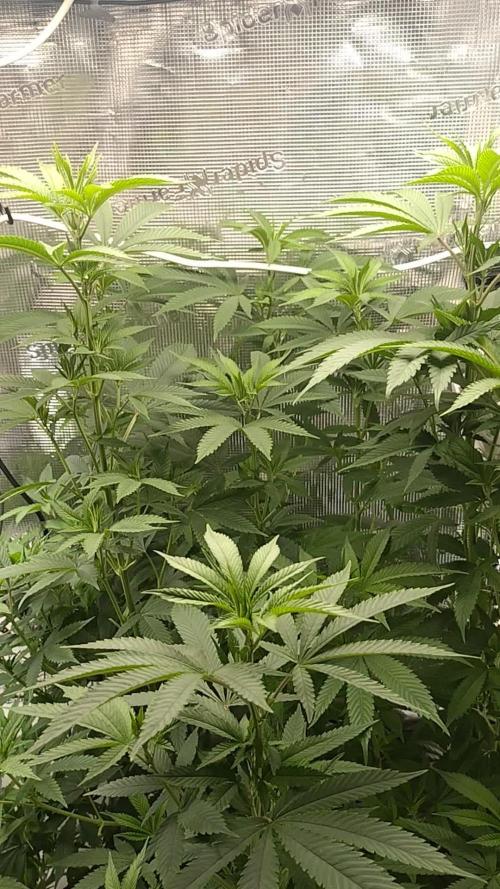
Hat gerade noch einen ordentlichen Stretch hingelegt, hoffentlich bekommt sie sich bald wieder ein, sehr schöne Büstenbildung💪🌱👌

Likes
14
Share


@CampaCavallo
Follow
2ª Settimana di Fioritura 💐
Eccoli arrivati i fiori spumosi della RUNTZ 💓 di Zamni💙🗿
La giovane cresce bene, regolare e senza carenze! Avanti tutta🔝💪🏻
Abbiamo fatto un po' di training alla pianta in modo da avere Bud di qualità 👍🏻🚜


Likes
31
Share


@Cultivate
Follow
Week 8 Looking absolutely huge😂 They’re so tall and wide . Lots of healthy green leaves and strong roots.
I was worrying a lot about sex issues as when I did my research I found out they’re quite common to hermaphrodite. Was really worrying but all calyx’s have female signs (so far🙏🏻) so pray for me brothers&sisters.
Likes
1
Share


@Ferenc
Follow
Day 57 : 600W LED, 18 hours on 6 hours off light schedule, the same with ventilation. Water intake 200 ml per day per plant, fertilization remains the same on Monday, Wednesday and Friday Biobizz Family and on Tuesday Thursday Saturday bat guano and Epsom salt. Humidity approx 50%.
Day 58: I removed all the LST stuff so no more elastic bands and hooks.
Day 62: Plants are fine Critical Orange Punch and Sour Stomper will be the quickest in this group. Lemon Zkittle' buds started getting thick...


Likes
14
Share


@Black_Widow
Follow
Привет садоводы
процес вегитации идет полным ходом и цветку понадобится много времени , что-бы вырасти до хороших размеров
поэтому будем наблюдать, как пойдут дела

Likes
15
Share


@bobtheblob
Follow
Seeing burned tips makes me feed it differently, 2 days with fulls set of nutrients, 2 days with Cannazym only.
I pruned them a bit more, not sure if it was a good idea but those little branches didn't develop a lot during this time.
On day 4 of the week, after HSO's comment on a weekly report, I've measured runoff and it was insane! 3k-5k ppm
Flushed them all so that runoff was around 800 ppm, and watered them with Cannazym only (PH around 6.1, EC 440 ppm).
Also moved them around a bit
Most likely the reason for conductivity going so high was that I removed the pots from platforms at some point and old runoff was probably soaking in.


