


Likes
Comments
Share


@Krisis
Follow
2/10/24. The girls grew a ton this week. The temperature has gotten warmer (staying around 80 in tent) They were growing more slowly in the lower 70’s previously. They seem to like it hot. The leaves have lightened in color so I’ll be feeding them again and see where we wind up. For the most part Ive just allowed them to grow pretty naturally just to see what they do. They are looking a bit in a need of some defoliation and I think I’ll try trellising them tomorrow to spread them out a bit. In all everything seems to be going well so far.

Likes
49
Share


@hawkeye_diesel66
Follow
I will update the dry weight once she is finished drying, I assure y'all. I'm so glad that I have one or two more of these beans laying around and I can't wait to run this again. She became this monstrous autoflower that never seemed to stop. I supercropped her midway through flower due to her getting close to the light. She took that and just kept going. Even formed a nice knuckle where it happened, but she righted herself back up like a champ. I still can't believe that she weighed in at almost 300 grams. I know that's wet, but I've grown quite a few autos and have never done what I just did with one. I've only heard about that from autos haha. Shout out to fast buds for killing it with their genetics.


Likes
145
Share


@biggreens420
Follow
She's stopped growing vertically and is chuncking up now took main nutes back down to 3 ml per litre she's smelling beautiful and is sticky as hell not much else to report will update some better pics when available thanks for reading happy growing guys

Likes
6
Share


@masterofsmeagol
Follow
5/4 I stupidly watered everything this morning. They were pretty much perfect weight for transplant......then I watered them. Oh well. If that's the worst mistake I make I'll be ecstatic. Went back over and found my 1 gal and 2 of those wierd slanty airports that tapers and holds like a gallon and a half and washed them. I mixed up 12 gallons of soil in a garbage bag and mixed it thoroughly with my gloved hands. It's mixed good. Looking at my plants in sadness thinking, "today could've been the day" and noticed a Special Kush of average size I didn't water that weighed in the 220's. I was happy. I filled the pit arpund a cup before removing it leaving the perfect hole. Mykos and water were poured in. Plant came out of the cup REALLY easy. Suprisingly easy. This wasn't totally dry. I was amazed it came out so easy so I kinda rolled it around looking at the roots. I started lowering it in the hole and I felt something break away but it webt DIRECTLY into the hole made for it. I tucked some soil around it but it was pretty tight from packing it around the empty cup. Didn't take a picture but the plant is fine. That was an average size plant too. So I may have to give some of the strains I popped later a little longer before I transplant. After everything's been transplanted I'll need to change lighting again. I think I'll open the window and use the hps and the l.e.d on the days and nights cThat's these girls won't be hardening off. I so wanna go plant those others but my intuition tells me to wait until morning and it's been serving me well. A couple can stay in cups longer. Not much longer but still.
5/5 Transplanted everything but two this morning into 1 gals with 1/2 happy frog half ocean forest. Mykos and water used during transplant. Found put the l.e.d was on for 24hrs for a while. I made sure the timer switch was ON but it was a different cord plugged in. Oh well. All transplants went perfect. I'm picking up an adapter for the outlet so I can plug the power strip into the timer and only use one timer. I had to hang the 150watt hps back up with the 1,000 watt equivelant 105 true watts. I hope this lighting setup works. Chemdog #4 and One MK Ultra will be transplanted later today or later in the morning. I also opened the shade to the south facing window. Shits getting real.
EDÌT: I FINISHED TRANSPLANTING THE LAST TWO PLANTS AND PICKED UP THE ADAPTER SO I COULD HANG THE HPS NEXT TO THE L.E.D. THEY WERE FIBE WHILE I WAS GONE. EASIEST TRANSPLANTS EVER. THEY ALL LOOKED PERKY AND HAPPY SIX OR SEVEN HOURS POST TRANSPLANT. I OPENED THE CURTAIN TO (SOUTH FACING WINDOW) BUT I MADE SURE THE PLANTS WEREN'T IN THE DIRECT LIGHT. EVEN THOUGH IT WOULD PROBABLY BE FINE. LAST TIME I HAD SEEDLING IN DIRECT LIGHT. I'LL PLAY IT BY EAR BUT IM HAPPY.
EDIT 2. Went back over to meditate by the stream and do my qigong. It's 75 and BEAUTIFUL today. The girls will be going out for a few hours on days like this. Anyway when I went in I was surprised to see everything looking nice and happy with praying leaves. Nothing is in direct sunlight but damn that window let's in a lot of light.
5/6 Girls LOVED the transplant! They seem to be all happy. No stress. Easiest transplant I've done. Leaves are praying upwards so I think the lights are approx tje right distance. They'll be going outside soon to harden off. It's been in the 70s but it's rainy now. I'll play it by ear according to weather. I'll continue to monitor lighting and I may lower the hps.
5/7 The soil was super dry when I went over this morning. Everything looked awesome though. I used about a half gallon watering. I don't want to water to run off. I want to keep the nutes IN the soil. It's also easier to fix an undet watered plant than an over watered one. It came out to about a half gaterade bottle on the biggest and half that on the smallest. I'll gradually increase water after I monitor the response. The water sat on the soil for quit a while so they definitely needed it. Looking good so far.
5/8 Soil lookeddry this morning. I think I'm going to up the water. Last time I dod seeds I gave like a pink. Some plants still had a little dampness where I watered that I could see. Others looked dry but happy. I gave the REAL dry bigger ones a small circle around the rootball. Just in case. I'm thinking of lowering the hps slightly so it's at least level with tje L.E.D. That window being open gives tons of light. If u moved them slightly left they'd get DIRECT sun most of the time. I'll be bringing them outside soon to start hardening them off.
EDIT: WENT TO CHECK THE GIRLS AT 5 TO MAKE SURE THEY WERENT DRIED OUT. THESE GIRLS ARENT JUST GETTING BIGGER BY THE DAY THEYRE LOOKING BIGGER FROM MORNING TO NIGHT! ITS BEEN RAINING LIKE CRAZY BUT WE WILL HAVE GREAT WEATHER NEXT WEEK AND I'LL BE BRINGING THEM OUTSIDE. I'M SUPER HAPPY WITH GROWTH SO FAR. ILL PROBABLY HST (TOP/FIM) AT THE NEXT NODE. I WANT THEM TO SETTLE IN NICELY BEFORE STRESSING THEM.
5/9 I may have stupidly uploaded doubles of pictures from today. Soil LOOKED real dry. I gave the plants their first real watering. I still went light. Almost a gallon with all plants. I know many say I should be watering to runoff but I want to keep the nutes in the soul as long as I can I don't want to overwater. I always start out careful. Once they show they xan tolerate it I'll increase water next time. This weekend it will be raining but after that we are getting some real good weather and I'll he taking the girls out to begin hardening off. I also need to take a look and top/FIM the plants now that they are settled. Also need to wash grow bags and sanitize outside.
5/10 It's pouring out. Horrible night and morning but this is about cannabis. After the watering ALL the plants shot up in size! Substantially. Leaves are over the sides of containers. I think I'm somewhere close with the watering schedule. I may bring the hps light down a little. I also NEED to start HST. I need to FIM and/or top these girls. Unfortunately I've been dealing with medical problems of my wife so I haven't got to it. If I get some sleep I may do something this morning or in the afternoon.


Likes
73
Share


@Andres
Follow
I mean this genetics it's excellent ... if I would grow zombie kush again ... good job ripper seed ... she fought and was very strong against the plagues after a beginning outdoors ... she fought against the white fly. worms .. red spider and other insects ... and deserves your recognition ... it will not be the most beautiful plant with its leaves impeccable ... but she is a champion ... thank you ripper seed .. .

Processing
Likes
3
Share


@Ogbangbang2981
Follow
I'm impressed with this C4 Auto, from fastbuds this is one of two plants I grew. This plant is a real indoor plant she grows lovely. The other plant is an outdoor plant it's pretty too don't get me wrong but where i thought the outdoors would produce a bigger plant i got the opposite of that, I got a Mutated plant, nice colored bud on here but she continues to mutate even in flowering stage my indoor plant is twice her height and size but love both my C4 Auto from fastbuds. Even if they broke my heart by changing payment policy, I'll never be able to get seeds from fastbuds again so I decided to spray my runt on the outdoors with tiresias mist feminized seed spray..... hopefully I get some pollen and able to pollinate my indoor C4 Auto..
Likes
202
Share


@CrazyHorse
Follow
Hello 👋 👋 👋
As a 29th day arrived inside the tent there are many changes 😇 💪 🙏
Purple and Cinderella start flowering a week before Bruce Banner but all girls have got similar high 😇 💪 🙏
63 cm was taken from B.B 😁
All of my beauties expanding in size, flowers sites start to taking a mass and density.
Some brown spots shows on humidity effected leafs so I removed them to control a healthy conditions 💪 💪 💪
Update:
Day 30
Ladies definitely goes in flowering stage, every day I can observe a massive size and high changes.
It's look like the tent will be full of buds soon. I'm very happy to see a purple colour on my Purple Lemonade.
I'm excited because this is my first purple strain 😇 🙏 😇
Day 32
I have to move a girls a little to adjust them for better space use. I love to look on them 😍
Spec.
Mars-Hydro TSW2000 100% power
RAM mix flow 199m3/h
Humidity 58% - 65%
Have a fantastic day, You Lovely Girls Growers 😇 😇 😇
Likes
18
Share


@TheGreenLeopard
Follow
It’s a nice grow so far in terms of expectations reality on the seed breeders. Great stuff again. I had a real germination nightmare this time around though - lots of strains failing at seedling so the numbers and strains became more 😂. So the tents are mixed up again to auto on one side and photoperiod on the other. In this tent as well as Afghan and a red gorilla - there is sweet zensation , banana krumble and red hot cookies and a peyote skittlez. Water in using ro solely through the grow. There has been one issue. I tried a “pro” substrate from biocanna this time and I have those little fleas. Really annoying and my aphids are late so kind of annoying - takes the pleasure off a bit. Any good organic solutions let me know please on comments

Likes
28
Share

@PhinolaGreen
Follow
Harvest
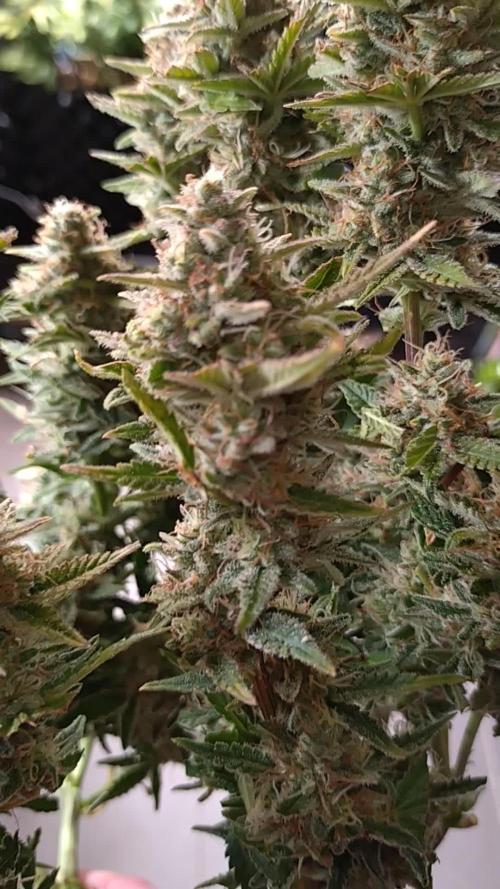
Es ist soweit, heute habe ich die Cherry Cola RF3 Auto von Fastbuds an Tag 67 geerntet. Für meinen Geschmack ist die rdy und deswegen hängt die jetzt zum Trocknen 😌
Update:
Sie hat 20,3g abgeworfen, nicht besonders viel aber es gab dafür ordentlich Schnitt für Butter, bin also soweit zufrieden. Vllt wär's mehr geworden, wenn ich sie noch bisschen hätte stehen lassen aber für mein Geschmack war die fertig.
Für mein erstes Mal Mainlining im Airpot lief es auch gar nicht schlecht, habe viel gelernt und werde Cherry Cola RF3 Auto von Fastbuds sicherlich in den nächsten Wochen nomma machen, zum Beispiel Outdoor vor meinem Fenster 🤭
Sie riecht angenehm nach roten Früchten, gar nicht mal gassy, eher minty und süß. Ich lass sie jetzt noch bisschen nach trocknen und dann kommt sie in ein Apotheken Jar und wird für 4-6 Wochen gecured 😌 Ich mache nomma ein Smokebericht die nächsten Wochen, also gerne dran bleiben 😀
Update 24 Tage nach dem Cut:
Das Bouquet von roten Früchten hat deutlich zugenommen, es lässt sich anhand der Säure auf reife, frische rote Johannisbeeren und ein zisch von der vorherig beschriebenen Mint smell mit drin und mit etwas Fantasie entwickelt sich das wirklich in die Richtung Coke mit roten Früchten 😍
Geschmack im Vapo ist frisch, saftig und hat was von Ice Bonbons im Abgang. Die Wirkung ist Klar, Strong, Entspannend, Beruhigend und langanhaltend, also denke 28-29% so von der Wirkung.
Ist fjedenfall spannend, den Cure Prozess zu beobachten 😊
Likes
20
Share


@Basementganja
Follow
LST'd the canopy out flat! She's about done stretching/stacking!
I will start with Bloom nutes next watering, at 1 gallon dosage. (1tsp of floranova bloom in 1 gallon of de-chlorinated tap water, PH'd to 6)

Likes
9
Share


@caspersaints1
Follow
King Louis Garcia by growers choice
Got 109.96G 1 plant
Mars hydro 100W
32G was is a bit Larfy though
Currently in paper bag then will put on jar tomorrow and leave to cure for few days
Overall happy with the first harvest ,took 4 hours ( 4 episodes of sopranos) to trim not sure if I was slow or not but I get why some call it trim jail lol
Processing
Likes
8
Share


@weed_gastro
Follow
This week they'll start growing pistils I hope :p
The peyote criticals already started showing pistils, but the Ayahuascas are waiting a few more days I guess.
The smell is better and better each morning when I open the tent :p
day37: extremely bushy ladies :'D
day38: light defoliation, I took around 10 leaves total
day 38-39: first preflowers and pistils starting to show up! resin production also started
Any advice?:) thx for reading!


Likes
60
Share


@PEAKYPLANTERS
Follow
Hi everyone, fantastic growers
My experiment can be said to be successful!
I germinated and collected two seeds in the same vase ....
* Perhaps with a single seed I would have collected the same quantity, but it was worth trying and experimenting since I am contrary to trashing a seed already germinated!
Everyone has the right to live his life ... especially if it's a question of increasing my stocks :)

Likes
9
Share


@burnercorona
Follow
Rough week for the little lady. Started with a pH problem that I think the issue increased by the small pot size lol. Probably an over water issue as well. She does seem to be bouncing back though.
Likes
25
Share


@FatnastyzBudz
Follow
Week 9
12-21
Flushed, Susie today! Not much further for her. She'll be the first done!! 💪
Regular good ol' PH for them all!
Midge like from the start, doing her own thing. lol and I topped her just for the sake of it.
Shes turning into quite the bad ass!! I think at least. lol
Vanna, doing ok. bit behind.
Then lastly, Cora. I stunted the hell out of her and shes not turning out.
Guess I try to do some type of hash or something with her, so not alls lost? Oof!!!!!
Still fking pumped! Cant wait!!!
💪💪
12-25
Just to wish a Happy Christmas or a happy day if thats not your thing!
Best to all!!!

Likes
6
Share

@eldruida_lamota
Follow
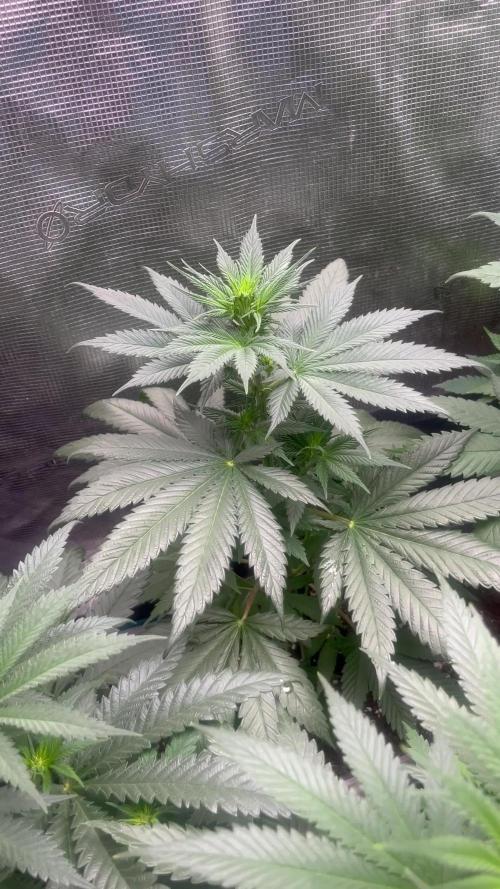
Que pasa familia, vamos con la segunda semana de floración de estas Gorilla girl F1 de Sweetseeds.
Vamos al lío, las plantas se trasplantaron a macetas de 7 litros.
El ph se controla en 6.5, la temperatura la tenemos entre 24/22 grados y la humedad ronda el 50%.
El ciclo de crecimiento puse 12h de luz, el foco está al 50% de potencia.
Me gustaría estar más encima este cultivo pero la salud me está impidiendo un poco este 100% con el proyecto. Con suerte la semana que viene andaré mejor.
- os dejo por aquí un CÓDIGO: Eldruida
Descuento para la tienda de MARS HYDRO.
https://www.mars-hydro.com
Hasta aquí todo, Buenos humos 💨💨💨
Likes
72
Share


@BodyByVio
Follow
After 14 days drying, 7 days hanging and another 7 days on cardboard boxes 📦 at a temp between 61 and 65 degrees F and a humidity between 52-55 % I trimmed all the buds and jar them with Boveda 62. After 2 days in jars ( 16 days from cutting the plant down) I weighed in everything. I got 434g of grade A buds and 685g of Grade B ( perfectly smokable ) buds plus a lot of trim that I didn’t weight.
I’m very pleased with everything and I enjoyed every single step along the way. Probably next time I will lollipop/defoliate more aggressively so I can get more top bud and less grade b bud.