Likes
Comments
Share


@bear66
Follow
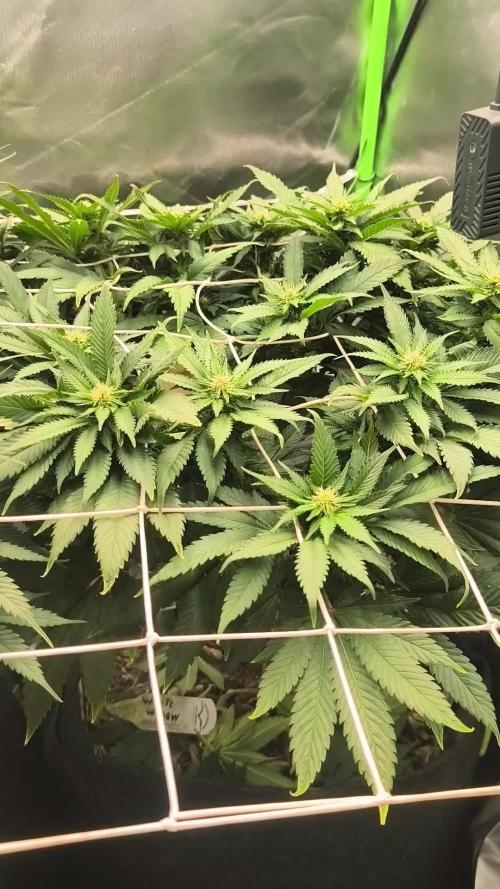
Мне кажется, что этот сорт будет даже сильнее bruce bunner 3, но это не точно))
Но точно не хуже по эффекту,


Likes
3
Share

@kvnvn
Follow
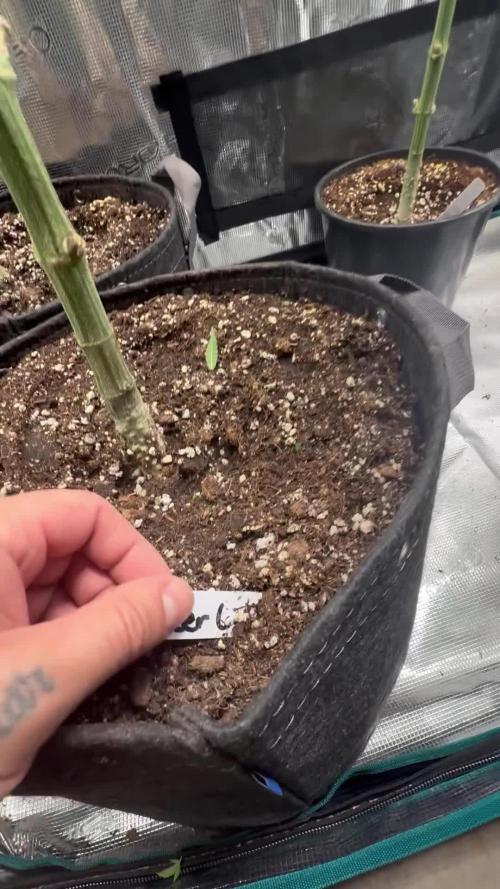
Not sure why it won’t let me add different strains in earlier weeks on here but, here’s the zeltzer and sour d, along with chem rsv week 2 flower…… also don’t mind the canopy…this is for a pheno hunt on what to run in my mothership. Zeltzer, sour zeltzer, chem rsv x cheese danish, and Cali sour diesel





Likes
9
Share


@sunshinegroww
Follow
Just been topped at around day 21 should done it earlier but here we go so far looking good and very healthy environment looks dialed in too

Likes
39
Share


@valiotoro
Follow
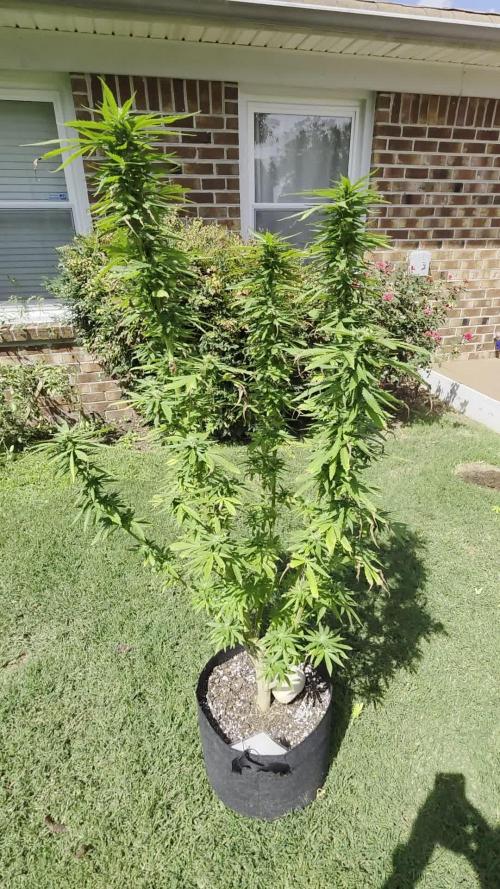
Hello everyone week 2 has passed for this Cinderella Jack auto by Dutch Passion 😎
this plant is doing very well growing at fast pace and with a beautiful green colour on the leaves.
Topping & LST for my girl next week 😎
wish you all happy growing!

Likes
4
Share

@Mrdub
Follow
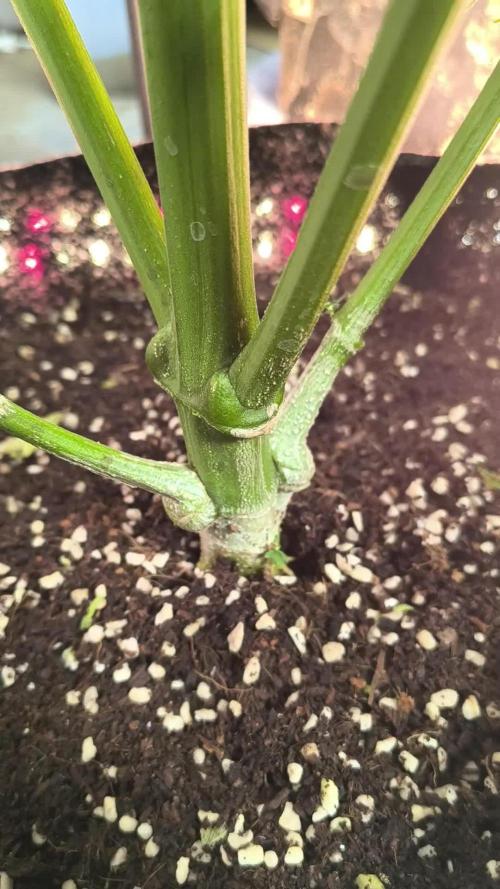
This should be the last week for this girl super loud got a soapy floral smell with some citrus on the backend colas swelled up nicely trichome coverage is thick thick looking like she got hit with a glitter bomb move it head a certain way super fat bracts and unlike the other two this one doesn't have the foliage barely had to defoliate her under canopy lighting is making the bottom colas looking gorgeous she taking a little longer cause if the cooler temps but the purple tips are coming out nicely tricomes nice n milky jus waiting for a little bit of amber to come in hitting her with a carbo flush then the last couple days I'll give her plain ol phed water I have loved watching this girl haven't had any problems with other then burnt tips and low temps kinda made her lag behind can't wait to get her dryer and inna grove bag so here's to another week of growing lfg

Likes
23
Share


@Ararhiel
Follow
Been a bit busy lately but back on them now, thinking at putting a net over them so I can test it out to see if getting more yield .

Processing
Likes
17
Share


@greennug
Follow
they are all thriving, growing exactly as i want them to. sucking up everything i give them and they are on daily feeds. some of the autos are starting to flower, but im gonna stretch out veg for atleast another 4/5days for photoperiods. they are ranging in height between 45 and 75cm. west coast OG auto from fastbuds been the tallest at the mo. dinafem cookie strains showing preflowers now and everything going fine. no problems as of yet in the slightest. daily updates.

Likes
3
Share


@BlueTrees
Follow
The leaves on my plants are starting to fold up like a taco, some yellowing.. Not too sure what is going on. My friend suggested that it was a calcium or magnesium deficiency and it matches the description online but I usually give 3 or 4 ml per gallon damn near every time i water, is that enough or too much even? They are 5 weeks from seed today and all 3 are flowing very different and at a different pace..

Likes
23
Share


@420DeepGrow
Follow
Gracias al equipo de Sweet Seeds, XpertNutrients y Marshydro sin ellos esto no seria posible.
💐🍁 Red Hot Cookies:
Excelente genética resultado del cruce entre un clon seleccionado de una variedad “Super Strong” americana de la familia Cookies, la Tropicanna Cookies (Girl Scout Cookies x Tangie), y un clon seleccionado de una potente variedad también americana de excelente aroma a mandarinas, la Tangie.
Para el cruce se han elegido exóticos parentales con fenotipo de flor roja. El color rojo en las flores se presenta en un 60% de la descendencia y suele aparecer en las últimas semanas del periodo de floración, comenzando desde las ramas y flores inferiores hacia las superiores.
Variedad de marihuana “Super Strong”, muy productiva y resinosa, que alcanza niveles de THC de hasta el 25%. Excelente aroma y sabor, dulce, profundo y denso, con marcados tonos de mandarina y mango, y pinceladas de frutos del bosque.
🚀 Consigue aqui tus semillas:
https://sweetseeds.com/es/the-red-family/3066-red-hot-cookies.html
💡FC6500: Eficiencia líder en el mercado: la lámpara de cultivo LED FC-E6500, que ostenta un estatus líder en el mercado, es una solución rentable con un PPE de 2,8 µmol/J y un rendimiento máximo de 2,5 g/vatio. Ofrece un PPF alto de 2026 umol/S y es adecuada para una cobertura de vegetación de 1,50 m x 1,50 m y una cobertura de flores de 1,20 m x 1,20 m.
Iluminación versátil y uniforme.
https://marshydro.eu/products/mars-hydro-fc-e-6500-730w-commercial-led-grow-light/?gad_source=1&gclid=Cj0KCQjw1qO0BhDwARIsANfnkv9IIrYSbmJqz8PqpJOIyWwJfp5bc3SGJgUV68USLQ4tjmXDYwoBuAsaAue3EALw_wcB
🚥 MarsHydro ADLITE UV/IR/RED:
Para lograr un crecimiento óptimo de las plantas y maximizar los rendimientos es un arte simple que depende en gran medida de las condiciones ambientales adecuadas. Reconociendo las limitaciones de la iluminación natural y las soluciones de iluminación tradicionales para satisfacer estas necesidades únicas, lanzamos ADLITE. Estas luces especiales UV, IR y roja están diseñadas para llenar áreas del espectro, proporcionando las altas longitudes de onda que las plantas necesitan para un crecimiento y desarrollo óptimos.
🚀 Consigue aqui tu Adlite:
https://marshydro.eu/collections/adlite-supplemental-lights/
🏠 : Marshydro 1.50 x 1.50 x 1.80, carpa 100% estanca con ventanas laterales para llegar a todos los lugares durante el grow
https://marshydro.eu/products/diy-150x150x200cm-grow-tent-kit
🌬️💨 Marshydro 6inch + filtro carbon para evitar olores indeseables.
https://marshydro.eu/products/ifresh-smart-6inch-filter-kits/
🍣🍦🌴 Xpert Nutrients es una empresa especializada en la producción y comercialización de fertilizantes líquidos y tierras, que garantizan excelentes cosechas y un crecimiento activo para sus plantas durante todas las fases de cultivo.
Consigue aqui tus Nutrientes:
https://xpertnutrients.com/es/shop/
📆 Semana 9:
Los dos ejemplares muestran cogollos densos y resinosos, con un aroma dulce y terroso.
Tonos rojizos empiezan a aparecer, dándole un aspecto único. La planta tiene una estructura equilibrada, prometiendo un buen rendimiento final.
Continuo con las dosis de nutrientes segun la semana requerida

Likes
15
Share

@IberianRootcraft
Follow
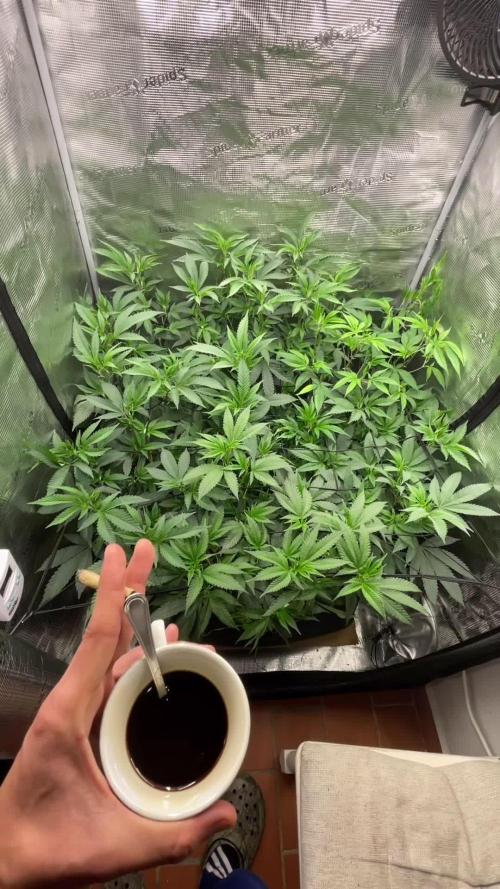
Final Week of Veg - Transition to 12/12
This is the last week before flipping the HiHolyHigh cuts to the 12/12 cycle.
Pre-flower Top Dress:
I have applied a pre-flower top dress using Almicanna Kick Flip and Malted Barley.
• Kick Flip: Provides all the necessary inputs for the upcoming flowering stage.
• Malted Barley: Helps decompose the remaining organic matter in the soil, converting it into readily available nutrients while also strengthening the plants' natural defenses against potential attacks.
Plant Status:
• RS11: Unfortunately, it didn't keep up. It remains locked out and is now 20cm shorter than the rest of the canopy. I’ll keep the top to sample the quality and will try to clone it again for the next cycle.
• Colorado Nightshifter & Runtz: Slightly shorter than the rest as they took longer to adapt, but they are well-developed and ready for a proper test.
• The rest: Looking perfect and ready for the flip.





Likes
22
Share


@Foxtrotoscar
Follow
Made the mistake of buying Soil from amazon and I now have an infestation of gnats!
Likes
1
Share


@Aonjacktallbeck
Follow
Kinda left the diary forgotten but hopefully for the next ones i should be more consistent.

Likes
14
Share


@GrowX-FarmZ
Follow
Nun wurde endlich geerntet, die Damen liegen aktuell im trockennetz bei einer RLF von 55% und 22 Grad
Jetzt erstmal trocknen lassen, weiteres folgt 😇
Update:
Nach 12 Tagen in der Trocknung war die Banana Cherry Cookies bereit getrimmt zu werden.
Der Geruch ist aktuell Süßlich, an eine Kombi zwischen süße Kirsche und Banane Schale 😅
Trocken und getrimmt lagen die Buds bei
65,7 g A-B Blüten
37,0 g C Blüten und Trimm
Jetzt geht’s erstmal ab zum Fermentieren und mal schauen wie sich der Geruch und die Haptik verändert
Smokebericht folgt 💚🍀
Likes
199
Share


@PEAKYPLANTERS
Follow
WELL WELL WELL, FRIENDS!
NO PROBLEM WITH THE GERMINATION OF THIS BABY .... I CAN'T WAIT TO OBSERVE HER RED GEMS !!! ----------------------
-------------------
For those interested in buying this fantastic light
https://amzn.to/3ttb2j9
Likes
8
Share

@Crop_Top
Follow
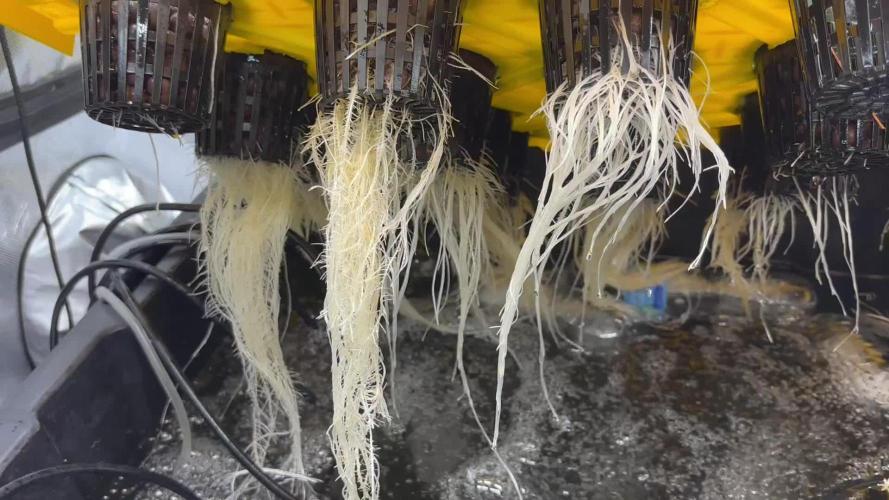
These plants have been thriving this week. Roots are exploding and already filling up the bin sooner than expected. Plants have been “praying” daily. Will likely be moving these into their forever homes (current culture buckets) before end of next week or at least split into 2 bins to give some space before topping.
Have just been mooting levels and water temps throughout the week. Didn’t have to add or adjust anything as of yet.
ph - 6.0
PPM - 375
EC - 750
Water Temp - 68*F
Air Temp - 74 (Lights On) 68 Lights Off
Humidity - 60% on average
Notice a slight cal/mag deficiency (rust coloring on a few on the leaves) so added another 15mL to the bin just to be safe. I’ll also be painting the lid white and insulating the bin to try and keep the water temps around 68, the ice bottles are annoying to continuously change out.

Likes
3
Share


@Krautbauern
Follow
Day 24
Topped the Ladies
Started to fertilize Bio Grow
In 1-2 weeks i will send them in the flower stage
Likes
2
Share


@Not_a_tutorial1990
Follow
Was a good week, she recovered great from the training she got.. Def flipping her end of this week
Likes
4
Share


@JeyGanesha
Follow
Queste runtz stanno crescendo bene, c'è n'è una che sta venendo su strana....aspetto,e vedrò cosa uscirà