The Grow Awards 2026 🏆 









Likes
Comments
Share
@AsNoriu
Follow
Day 115 since seed touched soil. Joe is harvested, a bit early, bottoms needed way more time, some tops were still flowering even, but i leave country and almost no time was left ...
Happy Growing !!!




Likes
2
Share
@Race91
Follow
Nice big stretch happened this week. Literally overnight my shorty plant jumped up to almost the height of the other two. I was so excited when I went out to find that but I let my rabbit out to hop around and she chewed a hole into my greenhouse and ate a shit ton of stuff off my plants. The video I posted on this week shows the extent of the damage but what really killed me was the shorty plant had just stretched and she fuckin ate 3 main branches off it and all the sides so now it’s a plant with 3 mains and little ass middle branches that have come up after I did some LST to open her up and try and make up for that loss. This week was good and it sucked. FML. I added Big Bud coco and carboload to the nute list this week so hopefully I start seeing some jump in bud production. Surprisingly I had no stunting from the rabbit eating the plants so stuff is still moving along nice for the branches that still stand. I did find some mite looking fuckers on these so I got the mighty wash out and blasted a couple rounds during the day and bought more so I can follow up but they had done no visible damage so I found them just by being active in my garden and paying close attention so go me for catching that shit before mites killed me off. That’s all for this week. Thanks to my followers for checking in and anyone checking in for the first time. Happy growing Kin.

Likes
33
Share
@Hawkbo
Follow
Did a full leaf strip on everything this week, the pics and videos were taken 2 days ago I just havnt got around to uploading them. Everything bounced right back after the strip but the pots arent drying out as fast and humidity went down a little bit.
Use the code bangdang for 10% the following sponsors..
@greenbuzzliquids
@rainscience_growbags
@gorilla_grow_tent
@growlightscience.led

Likes
28
Share
@Bongman
Follow
Hi All,
Its week 6 of flowering. Things are on track and buds are bulking up.
I think I am going to conclude that the red stems on top fan leaves are just a genetic trait.
Will do one last reservoir change and start to decrease nuets next week.

Likes
26
Share
@CannaTrope
Follow
The grow room is starting to smell really good. The girls are looking great and they are swelling and adding new hairs still. Two weeks at least and then we will see what the trichomes look like. Hoping they fade a little and seeing some slight yellowing of tips on fan and sugar leaves. I think P and K were a little high last two weeks, so straight water till the end now.


Likes
4
Share
@MoneyMorris
Follow
I finally got my LED light in and installed. The plants are in the first week of flower and are adapting well to the light

Likes
31
Share
@420DeepGrow
Follow
Gracias al equipo de AnesiaSeeds, Marshydro, XpertNutrients y Trolmaster sin ellos esto no sería posible.
💐🤯 39%Thc Wham Boom:
Sube al ring con WHAM BOOM de Anesia Seeds, donde la energía electrizante de Wham choca con las vibraciones frías de RS54, creando una variedad que es todo equilibrio, potencia y sabor. Este peso pesado feminizado ofrece una mezcla perfecta de 50% Sativa y 50% Indica, proporcionando una experiencia que te hará flotar de euforia mientras tu cuerpo se sumerge en una serena relajación.
WHAM BOOM es una productora prolífica, con rendimientos en interior de 600g/m² y en exterior que alcanzan la asombrosa cifra de 900 - 1200g por planta. Con una floración de entre 65 y 70 días, esta variedad está lista a principios de octubre, lo que la convierte en una competidora ideal para los cultivadores que aspiran a una cosecha de campeonato. Con una imponente presencia de 100-140 cm en interior y 160-220 cm en exterior, WHAM BOOM se alza como testimonio de su destreza genética.
🏠 : Marshydro 1.50 x 1.50 x 1.80, carpa 100% estanca con ventanas laterales para llegar a todos los lugares durante el grow
https://marshydro.eu/products/diy-150x150x200cm-grow-tent-kit
🌬️💨 Marshydro 6inch + filtro carbon para evitar olores indeseables.
https://marshydro.eu/products/ifresh-smart-6inch-filter-kits/
💻 Trolmaster Tent-X TCS-1 como controlador de luz, optimiza tu cultivo con la última tecnología del mercado, desde donde puedes controlar todos los parametros.
https://www.trolmaster.com/Products/Details/TCS-1
🍣🍦🌴 Xpert Nutrients es una empresa especializada en la producción y comercialización de fertilizantes líquidos y tierras, que garantizan excelentes cosechas y un crecimiento activo para sus plantas durante todas las fases de cultivo.
Consigue aqui tus Nutrientes:
https://xpertnutrients.com/es/shop/
📆 Semana 2:
Gran primera semana, ella ha dado un gran estiron estos días, si sigue así será una gran cosecha.
Esta semana se practica defoliacion, poda de ramas bajas y se le agrega Sticky Fingers .
La carpa está ocupada al 100%, sigue una floracion explosiva gracias a @Marshydro y @Xpertnutrients y @Trolmaster con esta gran genética 💪.
Potencia de la lámpara: 70%

Likes
151
Share
@PapaNugs
Follow
Girls are doing great! Especially for entering the final week! They are getting watered every day to every other day. Letting them dry out a little. Got hit with some recharge and mammoth P for the first time. Just cause I got some for Black Friday.
Pulled plant number four from the other tent. Wanted to wait for some amber and happy I did

Likes
4
Share
@DogDoctorOfficial
Follow
🌱 Ghost Train Haze — Week 3 VEG Report
12/12 from seed | Vegetative phase ongoing
General Overview
Week 3 of vegetative growth closes with Ghost Train Haze showing outstanding vigor and expression. From early in the light cycle, both plants consistently display strong “praying” behavior — leaves lifted upward, posture alert and confident. This is not occasional; it is constant, indicating a very good balance between light intensity, nutrition, and environment.
Running as a pair, they behave almost like twins. Structure, rhythm, and overall pace are remarkably similar. As expected in nature, one plant is slightly larger than the other — a reminder that nothing in the universe is ever truly identical. Still, the similarity between them is striking and reassuring.
Growth & Structure
• Stage: Vegetative
• Flowering signs: None observed
• Node count: ~5 to 6 nodes
• Growth habit: Upright, balanced, well-structured
• Leaf posture: Strong and consistent praying
• Color: Deep, lush green with excellent vitality
Internodal spacing remains tight, structure is clean, and development is even. There are no signs of stress, clawing, deficiencies, or imbalance.
⸻
Genetics Notes — Ghost Train Haze
Ghost Train Haze carries strong Haze-forward genetics, and early signs are already visible in her behavior:
• High responsiveness to light
• Expressive leaf posture
• Vertical intention without excessive stretch
• Clear metabolic efficiency
Haze genetics often prefer to build structure first, establishing roots and vegetative mass before revealing their full personality. At this stage, Ghost Train Haze is doing exactly that — laying rails before speed.
⸻
Photo Documentation
This week, both plants were briefly taken out of the tent for detailed photo documentation using a controlled studio-style setup.
The photos focus on:
• Leaf posture and symmetry
• Natural water droplets resting on the leaves
• Rich green coloration under controlled lighting
These images are meant to document subtle signals, not to dramatize the plant.
⸻
Environment — Room Conditions (Week 3)
• Photoperiod: 12/12 from seed
• Day temperature: ~26 °C
• Night temperature: ~18 °C
• Relative Humidity: 60–65%
• Airflow: Gentle, constant, non-stressful
• Solution temperature: ~21 °C
• Substrate temperature: ~21 °C
Environmental stability remains consistent across the room, allowing the plants to focus entirely on vegetative development.
⸻
💡 Lighting
• PPFD: ~600–700 (adjusted to plant size)
• Plants are growing naturally into the light
• No stretch, no light stress
The constant praying posture confirms that light levels are well matched to plant demand.
⸻
💧 Watering & Nutrition
• pH: 6.0
• EC: 1.0
Nutrient program:
• Plagron Terra Grow
• Power Roots
• Pure Zym
• Sugar Royal
Foliar:
• Vita Race
• Applied selectively and intentionally, not on a fixed schedule
This program continues to support strong root activity, clean metabolism, and vibrant vegetative growth.
⸻
🔍 What to Expect / What Not to Expect (Next Week)
What to expect:
• Continued vegetative expansion
• Additional node stacking
• Increasing leaf mass and canopy presence
• Gradual emergence of Haze characteristics
What not to expect (yet):
• No flowering initiation
• No explosive stretch
• No need to push inputs
Patience remains key — the foundation is still being built.
⸻
Final Thoughts
Week 3 confirms that Ghost Train Haze is thriving. Constant praying, twin-like development, and calm confidence define this stage. No rush, no force — just steady momentum.
Thank you to everyone following along, observing, learning, and sharing this journey with us.
The train is moving — quietly and with intention 🚂🌱
FOR DISCOUNT CODES AND MORE JUST FOLLOW THE LINK https://website.beacons.ai/dogdoctorofficial
📲 Don’t forget to Subscribe and follow me on Instagram and YouTube @DogDoctorOfficial for exclusive content, real-time updates, and behind-the-scenes magic. We’ve got so much more coming, including transplanting and all the amazing techniques that go along with it. You won’t want to miss it.
GrowDiaries Journal: https://growdiaries.com/grower/dogdoctorofficial
Instagram: https://www.instagram.com/dogdoctorofficial/
YouTube: https://www.youtube.com/@dogdoctorofficial
⸻
Explore the Gear that Powers My Grow
If you’re curious about the tech I’m using, check out these links:
🔆 Lighting & Environmental Control
• Future of Grow — Advanced LED lighting technology
https://www.futureofgrow.com/
DISCOUNT CODE: DOG20
• Lumiflora — Under-canopy LED lighting
https://lumiflorade.com/
• TrollMaster — Environmental controllers and automation gear (past collaboration)
⸻
Genetics
• Zamnesia Seeds — Genetics used in this project
https://www.zamnesia.com/
⸻
🌱 Soil, Substrates, Boosters & Root Support
• Plagron — Substrates, bio mixes, and supportive products
https://plagron.com/en/
⸻
🎒 Storage, Curing & Preservation
• Grove Bags — Curing and storage solutions
https://grovebags.com/
⸻
📸 Photography Equipment & Tools
(Not sponsors, but part of my creative toolkit)
• Sony A6700
• Sony full-frame macro lens + few more
• Stacking photography workflow - learning
• iPhone (for behind-the-scenes shots)
We’ve got much more coming as we move through the grow cycles. Trust me, you won’t want to miss the next steps, let’s push the boundaries of indoor horticulture together!
As always, this is shared for educational purposes, aiming to spread understanding and appreciation for this plant. Let’s celebrate it responsibly and continue to learn and grow together.
With true love comes happiness. Always believe in yourself, and always do things expecting nothing and with an open heart. Be a giver, and the universe will give back in ways you could never imagine.
💚 Growers love to all 💚
📸 P.S. – The Eye Behind the Lens
All photos in this diary (for now — except for the ones showing the camera, which I took with an iPhone) are taken with a Sony A6700 paired with a Sony full-frame macro lens and a few more.
Photography is part of the story — it’s how we share the fine textures, the glow, and the quiet details that words can’t always capture.
I’ve also started experimenting with photo stacking — a technique where multiple images, each taken at a slightly different focus point, are layered together to create one perfectly sharp image from front to back.
It’s not digital enhancement or AI; it’s pure photography — a way to reveal the plant’s beauty in microscopic depth, from trichome to petal.
You’ll even see a few shots of "ghost me" capturing the shots — camera, lens, setup — because every grow deserves not just to be cultivated, but documented like art.
FOR DISCOUNT CODES AND MORE JUST FOLLOW THE LINK https://website.beacons.ai/dogdoctorofficial
NEW DISCORD - Official Server Invite Link : https://discord.gg/ksjAkA5T74

Likes
19
Share
@DevelGrow
Follow
Hallo Freunde 👋 Big growers Love to Anesia Seeds and thank you so mutch for all the Merch ✌️☺️🍀💚🍀. Chaos Cake von Anesia Seeds ist zum Keimen in den Develgerminator und wird dann in sein 11 Liter Growbag wandern! Bin sehr gespannt auf die kleine, bis dahin Keep Green and grow High ✌️🍀💚🍀
Likes
2
Share
@Lautimi
Follow
ya un poco mas grande, me empiezo a dar cuenta de que el moho volvio. entonces empece a cuestionarme si regaba mal. Efectivamente estaba regando demaciado para la planta

Likes
10
Share
@SaintDave
Follow
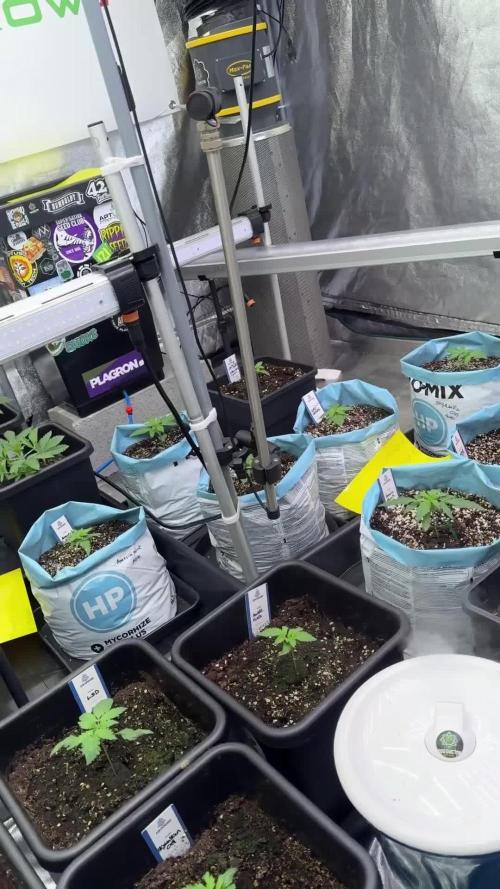
hello there growers ! 👽🌳🌴🌲🧚♂️ i cant add pics often, but i try to show my growing results as possible. its biggining of the 8th week and i’m pretty satisfied. please comment your advices 🤗

Likes
11
Share
@Buddyhighs
Follow
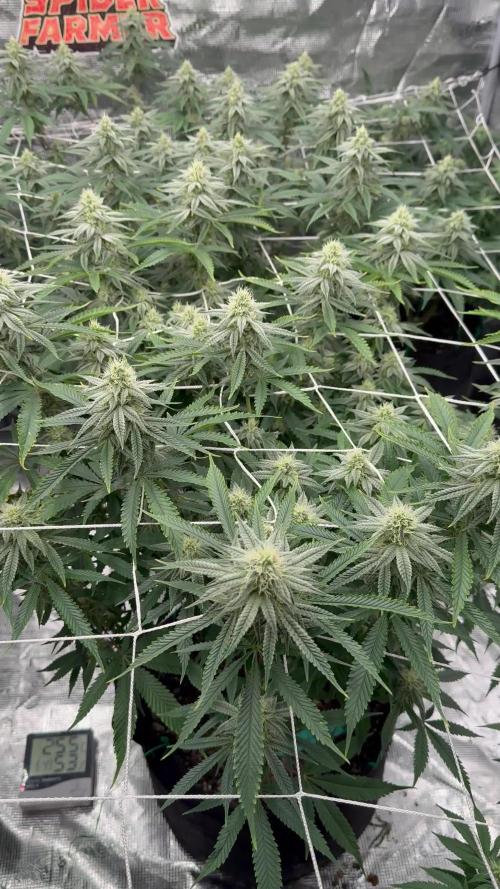
Another week down look at that canopy 😍
I think the stretch has finished and there’s no need for the second net so it’s come down.
Not a lot a work this week a bit of defo and top dressing.
Yeah for the first time this grow no a lot to say I guess……. Till next week let get it 💪🏽


Likes
Comments
Share
@SGCFarms
Follow
Not topped, only supercropped twice. Ridiculous growth with this phenohunted three kings allowing for me to lst into an invisible scrog maximizing tops. Pistils blooming at only 7 days in. Drinking about 1 gallon per day. Full res changes twice a week.
Likes
10
Share
@Nony_grows
Follow
I have a cal mag deficiency I’ve already treated it. We are on cruise control at this point, just waiting in the finish line.

Likes
15
Share
@Waveform
Follow
Day 53 has broken for the ladies, and I am very pleased with their progress. The buds are visibly getting stronger every day. A few brown leaf tips appeared, but at this stage I don’t care much for them. Overall, they still look very much alive.
Day 57: Uppermost leaves are curling up. Could be they are saturated with light and I should reduce the lighting period a bit, could be that the water drop installment provided them with a bit too much water, although they don’t show any more fresh signs of over-watering or fertilisation. But I had to remove water that flooded the bottom of the tank … I’ll reduce their lighting period to 14 hours. Rest of the ladies looks very healthy so I don’t want to stress them too much. It would be better to raise the left light a bit but I cannot. So, although the label says they would grow taller, I can be glad they did not gain more height.
Day 58: Buds are really getting massive, and they started to smell a bit more. They even gained 1 cm and tallest bud is now at 89.
It’s a very sweet but deep odour, really enjoyable. Lady #2, while being a bit smaller, looks like being in winter. Sugar leaves are enormous on her.
I added a detail photo from timelapse video showing some of the curled and slightly burnt leaves. They are not many, and damage does not seem to progress. Anyway, ladies are already late in the game and I am rather surprised they still look very healthy.

Likes
6
Share
@Gardengobblin
Follow
Toujours un bonheur de cultivé les semence fastbuds. La gorilla skittles est ma strain préférer et elle ne semble pas vouloir me décevoir encore cette fois
Likes
4
Share
@MoneyMorris
Follow
The plants have been flushing for almost a week now. Really starting to change colors. I can't wait to see how much I get from them.