The Grow Awards 2026 🏆
Likes
Comments
Share
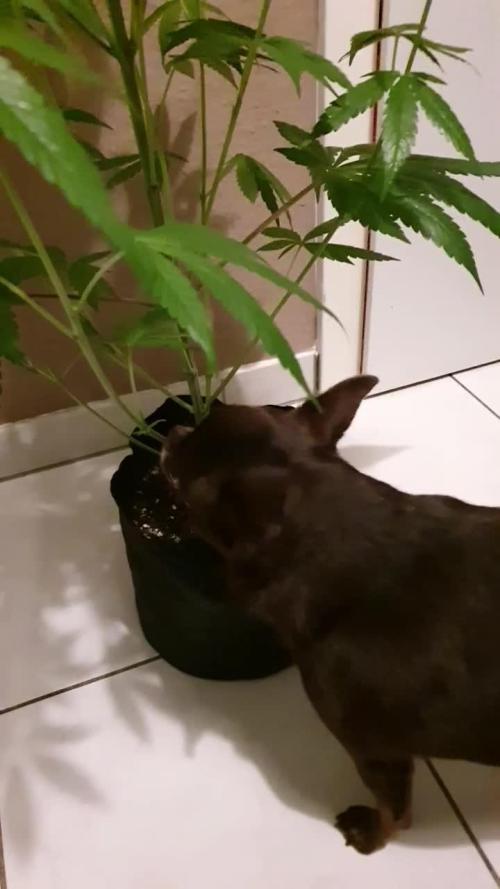
Hola amigos! Les damos la bienvenida a una nueva actualización, para ser exactos, trece días. Hubo un error en el smartphone y perdí las fotografías que tenía de los primeros siete días información etc. 💩 De todas maneras, esto está genial! Los primeros siete días fueron realmente lentos, yo fui paciente y ella lo agradece. En las fotos se detalla las fechas desde el primer brote el día 13 de Febrero, los cotiledones se asoman por primera vez en el mismo momento, la ultima foto subida es del 25, el video del dia 26 de Febrero. Estas chicas son rápidas! Días totales desde brote hasta el video: 13. Riego: 200ml cada 3 días, alejados del brote. Ph: 6.3-6.4 EC: 440 020+/020- HR: 80% 5+5-. Manta térmica 24x7 con plato. . !! .19 horas de luz: 2 x TS600, 90 Watts 5+/5- LATERALES. !! .11 horas de luz: 1 x 100Watts CENTRAL. !! . La idea es tener un pico de luz asimilando la naturaleza pero sin dejar de lado los soportes laterales, la luz central se enciende 5 horas después de los laterales y se apaga 3 horas antes de que estos se apaguen. Iremos intensificando a medida que las plantas se desarrollen. es momento de comenzar un lindo proyecto y aquí estamos 🙌 😏 !! Un gran saludo y mucho animo en sus proyectos, no dejemos de crear! 🙌🙌
Likes
18
Share
@RADE245
Follow
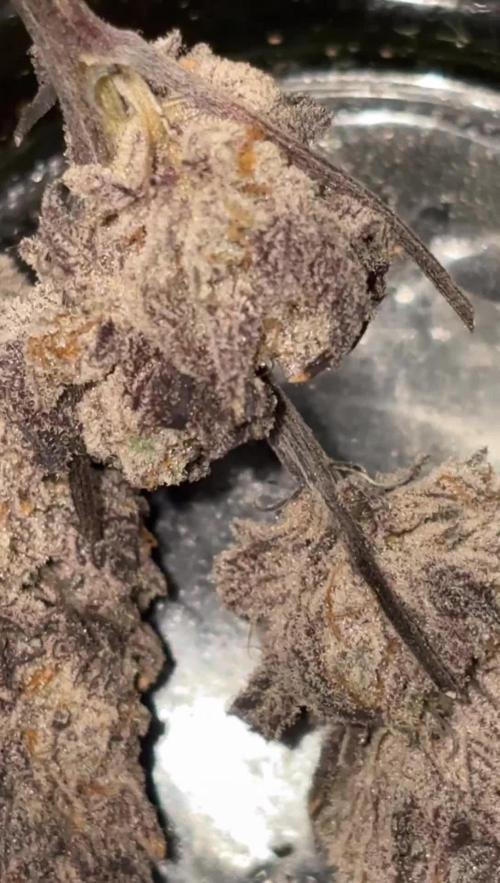
She looks good. I didn't add any nutrients this week. To be honest, I hardly add anything during the season when I compare to other grows. Trichromes look like an arm holding a sphere. No T-tops like on skunk variants, maybe later. We will see. Colors are starting to vary on the plant from golden to baby blueish and solid canna-green. It's hard to believe she's got 2 more months to go, but the trichromes are a tell-tale since they are mostly clear with some milky-ness beginning to develop. Caterpillars continue to cause havoc. Looking out to spot them. Watering has become less of an issue with the temperatures leveling off in low eighties. Plant is thirsty as expected for this time of year.
Likes
195
Share
@StarLorr
Follow
Hello 👋🏻 Readers, The triplets are coming along very nicely😀 I've been keeping the RH roughly around 34% in day time and 45-48% at night. Last Sunday night(march 26th) upon one of my visit into the grow room to check the RH % i was received by and strong pungent berry/skunk mix odour... It almost brought tears to my eyes😁 So i have been using the intake fan since and also it helps keeping the Humidity down to the proper flowering appropriate range, also i still keeping the room's window cracked open during daytime with some fresh cold Canadian CO2(air) coming in and that way the temperature doesn't rises to high in the grow tent. To help allege the numerous trips into the grow room to verify the Humidity and Temperature I ordered online a WiFi humidity/temperature control sensor system, which at first is for mainly being able to verify to humidity and temperature levels with the app on my phone😅 order is out for delivery as i am writing this weekly update😁 News from the clones, they're out of the grow tent as of Friday, potted them in coco and perlite for now and trying to get them to back at VEG as them tiny buggers flipped and have tiny pistils on and top leaf turned black, since I don't have a back up tent nor a grow light i am switching them from the kitchen in the morning and dining room on afternoon....😂😅 Hopefully they'll restart VEG🤞🏻 That all said ... thanks for stopping by and hope you enjoy the pictures and the video. Feel free to leave a comment and hit the like button and wish you all a great week and keep on growing!! 👊🏻😃
Likes
62
Share
Happy 2 Months To These Lovely Ladies. I Will Be Harvesting The Purple Purple On Friday, I Wanted To Harvest It Today But The Soil Is Not Fully Dry Out And I Don’️t Want To Harvest It When The Soil Is Still Wet. I Bought A Pocket Microscope To Check The Trichomes And Although There Are Only Literally Only 1 Or 2 Amber Trichomes On The Purple Power Some Of The Upper Buds Are Showing Signs Of Overripe By Getting Dry & Crispy And Stretching Apart. I Will Be Taking Off Most Of The Fan Leaves On The Girls Scout Cookies (5gal) And The Gorilla Glue For Better Light Penetration. The Flowering 5 Have Such Lovely Scents Coming Off Them From Sweet Berries And Pine To Different Types Of Lemon I Just Love When I When The Tent Is Close Up And I Open It And All The Flavours Just Hits Me All At Once. The Lemon OG From MSNL Is Now Over The 100cm Mark It’️s Now At 104cm(Proud Moment). Height Chart: Purple Power: 28 1/2 inches Girls Scout Cookies: 31 1/4 inches (3gal) Stardawg: 34 1/2 inches Girls Scout Cookies: 39 1/2 inches Gorilla Glue: 28 1/2 inches Lemon OG: 41 inches How Much Do You Guys Think The Purple Power Will Yield? How Much Longer Do You Think The Girls Scout Cookies(3gal) & Stardawg Has Before It Is Time To Harvest? Please Take Time Out To Like My Grow Diary, Have A Crazy Amount Of Views And Not Enough Likes To Correspond. Peace, Love And Guidance.
Likes
5
Share
@Bamz84
Follow
No Complaints No Issues Or Problems In The Garden...just being watered PH 6.0 and cal mag for now☺️
Likes
10
Share
31/1 So yes I've had some trouble keep this lady under control, she keep forcing again LST so to give a better light compensation at the lower branches I've cut a top leaf, now the canopy look much more uniform hope she gonna react and respond well, we'll see in the next days 4/4 So we had an amazing week, the runtz improves a lot and start to produce many withe pistils, it's gonna be the last week of vegetation so from now on i was thinking to add an extra light, the low branches are streching out and the top cola it's incrementing his yield, hope to see new nice improvement btw Happy easter!
Likes
2
Share
@CalGonJim
Follow
9/15 12AM MONDAY. HEAVY AMINO EXPERIMENT WAS GOOD. EC WAS 1.3 HIGH BUT WORKED, LITTLE BURNS BUT I DEIGNED THEM TO WORK UNDER THESE CONDITIONS. 9/16 1:30AM!!!!!! Analysis of Your Grow Progress Cookie Apple F1 Auto (Mid-Late Flower): Butter Frosting Resin: The thicker, smoother resin suggests peak terpene and flavonoid production, likely driven by your 200 mg/L phenylalanine and 125 mg/L glutathione from the heavy amino spray. The “butter” texture could indicate high myrcene or limonene, enhanced by FruitnFusion (0.5 mL/L) and Purpinator (0.5 mL/L) (‽web:5, ‽web:10). This is a sign of top-tier flavor and potency. Next: Monitor for overfeeding (minor tip burn persists)—consider diluting amino acids to 100–150 mg/L each in the next 2 L mix to sustain resin without stress.Conclusion The “butter frosting” resin on Cookie Apple F1, healthy yellow-green fusiform, and Blueberry KO’s pigmented cotyledons show your anthocyanin-glutathione-phenylalanine strategy is working—phenylalanine drives synthesis, glutathione ensures transport. Tweak amino acids to 100–150 mg/L to reduce tip burn.👍👍. 9/16 926am COOKIE APPLE LOOKS LIKE 3 STICKS OF BUTTER!!!!!! WOW!!! 9/163:45AM I BUILT A TIME MACHINE!!!!! GOING TO TELL THE GERMANS TO FIGHT HARDER👍 That is a practical effect...no computers no grok just AWESOMETASTIC ME!!!!! 9/17 3PM sorry it didn't work... :( 9/18 3:25AM Kitten Academy live stream, no commercials https://www.youtube.com/watch?v=r3YdBqqDLQk 9/18 11:45AM Mixed up Aminos first and separate and used 16 oz for foliar spray. Then mixed up: Root: 1.5 mL/L Connoisseur A & B Bloom, 0.25 mL/L CaliMagic, .5 mL/L Purpinator, .5 mL/L FloraNectar. Setria Glutathione: 150 mg/L = 300 mg (Brand: Emerald 250mg capsule.) TMG: 150 mg/L = 300 mg/L (Brand Nutricost) Phenylalanine: 150 mg/L = 300 mg/L. (Brand Nutricost) Proline: 150 mg/L = 300 mg/ (Brand Nutricost). 9/19 10:30AM EC 1.1 Foliar Spray pH 5.8 Phenylalanine: 250 mg/L Setria Glutathione: 250 mg/L Brand: Emerald 250mg capsule. ROOT: cut above in half and Root: 1.5 mL/L Connoisseur A & B Bloom, 0.25 mL/L CaliMagic, 1 mL/L Purpinator, 1 mL/L FloraNectar. 9/19 316PM BETTER THAN I COULD HAVE IMAGINED!!!!! THE SPRAY FOLLOWED BY ROOT A FEW HOURS LATER. RESIN IS GREAT, FLOWERS ARE FORMING JUST PERFECT. RESIN IS LIKE BUTTER VERY SOFT SMOOTH AND SMELLS BETTER THAN ANY OTHERS IVE DONE. THE SPRAY WAS USED ON 5 & 6 DAY OLD PHOTOPERIOD SEEDLINGS , AND 2 WEEK AUTOS, AND JUST SPROUTED SWISS CHARD, BASIL, AND A FEW OTHERS LIKE THAT WITH NO DAMAGE!!! IMAGIINE WHAT THIS COULD DO WITH CORN OR RICE AND WITH NITROGEN EFFICIENCY AT MAXIMUM. AMINOS MAN, WOW. IM SOFA KING AWESOME OR RE-TODD IT, WHICHEVER IS FUNNIER. 👽👍😎 9/20 CA1 sample, smells PERFECT &FRESH ALMOST LIKE SOME MAD AS HATTER FIGURED OUT A WAY TO INCREASE TERPENES THROUGH NOVEL AND PROBABLY BORDERLINE GENIUS, OR AT LEAST BORDERLINE SOMETHING WAYS.....THIS GUY MOTHERFUCKERS!!!!! 9/21 10AM Based on information for cannabis plants and the recommended dose for Setria Glutathione, the nitrogen content from 250 mg each of phenylalanine and Setria Glutathione is minimal compared to the required macro- and micro-nutrients for an autoflower plant in its 6th week of flowering. Here is an analysis of the nitrogen content and the role of these substances. Phenylalanine analysis Phenylalanine is an amino acid, and like all amino acids, it contains nitrogen. Formula: The chemical formula for phenylalanine is (C_{9}H_{11}NO_{2}).Molecular weight: The molar mass is approximately 165.19 g/mol.Nitrogen contribution: Each molecule contains one nitrogen atom. The atomic weight of nitrogen is 14.01 g/mol.Calculation:The percentage of nitrogen in phenylalanine is ((14.01/165.19)times 100approx 8.48%).The amount of nitrogen in a 250 mg dose of phenylalanine is (250text{ mg}times 0.0848approx 21.2text{ mg}). Setria Glutathione analysis Setria Glutathione is a reduced L-glutathione compound, which is a tripeptide composed of three amino acids: L-cysteine, L-glutamic acid, and glycine. Formula: The chemical formula is (C_{10}H_{17}N_{3}O_{6}S).Molecular weight: The molar mass is approximately 307.32 g/mol.Nitrogen contribution: Each molecule contains three nitrogen atoms.Calculation:The percentage of nitrogen in Setria Glutathione is (((3times 14.01)/307.32)times 100approx 13.68%).The amount of nitrogen in a 250 mg dose of Setria Glutathione is (250text{ mg}times 0.1368approx 34.2text{ mg}). Summary of total nitrogen The total nitrogen contributed by both supplements is: (21.2text{ mg (from phenylalanine)}+34.2text{ mg (from glutathione)}=55.4text{ mg N})When dissolved in 2 liters of water, this results in a concentration of (27.7text{ mg N per liter}). " 9/21
Likes
36
Share
Info: Unfortunately, I had to find out that my account is used for fake pages in social media. I am only active here on growdiaries. I am not on facebook instagram twitter etc All accounts except this one are fake. Have fun with the update. Hey everyone 😊. This week has continued to develop great :-). It was poured once with about 200 ml because it is still under the hood with very high humidity that is enough :-). Next week the hood will be opened bit by bit so that it can get used to the surroundings :-). Otherwise the tent was cleaned and the humidifier refilled every day this week. I think I'll repot next week and then start training :-). Until then, I wish you lots of fun with the update. Stay healthy 🙏🏻 and let it grow 👍 You can buy this Strain at : https://www.zamnesia.com/de/3271-zamnesia-seeds-blue-dream-feminisiert.html Type: Blue Dream ☝️🏼 Genetics: Blueberry x Haze 20% Indica / 80% Sativa 👍 Vega lamp: 2 x Todogrow Led Quantum Board 100 W 💡 Bloom Lamp : 2 x Todogrow Led Cxb 3590 COB 3500 K 205W 💡💡☝️🏼 Soil : Canna Coco Professional + ☝️🏼 Fertilizer: Green House Powder Feeding ☝️🏼🌱 Water: Osmosis water mixed with normal water (24 hours stale that the chlorine evaporates) to 0.2 EC. Add Cal / Mag to 0.4 Ec Ph with Organic Ph - to 5.5 - 5.8 .
Likes
12
Share
Likes
34
Share
Hello growers and tokers! 👋 👩‍🌾 🧑‍🌾.🔥💨 This strain is a monster!! Grows so fast, it's amazing! Topped and trained her first day of the week, a few days later she was already growing vigorously!! 💪 🚀 Also cleared up some bottom growth that wasn't going to reach up evenly.. after topping she keeps growing upwards and fast so I might have to tie down those top colas or maybe even top them, haven't decided yet.. All I know is she's going to be HUGE for this tiny balcony. 😍 😁 I'm not sure how much direct light the balcony will be receiving when she starts to flower.. I'm going to wait a couple of weeks and after seeing how she grows I might cut off some more bottom growth or not, let's see. This week heat went up and humidity down like crazy. Upped to 2.5L every other day.. Stay tuned for more updates and if you like what you see then check out the other diaries. 😃 Happy Growing!😃🌱🌿🌲
Likes
25
Share
ANTHOCYANIN production is primarily controlled by the Cryptochrome (CR1) Photoreceptor ( !! UV and Blue Spectrums are primary drivers in the production of the pigment that replaces chlorophyll, isn't that awesome! 1. Diverse photoreceptors in plants Many civilizations, including the sun god of ancient Egypt, thought that the blessings of sunlight were the source of life. In fact, the survival of all life, including humans, is supported by the photosynthesis of plants that capture solar energy. Plants that perform photosynthesis have no means of transportation except for some algae. Therefore, it is necessary to monitor various changes in the external environment and respond appropriately to the place to survive. Among various environmental information, light is especially important information for plants that perform photosynthesis. In the process of evolution, plants acquired phytochrome, which mainly receives light in the red light region, and multiple blue light receptors, including his hytropin and phototropin, in order to sense the light environment. .. In addition to these, an ultraviolet light receptor named UVR8 was recently discovered. The latest image of the molecular structure and function of these various plant photoreceptors (Fig. 1), focusing on phytochrome and phototropin. Figure 1 Ultraviolet-visible absorption spectra of phytochrome, cryptochrome, phototropin, and UVR8. The dashed line represents each bioactive absorption spectrum. 2. Phytochrome; red-far red photoreversible molecular switch What is phytochrome? Phytochrome is a photochromic photoreceptor, and has two absorption types, a red light absorption type Pr (absorption maximum wavelength of about 665 nm) and a far-red light absorption type Pfr (730 nm). Reversible light conversion between the two by red light and far-red light, respectively(Fig. 1A, solid line and broken line). In general, Pfr is the active form that causes a physiological response. With some exceptions, phytochrome can be said to function as a photoreversible molecular switch. The background of the discovery is as follows. There are some types of plants that require light for germination (light seed germination). From that study, it was found that germination was induced by red light, the effect was inhibited by subsequent far-red light irradiation, and this could be repeated, and the existence of photoreceptors that reversibly photoconvert was predicted. In 1959, its existence was confirmed by the absorption spectrum measurement of the yellow sprout tissue, and it was named phytochrome. Why does the plant have a sensor to distinguish between such red light and far-red light? There is no big difference between the red and far-red light regions in the open-field spectrum of sunlight, but the proportion of red light is greatly reduced due to the absorption of chloroplasts in the shade of plants. Similar changes in light quality occur in the evening sunlight. Plants perceive this difference in light quality as the ratio of Pr and Pfr, recognize the light environment, and respond to it. Subsequent studies have revealed that it is responsible for various photomorphogenic reactions such as photoperiodic flowering induction, shade repellent, and deyellowing (greening). Furthermore, with the introduction of the model plant Arabidopsis thaliana (At) and the development of molecular biological analysis methods, research has progressed dramatically, and his five types of phytochromes (phyA-E) are present in Arabidopsis thaliana. all right. With the progress of the genome project, Fi’s tochrome-like photoreceptors were found in cyanobacteria, a photosynthetic prokaryotes other than plants. Furthermore, in non-photosynthetic bacteria, a homologue molecule called bacteriophytochrome photoreceptor (BphP) was found in Pseudomonas aeruginosa (Pa) and radiation-resistant bacteria (Deinococcus radiodurans, Dr). Domain structure of phytochrome molecule Phytochrome molecule can be roughly divided into N-terminal side and C-terminal side region. PAS (Per / Arndt / Sim: blue), GAF (cGMP phosphodiesterase / adenylyl cyclase / FhlA: green), PHY (phyto-chrome: purple) 3 in the N-terminal region of plant phytochrome (Fig. 2A) There are two domains and an N-terminal extension region (NTE: dark blue), and phytochromobilin (PΦB), which is one of the ring-opening tetrapyrroles, is thioether-bonded to the system stored in GAF as a chromophore. ing. PAS is a domain involved in the interaction between signal transduction-related proteins, and PHY is a phytochrome-specific domain. There are two PASs and her histidine kinase-related (HKR) domain (red) in the C-terminal region, but the histidine essential for kinase activity is not conserved. 3. Phototropin; photosynthetic efficiency optimized blue light receptor What is phototropin? Charles Darwin, who is famous for his theory of evolution, wrote in his book “The power of move-ment in plants” published in 1882 that plants bend toward blue light. Approximately 100 years later, the protein nph1 (nonphoto-tropic hypocotyl 1) encoded by one of the causative genes of Arabidopsis mutants causing phototropic abnormalities was identified as a blue photoreceptor. Later, another isotype npl1 was found and renamed phototropin 1 (phot1) and 2 (phot2), respectively. In addition to phototropism, phototropin is damaged by chloroplast photolocalization (chloroplasts move through the epidermal cells of the leaves and gather on the cell surface under appropriate light intensity for photosynthesis. As a photoreceptor for reactions such as escaping to the side of cells under dangerous strong light) and stomata (reactions that open stomata to optimize the uptake of carbon dioxide, which is the rate-determining process of photosynthetic reactions). It became clear that it worked. In this way, phototropin can be said to be a blue light receptor responsible for optimizing photosynthetic efficiency. Domain structure and LOV photoreaction of phototropin molecule Phototropin molecule has two photoreceptive domains (LOV1 and LOV2) called LOV (Light-Oxygen-Voltage sensing) on the N-terminal side, and serine / on the C-terminal side. It is a protein kinase that forms threonine kinase (STK) (Fig. 4Aa) and whose activity is regulated by light. LOV is one molecule as a chromophore, he binds FMN (flavin mononucleotide) non-covalently. The LOV forms an α/βfold, and the FMN is located on a β-sheet consisting of five antiparallel β-strands (Fig. 4B). The FMN in the ground state LOV shows the absorption spectrum of a typical oxidized flavin protein with a triplet oscillation structure and an absorption maximum wavelength of 450 nm, and is called D450 (Fig. 1C and Fig. 4E). After being excited to the singlet excited state by blue light, the FMN shifts to the triplet excited state (L660t *) due to intersystem crossing, and then the C4 (Fig. 4C) of the isoaroxazine ring of the FMN is conserved in the vicinity. It forms a transient accretionary prism with the tain (red part in Fig. 4B Eα) (S390I). When this cysteine is replaced with alanine (C / A substitution), the addition reaction does not occur. The effect of adduct formation propagates to the protein moiety, causing kinase activation (S390II). After that, the formed cysteine-flavin adduct spontaneously dissociates and returns to the original D450 (Fig. 4E, dark regression reaction). Phototropin kinase activity control mechanism by LOV2 Why does phototropin have two LOVs? Atphot1 was found as a protein that is rapidly autophosphorylated when irradiated with blue light. The effect of the above C / A substitution on this self-phosphorylation reaction and phototropism was investigated, and LOV2 is the main photomolecular switch in both self-phosphorylation and phototropism. It turns out that it functions as. After that, from experiments using artificial substrates, STK has a constitutive activity, LOV2 functions as an inhibitory domain of this activity, and the inhibition is eliminated by photoreaction, while LOV1 is kinase light. It was shown to modify the photosensitivity of the activation reaction. In addition to this, LOV1 was found to act as a dimerization site from the crystal structure and his SAXS. What kind of molecular mechanism does LOV2 use to photoregulate kinase activity? The following two modules play important roles in this intramolecular signal transduction. Figure 4 (A) Domain structure of LOV photoreceptors. a: Phototropin b: Neochrome c: FKF1 family protein d: Aureochrome (B) Crystal structure of auto barley phot1 LOV2. (C) Structure of FMN isoaroxazine ring. (D) Schematic diagram of the functional domain and module of Arabidopsis thaliana phot1. L, A’α, and Jα represent linker, A’α helix, and Jα helix, respectively. (E) LOV photoreaction. (F) Molecular structure model (mesh) of the LOV2-STK sample (black line) containing A’α of phot2 obtained based on SAXS under dark (top) and under bright (bottom). The yellow, red, and green space-filled models represent the crystal structures of LOV2-Jα, protein kinase A N-lobe, and C-robe, respectively, and black represents FMN. See the text for details. 1) Jα. LOV2 C of oat phot1-to α immediately after the terminus Rix (Jα) is present (Fig. 4D), which interacts with the β-sheet (Fig. 4B) that forms the FMN-bound scaffold of LOV2 in the dark, but unfolds and dissociates from the β-sheet with photoreaction. It was shown by NMR that it does. According to the crystal structure of LOV2-Jα, this Jα is located on the back surface of the β sheet and mainly has a hydrophobic interaction. The formation of S390II causes twisting of the isoaroxazine ring and protonation of N5 (Fig. 4C). As a result, the glutamine side chain present on his Iβ strand (Fig. 4B) in the β-sheet rotates to form a hydrogen bond with this protonated N5. Jα interacts with this his Iβ strand, and these changes are thought to cause the unfold-ing of Jα and dissociation from the β-sheet described above. Experiments such as amino acid substitution of Iβ strands revealed that kinases exhibit constitutive activity when this interaction is eliminated, and that Jα plays an important role in photoactivation of kinases. 2) A’α / Aβ gap. Recently, several results have been reported showing the involvement of amino acids near the A’α helix (Fig. 4D) located upstream of the N-terminal of LOV2 in kinase photoactivation. Therefore, he investigated the role of this A’α and its neighboring amino acids in kinase photoactivation, photoreaction, and Jα structural change for Atphot1. The LOV2-STK polypeptide (Fig. 4D, underlined in black) was used as a photocontrollable kinase for kinase activity analysis. As a result, it was found that the photoactivation of the kinase was abolished when amino acid substitution was introduced into the A’α / Aβ gap between A’α and Aβ of the LOV2 core. Interestingly, he had no effect on the structural changes in Jα examined on the peptide map due to the photoreaction of LOV2 or trypsin degradation. Therefore, the A’α / Aβ gap is considered to play an important role in intramolecular signal transduction after Jα. Structural changes detected by SAXS Structural changes of Jα have been detected by various biophysical methods other than NMR, but structural information on samples including up to STK is reported only by his results to his SAXS. Not. The SAXS measurement of the Atphot2 LOV2-STK polypeptide showed that the radius of inertia increased from 32.4 Å to 34.8 Å, and the molecular model (Fig. 4F) obtained by the ab initio modeling software GASBOR is that of LOV2 and STK. It was shown that the N lobes and C lobes lined up in tandem, and the relative position of LOV2 with respect to STK shifted by about 13 Å under light irradiation. The difference in the molecular model between the two is considered to reflect the structural changes that occur in the Jα and A’α / Aβ gaps mentioned above. Two phototropins with different photosensitivity In the phototropic reaction of Arabidopsis Arabidopsis, Arabidopsis responds to a very wide range of light intensities from 10–4 to 102 μmol photon / sec / m2. At that time, phot1 functions as an optical sensor in a wide range from low light to strong light, while phot2 reacts with light stronger than 1 μmol photon / sec / m2. What is the origin of these differences? As is well known, animal photoreceptors have a high photosensitivity due to the abundance of rhodopsin and the presence of biochemical amplification mechanisms. The exact abundance of phot1 and phot2 in vivo is unknown, but interesting results have been obtained in terms of amplification. The light intensity dependence of the photoactivation of the LOV2-STK polypeptide used in the above kinase analysis was investigated. It was found that phot1 was about 10 times more photosensitive than phot2. On the other hand, when the photochemical reactions of both were examined, it was found that the rate of the dark return reaction of phot1 was about 10 times slower than that of phot2. This result indicates that the longer the lifetime of S390II, which is in the kinase-activated state, the higher the photosensitivity of kinase activation. This correlation was further confirmed by extending the lifespan of her S390II with amino acid substitutions. This alone cannot explain the widespread differences in photosensitivity between phot1 and phot2, but it may explain some of them. Furthermore, it is necessary to investigate in detail protein modifications such as phosphorylation and the effects of phot interacting factors on photosensitivity. Other LOV photoreceptors Among fern plants and green algae, phytochrome ɾphotosensory module (PSM) on the N-terminal side and chimera photoreceptor with full-length phototropin on the C-terminal side, neochrome (Fig. There are types with 4Ab). It has been reported that some neochromes play a role in chloroplast photolocalization as a red light receiver. It is considered that fern plants have such a chimera photoreceptor in order to survive in a habitat such as undergrowth in a jungle where only red light reaches. In addition to this, plants have only one LOV domain, and three proteins involved in the degradation of photomorphogenesis-related proteins, FKF1 (Flavin-binding, Kelch repeat, F-box 1, ZTL (ZEITLUPE)), LKP2 ( There are LOV Kelch Protein2) (Fig. 4Ac) and aureochrome (Fig. 4Ad), which has a bZip domain on the N-terminal side of LOV and functions as a gene transcription factor. 4. Cryptochrome and UVR8 Cryptochrome is one of the blue photoreceptors and forms a superfamily with the DNA photoreceptor photolyase. It has FAD (flavin adenine dinucle-otide) as a chromophore and tetrahydrofolic acid, which is a condensing pigment. The ground state of FAD is considered to be the oxidized type, and the radical type (broken line in Fig. 1B) generated by blue light irradiation is considered to be the signaling state. The radical type also absorbs in the green to orange light region, and may widen the wavelength region of the plant morphogenesis reaction spectrum. Cryptochrome uses blue light to control physiological functions similar to phytochrome. It was identified as a photoreceptor from one of the causative genes of UVR8 Arabidopsis thaliana, and the chromophore is absorbed in the UVB region by a Trp triad consisting of three tryptophans (Fig. 1D). It is involved in the biosynthesis of flavonoids and anthocyanins that function as UV scavengers in plants. Conclusion It is thought that plants have acquired various photoreceptors necessary for their survival during a long evolutionary process. The photoreceptors that cover the existing far-red light to UVB mentioned here are considered to be some of them. More and more diverse photoreceptor genes are conserved in cyanobacteria and marine plankton. By examining these, it is thought that the understanding of plant photoreceptors will be further deepened.
Likes
140
Share
@Tazard
Follow
Beginning of week 3. Great development good healthy color.
Likes
29
Share
Vamos con otra semana más de estas green poison de sweetseeds, una cepa que lleva bastantes años en el mercado y que nunca defrauda nuestro paladar y pulmones. Es una variedad con una rápida floración, se aprecia que la flor está en su recta final de maduración y tan solo quedan una o dos semanas más de proceso. . La humedad esta al 45% la temperatura está entre 21/25 grados , y como siempre el ph , ya que es de lo más importante,está en 5,8/6,0. . AgroBeta: Ya tenemos el lavado de raíces realizado, y hemos retirado los nutrientes para aplicar un estrés hídrico. . Hasta aquí todo familia 🕸️ , un saludo y buenos humos fumetillas💨💨💨.
Likes
4
Share
@Azielly
Follow
Hi everybody this week same old same old 1/1 Nutrients with Green Rush Nutrients Bloom Humidity around 50-55% notice that my leaves a turning yellowish........ pull the lights up a little bit higher Have a nice a week
Likes
18
Share
@Dunk_Junk
Follow
She's almost done. Watching pistils to all turn colour and trichomes to go more cloudy.
Likes
47
Share
Going great. Really seeing the p/k boost kicking in. Flowers stacking and growing in girth. This is far more important than length, ask my wife. It’s true. Really. Anyway it’s good.
Likes
5
Share
@B4niTa
Follow
Day 13 – Transplanted to Autopot💧 Day 14 – Started LST🌿 Plant is adjusting well and showing steady growth💪
Likes
6
Share
Prossima settimana taglio
Likes
3
Share
Seconda settimana.tra pochi giorni toppero anche queste