





Likes
14
Share


@GoldenWeedGrower
Follow
D85/F41 - 24/06/23 - She's almost ready, I think I'll start the flush soon
D86/F42 - 25/06/23 - Temp is still too high, I'm trying to refresh the environment with air conditioning
D87/F43 - 26/06/23 - First Thricomes Video. I'm going to start the flush today and I'll arwest next WE
D88/F44 - 27/06/23 - Flushing
D89/F45 - 28/06/23 - Flushing
D90/F46 - 29/06/23 - Flushing
D91/F47 - 30/06/23 - She's ready. Tomorrow I'll cut her

Likes
13
Share


@NorfFarmer
Follow
Both plants are being fed plain ph water (about 207 ppm, ph 6.4) purples on the second pheno are almost black 🤤

Likes
3
Share


@nag4wa
Follow
Still raising feeding content, ended this week with 1.8 EC. Plant still looks like it could get some more nutes. FIMed the taller plant and picked some fan leaves

Likes
22
Share

@Bread_n_Buds
Follow
I need to preface this diary: as I've said many times, I've been a true Hip Hop guy since I was a teenager, and now I have white hair. In my room, I still have a huge Wu Tang Clan poster/street poster from '97, the Enter the Wu Tang era. Those who know rap will understand me better...
At a certain point, well into my 40s, my friends at Zamnesia made a deal with Method Man's Tical and created this strain, and I'm growing it. I feel like I'm going crazy with joy.
We're talking about a strain with typically American characteristics called Nectar Drip, obtained by hybridizing a Zamnesia Apple Fritter and Tical's 24K Gold Fangs. The result is truly explosive, with an apple-like smell and an enormous amount of resin that makes it perfect for extracting even from residues. The leaves are full of pure resin and smell like heaven.
I don't know the Tical plant, but I can feel the Zamnesia one.
I'm once again truly embarrassed by its beauty, like when a beautiful girl talks to me and makes me blush. And I have to say, it's not even the best; there are four more epics coming that might surprise us, one of which is a clone of this one.
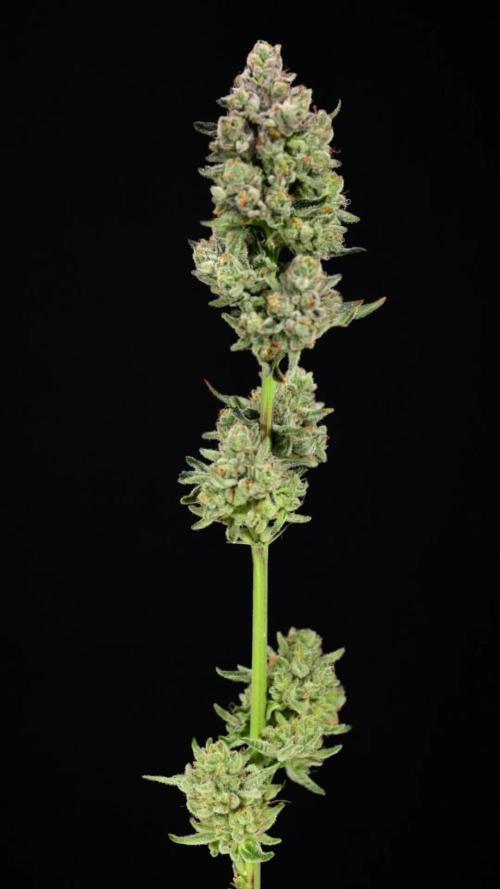
Ripeness - The pistils have looked super ripe for a long time, especially the upper ones, which are very red, and we're still over 90%.
The trichomes are about 30% amber, 40% cloudy/milky, and 30% clear, more or less naturally, but I think it's fine; it looks super ripe.
The flowers are all top-quality, and the yield is excellent, I think 80-100 grams.
The overall shape of the plant is truly splendid. Main lining works well even without LST training, as I did this time. The plant seems more solid and more evenly distributed than when I mainfold, or repeatedly top, the soil.
We chose a 100% organic, 1000% Plagron soil, as always.
The soil we chose is the recently launched Plagron Bio LightMix, which will allow us to start with more gradual and consistent watering, without the sudden changes that liquid fertilizers can cause. A week of soil is enough, so don't overdo it.
Choose your favorite style and calculate your results on the website:
www.plagron.com
Visit the new Growshop area on the Zamnesia website:
Z - https://www.zamnesia.io/it/531-growshop
These seeds are sold out and were a limited edition. I'm very sad not to have saved one, but we can choose from Zamnesia's excellent strains, and keep an eye out for exclusive limited editions like this one when they come out...
Z - https://www.zamnesia.io/en/35-cannabis-seeds
T - https://www.zamnesia.io/en/35-cannabis-seeds/745-tical
Z - Nectar Drip is a unique cannabis hybrid created in collaboration between Zamnesia Seeds and TICAL. These flowers are pure power, with up to 26% THC and effects that stimulate the mind and stabilize the body. But if you want to try them, you'll have to hurry: only 750 packs are available!
There's nothing better than a good collaboration—we know that better than anyone! For this partnership, we joined forces with TICAL to create a strain packed with flavor and potency. We brought our delicious Apple Fritter, while TICAL contributed its 24K Gold Fangs. After fine-tuning the result, Nectar Drip was born. This strain produces potent flowers with up to 26% THC, accompanied by delicious fruity and skunky aromas. Considering one of its parents is Apple Fritter, you can be sure that Nectar Drip has inherited a burst of fruity aromas and flavors. Skunky notes are evident, creating a rich and intriguing profile. Smoking this beauty will leave you feeling relaxed, with a pleasant cerebral euphoria accompanying the experience. It's definitely a great evening smoke, perfect for when you want to take a moment for yourself.
You know it, but I recommend it. You'll find so many wonderful things here, essentially "all the best that nature has to offer."
Z - www.zamnesia.com //
Music //
Last Day the Daddy Music
"Tical" (1994) is Method Man's first solo album.
www.radionula.com
+ Feng Shui Music
+ Frequencies 432 Hz


Likes
19
Share


@adam_pawloski87
Follow
Let’s Go Day 67 from seed !! So this week went real great! 2 Ogreberrys an Bruce Banner started getting flushed! The rest will follow up and start flush next week ! Today the 3 will continue getting flushed while the 3 others get there dose of nutrients, PHd at 6.5! Let’s grow lil ladies let’s grow!!! You all have an amazing productive day as well as a a great safe week !! Peace love and positive vibes to y’all Cheers 😶🌫️💨💨💨💨🤙🏻If there’s any questions please ask, I’ll be opened up to answer at best of my knowledge! Thank you all have a dank day !!



Likes
1
Share


@Cremedelacreme
Follow
Con solo 23 días de vegeta en 18/6. , se cambió el
Fotoperiodo a 12 horas hace 7 días
1Ra semana de floración con 45cm promedio !!
1ra de 8 semanas. !!
Likes
2
Share


@DrBud420
Follow
The plants were fed 3 days ago for the last time.. after the soil has dried, only flawless finish will go (probably from tomorrow) for the next 10-12 days, how long will it last... Glookies has a strong, exotic smell, it smells a lot like melon, sometimes a little like coffee... the smell is intense and can be felt even at 40-50 meters, especially at night... it is currently in full potency, some 90% trichomes are cloudy-milky and sometimes amber, when it is removed it will be exactly what an indica dominant hybrid should be... Dos Si Dos 33# also smells a bit like melon, but I think it will completely lose that smell by the end, no lime, citrus and mint as it says, it smells mostly like gelato, which makes sense because it's genetics,but I like it...it's like I planted gelato lol...but unfortunately I won't leave it as long as it requires because the weather won't allow it, I'll take it down in 12 days at the latest because after that the temperatures will go up to 3 degrees Celsius at night, the humidity will go over 70 , it's going to rain, there's no point in keeping it longer than that, I'm just increasing the risk of mold, and it's not like I haven't already thrown away a couple of moldy heads...50% of the trichomes are cloudy-milky, the rest are transparent and some amber... I hope that by the end it will be able to achieve at least full potency because time will not allow for more amber
These plants are real viking warriors, they didn't miss a bit of stress, but thank the dear Gods, it was reflected in the potency, and not in the production of seeds... this season is the worst season I've ever experienced, and so are my plants ...throughout the season they were under stress, and I was under even more stress...the weather in May and June was cold, without enough sun, temperatures were low, constant rain, ice and storms...after that came abnormal temperatures that easily exceeded 60 degrees Celsius in the direct sun....drought for almost 3 months, without a drop of rain, on the hottest days some plants drank 100+ liters of water, including food, I couldn't believe it with my own eyes... outdoor this year cost me more than if I did indoor... there were a lot of storms throughout the season... the last storm completely uprooted 3 of my plants and I had to take them down... of course I didn't manage to cut that much grass in time, so I ended up with over 600 g of dry moldy gorilla zkittlez( that's about it, the quarter that I cut gave 150 grams of dry matter, so I realized that there was no reason to continue cutting) it got worse because I didn't have time to cut it, and it was soaked from the rain... I still can't complain even if I I don't like the smell, I'm not a fan, it's potent and the work is relaxing and divine, I managed to save about 20 grams without it being touched at all... I have more strains that have been in jars for some time, but this is not the place for them now, I will certainly include some footage of them in jars as well...all the strains are superb and each is beautiful in its own way...I couldn't stop I decide on just one... dos si dos 33, runtz x layer cake, glookies and mimosa x orange punch I'm definitely planting again in the future..
I'm also interested in what barney's amnesia lemon is like because I really like this one, so next year I'll probably plant it too
Dos si dos is about 120 cm tall, glookies 2 m
These two plants had additional stress unlike the others which also didn't suffer...they were in smart pots, staked and one morning I go for a tour and see the plant broken, and the pot torn all the way, like a beast that was there.. .did some wild animal fly over there and got tangled up and uprooted it all... and it was as if someone had cut it with a knife, after a few days the same with the other plant, the same completely... then I seriously started to i mean someone is casting a spell on me lol then they were transplanted in early bloom into direct soil
Then glookies was transplanted to a place with much less sun than it was in, but at that moment I couldn't choose, what is there is..

Likes
26
Share


@d0cterstrain
Follow
added some guano tea. plants chugging along just fine. happy growing


Likes
3
Share


@BasedBuds_89
Follow
Really looking good so far, she's nugging up nicely. Can't wait to see the finished product!
Likes
4
Share


@Ageddd
Follow
Last week, fed the plant the plant with a dose of Top Bud, just at the begginning of this week, and then, i will be flushing until she is done...so last photos with nutrients, next days she should be yellowing :)
Hairs were like 50% orange at the beggining of the week, but some buds need to develope more so i think the timming will be fine im trying to flush for 1 to 2 weeks, until she is done, with like 90-100% of brown hairs
Good vibez GD !!!


Likes
11
Share


@RomeoAlphaWhiskey
Follow
day78: watered 6.4ph
day80:watered 6.5ph
day83:watered 6.1ph
day85: watered 6.2ph
give ζamensia a try, genetics are ON point.
Likes
14
Share


@exclusiveX420
Follow
Another really good week. We officially have flower sites as of Monday 3/27 first day of flower!!!!
She is such a monster now! I am really excited to move into flower. I have the plant opened up some more and hoping I can penetrate beneath the surface without side lighting this round. We will see !
The other sour clone I had running, same skunktek is doing well and just got setup with blumat Tropf drip Irrigation!
Stay tuned
Likes
13
Share


@dillande3
Follow
Hello!, Day 60 Flower I just done the my first harvest ever. Gelat og has cool looking buds, After seen the BUD ROT on one single bud in day 59 yesterday , Today in Day 60 i just cut the plant down for Dry. Going to WASH the buds with H202 (half of them) and going to dry for 10-14 Days and in to Jars for another 14-21 Days as I learned from fellow growmies. Thanks for everyone who support me through my First ever grow. Thumbs up guys.
Day 60 - Harvest - 02-01-23
Day 01 - Dry - 02-01-23

Likes
17
Share


@Sergio_721
Follow
So far it seems to be fine even if the high humidity worries me even if the temperatures are still high then they have stopped growing and will finally focus on the flowers and slowly we recover these small deficiencies