


Likes
Comments
Share


@Hempface86
Follow
Another week has stared and thease girls are monsters! The Gummiebears is in a 4 gal pot and is 41 inches tall ( 52 from the floor ) and is outgrowing the tent ( who says you shouldn't too autos? Lmao ) and as you can see the other 3 are in 1.5 gallon pots and are monsters as well .. if I don't pull 20-24 ounces this run I will be surprised honestly..
side note.. I cut the 2 lines branches early on from the Cream auto and put them in a vase for 2 weeks and they rooted so I stuck them both in the same little container and they have settled in nicely as I see new growth daily.. it's gonna yeild me an additional half ounce possibly? Idk 🤷♂️ fun experiment tho .. hope everyone is doing well! Happy growing! Likes and comments are appreciated! ✌️


Likes
4
Share


@DaisyNabis
Follow
preventivo de la semana al dia, desintale humificador para preparar a mis bellas para su trasplante a maceta definitiva, esta oportunidad no hare podas bajas solo algunas defoliacion

Likes
1
Share


@Hustle786
Follow
Hopefully Lemon 🍋 Should Be Fire
One 🍋 Plant Is Very Small HopeFully It Gives Big Bud
420💨💨💨

Likes
22
Share


@LSDMan
Follow
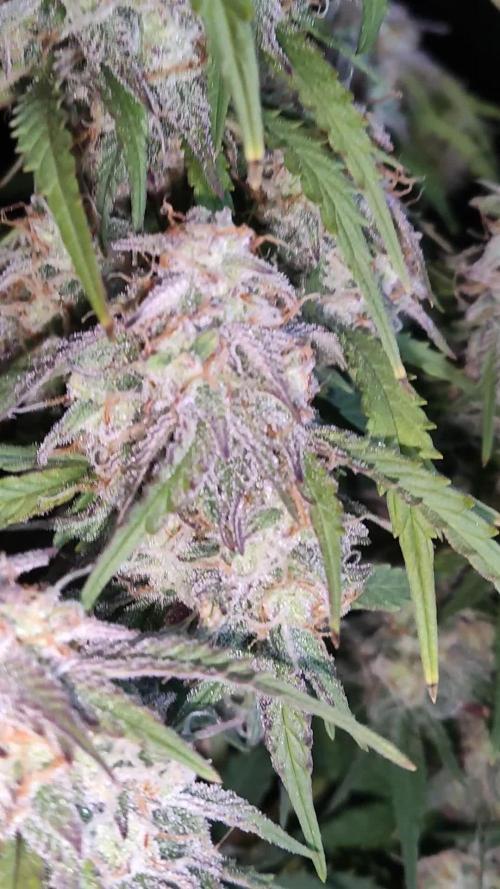
(EN) The plants are in a wooden planter to protect them from strong winds (they remain in their 3.6L pots for now). Watering with clear water on day 21. Some plants have slightly tipped but nothing serious. Meteorological change from day 23, with a drop in temperature and rainy, cloudy and windy weather (but this does not prevent the plants from growing, on the contrary). Watering with root fertilizer at 1mL/L and growth fertilizer at 1mL/L on day 25.
(CAN) Les plants sont dans une jardinière en bois afin de les protéger des vents violents (ils restent pour l’instant dans leur pots de 3,6L). Arrosage à l’eau clair le jour 21. Quelques plants ont légèrement tigé mais rien de grave. Changement météorologique a partir du jour 23, avec une baisse de température et un temps pluvieux, nuageux et venteux (mais cela n’empêche pas les plants de croître, au contraire). Arrosage avec l’engrais racinaire à 1mL/L et l’engrais de croissance a 1mL/L le jour 25.




Likes
5
Share


@BasiGoToGrow
Follow
Week5
The week is over and all looks fine.
Both ladies are preparing to bloom and are growing. Orange Sherbet is now 28 cm tall. Bruce Banner has caught up a lot this week and is at 25 cm.
For 1 liter of water there was 0.5 ml of silicate;;
0.5 ml of Calmag;; 2 ml of BioNova BN-Zym, 2 ml of BioNova TheMissingLink;; 2 ml of BioNova Auto complete fertilizer and 1 ml of 100% organic algae juice.
Ph 6.0-6.3 23°C

Processing
Likes
97
Share


@DudeGrowsWeed
Follow
Week 2 and the girls are looking more yellow and funky than I like. I'm pretty sure my soil is just way too hot. I tried flushing it through, but that just seemed to lead to general overwatering issues. I'm planning on transplanting to larger pots with more neutral soil this weekend and hope that will help straighten things out.
Likes
2
Share


Likes
13
Share


@GrowGuy97
Follow
Just got the new 8x4 setup and got some new seeds in from Seedsman so let’s see how this run goes! 5x5 is week 2 of flower going strong!


Likes
10
Share


@DeepRootsGrowTrees
Follow
ROYAL QUEEN CBG AUTO ORGANIC
This lady grew 💪 and big really impressed with her and the big buds she grew without needing much attention 👏 a smoke with earthy undertones as she relaxes, calms, and brings a feeling of serenity without any anxiety or head high!!
Thank you to ROYAL QUEEN SEEDS!!!
Thank you to FOOP!!!!
THANK YOU GROW COMMUNITY for your support 🙏 views, likes, and comments!!!
Likes
41
Share


@Basementganja
Follow
Watered/fed with 1 gallon of de-chlorinated tap water, mixed with the above listed nutrients, every 3 days! (Always waiting for the soil to become 95% dry, before watering again.)
Also placed a 9" tall pale under the plant, to lift her up into the high intensity zone of the light, for flower! (about 24" away from the sf4000(dimmed to 333watts))


Likes
4
Share


@UnUlver
Follow
Новое видео - жду новый спам в комментах. Может быть вы знаете как зарабатывать 1 000 000 в день и можете мне об этом рассказать? GD лучшее для этого место!
Растения чувствуют себя хорошо. Я в целом тоже. Спам боты тоже чувствуют себя прекрасно. Режу листву. Бывает не режу.
Думаю начать использовать GD строго для видео. В этом плане не видел более достойный ресурсов. Видите какие видео чудесные? Никаких авторских прав, никакой цензуры! Могу брать любую музыку, ставить логотипы брендов, удобрений, сидшопов. Следующий цикл буду вести именно так, семян подогнали люди Doctor'а.
Всем мир! Первостепенно спамерам.
Некоторые кусты пахнут жвачкой. Под конец цикла перестанут.
Не понимаю как вводить удобрения которых нет в базе, это нужно где-то согасовывать или самому вбивать составы? Кормлю по таблице, о! Добавлю таблицу в "G"

Likes
180
Share


@SlowpokeFuegobud
Follow
DAY 70
Watered with molasses 💧
I had to adjust some of the stems, I used one bamboo stick and glued sticky tape to it. So now the other Sticky tape is going to stick. 😜
DAY 72
Watered with Biobizz feeding. 💧 0,5ml Grow + 2ml Bloom + Enzym+
Raised the EC of the water a little bit by adding 1ml/L calmag instead of 0,5ml/L..
DAY 74
Watered with Biobizz nutes. 💧 1ml Grow + 4ml Bloom + HS300Bio + AminopowerPLus
DAY 76
Watered with Biobizz nutes. 💧 1ml Grow + 4ml Bloom
I love my little Caramelo girl! 😍 😍 😍 😍 😍 😍 😍 😍 😍
LED running at 100%.
Have a great week!! 😘
__________________________________________________
SET UP
240W Fullspectrum LED 660nm 730nm 3500K dimmable
custom exhaust fan 270/320 m³/h
3x Garden High Pro fans 5W
tap water EC 0,25 - adding Calmag to EC 0,4-0,6 - adding pH minus Bloom (AHH) to pH 6,5
Plantaflor organic tomato soil 🍅

Likes
36
Share


@MrJoint
Follow
Pretty straight forward strain. Recommend if you want something that doesn't need too much attention without sacrificing a good yield or quality.
Likes
8
Share

@Hempcules
Follow
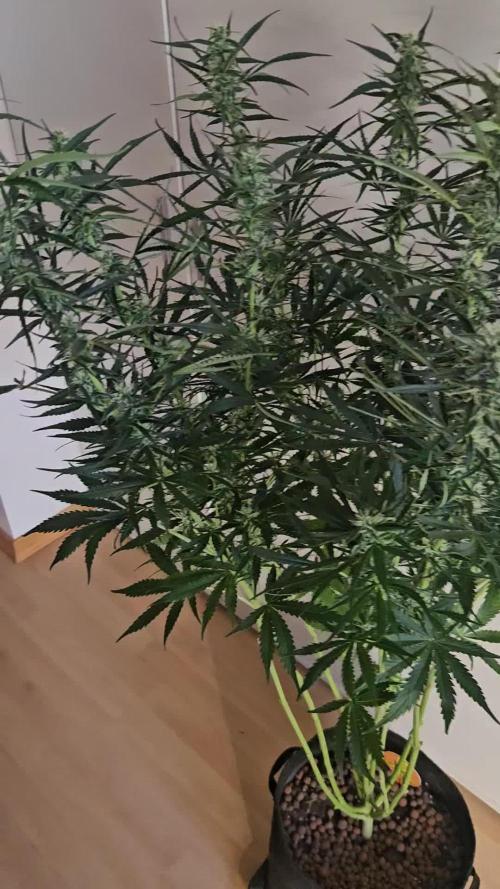
WEEK 8
This week I had to remove a few pollen sacs again, but I caught them in time. For now, it has stopped producing that crap. I hope it stays that way.
Otherwise, it’s looking fairly decent. The shoots will definitely need support in the future, as they’re rather thin and very long. This strain is not exactly ideal for small grow spaces. I’m already beyond my limit here, since I didn’t expect such a big stretch.
Unfortunately, the motivation has dropped a bit because of the high number of male pollen sacs, but I still hope something good will come out of it. If not, I’ll just make Ice-o-lator out of it.
PPFD: 750µmol/m²/s
Water: 2x water 1x nutrient solution
Vpd: 1,6Kpa

Likes
4
Share


@ChiloteAnonimo
Follow
DÍA 1 - CUARTA SEMANA DE VEGETA (26-05-2022)
*Se sigue con el LST
(28-05-2022)
* Se le aplica una poda selectiva a todas
* Tuve un problema de riego con varias
* En su día 31 desde q salió del sustrato, de las 6, hay 3 ya que van bien y han sufrido soportaron mejor el estrés, de las otras 3; hay una Banana y una AK que vienen más bajas que todas, de ramas más cortas y distancia internodal corta a comparación de las otras. Después esta la lemon que se viene recuperando muy bien de estrés y fue la que siempre vino más grande y ramificada :)
DÍA 7 ÚLTIMA SEMANA VEGETA (01-06-2022)
* Último día de la semana de vegetación, ya mañana es su día 1 de flora.
* El día de ayer se le regó lo último con Vegalquimia, y se le añadió 1ml de Alquisweet de LAAOS.
* Estos últimos 2 días he tenido problema de temperaturas muuuy bajas donde vivo, con luz encendida llegan 20 grados con suerte y luz apagada a 12-13 grados. Estoy tratando de jugar con bajar la humedad pero no la puedo bajar a menos de 55% aprox. Espero ya mañana arreglar ese problema de bajas temperaturas.
* Lo que es el cultivo se ve bien dentro de todo. Hay dos enanas que se estresaron en la semana 2 y quedaron pequeñas. A todas se le aplicaron LST, unas resistieron mejor los distintos estrés ya mencionados en semanas anteriores. Pero va bien.
* Hay 3 en pre flora, una de ellas en pre flora avanzada y es una de las más enanas.


Likes
16
Share


@Foggedaboudit
Follow
These are faster than expected. The smell is wonderful too. Pineapple and candy, the second pheno although it has less trichomes is bigger and has an added creaminess to its aroma. Truly great stuff even if they really don’t match the NTF description. Added some PK supplement too. Should be another week or two for these.




Likes
9
Share


@Scoota710
Follow
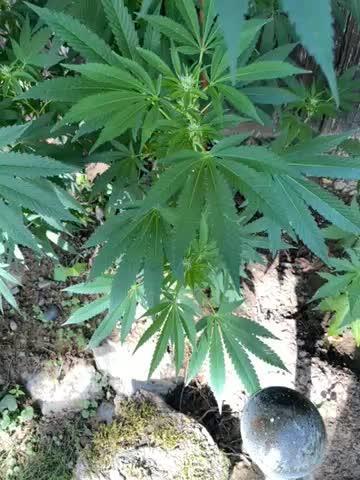
It’s growing pretty good. I’ve been debating on topping it or doing some LST on it 🤔