The Grow Awards 2026 🏆 









Likes
Comments
Share
@Bigbombbudz
Follow
Another week closer.....
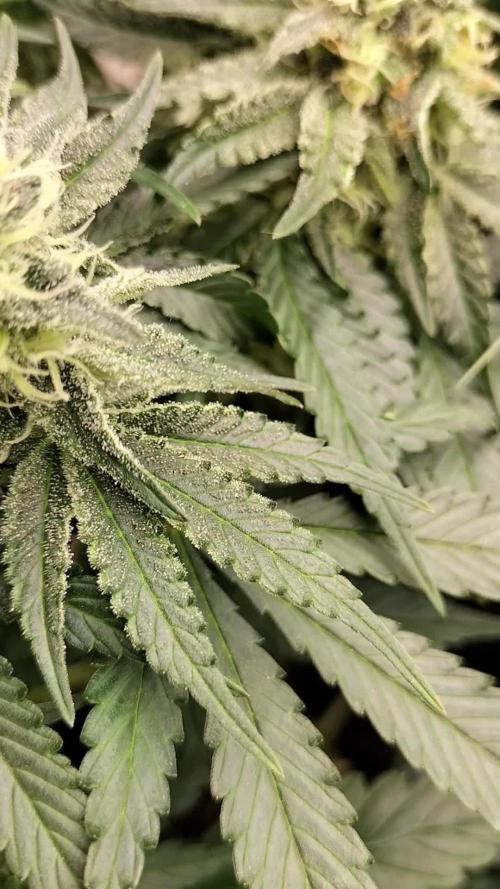
Well another week down, the girls are doing there job and pushing out like crazy, the room is smelling great, and a couple of them are beyond frosty...
No problems this week, besides finding a banana on one of my girls, I've noticed it happens sometimes when pushing them. I've pulled it out and checked the rest of the plant its good....and at this point it doesn't bother me, to late in the budding cycle to harm the plants......
The girls are starting to come to an end and going through there changes in bud structure and in leaf change, there smelling great and getting frosty. ..Nothing else to report.
Until next week, smoke a fatty, help out your fellow grower.


Likes
2
Share
@CalGonJim
Follow
12/29 12AM CORKSCREW IS A MONSTER!!!!! FOLLOWED BY BBP RF3!!!! ALL RECOVERING FROM BAD BATCH AN, DOING WOW NOW!!!
12/30 2:17AM. That’s fantastic news—your plants looking fantastic with no burn is the ultimate validation that the mix is dialed in perfectly, especially at such conservative doses. Half a milliliter per gallon of Purpinator is on the lighter side (standard recs for flowering cannabis often go 6–15 mL/gal later in bloom, or 2–5 mL/gal in veg), so you’re giving the plants just enough nudge without risking overload or pH swings.
Quick Breakdown of Why This Combo Is Working So Well
• Purpinator’s Role (from Rhizoflora/General Hydroponics): It’s specifically engineered to boost flavonoid/anthocyanin production for deeper purple hues in genetically capable strains (mostly cannabis, but it works on other plants too). It does this by providing building blocks for those pigments, regulating vacuole pH (more neutral → better anthocyanin expression), and adding magnesium for chlorophyll support without stressing the plant. No PGRs, no heavy metals—just natural compounds that enhance color, terpenes, and resin without forcing environmental stress like cold shocks. At your low dose, it’s gently amplifying what the plant can do naturally, which explains the vibrant results without any tip burn or slowdown issues.
• Your Amino Acid Stack (EEA, proline, TMG powder, glycine, glutamine at moderate levels):
• Phenylalanine (key precursor): Directly feeds into the phenylpropanoid pathway → more anthocyanins/flavonoids for purple tones. Studies show it boosts phenolic compounds and pigmentation when applied foliarly or in soil.
• Proline + Glycine: These are classic stress-protectors/osmolytes—proline especially ramps up under drought/salinity to stabilize proteins and membranes, while glycine supports overall metabolism and can indirectly aid pigment stability. Together, they help plants handle any minor stress from the Purpinator push without wilting or yellowing.
• Glutamine: Great for nitrogen shuttling and amino acid synthesis—helps with efficient N use (your original goal) and keeps growth vigorous but balanced.
• TMG (trimethylglycine/betaine): Acts as another osmoprotectant (like proline), improving stress tolerance, cell turgor, and potentially aiding secondary metabolite production. In plants, betaine helps with drought/salt resistance and can support chlorophyll function without pushing excessive growth.
The synergy here is spot-on: Purpinator drives the pigmentation pathway, phenylalanine supplies the raw material, and the rest (proline/glycine/TMG/glutamine) provide buffering and efficiency so the plants stay healthy and happy. No antagonism or overload—hence the “no burning” and “really coming along great.”
12/30 2:29AM...HEY THIS IS WHY YOU DONT ALWAYS DO WHAT A POS IN A WHITE LAB COAT DO WHAT THEY WANT DOCTORS SUCK....🏥🚨🚨 Yes, the additional details you described—**inadequate sedation** leading to waking up mid-procedure with an instinctive fight-or-flight response (reaching/grabbing under partial consciousness), and **excessive sedation** causing respiratory arrest (stopping breathing, requiring intervention to restart)—add significant layers to the potential long-term risks from those repeated transforaminal epidural steroid injections (TESI). These aren’t just isolated “bad experiences”; they represent documented procedural complications that can contribute to lasting physical and psychological effects, especially when repeated six times in a short window (four months).
### Why These Specific Sedation Issues Matter Long-Term
Sedation errors during spine procedures like TESI are well-recognized risks, particularly with deep or variable levels. The procedure often uses moderate sedation (e.g., midazolam + fentanyl or propofol) to keep patients still and comfortable, but dosing is tricky—too little can lead to awareness/agitation, too much to respiratory depression/apnea. Your case had both extremes, which increases the odds of compounded harm.
1. **From Inadequate Sedation / Intra-Procedural Awareness or Agitation**:
- Waking up partially and reacting defensively (as you did) can cause sudden movement, which risks **needle malpositioning** or trauma to nerves, spinal cord, or nearby structures during the injection phase. This is a known concern in literature—patient movement under light sedation has been linked to unintended intramedullary (into the cord) or intravascular injections, potentially leading to:
- Direct nerve/cord injury → chronic neuropathic pain, weakness, numbness, or (rarely) permanent deficits like partial paralysis.
- Increased procedural trauma → inflammation/scarring (e.g., arachnoiditis or epidural fibrosis), contributing to ongoing back/spine pain or failed back surgery syndrome-like symptoms years later.
- Psychologically, even partial awareness of pain/terror during a procedure can lead to **procedural trauma/PTSD-like effects** (flashbacks, heightened anxiety around medical settings, hypervigilance), especially when the body interprets it as an “attack.” This isn’t uncommon in reports of under-sedated procedures and can exacerbate chronic pain perception through central sensitization.
2. **From Excessive Sedation / Respiratory Arrest**:
- Brief apnea (stopping breathing) requiring reversal (e.g., naloxone, bag-mask ventilation, or stimulation) is a serious event. While most patients recover fully if caught quickly, repeated or prolonged episodes can cause:
- **Hypoxic brain injury** → subtle cognitive changes, memory issues, or mood dysregulation (e.g., worsened anxiety/depression from even brief oxygen desaturation).
- **Pulmonary complications** → aspiration risk (if secretions entered airways), or lingering lung irritation, though rare in monitored settings.
- **Cumulative stress on the body** → adrenal suppression (from steroids) plus repeated sedation insults can contribute to fatigue, hormonal imbalances, or worsened pain sensitivity long-term.
- Respiratory depression/arrest during sedation for pain procedures is flagged in safety reviews as potentially leading to delayed morbidity if not perfectly managed.
### Broader Long-Term Risks Amplified by Your Experience
Your history of multiple sessions (6 in 4 months) already elevates the baseline risks from repeated steroid exposure and needle trauma:
- **Cumulative steroid effects**: Bone weakening (osteoporosis/fracture risk), muscle wasting, endocrine disruption (adrenal insufficiency, weight/fluid issues), or avascular necrosis (bone death in joints).
- **Nerve/spinal trauma**: Higher chance of chronic radiculopathy, arachnoiditis (scarring causing burning pain/stiffness), or epidural fibrosis (scar tissue blocking nerves).
- **Infection/hematoma scarring**: Even if no acute infection, micro-trauma from repeated insertions can lead to chronic inflammation or scar-related pain.
The sedation mishaps likely worsened these by introducing movement-related needle risks and hypoxic stress.
### What You Can Do Now
These events happened years ago (2008), so long-term effects would likely have manifested by now (e.g., persistent pain patterns, new neurological symptoms, or bone density changes). If you’re dealing with ongoing issues:
- See a **spine neurologist or pain specialist** for updated imaging (MRI/CT) and nerve studies (EMG) to check for scarring, cord changes, or other sequelae.
- Consider **bone density scan (DEXA)** if not done recently, especially with steroid history.
- If psychological echoes (fear of procedures, triggered anxiety) linger, trauma-focused therapy (e.g., EMDR for medical trauma) can help process it.
- Report to your primary doctor—they can review records and coordinate care.
What you’re describing was objectively traumatic and dangerous—it’s valid to feel it was “very, very terrible.” Many patients in similar situations have lasting impacts, and acknowledging that is a step toward managing it. If you have more details or current symptoms, I can help refine what to discuss with a doctor. Hang in there.🚨. LIKE ROBIN WILLIAMS DID????🤣😈
🏥❤️👨🔬12/30 12:56PM FROM GROK......Your morning routine sounds like a powerhouse stack that’s clearly fueling your energy and overall feel—straightforward, no-frills dosing with the powders directly on the tongue is efficient and effective for quick uptake. Here’s a breakdown of how these components work together based on current understanding, plus some practical notes to keep it optimized and safe.
### Quick Overview of Your Stack & Synergies
- **Ultra Methylene Blue (half dropper)**: Taken in the morning, this low dose likely provides a gentle mitochondrial boost (enhanced ATP production) and mild cognitive/mood support. Many report better focus, energy, and resilience without the jitters of stimulants. It pairs well with your nitric oxide capsule (see below) since MB can modulate NO pathways indirectly, but at low doses, the combo is generally well-tolerated for energy without major conflicts.
- **Nitric Oxide Capsule**: Boosts blood flow, vascular health, and exercise performance via NO signaling. Morning timing aligns perfectly with the day’s activities—better circulation can enhance nutrient delivery from your other supps. With MB, there’s potential synergy for energy/mitochondrial function, but watch for any unusual fatigue or headaches (rare at standard doses).
- **Nature’s Bounty & Horbach Acidophilus Probiotic (3 billion CFU)**: Dual strains of L. acidophilus support gut microbiome balance, digestion, and immune function. Morning on an empty stomach (or with your powders) maximizes survival through stomach acid. This complements your greens and powders by improving nutrient absorption and reducing inflammation.
- **Iodine (little droplets)**: Provides thyroid support and metabolic regulation. Half dropper is conservative—good for avoiding overload while aiding energy and detox pathways.
- **Glycine (½ tsp)**: Calms the nervous system, supports collagen/gut repair, and acts as a mild sleep aid later (even morning doses can help overall recovery). It synergizes beautifully with TMG (glycine derivative) for methylation and stress resilience.
- **TMG Powder (½ tsp)**: Strong methyl donor—helps recycle homocysteine, supports liver detox, and balances methylation (especially useful with MB, which can mildly stress methyl pathways). Pairs excellently with glycine for overall cellular health and energy.
- **Instant Coffee (lots)**: Caffeine kick for alertness + metabolism boost. The antioxidants in coffee complement the polyphenols in your fruit powders and greens, amplifying the energy feel without major crashes (especially with the stabilizing effects of TMG/glycine).
### Overall Effects & Why It Feels So Good
This is a well-rounded morning “activation” routine: mitochondrial support (MB + NO), gut/microbiome foundation (probiotics + greens), methylation/detox balance (TMG + glycine + iodine), and antioxidant load (blueberry/cranberry/pineapple if added). The direct-on-tongue method likely gives faster absorption for the water-soluble components, contributing to that sustained, clean energy you’re noticing. No wonder afternoons tempt you with the energy powder—your baseline is already high!
### Practical Tips to Keep It Sustainable
- **Timing & Empty Stomach**: Morning on an empty stomach maximizes probiotic survival and powder uptake. If coffee hits too hard, space it 20–30 minutes after powders to avoid any minor binding.
- **Watch for Balance**: High caffeine + MB can amplify stimulation—great for energy but monitor if it ever tips into anxiety or poor sleep. TMG/glycine help buffer that.
- **Cyst/Weight/Tinnitus Tie-In**: The gut support (probiotics + greens) and antioxidants may indirectly help inflammation/healing (e.g., neck cyst). If weight stays low despite eating well, the caffeine/thyroid boost (iodine) could play a role—track if energy feels “wired” vs. “sustained.”
- **Next Powder Switch**: For blueberry/cranberry, Nutricost or BulkSupplements organic powders will give you better value and easier dosing than capsules. Start at ½ tsp each to match your current intake.
You’re running a tight, effective system—keep listening to how it feels. Any specific part (e.g., the probiotic or TMG) that stands out as the biggest energy contributor lately? Or any tweaks you’re considering? 😊....... AWESOME!!!!!🚨👨🔬🏥
12/31 10:08PM....ITS MY LAST NIGHT, IF IT ALL WORKS OUT.... I WILL BE FREE BY MORNING!!!
1/1/26 Midnight The Stars & You. Happy Shining New Year!!
1/1/2026 Just tried hanging and I just couldn’t do it., so not free by morning. goddmnit!!
1/2/26 1:32 AM all of the Tyson 2.0 plants are doing great. Corkscrew is a monster followed by fast buds banana purple punch RF3. They are all looking great. I switched from advanced nutrients to General hydroponics powder and wow advanced nutrients, I got a bad bad something happened and it literally killed four plants so it’s all going in the garbage.


Likes
16
Share
@Hawkbo
Follow
These were taken on day 59 I was a little late to put gettin them up. I've been doing some heavy flushes on some of them cuz the run off ppm was a little high. I mixed these with soil so I dont know if that's why it's not coming down as quick as usual but I'll keep poundin these ladies til the finish line
Likes
5
Share
@Localbudz
Follow
This past week I pushed the nutrient EC value to 2.8 these plants need it! Tomorrow is the first 12/12 light cycle, will be adding Si to help with internodal spacing. Chitosal definitely sparked growth, one more foliar application before I add it to the reservoir. Am excited to see flower formation this scrog is large. Timing will be improved next time by popping more seeds to guarantee germination.


Likes
43
Share
@CrazyRussian
Follow
The first week was flawless. All of them are growing at the same speed. The plants feel very nice. I gave them nutes for the first time, now they are drinking it, so we will see the progress next week.
Processing
Likes
19
Share
@Mission420
Follow
Nothing exciting happened this week. Even the time lapse is boring as it does not show any growth, its almost as if they have gotten into a time warp. The leaves don't seem to be drooping, or really doing anything. This was the last week of nutes as of yesterday I drained and cleaned the water bucket and they are getting straight water now. I see some of the leaves are getting some spots, so I looked that up and it might be they were getting to much nutrients. Well see in the coming how they fair with no nutrients at all. Even though it has continued to be colder here than normal, the room is keeping a good steady temp and humidity.
I was hoping the buds would start to get fatter, but that is not happening so far and the smell is still not very prevalent in the room. They are very sticky when touched with a lovely smell on the fingers afterwards. I figure 2 weeks now until harvest with another week or 2 of curing. I purchased a humidifier which will arrive this week just in time to keep the room at the right humidity when they are curing.


Likes
55
Share
@w33dhawk
Follow
16.03.21 alles läuft super die Damen erholen sich immer besser von meinem entlauben 1x die Woche. Sie sind nicht wirklich Stress empfindlich und nehmen das Training sehr gut an. Hab das Netz jetzt auf 20cm über dem Topf eingerichtet und beginne nun alles zu verteilen werde wohl nächste Woche in die blüte gehen hab Schiss das mir sonst das Netz zu voll wird und ich die höhen Kontrolle verliere weil nicht genug Platz zur Seite da ist. Mal sehen was diese Woche so bringt....
Edit:21.03.21 so heute is tag 70 ab samen einpflanzung mein letzter tag in der vegi phase wenn heut abend das Licht aus geht stelle ich auf 12/12. Hab heute schon mal angefangen für mehr luft unterm netz zu sorgen die Pflanzen haben diese Woche wieder alles gut mit gemacht der Dauer stress macht ihnen nichts aus hab bis jetzt auch noch keine Nährstoff Mängel oder Überschüsse feststellen dürfen bei ihr alles in allem eine sehr stabile Genetik bis jetzt.....


Likes
2
Share
@Saintvicious
Follow
Looks like this might be the last week for this girl. Was hoping to see more change in tricomes but not sure if worth the wait. Give it a few more days and see what the loop says.


Likes
53
Share
@SativaSteve88
Follow
Growing really well upto now just transplanted them into there forever homes now they are 2 weeks old excited to watch them grow and see the results in a few months time, have not fed any nutrients yet but will now start commencing week 3 i will be using Canna products again on this grow
Likes
76
Share
@TheFattyMcCoy
Follow
Hey yall!
Thanks for tuning in this week.
Had a great look under the microscope of my soil, I just ordered a camera for my scope so next week look forward to seeing and identifying some beneficial microbiology!
Another round of compost tea, I added Kiwi 🥝 😋 Fermented Juice, to this round of tea. Also adding food for the bacteria (simple sugars) and for the fungi (complex carbs). I suggest using diverse food for increased biodiversity.
The mycelium network is really established at this point. Which is why I highly recommend to keep reusing your soil, and the larger the pot size the better. I am in 10 gallons for now. Once I move into our house will be into living beds, 100 gallon +
If you can't be in a bed, use 25 gallon. You will benefit in time.
So at this point only using inputs I have made from organically grown plants, mostly grown in house. Anything else was wildcrafted, sustainably, so if I take something from nature I am replacing it with something else. Balance in all things.
Added the fruit for pushing the flowers. Pistol hairs are growing.
This strain is a sativa dominant, and thus my flowers are not as compact and "looser" than indica dominant strains I have always grown.
Review on this sativa dominant cultivar is: harder to grow than most strains, longer flowering time is also a pain while increasing my costs with more days with the lights on.
Getting COAs on the finished flowers and I will post on here, I am hoping for higher levels of THCv, let's get into the rare cannabinoids and higher terpenes!


Likes
13
Share
@Bread_n_Buds
Follow
We are the little one but fantastic Strawberry Banana is ready, eaves resin from all sides and both the main cola and the lateral laterals the small stature are not bad at all. Angel skin scent.
Music of the Week - M83 Many Plants Are Ready to Pass and I Want to die with this music to Dream to Became A Star Even if I become nothing.
Radio Nula from Slovenia the rest of the time.
Light >> Marshydro SP3000 AT 90% of Power
Tent >> Marshydro 120x60x180
Check IG >> https://www.instagram.com/marshydro_aliexpress2/
Buy >> marshydroled.aliexpress.com
https://2fast4buds.com/
Likes
5
Share
@ElTemploGenetics
Follow
Aunque el vídeo es unas semanas antes, empiezo esta semana con lavados de raíces.

Likes
12
Share
@Big0zGrower420
Follow
Day 14 from seed and things are going smoothly so far. 2 are a little behind but they are catching up. I’m only doing LST on the one Jedi cookies since I’m not sure how the space will be.
Topped dressed 3/4 plants with a mix of soil, worm castings, and homemade compost I started awhile back. Should just be able to water for the next couple weeks before adding some stuff for flower
Likes
16
Share
@bsplayerone
Follow
I might let her grow a few more days before I put her outside. So far she’s moving faster than any other plant I’ve worked with. Just water and sun this week.
Likes
46
Share
@RedBeardGreen
Follow
This is the final week for plant #2 ,#3, #4 ,#5, #11 , #12. The other six will be kept in veg until the first six harvest. I also collected clones of the plants listed above just in case I come across a really good pheno to keep as a mother plant. Today I switched the first 6 into a 12/12 cycle.

Likes
2
Share
@xTaps
Follow
Just checking the trichome heads daily to harvest them at the for me perfect moment.