


Likes
Comments
Share


Likes
30
Share


@Grower_Of_Persia
Follow
week intel:
we had some dear guests of family from foreign country to meet again after years so i had to make some free space for their stuff therefore girls are going to be gusts too for a week in their neighbors home :D some times unpredicted things happen you must be ready to change at any time , so i moved some and chopped off weak ones
stresses :
E.C stress around 1.2 3 times per week
feeding:
replaced b-52 with Bloom base nutrient
i feed them 3 times this week with this order :
day 1 : i feed them high with base nutrients(calcium & micros (half dose) + Bloom) about 631 ppm - 1.2 e.c to cause a little stress.
day 3 : i feed them high dose of Top-Max + Bloom Base nutrient around 600 ppm - 1.2 e.c to let them recover a little but not fully recover still a little stress will caused.
day 5 : i feed them high dose of Feeding Booster around 630 ppm - 1.2 e.c to cause stress this last week
guide of the week :
we are in the final phases of this run , i'm happy about quality but depressed about quantity :D

Likes
32
Share


@ZzTooRightOGzZ
Follow
Just a fun wee grow in a bong.
Using a white widow auto seed from royal queen seeds.
seed germinated 100% 😁

Likes
6
Share


@xmackobox
Follow
Hola amigos arrancamos nuevo cultivito, por ahora os traigo los videos que subo a YT como ya sabéis le estoy dando caña al canal, buscarme allí, me llamo como aquí, xmackobox.
Poco mas, se empezaron a germinar el día 14/02/24. Algunas se pasaron a maceta el día 16, otras en 17 y se terminaron de plantar en maceta definitiva de 11 L el día 18/02/24.
Para la primera semana de crecimiento ya meto fotos detalle de todas.
**ACTUALIZADO**
26/02/24 llevamos 12 días desde que se empezó a germinar, todas brotadas perfectas excepto 1 que como veis parece atrofiada o con algún problema, no desarrolla el ojo principal es decir su punta apical.
Esperaremos a ver que hace esta plantita :D


Likes
34
Share


@Grey_Wolf
Follow
Original sensible seeds Girl Scout Cookies Organically Grown 23rd Feb 2020
This lovely lady smells Fantastic!! I have to brush past her to get to the other end of the Greenhouse and every time I do she lets off her scent.
I can only descibe it as a mix of Dankness and a Sweetpastry Bakery like smell. The buds are starting to fill in better this week and she looks fairly healthy.
Gave her some fresh worm castings as well as Lime , Liquid potassium and High Tea. She is now in the middle of a two to three day fasting where Im not giving anything at all to allow the pot to dry a little and allow oxygen to feed the roots. When I do water I'll add fresh Mycorrhizae to innoculate the roots again.
Thankyou for Looking in on my Update See you next week . 👍

Likes
44
Share


@rudiak
Follow
Hey everyone :)
Another fabulous week in the tent from the girls, they are really developing, and still shooting up in height, who knew! Think they have actually stopped now havent seen any vertical growth in last 48 hours except for side colas, girl blue is now a staggering 44"...WTF?! We have got the hangers pulled all they way up if there is anymore growth then I will have to hook the light directly to the rail to gain a couple of inches, but I think we're safe now!
The girls have loved the scrog net shooting up in all directions, the canopy is a little uneven mainly because I put the net in so late and was just intended for support now I can't bend the stems in the slightest to try and pull them down a bit.
Over the last week have been defoliating quite a bit on 3 of the girls, and left the one back right untouched so have something to compare to, its really hard which method is better at this stage as the virgin girl is about a week ahead due to no stress! Mainly been defoliating as the tent so packed just to ensure air flowing around and through the plants still!
As the girls have gotten so big decided to up the lighting to ensure they flower as much as possible as it would be a shame to have this much success and not enough power for the plants to fully develop, we are now running the 600w bulb on overboost at 660w. Swapped on day 38. The girls have shown a slight bit of heat stress and canoeing leaves, think the heat now under control, but I am not to worried at this stage as my main focus is producing great buds.
Up to about 3L per girl per feed now and the flores strength has been dropped to 3.2ml this week. Slowly staggering the flores out now for the rest of the grow before the final flush weeks to ensure as little nutrient taste as possible.
I think the light tips to the leaves is a phospherous or nitrogen deficeincy with the rate the girls are flowering, generally happy though and not to concerned. A number of the burnt spots and leaves especially on the plant back right was from earlier issues in the grow but she's not been defoliated at all so all her war wounds are on show!
Let me know your thoughts and comments on this week guys and happy toking! :)
Likes
30
Share


@CanadianFillmore
Follow
Thanks for stopping by growfessors, Green Crack and LSD are coming along, lots of bud development, for these hungry ladies.
Slowly removing the dying leaves.


Likes
91
Share


@Greenwolvesfarmer
Follow
Jardines libres ahora !
Imágenes #sinfiltro
*7ma semana de floración / lavado raiz
*Variedad : #lemonking por @eva_seeds /
*Tecnicas mixtas : ✂️➿🍃
-corte de ápice 5to nodo
-poda lollipop y defoliacion
-amarres y lst ...
* Luces del gigante @leds.mk 10000% agradezco tu ayuda de corazón ! He aqui el hombre ! 💯
-Esta ves usamos un #samsungquantumboards
*480w regulables / 3500k
chips #epistar colores UV / 660nm / iR ,panel ideal para 120x120 crecimiento / 100x100 floración .
*Bio estimulante 💯 natural: @trichomemania , un súper producto que ayuda en toda fase a tu planta , lo mejor que he probado hasta el momento .
*Ahora riego sólo agua reposada a 18C...
*Pronto a finalizar esta gran etapa super feliz por ir sumando amigos cultivadores , que es lo que más me enorgullece al igual que ir sumando experiencia por mi cultivo y el de los demás ! "Todo" el día me la paso leyendo/investigando y adquiriendo conocimiento gracias a ustedes y lo agradezco tanto ! ...
Gracias de corazón !
.
.
.
Amen , acepten y fluyan. Tierra madre y sol padre , bendecidos gracias a tu bello paraíso ...
👉🏼estamos en @grow.diaries con este seguimiento completo @greenwolvesfarmer 👈🏼🙅♀️
.
.
.
.
#seguimientomkled #cannabisfamily
#greenwolvesfarmer #weedgrower #cultivoindoor #cultivointerior #indoorgarden #ledchile #cultivoledchile #chilecultivoled #cultivamedicina #medicinanatural #chilecultiva #nomaspresosporplantar #growdiary #cannabisgrowers #chileautocultivo #trichomemania
#quantumboards #comunidadcannabica #cannabiscomunity #evaseeds #mkledchile #ledpanel #mkled

Likes
7
Share


@Kirsten
Follow
Wow, this has been a wild week here! She is looking so good. She has perfect form, many tops. And is definitely winning against my FastBuds Mystery seed #1.
Hands down my favourite plant, maybe... ever! It's absolutely perfect. Look at her! 😍 A true dream come true...
Now watch me mess this up! 😅
Anyway so I fimmed, and ended up with 7 tops. Very happy with that.
Training started, to begin to open up all of those tops. I used the LST clips to bend over the stems away from the plants centre. I did this with every branch.
I water with 2 litres of dechlorinated water PH'd to 6.4 which I will add .5g Ecothrive Biosys to.
I water about every 3-4 days, when the pots have dried sufficiently.
Thanks for checking out my diary and hanging out 🍃✌️💚🙂
Likes
51
Share

@JaramnieJazz
Follow
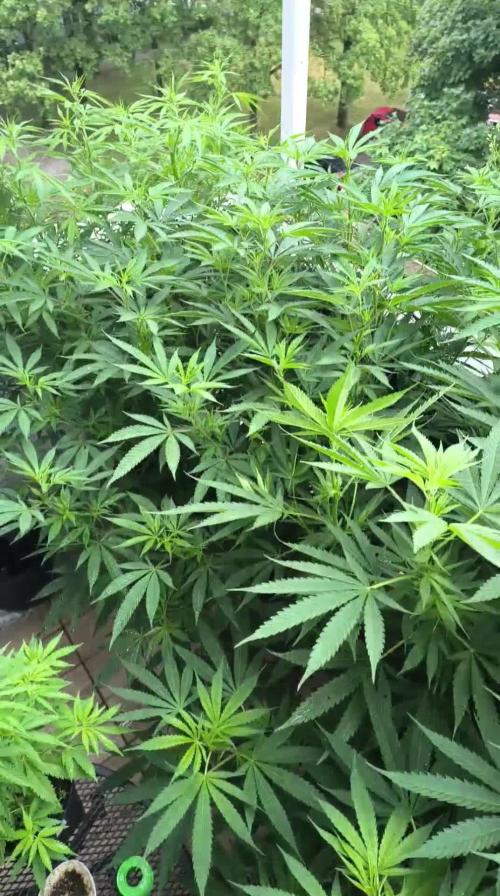
01.07.26 Ja weiter geht's sind richtige Monster geworden und so wie sie im Moment aussehen werde ich wohl nicht entblättern müssen das Licht dringt schön in die Pflanzen ein ich denke Apple Betty wird wohl am meisten Ertrag bringen zusammen mit Chocobang aber GDP braucht sich nicht verstecken wir werden sehen die Frage ist nur wann in Blüte entweder in 2 Wochen oder am 01.08.26 in 2 Wochen wäre wohl besser da ich paar Sorten diese Runde hab die bis zu 11 Wochen gehen dann wäre Anfang Oktober ende sonst ende Oktober und da ist das Wetter Mist mal schauen Daumen drücken für gutes Wetter Peace 🕊️
02.07.26 Sieht Bombe aus
03.07.26 Keine Ahnung ob es mir nur so vorkommt aber irgendwie bekommen die immer voll den Schub nach Regen sind deutlich größer geworden
04.07.26 Wetter ist schlecht keine Sonne nur Regen ich will sie bald in die Blüte schicken Daumen drücken dass das besser wird zumindest in der 2 Hälfte der Blühte .
Hab noch paar Triebe gefunden die nichts werden und entfernt. Größe ist jetzt 133cm


Likes
2
Share


@kissrubb
Follow
Actualización 05/10/2024
¡Hola, growers! Perdón por no poder compartir las semanas completas, pero poco a poco volvemos a la normalidad. Las fotos que ven corresponden al día 01/10/24 y, como pueden ver, están llenas de terpenos y tricomas por todas partes. Tanto la Fruit Gum como la Biscotti x Candy Rain son dos de las cepas más resinosas que he cultivado y, además, desprenden un olor increíblemente fuerte.
La Fruit Gum tiene esos toques dulces y nostálgicos, como a chicle de mascar, que me transportan directamente a mi infancia. En cuanto a la Biscotti x Candy Rain, su aroma es como el de una clásica galleta americana casera, ¡muy intenso! Ambas cepas me están impresionando mucho por su resinosidad y aromas únicos.
Cabe destacar que las genéticas de Uktha Genetics me han sorprendido gratamente; los resultados están siendo fantásticos. Eso sí, estas cepas comen como camiones, pero mientras se mantenga un control exhaustivo de las fertilizaciones y del medio de cultivo, no hay problema de sobrefertilización.
Pronto cortaremos una de las plantas que está bastante adelantada. Espero que disfruten tanto como yo este proceso y, como siempre, ¡buenos humos para todos! 🌱💨

Likes
6
Share


@Dr_slice
Follow
Habe nematoden benutzt nach einer Woche gab es keine Trauermücken mehr, sehr zu empfehlen.


Processing
Likes
6
Share


@Growers4life
Follow
Mites are still a problem ive come to terms with the fact im not going to fully be rid of them so im maintaing them with lady bugs. I will be flipping bery soon watch for the next update!! They are looking beutifull!! Ive decided to take clomes of in house indica as well as cheese. Ive also begun the beginning stages of germination for another @greenpointseeds purple chem seed so be tuned for that. Will also be doing an @greenpoint seeds purplecake diary so make sure to stay tuned, stay lifted and keep growing😎😎😎 make sure to go follow my instagram @grow_ers4life
Likes
6
Share

@DutchBarnacle
Follow
Week 6!
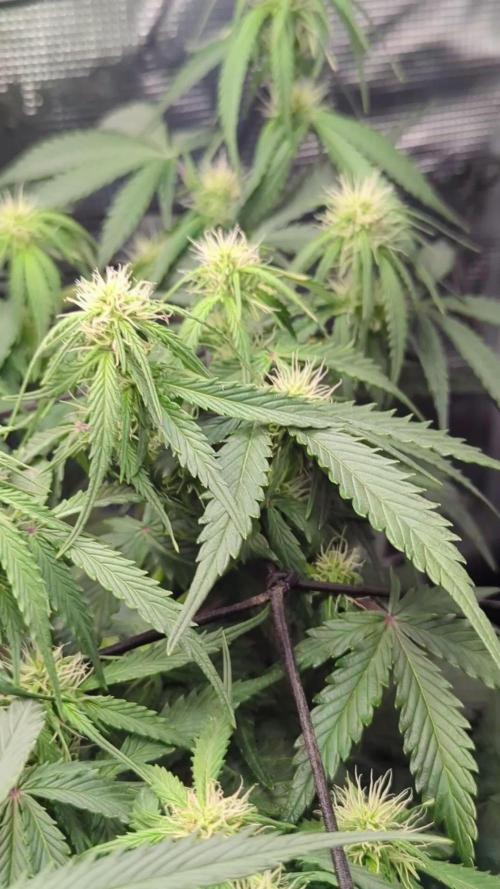
Well, even though she was restrained by the trellis net, the stretch was untamable. During two days on her own, she wrestled herself free and we had to reconsider our strategy. We opted for supercropping her and laying her down in a spiral.
..and still.. she's fiesty.
She's mostly flat now, and: wow, she takes first spot in the amount of viable bud sites. Most of these sites receive more than 500 PPFD on an 18/6 schedule while some of the escaped branches take in well over 900 PPFD.
Since she's not showing signs of any burn, we upped the nutrients once again! We also defoliated her bottom 3rd, as well as thinned out her center canopy.
Likes
148
Share


@Natrona
Follow
Frostbanger Plants 1-6
First thank you if you actually look at all these pictures that I photobomb with each week. Documenting six plants on a tester strain to provide ample information regarding the new strain characteristics takes a lot of time, work, and effort. I am so frustrated with Grow Diaries system doesn’t load pics or videos without error.
When I load pictures, I am systematic and load every picture on that plant together, each video that I load first on the pictures identifies the plant pictures that follows.
However, Grow Diaries puts the videos first, moving the picture out of order. I know which pictures of plant parts go with each plant, but with GD shuffling my pictures around good luck everybody else. This week I had so many errors uploading simple pictures that I had to go back and reload them. You may see multiple duplicate pics this time due to these system errors. Sorry about that but at least they are there.
I will not do this level of photographs and diary support again.
Week 11 June 1-7 FLOWER 6
Nutrients : 3 gal
GH Micro 7,5ml
GH Gro 0ml
GH Bloom 23ml
CalMag 7.5 ml
Elm Bloom 15ml
6/1 PH 6.62 PPM 646, temp 67 2 ltr each
6/3 PH 6.6, PPM 493, temp 68 2ltr each
6/5 PH 5,84, PPM 580, temp 68.5 2ltr
6/3 Defoliation
6/4 weekly pics & vid
As aways, thanks for visiting, for the likes and most of all growers’ love and support because I surely haven’t gotten any from @Fast_Buds on this grow.
Stay green, growers love 💚🌿my friends.
💫Natrona💫


Likes
26
Share


@darb35
Follow
Day 43 - 1.3L water with half dose according to biobizz schedule + extra calmag (ph 6.3)(84 cm)
Day 44 - 1L water with calmag (ph 6.4)(86 cm)
Day 45 - 1L water with half dose according to biobizz schedule (ph 6.3)(88 cm)
Day 46 - 1L water with calmag (ph 6.4)(88 cm)
Day 47 - 1L water with half dose according to biobizz schedule, trimmed some lower branches, hope they finished growing in height (ph 6.3)(89 cm)
Day 48 - 1L water with calmag (ph 6.5)(90 cm)
Day 49 - 1L water with half dose according to biobizz schedule (ph 6.3)(91 cm)
They don't have much more space to grow into, 30 cm from the lamp / tent's roof.
Hopefully they are at the end of their stretch, might even give one away to make space inside the tent.
Likes
9
Share


@KarlysCannabis
Follow
Week 2 - I gave up on 2 that only grew a tail, didn't make it through transplant. 3 healthy plants now! I keep hurrying them deeper in their dirt. Excited to see the progress!!


