


Likes
Comments
Share


@gr3g4l
Follow
Una vez pasados los dias huele bién, sabe bién y buen efecto.
Sabor: Matices dulces y cítricos
fácil de cultivar.

Likes
5
Share


@botanimancer
Follow
Week 0 (germination week) 4 seeds directly into
Strain chosen for Yield, this run will be about increasing yield, LST, & Defoliation techniques.
Any advice any of you may potentially have for Training auto-flowers would be greatly appreciated
Here is to a great Cycle and bountiful harvest!

Likes
56
Share


@MrGrow
Follow
10.11.2022
130 giorni dal seme al raccolto
70 giorni tondi di fioritura
1590 grammi il peso a umido delle 2 piante, sicuramente un buon risultato in un box con all'interno altre 8 piante.
La struttura della pianta si presenta con rami allungati tipicamente sativa, facilmente addestrabili sia con Scrog, sia con LST. Ho dovuto puntellare con aste reggi rami le infiorescenze che nelle ultime settimane piegavano i rami verso il basso.
il profumo che emanano questi fiori è qualcosa di straordinario, vanno dal dolce e agrumano, mandarino limone e caramello, si intercettano note floreali di lavanda ed erbe aromatiche.
Sicuramente aggiornerò il profumo e sopratutto il sapore ad asciugatura ultimata


Likes
9
Share


@Nebula
Follow
Transitioning to LED this week, going to ease into it. Topped at 21 days. Growing Lost Pearl and Critical Kush (which I plan to push into flower early.

Likes
19
Share


@HeavyHead
Follow
Started some LST this week. Keeping it pretty simple did a simple runoff test and everything came in range so going to keep nutes the same, drink rate has almost doubled since last week, fully saturating pots everything 12 hours or so. Probably going to do a deep clean of tent before get heavy into flowering and I’ll add some more pictures as I go with LST.
Likes
Comments
Share


@SkunkyDog420
Follow
Hallo zusammen 🤙.
Sie wächst sehr schön und macht keine Probleme.
Likes
26
Share


@Rock_n_Roll_Randy
Follow
FINISHED THE FIRST WEEK OF FLOWER, THEY REALLY FILLED OUT NICE FROM THE MAJOR DEFOLIATION I DID 3 WEEKS IN A ROW
.SEEDS PUT INTO THE SOIL ON JUNE 22ND
SORRY TO EVERYONE WHO TRIES TALKING TO ME....I STILL CANT TALK TO ANYONE BECAUSE I TRIED CHANGING MY EMAIL ON HERE AND IT MESSED EVERYTHING UP. I CANT LIKE ANYTHING OR COMMENT ON ANYTHING. THE WORST IS I CANT JOIN CONTESTS
STRIVE NUTRIENTS IS THE BEST IVE EVER USED. A MUST TRY AND I BUY IT MYSELF. GOT A SAMPLE LAST YEAR AND ITS SO GOOD I BOUGHT MORE. ITS A 2 PART POWDER NUTRIENT THAT DISSOLVES IN MINUTES AND YOU MIX THE SAME STRENGTH OF THE 2 PART NUTRIENTS FROM WEEK 2 UNTIL THEY ARE FINISHED (BESIDES THE FLUSH), NO MORE BULLSHIT OF SWITCHING TO BLOOM FERTILIZER. THATS MY FAVORITE THING BESIDES THE RESULTS.
CHECK EM OUT AND BELIEVE EVERYTHING YOU READ BECAUSE ITS NO BULLSHIT, AWESOME FRIENDLY AND HONEST PEOPLE
Likes
24
Share


@el_cultivito
Follow
Middle 2 plants stretched a lot week 3 of flower. They were growing slower in veg so I flipped to flower as soon as their canopy reached the net (barely LST these 2 plants with the net given their slower growth). Then week 2-3 of flower they took off.
Did some defoliating to expose bud sites further down with the intent to increase yeilds.

Likes
4
Share

@FarmerRasa
Follow
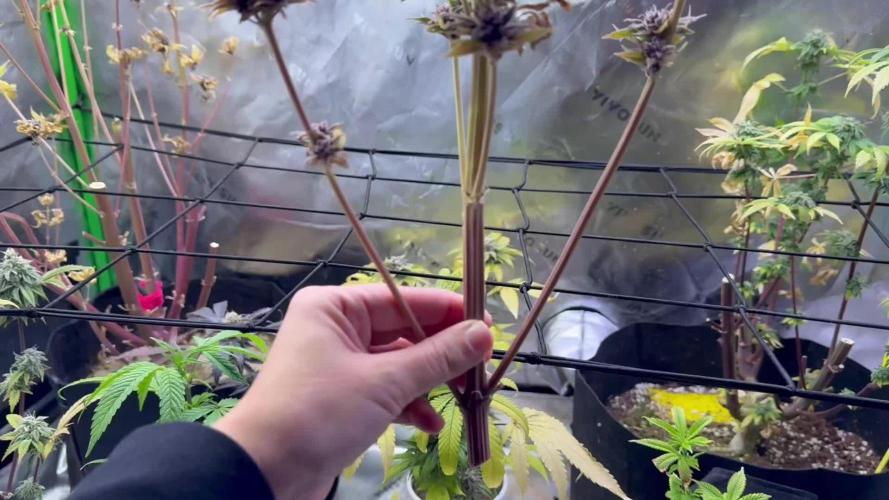
This pheno turned out to be absolutely gorgeous in color and smell. Piney and fruity. One of the bigger yields in the tent and a very unique growth structure due to the fasciation. I am really excited to dry and trim these big beautiful buds. The smell is delightful too. I may try to reveg this pheno. I wanna grow this one again! 3rd phone is getting flipped to flower now.
Will give actual dry weight once done drying out. Smoke report coming soon too.

Likes
32
Share


@koernchen02
Follow
Still going… since I got some positive feedback, I made a video. I think this helps so much imagining the size of the space!
Daughter is doing great… cozy environment!
And since day and night time schedule of my plant and my personal live aren’t in sync I do now own a green LED headlight, which - if it is working as advertised - shouldn’t stress the plants, when watering during the night.
11/15 new phone: Media Update
Likes
3
Share

@mjumbo
Follow
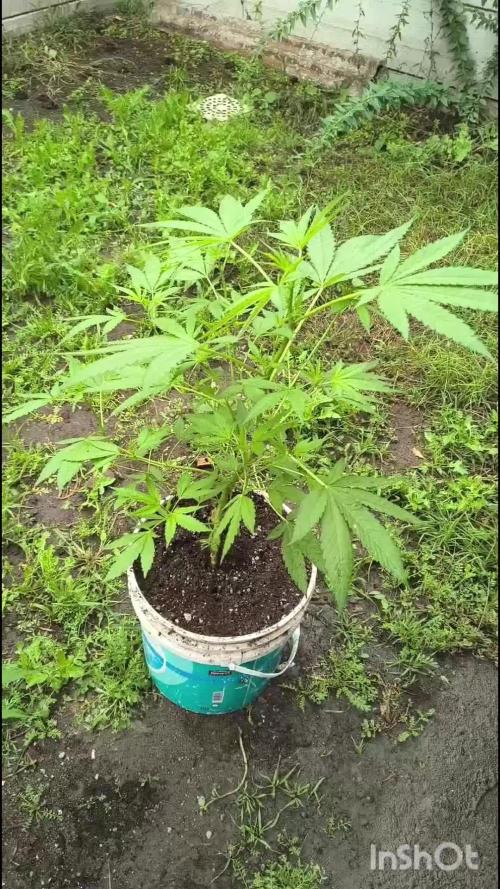
Week 11 / April 19
The plants are growing a lot these days. I think they Will love the tricomas and flora booster. Its been 1 or 2 weeks that I have stop the 12/12 cycle
Processing
Likes
28
Share


@No_Clout
Follow
27/02/19 - This one is great, I popped the seed 24hrs after the gelato and this one seems to be developing its leaves a lot faster than the rest, so far really happy with DNA and with mills nutrients, it’s a lot easier to mix and I no longer have to use ph down because once all mixed it’s at a 5.8/5.9. 👌🏻
02/03/19 - Just transplanted all into their final pot, just in time I think as it looked like the roots were starting to circle at the bottoms of the pot, sprinkled half a tea spoon of Mykos on each hole prior to the transplant & fed them 2.5 litres each. I was going to saturate the whole pot but I’ll do that next feeding.

Likes
26
Share


@Growbody
Follow
I am very pleased to be the first to describe the cultivation of the “Kitsune Kush Automatik First Edition” variety from Zamnesia Seeds.
The URL of the strain is https://www.zamnesia.com/uk/11404-zamnesia-seeds-kitsune-kush-auto.html?tab=use-points
The Kitsune Kush Auto First Edition from Zamnesia Seeds comes in a very beautiful, elaborate packaging. The seeds are in a small glass bottle with a cork stopper. The kitsune cannot be purchased yet, you can only select them in the Zamnesia Tribe program. This makes the Kitsune very exclusive.
Day 98: The Kitsune Kush Automatic First Edition from Zamnesia Seeds is entering its final week. She's become a real beauty. The flowers are thick, sticky, and firm, and they smell very sweet. I read somewhere that organically fertilized plants don't need to be flushed, so I'll try it right away. All plants in the apartment received SF nematodes today to combat fungus gnats, and the lacewing larvae to combat tripe and various aphids are hanging exclusively in the cannabis.
Day 100: Here are the promised trichome pictures. As expected, there are hardly any clear trichomes left. The day after tomorrow is harvest day.
Now I'll tell you where I get my knowledge about the optimal activities for my plants. It's from "Aussaattage from Maria Thun 2025," ISBN number 978-3-928636-80-3, now in issue 63, which is now published by Maria Thun's son Matthias. You can also order it directly from thun minus verlag dot com, it's inexpensive, and it's even available as an app (I don't have it). Unfortunately I don't know if there is an English edition right now. You can ask me, if you have questions about the calender. The Aussaattage are based on the actual planetary events that everything on Earth is exposed to. So if you want to do something good for yourself and your plants, make sure your weed receives the right care at the right time.
With the code ZAMMIGROW2024 you get 20% discount on your order of Zamnesia seeds. 👍
Thank you for being interested in my progress. Check back if you want to see how things are going. 🙏😎
++++++++++++++++++++++++++++++++++++++++++++++++++++++++++++++++
Ich freue mich sehr, der Erste zu sein, der den Anbau der Sorte „Kitsune Kush Automatik First Edition“ von Zamnesia Seeds auf Growdiaries dot com beschreibt.
Die URL der Sorte lautet https://www.zamnesia.com/uk/11404-zamnesia-seeds-kitsune-kush-auto.html?tab=use-points
Die Kitsune Kush Auto First Edition von Zamnesia Seeds kommt in einer sehr schönen, aufwendigen Verpackung. Die Samen befinden sich in einer kleinen Glasflasche mit Korkstopfen. Die Kitsune können noch nicht gekauft werden, Sie können sie nur im Zamnesia Tribe-Programm auswählen. Das macht die Kitsune sehr exklusiv.
Tag 98: Die Kitsune Kush Automatic First Edition von Zamnesia Seeds geht in die letzte Woche. Sie ist eine richtige Schönheit geworden. Die Blüten sind dick, klebrig, fest und sie riechen sehr Süß. Hab wo gelesen, dass organisch gedüngte Pflanzen nicht gespült werden müssen, wird gleich ausprobiert. Alle Pflanzen in der Wohnung haben heute wieder SF-Nematoden gegen Trauermücken erhalten, und die Florfliegenlarven gegen Tripse und diverse Läuse hängen exclusiv im Cannabis.
Tag 100: Hier sind die versprochenen Trichomebilder. Wie vermutet sind kaum noch klare Trichome zu dehen. Übermorgen ist Erntetag.
Jetzt sag ich Euch mal, woher ich mein Wissen über die jeweils optimalen Tätigkeiten bei meinen Pflanzen beziehe. Es sind die "Aussaattage von Maria Thun 2025", ISBN-Nummer 978-3-928636-80-3, mittlerweile Ausgabe 63, die jetzt von Maria Thun's Sohn Matthias herausgegeben werden. Kann man auch direkt bestellen auf thun minus verlag dot com, kostet nicht die Welt und gibt's sogar als App (hab ich nicht). Die Aussaattage richten sich nach den tatsächlich vorliegenden planetaren Ereignissen, denen alles auf der Erde ausgesetzt ist. Wenn Ihr also Euch und Euren Pflanzen etwas Gutes antun wollt, schaut, dass Euer Weed zur richtigen Zeit, die richtige Zuwendung erhält.
Mit dem Code ZAMMIGROW2024 erhälst du 20% Rabatt auf deine Bestellung von Zamnesia Samen 👍
Vielen Dank, dass du dich für meine Fortschritte interessiert hast. Schau mal wieder rein, wenn du lust hast hier zu sehen, wie es weitergeht. 🙏😎
Likes
2
Share


@Mr_nugs_lover_David
Follow
Very easy to grow, amazing aromas very mango strong tropical smell, very delicious, just like her sisters, I think it's a very stable genetic because 3 out of 4 were purple and the 4 of them have the same mango smell, very good automatic strain! 🌱 💚 💎


Likes
20
Share


@DeepRootsGrowTrees
Follow
KRITIC AUTO by KANNABIA
Week #9
Week #6 Flower
No issues this week she's doing 👍 she's really focusing her energy into her buds as the have stared becoming dense they look amazing and smell great!! Stay Growing!!!
Kannabia.com KRITIC AUTO

Likes
2
Share

@Count-Dooku
Follow
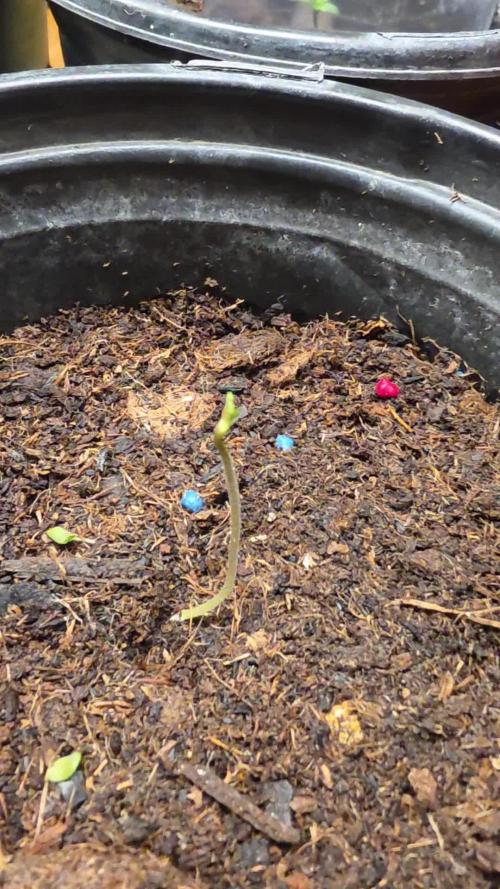
Restart
9/23 new kitten ripped up some of my seedlings, I've had such bad luck with trying to run this pack.. I'm glad they were on sale, and it's no fault of fastbuds.
Likes
126
Share


@WhiteWidow
Follow
** video in 2 parts
Sweet and sour showing interesting gold color on her leaves and some curled tips so i flushed her with canna flush and will dry her for a few days.. i dont know whats the provlem except the cold nights for the last few days. Would like to hear opinions..
Grapefruit from dinafem is amazing smell - very fruity and sweet..
Sweet and sour and spliffs strawberry share almost the same smell but sweet and sour is more hubba bubba chewing gum, intensive sweetnes...
Remo chemo still no distincitve smell, just sweet.. amazing trichome production.
Ayahuasca isnt purple and smells like a bag of nuts and petroleum. Very odd i am afraid i wont like.her...


Likes
38
Share


@TrueNorth
Follow
Made some bubble hash with bubble bag dudes hash bags! First attempt at ever doing this all these photos are in order of bag pulls! Followed all instructions mixed for 30 mins and let sit for 30 mins in between! Will let sit for 7 days on cardboard and in the herbnow dryer! The bucket used is sitting and i will sift that water aswell not letting that go to waste.! Those photos up soon with weigh ins!

Likes
31
Share


@Reaper
Follow
week 5 of the flowering period.
the smell is very strong now. if theres no fresh air (during the night) the smell is so intense that it just stinks lol. the buds however smell very nice and sweet up close.
there is a lot of thc visible already aroud the buds.
the night temperatures have dropped a lot the past week but its ok for the final weeks. this strain normally finishes at week 7 but i let her go till week 8 to get extra frost on the buds maybe 9 weeks if the temperatures dont go too low
