


Likes
Comments
Share


@422Grows
Follow
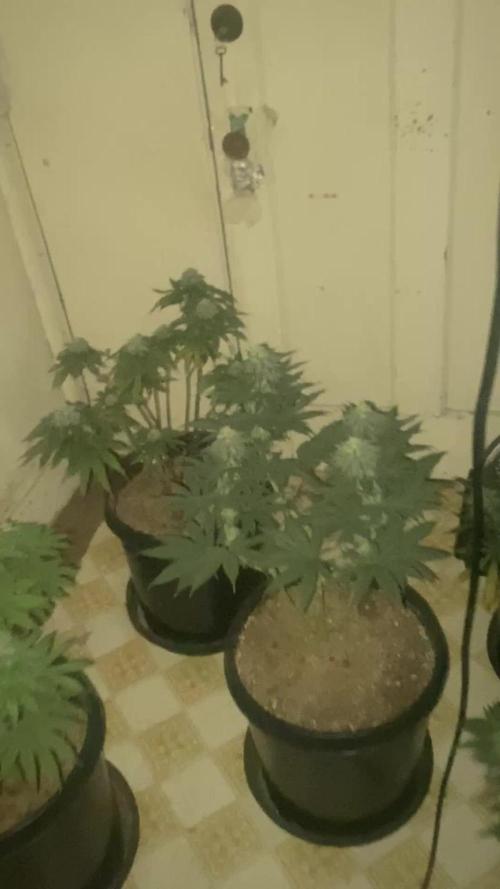
Stretching more and more out. 🕸️🍀
The first long white hairs started to appear.

Likes
35
Share


@Da420Andi
Follow
Howdy it is day 63 and in 2 days it is time to harvest. Since 2 weeks i feed clear Walter only. They get 16 hours darkness before harvest. All the plants are really🔥
My favourites are still 3G and Wedding Gelato. The smell and Look is crazy. You will see i guess Also North Thunderfuck and Hulkberry is good looking. The weight of North Thunderfuck for the dice is insane.
I wish everyone a nice Day and good time. Stay safe 💚


Likes
10
Share




Likes
6
Share


@Kountryboi90
Follow
She's growing good! Was able to start some LST on this girl. I think I'll be flipping the light schedule in the next day or 2. As I said before, I don't want to veg long as this is my first hydro grow. Can wait to see how she turns out.

Likes
23
Share


@555ABKY555
Follow
hello guys this week I applied lollipopping to the two girls who are getting really huge the skunk responded to the pruning in a masterful way while the honey cream tends to keep its tip firm the ak420s are growing a lot while the sc girls. they reported very strong sun stress freak shows grow slow and so far the only plants I get along with are frisian ducks.


Likes
10
Share


@ChitownCannaChica
Follow
Whoa!!! She took off like a rocket from the end of the first week to the end of the second week of veg! She likes the rain and crazy weather!!! ✌️🏻💚🌿💨

Likes
9
Share


@Colo420
Follow
17/12 se realiza fertiriego.
19/12 se podan los 2 primeros nudos, se hace poda apical y se transplanta de 1 a 3L con aplicacion de micorrizas


Likes
47
Share


@blazin_skywalker
Follow
Day 8 - Color improving, but not at the rate I'd expect or like, so I went ahead and gave her more food. I am feeling so hesitant in doing so, just because I've never had such a hungry baby, but I'm adding slowly over the course of the past few days to try my best to avoid nutrient burn.
Day 9 - This girl is getting greener and stronger, but she's still on the pale side. I added 2 more mls of both Veg A, B, and Coco Cal - slow and steady. I'm hoping I can find her sweet spot soon. I'm starting to get that "I don't know wtf I'm doing" feeling lol 😂
Her environment is pristine - Ph is great, temp in the tent and water is perfect, I brought up the humidity to 48%, air circulation is on point... I'm not sure what else I could offer this princess.🤷♀️
C'mon little FF3, show me what you got!
Day 10 - continued improvement in color, but not seeing what I want. I'm watching myself as to try to avoid nutrient burn, but she just seems hungry.... So far the more she eats the greener she's getting so, fingers crossed! 🤞added 5ml Coco Cal
Day 11 - I think we've found our happy place. Her color looks much better, and she's growing happily. Her little mutated leaf has grown so fat you can barely appreciate its uniqueness anymore.
Day 12 - added another half gallon of water along with 2mls of Veg A and B, as well as 4ml Coco Cal.
Day 13 - I continue to keep feeding with hesitation, only because I've. Never experienced an eater like this before. Still. No signs of nute burn, but I do have continued improvement of color and gusto. 💪
Day 14 - Closing out a happily uneventful week. She's fat and happy, and that's all I can hope for at this stage. She really enjoys story time! 💜🤣

Likes
3
Share

@MerekKutil
Follow
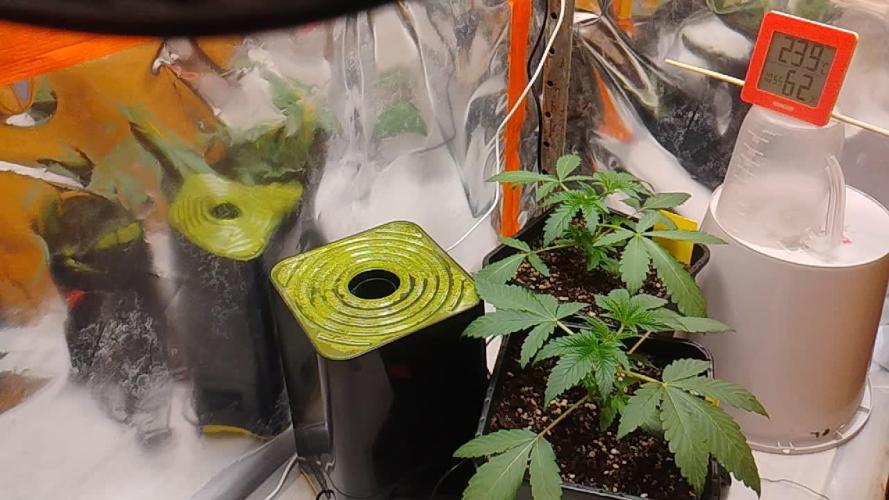
Zdravím všetkých nadržaných pestovateľov. Toto kolo som zatiaľ veľmi spokojný, sú spokojné a netrpia zatiaľ, tento 3 týždeň ich bude čakať veľká zálievka 2,2 l Hnojky ostávajú 2ml na 1 L Ph zostáva na 5.9. Čakám, aby substrát preschol a môžem Hnojiť, pri zalievaní sa snažím postupne liať a nie všetko naraz ako nadržaný 15 ročný cápek čo má péro ako Eiffelova veža. Pridal som výrobené košíky na odtok do podtacky , ešte som zistil, že ich prerobim aby sa lepšie hýbalo nimi.Vidím mierne krútenie taco listy dal som silnejšie svietiť svetlo a je možné, že som ich popálil ale pri 2,2 L zálievky som dal Vitamax 2ml na 1l čiže som dal veľa ťažke listy môžu reagovať aj na veľa Vitamaxu Plus popálenie svetlom Čakám ako to bude ďalej. Hľadal som príčiny suchý vzduch, silný ventilátor priamo fúkal málo vlhkosti, opravil som moje chyby a čakám ďalej ako sa im bude dariť. Cookies gelato iný strein iná zábava . Výhoda každého growu je nové skúsenosti ešte, že to nie je automat.Držte palce zdravý kutil.
Likes
2
Share


@CalGonJim
Follow
8/3 12:36AM MONDAY FULL RETARD MODE ACTIVATED
8/3 10AM "
They look solid for where they are.
**Quick visual read:**
- **Right plant (front)** — strongest of the three. Good color, solid node spacing, leaves are filling out nicely, no obvious stress. This one is handling the current feed best.
- **Back plant (Mendo Frost)** — clean and upright, healthy light-to-medium green. Looking very consistent.
- **Left plant (front)** — a bit behind the other two in size and leaf development. Color is still good, but it’s the lagging phenotype of the three. Common with mixed RF3 packs — you’ll often get one that starts slower.
None of them are showing tip burn, clawing, or dark “overfed” green, which means your decision to keep the EC at 0.93 while adding the light amino dose was correct. They’re not hungry yet either (no pale yellowing or slow growth signs), so jumping straight to 1.1 without aminos today is a clean next step.
At this stage (early veg, still small pots/coco), staying in the 0.9–1.2 range is ideal for RF3s and Mendo Frost. They’re still building structure and roots more than bulk. Once the stronger two start putting on more rapid growth and the internodes begin tightening a bit, you can ease toward the higher end of that range.
One small observation: the left plant’s lower leaves look a touch softer/less turgid than the others. Keep an eye on whether that improves after the next watering. If it stays lagging while the other two take off, you can always give it a slightly lighter feed or just let it catch up at its own pace — mixed packs almost always have one slower starter.
Overall they look healthy and on track. The amino experiment didn’t push them over. You’re dialed in right now.""
8/5 12:16AM. 8/3 Grandpa from the Lost Boys Mode activated
8/7 3:41am 👍 Yes, 400 mg each of L-proline and L-phenylalanine in a gallon of water is a low, one-time dose that should have only a minor effect on EC.
Rough concentration
1 US gallon ≈ 3.785 L
~400 mg of each → roughly 105–106 mg/L per amino acid (total ~210–212 mg/L).
Proline molecular weight is ~115 g/mol, so this is about 0.9 mM. Phenylalanine is higher MW (~165 g/mol), so closer to 0.6 mM. These are in the range commonly discussed for plant use (often 0.5–2 mM or a few hundred mg per gallon for proline as a stress aid).
Effect on EC
Amino acids do contribute some conductivity because they can ionize (especially depending on pH), but far less than mineral fertilizer salts at the same mass. At this low concentration the rise is usually modest—often in the 0.1–0.3 mS/cm ballpark or less, depending on your starting water, existing nutrients, and meter.
In practice, many growers add pure L-amino acids at similar or higher rates without big EC swings. The big EC jumps seen in some studies come from much higher doses of mixed commercial amino products. Measure your solution EC (and pH) before and after dissolving them so you know exactly what happened in your mix. If you’re already running a target EC for the autos, you can simply account for the small bump or dilute slightly if needed.
Will it help / any downside?
L-Proline: Plants accumulate it under stress (heat, drought, salinity, osmotic stress). Exogenous proline is often used to support osmotic adjustment and stress tolerance. A single modest dose is unlikely to hurt and may give a small buffer if the plants are dealing with any environmental stress.
L-Phenylalanine: Precursor in the phenylpropanoid pathway (leads toward flavonoids, lignin precursors, and various secondary metabolites). Some research and grower use explores it for supporting secondary metabolism; effects are more variable and usually not dramatic from one application.
Because this is a one-time introduction at a conservative rate, risk of imbalance or toxicity is low for autoflowers and your other plants. Amino acids are generally well-tolerated when kept moderate; the main caveats with higher or repeated doses are possible effects on nitrogen metabolism or nutrient uptake patterns, and the fact that they can feed microbes if the solution sits too long.
Practical notes
These are pure L-forms from the labels (BulkSupplements and Nutricost), which is what you want.
Dissolve fully, check pH/EC, and use reasonably soon.
For coco or other soilless media, just include it in a normal feed or water event. No need to change your overall regimen for a single application.
Keep an eye on the plants for a few days after (normal advice with any new input). If everything looks happy, you’re good.
You’re not wrong for trying a light one-off addition of these two. It’s a reasonable, low-risk experiment at the dose you used. Measuring the actual EC change will give you the clearest answer for your specific water and nutrient base..👍
8/7 11:54 PM Classic Stock Car Race Replays by My Journey 4K.... distracted by classic cars again
Likes
43
Share


@PEAKYPLANTERS
Follow
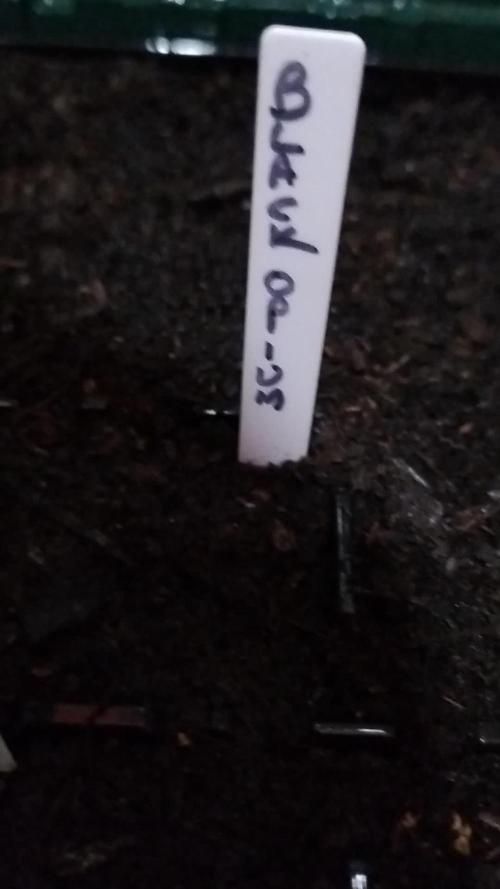
Welcome to all, Weed brothers!
Ready for a new week in Peaky Gardens!
The smell of this plant is really very strong and powerful and its buds overflow with resin!
We'll see some good ones, so you stay updated!



Likes
44
Share


@Theia
Follow
No stress in her final week. She had just water this week which stopped 3 days ago as I knew I was chopping her. D69 of bloom and I'm very happy. Flowers are super dense. Like rocks..👍🏼😋.
See you in days for a little update on how they have dried.🇬🇧👍🏼


Likes
9
Share


@pzwags420
Follow
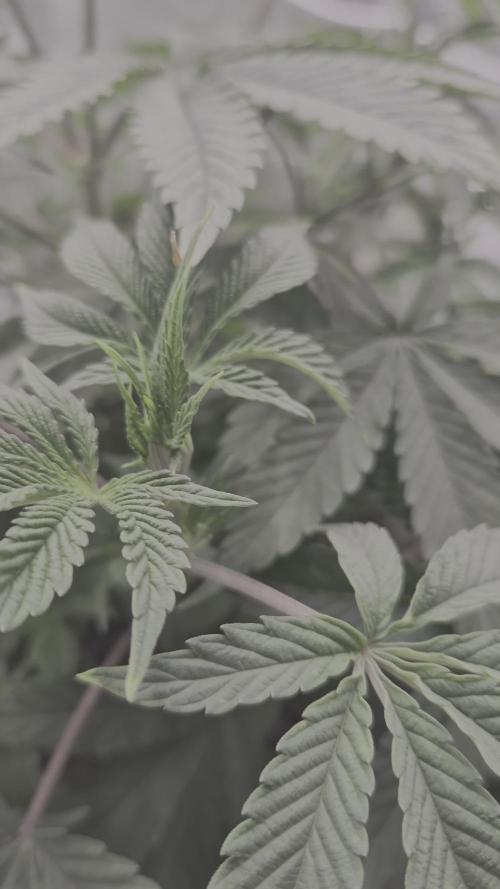
On day 1 the rez is at 6.2. The highest cola is 8.5" from the light.
On day 2 the rez is at 6.2. The highest cola is 7.75" from the light.
On day 3 the rez is at 6.1. The highest cola is 7.5" from the light.
On day 4 the rez is at 6.3. The highest cola is 7.125" from the light.
On day 5 the plants are smelling and doing well.
On day 6 I changed out the rez and PH to 6.1. The highest cola is 7" from grow light stretch is deff slowing down and should be over shortly. My avg PPFD at canopy is around 800.
On day 7 the rez ph is 6.0. The highest cola is still 7" away from light 😅 close but not too close in my small space.

Likes
18
Share


@Wondrej
Follow
🌿 Week 10 Update: Entering the "Bulking" Phase (Flower Week 5)
We’ve hit a major milestone! The plants have officially finished their "stretch," and we are moving into the most exciting part of the cycle: The Fattening.
🛠️ The "Improvise & Overcome" Moment
Sometimes in a grow, things don't go exactly as planned, and you have to know how to handle it yourself. I saw the colas getting too close to the LEDs and didn't waited for a disaster—and I took action and raised the whole tent. That’s the sign of a real grower: being able to adapt your environment to the plant's needs on the fly. By creating that extra headspace, i’ve protected the harvest from light bleaching and heat stress.
💎 What’s Happening Now:
• Resin Explosion: This is the week where the "frost" really takes over. Trichome production is ramping up, and the scent is likely getting much more intensely i needed to add some silica.
• Bud Architecture: The flowers are no longer getting taller; they are growing "out." They are filling in the gaps and becoming dense.
• The PK Hunger: The plants are craving Phosphorus (P) and Potassium (K).
⚠️ Critical Checklist for Week 5:
1. Humidity Drop: RH between 40% – 50%. Dense buds trap moisture, and we want to keep mold (Bud Rot) far away.
2. Airflow: Since i raised the tent, i needed to make sure fans are repositioned to move air across the top of the canopy and through the middle.
3. Watering: They are thirsty! Keeping the moisture consistent, as even a short drought now can stress the production of essential oils.
One love growmies 🤜🏼🤛🏻
UPDATES-
16.1.26 Short video shooting, there are still some issues, but im looking forward strong dense buds
Likes
12
Share


@GarciasGarden
Follow
Let me just say I Am so fu***** mad. I should not have kept the blueberry clone knowing that the mother hermied a little... this god damn plant RUINED MY WHOLE GROWWWW that is why I haven’t posted .. for the last couple weeks I’ve been flushing all my girls because they aren’t my little girls anymore 😕 they all got seeds and I’m not talking a little bit .. I am finding them in almost every bud and it’s so sad because these wet betty’s were beautiful and soooo smelly and yummy I lost so much money and time ... well you win some you lose some ... but let me tell you this next run is going to be beautiful 🌹🌹 I cant wait to show you guys what’s next

Likes
2
Share


@amazingautoflowers
Follow
Sorry for missing a couple Weeks. These shots were taken on May 22nd. They are both looking really good, growing well. Good stretch and they are starting to stack well.
I have just stayed with the normal feeding.