The Grow Awards 2026 🏆 








Likes
Comments
Share
@Bill_and_Ramsio
Follow
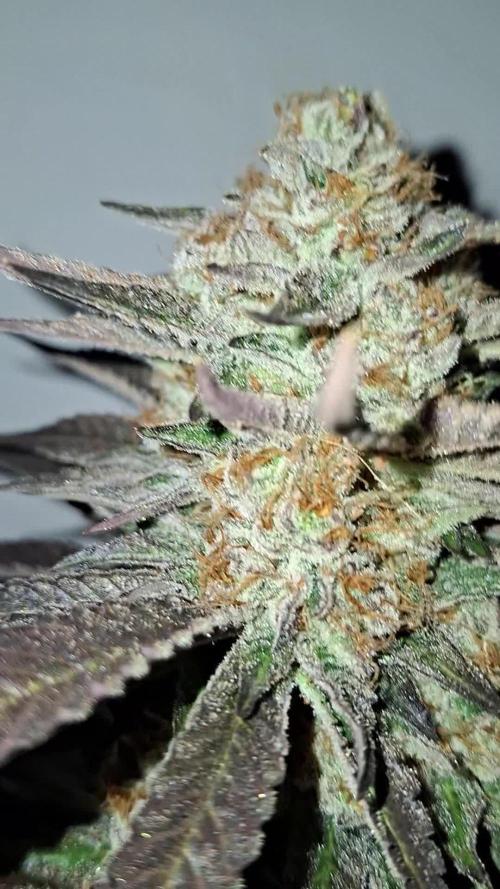
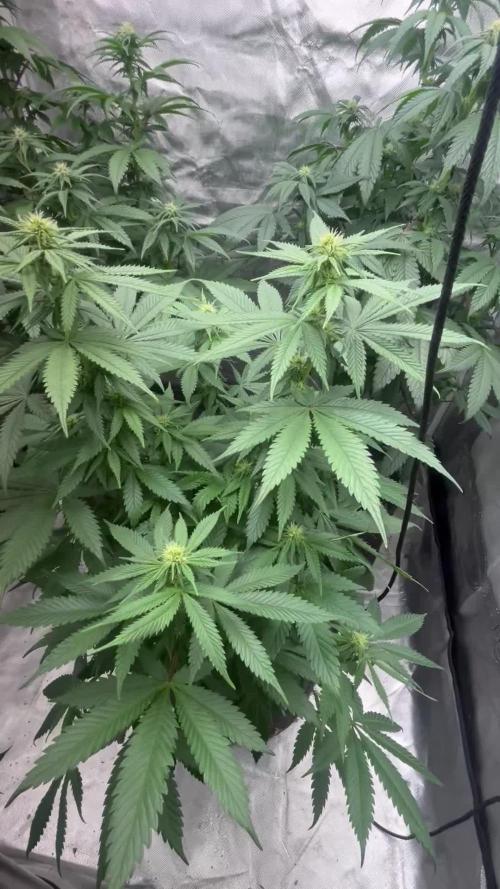
Un terpeno que me recuerda a los años 90
Aquellos maravillosos


Likes
18
Share
@Green_Blood
Follow
Excited I got to run and test this genetic.
Was very pleased with the result and would run it again.
Very frosty, Dense nugs, and great fruity/gassy aromas.
Great flavor, nice hybrid.

Likes
10
Share
@JiminyCricket
Follow
Been doing a lot of tweaking with the new gear and multiple sets of plants. Been quite a busy week and probably behind a bit on keeping track of everything. I'm currently working on trying to get better charts made to keep track of things like light schedules, detailed feedings, height change per day, etc.
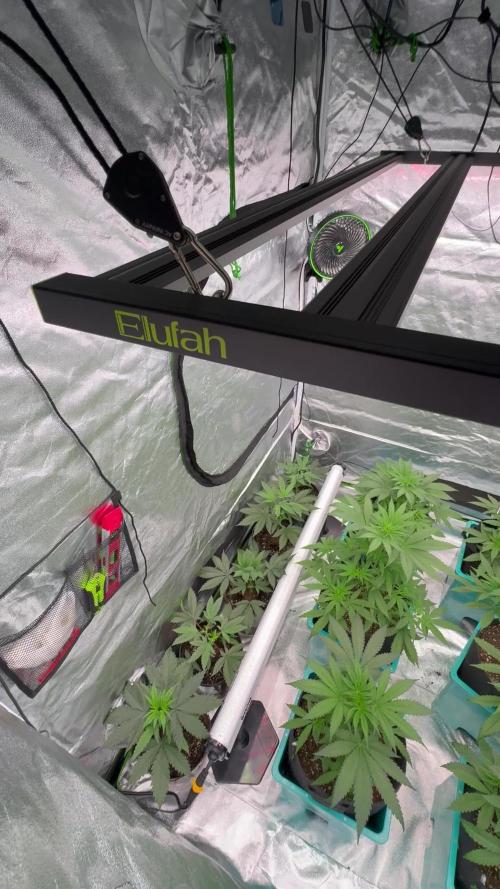
My current setup is my oldest 1st set of plants (5plants) and my 3rd set (6 seedlings), in my new 4x4 Vivosun grow tent equipped with a Spider Farmer SF-1000.
I have kept my 2nd set of plants (4plants) in my original 4x2 Vivosun equipped with 600W Vivosun LED. These plants had been extremely stressed due to not having soil or containers available with shipping constraints. They've been doing a lot better since then and I'm hoping they make a full recovery. Fingers crossed!
Running 24hr light schedule.
Both tents equipped with temp/hygro high and low ranging from about 71-81°F with an average of about 78°F.
Watering by plant pot weight, according to GH FloraTrio + CalMag Schedule.
Mild LST via tucking of leaves blocking developing sites. No more than 3 leaves removed per plant, per day to avoid stress.
______________________________________
Can't wait to start upgrading the quality of my journals and to hear you all's feedback! Happy growing and good vibes as always 🌱
______________________________________
4/29/20 - Update
Okeydoke! Feel like I've been doing too much running around everywhere. Sorry for being so hectic the past week or so if anyone has been keeping up with this 😂
For the time being, I'm currently running all three sets of my plants in my 4x4 tent. It's running all three of my fans, both lights and has the carbon filter system and humidifier hooked up to it as well. I basically have the other 4x2 just sitting as a shell for the moment. Either planning to save it for climate control when curing the first harvest or sell it to invest in another Spider Farmer SF-1000 LED or equivalent and possibly another 4x4 tent.
I have started a grow chart that's still a little sketchy but if nothing else having it here hells me keep up with it that much better.
[April 24th @ 3pm]
Plant 1- (11in.)
2- (9in.)
3- (14.75in.)
4- (13in.)
5- (10.75in.)
[April 26th @ 1:30pm]
Plant 1- (11in.)
2- (9.5in.)
3- (18in.)
4- (14in.)
5- (11.5in.)
[April 27th @ 12pm]
Plant 1- (11.5in.)
2- (10.5in.)
3- (20.5in)
4- (15.25in.)
5- (11.5in)
[April 29th @ 4am]
Plant 1- (12in.)
2- (10.5in.)
3- (23in.)
4- (16in.)
5- (11.75in.)
[April 30th @ 3:30pm]
Plant 1- (12.25in.)
2- (10.5in.)
3- (25.75in.)
4- (16.75in.)
5- (12in.)
______________________________________
The most current batch of nutrient mixes for was made this morning about (2am 4/29/20) for the 1st and second set of plants.
The first set of plant's nutrients was made to 4gal of water. The mix is a ratio of
(Cal-Mag/GHMicro/GHGro/GHBloom)
It's mixed (for the 4gal) in order; 10mL, 5mL, 10mL, 10mL.
440ppm @ 98.5°F
890EC @ 2.2°F us/cm
This new nutrient mix was applied for the first time tonight and will run about a week. I'm running a bit behind according to the GH schedule I was following due to stunting the growth I felt like over a couple issues to where I have them an extra week of veg nutrients. As I have defoliated them and they have seemed to take it pretty well, I'm hoping the increase in bloom nutrients will kick the buds into overdrive for production and the plants will start to thicken up again.
The second mix follows the same order as the first set in regards to nutrient usage. This mix is only mixed to one gallon. It as follows; 2.5mL, 2.5mL, 1.25mL, 2.5mL.
500ppm @ 98.6°F
992EC @ 0.4°F us/cm
This is mostly following the same GH nutrient schedule as the first set only about 2 weeks behind. These plants suffered from being in too small of containers for too long and I believe this stunted their growth. I've had them in suitable new containers for a couple days now and hoping this new mix of increased nutrients will bring them back to life a bit and get them back in schedule.
I'm honestly not too sure still about the ppm and EC numbers but a few bud-dies have mentioned that it plays important roles in plant health. So until I can better research good numbers and how to control it for my set up, I'm at the very least trying to keep track of the data.
I apologise about this large chunk of text! I hope you enjoy the diary anyway in spite of the fact. I'm loving the look of the buds and everything seems to be going great. Only a few months to go! 😎


Likes
82
Share
@Schnabeldino
Follow
🏆The First Grow Cup Diary🏆
_____📅 Week 7 | 📅 Day 43 - 49 | 22.02 - 27.02 Feb. ______
27.02.25 | Day 49 🌞💧
🔸 I didn't spend much time with the ladies this week, I had a lot to do and then there was the carnival. So this week just a little video of the three cuties. I try to cut off as few leaves as possible and try to do more with LST. It doesn't look very nice, but the fewer leaves you cut, the faster the plant grows....Yes, I know it itches in your fingers to cut every day, but just give your plants a rest.
🔸 Runtz 1 and 2 are doing really well and look just as I imagined. Runtz 1 looks a bit thirsty and therefore lets the leaves hang a bit.
🔸 I can't do much LST with Runtz 3 because the main branches on the stem are a bit broken and I don't want to break them off completely...shit happens hehe.
🔸 each Plant 3 l
__________________________________________________________________
🌡️🔆= 25-26°
🌡️🌜= 18-19°
💨 Hum. = 65%
🔦 PPFD = 600 umol 18/6
🔦⌚DLI = ~38
___________________________________________________________________
Equipment: Veggie
💡2 x 200 Watt Cosmos LED
💡4 x 40 Watt Spider-Farmer
⛺120 x 120 x 200 Tent (4 x 4 x 8)
🍯 18 liter pots

Likes
7
Share
@Weedcreator
Follow
a few days ago the soil probably had a pH value that was too low.. this was shown by the fact that the plants showed a Calcium-defiency.
I solved this problem by pouring hard tap water with a pH value of around 7 once.
Now everything looks very promising. although we are already through with the third week of flowering, my biggest one has grown from 41 to 48 cm
the photos were taken before watering.
Likes
6
Share
@pzwags420
Follow
On week 2 she is putting out much more preflowers. She is stretching for sure but still maintaining excellent node spacing. the average ppfd is 850.

Likes
17
Share
@CanadianFillmore
Follow
Week 2 begins, showing some deficiency signs, hopefully the addition of big bud coco will help correct it.

Likes
21
Share
@JohnnyBarrel
Follow
16th October, day 209 post germination, 11 weeks flowering: time to cut. Flushing with rain water Ok. Plant passed 72h in a totally dark room (attic), no watering.
Whole plant is turning in yellow color, with rusty flowers and heady smell.
Harvesting during the waning moon period can contribute to a better drying process.
Happy to close this session: a little bit difficult with heat waves and parasites.


Likes
19
Share
@proud_to_grow_loud
Follow
Fun to grow and took to lst and supercropping very well. I am keeping a mother of the stinkiest pheno I got. I made some other seeds that I will be growing out after Jinxproof's pheno hunt. I will be doing a few grows coming up here and its going to be gnarly! Stay tuned in for modern genetics that have been tested and stabilized. These were bag seed from regular seed of LA confidential given to a friend that won them in a giveaway from DNA Genetics.


Likes
61
Share
@Natrona
Follow
Auto Opium went outside on 7/19 because she grew to 46 inches. This past week has been rainy so I only got to feed once. I top dressed all gals with Bloom Soil. She is in 3 gal air pot and has already consumed all nutrients in the soil and has proven to be a hungry girl. Pics were taken on Friday and Saturday. Wow the amount of yellow leaves in one day. She had another growth spurt and is 53 inches tall. Her sister photo opium is 72 inches from t the pot. Her buds are forming nicely with some slight smell if I get close.

Likes
13
Share
@Canadian
Follow
This plant was the one that suffered the most with the nutrient lockout and the buds seem to be smaller than all the others I'm guessing because the excess nitrogen stunt those buds from growing any bigger. Either way the plant is so tall that is bound to give lots of buds regardless.
Thank you for reading I will continue to update have a happy grow.
Likes
1
Share
@phenosaurus
Follow
Runtz is a very hardy plant, has a great structure that folds well. The buds are medium sized and insanely hard, full of resin. Even the bottom buds are hard and nice when you let the light through. I definitely recommend this strain

Likes
26
Share
@GroloCup
Follow
We'll call this the beginning of week 1, she's up and growing. The MegaCrop should push her growth a little and really get her off on the right foot. Debating topping or LST, not sure how this one's gonna play out, but I'll see how fast she make a vertical move before the final decision is made. Thanks again to Zamnesia and Plagron for the opportunity to grow some dank buds!


Likes
40
Share
@BLAZED
Follow
Week 16 (26-1 to 31-1)
26-1
Temperature: 28.2 degrees (lights on) 19 degrees (lights off)
Humidity: 66% (highest) 48% (lowest)
Watering: Both 2000 ml. (Flush)
27-1
Temperature: 27.5 degrees (lights on) 18.4 degrees (lights off)
Humidity: 65% (highest) 48% (lowest)
Watering: None.
28-1
Temperature: 27.2 degrees (lights on) 18.2 degrees (lights off)
Humidity: 66% (highest) 48% (lowest)
Watering: None.
29-1
Temperature: 26.9 degrees (lights on) 18.4 degrees (lights off)
Humidity: 64% (highest) 47% (lowest)
Watering: Both 2000 ml. (Flush)
Today i checked the trichomes and they are all milky.
I will remove all the large fanleaves and i will let them stay in the dark for 48 hours before i will chop them down.
30-1 First day of darkness.
Temperature: 27.9 degrees (lights on) 18.8 degrees (lights off)
Humidity: 65% (highest) 48% (lowest)
31-1 Second day of darkness.
Temperature: 24.5 degrees (lights on) 19.5 degrees (lights off)
Humidity: 65% (highest) 50% (lowest)
Likes
12
Share
@GeneticsHunter420
Follow
Постараюсь быть краток , я не то ,чтобы ахуел с конечного результат или я там приятно удивлен , да нет же - я рассчитывал в разы меньше снять , просто наделялся снять ,хотя бы 0.5кг с 4ех кустов этих - по факту вышло 998.5 сухого с 4ех растений - огромных ,красивых , с невероятным терпеновым профилем соцветий ! Коллеги , обязательно обратите внимание на этот сид банк и ни капли не пожалеете когда его поднимете ! Всем больших и вкусных урожаев !!!🤙🏻

Likes
5
Share
@Mr_nugs_lover_David
Follow
As I said, she has become a single fat dense and sticky main cola, very compacted, looks like it's just 1 huge fat nugget. Very nice aroma but not stinky at all. I'm enjoying her, she's not very big but she's literally a single big fat nugget.
Likes
23
Share
@Mr_McNasty408
Follow
Day 43 (1/18/21)
Nutes:
Veg A: 4.6 g/gal
Veg B: 3.1 g/gal
PPM: 1350
Water temp: 63°F
pH: 5.8
Day 44 (1/19/21)
I’m sure my plants have salt buildup, that’s what I’m assuming from leaf symptoms. Starting to flush at lower strength.
Nutes:
Veg A: 3.07 g/gal
Veg B: 2.07 g/gal
PPM: 775
Water temp: 64°F
pH: 5.8
Day 45 (1/20/21)
Checked ppm of runoff and am very embarrassed it took me so long to diagnose🤦♂️ Runoff was 2000ppm
Nutes:
Veg A: 3.07 g/gal
Veg B: 2.07 g/gal
PPM: 775
Water temp: 64°F
pH: 5.8
Day 46 (1/21/21)
Nutes:
Veg A: 3.07 g/gal
Veg B: 2.07 g/gal
PPM: 775
Water temp: 64°F
pH: 5.8
Day 47 (1/22/21)
Nutes:
Veg A: 3.07 g/gal
Veg B: 2.07 g/gal
PPM: 775
Water temp: 64°F
pH: 5.8
Day 48 (1/23/21)
Plants seem to be making a comeback
Nutes:
Veg A: 3.07 g/gal
Veg B: 2.07 g/gal
PPM: 775
Water temp: 64°F
pH: 5.8
Day 49 (1/24/21)
Plants starting to look very good and healthy again 💪
Nutes:
Veg A: 3.07 g/gal
Veg B: 2.07 g/gal
PPM: 775
Water temp: 64°F
pH: 5.8
Likes
1
Share
@Budnotwar
Follow
Should I defoliate more . Just did a major strip But it doesn’t seem to be getting enough light down into the canopy

