


Likes
Comments
Share


@CanabisLoverHobbyGrower
Follow
Today is day 57 I flipped them to flower on day 55, responded so well to all the things they've had done, topping, tie downs, defoliations, they look really good especially the bigger of the 2,.. roll on next week

Likes
16
Share


@AestheticGenetics
Follow
4/15/25 This plant is blowing my freaking mind. Long stacked colas. Even the lower buds are plumping up like golf balls. This is an exceptional plant so far.
Shes starting to show the classic "sherbert" purple that ive noticed shows up with anything that has sunset sherbert in the lineage. Some of the leaves are starting to fade slightly and the purple is coming in.
The rs11 that this seed came from, produced the most from a single plant out of all plants ive grown and trained and kept that small. She yielded 3.5 ounces or a 1/4lb of top nugs from a plant that was only about 18 inches tall and vegged for 6 weeks before flip.
Once i start to clear out all of the fan leaves later on in flower, its just going to be buds running the length of the stems
4/18/25
I really believe this may be a keeper. She is absolutely stunning. Just everything is perfect. She has super long stacking of buds up and down the stems.
Im actually super stoked to see how she finishes up.
One of the craziest parts is that shes in a plastic 2 or 3 gallon pot and this plant is going to yield insane.

Likes
9
Share



Likes
77
Share


@cheetah844
Follow
2/3/22:
Watered with only aquarium water, no nutes.
They are all getting very thirsty! Sherbert was dry and droopy yesterday so I watered her yesterday. I watered all other plants today, they seemed mildly dry/very slightly droopy - so I gave them between a ½-¾ of a gallon each.
I'll have to keep a close eye on Sherbet she's very thirsty & she gets hangry easily! (hangry = droopy:)

Likes
2
Share

@Guerrilla_grower777
Follow
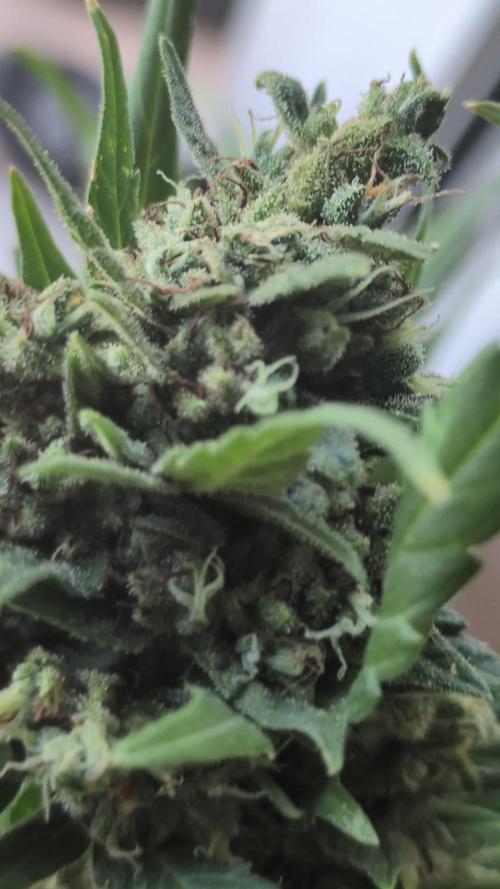
Strange hot week in the very end of Summer
I had to write something here to post this😄😄

Likes
37
Share


@RFarm21
Follow
Foram regadas hoje ( 08/07/2021).
Os nutrientes foram misturados num garrafao com 5L de água que usei para regar 3 plantas. Usei pouca quantidade porque foi a primeira vez que estão a levar com nutrientes, na próxima rega irei aumentar para um E.C de 0,5.
A royal gorilla 2 como ainda está pouco desenvolvida, apenas reguei com 1L com pH 6.3
10/07/2021 - LST
Ajudem-me com dicas para fazer o LST da melhor maneira, é a minha primeira vez.
Obrigado e boa semana a todos!

Processing
Likes
19
Share


@CBD_Sweden
Follow
2018-04-10 Day 1
I gave the girls water and nutrients yesterday so nothing to drink today.
Turned them 90 degrees today, to give my girls as much lightexposure as possible.
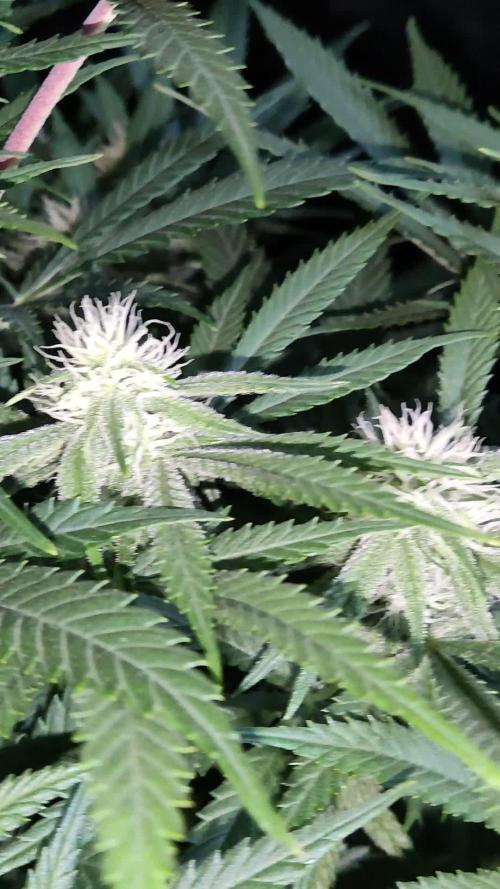
The flowers get bigger and bigger for each day,
Overall the ladies look really good, the colors are very nice, they look healthy.
Somehow the photos of nr1 got lost, very strange, but great pics of nr2. Also added videos of them both.
Power Plant XL nr 1 is 67 cm
Power Plant XL nr 2 is 68 cm
------------------------------------------------------------------------------------------------------------------------------------
Strain information
Genetics for the famous Power Plant were captured by a group of Dutch growers on a trip to South Africa, back in the 90’s. They managed to breed a strain that was soon a popular choice in coffee shops of the Netherlands, most likely due to the soaring and intense Sativa high. Zambeza Seeds thought that the productiveness of Power Plant should never be forgotten and created an updated version, to bring the legend back to live.
Power Plant XL yields up to 600-750g/m² in a flowering period of approximately 55 days! The efficiency and productiveness of Power Plant XL fears no comparison with many recently bred cannabis strains. Indoor heights of 80-110cm make this sativa-dominant variety relatively easy to grow, but outdoor growers need to be aware of the power that is being released under the sun. Outdoor plants can easily reach heights of 150-200cm, and yields of 500-600g per plant.
The taste of Power Plant XL can be described as a delightful blend of sweet and sour flavours, with subtle hints of pine tree in the background. Smokers who appreciate a very strong and uplifting Sativa high will be more than satisfied with the effects. One will experience feelings of euphoria that are definitely intense and uplifting, typical for a South African Sativa like this. The up-high can also evolve into being more relaxed, especially when larger quantities are being consumed.
Some people suspect Power Plant to be grown in large commercial operations around the world. It doesn’t really matter if these assumptions are the truth or myths, but Zambeza’s breeders are very proud to bring this highly productive legend back to live. The updated version of it, Power Plant XL, is the most efficient Dutch "bud factory" money can buy.
-------------------------------------------------------------------------------------------



Processing
Likes
10
Share


@Budofpray
Follow
unfortunatly after having had very good weather things have changed.
it's cold, it's raining and things don't seem to get better for the next 2 weeks. this will slow the growth of my two babies.
i decided to protect her for the night cause temperatures are annouced under 10° at night 😓 anyway they look healthy... it is the most important

Likes
19
Share

@DogDoctorOfficial
Follow
White Widow – Week 3 Flower | 12-12 From Seed 🌸❄️
Cycle: 12/12 (sometimes 11/13) from seed
Stage: Flowering – Week 3
Feeding: Aptus + Plagron + All-in-One Liquid
⸻
Full Flower Mode
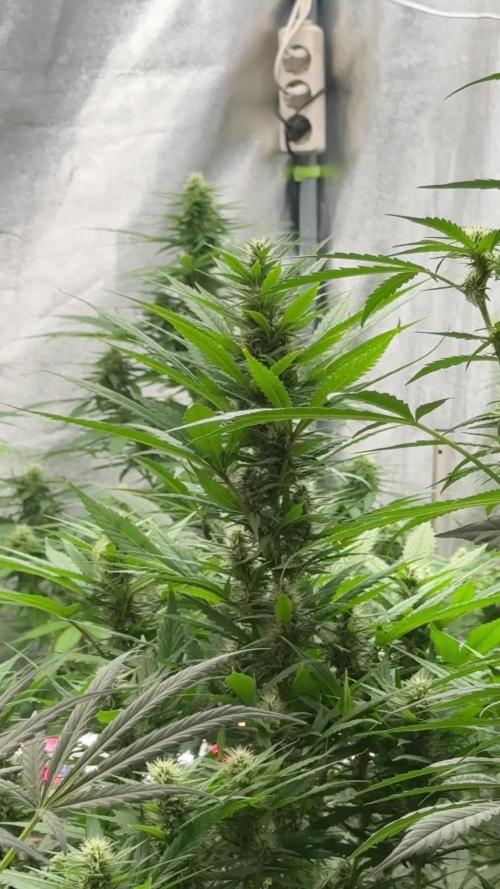
Our White Widow has fully embraced her flowering stage. This week marks her third week in flower, and she’s already showing beautiful bud formation from top to bottom. Despite her compact size, she’s filling in evenly and with excellent structure.
What really stands out is the early frost. Resin glands are already visible, sparkling under the light. For such a modest-sized plant, her energy is clearly going into dense flowers and resin production, not stretch. She’s showing her true White Widow heritage, compact, resin-heavy, and vigorous.
⸻
Nutritional Strategy
This week, her feeding remains consistent with the established recipe:
• Aptus Regulator – 0.15 ml/L
• Aptus CalMag Boost – 0.25 ml/L
• Plagron Power Buds, Sugar Royal, Green Sensation – 1 ml/L each
But we’ve added something new:
• All-in-One Liquid 🌱
This addition is meant to give her a balanced nutrient push during this critical phase. By Week 3, plants are transitioning from bud set into flower bulking, and the All-in-One helps provide extra micronutrients and macros that might not be fully covered by the base mix. The goal is to give her everything she needs for flower development, without overloading her.
We’ll be watching closely to see how she reacts, but so far, she’s thriving.
⸻
What’s Happening Now
At this stage, we see:
• Bud stacking beginning across multiple sites.
• Resin production kicking in early, with noticeable frost.
• Minimal stretch, as she stays compact and focuses on density.
• Healthy leaf expression, still a deep, vibrant green.
This week is often called the “foundation of flower.” The plant sets the stage now for how heavy, dense, and resinous the later weeks will be. If nutrition and environment stay on track, we can expect these bud sites to start bulking steadily over the next 2–3 weeks.
⸻
What to Expect (and What Not To)
✅ Expect:
• Rapid increase in bud density.
• More trichome development, the frost we see now is just the beginning.
• Aroma starting to intensify as terpenes begin expressing.
❌ Don’t expect:
• Major vertical growth, her stretch is over, and she’ll remain compact.
• Early harvest, White Widow typically flowers for at least 8–10 weeks.
⸻
Educational Note – Why Early Frost Matters
Trichome production this early is a good indicator of plant health and genetic quality. Resin glands serve as protection for the plant against heat, light, and pests, so seeing frost at Week 3 tells us she’s thriving under the current conditions and that her genetics are naturally resin-heavy. For growers, this means a higher chance of strong aroma, flavor, and potency later on.
⸻
A Quick Recap of the Journey
• Germination: Not an easy start — mistakes were made, but this White Widow was the survivor.
• Veg: Compact growth under 12/12 from seed, slower to show flowers, but structurally beautiful.
• Flowering: Took her time to enter full flower mode, but now she’s moving fast and strong.
She’s the perfect example of how patience, careful nutrition, and trust in the genetics pays off.
⸻
Shoutouts & Gratitude 🙏
🌱 Zamnesia – for the legendary White Widow genetics
💧 Aptus Holland – for reliable, precision nutrition
🌸 Plagron – for flower enhancers that push her into full bloom
💡 ThinkGrow & Future of Grow – for the light power and spectrum balance
🧠 TrolMaster – for stable and adaptive control of the grow environment
And most of all — thank you to everyone following along this diary. Your time, support, and interest in this journey mean everything. This isn’t just a grow log, it’s a story we’re writing together.
⸻
📸 This week’s gallery includes:
• Close-ups of bud development and trichomes ❄️
• Studio shots highlighting her compact beauty
• Room updates with environmental stability
Next Week Goals & Forecast 🔮
As we move into Week 4 of flower, here’s what we’ll be watching for:
• Bud Bulking – Flowers should begin to thicken, with calyxes swelling and pistils multiplying.
• Resin Expansion – Expect a noticeable increase in trichome coverage, making her sparkle even more under the lights.
• Aroma Kickoff – White Widow is famous for her pungent, earthy-spicy scent. We should start catching stronger whiffs this week.
• Nutritional Balance Check – With All-in-One Liquid added, we’ll be observing closely for any signs of overfeeding or lockout, though so far she’s responding beautifully.
• Environmental Consistency – The new AC unit is stabilizing temps and humidity — a perfect setup for flower development. Holding VPD steady will be key.
❌ What we don’t expect yet:
• No real ripening signs (amber trichomes or fading leaves) — it’s still too early.
• No heavy weight yet — the bulking comes between Weeks 4–7.
This next stage is often described as the “early swell” phase. It’s where flowers go from just “forming” into recognizable buds with weight, density, and stickiness.
📲 Don’t forget to Subscribe and follow me on Instagram and YouTube @DogDoctorOfficial for exclusive content, real-time updates, and behind-the-scenes magic. We’ve got so much more coming, including transplanting and all the amazing techniques that go along with it. You won’t want to miss it.
• GrowDiaries Journal: https://growdiaries.com/grower/dogdoctorofficial
• Instagram: https://www.instagram.com/dogdoctorofficial/
• YouTube: https://www.youtube.com/@dogdoctorofficial
⸻
Explore the Gear that Powers My Grow
If you’re curious about the tech I’m using, check out these links:
• Genetics, gear, nutrients, and more – Zamnesia: https://www.zamnesia.com/
• Environmental control & automation – TrolMaster: https://www.trolmaster.eu/
• Advanced LED lighting – Future of Grow: https://www.futureofgrow.com/
• Root and growth nutrition – Aptus Holland: https://aptus-holland.com/
• Nutrient systems & boosters – Plagron: https://plagron.com/en/
• Soil & substrate excellence – PRO-MIX BX: https://www.pthorticulture.com/en-us/products/pro-mix-bx-mycorrhizae
• Curing and storage – Grove Bags: https://grovebags.com/
⸻
We’ve got much more coming as we move through the grow cycles. Trust me, you won’t want to miss the next steps, let’s push the boundaries of indoor horticulture together!
As always, this is shared for educational purposes, aiming to spread understanding and appreciation for this plant. Let’s celebrate it responsibly and continue to learn and grow together.
Friendly reminder all you see here is pure research and for educational purposes only,
With true love comes happiness. Always believe in yourself, and always do things expecting nothing and with an open heart. Be a giver, and the universe will give back in ways you could never imagine.
💚 Growers love to all
Likes
30
Share


@SAC87
Follow
Hi Growers.
Day 21 Flower
So this week I decided to defoliate as they are super leafy. I took that pile from each plant. I also took off any branches that I thought would be under the trellis. It’s being pushed up so it’s hard to tell. They are pretty happy regardless. The leaves I left are already quite big after 3 days.
I did 2 hydrogen peroxide flushes around the defoliation to combat any possible pests and nutes weren’t gonna help in a slightly stressed state and they won’t hate some extra oxygen to the roots. I let them dry for 3 days and fed today.
The Vipar Spectra XS2000 is growing these plants nicely, heating the tent a prefect amount. It’s so powerful in my 2x4, I’d love to see it in a 3x3. They’re happy with it up at 22-24” until I know they’ve stopped stretching.
Pretty easy week. Just trying to keep them happy and growing big.
Happy Growing 🌱


Likes
96
Share


@DevilsBud
Follow
10/10/21 new week for CBD spliff berry
Growing almost a month now did some topping last week and today started to LST the main everything going great so far plants loving the new FC-4800 so as i absolutely no extra heat is coming of them 👌🏻
I maybe will top some more but as far it Goes for LST this will be the only thing i will do to the plants let the rest grow freely
14/10/21
Growing very nicely giving them the watering and nutrients when they need it . I am trying to understand plants better by looking at feeling soil etc instead of a regiment. And learning we do every day because bin growing in 11L pots but now in 8L pots so that means that there gone be smaller then my first grow . But hey got now 12 plants going on and not 4 so that will help lol
15/10/21
Did some small defoliation and some of them get light penetrating better
visit www.marshydro.eu
for your best gear and use the PROMO CODE: DEVILSBUD
Fully marshydro supported Setup:
Marshydro GT120x120x200
Marshydro FC-4800 LED lamp
Mars Hydro tent handy info
●【Lock All Light Insid】MARS HYDRO Grow Tent Interior is made of diamond mylar. Non-toxic to the environment, no harm to plants. High-quality 1680D canvas being double stitched, (ALL OTHERS BRAND grow tent is 601D canvas) which is tear-proof for perfect light locking, No light leaks or rips at all.
●【Durability Grow Tent】Stable Metal corner adapters and poles are the trustful supporters of the tent. No rusting nor paint-falling. Quick easy tool-free installation. Carries strong heavy-duty SBS zippers, double layer lining to create a light-proof seal.
●【Easy Observation of your Plants】Special peeks window made by double layers of cloths. Observe the growing conditions of your plants without opening the tent and avoid disturbing plants. The peek window also serves to dissipate heat and ventilate air.
●【Removable Tray Keep Clean】The package includes a removable waterproof floor tray to hold soil and fallen leaves. The tray can be taken out easily to wash. Removable and water-proof makes cleaning easy.
●【Good Ventilation&Fast Assembly】 Circular double-sleeved vent holes with adjustable nylon strap for air circulation by exhaust fan, ducting, carbon filter, or reflector. Better allows proper light, heat, and airflow. Quick tool-free installation. Reinforced by a sturdy metal frame to ensure security and stability, supports up to 140lb. Perfectly safeguard your plants to thrive even in winter.

Processing
Likes
43
Share


@GrowerGaz
Follow
Today is day 5 of flower.
I have been tying them down this week and defoliating every second day. Yesterday I turned off the autopots so i can water then with bio enhancer , once that dry out. Apart from that plain sailing.

Likes
410
Share


@Rock_n_Roll_Randy
Follow
https://youtube.com/channel/UChU5ZWwNi-DvnO3oWVU3ceA
MY SAYING NOW IS: THE ONLY WAY TO GROW IS WITH THE HYDRO🤘 AND THEY WILL REACH FOR THE STARS WITH MARS🤘🤣.
So it's been almost a week under the new MARS HYDRO FC4800 and the girls are loving it.. leaves were straight up like they were at a rock concert just blowing in the wind waving their arms like they are in the moshpit🤣🤣 looked so sweet👍. after a day they have stretched so much I had to raise the light already to keep it at 14 inches above the canopy. Plants grow so uniform under these lights, canopy is always nice and even👍. it has a whiter light than the mars tsw2000. Being side by side in my 8x8 tent, I can really see the difference in the color of light. The FC4800 is more of a white light like natural light. I think it might be the blue uv Diodes they added to the fc series lights. I'm amazed at how good this light is already. Barely any heat comes off it. I can rest my hand on it when the dimmer is at 100% and it's just warm. I have it daisy chained to my TSW2000 and it works awesome👍 and I dont have to reach for the other dimmer to do both. One dimmer controls both lights. When I add more lights I will daisy chain them too and control 4 lights from 1 dimmer👍. I still love my tsw2000. It's been going almost non stop since I got it and no issues at all. I take a picture of the Diodes to see if any have burnt out or anything, everything is fine. same thing with the heat it gives off is just like the FC4800. I can rest my hand on it without burning me👍. Having both lights on 100% because I in flower now, only raises my temperature about 3°celcius. Make sure you got some calmag and if you use reverse osmosis water (bottled water) or filtered water you will want extra calmag because it's filtered out of it👍. These lights are perfect for every stage of growth for germination to flower. Just use the dimmers to reduce the intensity of the lights for whatever stage you are in. Plus they are easy to raise and lower them with the ratchet straps. MARS HYDRO'S recommended height for different stages is pretty accurate but different strains like different Temps and light sensitivity so that's something to look into, a more Mediterranean strain can take more heat and intense lighting. and you can just follow their recommendations for the height for each stage. I slowly turn it up in the later veg cycle until I'm at 75% about a week before I switch to 12/12 and after about 4 or 5 days into flower I'm at 100% with no heat or light stress👍. Mars hydro is awesome for their pricing for what you get👍. They should cost alot more than other brands but shhhhh don't tell them🤣🤣🤣🤣. Just kidding. they want to stay competitive with every brand but there stuff is always cheaper than SF and vipar etc. They know once you use mars hydro products you won't switch to another brand. Why pay more money for something that isn't as good. I've seen lights cheaper than mars but they are cheaper for a reason. They are built cheaper. My TSW2000 is fairly heavy too. But when it comes to getting lights you want some weight to it so you know it's built strong and sturdy and will last a long time.. I called customer service a few times and they will help you out with any questions you may have about the products and they are very well educated in their products👍 very helpful and very friendly. They are awesome 🤜🤛.
I can't say enough about this grow tent too. The thing is a beast. I've owned a gorilla grow tent before and MARS HYDRO TENTS are better. Don't waste the money on a gorilla tent, get a mars and save a couple hundred bucks for your fertilizers and soils👍🤜🤛I could use the canvas tent to make a trampoline and i doubt it would break its that thick👍 I've had some cheaper tents made of 600d canvas and they aren't that bad. But when you get a tent made from 1680D canvas material it's insane how strong and heavy it is. Before I put the tent together when I lifted the canvas to start wrapping the frame I said to myself.. LORD TUNDERIN JESUS this has some nice weight to it. It was the easiest tent to put together that I've ever had. I went inside with the lights off and got someone to turn it on after a minute or two to look for light leaks and there was none👍. It even blocks out some noise, so if your fans or filters are loud, once it is zipped up it gets quieter. this tent is awesome with So many ports and vents for whatever you need to hook up to it. It has frame bars down the middle and one vertical pole in the middle to keep it sturdy but the poles are made nice and so thick that they probably didn't even need a vertical bar in the middle. It has 2 separate 4x8 floor trays that divide it into 2 4x8 tents. All you need is a mylar divider to easily divide it in half. I love the stickers it comes with. It's nothing big to some people but I know there is lots of people that like them because you see them everywhere in people's tents and in pictures. I love them they are super cool stickers👍. It really locks in the light and temperature and humidity good. Lots of room for all the equipment I have to go in it and will get to put in it. Be good to bring camping too🤣🤣🤣🤜🤛.
Thanks for stopping by and taking the time to read this and please leave a comment 🙏🤜🤛 if you have any questions about any of the products I use please feel free to ask me and I can help you out👍🤜🤛 I also know about all their other products too, so any questions about stuff I'm not using I can still help you guys out🤘 and ask about pricing if you're interested in anything and I'll see what kind of deals I can hook you up with. But don't just buy stuff.. let me know so I can talk to my friends at mars hydro and probably get you a better deal👍🤜🤛
https://www.mars-hydro.com
Promo code: Rocknroll
@marshydropenny
Here's some more information about these products I'm using:
The goal of MarsHydro is simply to produce the best value grow tents in the growing field and they didn't disappoint me at all. I'm beyond satisfied with everything. And with the most up to date hydroponic equipment at the lowest prices possible.
Their grow tents have combined all their engineers and customers' advice to produce these unbelievable tents.. they really listen to us and change things to our liking so if you own anything from mars just contact them and let them know.. they take our advice and considerations VERY SERIOUSLY so don't hesitate to let them know 💪🤜🤛
The MARS HYDRO 8x8 Grow Tent interior is made of a unique diamond design mylar which is highly reflective. (Other companies mylar and reflective rate is as low as 50%, and it won't provide efficient light. They use thick 1680D oxford canvas, and being double stitched, it is tear proof and perfect for locking in the light. Their grow tent keeps 100% of the light inside the tent and helps your plants absorb more light. EXTRA-THICK material means No light leaks or rips at all.👍
Strong Stable metal corner adapters and poles are the trustful supporters of the tent. It's very sturdy, neither rusting or paint flaking off. quick and easy tool-free setup. They use heavy-duty metal zippers, with double layer black lining, by far the best on the market which creates a light-proof seal.
The Easy observation windows are made by double layers of cloth. Observe the growing conditions of your plants without opening the tent and avoid disturbing your plants. The observation windows also serves to dissipate heat and ventilate the air.
The tent includes 2 removable waterproof floor trays to hold soil and water. The removable tray can be taken out to wash easily.
They guarantee the grow tents are easy to install even if you've never done something like this before. Clear Instructions and no tools needed! They also offer 30-day unconditional refunds for quality problems. Just contact their friendly 24 hours customer service 👍
https://www.mars-hydro.com/
Promo code: rocknroll
@marshydropenny
GET THE MAX FROM MARS👍: Welcome one of the newest members of the Mars Hydro family🤜🤛🤘. The Mars Hydro FC 4800 480W LED Grow Light can accommodate up to a 4' x 4' area for flowering. It has OVER 2000 LED chips consisting of the best selling Samsung LM301B diodes which has a Luminous Efficacy of: 220 lm/W
0.2 W, 3 V mid power,
Osram 660nm Diodes, Infrared light and UV LIGHT👍. It boasts the incredible efficiency of 2.8 µmol/J, maximum 2.5gram yield per watt with 30% higher Average PPFD. This High-intensity spectrum is beneficial for plants at all stages - from veg to bloom, and creates Big dense Buds👍. achieve 50% higher yields & quality compared with the old lights! Only consumes 480W for 4x4ft personal grows, and 3x3ft for commerical grow. It comes with a dimmer and daisy chain function with a maximum of up to 15 lights, the master light controls the rest👍. Wide 6-bar design offers even & wide canopy coverage and can maximizes your grow space. slim 180° FOLDABLE DESIGN... YES I SAID FOLDABLE🤘🤣 , making it compact and easy to install, it's IP65 WATERPROOF and will give you no worries while growing in a humid environment and makes it a flexible high performance commercial grow light for enormous SUPER FROSTY yields.😛😛😛. MARS GETS EM FROSTY BOYS👍
AWESOME HEAT DISSIPATION: The Low energy consumption FC4800 growing light has 6 passive-cooled bars and an aluminum heat-sink a removable driver you can upgrade later or have it outside your tent. with zero noise you can save up to 50% in your electricity bill compared to HID's or HPS lights!
It also has a removable driver so you can upgrade it in the future or have it outside your grow space for better heat control in your growroom👍
UPGRADED FULL SPECTRUM: Yield Max Spectrum with enhanced red (Top-Bin Samsung 3000k-5000knm, Osram 660nm Deep Red), speed up blooming & fruiting, perfectly suited for full-cycle growing. The FC4800 LED grow lamp was born for Big Buds, perfect for commercial, grow tent, grow room, hydroponics, and all soil grows.👍
THE BEST SAMSUNG DIODES: THE FC4800 has Top Bin genuine Samsung Osram Diodes, combined with remarkable 2.8 µmol/J Efficacy, 30% higher Average PPFD, 50% less energy consumption, to maximize your yields. They give you a TRUSTED 3 years warranty 100% Satisfactory guaranteed!!!
https://www.mars-hydro.com PROMO CODE: rocknroll
@marshydropenny
Happy growing to all my friends 🤜🤛
Likes
14
Share


@GoldenWeedGrower
Follow
D64/F20 - 03/06/23 - The situation is under control now. I'm going to change water asap (maybe tonight)
D65/F21 - 04/06/23 - 👉 Water changed, some hours without nutes...
D66/F22 - 05/06/23 - EC 0.8 ph 7.0
D67/F23 - 06/06/23 - EC 0.8 ph 7.3 - added pH-
D68/F24 - 07/06/23 - Added water and nutes EC 0.9 and pH 6.3
D69/F25 - 08/06/23 - EC 0.9 and pH 6.3
D70/F26 - 09/06/23 - Added water and Calmag, Connoisseur Bloom A-B. Added pH-. EC 1.0 and pH 5.5


Likes
5
Share


@Kickdrum
Follow
Came home from vacation to gorgeous ladies and their light fragrances. More to follow soon.
Likes
17
Share


@OrganicBuds030
Follow
Die beiden Melonade Runtz Pflanzen stehen einmal vorne in der Mitte und einmal hinten in der Mitte. Also quasi hintereinander. Die hintere Melonade Runtz ist Pheno#2 und die vordere Melonade Runtz ist Pheno#1. Die Pflanzen werden jetzt auf die Blüte vorbereitet und mein Blütedünger wurde schon zugegeben.
Ich bin sehr gespannt auf die Blütephase und auf die ersten Gerüche von Melonade Runtz. Sie riecht jetzt schon sehr lecker fruchtig.


