


Likes
Comments
Share


@Kronen
Follow
Pineapple Expressx2 (PE), Auto Durban Poisonx3 (ADP): Day 77 from seed. PEx2 Week 3 Flower & ADPx3 Week 5-6 Flower. Environment has been crazy fluctuations from outside weather: Temps 73-90F, RH 45-68%, CO2 500-875, & PPFD 1150-1250. Received a Compost tea to run off this week. All plants looking green and healthy. Flowering nicely. ADP #2, the most mature of the plants, Trichomes are coming along. Over all 55% Milky, 35% clear, 10% Amber. Going to give it another week of ripening and check again. The fade not real strong yet as well. 👌


Likes
12
Share


@CordersGreen
Follow
👉DIA : 13/12/21👈
Metodo de germinacion: 👉<< VASO DE AGUA >>👈
seleccionamos las cantidades deseadas de semillas y en un pequeño vaso con agua opmotizada insertamos las semillas para nutrirlas durante 12H, situada en un lugar sin luz, apropiadamente tapada con un trapo.😉
__________________________________________________________________________________________________________________________________________________________________________________
👉DIA : 14/12/2021👈
👇👇👇👇👇👇👇👇👇👇👇👇
una vez pasada las 12 H de germinacion en vaso de agua , depositamos las semillas bien colocadas en un recipiente con papel de cocina humedecido con agua y 1ML de estimulador de raices (TOPCROP).
Esperamos de 1 a 2 días a que salga la raiz de la semilla y ser transportada a los Jiffy😉
___________________________________________________________________________________________________________________________________________________________________________________
👉DIA 17/12/2021👈
👇👇👇👇👇👇👇👇👇👇👇👇
Pues pasados los 3 dias de germinacion en el metodo de papel, vemos que ya salieron a luz las raices y damos paso a colocarlas en los Jiffy.
👉Instrucciones:👈
- Colocación de los jiffy en un recipiente con 2L de agua y 2ML de enraizantes de top Crop.
- Dejamos actuar durantes varios minutos hasta que el jiffy se extienda.
- Abrimos un pequeño orificio en los Jiffy para introducir la semilla con el cáliz dejandolo hacia afuera.
- Colocamos en un pequeño invernadero para que tengan la suficiente humedad.
- Ayudandonos de unos foco de pocos waltios, le damos a luz necesaria para esta face de germinacion dejandolas 24 horas de luz.
________________________________________________________________________________________________________________________________________________________________
DIA 22/12/2021
Colocacion de Jiffy en Maceta de 3,25L
👇👇👇👇👇👇👇👇👇👇👇👇
👉Instrucciones👈
-Pasados varios dias vemos que el periantio(semilla) ya se rompió y empezo a salir los cotiledones con una hermosa raiz blanca por debajo del jiffy.
-rellenamos macetas de 3,25L con sustrato de top crop(anterior cultivo).
-introducimos los jiffy en las macetas dejando la plantula bien colocada.
-regamos con 3L agua opmotizada y 1ML/L enraizante Voodoo ADVANCED NUTRIENTS
- Permanecemos con las 24 horas de luz con foco led.
_________________________________________________________________________________________________________________________________________________
👉DIA 25/12/2021👈
👇👇👇👇👇👇👇👇👇👇👇👇👇👇👇
pasados 3 dias desde que se plantó en maceta. A dado unas respuestas increibles !!👍
las volvemos a regar y a cambiar las horas de luz que se pasarian a 18H

Likes
13
Share


@Yiyis_Grow
Follow
Bestva Quantum Board 2000W
Mr Hide Seeds
Humedad super alta al 80% , ya es hora de ir encendiendo los deshumidificadores.
Dos de las cuatro Kritical Red se han desarrollado más y tienen más altura.
Se calibró el PH metro y me di cuenta que estaban mal las mediciones con las que se han estado regando.
Se ven fuertes y sanas !
Buenos humos
Yiyi's grow

Likes
27
Share


@WestOzzie
Follow
She's grown about 20cm this week,branches are starting to stretch out,same watering cycle,definitely females hairs from top four branch nodes showing more now..she is booming along,looking healthy and cant wait till she pops out some sticky buds to stare at
Likes
17
Share


@Mr_nugs_lover_David
Follow
Another beautiful ak420, very nice smell like flowers, super sweet aromas, and the nuggets are very solid and dense, very nice plant, it's been a nice journey, I'm only feeding with water from seed too weed in each of my plants thanks to the amazing Florians living organics (living soil blend) stay tuned to see how this lady finishes up! We're not too far from the end! 💛💚❤️👨🌾✌️

Likes
21
Share

@ShinWeed
Follow
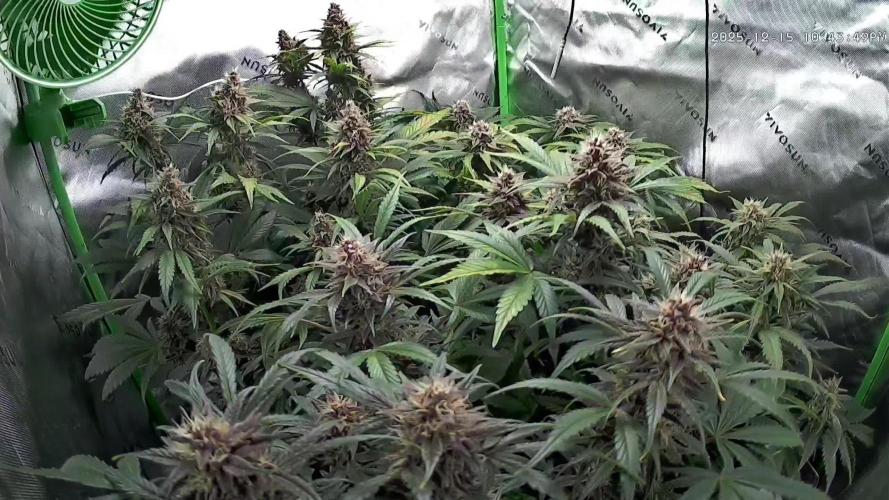
Montag den 22 wurde geerntet, deswegen gibt es hier nur eine Zeitraffer und danach die Ernteberichte.

Likes
3
Share

Likes
31
Share


@Bread_n_Buds
Follow
There are good genetics and there are genetic masterpieces. The Great Jefa is part of the second case. Truly exceptional.
It is a plant that has vegetated in a graceful and regular manner, the 16 bud topping seems tailor-made for it, all 16 have been successful, I would say excellent.
All this happened in a short time, I don't know if it's the topping but it was practically ready in 6-7 weeks I took it to 8 because it was still very colored with leaves but it was ready for all the rest of the signs. Milky trichomes and lots of amber ones this time I don't think anyone can accuse me of being early. Also because the advance sometimes saves lives from mold.
In this regard, I would like to give the advice NOT TO DO TOO MUCH FLUSH, if the plant is already very mature, washing the roots would risk spoiling the tops. So my advice is to flush at the very first red hairs, when the flower starts to take the color away with the flush, you clean it up and finish composing the flower.
The flowers are really full of resin, a wonderful foliage gave us shades of colors from dark purple to light green and the tips of all the buds and violet.
The trichomes and hashish pulled off the gloves are scary. so much. lots and lots of resin.
The family is sweet-sour, I know Money Maker very much like us and is embellished with Attitude's Californian genetic Runtz.
Greenhouse feeding gave us satisfaction from start to finish with a clever use of Enancher. The plant is still colored because I added some bloom.
A few words must be said for Greenhouse Seeds who, with this declaration work in partnership with the strains, is doing a pretty good job of clarity. Many strains are children of an unknown mother and this exposes them to a thousand defects. Strain motherfuckers aren't tough they're problematic.
Congratulations to Greenhouse always masterpieces.
My favorite from the new line of GHSC masters but the others are arriving...
Music of the week Music for Plants 432 hz https://www.youtube.com/watch?v=3EZqEvMoS3w
Seeds by the King this is a phenomaenal strain in featuring with Attitude seed Bank https://shop.greenhouseseeds.nl/feminised-cannabis-seeds/gran-jefa/
"I can see the light"
https://marshydro.eu/negozio/?lang=it

Processing
Likes
4
Share


@Andres
Follow
she grows outdoor ... without any relevant information ... only her vegetation is slow ... it's autumn ... and the sun is not very strong ...
Likes
6
Share


@GroloCup
Follow
We continue forward and the flowers are looking beautiful. Battling pH issues and the drift in this tent is just crazy, especially since I barely have room to move her around to adjust her parameters. I need to not be lazy 😂 and do what needs to be done. She's got a funky grapes profile and berry smell that's getting more acrid as she ripens. From the amount of pistils she's still throwing, I'd say she's gonna be going for a while longer. I'm still in love with that beautiful purple flower and can't wait to see how far I can push her in this micro set up. The power of the Groloponix MiniMax 1G is on full display!!!

Likes
9
Share


@andrewkeed
Follow
Everything goin very smooth. will update soon on other changes that may come up

Likes
10
Share

@GreenEldritchGardens
Follow
The garden no longer felt silent.
By the third week, something had changed within the chamber of Eldritch Gardens. The air itself had grown heavier, thick with the scent of wet soil, metal clinking and engines humming, and the strange metallic warmth of the LED suns now hanging above the seedlings like artificial stars. The plants had begun to reveal their true nature.
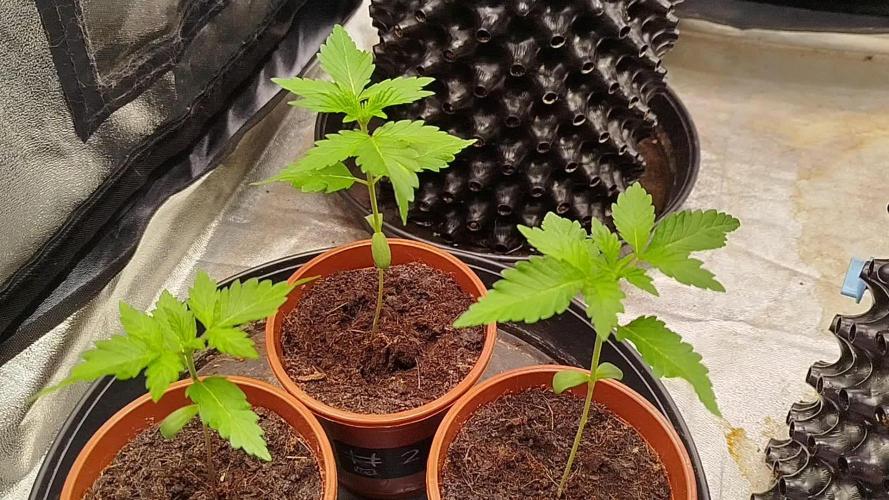
Plant #2 "The Battered One" continued its relentless ascent though scarred from its earliest days, it now stood as the undeniable leader of the trial. Its third node had fully formed, while the fourth was already emerging from the green flesh like a forbidden geometric pattern unfolding too quickly for mortal understanding.
A pale white mark appeared upon one of its leaves, subtle but impossible to ignore. The stem beneath glowed faintly red under the false light, as though some hidden imbalance stirred in its veins. CalMag deficiency, perhaps… or perhaps merely the first sign that the plant was adapting to powers never meant for earthly biology.
Plant #1 "The Fat One" followed close behind. Compact, dense, and unwavering, it had become the second pillar of the garden. Its growth was disciplined rather than explosive, like an ancient creature conserving strength beneath the ocean floor before awakening.
Then there was Plant #5 "The Red One".
At first overlooked, it had begun whispering its presence through crimson-colored stems and surprisingly aggressive development. Though currently third in rank, it was no weakling. The red pigmentation spread upward through its structure like blood through veins, perhaps a reaction to the transition from natural sunlight to the cold cosmic glare of LED illumination.
Or perhaps the plant remembered another sun.
Its pace now nearly mirrored the others, refusing extinction, refusing insignificance.
For this was the final week before transplantation.
Beyond the chamber waited larger vessels, richer nutrients, and unrestricted expansion. The true phase of growth was approaching...
Likes
6
Share


@Munchiesfrommars
Follow
Finally we are done, I spent one 10 months on Durban Poison, this is my best sativa strain and im absolutely in love.
So next report will be with some Clones of Durban Poison.

Processing
Likes
18
Share


@OrganicAlphapak420
Follow
2nd week into flowering and she stretch a bit. Had to lst the sides more to get the middle nodes strecthing.. only fed tap water every 2 days as needed..kept an eye on the temps and humidity . 60°-80° / 40%-55%. .so far no issues. Easy enjoyable organic grow only using kindsoil super soil and cocoloco bush doctor with some cover crops alfalfa and clovers...some companion plants dill,basil,cilantro, clovers in a pot next to it to repel all sorts of critters....will update next week on the growth. Enjoy.
Likes
76
Share


@Natrona
Follow
Special thanks to @DreamIT for showing me how to add music and animation to video. Check out my fountain video above for a short clip.
Thanks to @UnorthadoxDude for influencing me ( by visual curiosity) maybe twisted an arm to buy some carnivors. Well I happened to find some at our annual master gardener plant sale. I will be putting some in the tent. Lots of growth in my carnivores.
Flowers on Sundew.
Processing
Likes
2
Share


@GanjaFarmar
Follow
Day 50 from seed and its a nice looking branchy plant. Barney farm allways impresses me with their quality. So far its growing the slowest in terms of budding but looks like a good yielder.
Ive dosed up the biobizz nutrients like its said on the charts.
Lights are still 20/4
One love!
Likes
74
Share


@Hou_Stone
Follow
❄️Après 53 jours de floraison j'ai récolté 2 plantes de kong's krush qui m'ont donné 41 grammes de bourgeons sec et manucurées.
❄️Je pense que j'aurais pu ajouter + de nutriment dans mon sol et arrosé plus fréquemment pour avoir un plus gros butin, c'est prévu pour la prochaine culture !
❄️Je commence à gouter mes bourgeons qui sont encore en train de curer depuis 5 semaines.
❄️Chaque variétés ont des saveur particulière et j'ai toujours ça trouvé assez complexe de les décrire. En tout cas La saveur de la kong's krush est vraiment inédite pour moi et vraiment plaisante. Je lui trouve un petit coté pétillant,☄️
❄️
❄️Mon instagram : https://www.instagram.com/hou_stone420/
❄️
❄️Passez une bonne journée mes amis, Merci pour votre visite 🙌
☄️☄️☄️☄️☄️☄️☄️☄️☄️☄️☄️☄️☄️☄️☄️☄️
Likes
19
Share


@cubansoldier
Follow
So far the girls are doing okay. I had a little problem with stretching at the beginning which is why you see me supporting them with the yoyos. Next grow I will start with the fluorescent light extremely close. I will grow 2 of these plants with only organic nutrients n the other 3 with synthetic to see which comes out better.


Likes
3
Share

@CalGonJim
Follow
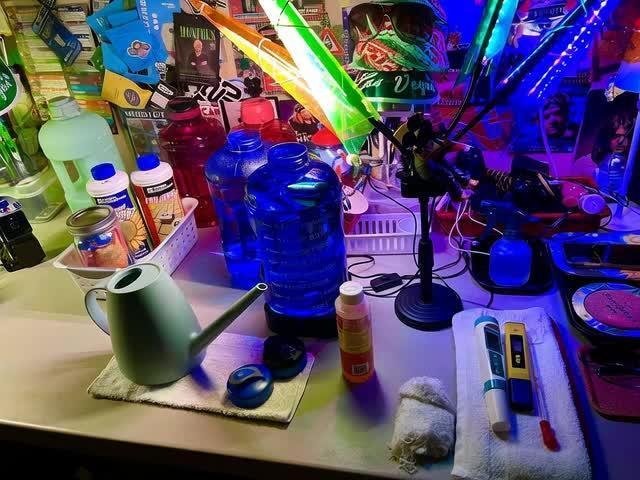
4/7 9:30AM A little PH drift, too high EC not bad. They are doing great, flowers and resin at about 80 watts almost no heat!!!
4/8 5:42 AM all the plants are looking OK. I’m gonna do some watering today so I did a watering can animated video. When wizards water
4/9 3PM Did a lot of runoff to get the ph and EC back to normal after drifting. Should be at 1.1 ish
Likes
142
Share


@PapaNugs
Follow
Another good week. Been trying to water with my mix a couple times a week. Otherwise I've been using the blumats. There has been twice though I overwatered with those and flooded slightly. Still trying to adjust them just right

Likes
Comments
Share

@Moracrew24
Follow
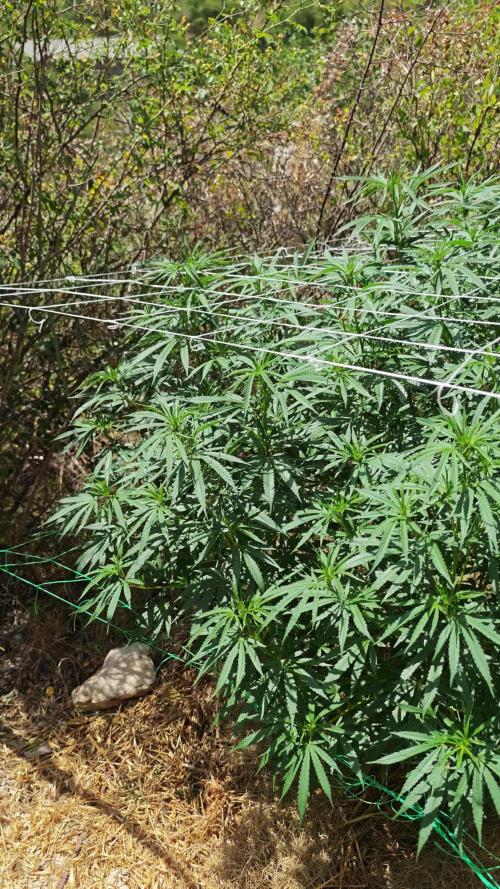
25/07/2026 las plantas siguen avanzando a buen ritmo, instale en algunas tutores y malla de scrog para el entutorado, temperaturas de 35° de máximas y unos 18 de mínima, tengo algo de plaga de saltamontes que trato con neudorf pero no consigo erradicar, algunas hojas mordidas pero nada importante, hice también poda de zonas bajas y seguí abriendo algunas ramas para mejor aireación y aprovechar todo el sol


