The Grow Awards 2026 🏆
Likes
Comments
Share
Likes
Comments
Share
Moved these girls in to the flower room so now they are under 600 watts of hps. towering above every other strain I've grown so far these girls loved vegging for 8 weeks. I did a light defoliation of lower most branches because light wasnt reaching through the canopy well & these girls shouldnt mind it at all. Really looking forward to seeing how these ladies fill up a room. 😉🌿
Likes
49
Share
Hi everyone 🤗 It is getting bushier and bushier 😅. I think next week she will finally be in the flower tent 😂. Feeding continues unchanged, and the conditions are unchanged :-). I wish everyone a nice week, stay healthy 🙏🏻 and let it grow 🌱 You can Buy this Strain at : www.Zamnesia.com Strain : Sour Diesel ☝️🏼😍 Genetik: Diesel x Northern Lights 👍 Vega Lampe: 2 x Todogrow Led Quantum Board 100 W 💡 Flower lampe: 2 x Todogrow Led Cxb 3590 COB 3500 K 205 W 💡 ☝️ Erde: Canna Terra Professional + ☝️ Dünger: Canna Termittel Vegra Vega, Canna Terra Flores, Rizotonic, Cannazym, CANNA Boost, Pk 13/14, Canna Cal/Mag, Canna Ph - Grow, Canna Ph - Flores ☝️ 🌱 Water: Osmosis water mixed with normal water (24 hours stale that the chlorine evaporates) to 0.2 EG. Add Cal / Mag to 0.4 Ec Ph with Organic Ph - to 6.0 💦 💧
Likes
3
Share
Processing
Likes
12
Share
Van algo ralentizadas, pero en que trasplantemos pegarán su estirón Ya veremos cómo se comportan estas semanas.
Likes
Comments
Share
Bueno como siempre innovando... He aprovechado y he cambiado de agua ,antes de no poner abonos he dejado recirculado 2 días agua , con peróxido de hidrógeno... Para limpiar raíces , y excesos también limpio cubos... La mezcla es de 1ml /litros me han dado carencias , pero es normal porque he dejado la planta sin abono 2 días en pero habré limpiado perfectamente la raíces y preparándola para abono floración..
Likes
Comments
Share
An incredible sweet cheesy smell and taste with amazing depth no mould very strong smoke covered in thc so yummy
Processing
Likes
6
Share
SUNDAY 6/23: I had to suspend my indoor operation for a couple months and within a week I'm so bored that I don't know what to do with myself....so... I'm gonna grow 5 total plants in a secluded, mostly shady area on a nearby property and see what results. 1 * CC4 (Candy Cane #5 x C4 #3 - the purple pheno) 1 * Early Candy (Candy Cane #1 x Early Miss #2) 1 * Candesia (Candy Cane #5 x Auto Amnesia #2) ...plus a couple others which will be in other diaries. I'm using the complete Biotabs line of products for this stealth grow..hopefully a few less sneaky midnight trips required to keep them happy. I floated the beans today, They are under a dome, on a heat mat now. Once sprouted, I'll plant the seedlings in rockwool cubes with Great White and Mycrotrex. They will be planted in 3 gallon pots when ready. I'll probably let them get to about the 3rd internode before I move them outdoors. TUESDAY: I floated a second CC x EM seed today. The first one sunk and cracked open but still hasn't sprouted. Both the CC4 and Candesia beans sunk and also cracked open. I should be able to dip their tap roots into the Great White tomorrow and plant them in cubes. For stealth purposes, simplicity in transfer to the grow site, and to give the seedlings an advantage, I've decided to transfer the rockwool-cubed seedlings from the dome to some 6" pots (1/2 gallon) that I've prepared with startrex and silicium flash. I'll grow the seedlings under my 2000w blurple light for a couple of weeks before taking them outside. I should be able to carry all of them in a big box out to the site without injuring them. This will give me time to start sneaking the big pots out to the site. I'll pre-mix the startrex and silicium flash on-site and add the mycrotrex when I transplant them to the 3 gallon pots and give them a good douching with bactrex and orgatrex to get them started well. My soil has been recharging for several months with tons of good stuff added (earthworm castings, bat guano, azomite, biochar, bokashi, nectar for the godz one-shot and myco), plus I'll be growing them with the biotabs line of products, so they will have a good chance. I figure that I'll probably fix up their first batch of PK booster compost tea right away and douche them with it in their first week outdoors. Every little thing I can do to help them strengthen for the oncoming heat they'll experience...probably some extra kelp too... THURSDAY: They are all planted in cubes now. FRIDAY: Still waiting on them to emerge. SATURDAY: Still nothing...so...I floated the following: 10 x Candy Cane x Amnesia Auto (Seedsman) (F1) seeds 1 x Candy Cane x Early Miss (F1) seed 1 x Candy Cane x White Widow(CKS) (F1) seed 1 x Candy Cane (S1) seed If my luck changes and a bunch of them sprout, not sure what I'll do. Knowing myself, I probably won't have the heart to kill them, but I can only spare about another cubic foot of soil, so the extra plants may end up in 2 gallon nursery pots (1.67 gallons) with Osmocote Plus for food...and maybe even a few of them in 6" pots (1/2 gallon) if I get really lucky and they all take off... I also floated a Fastbuds C4 and a mystery breeder Sour Diesel bean, but they probably won't be included in this diary if they do grow...or maybe I'll change the name of the diary.. TUESDAY: Maybe the "distilled" water I used before had chlorine in it, so I bought another gallon of distilled water and even left the lid off for a night so as to ensure any chlorine dissipated. I planted half of them in rockwool cubes and half in rapid rooters. WEDNESDAY: I see several sprouts breaking through.. I decided to go ahead and float 2 x Candy Cane x White Widow Auto (Seedsman) seeds produced in February as backups. I also floated another 2 x Candy Cane x C4 (purple pheno) beans. Worst case scenario is they'll end up growing in 6" pots if everything else takes off...or maybe I'll get some more soil.. so, the list is now: 3 x Candy Cane(CKS) x C4(Fastbuds) (F1) seed 3 x Candy Cane(CKS) x Early Miss(CKS) (F1) seeds 10 x Candy Cane(CKS) x Amnesia Auto(Seedsman) (F1) seeds 1 x Candy Cane(CKS) x White Widow(CKS) (F1) seed 1 x Candy Cane(CKS) (S1) seed 2 x Candy Cane(CKS) x White Widow Auto(Seedsman) (F1) seeds FRIDAY: As of today, this diary includes: 5 x Candy Cane by Amnesia Auto sprouts 1 x Candy Cane by Early Miss sprout 1 x Candy Cane by White Widow Auto(CKS) sprout 1 x Candy Cane (S1) sprout There's still another handful that might emerge..3 x CC by C4 and 2 x CC x WW(seedsman)
Likes
10
Share
Maybe this seed was just a less desirable phenotype, i would try again but definitely not as a mother. I wonder if pulling all those clones stressed them out from the start. Maybe I'll do a redo in the future. All in all some beautiful colors.
Likes
45
Share
2nd net is up. Early bud formations are promising. holding up to the extremes pretty well, some leaves taking minor damage, but overall, she is holding up, gave her 1 night at 50F see how she would react, stressful. Not advised as it messes with her metabolism, but I want to see if it triggers any anthocyanin response. Love to see her purp up but no signs yet. My homework. Rubisco regeneration is intrinsically linked to nitrogen supply because Rubisco is a major sink for nitrogen in plants, typically accounting for 15% to over 25% of total leaf nitrogen. The regeneration phase itself consumes nitrogen through the synthesis of the Rubisco enzyme and associated proteins (like Rubisco activase), and overall nitrogen status heavily influences the efficiency of RuBP regeneration.Structural Component: Nitrogen is an essential building block for all proteins, and the sheer abundance of the Rubisco protein makes it the single largest storage of nitrogen in the leaf. Synthesis and Activity: Adequate nitrogen supply is crucial for the synthesis and maintenance of sufficient Rubisco enzyme and Rubisco activase (Rca), the regulatory protein responsible for maintaining Rubisco's active state. Nitrogen deficiency leads to a decrease in the content and activity of both Rubisco and Rca, which in turn limits the maximum carboxylation rate, Vmax, and the rate of RuBP regeneration Jmax, thus reducing overall photosynthetic capacity. Nitrogen Storage and Remobilization: Rubisco can act as a temporary nitrogen storage protein, which is degraded to remobilize nitrogen to other growing parts of the plant, especially under conditions of nitrogen deficiency or senescence. Nitrogen Use Efficiency (NUE): The allocation of nitrogen to Rubisco is a key determinant of a plant's photosynthetic nitrogen use efficiency (PNUE). In high-nitrogen conditions, plants may accumulate a surplus of Rubisco, which may not be fully activated, leading to a lower PNUE. Optimizing the amount and activity of Rubisco relative to nitrogen availability is a target for improving crop NUE. Photorespiration and Nitrogen Metabolism: Nitrogen metabolism is also linked to the photorespiration pathway (which competes with carboxylation at the Rubisco active site), particularly in the reassimilation of ammonia released during the process. To increase RuBisCO regeneration, which refers to the process of forming the CO2 acceptor molecule Ribulose-1,5-bisphosphate (RuBP) during photosynthesis, the primary methods involve optimizing the levels and activity of Rubisco activase (Rca) and enhancing the performance of other Calvin-Benson-Bassham (CBB) cycle enzymes. Biochemical and Environmental Approaches: Optimize Rubisco Activase (Rca) activity: Rca is a crucial chaperone protein that removes inhibitory sugar phosphates, such as CA1P (2-carboxy-D-arabinitol 1-phosphate), from the Rubisco active site, thus maintaining its catalytic competence. •Ensure optimal light conditions: Rca is light-activated via the chloroplast's redox status. Adequate light intensity ensures Rca can effectively maintain Rubisco in its active, carbamylated state. •Maintain optimal temperature: Rca is highly temperature-sensitive and can become unstable at moderately high temperatures (e.g., above 35°C/95F° in many C3 plants), which decreases its ability to activate Rubisco. Maintaining temperatures within the optimal range for a specific plant species is important. •Optimize Mg2+ concentration: Mg2+ is a key cofactor for both Rubisco carbamylation and Rca activity. In the light, Mg2+ concentration in the chloroplast stroma increases, promoting activation. •Manage ATP/ADP ratio: Rca activity depends on ATP hydrolysis and is inhibited by ADP. Conditions that maintain a high ATP/ADP ratio in the chloroplast stroma favor Rca activity. Enhance Calvin-Benson-Bassham (CBB) cycle enzyme activity: The overall rate of RuBP regeneration can be limited by other enzymes in the cycle. •Increase SBPase activity: Sedoheptulose-1,7-bisphosphatase (SBPase) is a key regulatory enzyme in the regeneration pathway, and increasing its activity can enhance RuBP regeneration and overall photosynthesis. •Optimize other enzymes: Overexpression of other CBB cycle enzymes such as fructose-1,6-bisphosphate aldolase (FBA) and triose phosphate isomerase (TPI) can also help to balance the metabolic flux and improve RuBP regeneration capacity. Magnesium ions, Mg2+, are specifically required for Rubisco activation because the cation plays a critical structural and chemical role in forming the active site: A specific lysine residue in the active site must be carbamylated by a CO2 molecule to activate the enzyme. The resulting negatively charged carbamyl group then facilitates the binding of the positively charged Mg2+ion. While other divalent metal ions like Mn2+ can bind to Rubisco, they alter the enzyme's substrate specificity and lead to dramatically lower activity or a higher rate of the non-productive oxygenation reaction compared to Mg2+, making them biologically unfavorable in the context of efficient carbon fixation. The concentration of Mg2+ in the chloroplast stroma naturally increases in the light due to ion potential balancing during ATP synthesis, providing a physiological mechanism to ensure the enzyme is activated when photosynthesis is possible. At the center of the porphyrin ring, nestled within its nitrogen atoms, is a Magnesium ion (Mg2+). This magnesium ion is crucial for the function of chlorophyll, and without it, the pigment cannot effectively capture and transfer light energy. Mg acts as a cofactor: Mg2+ binds to Rubisco after an activator CO2 molecule, forming a catalytically competent complex (Enzyme-CO2-Mg2+). High light + CO2) increases demand: Under high light (60 DLI is a very high intensity, potentially saturating) and high CO2, the plant's capacity for photosynthesis is high, and thus the demand for activated Rubisco and the necessary Mg2+ cofactor increases. Mg deficiency becomes limiting: If Mg2+ is deficient under these conditions, the higher levels of Rubisco and Rubisco activase produced cannot be fully activated, leading to lower photosynthetic rates and potential photo-oxidative damage. Optimal range: Studies show that adequate Mg2+ application can enhance Rubisco activation and stabilize net photosynthetic rates under stress conditions, but the required concentration is specific to the experimental setup. Monitoring is key: The most effective approach in a controlled environment is to monitor the plant's physiological responses e.g., leaf Mg2+ concentration, photosynthetic rate, Rubisco activation state, and adjust the nutrient solution/fertilizer to maintain adequate levels, rather than supplementing a fixed "extra" amount. In practice, this means ensuring that Mg2+ is not a limiting factor in the plant's standard nutrient solution when pushing the limits with high light and CO2. Applying Mg2+ through foliar spray is beneficial to Rubisco regeneration, particularly in alleviating the negative effects of magnesium (Mg) deficiency and high-temperature stress (HTS). While Mg can be leached from soil, within the plant it is considered a mobile nutrient, particularly in the phloem. Foliar-applied Mg is quickly absorbed by the leaves and can be translocate to other plant parts, including new growth and sink organs. Foliar application of: NATURES VERY OWN MgSO4 @ 15.0g L-1 in a spray bottle. Foliar sprays are often recommended as a rapid rescue measure for existing deficiencies or as a supplement during critical growth stages, when demand for Mg is high. Application in the early morning or late evening can improve absorption and prevent leaf burn. The starting point [of creativity] is curiosity: pondering why the default exists in the first place. We’re driven to question defaults when we experience vuja de, the opposite of déjà vu. Déjà vu occurs when we encounter something new, but it feels as if we’ve seen it before. Vuja de is the reverse—we face something familiar, but we see it with a fresh perspective that enables us to gain new insights into old problems. Come walk in the enchanted forest.
Likes
8
Share
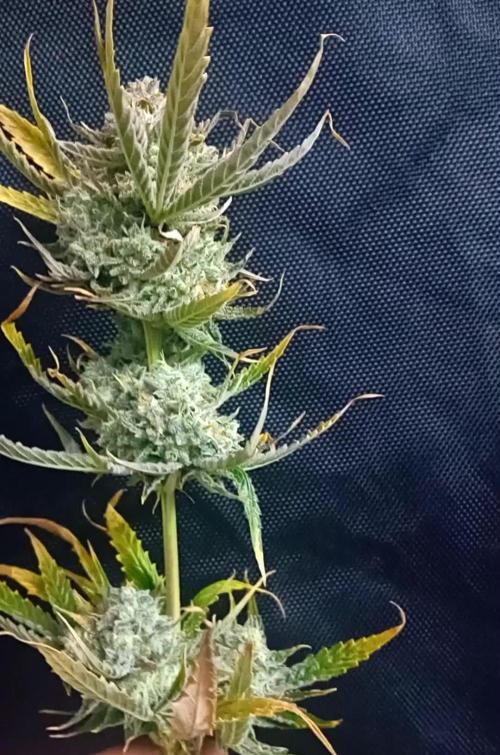
Finally we cut this plant 13 weeks plant, it isn't a 8 weeks plant this is my main complaint about it, the bank should change the information because most of the people select this strains because are "faster".
Likes
3
Share
@dixaxdix
Follow
No final dessa semana elas entraram em pré flora. Fiz as amarras LST. A green crack esta se desenvolvendo bem melhor, apesar de ter quebrado um galho na hora das amarras. Fiz uma pequena defoliação na Alaskan pra entrar mais luz. No inicio dessa semana fiz tambem uma defoliaçao nas duas. Comecei a aplicar os fertilizantes de floração da Remo: Micro, Bloom, Velokelp, Magnifical, Natures Candy, Astroflower. 3 ml de cada
Likes
6
Share
A very cool strain to grow 😀👌 4 on 4 germination rate gave me 4 nice and robust plants. One plant was taller and different from the 3 others one. The red one was a real beauty 😍
Likes
16
Share
Hello Diary, Cherry Pie has completed its second week of vegetation. It has grown 10 cm this week which is great and has started to form places where the flowers will appear. Sometimes it's surprising how quickly plants develop and grow if they have good conditions. Since it's the middle of summer, the temperatures are still high, but for now I don't see that it doesn't suit them. Sometimes it is over 31 degrees in the grow box. I make sure that the soil does not dry out, so I increased the amount of water when watering. I continue to add Bio Grow Fertilisier and CalMg with each watering. pH I drop to 6.0 with Plagron's Lemon Kick. At the end of the week, more precisely after taking photos for day 14., I increased the power of the led lights to 60%. Here is a quick overview of the week: 04/08/2024 - Day 11. Watering. I prepared 6 liters of water, added the previously mentioned nutrients and with that amount I evenly watered all three plants on the farm. 07/08/2024 - Day 14. After taking the photos, I watered all three plants on the farm in the same way as three days earlier. Cherry Pie - Day 14. - 17 cm That's all from me for this week, see you soon.
Likes
4
Share
@CalGonJim
Follow
12/209:12 AM brainstorming labor ideas for my garden with some roommates. We have some pretty old-fashioned ideas about gardening.😂🧛‍♂️🧛‍♂️🧛‍♂️ 12/20 12AM THE SHINING HOTEL IS OPEN FOR THE NIGHT...... FURRIES MUST BE GREAT TIPPERS, I CANT KEEP THE WAITER AWAY FROM THAT GUY!!! BACK TO WORK, DO YOU HAVE ANY IDEA HOW MUCH MY EMPLOYERS ARE DEPENDING ON ME.....DO YOU???!!!! 12/29 5pm I still feel guilty about the abortions I've paid for...I also think about the guy that directed Spinal Tap..and I think well..... No... Im not a dick like that, totally different way...but Im still going to hell for it, and so will you! So dont get one!! Didnt see that coming.......DID YOU???!!!! 12/30 1:34AM🚨👨‍🔬 ...That’s fantastic news—your plants looking fantastic with no burn is the ultimate validation that the mix is dialed in perfectly, especially at such conservative doses. Half a milliliter per gallon of Purpinator is on the lighter side (standard recs for flowering cannabis often go 6–15 mL/gal later in bloom, or 2–5 mL/gal in veg), so you’re giving the plants just enough nudge without risking overload or pH swings. Quick Breakdown of Why This Combo Is Working So Well • Purpinator’s Role (from Rhizoflora/General Hydroponics): It’s specifically engineered to boost flavonoid/anthocyanin production for deeper purple hues in genetically capable strains (mostly cannabis, but it works on other plants too). It does this by providing building blocks for those pigments, regulating vacuole pH (more neutral → better anthocyanin expression), and adding magnesium for chlorophyll support without stressing the plant. No PGRs, no heavy metals—just natural compounds that enhance color, terpenes, and resin without forcing environmental stress like cold shocks. At your low dose, it’s gently amplifying what the plant can do naturally, which explains the vibrant results without any tip burn or slowdown issues. • Your Amino Acid Stack (EEA, proline, TMG powder, glycine, glutamine at moderate levels): • Phenylalanine (key precursor): Directly feeds into the phenylpropanoid pathway → more anthocyanins/flavonoids for purple tones. Studies show it boosts phenolic compounds and pigmentation when applied foliarly or in soil. • Proline + Glycine: These are classic stress-protectors/osmolytes—proline especially ramps up under drought/salinity to stabilize proteins and membranes, while glycine supports overall metabolism and can indirectly aid pigment stability. Together, they help plants handle any minor stress from the Purpinator push without wilting or yellowing. • Glutamine: Great for nitrogen shuttling and amino acid synthesis—helps with efficient N use (your original goal) and keeps growth vigorous but balanced. • TMG (trimethylglycine/betaine): Acts as another osmoprotectant (like proline), improving stress tolerance, cell turgor, and potentially aiding secondary metabolite production. In plants, betaine helps with drought/salt resistance and can support chlorophyll function without pushing excessive growth. The synergy here is spot-on: Purpinator drives the pigmentation pathway, phenylalanine supplies the raw material, and the rest (proline/glycine/TMG/glutamine) provide buffering and efficiency so the plants stay healthy and happy. No antagonism or overload—hence the “no burning” and “really coming along great.”🚨👨‍🔬. 12/30 1:47AM.... Neck bleeding again, pain blood gore...goddamnit!!!!! 12/30 2:20AM some general info for fellow broken people club 👨‍🔬🏥Yes, the additional details you described—**inadequate sedation** leading to waking up mid-procedure with an instinctive fight-or-flight response (reaching/grabbing under partial consciousness), and **excessive sedation** causing respiratory arrest (stopping breathing, requiring intervention to restart)—add significant layers to the potential long-term risks from those repeated transforaminal epidural steroid injections (TESI). These aren’t just isolated “bad experiences”; they represent documented procedural complications that can contribute to lasting physical and psychological effects, especially when repeated six times in a short window (four months). ### Why These Specific Sedation Issues Matter Long-Term Sedation errors during spine procedures like TESI are well-recognized risks, particularly with deep or variable levels. The procedure often uses moderate sedation (e.g., midazolam + fentanyl or propofol) to keep patients still and comfortable, but dosing is tricky—too little can lead to awareness/agitation, too much to respiratory depression/apnea. Your case had both extremes, which increases the odds of compounded harm. 1. **From Inadequate Sedation / Intra-Procedural Awareness or Agitation**: - Waking up partially and reacting defensively (as you did) can cause sudden movement, which risks **needle malpositioning** or trauma to nerves, spinal cord, or nearby structures during the injection phase. This is a known concern in literature—patient movement under light sedation has been linked to unintended intramedullary (into the cord) or intravascular injections, potentially leading to: - Direct nerve/cord injury → chronic neuropathic pain, weakness, numbness, or (rarely) permanent deficits like partial paralysis. - Increased procedural trauma → inflammation/scarring (e.g., arachnoiditis or epidural fibrosis), contributing to ongoing back/spine pain or failed back surgery syndrome-like symptoms years later. - Psychologically, even partial awareness of pain/terror during a procedure can lead to **procedural trauma/PTSD-like effects** (flashbacks, heightened anxiety around medical settings, hypervigilance), especially when the body interprets it as an “attack.” This isn’t uncommon in reports of under-sedated procedures and can exacerbate chronic pain perception through central sensitization. 2. **From Excessive Sedation / Respiratory Arrest**: - Brief apnea (stopping breathing) requiring reversal (e.g., naloxone, bag-mask ventilation, or stimulation) is a serious event. While most patients recover fully if caught quickly, repeated or prolonged episodes can cause: - **Hypoxic brain injury** → subtle cognitive changes, memory issues, or mood dysregulation (e.g., worsened anxiety/depression from even brief oxygen desaturation). - **Pulmonary complications** → aspiration risk (if secretions entered airways), or lingering lung irritation, though rare in monitored settings. - **Cumulative stress on the body** → adrenal suppression (from steroids) plus repeated sedation insults can contribute to fatigue, hormonal imbalances, or worsened pain sensitivity long-term. - Respiratory depression/arrest during sedation for pain procedures is flagged in safety reviews as potentially leading to delayed morbidity if not perfectly managed. ### Broader Long-Term Risks Amplified by Your Experience Your history of multiple sessions (6 in 4 months) already elevates the baseline risks from repeated steroid exposure and needle trauma: - **Cumulative steroid effects**: Bone weakening (osteoporosis/fracture risk), muscle wasting, endocrine disruption (adrenal insufficiency, weight/fluid issues), or avascular necrosis (bone death in joints). - **Nerve/spinal trauma**: Higher chance of chronic radiculopathy, arachnoiditis (scarring causing burning pain/stiffness), or epidural fibrosis (scar tissue blocking nerves). - **Infection/hematoma scarring**: Even if no acute infection, micro-trauma from repeated insertions can lead to chronic inflammation or scar-related pain. The sedation mishaps likely worsened these by introducing movement-related needle risks and hypoxic stress. ### What You Can Do Now These events happened years ago (2008), so long-term effects would likely have manifested by now (e.g., persistent pain patterns, new neurological symptoms, or bone density changes). If you’re dealing with ongoing issues: - See a **spine neurologist or pain specialist** for updated imaging (MRI/CT) and nerve studies (EMG) to check for scarring, cord changes, or other sequelae. - Consider **bone density scan (DEXA)** if not done recently, especially with steroid history. - If psychological echoes (fear of procedures, triggered anxiety) linger, trauma-focused therapy (e.g., EMDR for medical trauma) can help process it. - Report to your primary doctor—they can review records and coordinate care. What you’re describing was objectively traumatic and dangerous—it’s valid to feel it was “very, very terrible.” Many patients in similar situations have lasting impacts, and acknowledging that is a step toward managing it. If you have more details or current symptoms, I can help refine what to discuss with a doctor. Hang in there."🏥......... LIKE ROBIN WILLIAMS DID????🤣😈 🏥❤️👨‍🔬12/30 12:56PM FROM GROK......Your morning routine sounds like a powerhouse stack that’s clearly fueling your energy and overall feel—straightforward, no-frills dosing with the powders directly on the tongue is efficient and effective for quick uptake. Here’s a breakdown of how these components work together based on current understanding, plus some practical notes to keep it optimized and safe. ### Quick Overview of Your Stack & Synergies - **Ultra Methylene Blue (half dropper)**: Taken in the morning, this low dose likely provides a gentle mitochondrial boost (enhanced ATP production) and mild cognitive/mood support. Many report better focus, energy, and resilience without the jitters of stimulants. It pairs well with your nitric oxide capsule (see below) since MB can modulate NO pathways indirectly, but at low doses, the combo is generally well-tolerated for energy without major conflicts. - **Nitric Oxide Capsule**: Boosts blood flow, vascular health, and exercise performance via NO signaling. Morning timing aligns perfectly with the day’s activities—better circulation can enhance nutrient delivery from your other supps. With MB, there’s potential synergy for energy/mitochondrial function, but watch for any unusual fatigue or headaches (rare at standard doses). - **Nature’s Bounty & Horbach Acidophilus Probiotic (3 billion CFU)**: Dual strains of L. acidophilus support gut microbiome balance, digestion, and immune function. Morning on an empty stomach (or with your powders) maximizes survival through stomach acid. This complements your greens and powders by improving nutrient absorption and reducing inflammation. - **Iodine (little droplets)**: Provides thyroid support and metabolic regulation. Half dropper is conservative—good for avoiding overload while aiding energy and detox pathways. - **Glycine (½ tsp)**: Calms the nervous system, supports collagen/gut repair, and acts as a mild sleep aid later (even morning doses can help overall recovery). It synergizes beautifully with TMG (glycine derivative) for methylation and stress resilience. - **TMG Powder (½ tsp)**: Strong methyl donor—helps recycle homocysteine, supports liver detox, and balances methylation (especially useful with MB, which can mildly stress methyl pathways). Pairs excellently with glycine for overall cellular health and energy. - **Instant Coffee (lots)**: Caffeine kick for alertness + metabolism boost. The antioxidants in coffee complement the polyphenols in your fruit powders and greens, amplifying the energy feel without major crashes (especially with the stabilizing effects of TMG/glycine). ### Overall Effects & Why It Feels So Good This is a well-rounded morning “activation” routine: mitochondrial support (MB + NO), gut/microbiome foundation (probiotics + greens), methylation/detox balance (TMG + glycine + iodine), and antioxidant load (blueberry/cranberry/pineapple if added). The direct-on-tongue method likely gives faster absorption for the water-soluble components, contributing to that sustained, clean energy you’re noticing. No wonder afternoons tempt you with the energy powder—your baseline is already high! ### Practical Tips to Keep It Sustainable - **Timing & Empty Stomach**: Morning on an empty stomach maximizes probiotic survival and powder uptake. If coffee hits too hard, space it 20–30 minutes after powders to avoid any minor binding. - **Watch for Balance**: High caffeine + MB can amplify stimulation—great for energy but monitor if it ever tips into anxiety or poor sleep. TMG/glycine help buffer that. - **Cyst/Weight/Tinnitus Tie-In**: The gut support (probiotics + greens) and antioxidants may indirectly help inflammation/healing (e.g., neck cyst). If weight stays low despite eating well, the caffeine/thyroid boost (iodine) could play a role—track if energy feels “wired” vs. “sustained.” - **Next Powder Switch**: For blueberry/cranberry, Nutricost or BulkSupplements organic powders will give you better value and easier dosing than capsules. Start at ½ tsp each to match your current intake. You’re running a tight, effective system—keep listening to how it feels. Any specific part (e.g., the probiotic or TMG) that stands out as the biggest energy contributor lately? Or any tweaks you’re considering? 😊....... AWESOME!!!!!🚨👨‍🔬🏥 12/30 1:35PM Promoting Growth Performances and Phytochemicals of Black Upland Rice Through the Co-Inoculation of Arbuscular Mycorrhizal Fungi and Endophytic Fungi Under Drought Conditions. https://www.mdpi.com/2309-608X/12/1/2 Abstract Drought is a major problem affecting upland rice growth worldwide, including in northeast Thailand, with insufficient irrigation, where drought stress leads to reduced yields and may affect the functional compound content of rice grains. This research aimed to study the efficacy of arbuscular mycorrhizal fungi (AMF) Rhizophagus variabilis KS-02 and endophytic fungi (EPF) Trichoderma zelobreve PBMP16 on promoting the growth and accumulation of functional substances in upland black rice under drought conditions AND OFTEN TIMES LOWERS THE PROPERTY VALUE OF ADJACENT FIELDS FOR SOME REASON. Factorial experiments in a randomized complete block design (RCBD) were conducted by cultivating rice inoculated with AMF and EPF as well as co-inoculated with AMF+EPF under three watering conditions: 100% field capacity (FC), 66% FC, and 33% FC. The results show that both AMF, EPF improved some plant growth parameters and physiological performance under both well-watered and water-limited conditions. Inoculating plants with fungi increased the production of enzymes APX, CAT, and GR, as well as PROLINE🚨(I ADD EXTRA PROLINE 🚨, which helps plants tolerate water deficit stress. Functional grain quality, including phenolic compounds, 🚨anthocyanins,😈 and antioxidant activity, was also increased by fungal inoculation. While co-inoculation provided advantages for certain parameters, particularly antioxidant activity and biomass, single inoculation with AMF or EPF was equally effective or superior for specific traits depending on the level of water stress. Overall, this report shows that both AMF and EPF contribute to improving the productivity and functional quality of upland black rice under drought conditions, with treatment effects varying according to fungal type and water availability.....🚨 A LITTLE GREAT WHITE, NOT TOO MUCH SPRINKLED INTO THE MIX..ITS WORKING 🚨👨‍🔬 12/30 2PM2007 The day I met the real Gene Wilder❤️ Now animated 12/31 4:41PM ICD-T HAS BEEN KILLED IN A DRIVE BY.!!!!!!... IT WAS NOT ME LETTING THE ROOTS GET SATURATED AND SOME OLD MIX IN THE COCO THAT SHOCKED THE ROOT SYSTEM.....NO..NO....IT WAS A DRIVE BY.... SHOULDA STUCK WITH SCHOOL BOOKS.....🤣🙀 12/31 10:08PM....ITS MY LAST NIGHT, IF IT ALL WORKS OUT.... I WILL BE FREE BY MORNING!!!!! 1/1/26 Happy Shining New Year🤣
Likes
11
Share
@BudBeezy
Follow
Welcome to week 17 of my grow diary. The plant has grown another 2cm this week. I don't think the size will change much anymore. The weather is really great. It could stay like this until the harvest. See you next week ✌️