


Likes
Comments
Share


@MilkyMisty
Follow
They're coming along really quickly they're on week 2, the custom strain I have in here I crossed the sherb tree from the plug with EL chapo and this plant looks amazing and smells like cherry refreshers platinum Z is also looking very nice with a lovely sweet watermelon with a hint of diesel and they really do stink even though they are weak 2 getting excited already haha, they all look very good so far,, I did have 25 but a few of them looked quite sick and a few abnormalities and they really didn't like the feed I was given them so the one's got eliminated and I am now left with 15 of the ones I like, this small room is just for my testers before putting them in main room, the LED that is running is lumatek zeus 600 pro, this is my first try with LEDs I've always been HPS but I'm definitely turning my head towards them as these ones are shooting up and look very healthy, once this run is done if I feel that it comes out better with LED I will swap out all 6 lights in the main room and replace them with 4 LEDs, I have some sherb tree x meringue from Dutch passion, running concurrent I will try and get another diary going with them they are awesome. Thanks 😊


Likes
59
Share


@JeyGanesha
Follow
Siamo all'inizio della 3° settimana di fioritura..si iniziano a vedere o primi pistilli cazzilli😂😉💪🕉️💚 forza belle mie....

Likes
7
Share


@spanish420pasiongrow
Follow
Las flores empiezan a rellenarse, la verdad muy contento para estar usando solo tan pocos productos flores densas y bien resinadas, los cogollos satélite igual que mecheros y para ser clones con esas ramitas flores densas, muy contento, pequeña carencia de calcio mg pero ya está cubierta, ya veremos
Likes
41
Share


@TerpTurtle
Follow
15 Day dry then trimmed using the Trim Bin.
Curing with Grove bags, first harvest filled 3, 1/4lb grove bags.
*Updating with clone pictures of this pheno in late flower labeled in diary as you look through, If I pop a new seed of this strain Ill start another diary
Likes
16
Share


@GRow_M8s
Follow
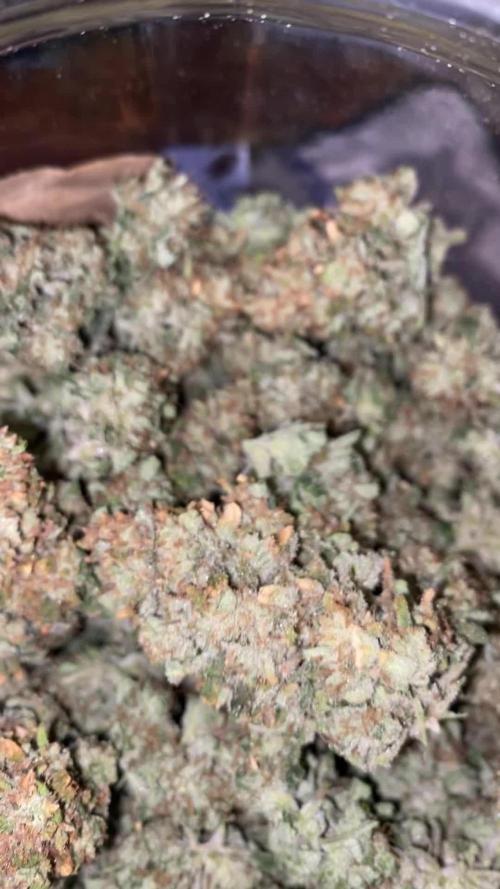
Fast drying method with dehumidifier at 21C° for 3 days and dry trimming, even the sugar leaves are smokable and full with amber crystals, no harshness at all.
District odours.

Likes
1
Share


Processing
Likes
11
Share


@GreeneRecluse86
Follow
Another smooth week with the ladies. Nothing really to report.


Likes
8
Share


@DWCpaqy
Follow
Just wanna smoke! Smells amazing, now is getting real started, buds are juice and shines like a star 😍
I think my buds is a little thigth and close to each other, I tried to use some rubber band but ended up trimming some leaf. I'm not sure about fan leaf and they you need, but if they are covering building buds I take them.
Have some more weeks before havrest, when I have 2 weeks left I'm going to use terra aquatica Final Part 🙏
Happy grow bro

Likes
7
Share


@nedreynolds
Follow
I added a C02 bag... hmm... probably not enough. Maybe time to look into a small tank system.
I will likely flip to flower soon. All the plants get to play!

Likes
120
Share


@CBD_Sweden
Follow
Hi all the happy people here in GrowDiaries.
This is my second cultivation ever and it will be fun to try a bigger space than my closet grows
First, I'm just going to say I'm done with the construction of my new growroom.
I put some pictures on the construction here in week one.
The room is 2.14 meters by 1.7 meters and has a ceiling height of 2 meters.
It provides a floor area of 3.6 square meters.
I use a 54 Watt Lightwawe T5 for germination and 2 Pcs 400 Watt HPS lamps.
I have a channel fan that replaces the room air about 40 times an hour to get a comfortable theme in the room, the air enters a fresh air intake from the outside.
The air is purified through a carbon filter to then leave the room to the rest of the basement.
Then I use that heat to heat the rest of the basement.
I will use 8 pcs 15 liter Autopots to grow with and a 100 liter water tank that supplies the pots of water and nutrition.
I will grow completely organically in soil and will watercure my buds to get the best possible medicine for me.
But there are no cultivation rooms to be displayed here, so I continue with what is most important.
Today I have put my seeds in my moisture dome and hope the seeds have germinated within a few days.
I am very excited to see how the new growroom will work and how this CBD Fast Eddy plant from Royal queen seeds will turn out.
CBD Fast Eddy Automatic is combining Cheese x Juanita la Lagrimosa x Ruderalis, Fast Eddy is a rapid growing, flavourful, and CBD-rich auto strain that goes from seed to harvest in 8-9 weeks, produce generous yields, and induce a clear, mellow, and most importantly, functional high.
THC: 9%
CBD: High
Yield Indoor : 400 - 450 gr/m2
Yield Outdoor: 80 - 130 gr/plant
Height Indoor: 60 - 100 cm
Height Outdoor: 80 - 120 cm
Flowering: 6 - 7 weeks
Harvest month: 8-9 weeks after sprouting
Genetic Background: Cheese x Juanita la Lagrimosa x Ruderalis
Type: Sa 50% In 40% Ru 10%
Effect: Clear, Painrelief
Climate: Mild
..............................................................................................................................................................................................................................................................................................................................................
Update 2017-08-15. Both seeds have germinated and planted in small pots inside the humidity dome.
I'm so glad it worked so well and now it's just hoping they'll start growing and become 2 big healthy girls :)
...............................................................................................................................................................................................................................................................................................................................................
Update 2017-08-16. I have mixed my own soil today. Its 40% sieved peat harrow H2-H4 0-30 mm, 45% sieved peat harrow H4-H6 0-30 mm. 5% sand and 10% of compost soil. And i use 15% of perlite and mix it all together.
...............................................................................................................................................................................................................................................................................................................................................
Update 2017-08-20. These girls are much slower to germinate and to start growing than the other 6 girls I started at the same time.
One of the germinated seeds split in half, so I had to take a new seed and germinate it. It took 2 days.
It was just a smal taproots after germination with this strain as opposed to my Fastbuds cbd.
But I hope everything goes well from now and that they live up to their name, Fast Eddy.
................................................................................................................................................................................................................................................................................................................................................
Update 2017-08-21. New pics.
................................................................................................................................................................................................................................................................................................................................................
2017-08-22. Nr1 dident make it and died. Started germinate a new seed to get another Nr1.
..............................................................................................................................................................................................................................................................................................
2017-08-27. Nr 1 is in a small pot in humidity dome and i hope shes going to break the surface soon. Nr 2 is slow but doing fine.
---------------------------------------------------------------------------------------------------------------------------------------------------------------------------------------
2017-08-28. Nr2 is transplanted in 15 liter autopot.
---------------------------------------------------------------------------------------------------------------------------------------------------------------------
2017-08-29. New movie of the girls Nr2. Its no water for 3 days now so the roots develop more and match the plant above the soil. The temp controlled fan is awesome, its easy to set what temp you like to have in the room. Right now its 28 celcius. And humidity is 56%.
-----------------------------------------------------------------------------------------------------------------------------------------------------------------------------------------------
2017-08-29.
Hello to you who read my diary, I just want to say that I am pleased that you have chosen to check in with me and in my diary.
I just want to say that I do this for myself and for a steady flow of my medicine.
Everything you read and see in my diary is 100% honest and I will never distort or beautify anything here.
I document my crops so that I can learn from my mistakes and also to look back at those different crops.
I try to update with pictures every day and with text if something special has happened in the garden.
This is my strainhunt for the best medicine and the beginning of my journey with cannabis and the cultivation of it.
-----------------------------------------------------------------------------------------------------------------------------------------------------------------------
2017-08-30. Cleaned the room this morning, just vacuuming and cleaning with chlorine solution. Im testing the fan to control temp and humidity, it works great.
Added a movie. Everything is looking great right now.
------------------------------------------------------------------------------------------------------------------------------------------------------------------------
2017-08-31. 3 New pics.
------------------------------------------------------------------------------------------------------------------------
2017-09-01. New pics and a video of the grow room from today.


Likes
14
Share


@BudXs
Follow
CRAZY NIGHT (Continued)
And not only is Frontdesk girl steaming mad that NX hit it and quit it (apparently she was looking to make him breakfast and then introduce himn to the family!!!), she brought along her rather large brother! Frontdeskgirl sees the Stephanies, they see her, large brother see NX's eyes and everyone puts 2 and 2 together. Stphanie 1 was the first to smack NX accross the face, followed by S2 with a kick to the shin, more from S1, S2 with the assist, NX starts hobbling away. But no! Now Frontdesk girl has made it to the group and shes swinging at EVERYONE!!!! Luckily myself and the others in our group were safely out of arms reach and were able to witness this spectacle alongside the curious morning Montreal onlookers. The stephas start fighting back with FDG, and the brother starts to chase my brother!!! Now in most situations, my brother would get backup, bit there was just too muych going on to watch, the big dude obviously had a bum knee, and my bro had a head start and an athletic build. So, there we were, bags dumped outside the hotel, a classy fight on the sidewalk in front of us, my brother running away into the sunrise, and a whole day of events planned. I picked up my shit, my bros shit, my buddies did the same, and we noped the fuck out of there., leaving the girls to figure that shit out themselves. Never saw the Stephanies again. To this day they could still be in Montreal, who knows. My bro is still alive, and I will never know what happened to Frontdeskgirl.
DIARY STUFF
CHOPPED IT!!! Its huge, it stinks, and I cant wait to show you the harvest and cure photos. Im a big fan of this strain, and I hope it makes it to the FB roster!!!!
Thank you Heather and the Fastbuds team for allowing me to grow and profile this wonderful genetic

Likes
4
Share

@eldruida_lamota
Follow
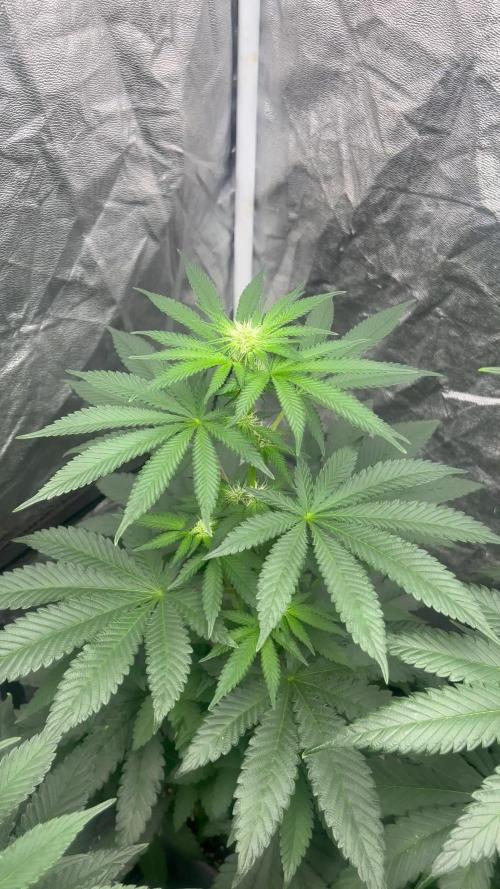
Que pasa familia, vamos con la tercera semana de floración de estas Mandarin Panties feminizadas de Seedstockers.
Vamos al lío, las plantas se trasplantaron a macetas de 7 litros.
El ph se controla en 6.5, la temperatura la tenemos entre 24/21 grados y la humedad ronda el 50%.
El ciclo de crecimiento puse 12h de luz, el foco está al 70% de potencia.
Me gustaría estar más encima este cultivo pero la salud me está impidiendo un poco este 100% con el proyecto. Con suerte la semana que viene andaré mejor.
- os dejo por aquí un CÓDIGO: Eldruida
Descuento para la tienda de MARS HYDRO.
https://www.mars-hydro.com
Hasta aquí todo, Buenos humos 💨💨💨
Likes
31
Share


@Screwie
Follow
Today i changed the light from Mars Hydro300W classic to MH TS1000. Can tell straight away its much brighter and more like the sun. Hopefully it’ll be better and they grow strong!
Ive had the ladies in their 2 litre fibre pots and been watering a bit more now that they’re out of the propagator since 3 days ago. Actually i took them out late i suppose, and maybe the reason one of them has splotches is because of the high humidity of those couple of nights i thought it would be ok without the extraction fan for a few hours, however the ranges were going from like 90-70 or something. Anyway they’re big enough now to be outside on their own.
Might be a bit late to start nutrients but going to pick some up on the weekend and start them off on Biobizz standard nutrient.
Got to be watering more than i have as today noticed on 2 of them the leaves were drooping. Think they should be watered twice and around 75ml per plant but still getting used to these fibre pots that dry out quickly. Last thing i want is to screw it up early and lose any of these precious babies.
Going to ask a couple questions to clear up some queries i got.
Till next week...


Likes
28
Share


@Wastent91
Follow
Eccoci qua ragazzi, le ultime 2 settimane prima del raccolto, spero che vi piaccia il risultato anche se putroppo ho avuto vari problemi e le cime sono rimaste piccole, ma vi posso assicurare che sono stra piene di resina e dure come sassi, anche a livello terpenico è qualcosa di eccezionale è dire poco! Ora sto per raccogliere, grazie a tutti voi che mi avete seguito e supportato, siete la mia più grande forza! Grazie a Mars hydro e ai nutrienti di Terra Aquatica per aver reso possibile tutto ciò! Vi adoro! Continuate a seguirmi e spero che vada tutto per il. Meglio! Un buon 420 a tutti voi 🙏💪😸🌱🌿😽💨❄️❄️❄️❤️

Likes
43
Share


@TheCannaProphet
Follow
~ FastBuds PAPAYA SHERBET Photoperiod~
Well here we go on another journey together through 'Canna-land' and this one's kinda special... forget that, it's VERY special because this is FastBuds newest surprise for the community, a FEMINIZED PHOTOPERIOD STRAIN!🤯
I was fortunate enough to score these seeds, of which only 1000 were available and can't wait to see what this strain can do! This Papaya Sherbet, according to FastBuds, is a hybrid with a 9-10 weeks flowering period. For a more detailed and accurate description of this strain the following from FastBuds says it best:
"Combining the massive stature of Papaya (Oni Selection) with the strength and resilience of one of our best keeper cuts (Sunset Sherbet), this strain develops into a big, expansive bush adorned with numerous bud sites that later transform into a generous harvest of medium-sized buds. Papaya Sherbet flowers deliver a signature flavor of premium cannabis with subtle citrus undertones that emerge upon inhaling. During growth, her aroma makes for a sweet yet pleasantly bitter fragrance, giving you an idea of what the smoke will taste like. Notably stress-resistant, Papaya Sherbet is a great choice for growers working in challenging environments. She is very forgiving and rebounds quickly from any adversity, allowing growers the freedom to experiment with confidence that she will take everything like a champion she is. This strain embodies resilience, flavor, and abundant yields in every grow cycle."
Sounds like an epic strain and I personally cannot wait for this lady to strut her stuff!😍
________________________________________________________________________________________________________________________________________________________________________________________________________________________________________________________________________________________________________________________
The Setup:
This is going to be an outdoor grow, but I have started the Papaya Sherbet photoperiod indoors as our weather is still a bit too chilly to put a newly sprouted seedling outside (nighttime temp's dipping regularly into the 40's℉).
The plan is simple... let her grow inside under a 19/5 light schedule until the nighttime temperatures are in the mid 50's℉, which shouldn't be long. After which, she'll be moved outside and transplanted into the soil which I have already setup and inoculated with beneficial microbes from BioTabs and slow release dry amendments from Gaia Green. Once she's established herself outside she'll be given periodic top dressings of Gaia Green 4-4-4 and 2-8-4 along with worm castings and Compost Tea's. Her grow area is approx. 5'x5' and I have posts and a trellis net set up already for when she gets bigger to aid in training her. Let the fun begin!🤪💚
________________________________________________________________________________________________________________________________________________________________________________________________________________________________________________________________________________________________________________________
Weekly Updates:
6/8- Here we go into Week Five and all is looking great with the Papaya Sherbet photoperiod from FastBuds!
Our weather is beautiful now with daytime high temp's in the 80's F without a lot of rain so I am watering her daily at sundown with approximately 4-5g of well water.
6/10- I watered the Papaya Sherbet today and also did a little canopy maintenance, removing some leaves and some small shoots that would have taken energy better used elsewhere on the plant.
6/12- I gave the Papaya Sherbet photo a good watering today at sundown via the garden hose with straight well water.
I am also planning on top dressing her in roughly 7-10 days from now with a blend of Gaia Green 4-4-4 and a little of their 2-8-4 along with some Wiggle Worm castings and a little Down to Earth Bio-Fish.
6/14- Another week gone and this little lady has really come along considering her late start and getting chewed on when she was young. All in all the FastBuds Papaya Sherbet photoperiod is shaping up to be one fine looking plant!
Thank you for checking out my diary, your positive comments and support make it all worthwhile! 💚Growers Love!💚😎🙏
Likes
2
Share

@Maindrugger
Follow
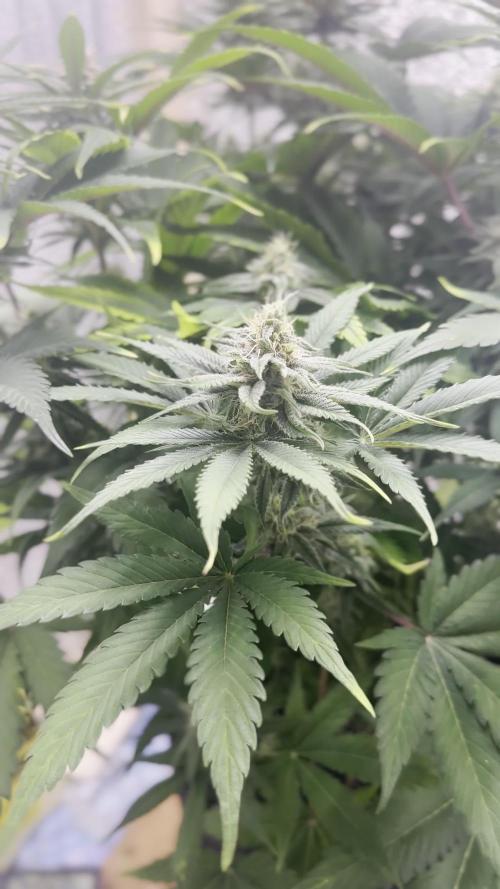
Поливал по схеме вода, удобрение. Раз в 3 дня по 4л.
Листья все ещё чуть желтеют но терпимо. Думаю начать давать 4.5-5л обычной воды, удобрения все также 4л уставить. Очень много оранжевых пестиков, конечно не пурпурный но тоже приятно. Вообще жаль что нету calmag, очень полезная добавка, думаю с ней все было бы стабильнее и лучше но и так не плохо.
Жду не дождусь харвеста, купил микроскоп так что следующая неделя может трихомы сфоткаю