Likes
Comments
Share
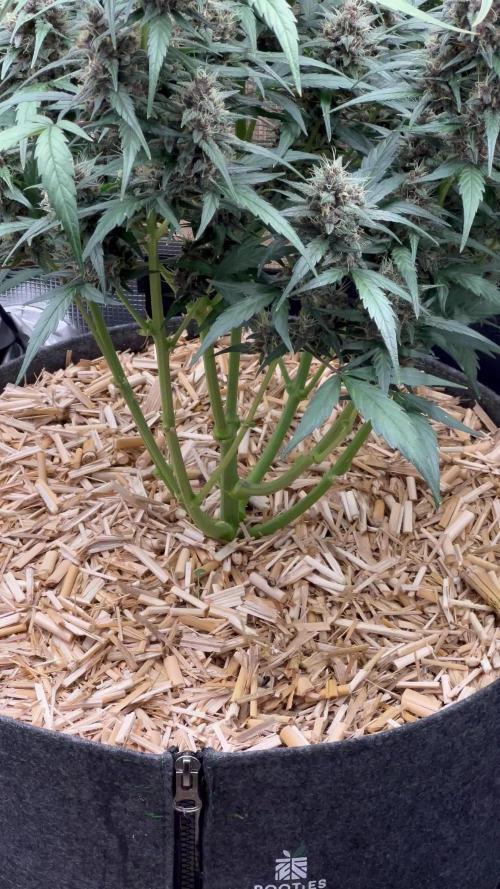
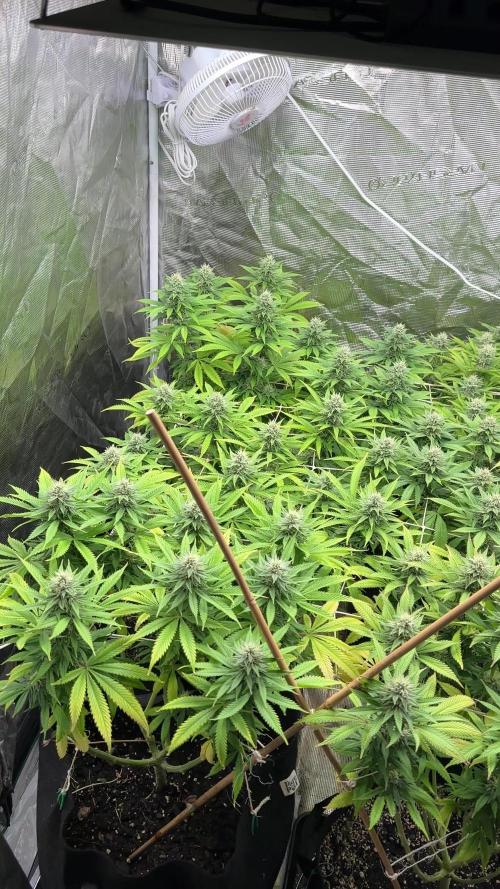
First day of week 7! So, flowering has clearly decided to start and things are looking well. I managed to correct the deficiencies with Sensi CalMag Xtra and she seems to be loving it. I guess we all make mistakes on our first grow but I’m enjoying all of the learning so far. She was in a terrible state a week ago and I thought I was potentially going to lose her. Still, she powered through and here we are. Nothing much to report, I’ll just get some nice shots of bud sites when she fattens up a bit more as we go through. Peace brothers and sisters ✌️ Update 06/07: Took away quite a few leaves which were not providing much value (IMO) and she’s loved it, proper perked up and reaching high for the light. Today I also installed a little mini humidifier and it works a treat, makes it look super cool too 😂👍🏼 - Looking forward to seeing some juicy buds soon.
Likes
3
Share
She's looking very strong and healthy,she's gonna be a 🔝 lady for sure,let's keep on working to make things happen,peace and love ✌️🌱💚❤️💛
Likes
33
Share
I’m loving her structure definitely worth growing again.
Likes
17
Share
This week marked the start of the flowering phase as the light cycle was switched to 12/12, officially initiating bloom 🌸 For the first few days the plant continued normal vegetative growth, with the stretch becoming noticeable after about 3 days. By the end of the week the plant had already gained noticeable height and the early stretch phase was clearly underway. • Stretch beginning after ~3 days • Canopy mostly even with only one branch slightly leading • First few white pistils visible toward the end of the week Light intensity was increased to ~750 PPFD ☀️ and the fixture was raised slightly to maintain proper distance as the plant began stretching. Watering increased slightly as the plant entered the flowering transition: • ~3L every 2–3 days based on pot weight 💧 Feeding this week: • 1x BioTabs Bio PK • Otherwise water + BioBizz CalMag Environment remained stable: • ~25°C temperature • ~55% RH 🌡️ The plant remained healthy with balanced structure and deep green foliage. The topping from earlier veg clearly paid off, as the canopy remained fairly even going into the stretch phase. Overall this week marks a smooth transition into bloom with the first signs of stretch and flower initiation 🍩🔥
Likes
9
Share
@Piorkeed
Follow
Week 1 (23-29/01) During this week I will feed the plants with tap water and only 2 ml of Bio-Grow. I will also dimmer the light down to 30% because, being it at 20cm from the plants, I want to avoid burning them. The fan will be on 4 hours/day. By means of the inkbird thermostat I will control the heating/cooling system. Inkbird parameters will be: 23.5°C with -3°C for heating and +2°C for cooling. 23/01 D1: preparing the pots. A layer of gravel surronded by light-mix by BioBizz. Planted the three sprouts. 24/01 D2: added a support to each plant to avoid the fall due to the weight. Provided a glass of fresh water (25cl) to each of them. 25/01 D3: - 26/01 D4: watering day. Added 2ml of Bio-grow to 1.2l of tap water (approximately 40cl of water each plant). 27/01D5: - 28/01D6: watering day. Approximately 50cl of tap water to each plant. Powered on the fan. 29/01D7: -
Likes
6
Share
1 Strain, same breeder, same tent and conditions but 3 different agendas. Molly is just over 42”, Meredith is 30” and Marissa only 16”. I think Molly’s stretch is over and the other 2 have a ways to go. This week I defoliated all 3 again to open up the bases and thin the canopies a little. I’m no expert but I’m learning and the ladies are looking great. Added some more coco to make up for the sinking and while I’ve been trying to keep this as simple as possible just using Advanced Nutrients and CalMag, after doing lots of reading I ordered some Big Bud for Coco and will be starting that when it arrives. Haven’t run the humidifier this week at all or the dehumidifier. Just letting it stay 45-55 on its own. Figured out how to gain almost 6” in the tent without sacrificing ventilation so got Molly back under the light fully, then she grew another 6” out of spite…lol. Great week! I love opening the tent and having the humidity and smell hit me in the face.
Likes
2
Share
Hallo zusammen, Die zkittlez wächst wunderbar, die buds werden richtig schön und bekommen so langsam Gewicht. Was aber nicht so schön ist das die Blätter sich braun färben und punke bekommen was jemand was das sein kann? Danke für eure Zeit💚
Likes
11
Share
On attend le curring pour en savoir plus
Likes
25
Share
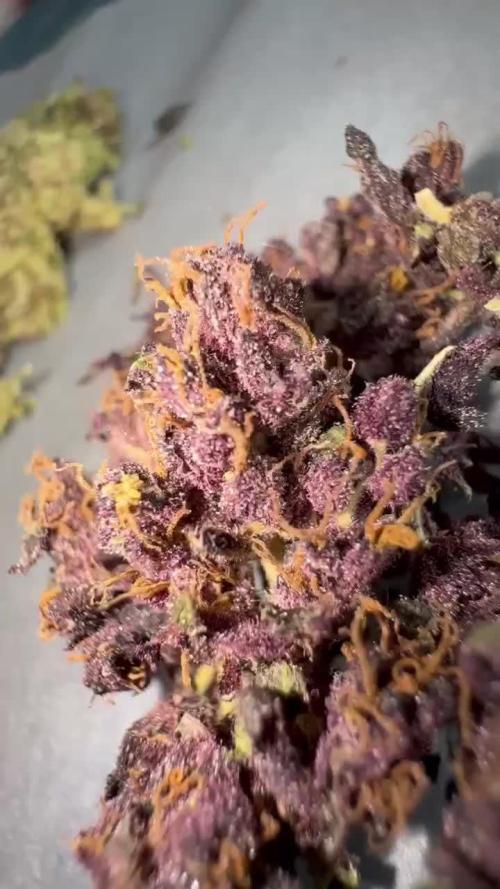
Last week after flush.More trichomes and flower color has changed.
Likes
6
Share
Really starting to put energy into making some delicious cookies
Likes
32
Share
@Dunk_Junk
Follow
She really seems like she's filled out this week! Must have liked the flush last week!
Likes
9
Share
@Sauce_XL
Follow
3.9.2024: Start of week 8. Day 50 from seed, 46 from sprout. Nothing doing today, plant is healthy and getting fatter by the day. Plucked a few leaves but thats it. 3.10.2024: Day 51. Fed 1/4 strength fox farm trio mixed w/ calmag into over a gal of 6.5ph water. Gave roughly 3 liters of the solution. Runoff ppm is finally under 1000. Might increase nutes to 1/2 strength moving forward. Bud development on the main cola is almost half the main stalk now. I'm no pro when it comes to taking pictures so its hard for me to get clear, detailed shots of the nugs. 3.11.2024: Day 52, 48 from sprout. Moving along nicely. 3.12.2024: Day 53. Fed 1/4 strength, roughly 96oz at 6.4ph. I broke the feed/water/feed schedule and fed twice in a row. Also did some lite defoliation on the bottom fan leaves that weren't getting light. 3.13.2024: Day 54 from seed. Plant is doing its thing. 3.14.2024: Day 55. Fed again at 1/4 strength, 96oz at 6.6ph. Runoff ppm was 880. 3.15.2024: Day 56 from seed, 52 from sprout.
Likes
12
Share
Week 12 — GMO Cookies Served with extra curiosity ? Week 12 from seed marks what we call Week 7 of flower in this 12/12-from-seed run, and at this stage the room is doing exactly what it should: less intervention, more observation, and a whole lot of trust in the process. By now the heavy lifting is done. Structure is built, flowers are formed, resin production is in full swing, and the focus shifts from pushing growth to guiding the finish. That’s why the room still looks familiar on paper — 26°C days, 18°C nights, 60% RH, steady airflow, same rhythm, same calm environment. No dramatic changes, no chasing numbers, no panic-adjusting because a chart says so. Leaf expression remains relaxed, transpiration is steady, and the plants are still telling us the same thing they have all run: conditions are stable, leave us be. That consistency is what got us here. And now we let them finish. ⸻ Less feeding, more finishing This week marks the real transition into the final stretch. The bottles have mostly stepped aside, and the focus now is simple: water, enzymes, patience. At this point the soil still holds more than enough nutrition to carry these plants home. That is one of the biggest advantages of building a living, reusable medium instead of treating soil like an inert substrate. The plant has already been fed. Now the soil gets to do what it was built to do: buffer, break down, recycle, and deliver what remains. So instead of continuing to push feed late into flower, we’ve shifted almost entirely to enzymes. This week the mix is simple: * rainwater * dehumidifier water * Pure Zym * no pH adjustments Landing naturally around 6.8. That is perfectly acceptable here, and more importantly, it is consistent. At this stage we are no longer trying to micromanage every decimal point. We are reading plant response, not chasing bottle charts. The root zone is stable, the soil is active, and the plants are finishing without asking for more. That matters more than forcing a perfect number onto paper. ⸻ Why enzymes matter now This is where enzymes earn their place. Late flower is less about feeding the plant directly and more about helping the soil finish clean. Enzymes work by breaking down dead root matter, leftover organic residue, and unused nutrient material in the substrate. Instead of allowing that material to sit, stall, or accumulate as waste, enzymes help convert it into simpler compounds the soil biology can either recycle or clear out. That matters for three reasons right now: 1. Cleaner root zone The plant is nearing the end of its life cycle. Roots naturally slow, age, and shed. Enzymes help keep that zone cleaner, reducing buildup and preventing the root mass from becoming stagnant. 2. More efficient nutrient recycling There is still food in this soil. Enzymes help unlock what remains, allowing the plant to access residual nutrition already present in the medium instead of continuing to push fresh inputs. 3. Better soil for reuse This matters beyond harvest. Because this soil is being reused, enzymes help start that cleanup process now — breaking down residual organics and preparing the medium to be re-amended instead of discarded. This is not just feeding the end of this run. It is preparing the beginning of the next one in the veggie world outside. ⸻ Drinking less… but still drinking well Water uptake has eased slightly this week, now sitting around 1.5L per plant every 24 hours. That small drop is exactly what we expect here. They are drinking a little less now because the plant is no longer prioritizing rapid structural expansion. Stretch is done. Leaf production has slowed. Vertical growth is over. The plant is no longer spending energy building framework. Now it is ripening. That shift changes demand. Water use naturally tapers as metabolic priorities move away from expansion and toward maturation. Less new biomass is being built, so total uptake softens. But they are still drinking well — and that matters. Because while structural growth has slowed, flower metabolism has not. The plant is still: * moving water * stacking density * swelling calyxes * pushing resin * regulating temperature * transporting stored energy into the flowers That still takes water. So yes, they are drinking less. But 1.5L per day, in late flower, with this amount of biomass and this level of flower production, is still a very healthy sign that the engine is running exactly as it should. ⸻ The room right now This is one of the most rewarding phases of the cycle. The room smells louder. The flowers feel heavier. The frost gets thicker by the day. The color starts to shift. And every plant begins speaking its final language. This is where the run stops being about control and becomes about presence. There is less to do now. But more to notice. This stage is hand-watering, lifting pots, checking weight, scanning leaves, watching posture, tracking fade, peeking into bracts, checking trichomes, noticing who is ahead, who is slower, who is swelling, who is darkening. This is where the work becomes quiet. And this part matters just as much as everything that came before it. ⸻ Bulk, frost, and the final swell This week the flowers are doing what good late flowers should do: they are swelling. Not stretching. Not throwing chaos. Swelling. The buds are putting on that final weight now — denser, tighter, heavier by the day. Calyxes are stacking over calyxes, the flower surface is thickening, and what looked finished a week ago suddenly looks like it still has more to give. That late swell is where so much of the final weight comes from. And GMO is showing exactly why it earned its reputation. The flowers are broad, greasy, and dense. The frost is no longer just visible — it is layered. Trichome coverage has moved past sparkle and into texture. You can see it sitting on the flower surface like sugar pulled too thick. This is where the plant starts looking less like it is flowering and more like it is preserving itself in resin. ⸻ What you are seeing now: pistils, calyxes, and ripening This is the point where flower development becomes easier to read once you know what is changing. Those bright white hairs (pistils) that dominated earlier flower are beginning to darken, curl, and recede. That is normal. Early on, pistils emerge fresh and white as part of active flower development. Their job is simple: reach outward while the flower builds. Now that the flower is mature, many of those pistils have done their job. So they begin to: * oxidize * darken * curl inward * shift from white to orange, amber, or brown That is not decline. That is ripening. At the same time, the calyxes beneath them begin swelling. This is the part many growers miss. As the pistils age and pull inward, the calyxes underneath begin to enlarge and firm up — becoming fuller, rounder, tighter, and more pronounced. That swelling is where density comes from. It is one of the clearest signs the flower is still building real mass even when fresh white hairs begin slowing down. So while the pistils look older, the flower itself is still maturing. That is exactly what we want. ⸻ And then there are the trichomes This is where the real finish happens. Trichomes are not just “frost.” They are the plant’s chemical armor. These resin glands are where cannabinoids, terpenes, and much of the plant’s aromatic complexity are produced and stored. What looks like sparkle is actually the plant concentrating its chemistry onto the flower surface. And late flower is when that chemistry peaks. Right now they are thickening, clouding, and maturing. This is the stage where clear heads begin turning cloudy, volatile terpene content is peaking, and the plant begins shifting from active production into final ripening. That is why this stage matters so much. This is not just visual maturity. This is chemical maturity. ⸻ Special guest in the garden ? This week’s inspection team also included one highly unqualified but deeply committed assistant. A tiny toy fly has been making rounds through the canopy, checking trichome density, inspecting pistil posture, and offering absolutely no useful advice whatsoever. Morale has improved. Yield projections remain unchanged. The inspection reports were biased, but adorable. We’ll allow it. ⸻ Looking ahead to Week 13 Next week will be about watching the finish tighten. Expect: * more visible fade * stronger senescence expression * slower water uptake * deeper aroma * continued calyx swell * more pistil recession * trichomes pushing further cloudy This is where patience matters most. Not every plant will finish on the same day. Not every top will mature at the same speed. And not every signal arrives all at once. Next week is not about deciding harvest. It is about learning how close harvest is becoming. And that is a very different thing. ⸻ Final thoughts Week 12 is one of those weeks that reminds you why the slow parts matter. The feeding. The restraint. The consistency. The observation. The trust. Now it shows back in the flowers. To everyone following along — the longtime growers, the silent lurkers, the curious beginners, the sharp-eyed critics, the day-ones, the new faces, the supporters, the skeptics, the genetics, the breeders, the platform, and everyone spending even a minute here with this run: Thank you. To those who watch closely, cheer loudly, question honestly, and keep showing up week after week — respect. To the OGs who have been here since the first awkward updates and to the new eyes just arriving now: welcome. And to these plants, for doing what they do best with quiet precision and no ego at all— all love. 📡 DELETED @ 1K Please stay tuned.we never quit https://www.youtube.com/@TheDogDoctorOfficial NEW 🙏 Thank you for your patience and continued support. FOR DISCOUNT CODES AND MORE JUST FOLLOW THE LINK https://website.beacons.ai/dogdoctorofficial 📲 Don’t forget to Subscribe and follow me on Instagram and YouTube @DogDoctorOfficial for exclusive content, real-time updates, and behind-the-scenes magic. We’ve got so much more coming, including transplanting and all the amazing techniques that go along with it. You won’t want to miss it. GrowDiaries Journal: https://growdiaries.com/grower/dogdoctorofficial Instagram: https://www.instagram.com/dogdoctorofficial/ YouTube: https://www.youtube.com/@dogdoctorofficial Deleted by Youtube - https://www.youtube.com/@TheDogDoctorOfficial NEW Vimeo : https://vimeo.com/dogdoctorofficial Under construction stay tuned ⸻ Explore the Gear that Powers My Grow If you’re curious about the tech I’m using, check out these links: 🔆 Lighting & Environmental Control • Future of Grow — Advanced LED lighting technology https://www.futureofgrow.com/ DISCOUNT CODE: DOG20 • Lumiflora — Under-canopy LED lighting https://lumiflorade.com/ • TrollMaster — Environmental controllers and automation gear (past collaboration) ⸻ Genetics • Zamnesia Seeds — Genetics used in this project https://www.zamnesia.com/ ⸻ 🌱 Soil, Substrates, Boosters & Root Support • Plagron — Substrates, bio mixes, and supportive products https://plagron.com/en/ ⸻ 🎒 Storage, Curing & Preservation • Grove Bags — Curing and storage solutions https://grovebags.com/ ⸻ 📸 Photography Equipment & Tools (Not sponsors, but part of my creative toolkit) • Sony A6700 • Sony full-frame macro lens + few more • Stacking photography workflow - learning • iPhone (for behind-the-scenes shots) We’ve got much more coming as we move through the grow cycles. Trust me, you won’t want to miss the next steps, let’s push the boundaries of indoor horticulture together! As always, this is shared for educational purposes, aiming to spread understanding and appreciation for this plant. Let’s celebrate it responsibly and continue to learn and grow together. With true love comes happiness. Always believe in yourself, and always do things expecting nothing and with an open heart. Be a giver, and the universe will give back in ways you could never imagine. 💚 Growers love to all 💚 📸 P.S. – The Eye Behind the Lens All photos in this diary (for now — except for the ones showing the camera, which I took with an iPhone) are taken with a Sony A6700 paired with a Sony full-frame macro lens and a few more. Photography is part of the story — it’s how we share the fine textures, the glow, and the quiet details that words can’t always capture. I’ve also started experimenting with photo stacking — a technique where multiple images, each taken at a slightly different focus point, are layered together to create one perfectly sharp image from front to back. It’s not digital enhancement or AI; it’s pure photography — a way to reveal the plant’s beauty in microscopic depth, from trichome to petal. You’ll even see a few shots of "ghost me" capturing the shots — camera, lens, setup — because every grow deserves not just to be cultivated, but documented like art. FOR DISCOUNT CODES AND MORE JUST FOLLOW THE LINK https://website.beacons.ai/dogdoctorofficial NEW DISCORD - Official Server Invite Link : https://discord.gg/ksjAkA5T74
Likes
4
Share
Likes
25
Share
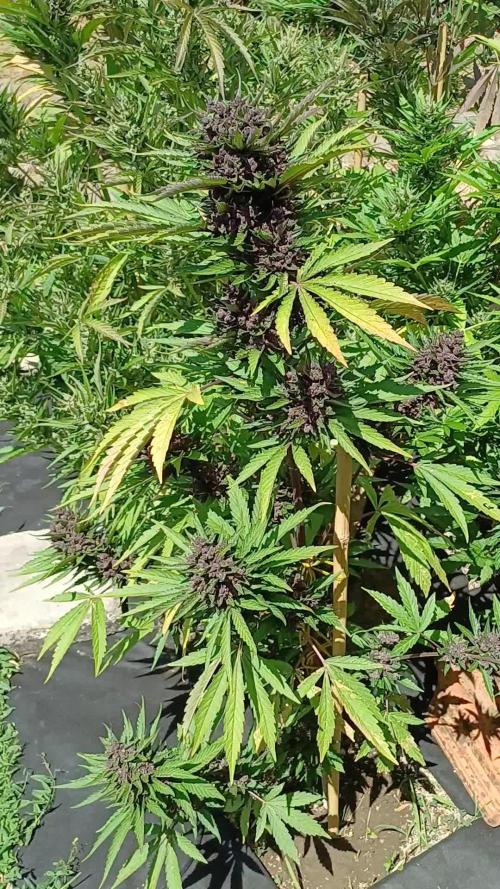
Day 70 This plant is doing amazing! Buds are fattening up nicely, covered in trichomes, and giving off a strong, sweet aroma. The flowers are dense but still showing good airflow between the sites, so no signs of mold or bud rot. Leaves are a healthy green, with just a bit of fading on the lowers – perfect for this stage of bloom. Pistils are starting to turn orange, and trichomes are mostly cloudy with a few clear ones left. Looks like harvest will be right on schedule. Environment is stable: Temperature: 24–26°C (lights on) / 20–21°C (lights off) Humidity: 55-65% Fans are running strong, keeping everything in motion Compared to the other plant, this one is problem-free and really showing its potential. If it keeps going like this, I expect a heavy yield with very resinous buds.
Likes
3
Share
@HookahCli
Follow
d46 Todavía parece que se han secado un poco más, les ayudaré con un poco de aminoácidos para que mejoren, pero la que se ve más bien es LSD, después seguido de Mimosa Evo, seguido de Melon Gum y para terminar Meganuska que bueno es la que está más afectada también era la planta más joven por lo que esos días de diferencia, se notan en la madurez de la planta, LSD seguramente sea la ganadora y tenga mayor espacio para crecer durante esta temporada, también parece ser que es la que mejor resiste y mejor crece, también las hojas siempre hacia arriba, me gusta eso, que se vea que esta sana, le tengo grandes esperanzas. Rezaremos para que no venga el pulgón ya que ahora no están en las mejores condiciones, para que les ponga preventivos a las plantas, quiero que estén sanas, que puedan soportarlo y asimilar bien ya que les provoco un poco de stress. d47 Me preocupa que Mimosa Evo se ponga a floración, si eso pasa, haré poda apical y trasplante. Pero de todas formas la semana que viene toca trasplante, luego tendrán 1 mes para rellenar la maceta y otra vez trasplante... d49 no se han regado, en un par de dias se riega.