


Likes
Comments
Share


@Adkguerrilla44
Follow
I hit it with some boost one last time then 4 or 5 days later hit it with carboflush the colors are insane since i hooked up the air conditioner,im hoping for a good amount of head smoke .. ✌️✌️✌️

Processing
Likes
2
Share


@Lil_Queazy
Follow
Start of week 2. Everything seems to be ok. The bottom left and right seem to have taken the lead. I switched the two biggest plants into the center. And raised the pots off the ground to help with airflow and temps. Plants are doing good. Two centers are taking the lead. Using RO water. Currently watering when top two inches are dry.

Likes
2
Share


@CannaPharma
Follow
The plants were transplanted into a new soil/RDWC hybrid system to finish off veg. More info to come soon

Likes
3
Share


@MicroHidroGrow
Follow
Día 16.
Ayer en el cambio de solución me olvidé la bomba desenchufada y las plantas estuvieron medio caidas hoy. Me di cuenta a tiempo y solamente tuve que sacar 6 hojas grandes que sufrieron mucho y cayeron. Luego prendí la bomba continua, bajé .un poco la intensidad de luz, y en un par de horas las plantas ya estaban mucho mejor. Esta semana agregué big bud de advance y reduje a la mitad el bud blood. Compré un medidor de ph y TDS, pero tengo que comprar baterías. Hasta ahora navego en ciego confiando en feeding y la verdad que no me ha fallado. Hice un LST para ocupar mejor el lugar, exponer más otras ramas y emparejar la altura de las plantas. Las flores han empezado a aparecer y parecen de un tamaño respetable.
Día 19. Las plantas se adaptaron muy bien al LST. Ya están empezando a formarse las flores. Por suerte las veo muy bien y estoy contento con cómo vienen. El haber defoliado bastante hizo que las plantas tomen menos agua y ahora el depósito de 20 litros me alcanza bien. Estoy muy ansioso, pero siento que va pasando muy rápido el tiempo.
Likes
42
Share


@Hashy
Follow
Notes.
Week 18 (week 11 flower)
Light settings
12/12 on at 9.00am off at 9.00pm
Viparspectra
Light power= 75% 165w
VPD aim 1.0-1.2
DLI aim 35
Extractor settings
temperature 23c with 0c steps
Humidity 30% with 0% steps
Max speed 10
Min speed 4
Monday 17/7/23 Day 120 (day 74 flower)
Looking good.
Tuesday 18/7/23 Day 121 (day 75 flower)
Defoliate
Wednesday 19/7/23 Day 122 (day 76 flower)
Harvest
#3 338g
Hung to dry.
Extractor settings
temperature 20c with 0c steps
Humidity 50% with 0% steps
Max speed 10
Min speed 2
Thursday 20/7/23 Day 123 (day 1 dry)
Removed some fan leaves.
Friday 28/7/23 Day 132 (day 9 dry)
Trim
#3 FBPHP14, dry 38g. Larf 4g.
Saturday 29/7/23 Day 133 (day 1 cure)
Saturday 5/8/23 Day 140 (day 8 cure)
Put humidity packs in the jars.
Friday 11/8/23 Day 146 (day 14 cure)
Stop using auto burping system now and burp less frequently for a bit.
Saturday 12/8/23 Day 147 (day 15 cure)
Sunday 27/8/23 Day 162 (day 30 cure)
Sampled
Stats for the grow
#1 377g
#3 338g
#4 276g
#5 393g
#6 312g
Total wet weight =1696g
#1 FBPHP12, dry 40g. Larf 4g.
#3 FBPHP14, dry 38g. Larf 4g.
#4 runtz, dry 29g. Larf 2g. Rot 5g.
#5 Pink Rozay, dry 38g. Larf 6g.
#6 Candy Rain, dry 34g. Larf 0g.
Total dry weight. 179g
Total dry larf weight 16g
Loads of trim so going run some hash.

Likes
Comments
Share

@pduchemin
Follow
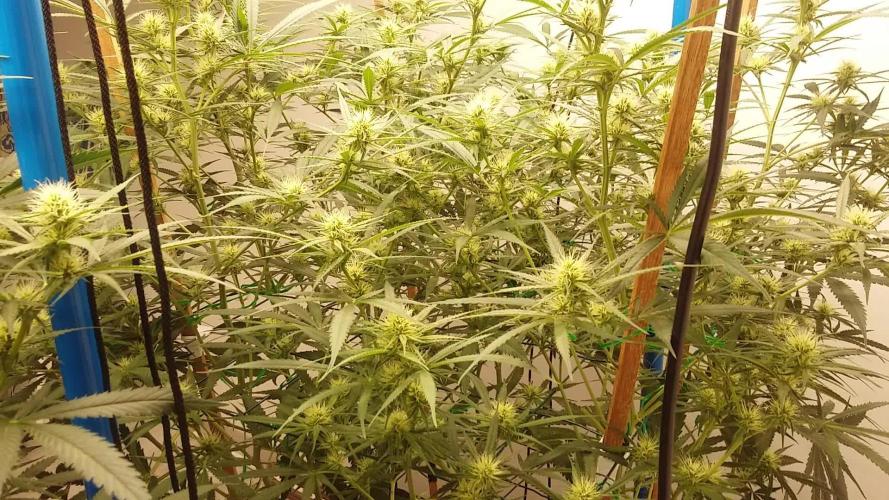
plus d'engrais minéral, j'ajuste mon npk avec la gamme aptus , defiolation, attache des branches qui partent en sucette, bref l'entretien, rinçage leger en fin de semaine. je precise qu'un jour sur deux elles n'ont pas d'engrais juste de l'eau au bon ph.


Likes
18
Share

@Bread_n_Buds
Follow
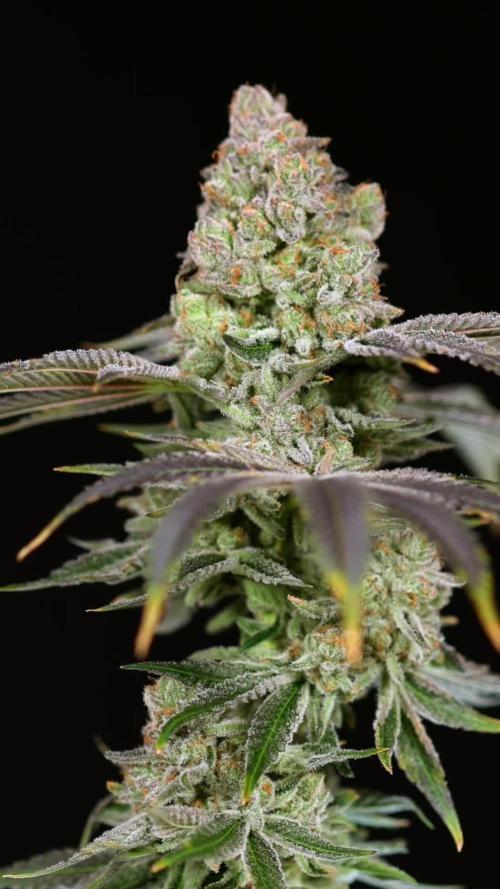
When the package containing Zamnesia x Tical Nectar Drip arrived, I was so excited I didn't think to save a seed, and now I'm regretting it because it's in my all-time top five. Why?
Because it produces wonderful flowers from every perspective: hardness, density, and weight are unbeatable. The resin production is top-notch, and in a way that only US plants can achieve, the yield is consistently good and lends itself very well to mainlining, topping, mainfolding, and cloning.
This plant is a clone of the already-seeded #1, and it's indeed very similar.
We're talking about a strain with typically American characteristics called Nectar Drip, obtained from the hybridization of a Zamnesia Apple Fritter with a 24K Gold Fangs by Tical. The result is truly explosive, with an apple aroma and a huge amount of resin that makes it perfect for extracting even from residue. The leaves are full of pure resin and smell like heaven.
I'm once again truly embarrassed by her beauty, like when a beautiful girl talks to me and makes me blush. And I have to say, she's not even the best; there are four more epics on the way that might surprise us, one of which is a clone of this one.
Maturation - The pistils have been looking super ripe for a long time, especially the upper ones, which are very red, and we're still over 90%.
Indica dominant, so we're moving towards the final part of the harvest window compared to usual. The trichomes are about 30% amber, 40% cloudy/milky, and 30% clear, more or less naturally, but I think it's fine; she looks super ripe.
The plant was cloned and left to vegetate for a short while, then directly into flowering. The flowers are all of excellent quality, and the yield is excellent, I think around 50-60 grams.
We chose 100% organic soil, 1000% Plagron, as always.
The soil we chose is the recently launched Plagron Bio LightMix, which will allow us to start with more gradual and consistent watering, without the sudden changes that liquid fertilizers can cause. A week's worth of soil is enough, so don't overdo it.
Choose your preferred style and calculate your results on the website:
www.plagron.com
Visit the new Growshop area on the Zamnesia website:
Z - https://www.zamnesia.io/it/531-growshop
These seeds are sold out and were a limited edition. I'm so sorry I didn't save one, but we can choose from Zamnesia's excellent strains and keep an eye out for exclusive limited editions like this one when they release...
Z - https://www.zamnesia.io/en/35-cannabis-seeds
T - https://www.zamnesia.io/en/35-cannabis-seeds/745-tical
Z - Nectar Drip is a unique cannabis hybrid created in collaboration between Zamnesia Seeds and TICAL. These flowers are pure power, with up to 26% THC and effects that stimulate the mind and stabilize the body. But if you want to try them, you'll have to hurry: only 750 packs are available!
There's nothing better than a good collaboration—we know that better than anyone! For this partnership, we've joined forces with TICAL to create a strain packed with flavor and potency. We brought our delicious Apple Fritter, while TICAL contributed its 24K Gold Fangs. After perfecting the result, Nectar Drip was born. This strain produces potent flowers with up to 26% THC, accompanied by delicious fruity and skunky aromas. Considering one of its parents is Apple Fritter, you can be sure that Nectar Drip has inherited a burst of fruity aromas and flavors. The skunky notes are evident, creating a rich and intriguing profile. Smoking this beauty will leave you feeling relaxed, with a pleasant cerebral euphoria accompanying the experience. It's definitely a great evening smoke, perfect for when you want to take a moment for yourself.
You know it, but I recommend it. You'll find so many wonderful things here, essentially "all the best nature has to offer."
Z - www.zamnesia.com //
Music //
Music by Last Day the Daddy
"Tical 2000 - The Judgment Day" by Method Man.
www.radionula.com
+ Feng Shui Music
+ Frequencies 432 Hz

Likes
34
Share


@Grey_Wolf
Follow
Original Sensible seeds GIRL SCOUT COOKIES 8th Week Of Veg December 30th 2019
Firstly ignore the white residue on the leaves as it's only Diatomaceous Earth that I mixed in with the Worm casting and Mollasses tea that I brewed up and sprayed on all my Plants. I did it after dark to alleviate any stress from sunshine or heat. The Diatomaceous Earth should hopefully deter some of the insects that are taking the odd bite out of some of my plants leaves. I suspect grasshoppers are the culprit and I know that they do not like the DE.
The Cookies plant is looking really healthy and as you can see from the above pics I topped her to make the plant bushier.
Cheers for Looking in on my Diary update Have a Safe and Happy New Years Celebration and I will be back Next week in 2020 💪💪

Likes
14
Share


@Terpyboyz
Follow
Final product is been absolutely amazing on these clones - the jungle came out about average but the clones definitely exceeded expectations there absolute fire in comparison but still just as good hopefully I can just improve a few issues we had on this run and dial right in 100% will be so much better, next few run is going to be special I’ve got a few things lined up. From tester packs to breeders packs I can hunt from. So lots to choose from but what to keep to run will be interesting


Likes
16
Share


@Big_Rade_SCLA
Follow
Hello fellow growers. Croptober is here. Still displaying flowering on the week because I only harvested 2 of 5 plants. I checked the trichromes and they were T-d off and all milky white. I will wait a few more weeks for the remaining plants. The goal is to have a couple plants at the beginning of the harvest window and harvest the rest when they are more mature and ripe.
The 2 plants I harvested were the bigger ones and each yielded about a pound each. One was the tall purple nug plant and the other was the bushy one. The shorter one smelled like gas once you got all the flowers bundled together, definitely can smell the sour diesel in the genetics. The tall purple one also smelled gassy, but also fruity. I would describe it as a mango/orange smoothie kind of fruity aroma. I didn't get a lot of popcorn and even the smallest nugs looked at least like a grams worth. The bud was sticky and gave a lot of finger hash. The leaves also looked packed with trichromes so I will save them for making medicine. The plants didn't grow as tall as I expected. I've honestly had indicas grow bigger, but the quality of the herb is there. Next time I will start these seeds earlier in the year to get bigger plants. I started them in May, but usually start my seeds in late March to get the roots to develop earlier. Usually they get stunted in height when you start them early, but the roots are developing. Once they take off, they tend to grow bigger because they already have an established root system. IMO BTW.
The DRY. I placed the nugs in one of those multi-level mesh containers for drying. I used the top three levels. They started off displaying around 85% humidity on the first day and on the third day are now down to 68% humidity at 76°F. They are not moldy. I handle them once daily so they don't flatten out too much on one side. This is the down side of using this type of drying technique. By the fourth or fifth day, they should be ready to start jarring. I've left them longer in the past, but they start getting really dry if you leave them in the mesh too long. Smells like it's going to be at least a two to three month cure to get that smell out, but the one I already had curing from 2 weeks ago is already smokeable. We will see how good it gets by the end of the year.
I can't wait to see how the remaining plants turn out. I will let them go as far as I can to see how the smoke differs from the early and the late harvest. Sativa dominant genetics should go at least another month, but I will start with the let's check in 2 weeks rule. Thanks to everyone following. This has been a great year for growing.

Likes
86
Share


@CANNASIM
Follow
------GENERAL COMMENT------
Here e go, last week for the final flush. Piece of cake! 👋
Went in with the overdrive. I noticed some buildup in the runoff as the EC is testing high, little overfeed so I will water with, PH water + Recharge, might cut the Sensi and go with big bloom in this last feed week.
Feeding every other day, gave a shoot in constant feeding, alternating the Base+Recharge+PK and the VeloKelp + Natures Candy in the other. Did not need more CalMag.
No deficiencies, or spotting, they are growing nicely.
------GG.AK47 COMMENT------
The AK is adding height, buds are bulking and on both are very dense!

Likes
8
Share

@eldruida_lamota
Follow
Que pasa familia, vamos con la séptima semana de floración de estas Fishy Zoap feminizadas de Seedstockers.
Vamos al lío ,se trasplantaron en macetas de 7 litros definitivamente.
El ph se controla en 6.0 , la temperatura la tenemos entre 24/20 grados y la humedad ronda el 50%.
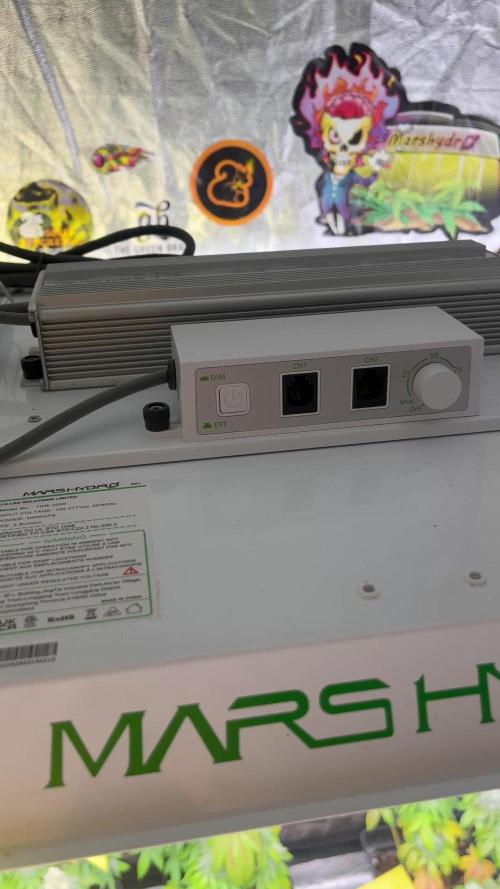
El ciclo de floración puse 12h de luz, el foco está al 100% de potencia.
De momento está yendo todo bien están madurando ya, tienen un aroma fuerte , y han tricomado por el momento de lujo.
Comentar de nuevo que el estrés hídrico fue superado sin problemas, esperemos que no surja nada más.
Gracias Agrobeta por el envío de la Gold series para esta temporada, se vienen cositas .
- os dejo por aquí un CÓDIGO: Eldruida
Descuento para la tienda de MARS HYDRO.
https://www.mars-hydro.com
Hasta aquí todo, Buenos humos 💨💨💨
Likes
3
Share


@EliteGrower
Follow
Have to cut down day 65 it's now day 60 premature again I know can't help it Buds seem to be getting a lot more dense and orange hairs are apparent now so I just hope it is good to go on that date as may not be ripe but the smell is to much my neighbor will notice with the light I've got and first grow I'm happy with how she looks will post harv and update next

Likes
18
Share


Likes
2
Share


@CannaIGrow
Follow
Seems to be growing and looking good. I can’t wait to see how she grows out.
Likes
22
Share


@medicalhydro
Follow
Flush week
Total system power 230w
Dim %10
UV-IR-FR Dim %100
PH:6.0
PPM 285
Likes
22
Share


@715creeks
Follow
First grow using Fast Buds seeds, really looking forward to seeing this one for myself
Likes
Comments
Share


@Card1Cultivations
Follow
Growth is amazing and the girls already need to be transplanted into their final 5 gallon pots.
Transplanting went well, I could have waited another week and I think it would have been better.
Anastasia is having issues with the main stem growing straight so I added supports to encourage straight growth. Drizella is too but not as severe.
During the transplant process. I also sprinkled Great White Mycorrhizae on the roots for better root health and to reduce transplant stress.
Nutrients still hand watering every other day to run off.
5.8 ph / 1.63 ec / 74.7 degrees
I reconditioned my coco coir from my first grow that was originally 1 bag of royal gold tupur blend which I believe produced some nats due to the forest material mixed in with the coco coir. This one original bag was enough to fill two 3 gallon pots and transplant them into two 5 gallon pots with a little left to spare.
I hand cleaned that first grow medium to remove all large root debris and then rinsed it thoroughly in Ro only water before letting it dry for several weeks leading up to this current transplant. I then soaked it in a solution of Sensizym and calMag to break down any remaining dead roots into nutrients while ensuring the medium is still well buffered.
The girls were started in the 3 gallon pots using a new bag of roots organics brand 70/30 coco coir/perlite. That medium had to be buffered well with calMag to avoid common Calcium and Magnesium deficiency that surface due to coco coirs ability to soak it up and steal it from the plant. This was a leason learned from my first grow that resulted in several foliage feedings to adjust for.
I was able to recycle a great deal of coco coir from my first grow which provided me enough to bump this grow up to three plants from two. So I used the recycled coco as the base and most of the back fill in all thee 5 gallon pots. I did have to use a little extra of the 70/30 to top everything off properly.
I still have a 1/4 of a bag of the 70/30 left dor future grows.
Processing
Likes
6
Share


@Weedganja420
Follow
Lleva 35 dias a 12/12 horas y cada dia se ve mas bonita!! Ha estirado mucho en esta semana y sigue llenándose de resina a pesar de haber bajado un poco las temperaturas por la noche. Estoy muy contento con el ritmo que lleva :)

Likes
18
Share


@growingpepini
Follow
This girl is exploding in the last weeks.
The buds are getting so thick finally and our expectations for harvest are getting better than last week.
We are not feeding her a lot as we already want her to suck up everything the soil already has. 👇
The weather here is also pretty humid, she is not showing signs of water lack.
I would love to hear from anyone opinions on the maturation point. How ready is she? 🙌
This is our first time with a lens so we can't really tell just by looking at it.
hope you enjoyed, see you next week! 😛😁
18-10
leaves are looking really bad, looking for some advice


