


Likes
Comments
Share




Likes
5
Share


Likes
1
Share

@therealgrowmie
Follow
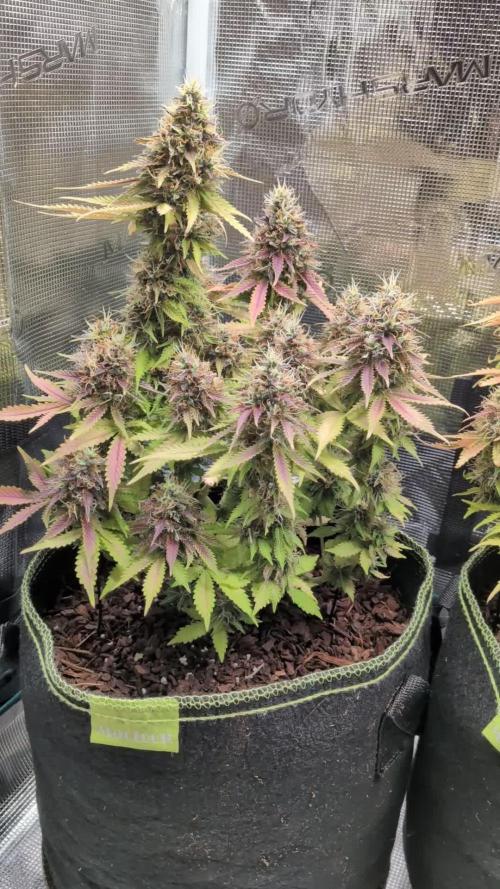
Hey Growmies! I’ve been out of town, so this entry is a bit off-schedule, and watering was handled by an automatic irrigation system.
That said, the flowers are looking big and developing fast, with senescence in full effect. The leaves are yellowing significantly, which tells us the plants are now entering the late stage of their lifecycle.
They’re basically ready for harvest any day now—depending on your individual preference. I’m going to let them ride a little longer to aim for no more than 10% clear trichomes. 🙂
---
Quick rundown on everything else:
Watering: 1500ml every third day
Fertilizer: According to the BioBizz schedule
Light intensity: ~1000 PPFD
VPD: ~1.82 kPa
Temperature: ~28°C
Relative humidity: ~50%
Likes
18
Share


@Borberad
Follow
Die Pflanzen haben deutlich mehr Durst. Eine halbe Stunde nach ihrem Sonnenaufgang sind sie zweimal in Folge sehr trocken gewesen. Die Spitzen der Stempel an einigen Blüten haben sich leicht braun gefärbt. Daher die Wassergabe jetzt auf 3,5l Täglich erhöht. 2,5l eine halbe Stunde nach "Sonnenaufgang" mit normaler Düngung und ca 5h später nochmals 1l jedoch mit halber Dünger Dosis.

Likes
148
Share


@BioBuds
Follow
Well, she keeps disappointing me a bit. If you see her development compared to the two other strains, she is miles behind. Not stretching that much, and flowering stays behind. Im checking for male signs every day as I suspect she might go on me.
All conditions are the same. This is a 9 euro seed. 4 of them didn't germinate. 50 bucks down the shitter. The plant right next to her comes from a one dollar seed, xtrakush at weedseeds.site.
That's why I plead for the growers to share their lucky shots and give the small-time breeders a break.
Also a plea for an expiry date on the products, for the price vs cost of production, we can expect that service.
that way renowned breeders also protect their name when third parties sell old seeds to growers that leave bad reviews.
Maybe she surprises me yet, but we are long way from the silverback we wanted.
Thanks for checking in, see you next week!!
Bud

Likes
13
Share


@DevelGrow
Follow
Hallo Freunde 👋 Grand Daddy ist 35 Tage alt und in Blüte! Nun kommt noch der Stretch und bin gespannt wie hoch sie noch kommen möchte 😁🌴 bis nächste Woche keep Green and grow High ✌️🍀💚🍀

Likes
7
Share


@Tazard
Follow
I increased the PK again this week. She is developing nicely I don’t think I’m ready to start flushing her yet going to keep pumping the PK in for another week or so until she’s closer to ripening.

Likes
5
Share


@Deli_Weed
Follow
Iniciando la semana con el primer entrenamiento 💪🏻 🌱 (LST) respondió muy bien 👏🏻

Processing
Likes
Comments
Share


@DIYbucketgrows
Follow
Released the shackles of LST for now — going to allow some vertical and unobstructed growth of all branches for a few days, then perhaps resume. I hope to have another week or so of vegging!


Likes
3
Share


@High_Grade_Dadli
Follow
Girls are coming on good cant complain still need to do some trimming
Likes
8
Share


@Aleks555
Follow
Test FBA 2503 – 42Fast Buds
68 days from seed — and we’ve reached the final stage: harvest time!
Although the plant didn’t grow very big, it truly impressed us — the buds are dense, large (as big as a fist!), and absolutely drenched in sticky resin. The pinkish hue of the buds gives this beauty an extra touch of elegance — she looks stunning! But the most striking thing is the smell. It’s incredibly strong, sharp, and long-lasting. Our girl has a seriously intense chemical scent — it fills the entire grow tent instantly and lingers for hours. Not for the faint of heart!
From the beginning, we focused on giving her everything she needed: a well-balanced substrate, a stable environment, and, of course, proper nutrition.
Huge thanks to Xpert Nutrients for their powerful line of fertilizers — they played a key role in helping this plant reach its full potential, delivering impressive trichome production, vibrant colors, and strong structure.
And special thanks to 42Fast Buds for the opportunity to test this unique and powerful autoflower — it’s been an amazing experience!
Harvest results coming soon — stay tuned!
Processing
Likes
37
Share


@MG2009
Follow
Not much to report slow steady growth cool temps are not helping.Getting warmer weather next week should help speed things up a bit👍
Processing
Likes
20
Share


Likes
18
Share


@eldruida_lamota
Follow
Que grande es esta variedad, muy contento con El Progreso vegetativo de estos ejemplares.
Iremos viendo estas semanas cómo florecen ya que cambiamos el fotoperiodo, la cosa os Aseguro que pinta muy bien.

Likes
18
Share


@GYOweed
Follow
The sour sorbet dna copy is outdoors doin ok.
Bruce banner in the left and trainwreck on the right both getting milkier and pungent.
Just getting ro now.


Likes
26
Share


@MrHightimes
Follow
Got them at home in their flowering tent. Everything is looking great!
Likes
8
Share
@eldruida_lamota
Follow
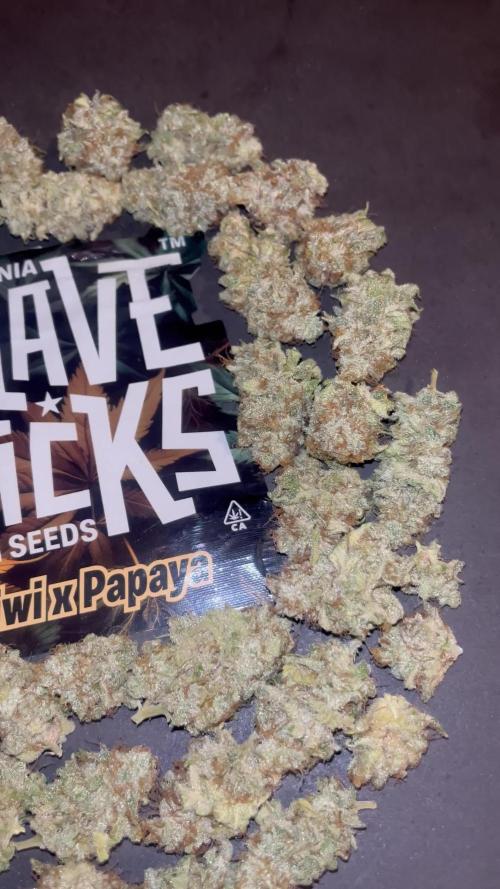
Venga familia que ya viene la cosecha de estas Kiwi x Papaya de Maverickseeds, que ganas que tenia ya de pasarles la tijera.
Que locura de variedad , me encantó cultivarla, que aromas y que flores aparte de piedras, se ven resinosas y muy apetecibles.
a sido una genética con la que disfruté bastante todo el proceso, crece bastante vigorosa y al final saca unos tonos llamativos.
No supuso ningún problema todo el ciclo fue perfecto.
Agrobeta:
https://www.agrobeta.com/agrobetatiendaonline/36-abonos-canamo
Mars hydro:
Code discount: Eldruida
https://www.mars-hydro.com/
Hasta aquí es todo , espero que lo disfrutéis, buenos humos 💨💨.

Likes
44
Share


@Cogollo_eu
Follow
**Encontrarás la traducción a español al final de la descripción**
From/Desde: 19/04/19 || To/Hasta: 25/04/19
From day/Desde día: 57 || To day/Hasta día: 63
You can find the Money Maker Diary here:
** Podéis encontrar el diario de las Money Maker aquí:**
https://growdiaries.com/diaries/25667-gorillamakingmoney-gorilla-vs-money-m
-----IMAGES & VIDEOS-----
1 - Before defoliation
2 - Defoliation
3 - After defoliation
-----WEEK SUMMARY-----
(Following text was translated with tools and reviewed, sorry for mistakes, misspellings or nosense things)
As you can see I've done a defoliation this week. Yes, I have really gone over the top, I have removed many more leaves than I had, and the tails of the plants has not come to join at all due to the failed defoliation.
Being the first defoliation I do, I did not really know what I was doing and I went crazy. Now that it has been several weeks since I made this defoliation, I realize that I should not have removed the leaves from the nodes of the tails, because they have stopped growing and have not joined with their superior parts. Anyway, the plants are beautiful today and although they could be much better I feel very happy with them.
I know I've made 2 fatal mistakes in this grow
- The first has been the massive defoliation badly done, defoliation yes, but with head ... do not follow my example.
- The second failure that I see today, is that I did not leave enough growth time (18/6) after having made the last pruning and that has made the tails have been a length much less than what would have been desired, I think that 2 more weeks of growth would have been perfect.
-----WATERING CALENDAR-----
20/04/19 - 1,250 ml with Sensizym, Silica, Rhino Sk, Bud Ignitor, Big Bud, Bud Candy & Bud Factor-x @ PH6.4 & 1.2 E.C.
23/04/19 - 1,250 ml with All week nutrients - (Silica, Sensizym & Bud Ignitor) @ PH6.5 & 1.5 E.C.
*****ESPAÑOL*****
-----IMÁGENES Y VÍDEOS-----
1 - Antes de la defoliación
2 - Defoliación
3 - Después de la defoliación
-----SUMARIO SEMANAL-----
Como podéis ver esta semana he hecho una defoliación. Si, efectivamente me he pasado de listo, he quitado muchas más hojas de las que debía y las colas de las plantas no ha llegado a unirse del todo debido a la fallida defoliación.
Al ser la primera defoliación que realizo, no sabía muy bien que hacía y me lancé a lo loco. Ahora que han pasado varias semanas desde que realicé esta defoliación, me doy cuenta de que no debí de haber quitado las hojas de los nodos de las colas, pues estos han dejado de crecer y no se han unido con sus partes superioras. De todas maneras, las plantas están preciosas a día de hoy y aunque podrían estar mucho mejor me doy con un canto en los dientes.
Se que he cometido 2 errores gordos en este cultivo
- El primero ha sido la defoliación masiva mal realizada, defoliación si, pero con cabeza.... no sigáis mi ejemplo.
- El segundo fallo que yo veo a día de hoy, es que no dejé suficiente tiempo de crecimiento (18/6) después de haber realizado las últimas podas y eso ha hecho que las colas hayan quedado de una longitud muy inferior a la que hubiera deseado, creo que 2 semanas más de crecimiento hubiera sido perfecto.
-----CALENDARIO DE RIEGO-----
20/04/19 - 1.250 ml con Sensizym, Silica, Rhino Sk, Bud Ignitor, Big Bud, Bud Candy y Bud Factor-x @ PH6.4 & 1,2 E.C.
23/04/19 - 1.250 ml con todos los nutrientes semanales - (Silica, Sensizym y Bud Ignitor) @ PH6,5 & 1,5 E.C.

Likes
15
Share


@902EastCoast
Follow
This week went great again. The flowers are chunking up more now, filling with trichomes. The smell is amazing🤤🤤🤤! Afghan kush early harvest is impressive with chunky buds already.Pink kush has the best smell and beautiful Color’s on her leaves. They all smell great. Orange bunz smell like oranges. Lots of trichomes everywhere! These LED lights seem to be doing a great job so far. Gaia green hasn’t disappointed me yet, always heathy happy plants. I defoliated a bunch a little bit over time to make sure I didn’t run into pm or other issues.
🔥💨💚✌️🏼
