


Likes
Comments
Share


@chrizhype
Follow
Video at the end.
Watering:
12.05.
3,70kg - 4,27kg
14.05.
3,6kg - 3,9kg
17.05
3,6kg - 4,6kg
(1g green house powder feeding "grow" in 1L of water)
The training is going well, I added some force here and there. Plant seems to be happy.
I decided to order some powder feeding fertilizer, since the plant is now starting week 4 and is still quite small.
Update:
1g greenhouse powder feeding in 1L of water used at the end of week 4.

Likes
2
Share


@C_More_Budz
Follow
Things are goin by smoothly started to give them some calimagic in low doses so they can get use to it. The upper 4 more so towards the left I believe are white Runtz because they all have similarities, and the bottom three in a triangle are all mac and jacks because again they all have similarities, the last two smaller ones I believe may be gelato but I still don’t know. Goin to start giving them low dose feeds and gradually increase it. I’m gone try my best to upload every Thursday and make a YouTube video as well I will provide all links once things are set in stone. Any input is appreciated happy growings growmies

Likes
5
Share


@Weedganja420
Follow
Esta preciosa cepa ha crecido bastante rápido llegando a ser la más alta del armario, durante la floración ha creado unas increíbles flores llenas de resina que poco a poco se caían del peso de las mismas.
Una locura de genética que todos deberíamos de cultivar al menos una vez.
Espero que os guste estas bonitas fotos.

Likes
30
Share


@Mazgoth
Follow
Going little bit slower but will see,(UPDATE D51)i put an CFL 200W lamp at day 48 until harvest,the older lamp was a waste of time and waste of money,hope the plant will get a lot bigger with this light

Processing
Likes
10
Share


@JohnnyGrower
Follow
Esta semana los nutrientes siguen de la misma manera, es notorio el exceso de Nitrogeno por ende se disminuira en los próximos riegos, se realizaron podas apicales en los clones que no les hice anteriormente para que alcanzaran más altura. Dentro de esta semana instalare la malla scrog Kanovi para guiar los vigorosos brotes.
Además esta semana ya esta retomando el crecimiento la planta madre variedad Tangie la cual cumplió su ciclo de propagación por esquejes y porfin florecerá.
Leo comentarios, opiniones y recomendaciones


Likes
4
Share


@Happygrowing
Follow
The frostiest of the 3 different cut strain that I have.
Smells like strawberry...
Its very interesting...
Produttive one...
I already love her🤣
Processing
Likes
34
Share


@Mr_Motalovah
Follow
Hello growers and tokers! 👋 👩🌾 🧑🌾.🔥💨
Alright so as promised to make up for the few pictures from last week I've got more photos and a little video to see more detail.
She hasn't stopped growing yet, that's another 10cm this week.
Really really visible for my top to neighbors.. 😂
Now I'm just at a point where it's like fuck it, whatever happens happens.
She's not stacking as good as I hope on the top four colas. For my taste there's too much space between each node.
The bottom growth isn't getting that much light anymore but there's some little bud sites..
No smell yet but I'm guessing that'll kick in next week.
That's it for this week. Stay tuned to see how she flowers.
Stay safe!
Likes
4
Share


@Purkle
Follow
UPDATE: New dry bud jarred up and bud shot pictures as well as ice bubble hash run pictures.
Harvest day!
Oh how amazing it has been. After 48 hours of darkness with just the dehumidifier and fan going, the smell of sweetness and gas filled our nostrils when the tent was opened to get the girls out.
Unfortunately I couldnt get very good pictures with the lighting against the tent but got some decent results where I could use natural lighting. Ive got some more pictures on the way so check back for some dry bud shots as well as some macro shots of the trichomes.
With the help of a couple good friends, we got the gloves and trimming scissors out and trimmed the girls down in about 2 - 3 hours while listening to music and smoking some joints (wth some added scissor hash between trims 😜). We only did a basic trim (taking off the fan leaves as well as the larfy/popcorn buds which then went into the freezer which will be used as a fresh frozen ice bubble hash run) as I like to leave a good amount of the leaves on during the drying process but not too much as the humidity is quite high at the moment anyway so I dont have to worry about overdrying.
Overall this strain was super easy to grow but I can chalk that up to the environment and nurtients being on point as well as the light upgrade which has made a massive difference.
They didnt stretch as much as they would do under a MH or HPS bulb but I was happy with their size but may look at going bigger in the next round (the diary for the next round is currently up so check the progress of what I hope will be monsters as I will be adding more light to the flower stage!)
Once the girls have spent 7 - 10 days drying, I will be popping them in their jars and doing a smoke report with some pictures of the finished buds and some trichome macro shots.
Thank you to everyone whos followed this diary and I hope you enjoyed my content and dont forget to check back in about a week for those macro shots for a closer look at the trichomes from the buds as well as getting up close and personal with some bubble hash.
Next up will be making some edible gummies and this run will be complete with flower, hash and edibles.
Pros about this strain. It's great for anxiety. A little goes a long way as it packs a punch, filling your mouth, nostrils, air passages, lungs abs
✌️
Likes
28
Share


@Mitch
Follow
Growing very well, nice colas cover in white, almost finishing 2 week with beastie blumz, starting to create huge looking nugs, really excited about the finish result.

Likes
10
Share
@ThatsmyGrow
Follow
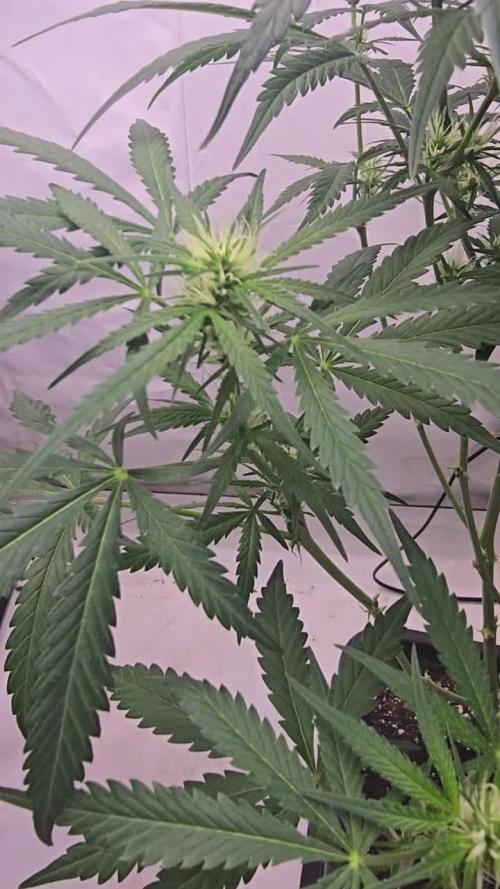
🌸 Week 7 – Gorilla Cookies Auto Pheno Hunt
Another week has passed and flowering is now in full swing across all 6 phenos 👀🔥
The differences between the plants continue to grow, and it’s becoming easier to see which phenos have the potential to become real standouts by harvest time.
📈 Current observations:
Pheno #1 and #6 have finally started to catch up and are now slowly building buds as well 🌸
Pheno #5 continues to dominate the tent and has stretched to an impressive 130 cm
The flower development on Pheno #5 is especially promising, with some bud sites already suggesting the potential for 25 cm+ colas if everything continues as planned 🔥
Pheno #2 and #6 are being overshadowed by the larger phenos and are clearly falling behind in overall size and vigor
The structural differences between the phenos are now more obvious than ever, with some focusing on height while others remain more compact and bushy
💡 Environment & setup:
The grow has now reached its current limits in terms of space and lighting:
Light fixture raised to its maximum height
Light intensity increased to 80%
Summer temperatures pushing the tent up to around 32°C ☀️
Relative humidity averaging around 67%
Despite the higher temperatures, the plants are still pushing forward and stacking flowers nicely. The next few weeks will be all about bud development, density, and resin production.
🏆 At the moment, Pheno #5 is definitely demanding attention, but there is still plenty of time for surprises. Sometimes the biggest plant doesn't end up being the best one, and that's exactly what makes a pheno hunt so exciting.
💬 Which pheno do you think will come out on top when harvest day arrives?
Likes
50
Share


@GMSgrows
Follow
Sleepy Joe's are wide awake and throwing some nice flowers. Stacking up nice and starting to show some trichomes now. Odours in the room are very pleasant. Hoping these ladies hit their high tech levels. 34% is nothing to sneeze at.

Likes
7
Share


@apmcfly76
Follow
Very satisfied and impressed lasted a little bit longer than I expected in vegetation. Enjoying the process and learning
Likes
Comments
Share


@Batista
Follow
This was the last week on vegetation light schedule, we think she had grown enough to start flowering cicle.
We also started the defoliation, gradually removing the leaves, when we find it necessary.

Likes
Comments
Share

@420DeepGrow
Follow
📆 Semana 5
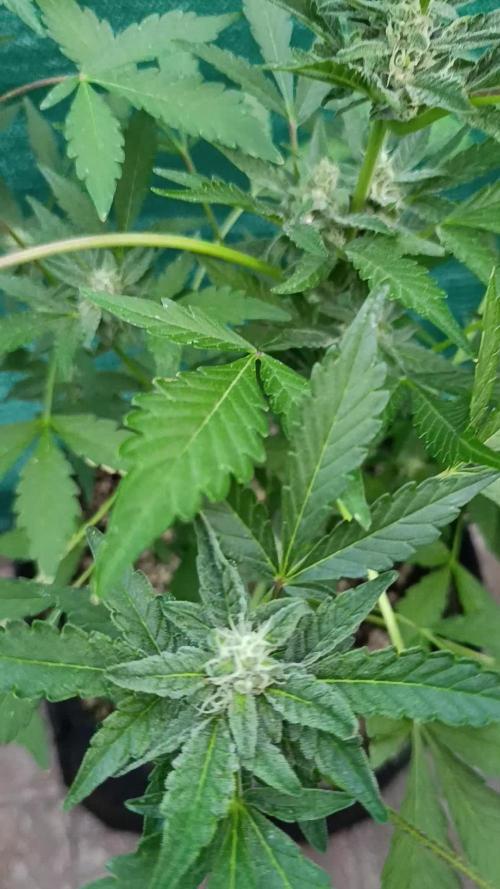
Durante esta quinta semana, la floración continúa avanzando con buen ritmo. Los cogollos, todavía pequeños, empiezan a destacar por la gran cantidad de resina que presentan, mientras la planta mantiene un desarrollo equilibrado bajo el sol directo.
⚡ EC: 1.0
💧 pH: 6.2
🌡️ Agua: 21°C
🌫️ Humedad: 45 - 55%
💡 Intensidad: Luz directa del sol
🌱 Aporte nutricional: Se mantiene la nutrición en una EC de 1.0, con Bloom Booster y el resto de aportes habituales para acompañar el desarrollo floral.
🔥 Nota de cultivo: Cogollos pequeños pero totalmente cargados de resina, mostrando un potencial muy interesante a medida que avance la floración.
Seguimos creciendo fuerte 💪!

Likes
67
Share


@GanjaReaper
Follow
Day 69:
As you can see, lucky the buds gone bigger but because of these intense feeding to fix the grow, they start to get nutrient burns. So for the new week i might only give water until the end with maybe some Regulator, enzymen, humic-blast...
They also don't drink fast anymore. Another indicator that they having a hard time taking all the nutrients and that they are at their end of their stage.
Some smaller plants, that finished growing and flowering faster, are already done and will get cut down in the comming days.
These plants are some Gorilla's and some are cherry cola's.
As you see, some have been foxtailing because i had to raise the lamps everytime. I personally don't like fox tail buds but i know some people that love them, pure flower to smoke.
I really liked to make those photos in the dark, It shows many flowers and thc.
Likes
169
Share


@SlowpokeFuegobud
Follow
🍊 🐶 💜 🐘 🍊 🐶 💜 🐘 🍊 🐶 💜 🐘 🍊 🐶 💜 🐘 🍊 🐶 💜 🐘 🍊 🐶 💜 🐘 🍊 🐶 💜 🐘 🍊 🐶 💜 🐘 🍊 🐶 💜 🐘
Welcome to week 14, my fellow growmies!! 💚 💚 💚
She's going to be chopped soon 🎵 :axe:
Thanks for stopping by, it's a true pleasure to have you as visitors!! 💚 💚 💚 😘
💜 🐘
______________________________________________________________
About Sour Tangie Dawg cannabis seeds
Sour Tangie Dawg is a sativa dominant cross between the famous Tangie and Chemdawg. Expect a combination of sweet & fruity mixed with a gassy, jet-fuel flavour. The amazing mix of citrus, tangerine, pine and gasoline produces uniquely rich, dank buds. The powerful sativa high is strong, uplifting and long lasting, great for creativity and socialising.
Chemdawg is the parent of OG Kush, all Diesel strain originate from Chemdawg. The Tangie is originally a Skunk hybrid strain but extremely fruity with the trademark Tangerine flavour. This strain is potent with THC-levels over 20% alongside very generous yields of top quality weed, very suited for hash and rosin producers. If you’re looking for a strain to produce the best tasting concentrates this Sour Tangie Dawg is a proven winner! She easy to grow and the perfect choice for SCROG growing due to her growth speed and stretch. We advise switching to 12/12 light when 75% of the net is filled. For outdoor growers the harvest period is early October. Indoors she’s finished after 9 weeks of flower - fast for a sativa dominant strain. We recommend growing in soil with organic nutrients for the best tasting weed.
Get some fantastic genetics here: https://supersativaseedclub.com/ 💜 🐘
___________________________________________________________________________
SETUP:
80x80x180 cm Zelsius
240W Full Spectrum LED IR UV dimmable
DW240H-A6-HS
Heatsink color red
LED Chips:
512pcs SAMSUNG LM301H + 24pcs Osram 660nm + 8pcs Osram IR 730nm + 8pcs UV 385nm
Color mix: 2700K + 4000K
2,8umol/J
Driver HLG-240H-C2100B
Coverage: veg 5x3ft / flower 4x2ft
Product size: 628x205x68mm
Green Buzz Nutrients
Shouts go out to my sponsors @GreenBuzzNutrients, thanks so much for your support! ❤️
If anyone would like to try their amazing organic products, use code GD42025 for generous 25% discount (for orders of minimum 75€) ✨
https://greenbuzznutrients.com/
Biobizz Lightmix
custom exhaust fan 320/270cm³/h
Carbon Active Granulate 240cm³/h
tab water pH 8 - EC 0,25 with Calmag to 0,5
Advanced Hydroponics pH minus Grow + Bloom to pH 6.2
🍊 🐶 💜 🐘 🍊 🐶 💜 🐘 🍊 🐶 💜 🐘 🍊 🐶 💜 🐘 🍊 🐶 💜 🐘 🍊 🐶 💜 🐘 🍊 🐶 💜 🐘 🍊 🐶 💜 🐘 🍊 🐶 💜 🐘

Likes
5
Share

@420DeepGrow
Follow
📆 Semana 5
La Grease Monkey está sacando todo su carácter esta semana 🐒
🔹 Desarrollo floral: Los cogollos han empezado a ganar tamaño y están cubriéndose de una fina capa de resina que promete mucho, los pistilos siguen alargándose y ya empiezan a mostrar tonos más intensos
🔹 Tamaño y estructura: Planta de porte medio pero muy compacta, las ramas están cargadas de flores y soportan bien el peso gracias a una estructura sólida
🔹 Condiciones ambientales: La temperatura se ha mantenido estable entre 24-26°C y la humedad ronda el 50%, ideal para favorecer el engorde de los cogollos sin riesgos de hongos
🔹 Nutrición: Siguiendo con el plan de XpertNutrients, aunque he notado que una de las plantas muestra una ligera carencia, por lo que he añadido un pequeño refuerzo de cal/mag para corregir a tiempo y asegurar que el desarrollo siga sin problemas
🔹 Equipos utilizados: Bajo los Adlite de Mars Hydro los cogollos están compactándose de manera espectacular, la luz intensa y bien repartida está marcando la diferencia en el desarrollo de las flores
🔹 Observaciones generales: La Grease Monkey tiene un aroma cada vez más intenso y pegajoso, todo apunta a que la resina será uno de sus puntos fuertes, seguimos sin incidencias graves y el cultivo avanza con mucha fuerza
¡Seguimos creciendo fuerte! 💪


Likes
2
Share


@Autower
Follow
End off week 10 start off week 11 gave them a feed today think this will be the last feed of nutrients maybe a week to two left what’s everyone’s thoughts start flushing now or give another feed of nutrients then flush the next feed thanks for viewing happy growing :)


Likes
22
Share


@Prilyfe13
Follow
June 30, 2024
This week is the end of mid flower. Next week we should be in the final stages of flower. Maturing as it's called. So we will focus on watering this week. Lighting doesn't need to be observed. So I'll be skipping that report unless something changes.
Sour Diesel A is drinking next to nothing. Her reservoir is more than half full where the rest of the plants are nearly dry. She still looks good and has great color. But I think she needs to drink more. It's like the soil isn't absorbing much water at all. Maybe it's supposed to be this light. It's a new soil brand, so I'm not really sure what's going on. I think I'll top water her again tomorrow when the reservoir is less than half full. I was considering it today as it's a new week, but I'll be doing everything tomorrow when the rest of the plants are dried out.
Sour Diesel B is looking really good. Her lowers look a little underdeveloped. No concern, it's to be expected. But I'd much rather see some development from the supplemental lighting. I'm not sure if it's working or not. I think I have them set up wrong. I need the bars. That's the only thing I can think of. I really don't want to install them so late into the grow, but maybe I will tomorrow. Or later today if I decide to clean out the reservoirs and start fresh. It's still really early.
Sour Diesel C is swelling up more noticably now. I think it's due to the top feed. I'm wondering if this soil has issues with bottom feeding. Because I can tell you my previous soil would leave the whole top of the reservoir wet. And the soil would stay at a near constant 45% moisture level. Roots would come out from all over, but this is different. I might have to research the differences.
Sour Diesel D has this massive baseball on top. Good side branch buds as well. She needs to be top fed as well. I think. She is a bit light, but doesn't seem to be having any issues. She's drinking just fine though. It's strange. Maybe she is more thirsty than the wicks can handle?
The environment is a mess again today. It's really humid out and again it's showing in the tent. 67% humidity. Of course I'll be spending the day opening the tent to let in fresh air. Although, the airflow in the tent should be more than enough to keep air fresh and clean. Just humid. Once the AC kicks on it should drop to around 55%. Let's see how long that takes. It's not hot today.
Grow System Environment:
Temp: 76.1°
RH: 64.4%
VPD: 1.07 kPa
July 1, 2024
Watering Day! All ladies got a full gallon refill today. Not much else going on. No pictures today. I did rotate a couple plants to get light to the outer branches.
Sour Diesel A had about 2 liters left in the reservoir. So I put it in the sprayer and top watered it. There was absolutely no runoff, so I know she is a bit too dry. That should help. The branches are also starting to sway a bit when I move her around.
Sour Diesel B has these super dense colas. Great size and smells wonderful. I can't wait to see how she tastes. Very promising quality. And a decent yield for the size.
Sour Diesel C is looking really good. Now that all the buds are swelling, they are connecting and making the branches look fatter. She is also starting to sway a bit with movement.
Sour Diesel D looks great with her giant cola. Nothing really else to say. I took a leaf off that was just blocking everything.
The humidity today is still about 60%. I don't know how to make it go down. The AC hasn't kicked on, so I'm fighting it again. Shocker.
Grow System Environment:
Temp: 74.1°
RH: 61.8%
VPD: 1.07 kPa
July 2, 2024
It's picture day! That's about it though. No watering. Everything looks great!
Sour Diesel A is starting to sway a bit. She is definitely packing on the weight in her buds. We are looking absolutely wonderful right now. Great leaf color. Beautiful buds. Nice bright orange pistils. Tons of trichomes. Nice and frosty. She is also holding on to that top feeding from yesterday. I may have to top feed her more often. I will most likely use some recharge when I have to top feed. Just to keep the microbes going.
Sour Diesel B has these huge fat buds and some super strong branches as well. There's no real sway unless I jostle the plant, but she is also covered in frosty trichomes. Another week or 2 on her I think. Maybe a bit longer.
Sour Diesel C is definitely starting to pack the weight on. Her tops are swaying without much touching. Solid buds and a lot of them. Definitely not a big as they should be. A friend of mine said it could be from a slight lack of water. It's definitely possible. My plants usually go through a gallon in less than 2 days by this time.
Sour Diesel D looks great with her baseball sized cola. The side branches look pretty good as well. Lots of trichomes. Super dense.
I've also had an idea. I haven't used base nutrients for this entire run as the soil is pre-amended and these are autos. However, I'm starting to think that was a bad idea. I don't think they got enough base nutrients to keep up with growth. It's probably why they didn't shoot up and most likely why 2 of them didn't grow super fat buds. Either way, I didn't have all three bottles anyway, so there wasn't much I could do. I should have used the micro and bloom and just worked with that. I don't have the grow bottle.
Anyway, they didn't show any signs of deficiency, so I didn't bother adding them, but I'm starting to think they could have handled a hell of a lot more nutrients than I gave. There's still 2 to 3 weeks left. Maybe I'll add the flower and micro the next watering until flush.
The environment is really weird. So it's a super nice day out. 72° and like 40% humidity. Just an overall nice day. On the other hand, my tent is stuck over 60% humidity yet again. So I have my heater turn on periodically to keep the temp up and try to pull some of the humidity out of the air. It's not really working. Even with the tent door open, the humidity is still high. I really don't get it.
Grow System Environment:
Temp: 72.4°
RH: 62.1%
VPD: 1.01 kPa
July 3, 2024
Not much going on today. Our ladies still have enough water to last another day or 2. I've also decided to add a new gallon of water to each reservoir after the first plant runs out of water. The rest will be top fed into the corresponding plant.
Sour Diesel A is definitely the most frosty of the bunch. Her buds are swelling up nicely and are super dense. Another 2 to 3 weeks of this and we are gonna have some hefty buds.
Sour Diesel B already has some hefty buds. Not as much frost, but definitely a lot. Her lowers are also getting fairly hefty. Big for lowers that I have seen.
Sour Diesel C has super dense buds. Even though they are smaller, I expect them to continue swelling over the next 3 weeks.
Sour Diesel D is happily doing her thing. The single massive cola seems to be getting fatter as expected. There's still a good 2 to 3 weeks left on her, so I expect some super weight on the cola.
The environment is jacked up. I don't know how to fix this with what I have. Now it's 64% and I have no idea why. It'll drop shortly when the central air kicks on.
Grow System Environment:
Temp: 74.3°
RH: 58.8%
VPD: 1.17 kPa
July 4, 2024
Happy 4th everyone who celebrates it.
It's picture day! Not a ton going on today, just some slight adjustments.
Sour Diesel A looks good. She's getting heavy and swaying on the wind. Tons of frost, lots and lots of orange pistils.
Sour Diesel B has massive frosty buds. They are super dense and look great! Honestly, there's a lot of leaves, but they are big. Even the sugar leaves are big. It should be pretty easy to trim.
Sour Diesel C had light burn on one of the leaves that was way too close to the supplemental lighting. I snipped it off and rotated the plant slightly to get the leaves directly off the light. Secondly, she was super light, so she got a half gallon of just recharge top feed. I didn't use any of the nutrients, just the recharge. Hopefully that triggers some water intake.
Sour Diesel D looks ridiculous with her one massive cola. Kinda looks like the main top of a huge plant that was cut off. Lol. She's drinking really well right now. The bottom of the container is evenly wet throughout. A great sign. She will be putting on more weight I think.
Super frosty too.
The central air kicked on really early today, so the environment should be good for the day.
Grow System Environment:
Temp: 75.8°
RH: 57.7%
VPD: 1.26 kPa
July 5, 2024
Not a lot going on today. I checked the plants and watered D.
Sour Diesel A looks really nice. Super frosty and her pistils are bright orange and shriveling against the buds. It's really pretty.
Sour Diesel B is packing on more weight. I see the natural foxtails. I wouldn't call them foxtails. I'd call them buds that got too big for the cola. Hell yes.
Sour Diesel C is looking super good. Her buds are still swelling and frost is still coming in.
Sour Diesel D was bone dry today. Not the soil, but the reservoir. The soil was a little dry, but it will soak up the water and fix itself. If not, I'll be doing a half gallon top water tomorrow. I did the full nutrient regimen, but I used the rest of the half gallon for A yesterday. I topped it off and left the Recharge in.
The environment is messed up like it is every morning. But it's noon now and the humidity is still at 64%. When the central air kicks on, it will drop down to 50% by mid afternoon. The temp is still really good at 75°. Very happy with that.
Grow System Environment:
Temp: 75.2°
RH: 57.6%
VPD: 1.24 kPa
July 6, 2024
It's picture day! It's also the last day of week 6 of flower. Day 77 from seed. I also did my weekly video.
Sour Diesel A is looking quite good. Her branches are pretty stiff and that frost is insane. It looks like white frosting all over. Some is so thick you can't see the green beneath.
Sour Diesel B looks great! Her leaves just started to canoe a bit. I'm not sure if she is reaching or coming to the end of her life, or has some sort of toxicity or deficiency. I don't think so though. Nothing has changed in weeks. However, tomorrow I'll be watering with Overdrive for the rest of the grow cycle. She's also foxtailing. Not entirely sure that's supposed to happen, but it is. Although, I read somewhere that the Sour Diesel strain tends to produce foxtails naturally.
Sour Diesel C is a bit droopy. I'm not sure why. She doesn't seem to need water, but I may top feed her tomorrow as well as refill the reservoir. Maybe I'll water to runoff. I'd say a gallon of water should do it. Or 3/4 gallon. Either way, I think she needs it. Actually, I'm thinking the rest of the plants need it too. Maybe I'll just water all of them to runoff.
Sour Diesel D is just doing her thing. Not much to report. A couple little foxtails here and there, but the buds are still super dense. Let's hope it's a natural occurrence and not some environmental issue, like the @#$&ing humidity being too high. I should definitely try to research this.
The environment is back to what it has been. High humidity in the morning and then it drops down to 54% by mid afternoon and by evening it's down to 49%. The temp is perfectly under control. At a steady 75° to 76° all day. Night time is a bit weird lately though. 72° at night. Mostly because the central air kicks off and my room warms up. I have my room AC but we all know by now that the thing blows out humidity like a rainforest. It just doesn't make sense.
Grow System Environment:
Temp: 75.3°
RH: 57.3%
VPD: 1.25 kPa

Likes
10
Share


@jahredi
Follow
Both plants started coming along. The Blue Dream has a weird leaf curl. The ends are pointing straight down on some leaves. Also, a little twisting. Maybe some dark leaf veins. I’d be inclined to think nitrogen toxicity, but I’m reusing some soil from may last grow that I had in a huge pile all winter. And I only put .25 tsp per gallon of Big Grow for the last water. I dunno. Just going to go back to regular water and see how it goes. Funny that the HP isn’t showing any unusual signs.