






Likes
14
Share


@eldruida_lamota
Follow
Venga familia que ya viene la cosecha de estas Punch Pie de RoyalQueenSeeds , que ganas que tenia ya de darles machetazo.
No veas que pinta que tienen estas plantas.
Las flores aparte se ven bien resinosas.
a sido una genética con la que disfruté mucho cultivarla, es algo complicada cultivarla pero merece la pena si eres cultivador con experiencia no te será problema cosechar.
Agrobeta:
https://www.agrobeta.com/agrobetatiendaonline/36-abonos-canamo
Mars hydro:
Code discount: EL420
https://www.mars-hydro.com/
Hasta aquí es todo , espero que lo disfrutéis, buenos humos 💨💨.
Likes
110
Share


@SlowpokeFuegobud
Follow
💜 💚 😍🥤💜💜 💚 😍🥤💜💜 💚 😍🥤💜💜 💚 😍🥤💜💜 💚 😍🥤💜
Dear growmies, welcome to week 12, and the last week!! ❤️
This is the most spiritual grow ever! Everything just falls into place! 💜🙏
I water every 2nd day with only boosters now, and added Aptus KBoost once. 💩
This quine looks actually finished to me, I'm basically waiting for a sign now, and then I chop her (after one last photo session sigh) 😍
Thanks @Fast_Buds for your awesome genetics, growing Fastbuds is always a bit like riding a ferris wheel! Woohooo!! 😜 🙏 💚
Thanks to my sponsors @Green_Buzz_Nutrients, their nutes never ever let me down!! Check out my diaries on how well they work! 💚 😘 In case you want to give them a try, you can find a generous discount code in the setup description further down the road ⬇️
You can find more brand hot updates on my IG, where I share real time events from my growroom, don't miss this! 😝
_______________________________________________________________________
Purple Lemonade FF
As refreshing as cold lemonade on a hot Summer day. 🌞
• Quench your thirst. Just as good as lemonade on a hot Summer day.
• The gentle giant. Up to 550 g/m2 of gorgeous pinkish-purple buds.
• Refreshing for the mind and body. The ideal all-day strain with a perfectly balanced effect.
• Sweet n’ sour terps. Mouth-puckering lemon flavors that’ll hypnotize your taste buds.
• Properly purple. The perfect choice for purple hash and extractions. As refreshing as cold lemonade on a hot Summer day.
Arising from a cross between purple and citrus Cali genetics, Purple Lemonade FF (Fast Flowering) offers a complex high made up of perfectly balanced cerebral and body effects that are ideal for daytime use. Expect an extremely enjoyable high that boosts your mood while deeply relaxing your whole body and getting
rid of muscle pain. This meticulous cross produces up to 550 g/m2 of some of the most beautiful purple buds, with pinkish and reddish hues that will catch everyone’s attention. The beautiful purple buds are ready for harvest in 7-8 weeks and come hand-in-hand with unbelievably sugary citrus terps that are just as refreshing as a cold lemonade on a hot Summer day. It’s the ideal variety for the sweet-tooth stoner seeking strains that deliver both in quality and quantity of resin.
Bud Description 🦔
Purple Lemonade FF grows chunky, spade-shaped buds that boast a whole range of pinkish-purple hues with rich, dark orange pistils shooting out of every direction. This variety stands out for the, oftentimes, lilac trichomes that give them a gorgeous pink tint and make for outstanding purple concentrates. The buds give off a delicious tart lemon aroma that reveals a sweeter, more fruity scent as you break the buds open. Definitely a must for flavor chasers and those looking for pungent terpene profiles.
Smoke Reports 💨
Purple Lemonade FF offers an effect that’s just as unique as the flavor. Expect a potent uplifting high that gives you that energy boost you need to get things done while 100% happy and stress-free. The effect gradually transforms into a wave that works its way along the limbs and through the muscles, deeply relaxing your body and putting you in the right mindset to go through a busy day with a huge smile on your face. This is an excellent all-day smoke as it not only increases energy but can also help combat chronic pain, migraine and stress.
Plant Appearance 💄
This feminized photoperiod variety develops a thick and strong structure, growing a medium-sized main cola with multiple shorter side branches, typical of hybrid strains. Purple Lemonade FF develops fairly short internodal spacing with gorgeous purple buds growing stacked on top of each other, making it the perfect choice for growers of all levels looking to get lots and lots of top-shelf purple weed, as this variety can produce up to 550 g/m2 in a 7-8 week flower cycle.
Grow Tips 🤓
This is a super fast feminized photoperiod version that takes approximately 7-8 weeks to flower with a 5-week vegetation cycle,, this means you can have faster harvests by shortening the veg cycle or have a longer veg cycle for bigger yields. Purple Lemonade FF (Fast Flowering) makes for a great candidate for growers of all levels as it’s a vigorous strain that will thrive with basic maintenance both indoors and outdoors. This is a resin powerhouse so make sure to have your trim bin close by as all the resinous sugar leaves will make for the most mouth- watering hash and extracts.
Flavor 😋
Expect a long-lasting citrus zest that taste just like it smells. Purple Lemonade FF reeks of a delicious blend of sweet fruits and tart citrus that’ll make your mouth water. On the inhale, expect sour flavors that taste just like lemon candy with hints of orange and a really subtle earthy background. And on the exhale, the citrus flavors open up, giving place to a more sugary berry fruitiness that leaves your whole mouth tasting like an extremely sweet weed-infused lemonade.
https://2fast4buds.com/seeds/purple-lemonade-fast-flowering
_______________________________________________________________
Setup:
140x70x200 cm Spiderfarmer tent
2x Monkey 16W fans (not oscillating)
1x Secret Jardin 30W
1x box fan 50W oscillating (on lowest level)
LED
Full Spectrum 320W AGLEX AGL-320W-MA
5,6 kg
foldable, dimmable
864 pieces Samsung LH301H
864umol/s
2,7umol/J
full spectrum white + RED 660nm + IR 740nm
wavelength range 380-780nm
covering 3x4ft
Green Buzz Nutrients https://greenbuzzliquids.com/
❗ Use code GD42025 for generous 25% discount (for orders of minimum 75€)
Biobizz Lightmix + coco + wormcastings + perlite
Carbon Active Granulate Filter 125/360 cm³/h
PrimaKlima exhaust EC 125-400/240 cm³/h
Likes
35
Share


@Hydro_Hiebs
Follow
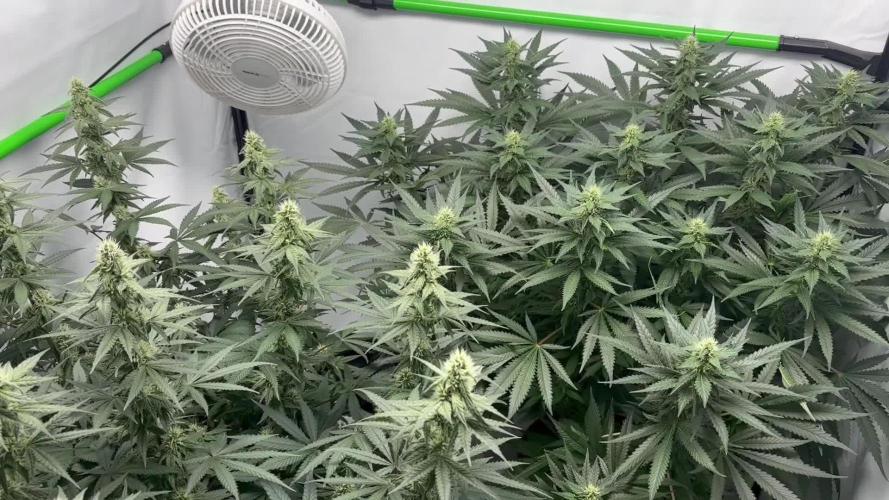
What up gromies. I'm back here to put this diary to rest with a harvest and smoke report. After 14 day dry and 30+ day cure these flowers are ready for enjoyment. Purple Cookies from GFS grew short and compact finishing in just 9 weeks from seed to harvest. No sign of purple in this pheno but would you look at the quality here? Amazing structure and trichome production. Everything that I've grown from Ganja farmer seeds has been really impressive. I will continue growing their genetics.👊😁💨

Likes
1
Share

@PharmaZ
Follow
Saturday 25th July (day 28) 9pm
This time I could be home at lights on so they will have a mixed feed with a little PK.
EC still low and will be upping the base nutrients starting tomorrow.
0.5ml/L - Nirvana
0.5ml/L - Calmag
1ml/L - Canna A&B
0.5ml/L - Big Bud
0.5ml/L - Big Fruits
0.5ml/L - Growzyme
PH5.8 EC1.1
Run off BBM PH6.5 EC0.9
Run off Cheese PH6.5 EC0.7
Sunday 26th July (day 29) 9pm
5L of nutrients made.
It is nice to be able to feed when the lights come on makes a massive difference in my management of this grow.
Hopefully fingers crossed and praying to God we can get to harvest.
In a few weeks i have some time off so i can really try to dial it all in.
1ml/L - Nirvana
0.5ml/L - Calmag
1.5ml/L - Canna A&B
0.2ml/L - Big Bud
0.5ml/L - Big Fruits
1ml/L - Humic Acid Plus
PH5.8 EC1.2
Run off BBM PH6.5 EC1.3
Run off Cheese PH6.5 EC0.9
Wednesday 29th July (day 32-39)
1ml/L - Organic Bloom Liquid
2ml/L - Big Bud
1ml/L - Big Fruits
1ml/L - Fast Buds
2ml/L - Humic Acid Plus
PH6.2 EC0.9
Run off BBM PH6.5 EC1.2
Run off Cheese PH6.5 EC1.1
The above feed is to offset the nitrogen in the coco. I have been adding EcoThrive charge too much which has cause lockout due to excess nitrogen in the soil, at first I thought it could have been PK but some research and listening to Brandon Rust I have come to my conclusion that it is a nitrogen toxicity. I was adding far too much organic microbes and supplements.
Basically nitrogen locked out Calmag that caused tip burn, the plants or on the edge of a nitrogen toxicity but because they’re in Coco and have had a mixture of organic and synthetic the organic side has acquired to much nitrates locking out calcium to the tips of the leaves
The BBM has had tip burn the cheese looks too green, both are dark green but the Cheese has more foliage to store the nitrogen hence why little tip burn but more of a vegetative colour, the BBM has hardly any fan leaves left after a strip early in flower. I also think I defoliated too early, but then to second guess I believe if I didn’t feed to much organics the flowers would be much further along.
After the previous 2 feeds I can notice the buds picking back up again. Hopefully I can continue with this mix I’m using now and get some consistent bud growth over the next week. I’ll be glad when this one is over. The summer heatwaves are just tiring when you’re growing especially in coco.
I remember years ago I had issues like this and I said to myself never start a grow in the summer…
https://www.youtube.com/live/qbeT6JAbMe4?is=QqnXHUBAE09fLDUQ
Thursday 30th July (day 33)
1ml/L - Organic Bloom Liquid
1ml/L - Big Bud
2ml/L - Big Fruits
1ml/L - Fast Buds
2ml/L - Humic Acid Plus
PH6.2 EC0.7
Run off BBM PH6.49 EC1.2
Run off Cheese PH6.47 EC1.0
Messed up my measurements a little and only realised after. Big Bud I only put 1ml/L and big fruits I did 2ml/L should have been the other way round…
Otherwise looking ok, returned home the temp was 35c and humidity 78% that is not good…
Tomorrow I will try to get everything In order again, still going to feed this current program for another week, then I will go back to a more balanced feed using more organics for the final push.
Friday 31st July (day 34)
1ml/L - Organic Bloom Liquid
2ml/L - Big Bud
2ml/L - Big Fruits
1ml/L - Fast Buds
2ml/L - Humic Acid Plus
PH6.0 EC0.9)
Run off BBM PH6.49 EC1.3
Run off Cheese PH6.47 EC1.0
Saturday 1st August (day 35) 2am
Scraped the top layer of coco exposing roots, applied some great white after doing another flush and feed.
As you can see I’m imputing a low EC and the run off is gradually spiking up everyday.
Only way to reduce it is to do massive amounts of nutrients.
Note to self, make sure the timer is set up so I can be home for lights on watering. Never grow in the summer in coco again.
2ml/L - Organic Bloom Liquid
2ml/L - Big Bud
3ml/L - Big Fruits
1ml/L - Growzyme
PH5.9 EC1.1
Run off BBM PH6.35 EC1.8
Run off Cheese PH6.35 EC1.3
2nd time
Run off BBM PH6.25 EC1.8
Run off Cheese PH6.2 EC1.1

Likes
4
Share

@Janerussel
Follow
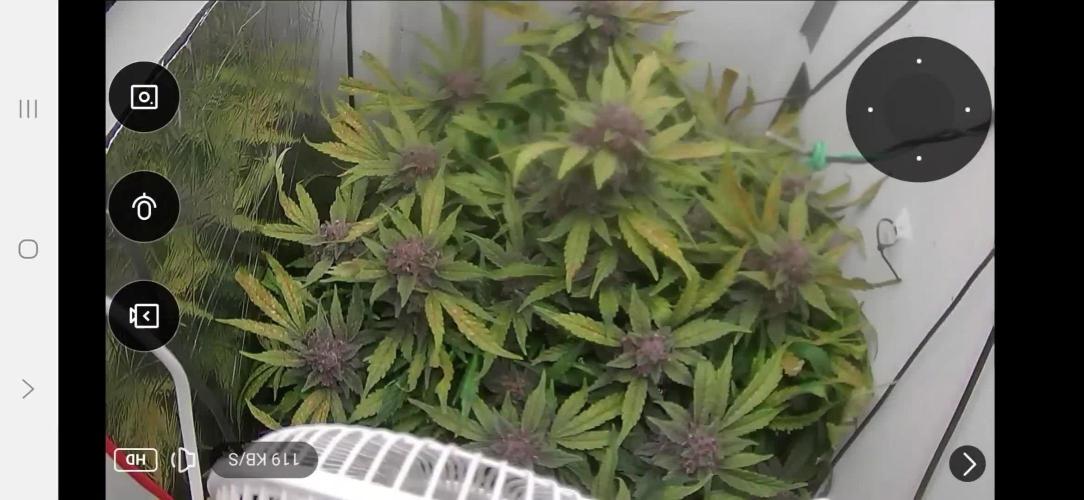
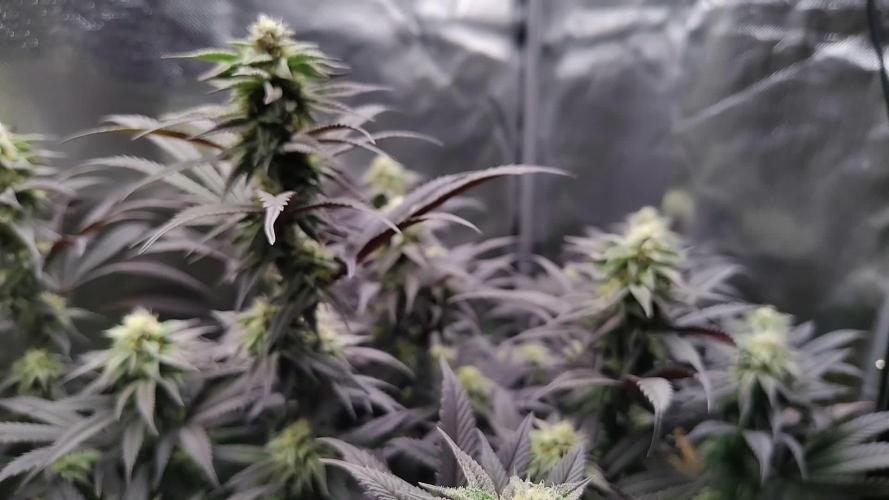
F week 7. I had nutrient lockout and ph started to swing down. I wasn't mixed my nutes right. I should have kept more break between adding the nutes and let it blend in peace.I lost some days because of that. Now everything should be under the control. The plant smells really strong. Cola nuggets are really hard but the trichomes are still mainly transparent.
Likes
Comments
Share

Likes
4
Share

@Dr_4NdY
Follow
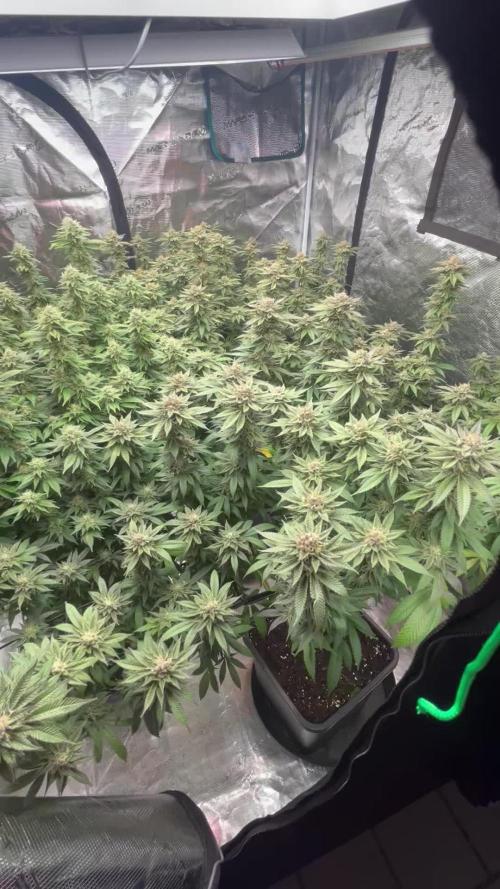
Week 7 🌸 done
Overdrive pushes Studio & Bruce Banner nicely
Rainbow Gelato doesn’t seem to be effected by it - no new pistils / no significant bud swelling
Real heavy smell in the box, mostly caused by the Studio54
Bruce Banner will get another week with reduced fertilizer - updated pics in the back, such a fat bush
Rainbow Gelato & Studio only get water from now on
Studio54 branches already bending down cause bud weight
Happy to harvest the 2 in the front end of this week
Drying etc will take place in another box with exhaust ventilation
Sadly the images are being strangely compressed by the platform, so they no longer match the original.
Last 3 pics are Studio before that is Rainbow
Good to go for 7-9 days


Likes
8
Share


@Canna96
Follow
Hey now, hope everyone is having a great weekend. This Purple Punch didn't break soil until 4 days from getting wet. I ended up with a slightly mutated Purple Punch Seedling as she has 3 Cotyledons instead of 2. I have friends who have had this and they told me they turned out just fine yield and terp wise just really based more on the phenotype than the fact that it was genetically mutated. She is in a Solo Cup in ProMix/Perlite under the Spectrum X at 30% Power which is 230 Watts in V1 or Veg Mode. Very happy so far with the light as it is keeping all nodes tight and all leafs green and pointed upwards. I will also this Purple Punch's roots to fill the solo cup and then I will transplant her into a final 3.4 gallon airpot and hook her up to an auto feeding halo coming from a reservoir. When a plants roots are just fertigated in soil they are lacking in oxygen until some drying takes place. In Coco Coir, they have the perfect ratio of H20/Oxygen just after watering and as long as the Coir stays somewhat saturated. This is why high frequency fertigation pays off in coco coir. My plan is to top her one time by day 28 or so at the latest, or at least before she starts flowering, so whatever node that will be depends on her growth between now and then. Thanks for stopping by, be safe and Blaze On!
Website: https://medicgrow.com/
https://growdiaries.com/grower/medicgrowled

Likes
19
Share


@Nickeluring
Follow
Day 30 of flower;
I raised the pot 14 cm to get her closer to the light. The Hulkberry next to her measures 126 cm. SHe's full of buds and she's very sticky. Her smell is amazing!!

Likes
7
Share


@Minuteman_Organics
Follow
Big week of defoliation. Added another level of scrog as well to prevent the plants growing into the light.
The medipak are sativas and are stretching like crazy. Medipak #2 in the middle back is looking like an indica with much larger fan leaves and thicker stems. Less stretch compared to medi pak #1 and #3 which are growing like crazy. #3 is gonna be a real heavy yielder...stacked!
Smelling of spices and hash
The indigo child are stretching much less and are a little slower in flower development. Very similar to the putang I grew previously. Usually slow to start but will pick up steam and fatten up in the last few weeks.
Smells like orange soda mixed with grape candy. Has a little sour pine sol finish. Almost identical to the putang. Still one of my favs.
Edit day 17. Not great but my setup lost power most of the day. It probably got into the low 50's in my tent, maybe less. I'm sure I'm gonna see some temp shock from that.
Sure enough when I looked at the leaves they were a little curled. We shall see what happens. They're big plants so I'm sure they'll bounce back. Maybe lose a few days of stretch...
Update day 19: Plants are recovering nicely. Starting to see some frost. Temps are back in check now as well.
Update day 20: temps are good.

Processing
Likes
21
Share


@GreenISR
Follow
I have made some clean up down the plant ,I cant belive its a clone so big 🤗

Likes
39
Share


@BelgianBudtender
Follow
Heyo growmies!
The smell is so potent, i have only grown 4 strains to this point, but this plant seriously knocks all others out of the park when it comes to smell, this is not a strain you put in your backyard without upsetting some neighbours.
following last week's EC observation I have lowered my nutrients down to 1.8 ec, keeping the same amount of green sensation. I'll be monitoring the reservoir in any case, there is currently no sign of nutrient lockouts or deficiencies.
the only issue I see one or two colas are starting to show some early signs of light stress, So once again I'm faced with a decision, do i turn down light intensity, making the lower canopy suffer, do i leave it and have a few foxtail buds and burnt fan leaves or, do I hst the colas that are getting too close.
That's an issue I would like to be moot in future grows, I want to get good enough at training that I can have a completely even canopy.
in the middle of the week, when changing out the reservoir, I noticed some buds are starting to show some colors, nothing impressive, just the tips of calyxes and fan leaves turning purple, still, I love the way her flowers look.
she's very slow to finish and I cannot wait to see the end result.
I am making good progress on my veg closet, i'll now have space for a mother plant,so my hunt for a strain and pheno i love can begin!
I will be starting another diary featuring Zamnesia genetics next time, I want to bulk up my stash so i've germinated 2 Runtz and 1 Wedding Cake Automatic. I will move the Timelapse to that grow, it's more interesting to see small plants grow rather than an old girl bulk up her buds.
Stay safe and keep growing✊

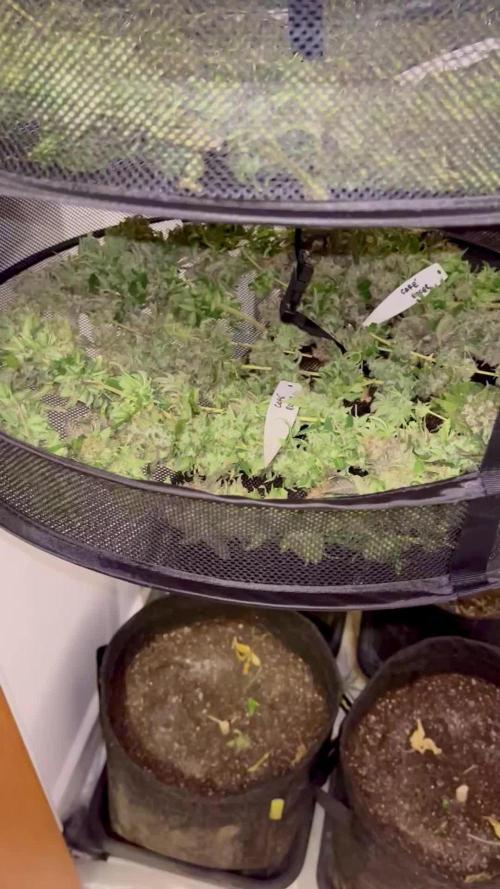



Likes
9
Share


@datrobspeoria
Follow
It was a easy strain to grow and was happy with the several watering she needed! I was feeding her every couple of days and she rewarded me with some immense dense buds! I have one more of this strain that might be heavier!
I just got done with my 2nd plant and she was a big one! Got 792grams or 27 Ozas Wet weight! My best so far with a 5 plant limit this is the weight of only 2 of the 5 I grew..


Likes
29
Share


@Reaper
Follow
Day 22 - december 26
The hydro goes really fast now we can see the difference in growth vs the soil
ppm 500 Ph 6.1
day 23
water change - 730ppm
day 25
i cut off the 2 top fanleaves of the hydro and soil plant wich are blocking light on the stems underneath, now both plants have 6 main stems so both plants will have the same structure. nothing needs to be cut from here its just veg a bit longer and wait for flowers.
also did LST on all 6 branches each has a string on them with a pencil attached to them to bend the young stems gently as you can see in the final video of this week.
day 28:
the hydro plant recovered from the too light nute mix new growth is healthy again theres just brown spots on the oldest water leaves. temps are also a bit low when lights turn of (15ceclius) in the res. i put the timer of the light now at 20/24 to keep it 2h warmer.


Likes
32
Share


@LockDownGrow
Follow
I am sad too say out of all my seeds this blackberry kush has has the slowest development and just looks poorly slow growth and new leave deformities ,
The newest leaves are curling downwards and have a very round leave appearance yet everything else in the same space is loving life , I intended too top this plant but will see how she picks up in the next week ,
This week I had too change my lighting too 600 true watts of kingbo dual optical LED range due too the temps getting closer too 30c than I would like , and by doing so I have now got a constant temp of 27c lights on and 18c lights out

Likes
2
Share


@DaddyPrime2
Follow
11/03/24
FD23
the buds are frosty and the nodes are spaced pretty tightly. the buds look as if theyll fill out fairly large.
11/05/24
FD25
everytime i open the tent, the buds just yell at me. citrus and fruit smell come through
11/07/24
fed today. cut the nitrogen/ grow forumula out.


Likes
14
Share

@PavementPunk
Follow
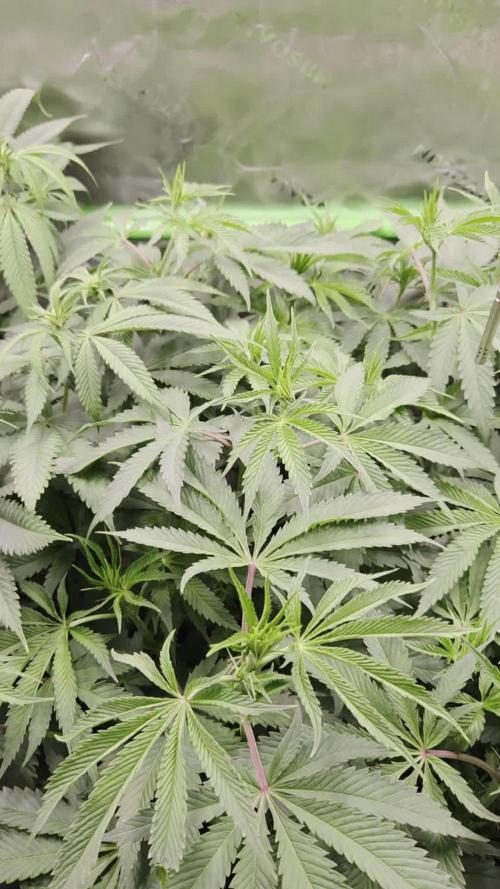
9/18/26 🌈 Zkittlez — Early Bloom & Canopy Stretch (Day 13 Flower / 10 Weeks Total)
Vital Stats & Setup
* Growth Stage: Flowering — Day 13 (10 Weeks overall)
* Plant Height: 29.0 inches
* Container Size: 7.0 Gallon fabric pot
* Light Distance: 23.0 inches under MiGRO LED array
* Schedule & Environment: 13h on / 11h off | 75°F tent temperature
Watering & Maintenance Log
* Sep 12 (Day 8 Flower):
* 0.7 Gal feed/water — splitting volume into smaller, more frequent waterings
* Sep 14 (Day 10 Flower):
* 0.7 Gal water (pH 6.5, ~72°F) + light LST canopy adjustment
* Sep 15 (Day 11 Flower):
* 1.0 Gal plain water (pH 6.5, 74°F)
* Sep 17 (Day 13 Flower):
* Height entry recorded at 29.0 inches
Grower’s Notes & Garden Observations
Early Pistil Formation:
Top-down and close-up views show active pistil sites (white hairs) forming rapidly across main growth tips. Transition into true flower development is moving smoothly.
Canopy Structure & Understory:
The main stalk is thick and sturdy with clean low-level pruning. Upper foliage has spread across the trellis bar layer to create a broad, even canopy surface.
Stretch Management:
Standing at 29.0 inches with 23.0 inches of light distance remaining. Canopy management with LST and horizontal support is keeping tops level under the LED bars. Ive been getting gemini to summarize my notes. When i read through it they kinda suck. Im gonna go back to at least adding personal commentary to my comment section. Especially now that im back to a reasonable number of plants/diaries. Im so pleased with my indoor grow currently. It smells and looks amazing. Im being very cautious about tracking pests into my grow room/house in general. Keep it clean. Happy growing friends ✌️
