The Grow Awards 2026 🏆
Likes
Comments
Share
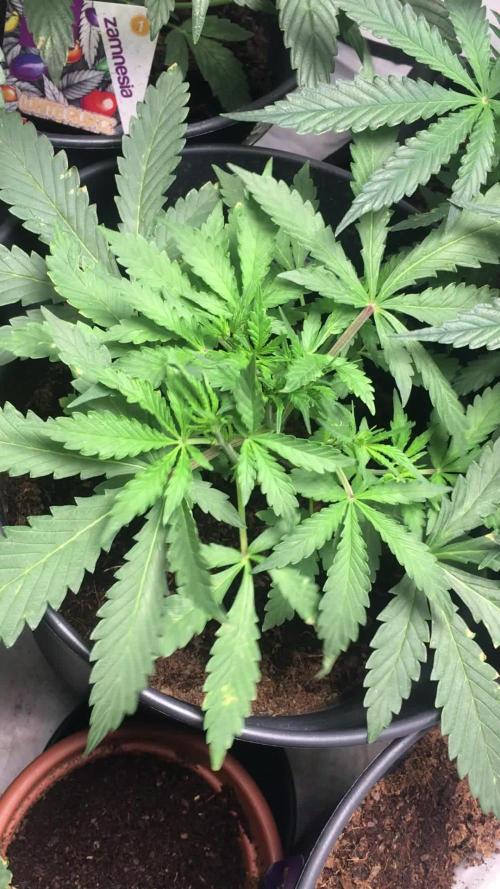
Venga familia que ya viene la cosecha de estas finta F1 de ZamnesiaSeeds, que ganas que tenia ya de darles machetazo, me estaban dando muchos quebraderos de cabeza. Las flores no son para nada llamativas, una variedad más cruzada con rudelaris, que para mi gusto es perder el tiempo y el dinero invertido en cultivar cosas así… no merece la pena en interior, el ratio de gramo watio se me quedó en 0.5 , de los no peores resultados que tuve en los últimos 5 años. a sido una genética con la que no disfruté nada cultivarla, es complicada, es bastante sensible. Las plantas en sí se quedaron enanas y para nada fue lo que esperaba, me recordaron a las autos que plantaba en el 2012… Agrobeta: https://www.agrobeta.com/agrobetatiendaonline/36-abonos-canamo Mars hydro: Code discount: EL420 https://www.mars-hydro.com/ Hasta aquí es todo , espero que lo disfrutéis, buenos humos 💨💨.
Likes
25
Share
🍼Greenhouse Feeding BioGrow ⛺️MARSHYDRO The ⛺️ has a small door 🚪 on the sides which is useful for mid section groom room work. 🤩 ☀️ by VIPARSPECTRA (models: P2000 & XS 2000)
Likes
6
Share
@Spearfish
Follow
Water change day 51. Too close to lights day 52. Used dimmer, prolly gunna buy a taller tent or modify this one. Day 54. Dimming helped, glad i caught it early.
Likes
47
Share
What's in the soil? What's not in the soil would be an easier question to answer. 16-18 DLI @ the minute. +++ as she grows. Probably not recommended, but to get to where it needs to be, I need to start now. Vegetative @1400ppm 0.8–1.2 kPa 80–86°F (26.7–30°C) 65–75%, LST Day 10, Fim'd Day 11 CEC (Cation Exchange Capacity): This is a measure of a soil's ability to hold and exchange positively charged nutrients, like calcium, magnesium, and potassium. Soils with high CEC (more clay and organic matter) have more negative charges that attract and hold these essential nutrients, preventing them from leaching away. Biochar is highly efficient at increasing cation exchange capacity (CEC) compared to many other amendments. Biochar's high CEC potential stems from its negatively charged functional groups, and studies show it can increase CEC by over 90%. Amendments like compost also increase CEC but are often more prone to rapid biodegradation, which can make biochar's effect more long-lasting. biochar acts as a long-lasting Cation Exchange Capacity (CEC) enhancer because its porous, carbon-rich structure provides sites for nutrients to bind to, effectively improving nutrient retention in soil without relying on the short-term benefits of fresh organic matter like compost or manure. Biochar's stability means these benefits last much longer than those from traditional organic amendments, making it a sustainable way to improve soil fertility, water retention, and structure over time. Needs to be charged first, similar to Coco, or it will immobilize cations, but at a much higher ratio. a high cation exchange capacity (CEC) results in a high buffer protection, meaning the soil can better resist changes in pH and nutrient availability. This is because a high CEC soil has more negatively charged sites to hold onto essential positively charged nutrients, like calcium and magnesium, and to buffer against acid ions, such as hydrogen. EC (Electrical Conductivity): This measures the amount of soluble salts in the soil. High EC levels indicate a high concentration of dissolved salts and can be a sign of potential salinity issues that can harm plants. The stored cations associated with a medium's cation exchange capacity (CEC) do not directly contribute to a real-time electrical conductivity (EC) reading. A real-time EC measurement reflects only the concentration of free, dissolved salt ions in the water solution within the medium. 98% of a plants nutrients comes directly from the water solution. 2% come directly from soil particles. CEC is a mediums storage capacity for cations. These stored cations do not contribute to a mediums EC directly. Electrical Conductivity (EC) does not measure salt ions adsorbed (stored) onto a Cation Exchange Capacity (CEC) site, as EC measures the conductivity of ions in solution within a soil or water sample, not those held on soil particles. A medium releases stored cations to water by ion exchange, where a new, more desirable ion from the water solution temporarily displaces the stored cation from the medium's surface, a process also seen in plants absorbing nutrients via mass flow. For example, in water softeners, sodium ions are released from resin beads to bond with the medium's surface, displacing calcium and magnesium ions which then enter the water. This same principle applies when plants take up nutrients from the soil solution: the cations are released from the soil particles into the water in response to a concentration equilibrium, and then moved to the root surface via mass flow. An example of ion exchange within the context of Cation Exchange Capacity (CEC) is a soil particle with a negative charge attracting and holding positively charged nutrient ions, like potassium (K+) or calcium (Ca2+), and then exchanging them for other positive ions present in the soil solution. For instance, a negatively charged clay particle in soil can hold a K+ ion and later release it to a plant's roots when a different cation, such as calcium (Ca2+), is abundant and replaces the potassium. This process of holding and swapping positively charged ions is fundamental to soil fertility, as it provides plants with essential nutrients. Negative charges on soil particles: Soil particles, particularly clay and organic matter, have negatively charged surfaces due to their chemical structure. Attraction of cations: These negative charges attract and hold positively charged ions, or cations, such as: Potassium (K+) Calcium (Ca2+) Magnesium (Mg2+) Sodium (Na+) Ammonium (NH4+) Plant roots excrete hydrogen ions (H+) through the action of proton pumps embedded in the root cell membranes, which use ATP (energy) to actively transport H+ ions from inside the root cell into the surrounding soil. This process lowers the pH of the soil, which helps to make certain mineral nutrients, such as iron, more available for uptake by the plant. Mechanism of H+ Excretion Proton Pumps: Root cells contain specialized proteins called proton pumps (H+-ATPases) in their cell membranes. Active Transport: These proton pumps use energy from ATP to actively move H+ ions from the cytoplasm of the root cell into the soil, against their concentration gradient. Role in pH Regulation: This active excretion of H+ is a major way plants regulate their internal cytoplasmic pH. Nutrient Availability: The resulting decrease in soil pH makes certain essential mineral nutrients, like iron, more soluble and available for the root cells to absorb. Ion Exchange: The H+ ions also displace positively charged mineral cations from the soil particles, making them available for uptake. Iron Uptake: In response to iron deficiency stress, plants enhance H+ excretion and reductant release to lower the pH and convert Fe3+ to the more available form Fe2+. The altered pH can influence the activity and composition of beneficial microbes in the soil. The H+ gradient created by the proton pumps can also be used for other vital cell functions, such as ATP synthesis and the transport of other solutes. The hydrogen ions (H+) excreted during photosynthesis come from the splitting of water molecules. This splitting, called photolysis, occurs in Photosystem II to replace the electrons used in the light-dependent reactions. The released hydrogen ions are then pumped into the thylakoid lumen, creating a proton gradient that drives ATP synthesis. Plants release hydrogen ions (H+) from their roots into the soil, a process that occurs in conjunction with nutrient uptake and photosynthesis. These H+ ions compete with mineral cations for the negatively charged sites on soil particles, a phenomenon known as cation exchange. By displacing beneficial mineral cations, the excreted H+ ions make these nutrients available for the plant to absorb, which can also lower the soil pH and indirectly affect its Cation Exchange Capacity (CEC) by altering the pool of exchangeable cations in the soil solution. Plants use proton (H+) exudation, driven by the H+-ATPase enzyme, to release H+ ions into the soil, creating a more acidic rhizosphere, which enhances nutrient availability and influences nutrient cycling processes. This acidification mobilizes insoluble nutrients like iron (Fe) by breaking them down, while also facilitating the activity of beneficial microbes involved in the nutrient cycle. Therefore, H+ exudation is a critical plant strategy for nutrient acquisition and management, allowing plants to improve their access to essential elements from the soil. A lack of water splitting during photosynthesis can affect iron uptake because the resulting energy imbalance disrupts the plant's ability to produce ATP and NADPH, which are crucial for overall photosynthetic energy conversion and can trigger a deficiency in iron homeostasis pathways. While photosynthesis uses hydrogen ions produced from water splitting for the Calvin cycle, not to create a hydrogen gas deficiency, the overall process is sensitive to nutrient availability, and iron is essential for chloroplast function. In photosynthesis, water is split to provide electrons to replace those lost in Photosystem II, which is triggered by light absorption. These electrons then travel along a transport chain to generate ATP (energy currency) and NADPH (reducing power). Carbon Fixation: The generated ATP and NADPH are then used to convert carbon dioxide into carbohydrates in the Calvin cycle. Impaired water splitting (via water in or out) breaks the chain reaction of photosynthesis. This leads to an imbalance in ATP and NADPH levels, which disrupts the Calvin cycle and overall energy production in the plant. Plants require a sufficient supply of essential mineral elements like iron for photosynthesis. Iron is vital for chlorophyll formation and plays a crucial role in electron transport within the chloroplasts. The complex relationship between nutrient status and photosynthesis is evident when iron deficiency can be reverted by depleting other micronutrients like manganese. This highlights how nutrient homeostasis influences photosynthetic function. A lack of adequate energy and reducing power from photosynthesis, which is directly linked to water splitting, can trigger complex adaptive responses in the plant's iron uptake and distribution systems. Plants possess receptors called transceptors that can directly detect specific nutrient concentrations in the soil or within the plant's tissues. These receptors trigger signaling pathways, sometimes involving calcium influx or changes in protein complex activity, that then influence nutrient uptake by the roots. Plants use this information to make long-term adjustments, such as Increasing root biomass to explore more soil for nutrients. Modifying metabolic pathways to make better use of available resources. Adjusting the rate of nutrient transport into the roots. That's why I keep a high EC. Abundance resonates Abundance.
Likes
1
Share
@Dabcik
Follow
I fiori diventano sempre più compatti e incominciano a sentirsi sempre di più i profumi delle cime Sono riuscito a stabilizzare la temperatura a 24.5 gradi con la lampada al 100% di intensità luminosa a 45cm dalle cime Questa settimana per pulire un po’ il substrato ho dato 2 irrigate a ph 6.4 e circa 100ppm
Likes
35
Share
09/07/2021 (F DAY 42) El olor es sumamente intenso, todo marcha muy bien! 13/07/2021 (F DAY 46) Continuo con los dos riegos semanales de 3 litros de te y las plantas están super contentas, Sweet cheese ya está amarillentando y es sin dudas la mas rápida. Pomelo Haze es la mas lenta y espero tenerla 1 a 2 semanas mas dentro del indoor luego del corte de las damas.
Likes
16
Share
I have light from all sides, that's why I didn't do so much lollipopin.. but a lillte bit on the lowest internodes. 🔥🔥
Likes
14
Share
The OG Kush has wrapped up week 4 of flower. She got a healthy defoliation to expose bud sites, and is now on track to bulk up. She's been moved to the center of the tent for the rest of the grow. She's recharged and on cruise control from here on out...only removing dead leaves. Starting to smell like a funky citrus fruit. Still pretty light on the nose and trichome production has been minimal.
Likes
32
Share
! this is my current status, gonna upload my last veg weeks within the next week - got a bit busy around Spannabis - thank you for your understanding! 💚 Welcome to Bud Boutique Grow Diary - really appreciate all your love and support :) Dont forget to check out my other current grows! 🗓️ This Week: after 48 hours of complete darkness (important for seedlings to make sure all plants switch into flower same time), I finally switched my lights to the 12/12 schedule and sent my ladies into the flower. - more than healthy and going well - Day 5: super strong and praying upas u can - Day 3: Foliar spray with APTUS Regulator and APTUS Nutrispray to give them extra micronutrients and give them a little shell for protection. ! always use APTUS Regulator first and mix well with your water before adding any other nutrients for Feeding or Foliar! Thank you for still staying with me 💚 ___________________________________________ --- 🌱 Strain (Sponsor) --- 🏷️ Stardawg by MSNL https://www.marijuana-seeds.nl/stardawg-feminized-seeds --- 🥗 Nutrients and Feeding (sponsored by APTUS: APTUS Ambassador) --- 🍸 APTUS: full nutrient schedule extreme -- Regulator, N-Boost, P-Boost, CaMg-Boost, K-Boost, Allin1 Liquid, Startbooster, Topbooster, Enzym+ every feeding -- Fulvic-Blast, NutriSpray as Foliar each once a week 🔗 https://aptus-holland.com/ --- ♻️ Grow Control (Sponsor) --- TROLMASTER: TENT-X + LM14 Light Adapter to dim/sunrise/sunset lights + Temp & rH Sensor all remote on App 🔗 https://www.trolmaster.eu/ --- 🏭 Grow Setup --- 💡LUMATEK Zeus Pro 600 * 🏠🌿 Indoor: Homebox 120x120x200cm (4x4) * 📐🌀 PrimaKlima exhausting Fan 1180m3/h (running on 60-80%) * 🌀 Can Light Filter 800m3/h & 1x Fanbox 1x Dyson fan for Air circulation 🔗 https://lumatek-lighting.com/zeus-600w-pro-29/ 🔗 https://primaklima.com/de/shop/ventilatoren-de/ec-ventilatoren/pk160ec-tc/ 🔗 https://canfilters.com/products/filters/ All Likes and comments are highly appreciated!!! 👨‍🌾 don't forget to check out my Instagram for daily educational content: budboutiquee - Bud Boutique
Likes
5
Share
@noobiii
Follow
So far so good. Today, on 23/8, I fed her with Biobizz Grow for the first time. I think she's been growing at a decent pace even without any fertilizers, so, in order to not risk nute burn, I used a smaller dose than what BioBizz recommends. 27/8 The newer leaves seem as if they are curling up a little bit. Might be because the light is very low. So, I have raised the light a little bit. Let's see how she responds. put on new lights that are more suitable for the veg phase. ------------------- 28/8 So I posted a question regarding a Spot that appeared on one of the leaves. By mistake I selected an answer that might not be adequate to my situation. GrowDiaries does not let you change the selected answer so I am copy-pasting the correct answer here. Bostongirl17 was right because I did spray some Neem Oil on the plant because there were mosquitoes in my room and i even saw a little spider. So it could be that a bigger droplet fell on the leaf and caused that blemish/spot. Bostongirl17: If it’s growing with the leaf- and not at a faster rate. It’s probably just a blemish. Is it possible you splashed them with your nutrients during feeding? 🌱 ----------------------
Likes
17
Share
AHHHHHHHHH!!!!!! Hermi!!!! Our beautiful mystery plant is sporting pollen sacks.. she just went on a field trip.. we're closing this diary out.. we'll let her finish naturally outside and salvage what we can for edibles and bubble hash... a very depressing outcome to a lot of work and training... we don't know if this was genetic or stress induced and have about 3 medium sized plants cloned from her in veg atm.. we're hesitant to flower any of them, instead we're taking all new clones from our GDP thats in 3rd week of flower, hoping for a fast re-veg... thanks for reading..be sure to inspect your plants diligently friends..happy growing
Likes
37
Share
Hi all. I finally decided to plant a little defoliation this week... a lot of buds are hidden under leaves that are difficult to develop. I think before the end of flowering they will receive enough light to become stronger and covered with trichomes.
Likes
37
Share
@Whitey307
Follow
Hi all another week done strawberry banana still hanging on ill chop her tomorrow though and hang to dry for 5 to 10 days but other plant well thats a different stroy i chopped that bitch down and dried it all lasted 6 days drying between 16 &21 degress a few warm days but nothing to mad and 55 to 62% humidity now its curing in cvault containers no smell of hay at all jst pure sticky and opened container to weight it and wife screams down stairs about the smell of house I wouldn't say it was out of container and on counter top for more than 3 mins and she roaring over smell so hopefully that a good sign 🤣🤣66 grams dried. Now to my one criticism to myself the buds are a bit airey compared to what I was aiming and hoping for did I do anything wrong or will they dense up in curing process or do they come out same way they went in either way tho im well happy with my first run at this plus strawberry banana a much bigger plant buds look much denser and frostyer so dying to see what grams she gives out when all done Thanks again all Keep grow and blazing.
Likes
57
Share
@Clutch
Follow
Hey everyone A fantastic week here. No rain, temperatures around 27°/32° Celsius and nights are not colder than 16° with low humidity. Sounds perfect huh 😃 This week the buds really started bulking up. A good smell too and not to stinky so far. I'm glad with that to be honest 😂 no need to attract the neighbors. Gonna make some daylight pictures too tomorrow. Just got home from late shift. Sun just went down while doing this update 🙂 I gave a good feeding this week. All nutrients were 4ml on 4 to 5L of water (6,4Ph) No signs of nutrient burn and i guess the PH in the soil is right. One leaf is showing brown marks and is dying but that's the only leaf for 3 weeks now. Guess she doesn't receive enough light or the plant used it as food when there wasn't enough water left. LST is good but i really see mistakes in the lower canopy. Some buds don't receive enough light. I cut away a few leaves but i don't wanna do too much. Trial and error year for sure. Will learn and know a lot for the next grow 😃 This girl has 3 to 4 weeks left i think. Next week will probably be the last feeding. Will wait to see how she develops. Gonna water in one more time with Neem Oil too. So far so good. My easiest grow ever 🙂 (I jinxed it now 🤦‍♂️) Happy growing everyone 🙏
Likes
11
Share
North Atlantic Seed Company freebie Barney's Farm Do-Si-Dos Auto, germinated in rapid rooter placed in AC Infinity propagator. Temp 75º RH 85% + DOS SI DOS AUTO by Barney's Farm DOS SI DOS AUTO is an extraordinary new super breed of autoflower that is Indica-dominant with 65% Indica / 35% Sativa, dropping perfectly to our ever growing Autoflowering Cali Collection. This jewel brings together the historical parental power of Face Off OG x Girl Scout Cookies now crossed with our BF Super Auto #1 = Increased yields, power and trichome production providing DOS SI DOS AUTO with a serious genetic boost. Dos Si Dos Auto smooths away anxiety and pain and softens your day in every way. Lingering lime flavours will remind some of granny’s lemon meringue pie, fresh out the oven. This spellbinding speed demon grows climbs to an indoor height of 100cm and up to 140cm outdoors. This plant explodes from seed to harvest in a mere 70-75 days generating stupendous yields of up to 600g/m2, with THC measured above 20%. Dive into a delicious dream of divine delight with the one and only Dos Si Dos Auto, the autoflower that lets you transcend reality. Genetics Dos Si Dos x BF Super Auto #1 Indica / Sativa Percentage 65% Indica / 35% Sativa Flowering Time 70 – 80 days from sprout
Likes
38
Share
" Il reste quelques gens biens donc je garde espoire " PNL Wednesday It's fattening and ot seems that the bugs are not around anymore but it's just an illusion as a low population in still a population so I'm still at war. Thanks for your inputs , it's when you are in trouble that you're realising that you've got a whole community here for you 😘🤘👌🙌 Observations : Burning tips of the leaves due to an over feeding // Lower leaves that are fading and falling due to the age // Old signs of PH fluctuation As my last runoff check was a while ago I'm about to check these values today 👍🤘 Saturday The small Grapefruits, the one with the 420 pin , is doing so so . Two of the main buds have some bud rot due to the high humidity of the 2 last days ... high humidity due to the fact that I am working without air extractor and box half open but I've closed my box for less than. 48h and when zinc opened it the wall were full of water drops ( more than drops ) To help with that issue I've done a defoliation to have a better air circulation around the buds even if it's not recommended to do it that far in flowering. I've also observed the trichomes and they are mostly cloudy with a few brown and like 40% of clear trichs : surprising as the looks like she may need 1 extra week or 2 before cutting
Likes
13
Share
@MrPott
Follow
She's really popping off with her bud sites. Short but definitely promising. Managed to tidy up the grow tent a bit and did a bit of cable management so I could put in the dehumidifier. Hoping to reach lower RH from now on.