Likes
Comments
Share


@tresplantes
Follow
Transplanted on day 6 from the jiffys into redcups with some biobizz Lightmix and COCO.
Mixed a 1/4 teaspoon grennhouse bio grow in the down Part of the cup
A Bit dynomyco With direct contact to the roots for the lil extra boost.
Zake isnt the biggest drinker but everything Looking good so far.


Likes
26
Share


@SmokeableHobby
Follow
1/25 - Day 70 / Day 43 Flower - Feeding day
I prepared a feeding solution that consisted of the following:
- 1 gallon spring water
- 5ml of FF Tiger Bloom (1/2 dose)
- 10ml of FF Big Bloom (2/3 dose)
Adjusted the solution to the following conditions before feeding:
- pH: 6.5
- TDS: 328ppm
- EC: .7
I gave each of the 5 gallon pots about a half gallon each of the solution, followed by enough non-fertigated spring water to induce runoff (approximately another half gallon). I tested the runoff for both of my 5 gallons and returned the following readings;
Z51:
- pH: 6.5
- TDS: 799ppm
- EC: 1.6
Z52:
- pH: 6.5
- TDS: 683ppm
- EC: 1.4
Even though I've had my soil conditions dialed in over the last week, I'm still plucking off 5-10 leaves per day that have succumbed to chlorosis.

Likes
6
Share


@MastaFive
Follow
I didn't post week 4, due to my job! I don't know if I'm doing right, I'm not an expert, but my plants are in the pre-flowering phase, all in all I'm very satisfied for now! With time and experience, I will definitely be able to make more beautiful plants later! Any advice helps me! if you have something to recommend, do it, I'll be happy to learn how to improve my crops!

Likes
21
Share


@cadur
Follow
Bobbing along, no vertical growth this week.
A little more leaf tip nutrient damage so I diluted the nutrient water down.
A few brown pistils, say 5 %, if I was a betting man I'd say 3 weeks till harvest. Expect my crystal ball prediction will be well off the mark!
Likes
2
Share

@fabialien
Follow
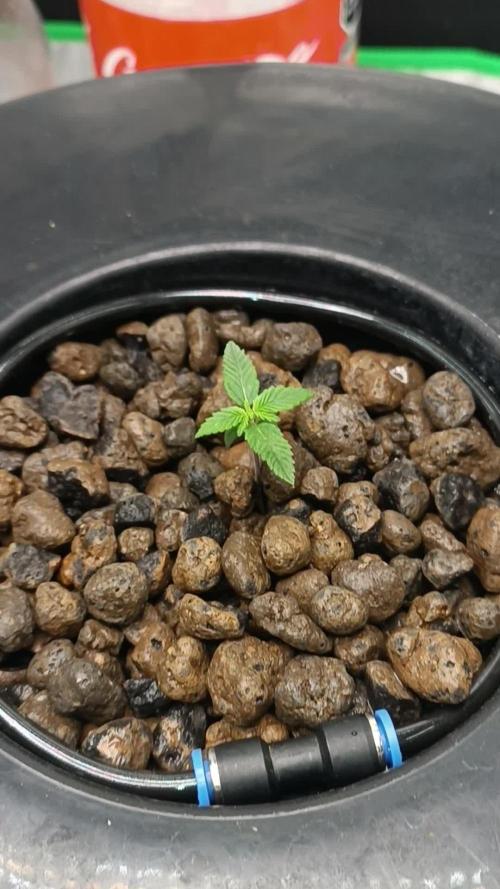
Lunes 13 de octubre, estamos por pasar la nena a la cubeta DWC.
Martes 14, pasamos a la Cubera DWC, hacemos el Drip Rig pará estimular a la nena.
Viernes 17, se mejora el drip ring



Likes
2
Share


@Capt_Chungus
Follow
My first grow has turned in to a science project.
Switched from AN pH perfect Grow/Micro/Bloom to AN pH Connesseur, still giving 50% dose. Had rain Monday maybe, didn't water for 3 days, hit her up last night with the Connesseur and just a tad of Big Bud, looks really good this morning. Yesterday I had mini buds with white pistils, that's why the Big Bud. Everything else is normal- watering 32 oz of water/nutrients at night, MAYBE mist the top soil but haven't really needed it. Will most likely switch to AN Connesseur bloom next week. Very satisfied with Fast Buds and Advanced Nutrients products. It is all on the grower!

Likes
27
Share


@Calibarsjay
Follow
These plants smell to pungent can’t wait to cut them, overall everything has gone well big dense buds, the getiva 1700e was a upgrade i put in on the last day for my next run it was not grown using a getiva i used 600hps. Terps are looking good and ready


Likes
23
Share


@HomeGrownFamz
Follow
Noticed a small issue that looks like magnesium deficiency so use full dose of Sensi cal at 1ml/L. Some small interveinal yellowing starting around the leaf margins on a couple of fan leaves below the tops. Cal Mag fed via tank and foliar feed. The issue I have found could also be down to the small dose of pk13/14 added to the nutrient tank slightly early (Early last week) causing a lockout.
Used the pk booster again this week but still added less than the recommended dose to avoid any issues.
Hoping the buds start to fatten this week 😀
Using hydro is causing my humidity to stay up so I will need to find a way of lowering it this week.
Ppfd 700-1000. Ppm 1200. PH 6.0.

Likes
8
Share


@Tontsekz
Follow
29/10 - Paper towel method, all seeds germinated
30/10 - Planted into their first pots
01/11 - Sprouted
03/11 - Watered with PH 6.2 water
06/11 - Watered with PH 6.2 water and 10ml of Seasol

Likes
21
Share


@CanadianFillmore
Follow
Welcome growfessors to another episode of growfessor theatre! 👽🌳💚
Tonight from the 4x4 the ladies move into week 7 and they get a change in nutrients. Out with Big Bud coco & sensizym, in with Overdrive.
Removed dead & dying leaves from each lady, added a support stake in Mandarin dreams & LSD, they was leaning hard!
Thanks for stopping by growfessors 👽🌳💚


Likes
99
Share


@BudXs
Follow
Room continues to pump out growth. HEat and humidity were an issue this week, but was managed with multiple garden visits and some air diversion. Extremely impresed with all genetics in the garden and there has not been any growth issues to date. 5 weeks complete, another 5 more to smoke.
Thanks for following. See GreenMachine's diaries to see how to really grow In House Genetics


Likes
32
Share


@Roberts
Follow
Critical x Animal cookies is growing great under the Hortibloom Solux 350. She got a solution change today. She has sone nice frosty colas growing. She is mid bulking now. Every thing is looking good at the moment. Thank you Hortibloom, and Ripper Seeds. 🤜🏻🤛🏻💪🏻❄️🌱
Thank you grow diaries community for the 👇likes👇, follows, comments, and subscriptions on my YouTube channel👇. ❄️🌱🍻
Happy Growing 🌱🌱🌱
https://youtube.com/channel/UCAhN7yRzWLpcaRHhMIQ7X4g
Likes
21
Share


@BLAZED
Follow
Week 13 (25-4 to 1-5)
25-4
Temperature: 22.6 degrees (lights on) 18.2 degrees (lights off)
Humidity: 72% (highest) 56% (lowest)
Watering: None.
Strength of the light increased from 80% to 85%.
26-4
Temperature: 23.7 degrees (lights on) 19 degrees (lights off)
Humidity: 70% (highest) 49% (lowest)
Watering: 2000 ml.
No pictures.
27-4
Temperature: 22.9 degrees (lights on) 19.1 degrees (lights off)
Humidity: 70% (highest) 51% (lowest)
Watering: None.
28-4
Temperature: 23.5 degrees (lights on) 20.2 degrees (lights off)
Humidity: 72% (highest) 51% (lowest)
Watering: 1500 ml.
29-4
Temperature: 23.2 degrees (lights on) 19.7 degrees (lights off)
Humidity: 70% (highest) 41% (lowest)
Watering: 1500 ml.
30-4
Temperature: 24.4 degrees (lights on) 19.9 degrees (lights off)
Humidity: 70% (highest) 54% (lowest)
Watering: None.
No pictures.
1-5
Temperature: 25.6 degrees (lights on) 20.9 degrees (lights off)
Humidity: 71% (highest) 49% (lowest)
Watering: None.


Processing
Likes
17
Share


@kcartel
Follow
good flowering, everything is stable, a lot of inflorescences appeared this week, next week it is planned to remove the lower leaves. We had to tilt two branches from the middle, as they stretched out very much and there was a risk of burn, we are waiting for 7 weeks!
Likes
29
Share


@Chubbs
Follow
What up family. These girls are super close with some being done and will get pulled out to get harvested in the next day or so. I flowers are super dense covered in trichs. The smell is pungent & sweet. Over all a fast strain to grow producing beautiful flowers.
Likes
2
Share


@Growdadough
Follow
Fastbuds have always did me good. Not only does she smoke good but the SMELL is what draws me in man does she smell good! If you haven’t grown her yet you need to go get some before it’s sold out!
Likes
49
Share


@masterofsmeagol
Follow
IVE MADE MORE VIDEOS BUT THEY JUST DON'T SEEM TO UPLOAD AND IT'S FAR TO SLOW TO DO IT FROM HOME
6/27 Made last week a five day week to get back on track. It's still overcast and rainy. It's not raining a lot bit it's consistent. Despite the weather the plants are doing phenomenal. I'll update later. It's 1pm. It's been raining consistently since 11. Just a sprinkle but it's steady. I'm going to begun uploading the weeks weather on my diary. I may start a new diary for the plants I light depped as they are flowering pretty good. Rain stopped and it's just overcast for now. I looked at some videos and did a comparison of videos one week ago and videos today and HOLY SHIT! WHAT A DIFFERENCE. Especially the light depped 10th planet. Well everything but that was the most significant difference. I'm astonished at the health and growth despite the crummy weather. Continued to rain. Just got harder. Plants are taking it but it's flooding underneath the pallets a little but it will be fine. The light dep however has me concerned. The 10th planet is looking spectacular. The bigger purple punch I'd looking good too. The smaller one though looks to have a pollen sack coming off one of the branches. Considering its not on the otherside I assume it's not just a swollen calyx. I don't mind chucking it especially if that means I don't hurt my other girls so I want to make sure. I sent videos to a few other growers and I'll add a question on here. Those three plants have been isolated from the rest for a few days due to rain. I have the suspect isolated alone until I can confirm. It sucks cause the light Depp was going good and the6ve all got little flowers.
6/28 Well that fucking sucks. ALL THREE plants I tried to light depp hermed on me. I could see male flowers. Luckily I had been keeping a really good eye on them and it was preflowers mostly. At least I caught it. One or two stamines on each plant. Would've been really easy to miss. Only one had STARTED to elongate into a stem so I think I caught it early enough. Plus since all this rain they've been kept in a different location then my big girls. Glad I did that now. Boy the roots looked good on those plants. I just grabbed the stalk and lifted and it came right out of the pot. I held it there admiring it for a minute. This sucks. At least the real plants are doing good. As far as I know. No male preflowers that's for sure. I've got some feedback from other growers and the videos are a little blurry but I had found a light leak and I'm certain these plants hermed. I know I could've tried to save them but I didn't want to risk it. I compared what I was seeing with Google photos and other websites. Aside from the larger ball with its stem, there were also several little bumps besides developed calyxes that were weaving into little buds. Trust me that I wouldn't cut down my plants if I wasn't 110% sure. I might've been able to "save them" but to me it's just not worth the risk.
6/29 I was second guessing myself pretty hard last night due to some responses I got on my light dep and messages I got from other growets. Made my anxiety horrible but I looked on several video's I'd taken again and I know what I saw. I felt better after that. This was after I researched and waited THREE days until I saw the ball on the stem and the groupings of small nubs under a fresh yellow flower. These plants were flowering good and it sucks to lose them. One MAY have been ok but one was a runt and had all the characteristics of a true hermaphrodite. They were only in 3's and I couldn't risk my harvest for an experiment. Still sucks. Oh well. Sun is starting to come out. Plants seem to be doing fantastic. I have one spot on a leaf that looks like a pillar munched on a leaf so I'll probably get the bt out soon as I have a dry day that I can apply it. I'll have to check the weather. I need to start a nute regiment but the plants aren't telling me they need anything yet.
6/30 I fucked up dates or dodnt do it yesterday or it didnt save right so I'm leaving this blank today is the 1st.
7/1 I have still only watered s couple times and I haven't had to feed. This week I'm going to start nutes. I had some external ersonal situations that have kept me from my plants. I'm hoping to get back on track. I noticed some pillar damage so I'll need to dig out the BT. This morning I saw this giant ground hog by my cage. Hated too but had to get rid of him. Of course some of the blowback landed on the leaves of one of my plants. I tried to clean it as best I could. Better than that fat bastard eating everything in one night. I broke a branch either falling around it or bulling through when I was pissed or I LST it the wrong way and the wind broke it against the tomato cage. Nice big branch too on top. I tried to fix it with duct tape but we'll see. The plants need me to spend sometime with them. I need to clean them up. Apply bt and give them their first feeding. I'll update as I go. They don't seem nutrient deficient by any means but I don't think it would hurt to start the nutes.
7/2 Bags were lighter today and if it wasn't going to rain tonight and tomorrow I'd he watering. Plants look great so soil isn't depleted yet I guess. They're growing rather rapidly. The branch I broke didnt make it. Had an idea it wouldn't but I had to try. I waited on the BT on account of the rain. I may go back over and change my mind and water with silica or a mild nute solution or maybe apply the BT. Depends what time I get back. I have some work I need to do over there. There's a few that I need to clean up the bottoms on. Pest damage is minor and limited to one or two plants and a leaf or two only.
7/3 More rain. It was supposed to rain this morning too but it didn't. We got .33in yesterday and through last night so I thought that was ok. Looking back on my previous diaries I'm doing things significantly different than before. I had used a lot more nutes earlier on. This morning I mixed two gallons of 2tsp of big bloom and fed it to the 9 plants in smart pots leaving the container plants as they have much more water in them. Looking back at other diaries I previously had, WPM and septoria by this time not to mention a shit ton of other pests I was fighting by this time. Since I poisoned where the cagexwas multiple times and sprayed the cage before it was moved I luckily don't have that problem yet knock on wood. I'm planning to apply BT tonight to deal with the moth larvae if there are any. I'm looking at plants around this area and im seeimg SOME septoria and pm on raspberry bushes and burdock so it is around. I made sure my cage is not by any other vegetation this year and is sitting on asphalt with the bags on raised pallets. Good thing I did or I guarantee they'd be flooded by now. I've been seeing multiple complaints from maine growers online (AND THEY HAVE HEALTHY PLANTS!) saying this is the worst year ever. Maybe they need a dose of fusarium oxysporum to keep them humble. This is maine. If you don't like the weather just wait five minutes. Meanwhile I'll be doing my sun dance hoping for sun. "Hard to grow cannabis with no sunlight" said another grower on my forum.

Likes
2
Share


@51sGarden
Follow
Getting less and less boring
Started growth this week
They dont look 100% healthy
For like 4 days i didnt notice and watered with high PH
Fixed that
Next week gonna transfer all 3 to a bigger pot
Also germinated 1 black oreo seed
We’ll what happens with it

Likes
Comments
Share

@420abbybox
Follow
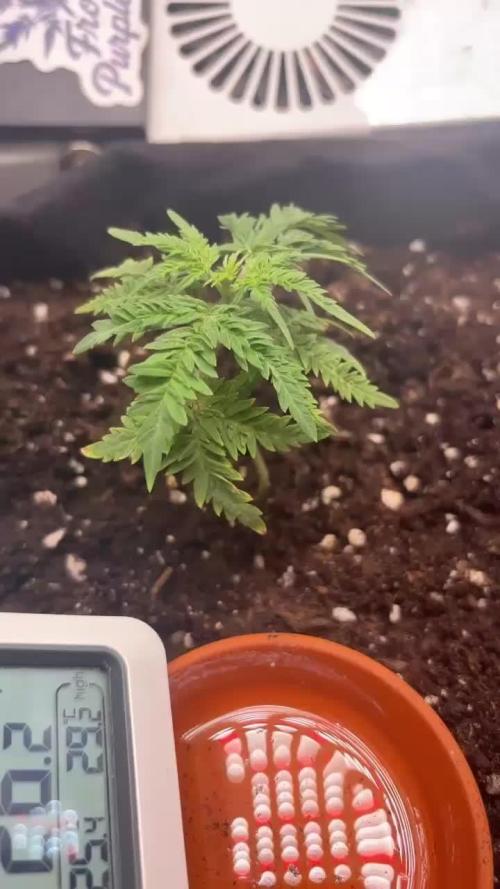
We are in the 5th week of the vegative stage the plant became stunted but seems to have bounced back since the transplant from 14L waterlogged pot to the 3L pot with new lateral growth and can see the 5th-6th set of leaves coming trough