The Grow Awards 2026 🏆
Likes
Comments
Share
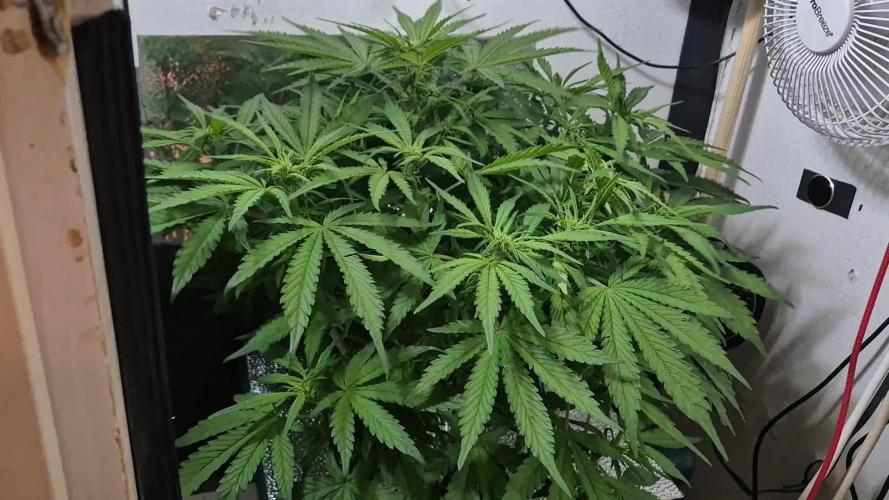
Gracias al equipo de Seedsman y XpertNutrients sin ellos esto no sería posible. 💐🍁 Bubba Cheescake: Bubba Cheesecake es un cruce de Bubba Kush anterior al 98 con Cheese Cake (Wedding Cake x Exodus Cheese). Se trata de un híbrido 70% índica con muy buenos rendimientos, alto en THC y bajo en CBD. Bubba Cheesecake prospera en interiores y exteriores. En interior se aconseja un corto periodo de crecimiento vegetativo debido a la cantidad de estiramiento que presentan las plantas. Las plantas pueden crecer hasta una altura de 250 a 350 cm. cuando se deja crecer naturalmente al aire libre. En interior, la floración dura entre 60 y 65 días, con rendimientos entre buenos y altos, de 400 a 550 gr/m2. Las plantas de exterior son capaces de producir entre 700 - 800 gr. peso seco. En las latitudes norteñas, en exterior, los productores pueden esperar cosechar a principios de octubre. Los cogollos son grandes y duros como piedras. Las plantas maduras muestran atractivos colores púrpuras y azules y brillan con una resina pegajosa que cubrirá las manos del cultivador si no tiene cuidado. El componente Wedding Cake agrega dulzura al sabor del regaliz y el aroma es terroso y musgoso. La producción de THC es muy alta con un nivel bajo de CBD. El efecto es intensamente narcótico, fuerte y duradero. 🌻🚀 Consigue aqui tus semillas: 🍣🍦🌴 Xpert Nutrients es una empresa especializada en la producción y comercialización de fertilizantes líquidos y tierras, que garantizan excelentes cosechas y un crecimiento activo para sus plantas durante todas las fases de cultivo. Consigue aqui tus Nutrientes: https://xpertnutrients.com/es/shop/ 📆 Semana 10: Por fin comienza el buen tiempo y ella lo esta agradeciendo, incrementa su tamaño dia a dia considerablemente, se aprecian preflores sin erizos aparentes. Sigo con las dosis de nutrientes recomendada por el fabricante. Aplico tratamientos insecticidas y fungicidas para asi evitar plagas y hongos 🍄
Likes
17
Share
Venga familia que ya viene la cosecha de estas finta F1 de ZamnesiaSeeds, que ganas que tenia ya de darles machetazo, me estaban dando muchos quebraderos de cabeza. Las flores no son para nada llamativas, una variedad más cruzada con rudelaris, que para mi gusto es perder el tiempo y el dinero invertido en cultivar cosas así… no merece la pena en interior, el ratio de gramo watio se me quedó en 0.5 , de los no peores resultados que tuve en los últimos 5 años. a sido una genética con la que no disfruté nada cultivarla, es complicada, es bastante sensible. Las plantas en sí se quedaron enanas y para nada fue lo que esperaba, me recordaron a las autos que plantaba en el 2012… Agrobeta: https://www.agrobeta.com/agrobetatiendaonline/36-abonos-canamo Mars hydro: Code discount: EL420 https://www.mars-hydro.com/ Hasta aquí es todo , espero que lo disfrutéis, buenos humos 💨💨.
Likes
25
Share
Thorium (chemical symbol Th) is a naturally occurring radioactive metal found at trace levels in soil, rocks, water, plants and animals. Thorium is solid under normal conditions. There are natural and man-made forms of thorium, all of which are radioactive. In general, naturally occurring thorium exists as Th-232, Th-230 or Th-228. The atomic number of 90 - Thorium 1. Dobereiner’s Triads German chemist Johann Wolfgang Dobereiner attempted to classify elements with similar properties into groups of three elements each. These groups were called ‘triads’. Dobereiner suggested that in these triads, the atomic mass of the element in the middle would be more or less equal to the mean of the atomic masses of the other two elements in the triad. An example of such a triad would be one containing lithium, sodium, and potassium. The atomic mass of lithium 6.94 and that of potassium is 39.10. The element in the middle of this triad, sodium, has an atomic mass of 22.99 which is more or less equal to the mean of the atomic masses of lithium and potassium (which is 23.02). 9 controls the 6 and 3. The Limitations of Dobereiner’s Triads are : All the elements known at that time couldn’t be classified into triads. Only four triads were mentioned – (Li,Na,K ), (Ca,Sr,Ba) , (Cl,Br,I) , (S,Se,Te). 2. Newland’s Octaves English scientist John Newlands arranged the 56 known elements in increasing order of atomic mass in the year 1866. He observed a trend wherein every eighth element exhibited properties similar to the first. This similarity in the properties of every eighth element can be illustrated as follows. Classification of Elements and Periodicity in Properties Newland’s Law of Octaves states that when the elements are arranged in increasing order of atomic mass, the periodicity in properties of two elements which have an interval of seven elements in between them would be similar. Azomite has an average of 180ppms of THORIUM...........I'm fucking mindblown Alot if big things happening this weeeeek plants final form starts to take shape, light defoliation on lower parts of the plants I know make the cut later in life. Going to restrict defoliation to week 2-3. Going more cautious this time round as my excessive defo last grow was tooooooo much and effected yield greatly. Added steel weights 💪. Big buds require a solid frame, I'm still trying to find balance for this part, I'd like to have had the reinforcement done earlier. Ever learning. Can already tell by early flower formations these are going to be madness : AZOMITE: Most farmers have not had a proper understanding of what is azomite and how to use it in gardening, especially if you practice organic farming. Continuous propagation and leaching effects of water deplete the essential minerals and micro-nutrients from the soils. Such soils remain weak, not able to support the production of fruits and vegetables. Azomite mineral contains micronutrients that supplement the soil. It also balances the minerals for growth and overall productivity. Constant use of this mineral rejuvenates your soil renewing its potency again. Azomite is a naturally mined mineral product that is ready to use. It’s a unique rock that comes from a mine in central Utah. Azomite requires no mixing or special preparation before use. It is derived from volcano ash that spewed out millions of years ago. It contains the widest range of minerals of all the rock dust in the world. Azomite provides the plants with 70% essential elements. These elements include magnesium, calcium, potassium, and silicon for plant growth. Facts About Azomite Fertilizer It’s a natural mineral – 100% natural with no fillers or additives Does not contain any harmful elements Requires no special preparation before use It’s odorless – very friendly to use Does not restrict water penetration or aeration Is easily broken down and absorbed into the soil Does not burn plants GREENSAND Espoma Greensand, love Greensand. If you have never used the product (or never heard of it) Greensand is a mineral called glauconite, which is found on the ocean floor and mined for use as an organic fertilizer and soil conditioner. Greensand supplies marine potash, silica, iron oxide, magnesia, lime, phosphoric acid, and 22 trace minerals. Greensand works great on Southern “hard as a rock” clay soil this spring, to help improve its texture, and enrich the nutrient content of my soil without using chemicals. Greensand is one of the oldest and most generally useful tools in the organic gardening tool box. Greensand has been used since the eighteenth century as a soil amendment and slow-releasing fertilizer (0-0-3). It is one of the best certified organic sources of potassium. It comes from sandy rock or sediment containing a high percentage of the mineral glauconite (greenish-black to blue-green). It contains potash, magnesium, iron, silica and can contain as many as 30 other trace minerals. The recommended usage is to broadcast 50 to 100 lbs. per 1,000 square feet. It improves plant health in general and is also be used to loosen heavy, clay soils. It will also improve the moisture retention of sandy soils. Greensand is OMRI listed for organic use. Sea Kelp – Ascophyllum Nodosum Sea kelp, also known as brown algae, is the generic name for the seaweeds that make the order Laminariales. Kelp grows in huge underwater forests in shallow parts of the ocean, with some forests covering over 2230 square miles! Kelp thrives in cold and turbulent ocean water with strong currents that bring enough nutrients for the algae to grow. The coasts of Norway, Japan, Mexico, and California are some of the most abundant in terms of natural kelp density. Sea Kelp BenefitsSea kelp is rich in a wide range of nutrients, minerals, and active compounds. Some of them have great nutritional value, others show antioxidative and anti-inflammatory properties, help with diabetes, and may even fight off some types of cancer. In other words, sea kelp is jam-packed with health benefits. Let’s explore some of them in more detail one by one! Macronutrients in sea kelp Energy – 43 kcal Protein – 1.68 g Total fat – 0.56 g Carbohydrate – 9.57 g Fiber – 1.3 g Sugars – 0.6 g Minerals in sea kelp Calcium – 168 mg Iron – 2.85 mg Magnesium – 121 mg Phosphorus – 42 mg Potassium – 89 mg Sodium – 233 mg Zinc – 1.23 mg Copper – 0.13 mg Manganese – 0.2 mg Selenium – 0.7 mcg Vitamins in sea kelp Vitamin C – 3 mg Vitamin B1 – 0.05 mg Vitamin B2 – 0.15 mg Vitamin B3 – 0.47 mg Vitamin B5 – 0.642 mg Vitamin B6 – 0.002 mg Vitamin B9 – 180 mcg Vitamin A – 6 mcg (116 IU) Vitamin E – 0.87 mg Vitamin K – 66 mcg
Likes
12
Share
Transplanted the ladies this week! Moved them into a 4 gallon pot, I plan on letting them get settled and flipping to flower soon. Temps were good this week, RH was steady at about 60%. No big surprises with the transplant, however it did take them a day or two longer than my typical recovery time.
Likes
4
Share
My Strawberry Gorilla Automatic from Fast Buds is now in its third week of flowering, and I couldn’t be happier with how she’s progressing. She looks incredibly healthy, with vibrant green leaves and strong branches. The stretch phase is nearly over, and she has developed a solid structure with a well-defined main cola.🌱 One of the most exciting changes this week is the first appearance of trichomes on the main bud. Under the light, they’re starting to sparkle, hinting at the resin production that’s about to take off. The buds are forming nicely, and I can already smell a faint but promising aroma developing. So far, she’s responding well to the nutrients and environment, with no signs of deficiencies or stress. If she keeps going at this pace, she’s going to be a real beast by harvest time.😊
Likes
124
Share
📆 Week 6, 26 May - 1 June 2024 26-31 May - Observed and let the plant grow. 1 Jun - Did a light defoliation of plant (see picture) to allow light to reach all bud sites. 📑 This is her first week of true flower and she is still stretching some. Her size has doubled and as is now into more intense lighting, the canopy coverage reads at 40 DLI. It looks like the light power will need to only stay at 50% in this small tent. The new light is proving itself well so far, more light without added heat, no complaints - except for the dimmer switch. A true consumer marketing mistake by ViparSpectra. 🍶 28 May nutrient solution changed 🍽️ 28 May feeding schedule updated 💧 Using reverse osmosis water with EC/TDS at 0 🐉 Nutrient solution EC 2.6 at 70 degrees F 🔆 Light power at 50%, DLI 40 canopy coverage at 18hrs 😤 Using PYPABL, Air Pump, 400GPH That is it for this week. Thanks for the look, read and stopping by.
Likes
6
Share
Questa settimana ho notato un piccolo stress alle foglie della cima centrale (questo stress credo sia dovuto alle temperature elevate )
Likes
11
Share
Harvest time has come. This plant grew beautifully and strong. The flowering time was insanely fast hence the "fast" strain. The Gaia green nutrients are where its at. Definitely sticking to organic from now on after this grow. The smell is pungent and stinking up my entire house in a great way! Very resinous buds so I cant wait to use the nug smasher and press some rosin. Overall great grow and learned a lot about the organic process. Next grow is going to be blueberry pie fast. Stay tuned and thanks for following along!
Likes
Comments
Share
@Chamed33
Follow
We at week 5 Flower and the buds are still pushing !! From week 1 to now I did not encounter any issues on the plant
Likes
55
Share
- i'm back already! i decited to harvest today on day 93, there was about 5-10% amber so i din't want to wait any longer! - all pics are from right before/during/after harvest - the 2 lowest branches are trimmed up and drying in a brown paper bag, the rest is drying in my carboard box - i will be back with a harvest report and smoke report in about 10 days when everything is nice and dry. - added 3 videos at the end so check em out
Likes
10
Share
Some bad news... Had pollen sac explode in the tent (two actually). I'm going to finish the grow, might lose some yield and have some seeds but better then nothing. I new this might happen from the sacs I found earlier in the grow. I did mist the tent down to minimize the pollen spread hopefully not to many flowers compromised.
Likes
72
Share
@BodyByVio
Follow
After 14 days drying, 7 days hanging and another 7 days on cardboard boxes 📦 at a temp between 61 and 65 degrees F and a humidity between 52-55 % I trimmed all the buds and jar them with Boveda 62. After 2 days in jars ( 16 days from cutting the plant down) I weighed in everything. I got 434g of grade A buds and 685g of Grade B ( perfectly smokable ) buds plus a lot of trim that I didn’t weight. I’m very pleased with everything and I enjoyed every single step along the way. Probably next time I will lollipop/defoliate more aggressively so I can get more top bud and less grade b bud.
Likes
18
Share
We have passed the month and we are madly in love with all our autoflowering plants, we have two per strain, one worked with a mainlining adapted according to the characteristics of the plant and one that grows straight, we can't easily give up the main cola. For now we will show you those worked with the techniques that are more interesting to see and later planted earlier to make them finish more or less together with those that will grow straight and fast. Our Do SI Dos worked with the Main Lining is taking on a bonsai appearance that we don't mind at all. This is due to the fact that it is a plant with a low internodal distance, it tends to lignify very quickly because this distance is short and therefore you have to be very delicate. We have succeeded and the plant really looks good, it is small but in flower it will be really beautiful to see. So topping at the third internode, main lining, no pruning until the third internode and topping them so we have multiplied the buds adequately. The application of the techniques is a delicate moment also for fertilization. The topping slows down the growth of the plant a bit and does not make it require all that Grow fertilizer that is normally recommended. So you have to go really slow and understand when to reduce the nitrogen. Better to prepare the soil with fertilizers to mix with the soil probably. The problem is sweeping now that it is going into flowering, the plant has shown the first fluff, declared the sex, and the fertilizer will be of short use indeed. You have to swell. In any case, everything is under control and I will demonstrate it to you during the flowering phase. Wait for the Uncle BreadandBuds and see what he does. Remember the cold temperature makes the girls absorb food much more slowly than in summer so be careful to give the right amount and to dry the plant in maximum 2 days or you risk imbalances. We are still using soil, feeding and all the recommended additives from Plagron 100& organic we have only lowered the amount of grow in this topping phase for the reasons above. ---- Decide on the right soil and calculate your fertilizer schedule based on the soil on the official website. -- www.plagron.com Try a seed of this strain that drives us crazy.. ---- https://www.zamnesia.io/en/10664-zamnesia-seeds-do-si-dos-f1-automatic.html Zamnesia Description // From the team at Zamnesia Seeds comes Do-Si-Dos F1 Automatic. Using consistent and reliable F1 genetics, this strain is not only incredibly easy to grow, but also offers potent and delicious buds. The plants remain small and offer a reliable growing experience that everyone will enjoy. All the best that mother nature can offer is on ---- www.zamnesia.com
Likes
72
Share
@BodyByVio
Follow
Day 37 from seed. 2nd day into week 6. -My focus for this week is to keep room temperatures under 75 degrees since I notice that my roots don’t like high nutrients temp. And since I m in DWC single 5 gallons bucket I don’t have the possibility to chill the water. So I have to keep the room temp lower then I wish to. - Day 41- I have to add nutrients and PH down every 12 hours. My PPM’s goes from 450 to 390 and my PH drift from 5.7 to 6.2 in less then 12 hours. Also I notice some rust on older levels (probably Ca/Mg deficiency). After some research (I’m new to this) I decided to up the nutrients to 600 PPM’s. Hopefully is a good decision. I will really appreciate some feedback.
Likes
2
Share
Total days above ground: 63 Total flower nights: 24 Just beyond 3 weeks into flower and the plants are showing their potential. Even the 2 smaller Kush Mints have really come on strong in flower. Can barely tell they were under-sized at this point. Still have a little more compact structure, but spreading it out with some garden wire really allowed it to power its growth. Yield should be in line with the others. The KM3 had a strong minty smell last week, but that's mellowed out a bit since. All of the MSNL plants are robust and strong. Second grow with excellent results from this breeder. I did not pay for these seeds, but I am not a shill, either. If one of them grew all whacky like the mountaintop mint, I'd voice the same complaints. The clearly care about such traits in their selection process. Overall the canopy has filled in nicely. I have a couple spots where light is wasted and I'll make some adjustments to the process to fix that for future grows. Now that I've settled on plant size and number of plants, improvements can be made each cycle until it's clockwork. I like the 12-cola vs 8 cola experiement. I've got a fairly long list of edits to make to various sections of my "bible," which means I liked the outcomes of most of my incremental adjustments. Continual, systematic improvement in action... One other incremental change on the docket but not yet realized will be dropping nutrient concnetration once vegetative growth ends. Exact timing will be based on what I see in the foliage. I see some minor tip curl and its a bit darker than I want. So, it may come sooner than later. This'll be something I tweak over the next few grow cycles until I'm happy with the late-flower health. I'll drop fertilizer concentration 10-15% on next refill and see how that plays out. It'll take a couple refills of reservoir to near 100% transition without draining it. If necessary, I'll drain and do a full refill for more pressing needs. A rez scrub before final stretch is coming, regardless. Side note: The impacts of VPD can be enormous. Last year (2025-2 diary) I had a humidifier wick get fouled and RH dropped while VPD spiked for more than a few days, thinking I could power through or that the canopy would soon provide more moisture. Nope, growth stalled in a significant way. By comparing day 34-42-49 of 2025-2 and day 38-42-49 of this diary, I can see a huge difference in growth at same point above ground. The consitency with which i do things makes it fairly certain it's the extende period with extremely high VPDs that caused the difference. Also, interesting that it mostly catches back up by completion of third week of flower. The size difference is nearly undone by this point, though 2025-2 took 4 days longer vege phase to get there. Even so, I still think this grow is more than 4 days ahead of 2025-2 (the difference in vegetative phae duration). Time will tell if the development is ahead of the pace in 2025-2 or whether it's simply mostly an offset due to a less efficient vege phase for 2025-2.
Processing
Likes
12
Share
@BloodBath
Follow
I will be focusing this diary on the smoothie strain but you’ll be seeing some other plants in the tent that are not the same strain. I only have room in this tent so bare with me. There are 2 Smoothie, 1 CNC, and 1 Stardawg (dog). The smoothie are the two bigger ones in the back of the tent. Now, the Smoothie from FastBuds is just killin it right now. Since I popped the beans they have done nothing but show signs of greatness. I don’t think this one is gonna slow down much either. I’m going to push these plants harder than my last harvest. I had a really really amazing harvest last time. I was even able to pull sap out of all 4 plants. 2 Zkittles and 2 LSD-25. This was all done by feeding at the right times and keeping a “moist” soil. Also I want add that I ran pretty much the entire line of Nectar for the Gods at a little less then the recommended ratios. This time I plan on going a tiny bit over the recommended ratios just to see what these plants will do. Trust me, if the plants have a bad response I will go back to the recommended ratios. The reason I want to do this is because I really think these auto strains can handle a lot more than a regular flowering cycle plant would. They can handle more stress, that’s for sure. When do you think I should add a compost tea into my regimen? Soon or wait till the plant is a little larger?