


Likes
Comments
Share


@Sieben
Follow
That was the first and definite not last grow of Greenhouse Seeds Lemon Orange.
She has grown very wide with strong and heavy branches, buds also really crazy exploded.
The taste should satisfy every fruity lover out there , the high is uplifting , not too much body, for me a pretty nice allday smoke.
I also find a medical aspect in it , i suffer under depression and it gave me nice moments.
Update:
After a time with it , i'm even more convinced, it also give me energy to get started / going.
I thank Arjan and all Greenhouse employees, especially Georgia from CS , for this wonderful plant.

Likes
111
Share


@DreamIT
Follow
🍋🥧🏎️ LEMON PIE AUTO BY FAST BUDS 🏎️🥧🍋
🍋 5.2 ...
🍋 6.2 ...
🍋 7.2 ...
🍋 8.2
🍋 9.2
🍋 10.2
🍋 11.2 today second top. , by the weekend I put in a 6.5 l pot, yeah
__________________________________________________________________________________________________
❌❓Not sure where to buy your seeds?
😮 Fast buds literally ships all over the world, check out their site!
http://bit.ly/FastBudsgood
__________________________________________________________________________________
📜 A look at the details of what I'm growing 📜
🍋🥧🏎️Lemon Pie Auto 🏎️🥧🍋
⚧ Gender
▪️ Feminised
➰ Genes
▪️ 50% Indica / 50% Sativa
🎄 Genetics
▪️ Lemon Pie X Autoflowering Genetics
🚜Harvest
▪️ 450 - 550 g / m²
🌱Vegetation
▪️30 - 35 days
🌷Flowering
▪️ 30-35 days
✨THC
▪️ 24.0%
✅CBD
▪️ 1.0%
🏡Room Type
▪️ Indoor
🌄Room Type
▪️ Outdoor
🕋Room Type
▪️ Greenhouse
🎂Release Year
▪️ 2020
__________________________________________________________________________
📷🥇 Follow the best photos on Instagram 🥇📷
https://www.instagram.com/dreamit420/
🔻🔻Leave a comment with your opinions if you pass by here🔻🔻
🤟🤗💚Thanks and Enjoy growth 💚🤗🤟

Likes
32
Share


@Dunk_Junk
Follow
She's filling out a bit more this week. Just watching and waiting though.
Likes
3
Share


@420loveroftheleaves
Follow
We're almost done with the untouched plant! I'm watching daily for the Terps to turn to my taste. So I love sativa's & hybrid's so now I'm wanting almost all of the Terps to turn red but about 15-20% so there's not too much of a heavy couch lock on it. So basically any day now! Baby #2, with the right bottom side missing is still in full flower, working on getting those buds growing. They've gotten so big where I rotate them daily to make sure we have equivalent lighting on every side of the plant.
After almost losing 2 of my plants to my toddler, I got very serious. I ordered a hygrometer, so I can watch temps & humidity. A water ph tester. & a tiny humidifier, within like a 7 day period. I got everything to make sure everything was on point.
Turns out this FOOP canna food is way more than what I ever imagined. I don't hardly ever have to adjust my ph turns out the FOOP comes very balanced. I now check my ph everytime I feed and water but when I used my food & mix it with water i then check my ph & every single time its spot on!
I've kept my routine this whole time. Even the few days I nursed my dying babes back to health. Feeding every tuesday & friday & watering on sundays.
I don't know if any of you would wonder if it seems like I'm maybe not watering enough. But autos grow at an insane rate, so giving their roots an airy dryer soil gives them maximum amount of room to grow as quickly as they want. They don't have heavy wet soil slowing them down which gives them more opportunity for growth.
SO. I've got 1 plant almost finished. 1 very large plant even with a side missing is still huge, and working hard on growing some little chubby buds. Lol. And then my mini auto growing some chunky buds but not very many. Lol. Pics to come very very soon!
I appreciate anyone who reads all of this! I've poured my heart into all of these plants & I hope to only keep learning & loving it!!
Likes
410
Share


@Rock_n_Roll_Randy
Follow
It's been 74 days of flower now and they only got another week left. A few of the girls were acting up so they were put into dark solitary confinement for 24 hours🤣🤣🤣🤣 bad girls... I have been flushing them for 2 weeks now. Almost there 🤘🤘. I'm very happy how they have turned out, the color, the smell, the crystals 👍. Very proud of what I created. One was chopped last week and is trimmed up and curing in jars now. Looks and smells good👍...
The gals are still loving the new fc4800, TSW2000 and their new 8x8 mars hydro grow tent as much as I do👍 leaves are sticking straight up towards the light. Love how easy the zippers are to open and close. Nice and strong and guaranteed to last. It has extra material on the backside of the zipper that helps for light leaksand enough ports and vents for anything you need in it👍. the tsw2000 is still going strong and is also a very good light. Its been going almost nonstop for 6 months and still working the same as when I got it👍. not much heat off both lights but the fc4800 is alot cooler and the heat-sinks work extremely well. I have it daisy chained to the tsw2000 and 1 dimmer controls the other and i don't need to be reaching in too far to dim the other light, it's awesome and I can't wait to buy more lights to daisy 4 together👍. I would recommend this light to everyone that grows with leds and have trouble with temperatures getting too high. Even if you grow with HPS lights I think any mars hydro light is a MUST TRY. I like how heavy both lights are because I know it means they are built soild and strong 💪. Very good sign with the frost they are starting to get thanks to bith mars hydro lights. I can notice more frost under the fc4800 and I'm thinking it's from the UV DIODES they put on the fc4800 👍. 2 days ago they all smelt like my nuken, sweet marshmallows. But now I can smell the monkey dough and gorilla glue and skunk monkey coming through👍. I touched a bud on the gorilla and monkey fingers smelt like fruit loops👍 really pleasant smell. Lingered on my fingers for atleast 30 min. I'm glad mars hydro is under priced compared to some brands and for how popular they are. usually companies would charge more. Thanks mars you guys are awesome 🤘🥁🎸. I'm getting a new exhaust fan soon. An 8 inch that will work alot better than my 4 inch lol. Wayyy to small for a 8x8 Grow Tent. Dehumidifier is going almost non stop to try and get the humidity down. I love how both lights on 100% power only raise my temperature 2 or 3 degrees 👍. You can rest your hand on the lights and not much heat comes off them. Obviously there is some heat but for the brightness of the lights and only raising the temp that much is awesome 👌. And if I wanted to I could remove the driver from the fc4800 and run it on the outside of my tent because the cord is so long but 2 or 3 degrees is barely nothing👍. The girls are starting to bulk up abit now and only 3 weeks of flowering, these lights are awesome 👌. My last run of monkey dough and gorilla glue didn't start showing alot of crystals until week 4. These were only 2.5 weeks and I started noticing some frost. Next week I will be able to tell more about what these custom bred seeds will be like. I love how the smell is changing now. Didn't want all them to smell like nuken marshmallows lol. It's awesome that I can get right inside the tent to do any work i need👍. Even if I wanted an 4x8 tent. I'd rather this 8x8 because it's so easy to work with the plants and have so much room to move around and massive headroom when I'm in there chillin with the gals🤣🤘.
FOR EVERYTHING MARS HYDRO VISIT:
www.mars-hydro.com
PROMO CODE: rocknroll
VISIT THE ALIEXPRESS STORE:
@marshydro_aliexpress2
Instagram: @marshydropenny
https://youtube.com/channel/UChU5ZWwNi-DvnO3oWVU3ceA
Thanks for taking the time to read and check out my shit🤜🤛
GET THE MAX FROM MARS👍: Welcome one of the newest members of the Mars Hydro family🤜🤛🤘. The Mars Hydro FC 4800 480W LED Grow Light can accommodate up to a 4' x 4' area for flowering. It has OVER 2000 LED chips consisting of the best selling Samsung LM301B diodes which has a Luminous Efficacy of: 220 lm/W
0.2 W, 3 V mid power,
Osram 660nm Diodes, Infrared light and UV LIGHT👍. It boasts the incredible efficiency of 2.8 µmol/J, maximum 2.5gram yield per watt with 30% higher Average PPFD. This High-intensity spectrum is beneficial for plants at all stages - from veg to bloom, and creates Big dense Buds👍. achieve 50% higher yields & quality compared with the old lights! Only consumes 480W for 4x4ft personal grows, and 3x3ft for commerical grow. It comes with a dimmer and daisy chain function with a maximum of up to 15 lights, the master light controls the rest👍. Wide 6-bar design offers even & wide canopy coverage and can maximizes your grow space. slim 180° FOLDABLE DESIGN... YES I SAID FOLDABLE🤘🤣 , making it compact and easy to install, it's IP65 WATERPROOF and will give you no worries while growing in a humid environment and makes it a flexible high performance commercial grow light for enormous SUPER FROSTY yields.😛😛😛. MARS GETS EM FROSTY BOYS👍
AWESOME HEAT DISSIPATION: The Low energy consumption FC4800 growing light has 6 passive-cooled bars and an aluminum heat-sink a removable driver you can upgrade later or have it outside your tent. with zero noise you can save up to 50% in your electricity bill compared to HID's or HPS lights!
It also has a removable driver so you can upgrade it in the future or have it outside your grow space for better heat control in your growroom👍
UPGRADED FULL SPECTRUM: Yield Max Spectrum with enhanced red (Top-Bin Samsung 3000k-5000knm, Osram 660nm Deep Red), speed up blooming & fruiting, perfectly suited for full-cycle growing. The FC4800 LED grow lamp was born for Big Buds, perfect for commercial, grow tent, grow room, hydroponics, and all soil grows.👍
THE BEST SAMSUNG DIODES: THE FC4800 has Top Bin genuine Samsung Osram Diodes, combined with remarkable 2.8 µmol/J Efficacy, 30% higher Average PPFD, 50% less energy consumption, to maximize your yields. They give you a TRUSTED 3 years warranty 100% Satisfactory guaranteed!!!
The MARS HYDRO 8x8 Grow Tent interior is made of a unique diamond design mylar which is highly reflective. (Other companies mylar and reflective rate is as low as 50%, and it won't provide efficient light. They use thick 1680D oxford canvas, and being double stitched, it is tear proof and perfect for locking in the light. Their grow tent keeps 100% of the light inside the tent and helps your plants absorb more light. EXTRA-THICK material means No light leaks or rips at all.👍
Strong Stable metal corner adapters and poles are the trustful supporters of the tent. It's very sturdy, neither rusting or paint flaking off. quick and easy tool-free setup. They use heavy-duty metal zippers, with double layer black lining, by far the best on the market which creates a light-proof seal.
The Easy observation windows are made by double layers of cloth. Observe the growing conditions of your plants without opening the tent and avoid disturbing your plants. The observation windows also serves to dissipate heat and ventilate the air.
The tent includes 2 removable waterproof floor trays to hold soil and water. The removable tray can be taken out to wash easily.
They guarantee the grow tents are easy to install even if you've never done something like this before. Clear Instructions and no tools needed! They also offer 30-day unconditional refunds for quality problems. Just contact their friendly 24 hours customer service 👍


Likes
3
Share

@JNSGenetics
Follow
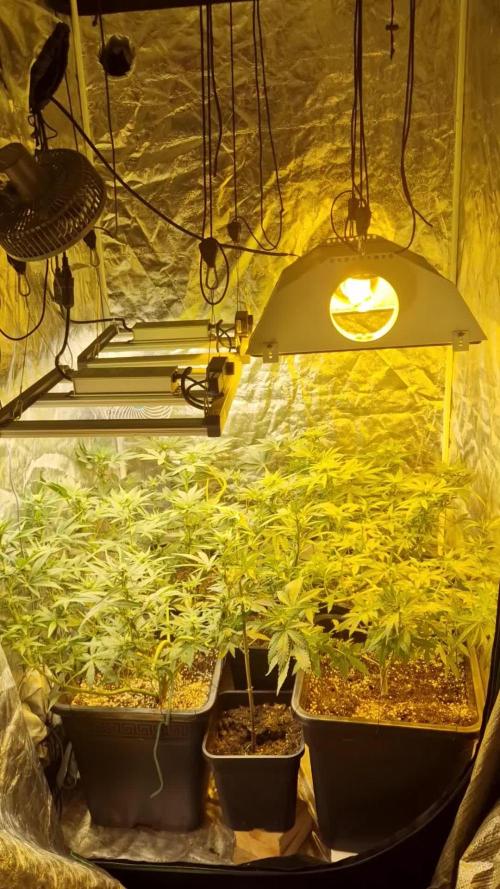
Day 15 and they were watered 2 days ago. They all got around 3 - 4 liters of water and they are drinking alot now. The lemon tree is the winner so far. The permanent jealousy auto is ahead in flower. The slurrups clones from in house genetics are starting to flower as well in their 6 liter pots. I just make them for fun. Was hoping for a male plant.
Still early flower. So far so good
Day 17 the orange sherbert is slow to transition into flower. I have tied it down further to expose the lower buds while allowing it to stretch fully


Likes
3
Share


@SimplyGrowLogical
Follow
Since Dosidos flowered two weeks before all of my other outdoor, it was lacking in size from the veg cycle. Next year I could offset this by having a few more plants or veg inside for a month or two before bringing them out. Other than that this strain had the most resin production compared to everything else! The dried nug looks comparable to quality indoor.


Likes
99
Share


@BudXs
Follow
Autos are growing slower than I hoped, but it doesnt matter, lots of time for them to finish before the unrooted clones hit the 12/12 flip
Low humidity causing me to foliar spray the bigger plants daily. Clones looking good, mothers in veg looking good, all is good


Likes
14
Share


@ConspiracyFly
Follow
It is growing sideways :) more leaves are appearing
18 hours - Daytime from 19:00 to 13:00
6 hours - Evening Time 13:00 to 19:00
It was necessary to buy another heating blanket the temperatures dropped a lot around here
I already had a blanket keeping the girl company
Warming Blanket 35x20cm 15W
I put another blanket under the vase
Heating Blanket 55x35cm 30W
(A)
Suggestions:
-You can also buy tent heaters
-And if you prefer, there are also electric towel dryers, they say they work!
(B)
The Analog Timer serves for lighting, ventilation and heating blanket
Note:
- They say that ventilation must be continuous so as not to harm the plant!
😲10 washed worms dropped in the pot let's see if they work well or destroy the roots of the plant


Likes
2
Share


@Mytrichomedgarden
Follow
Estoy en la ultima semana todo salio genial vamos por ese secado y curado


Likes
12
Share


@Dayexpress
Follow
Im trying to keep training to a minimum this run i want her long and tall in this i gallon. She has her 2nd topping that should lead to eight tops. Shes very healthy and has taken each in stride.
Likes
13
Share


@HeavyHead
Follow
So this is a combination of weeks 11-12 as they all went into 48 hours of darkness and cut down on different days. My got cut down on different days. Will post dry harvest pics next ;p
Likes
11
Share


@BLAZED
Follow
Week 6 (3-3 to 9-3)
3-3
Temps: 17.9 to 22 degrees
Humidity: 58% to 74%
4-3
Temps: 17.8 to 21.9 degrees
Humidity: 61% to 72%
5-3
Temps: 17.8 to 21.5 degrees
Humidity: 55% to 79%
Watering: Both 1000 ml. (Only calcium)
6-3
Temps: 17.8 to 21.7 degrees
Humidity: 66% to 82%
7-3
Temps: 17.6 to 21.7 degrees
Humidity: 68% to 82%
8-3
Temps: 17.7 to 21.7 degrees
Humidity: 70% to 88%
Watering #1: 1000 ml.
9-3
Temps: 17.3 to 21.5 degrees
Humidity: 63% to 87%
Installed the dehumidifier, as the humidity is getting high at lights off.
Likes
43
Share


@GODSGIFT_2005_JM
Follow
🍼Greenhouse Feeding BioGrow & Bio Enhancer
⛺️MARSHYDRO
The ⛺️ has a small door 🚪 on the sides which is useful for mid section groom room work. 🤩
☀️ MARSHYDRO FC 3000 LED 300W
☀️Also special thanks to VIPERSPECTRA P2000 (200W) & XS2000(240w) LED growlights
🌱 FastBuds 420
Likes
51
Share


@felixthegrower
Follow
Well, it was my first diary here, and I'm really happy to had found this amazing community that is so eager to help!
It gave me the opportunity to win the first giveaway in my life 😂 And it was from RQS! These seeds are in my new grow diary, and I really thankful for all the gift received! A special thank to Pol from the RQS staff!
A special thanks to everyone who watched me grow here, and I hope to contribute with the community more and more!
Likes
6
Share


@Sensiseeker
Follow
This grow has just remained on autopilot, I am very pleased. I have cut back water a bit they were looking a little unhappy going to give them a dry back and not feed a whole day.
Likes
15
Share


@GermanGrow182
Follow
Woche 7 und die Automatiks gehen in die Blüte. Tropicana Cookies purple Auto, fat Banana Auto und Apple fritter Auto. Die feminisierten wurden nach der 5. Node getoppt und verzweigen jetzt, LST bei den Autos wirkt. Hab die pötte mit Hornspänen (Stickstoff) vorgedüngt, deshalb noch kein Flüssigdünger. Erst, wenn die Blüte oder Mangel kommt. Es läuft ganz gut 👍 bis nächste Woche ✌️