


Likes
Comments
Share


@Grizz357
Follow
Continuing regimen of appx .75gal/plant nutrient top watering every 4-5 days alternating recharge .3-.4ish gal compost tea per plant. All other water coming from wicking bases only treated with 2ml/gal hydro guard. Lights are maxed out with us/ir 100% as well. All good so far. 👍


Likes
1
Share


@RussianGrower
Follow
So it's time to harvest Russian machine guns. The plants were high because we pulled them with a lamp and did not use LST. The final product was removed on the shelf of the refrigerator.00

Likes
61
Share

@squalino
Follow
📖 Chroniques de l'Oasis : La Marque Blanche
🐪 Chapitre 7 : La Rosée d'Étoiles du Rif
Date : 8 Avril 2026
Âge : J+49
Taille : 66 cm (+4 cm depuis le 2 Avril)
Le périple continue. Je marche d'un pas lent et régulier, car je sais que l'Oasis ne livre pas ses secrets en un jour. Il reste encore bien des lunes avant d'atteindre le cœur du sanctuaire — au moins un mois de marche sous ce soleil du sanctuaire.
Mais aujourd'hui, le paysage change.
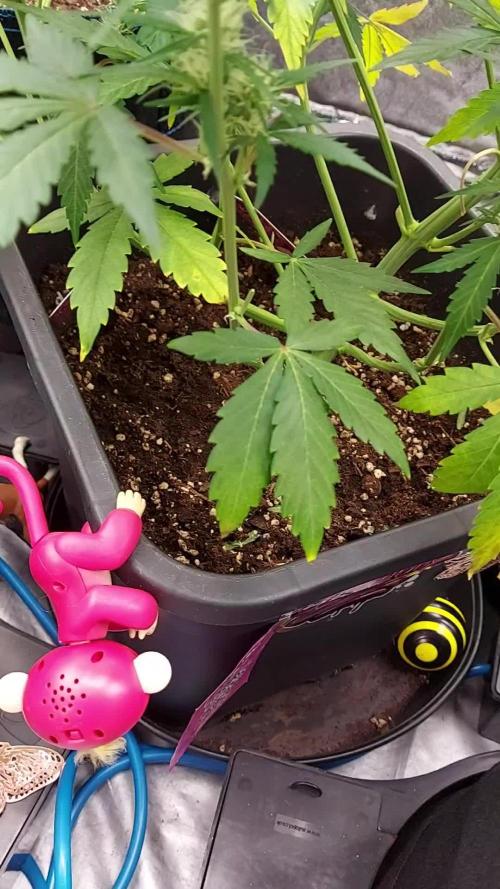
La Sultane, du haut de ses 66 cm, commence à capturer la lumière d'une manière nouvelle. Ce n'est plus seulement du vert que je vois ; sous l'éclat de la lampe, on dirait qu'une fine poudre d'étoiles commence à se déposer sur ses épaules de velours. Cette poussières d'Étoiles scintillent, transformant chaque calice en un réceptacle de délice. Elle s'habille de cette rosée céleste, préparant sa parure pour la suite du voyage.
🏜️ Le Souffle de la Vallée
Température :
24,5°C jour / 21°C nuit (Le climat reste clément et stable).
Humidité :
50% (Idéal pour laisser cette poudre d'étoiles sécher et s'incruster).
Lumière :
Intensité 75%, à 57 cm de la couronne (Le soleil se fait plus pressant, plus intime).
L'Élixir de vie (Nutrition)
Le chemin demande de la force, et la Sultane puise dans ses réserves :
le 06/04
Il y a 2 jours :
1 Litre d'eau (pH 6,3) avec 4 ml de PK 5-8. L'élixir de densité pour forger ses fleurs.
le 08/04
Aujourd'hui :
3 ml d'Orgatrex. J'ai vu ses feuilles du bas jaunir, signe qu'elle sacrifie sa base pour nourrir son sommet. Cet apport d'azote est une main tendue pour l'aider à garder sa vigueur sur la longue route qui nous reste.
le 14/04
apport de l'élixir de vie
4ml pk 5-8 1 litres d'eau ph 6,3
📜 Anecdote du Rif : Les "Nuits de Cristal"
Dans les montagnes du Rif, les cultivateurs les plus expérimentés ne regardent jamais leurs plantes en plein jour pour juger de la résine. Ils attendent la nuit, munis d'une simple lampe à huile ou à la lueur de la lune.
On appelle cela chercher le "Givre du Rif". Ils disent que si la plante "mange la lumière" le jour, elle "recrache des étoiles" la nuit. Si, à la lueur d'une flamme, la plante scintille comme si elle était couverte de diamants pilés, alors ils savent que la recolte sera d'une pureté exceptionnelle.
Note du Nomade :
"Le chemin est encore long, les horizons se succèdent. Mais sous cette pluie d'étoiles, la marche devient plus légère. La Sultane n'a pas encore tout dit, et je serai là pour voir chaque grain de lumière se poser sur elle."

Likes
9
Share

@GERGrowDesigns
Follow
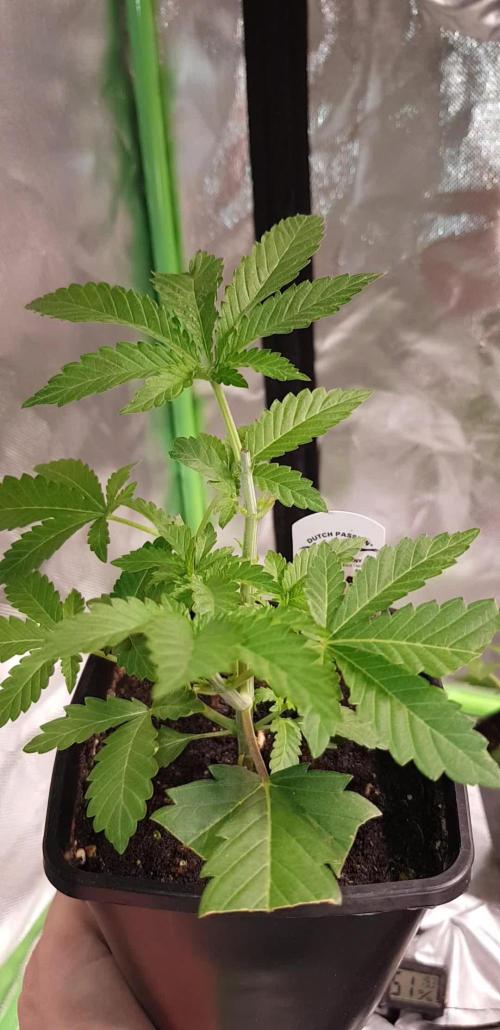
Welcome to Veg Week 3 of Kannabia Clementine Slush BioBoost Edition
Need a Fail-Safe Germination and Express Flowering?Kannabia Makes It Easy with BioBoost, Sproutly and Its Fast Genetics . More informations to find at The Kannabia Blog on GrowDiaries.
Check out Kannabia Seeds with my link [https://www.kannabia.com/de?ref=61966] and grab the germination device or the strains I used . Trust me – it’s worth it for sure !
Get another 20% Discount at all products using the code [GGD] at the checkout. little Holiday Present to the Community btw ☃️
For this Project , I’ve chosen the Feminized Photo Strain Clementine Slush BioBoost :
Here’s what I’m working with:
• 🌱 Tent: 120x60x80
• 🧑🌾 Breeder Company: Kannabia Seeds
• 💧 Humidity Range: 60
• ⏳ Flowering Time: 65 Days
• Strain Info: 21%THC
• 🌡️ Temperature: 26
• 🍵 Pot Size: 0.1
• Nutrient Brand: Hy-Pro
• ⚡ Lights : 600W x 2
A huge thank you to Kannabia Seeds for allowing me to try my Best with this amazing collection from Photo Strains they managed to Sponsore . Big thanks for supporting the grower community worldwide! Your genetics and passion speak for themselves!
Let’s grow together – and don’t forget to stop by again to see the latest updates!
Happy growing!
Stay lifted and stay curious!
Peace & Buds!
Likes
3
Share

@MrWeeedWorld
Follow
Keimungsbericht – Lemon Cherry Sundae Automatic
Heute beginnt mein neues RDWC-Abenteuer mit der brandneuen Lemon Cherry Sundae Automatic von FastBuds.
Für die Keimung habe ich diesmal eine völlig neue Methode ausprobiert – mit einem Ergebnis, das mich absolut überzeugt hat.
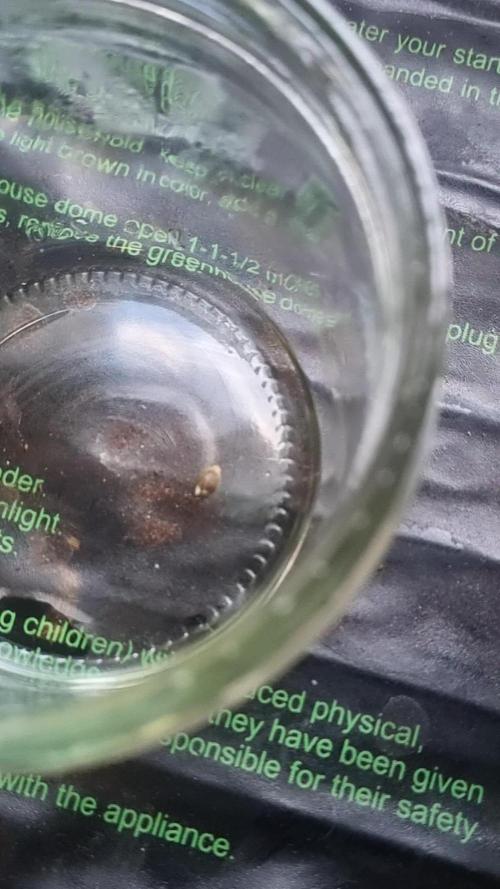
Zum Einsatz kam ein neues, sauberes Marmeladenglas mit Deckel. Das Glas wurde mit etwa 1 cm Osmosewasser befüllt. Anschließend habe ich mit einer Pipette zwei Tropfen 11,9 % Wasserstoffperoxid hinzugefügt und das Glas verschlossen.
Danach wurde das Glas auf einer Heizmatte bei konstanten 28 °C platziert.
Das Ergebnis war beeindruckend: Bereits nach nur 8 Stunden entwickelte die Lemon Cherry Sundae eine kräftige Keimwurzel von etwa 1 cm Länge.
Eine schnellere Keimung habe ich bisher nur selten erlebt. Die Kombination aus sauberem Osmosewasser, stabiler Temperatur und zusätzlicher Sauerstoffversorgung scheint ideale Bedingungen geschaffen zu haben.
Nach diesem perfekten Start zieht die Lemon Cherry Sundae nun in ihr neues RDWC-System ein, wo sie mit dem Plagron Hydro Düngeschema versorgt wird.
Ich freue mich darauf, die Entwicklung dieser neuen Genetik von Anfang an zu dokumentieren und bin gespannt, welches Potenzial sie unter optimalen Hydro-Bedingungen entfalten wird.
Vielen Dank fürs Vorbeischauen!
Jeden Sonntag gibt es neue Updates zu diesem Grow.
--------------------------------------------------------------------------------------------------------------------------------------------------------------------
Germination Report – Lemon Cherry Sundae Automatic
Today marks the beginning of my new RDWC adventure with the brand-new Lemon Cherry Sundae Automatic from FastBuds.
For this grow I decided to test a completely new germination method and the results were outstanding.
A brand-new clean glass jar with a lid was filled with approximately 1 cm of reverse osmosis water. Using a pipette, I added two drops of 11.9% hydrogen peroxide before sealing the jar.
The jar was then placed on a heating mat maintaining a constant temperature of 28°C (82°F).
The results were impressive. After only 8 hours, the Lemon Cherry Sundae had already developed a strong taproot measuring approximately 1 cm in length.
This was one of the fastest germination results I have experienced so far. The combination of clean RO water, stable warmth and additional oxygen appears to have created ideal conditions.
Following this excellent start, the Lemon Cherry Sundae is now moving into its new RDWC system where it will be grown using the Plagron Hydro nutrient line.
I am excited to document the complete journey of this new genetic and discover its full potential under optimized hydroponic conditions.
Thank you for following along!
New updates will be posted every Sunday.

Likes
11
Share


Likes
17
Share


@SkunkyDog
Follow
Hallo zusammen 🤙.
Habe sie heute geerntet.
Wir sehen uns in 3 Wochen mit dem Erntebericht.
Rabattcode für den BIOTABS-Webshop https://biotabs.nl/en/shop/ GDBT420, damit erhalten Sie 15 Prozent

Likes
4
Share


@HowtoBubatz
Follow
We’re now fully in production mode!🔥
The stretch is definitely done, and she’s putting all her energy into bud development.
The trichomes are multiplying nicely, and the smell is becoming more and more intense, fresh lemon with a subtle sweet twist.🍋🍬
The bud structure is quite different from what I’m used to, more airy and elongated, kind of sativa-like.
Curious to see how this one finishes up. Still healthy, still cruising, let’s see what next week brings!

Likes
7
Share


@100Trillion
Follow
Second week of flower went well. The plant has over double the size at this point and we have early signs buds forming within the second week. Continuing to keep the light about 12 to 14 in above the canopy as the plant stretches. Plants are getting really bushy will prepare for a day 21 leaf strip to clear out the canopy and to allow for air flow while dropping humidity. Will also try to implement a second scrog for support.Currently The single seed Sent from khalifa for grow Contest is tallest pheno in the tent and healthiest looking that pheno will show on the top right in any of the disclosed pictures and videos.

Likes
15
Share


@Gram_Solo
Follow
Last week of flower 🔥🔥🔥
These 2 are flushing now, flawless finish 2ml pl. They on the 5th day of flush so next we gonna do a dark period for 2 days and then chop and dry for around 11 days.
Smells Amazing! And sticky as fuuuuu
Other 1 has been in the curing jar for about a week
Not long now!
👽👍
Likes
29
Share


@eldruida_lamota
Follow
Venga familia que ya viene la cosecha, que ganas que tenia ya de darles machetazo.
No veas que pinta que tienen estas plantas.
No son grandes pero si están bien gordas.
No soy de plantar autoflorecientes pero e de comentar que con este cultivo e hasta disfrutado. Pronto la cataremos 💨💨💨.
Agrobeta:
https://www.agrobeta.com/agrobetatiendaonline/36-abonos-canamo
Mars hydro:
Code discount: EL420
https://www.mars-hydro.com/
Hasta aquí es todo , espero que lo disfrutéis, buenos humos 💨💨.

Likes
3
Share

@Krautis_IndoorFarm
Follow
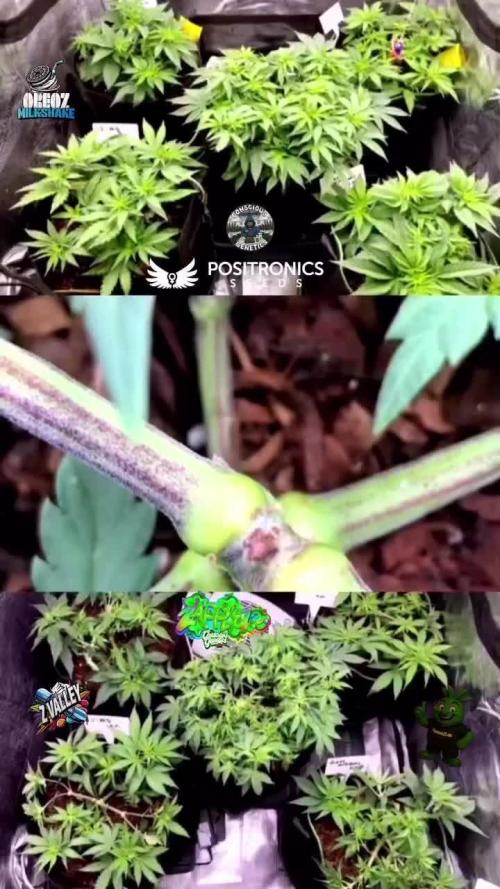
Tag 41!Der Endspurt zur Blüte hat begonnen! 🚀
Die Veg-Phase läuft sensationell! Unsere Mädels stehen nach dem intensiven Training extrem stabil und buschig da. An Tag 41 ist die Struktur perfekt geformt, um am kommenden Freitag in die Blüte zu starten. Wir nutzen diese letzten Tage der Wachstumsphase optimal, um sie final auf den großen Stretch vorzubereiten!
🌟 Das Wichtigste auf einen Blick!
• 🏆 Zustand der Pflanzen: Volle Vitalität, dichter Wuchs und keinerlei Stress. Sie sind gesund und bereit, ihre Nährstoffreserven für die Blütenproduktion aufzufüllen.
• 🌱 LST abgeschlossen: Die gleichmäßige Blattdecke ist das Ergebnis des erfolgreichen Low-Stress-Trainings, ideal für maximale Lichtausbeute unter dem SCROG.
• 🚨 Blüte Stichtag, Freitag, 19. Dezember! Nur noch wenige Tage, dann schalten wir um auf 12/12 und lassen den Stretch beginnen. Die Spannung steigt! 🔥
Bleibt dran, um den Übergang in die Blüte mitzuerleben!
🌱 Die Crew & 🤝 Das Ökosystem
Die Pflanzen (Genetik):
• Z-Vally (2x) & OreoZ Milkshake (2x) | von @positronicsseedsgermany @positronicsseed
• Zapplez 2.0 (1x) | von @conscious__genetics @conscious_genetics2.0
Das Ökosystem🐻💚
• Substrat (Living Soil): @panova25.de / @living_roots_pro
• Community: @cannacommunity.deutschland420 @cannacommunity.deutschland / @cannacommunity.germany
#LivingSoilGrow #Tag41 #BlüteCountdown #FreitagStart #LSTTraining #Zapplez20 #OreoZMilkshake #ZValley #CannabisTraining #OrganicGrow #GrowUpdate


Likes
3
Share


@Bear_Grows_Green
Follow
01/01 happy new year start of a new week here. Top dressed with craft blend, pushin p, and ocean blend, and 2/1 mix of buildaflower and castings .and watered in rootwise goodies just 3 gallons also raised vpd to 1.2 and ppfd to 550-600 depending on the spot.
01/02 remembered to shift the hours down to 16/8 definitely gave em to much light for to long looked pissed before lights out. Also have been adjusting light height and power to get the ppfd I want and temp. Think I got it dialed in now. Just keep tucking for now
01/03 made adjustments to light and environment again took controller off AI and manually set everything and the environment is super I dialed in now. Also started the fungal prime mix for a pre bloom/stretch tea.
01/04 watered in 3.5 gallons of plain water and 3.5 gallons with goodies. Very light on NPK this time did some more tucking


Likes
2
Share


@Justrite
Follow
Had this cutting on the go slowly doing it thing on the window sill establishing .
New led light has just arrived and got the tent set up to prep a batch a of cuttings to do my next run with .
Hopefully things will speed up so I can have my cuttings ready in time


Likes
30
Share


@Hawkbo
Follow
Day 42, everything is chuggin along pretty healthy. Definitely some seeds in most of them which bugs me. The whole tent reeks tho which is nice. Some of the citradellics look like they are gettin pretty close so I'll start keeping an eye on them. I had to take the pics again and was strugglin so they arent my best. I have to go thru them still so I got the video up and tmm or as soon as possible I'll get the still shots up✌️
These 2 might have taken the lead as the best ones. This strain is a frost monster both phenos look good but #3 is swelling up much more than 1 or 2. I'm not sure of 2 has any seeds but 3 looks like it does. 3 smells weird as hell like those taco bell sauce packets the spicy one and it was confirmed by myself another human and another human so I'm not just a psycho I dont think


Likes
2
Share
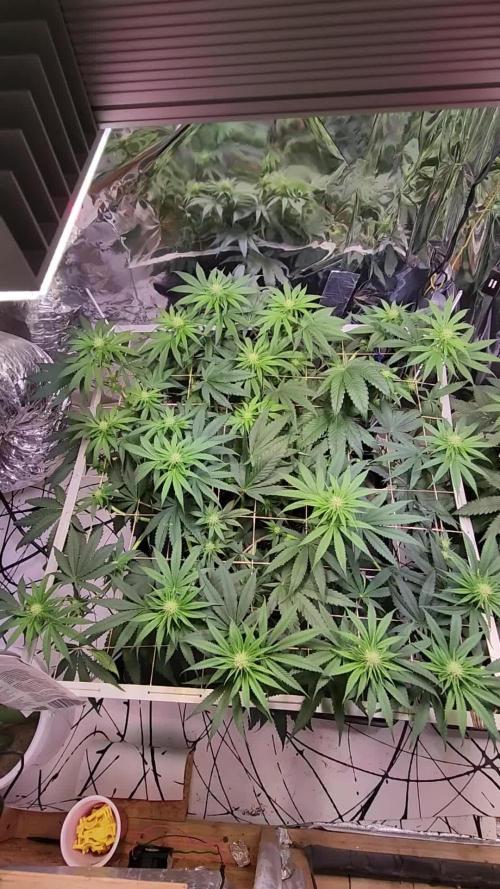

@Oldwied
Follow
Everything is fine. At the beginning of the week I do the last tucking for the SCrOG.
Light Power: 90%
Day 66
Flower day 19
Photoshooting
Likes
34
Share


@pHilosophy420
Follow
Original Auto Amnesia Haze - She is very bushy and growing very well. One more week till flowering so the next watering will be with bloom nutrients :-)