Likes
Comments
Share


@Robom069
Follow
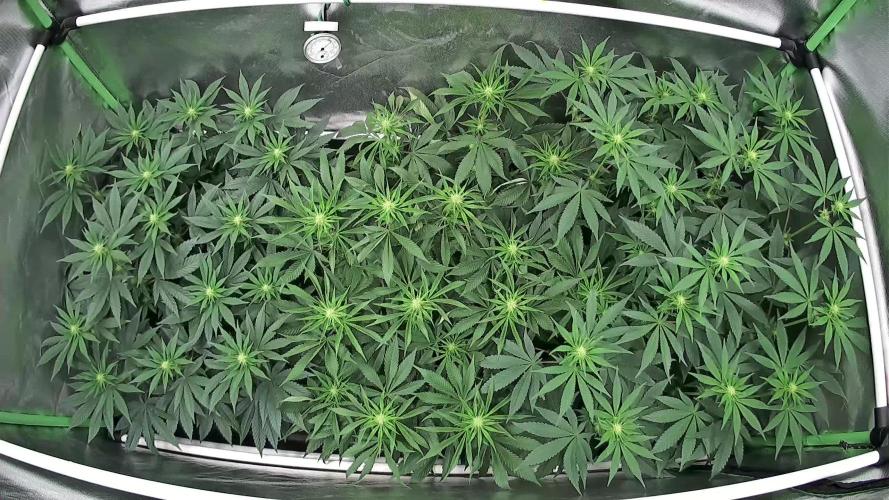
very big buds
not so dense but still very good i guess
left side acid dough
right side black domina

Likes
229
Share


@Crashoverite
Follow
Hi everyone 😁
Welcome back in another week update!
Have to say girls are looking stunning 😍 frost it's almost everywhere. Trichomes on some buds up to 30% amber and progressing by hour. They are gaming weight on buds nicely as well. Aroma OMG I am sensing ripe sweet fruits, a bit woody and gasy. Planning to turn the lights off on Thursday at midnight and harvest by Sunday 😅
Wishing everyone a great week
Stay tuned for daily updates
Peace and love brothers and sisters ✌️💚
02/10 Day 71
Watered again approx. 2.5l of water and fish shit at 0.4 ml per 1 ltr. Runoff approx. 50-100ml.
04/10 Day 73
Everything going great. More amber trichomes, almost all pistils hairs are brown. These girls are almost ready. The Day it's just around the corner.
05/10 Day 74
Last watering, in the morning approx. 1.5l per pot. At midnight lights out for good.
06/10 Day 75
Uploaded 2 clips from last night.
Trichomes are on point. Some buds 50-70% amber and they did gained some weight overnight. Just one more night of darkness and will harvest! 😎
07/10 Day 76
It's done!!! Harvested and trimmed.
Soon will return with final update - Harvest 😁
Thank you all for such a great support, likes comments and pm's
Peace and love brothers and sisters ✌️💚

Processing
Likes
16
Share


@Dunk_Junk
Follow
Finally a big jump in vertical height.
She's grown 15cm this week, now up to 21cm.
I've had a feeling she's been struggling up till yet. Her leaves seem to be getting greener as time goes on.

Likes
23
Share


@SonomaSungrown
Follow
This week was a banner week for the Adult Garden.
Booming vegetative growth for all three girls.


Processing
Likes
10
Share


@MichaelMan
Follow
I dont know why it takes so long to get my package that i ordered. Wanted to use scrognet on this grow but seems not happening this time.
Buds are forming beautifully😍


Likes
16
Share


@FreedomOfSeeds2009
Follow
Germinating 3 Purple Kush Feminised seeds.
filtered water in glass, also add 3/5 drops of hydrogen peroxide, stir water well before adding the seeds, and stir again after adding seeds to water.
I will leave it for 24 hours
The seed coat softens by soaking your seeds in a hydrogen peroxide solution, allowing the seeds to absorb more oxygen. This results in increased germination speed
Hopefully all 3 seeds will germinate by tomorrow?
Seeds popped today:-)transferred 3 Purple Kush seeds in to small pots 10/09/23
3 Purple Kush seeds, 1 seed in each small pot.
Each Pot is Half filled with lite mix compost and Half filled with Vermiculite , watered planting medium before sowing seeds 2cm deep in planting medium.
The seed will push through the vermiculite easley with very little effort, in effect increasing higher successful germination rate, the compost will offer the first tap root an immediate lite nutrient supply.
Placed 3 pots on top of a Propagation heating mat for correct germination temperature, position in a shaded place, and keep out of direct sunlight.
This may seem like a lot of effort? and it is, but it will be highly beneficial by increasing a higher germination rate and higher amount of seeds will germinate from using this method :-) especially if your seeds were expensive.
11/09/23 no sprouts above the vermiculite yet, i will check it again tomorrow.
Today 2 Purple Kush Germinate and rise above the vermiculite 3 days after sowing.
Purple Kush is going ok, it could be growing faster, unfortunately i can't upload new photos because there is a problem in the GD system, they are doing there best to fix this problem as soon as possible.
GMO Cookies where started 16/09/23 filtered water in glass, also add 3/5 drops of hydrogen peroxide, stir water well before adding the seeds, and stir again after adding seeds to water.
3 seeds sprouted, but only 2 survived, it become to hot and one GMO Cookie sprout died.
I have now started another strain (Party Monster) 19/09/23 filtered water in glass, also add 3/5 drops of hydrogen peroxide, stir water well before adding the seeds, and stir again after adding seeds to water.
I will leave it for 24 hours, 5 seeds of Party Monster have sprouted and are under the same 100W LED grow light.
GMO Cookies have all come up above the vermiculite and are now positioned under a 100W LED, there is a small clip on fan blowing and circulating the air. This is my second attempt to grow GMO Cookies from 3 feminised seeds, i messed up on the first 3 seeds, i put them under a 250 Watt LED and it fried them, my folt.
Growing from germinating seeds is a very delicate situation, your environment temperature needs good control.
2 Party Monster seedlings are looking good, coming along well under the 100W LED light.
3 GMO Cookies are looking good also under the 100W LED light.
Plus i have now started soaking in glass of water 03/10/23, 5 Strawberry Yields fem seeds aka Strawberry Fields.
filtered water in glass, also add 3/5 drops of hydrogen peroxide, stir water well before adding the seeds, and stir again after adding seeds to water.
I will leave it for 24 hours.
The seed coat softens by soaking your seeds in a hydrogen peroxide solution, allowing the seeds to absorb more oxygen. This results in increased germination speed
Hopefully all 5 seeds will germinate by tomorrow?
The 3 GMO Cookies fem seedlings are coming along well, keeping them under the hood of a propagator, i have many mixed seedlings under the same hood, to keep seedlings protected from this relentless Spanish heat.
5 Strawberry Yields fem seeds have all sprouted and are above vermiculite, keeping them under the hood of a propagator, i have many mixed seedlings under the same hood, to keep seedlings protected from this relentless Spanish heat.
Also positioned also under the 100W LED light, indoor temp 29 degrees humidity 65%, still to hot for seedlings to be directly under lights due to high temp in the room.
3 Strawberry Yields sprouts are doing well, gave 2 seedlings away, no space for all 5 plants, coming along well under the 100W LED light.
27 degrees humidity 55% good growing conditions
Super Lemon Haze
I began soaking 13 feminised seeds SLH since 27/10, after 24 hours soaking 11 seeds opened in
filtered water in glass, also added 3/5 drops of hydrogen peroxide, stir water well before adding the seeds, and stir again after adding seeds to water.
The seed coat softens by soaking your seeds in a hydrogen peroxide solution, allowing the seeds to absorb more oxygen. This results in increased germination speed!
1 Super Lemon Haze fem seed planted in a 2 ltr pot 28/10, this is the only plant i will keep for flowering.
The Pot is Half filled with lite mix compost, and the rest of the pot is half filled to the top with Vermiculite , watered planting medium thoroughly soaking it before sowing seeds 2cm deep in vermiculite.
The seed will push through the vermiculite easley with very little effort, in effect encouraging a higher successful germination rate, the compost will offer the first tap root an immediate lite nutrient supply.
And i planted the 11 remaining popped SLH seeds in the brown round pot, this is just to see how many will rise above the vermiculite from the 13 SLH fems seeds soaked on 27/10.
I will give these away to a friend.
Both pots have been placed on a propagating heating mat for consistent and ideal germination temperature until all seeds have risen above the vermiculite.
Once my 1 fem seed has germinated! i will cover the pot with a transparen plastic bag and place the pot 20cm below a 100W LED light.
Super Lemon Haze feminised seeds
Seeds sourced from Satdica Bulk Seeds
Soaked seeds 27/10 planted up on 28/10, 12 out of 13 seeds have transformed in to 12 healthy little seedlings.
11 seedlings will be given away to a friend, and i will keep the one seedling you see already planted up in a black 2 ltr size pot.
Now positioned under my 100W LED light, distance 15cm above seedlings.
Light cycle 24 hours.
Keeping them covered with propagating hood for a few days longer to allow seedlings to become better established before removing the hood.
The vents on hood are fully open to allow seedling to slowly become accustomed to the outside vege room space.
Gelato Cookies 3 Feminised seeds
Satdica Bulk Seeds
Popped 3 Gelato Cookies Feminised seeds today 06/11
filtered water or bottled water in a glass, also add 3/5 drops of hydrogen peroxide, stir water well before adding the seeds, and stir again after adding seeds to water.
I will leave it for 24 hours
The seed coat softens by soaking your seeds in a hydrogen peroxide solution, allowing the seeds to absorb more oxygen.
After placing on propagating heating mat for 24 hours.
This resulted in increased germination speed! and today i can see little white taproot tails protruding out from the seed husk 👌
3 Gelato Cookies seeds, 1 seed in each small pot.
Each Pot is Half filled with lite mix compost and Half filled with Vermiculite , watered planting medium before sowing seeds 2cm deep in planting medium.
Spoon your seeds into it's planting medium, do not touch with fingers, spoon it in with half spoon of water and a seed, place the seed in the center 2cm deep in the planting medium, water it in again very lightly to help the seed settle into a comfortable position before leaving it to rest covered on your heating mat.
The seed will push through the vermiculite easley with very little effort, in effect increasing higher successful germination rate, the compost will offer the first tap root an immediate lite nutrient supply.
Watered and fed them in with Plagron Terra Grow 5ml to a ltr of water, i may have added too much, perhaps 2/3ml to a ltr of water would have been enough?
placed 3 pots on top of a Propagation heating mat for correct germination temperature, position in a shaded place, and keep out of direct sunlight.
This may seem like a lot of effort? and it is, but it will be highly beneficial by increasing a higher germination rate and higher amount of seeds will germinate from using this method :) especially if your seeds were expensive.
3 Gelato Cookies have come through the vermiculite, 09/11 and now they are positioned under my 100W LED grow light.
I didn't expect all 3 seeds to pop, because 1 seed looked like perhaps not viable, because i only keep the bad looking seeds for myself and keep the best seeds for customers.
I am keeping them covered with transparent plastic bags for a few days to protect them in case it's to hot in the 24/7 grow room which is 24 degrees, this is probably an ok temp for them? but i'd rather not run the risk.
Romulan Feminised seeds
Germinating 3 Romulan Feminised seeds 26/11
filtered water in glass, also add 3/5 drops of hydrogen peroxide, stir water well before adding the seeds, and stir again after adding seeds to water.
I will leave it for 24 hours
The seed coat softens by soaking your seeds in a hydrogen peroxide solution, allowing the seeds to absorb more oxygen. This results in increased germination speed
Hopefully all 3 seeds will germinate by tomorrow? 27/11
Processing
Likes
34
Share


@TheFairyBudMother
Follow
7-16 This thing blows my mind. She smells like overripe pineapple. Frost coming in. Mad stacking. The leaves can be floppy but otherwise look healthy. It’s really hard to take a picture of how huge these colas are coming in. Never thought I could grow big buds like this with my low watt LEDs!
7-19 Fattening up and reeking more with some orange hairs coming in.

Likes
2
Share


Likes
10
Share


@teabee
Follow
Overall pretty happy with the grow, had a little mold issues but humidity was way to high for a while.
Likes
32
Share


@MadeInGermany
Follow
Flowering day 19
since the time
change to 12/12.
Hey all together 😀.
This week she has developed beautifully ☺️.
I poured it 3 times with 1.2 l this week.
Tomorrow I will add the 2 g GHSC Powder Feeding Bio Bloom because the first blossoms are coming :-).
I checked all the leaves thoroughly for pests or diseases and everything is fine ☺️.
Next week I'll look at your roots as soon as the coconut is completely rooted.
As every week, the tent was cleaned and the entire technology checked.
The humidifier was also refilled every day 👍.
In the next few days I will remove the bottom shoots so that the energy doesn't end up being wasted in the small popcorn buds.
I wish you a lot of fun with the update.
Stay healthy 🙏🏻 and let it grow 🍀
You can buy this Strain at :
www.Zamnesia.com
Type:
Banana
☝️🏼
Genetics:
OG Kush x unkown
👍
Vega lamp:
2 x Todogrow Led
Quantum Board 100 W
💡
Bloom Lamp :
2 x Todogrow Led
Cxb 3590 COB 3500 K 205W
💡💡☝️🏼
Soil :
Canna Coco Professional +
☝️🏼
Fertilizer:
Green House Powder Feeding
☝️🏼🌱
Water:
Osmosis water mixed with normal water (24 hours stale that the chlorine evaporates) to 0.2 EC. Add Cal / Mag to 0.4 Ec Ph with Organic Ph - to 5.5 - 5.8 .
Likes
12
Share


@Hawkbo
Follow
On cruise control now, done some defoliation here and there but that's it, feeding every 2-3 days and they are swelling up very nicely. I took a nice slow video instead of photos of each plant individually below is the order they appear in the video.
1st is 31?
2nd is #29
3rd is #35
4th is Orange Sherbert
5th is #33
6th is Wedding Cheesecake
7th is Wedding Cheesecake #2
8th is #37
REMEMBER , IF YOUR SHOPPING FOR GEAR YOU CAN USE THE CODE “BANGDANG” FOR 10% OFF YOUR ENTIRE PURCHASE FROM ANY OF THE FOLLOWING COMPANIES.
@greenbuzzliquids
@rainscience_growbags
@gorilla_grow_tent
@growlightscience.led
NEW* @Rocbudinc Seeds on his website *
*****Gorilla grow tent discounts extend to all companies affiliated with grow strong industries which include..*****
@super.closet
Lotus Nutrients
Kind LED grow lights
Likes
21
Share


@Eponymus29
Follow
Hello growmies!! Well I ended up with just one girl in the tent and two little seedlings I'm growing 12/12 from seed (I'm just curious about it, not expecting anything too impresive) this week I actually started using my scrog net to keep the taller stems from going up and making them stay at canopy level, right now ppfd is about 1100 in most parts of the canopy...

Likes
6
Share


Likes
8
Share


@TheGreenLeopard
Follow
Coming throw - we put a few in a 20liter - going for a few tiers. Tent has opened up some space from harvesting this week so should see the remainders beef up some more. Weird that I have flies in this tent. Harmless but I think the sweet aroma maybe have something g to do with it - or coffee grinds -
Likes
15
Share

@masterofsmeagol
Follow
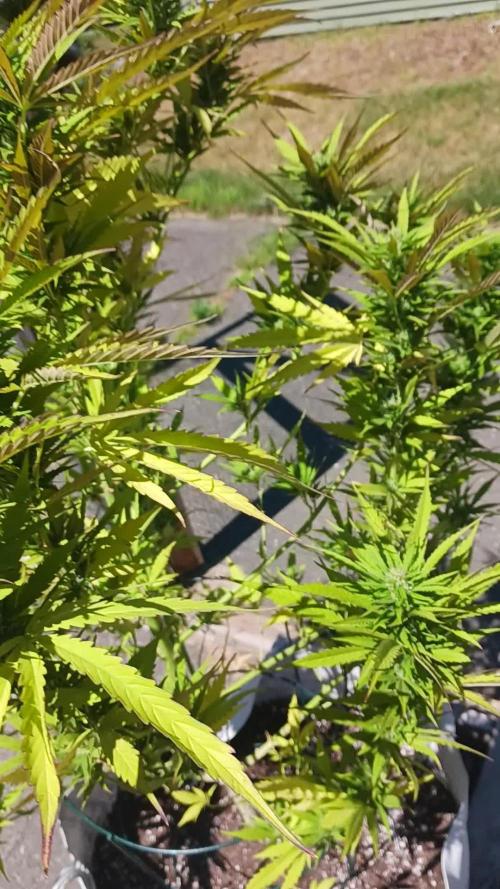
8/17 Watered everything but the 50. Found two leaves with sep markings on the pink kish in the 50. Definitely not using old soil again. I'm pretty sure THIS plant contracted it from the soil and not the way the others did with the lawn mower and birdseed hijinx. It's supposed to rain for the first time basically all summer. It's am 80% chance so I HELD OFF ON PLANT DOCTOR AND DID NOT APPLY as I'm supposed to have a clear day after. I'll apply the plant doctor in the morning. I'm hoping this rain will knock down a bunch of those thrips. They seem to be on a small branch on a plant or two. One or two leaves show damage and I'll pick them off. I figure I'll get them after I apply plant doctor. I'll use either citric acid or just my regular bt-k pillar treatment with Castille or liquid soap. That will kill them as well. I'm on really worried about it. I also might just buy a bunch of lady bugs and unleash them once things get further along.
EDIT: TOOK A QUICK VIDEO AND A COUPLE PICS. HOPEFULLY WE GET THIS RAIN. IF NOT IM GOING TO TREAT THE THRIPS THAT ARE ON TWO PLANTS NOW. I THINK IM GOING TO GO WITH BT-K FOR NY PILLARS AND HOPE THAT THE DISH SOAP IN THE MIX KILLS THE THRIPS. I HAVE LOTS OF DIFFERENT OPTIONS SO ILL FIGURE SOMETHING OUT. BUDS SEEM TO BE EXPLODING IN GROWTH. OH AND THANKS TO THE OUTDOOR GROWER THAT MESSAGED OFFERING TO HELP. I APPRECIATE THAT. THANKS.
8/18 We got the rain we were expecting. It was sheet rain for a few hourscand rained during the night. Everything was drenched and it was cold (50°F). I shook off the special kush that's way further in flower. I decided to use the leafblowrr despite the risk of spreading anything. I did it so that it wasn't ever blowing TOWARDS another plant but still. I was hoping it might blast off some thrips that might have survived that torrential rain. We've never had a dry summer like this. I'll moniter things. My water day is tomorrow so I assume that's when the girls will get their plant doctor dose. It's a great time of year for cannabis growers. We get to watch all the hard work we've put in literally pay off. It's very peaceful in the garden.
EDIT: Went over at about one to check things out and do some minor defoliation. I checked on the thrip situation and I dont know if I blasted them off with the leafblower or if the rain washed them away bit I doubt it. Ivecmade the decision to treat these little bastards. It's on one plant but it's started to spread to another branch on another plant. I probably just overlooked it but still. Seeing that it rained like he'll and I'm seeing like zero signs of septoria I'm going to treat everything. At least I think I am. I haven't decided what to use. I think I could just use bt and soap and I'd probably be alright. I'd feel better doing that as it's something I'm familiar with. Outdoor growing. It's always something.
8/19 In the 40's last night. Hopefully that will help with the thrips. I was hurried and since today tops at 72° I only watered the 10th planet big mk ultra and the chem dog with preventative plant doctor. I'm not seeing hardly any septoria and if I do itsca random leaf. I mixed up 3tsp of citric acid and some Dawn in a 2 quart hand sprayer and treated the 10th planet that I thought had heat stress and the Pink kush in the ten gal that has the damage. I also treated a branch on my good tenth planet. It was the only branch with markings so I think I've got it early enough. I'm just wondering the best way to tackle this. The pink kush I'm sure, could handle spinosad. That strain is much later flowering. I'll see how the citriccacid works and go from there. If the other girls need water they'll get it when I get home alongcwith plant doctor. I've got some work to do. I'll keep this updated. Opinions are always welcome.
UPDATE: THE PLANT IN THE TEN I SPRAYED LOOKS BETTER THAN WHEN I SPRAYED IT! I ALSO DIDNT WATER AS ITS UNDER 70° AND EVERYTHING I WATERED LOOKS WORSE THAN WHAT I DIDNT. WATERING NEEDS CHANGE QUICK WITH A 40° TEMP SWING. THESE THRIPS ARE GONNA HAVE A FEW MORE NOGHTS IN THE 40'S. THE CITRIC ACID SEENED TO KILL ON CONTACT. MY PROFESSIONAL BUDDY ADVISED TO ORDER GREEN LACEWINGS AS OPPOSED TO USING SPRAYS. HE SUGGESTED SPOT TREATMENT BUT AFTER MY RESEARCH ON THRIPS THAT WONT HE AS EFFECTIVE. I HAVENT DECIDED WHAT TO DO. I MAY ORDER THE LACEWINGS AND I MAY CONTINUE AND ROTATE TREATMENT. I DONT WANT TO OVERREACT (WHICHVI TEND TO DO) BUT I ALSO DONT WANT ALL MY LEAVES TO DIE. ILL KEEP THIS UPDATED. IM PLANNING TO GO OVER TONIGHT AND CHECK THINGS OUT. I MAY SPRAY A FEW MORE PLANTS AND WATER WHILE IM THERE. ITS TIME FOR THERE PLANT DOCTOR PREVENTATIVE.
8/20 I watered the two kush in the back WITH THE PREVENTATIVE DOSE OF PLANT DOCTOR as they were dry I assume due to the wind they get. The one in the 50 I found one sep leaf. Looking carefully arpund the garden I can tell that I have a thrip infestation. First time I've fought this and it seems most people don't really know what to do besides predators at the beginning of the season. I'm too far along for spinosad. At least thats what I've been told. My pro buddy said to try to spot treat it. It's not bad bit I'm afraid it might be worse than I think. The plants I treated with citric acid look MUCH better. I think I'll dial the dosage of citric acid down and start with that tonight and switch up treatments. I can get rid of them it's just going to take a ton of work. I think I've had them before and I attributed to something else. I so think that the very early pink kush plants could handle spinosad. I hope so. The plants I watered the other day look overwatered. The plants I didn't water look GREAT. The special kush in late flower looks happier than I've ever seen her. The difference being we went from 104° one day to 72 the next with 46° night Temps. This week is highs of 70's lows of high 40°'s. I've got a lot of work cut out for me. Didn't do a video as I didn't have time but I'll do one.
EDIT: Nothing needed to be watered at noontime and I'm trying to not overwater so I left them. The two I watered this morning are fine. I'm glad I caught this thrip bullshit when I did bit it sounds like it's going to be a HUUUGE pain in the ass to beat. One thing right after another. I've found those suction marks and the silvery shit they leave behind on pretty much every plant now. I'm thinking me using the leafblower (away from the other plants I THOUGHT) must have blown a bunch of them around. I'm not seeing a lot of bugs. Mainly feces. I did find a couple adults. Honestly, I've probably had these before and not known it or attributed it to something else. Literature I'd all about spinosad which of course I have on hand. AI told me I could use spinosad in early flower so MAYBE I could treat the pink kush plants with it but ill have to figure something else out for the other girls. I'm planning to treat tonight depending on where the research takes me. Not sure exactly what I'll be using but I'll keep this updated.
8/21 IT got cold last night. It was low 40's when I went to the garden. I watered the special kush in late flower and the mk ultra I kept natural. Did some defoliation. Found little feather on a large branch. Birds have been helping with pillars. I left out the plant doctor on those watering as septoria has pretty much been eradicated. Plants are drinking significantly less water. It went from 104° day time to 72°. Same with the nighttime Temps. Luckily with Temps like this the thrips don't seem to have spread. I found a couple lacewi g eggs while looking for pillars. Hopfully they will help. Maybe spot treatment and decoliation will he enough. I'll update as I go.
EDIT: Went back over around noon and put up blue sticky traps and did some defoliation. I may go back tonight and treat some stuff. Not sure yet.


Likes
9
Share


@Herbz_Unkraut
Follow
another resin monster from seedstockers, with a very special scent, full of flavors! grinded it smelled like peppermint, and vaped it has a great sweet creamy taste!

Likes
6
Share


@Fuego19Drippz17
Follow
I’m happy to be here at this point. Hoping In these few weeks these ladies start to thicken out. Sundae Batter is sticky sweet as hell. Bubbles smells so good, just stomping up my nostrils.

Likes
10
Share


@DeepRootsGrowTrees
Follow
ROYAL QUEEN CBG AUTO
ROYAL QUEEN SEEDS
WEEK #11 Overall
WEEK #6 Flower
This lady made some big dense buds and just looks amazing as she's coming to the end of her grow cycle I've had no issues with this CBG plant easy to grow and a nice producer!!
Stay Growing!!!
Royal Queen Seeds
ROYAL QUEEEN CBG Auto